Some buildings announce themselves. PITC asks you to come closer.
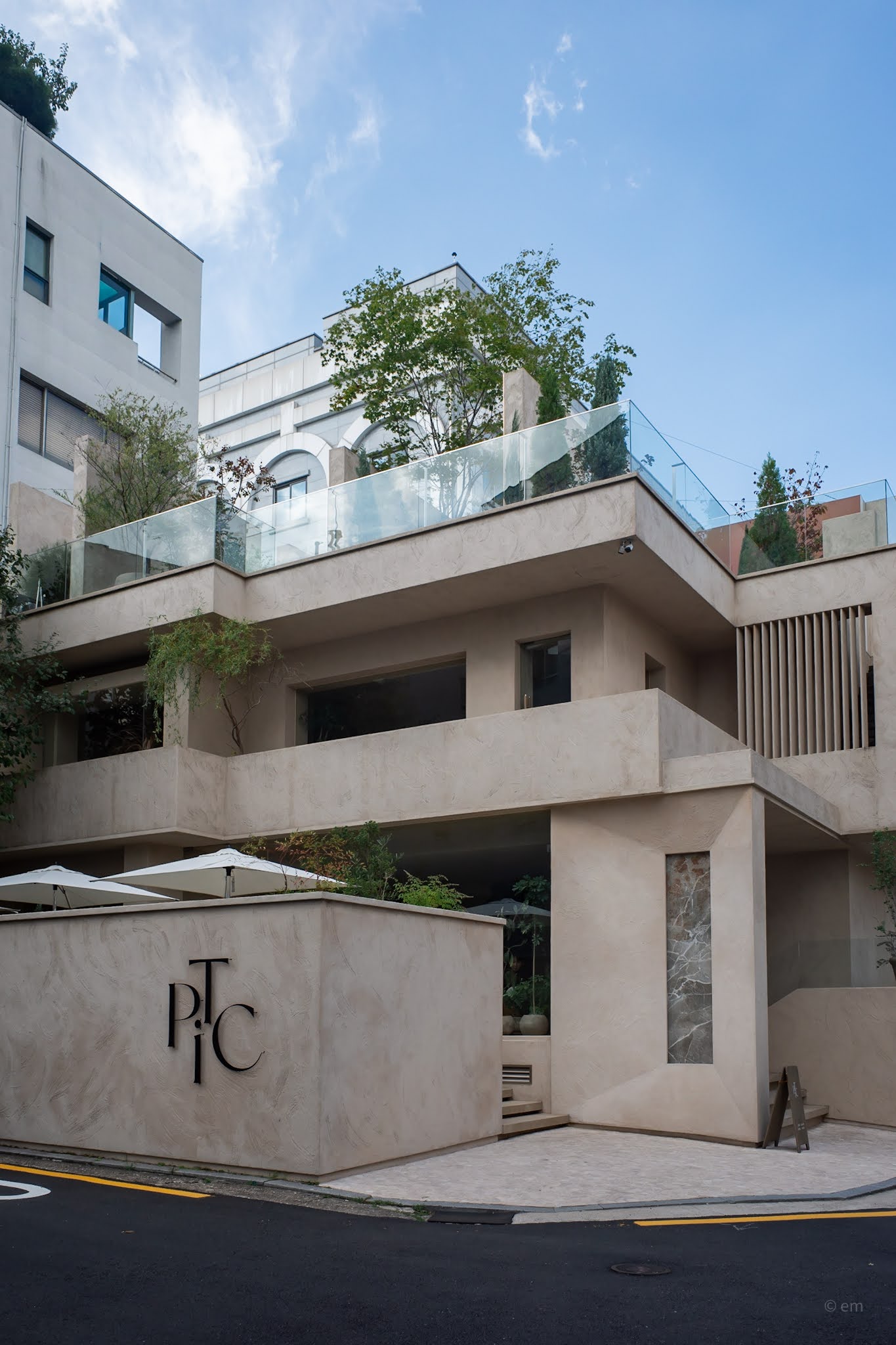
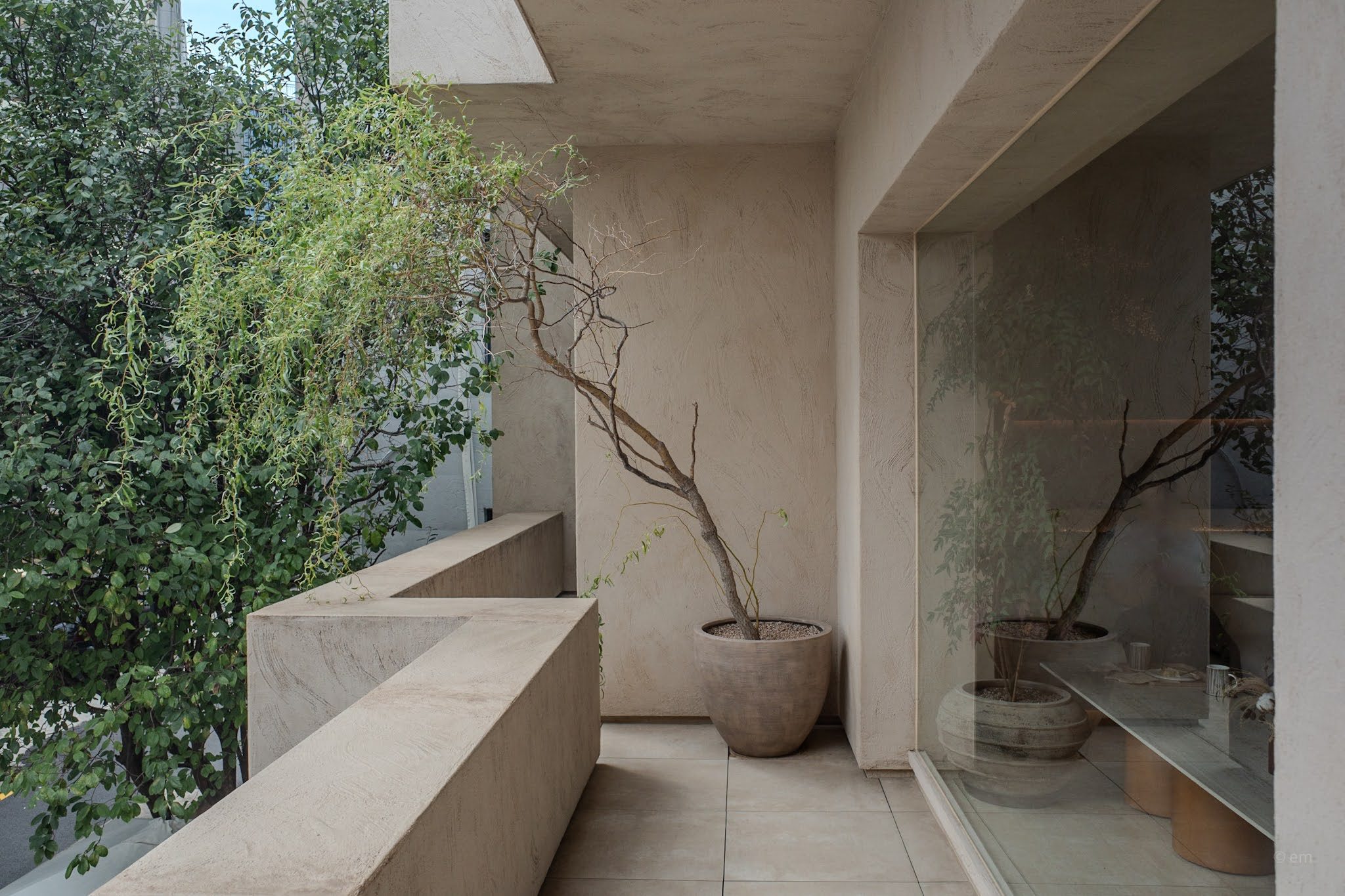
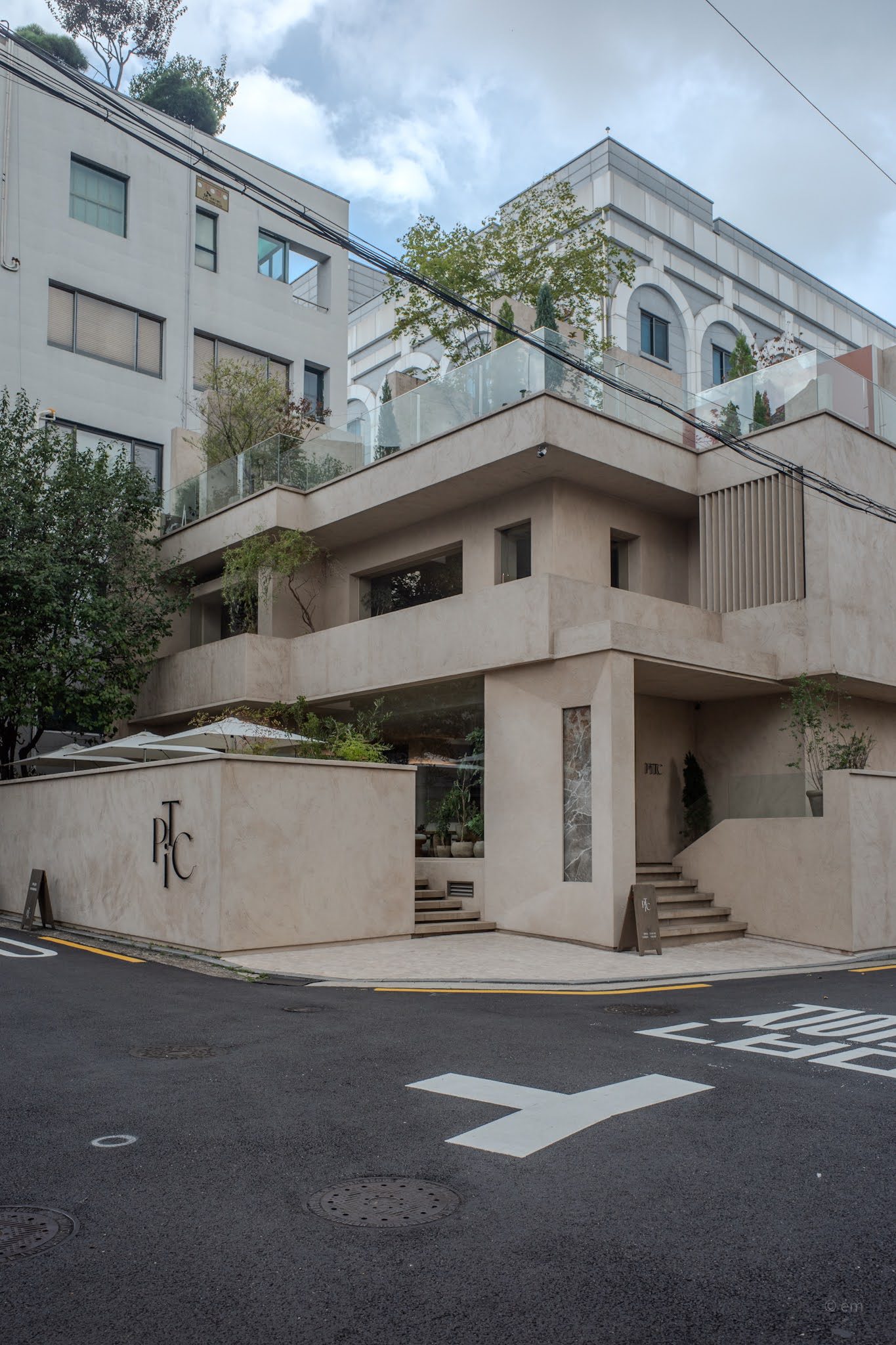
The name is an acronym — Pearl In The Clay — and the building earns it. Set back from a quiet lane in Seongsan-dong, the structure rises in stacked horizontal planes of sand-toned plaster, each level slightly offset from the one below, terraced upward like something excavated from the earth rather than constructed upon it. At street level, a low wall branded with the PiTC monogram frames a sunken garden. At the top, glass balustrades catch the sky. It reads less like a café than a small consulate from somewhere dry and sun-bleached and very far away.
Pearl in the Clay
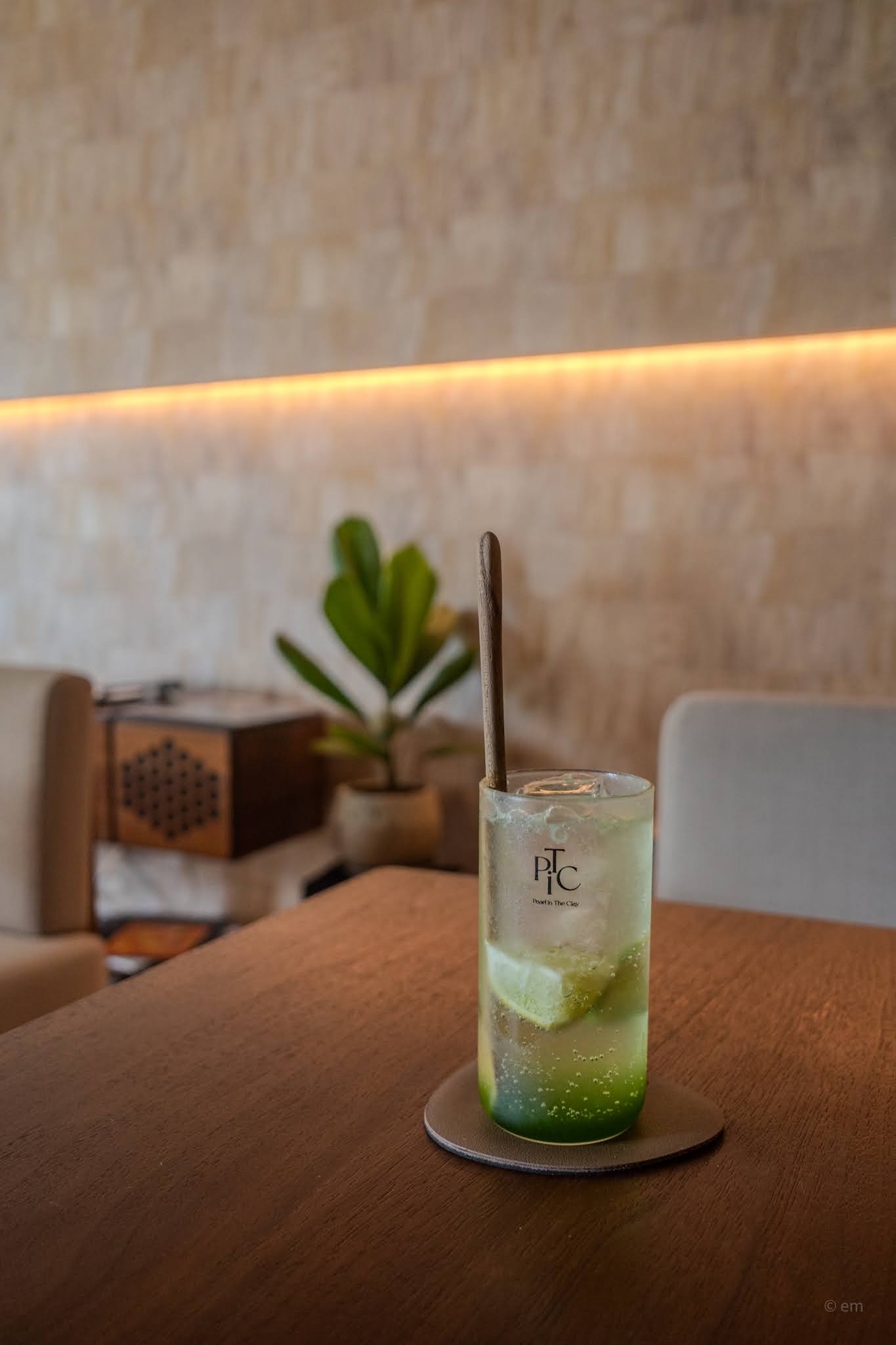
The concept is desert — not in any literal or thematic-park sense, but as a sensibility: an obsession with sand, stone, aridity, and quiet luxury. Everything here has been chosen with that logic in mind. The façade plaster. The colour palette inside. The plants — olive, cypress, ornamental grass, cactus, and towering kentia palms. Even the menu, which includes kunafa, the layered pastry dessert from the Levant, served alongside the usual café drinks. The name on the glass of your iced matcha reads Pearl In The Clay, and the building you’re sitting in is designed to make you believe it.
Entering
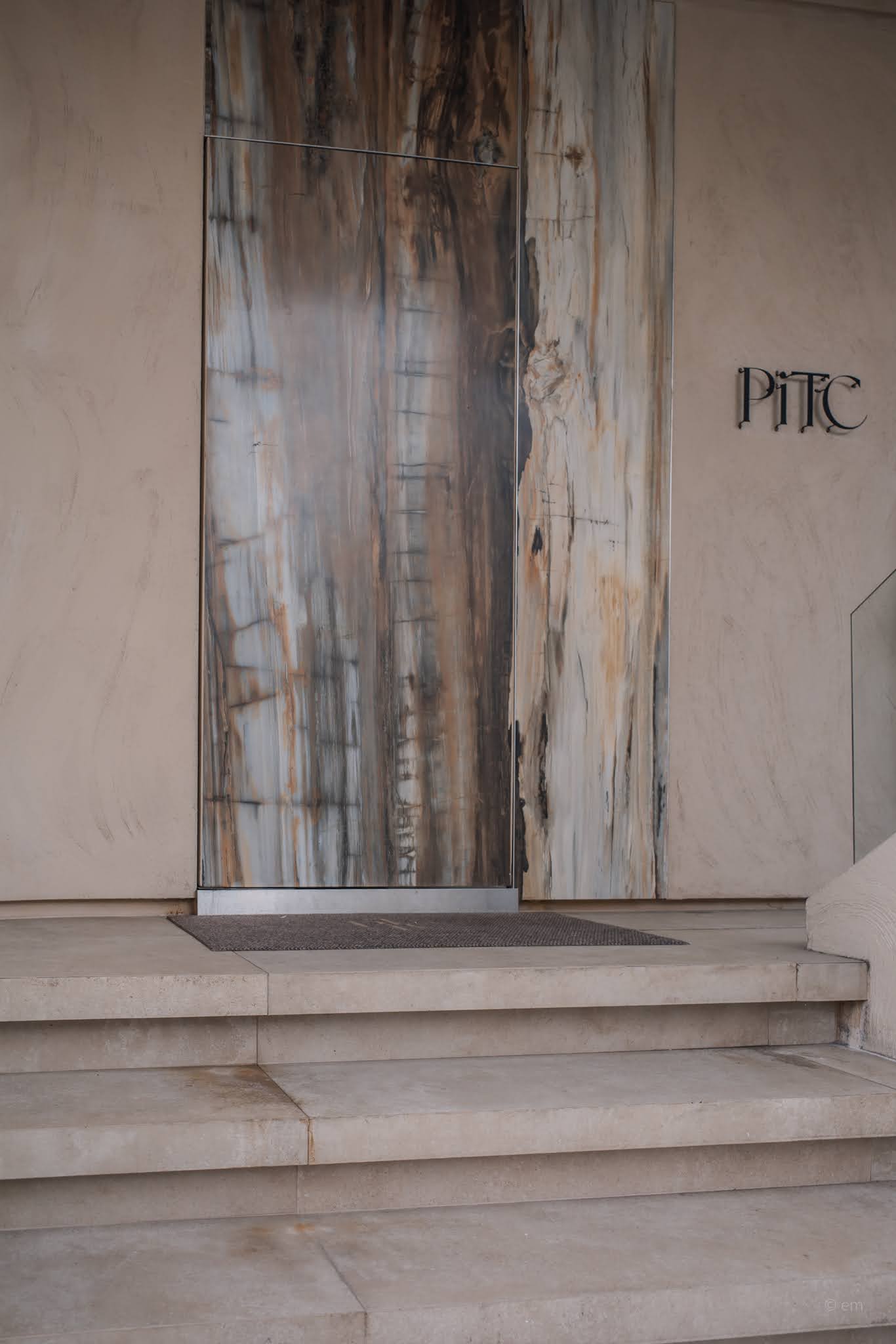
The entrance is a moment. Before you reach the door, a full-height panel of petrified wood — veined in grey, amber, and deep charcoal — stands framed against the beige wall. It is both the entrance feature and the door itself, a slab of geological time repurposed as threshold. The monogram beside it is cast in small dark letterforms: PiTC. The steps beneath are the same pale stone that surfaces every outdoor plane of the building.
The Ground Floor Garden
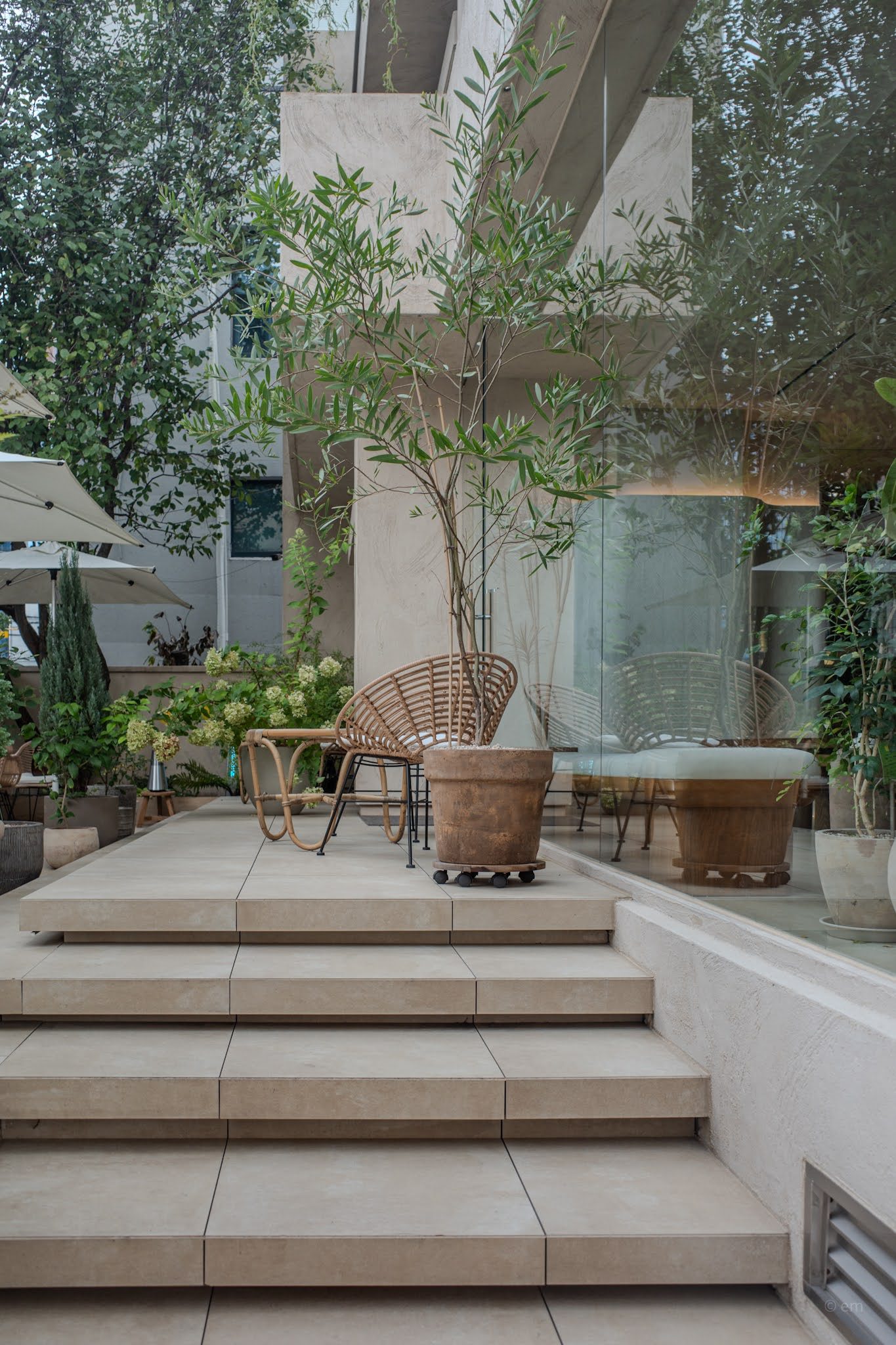
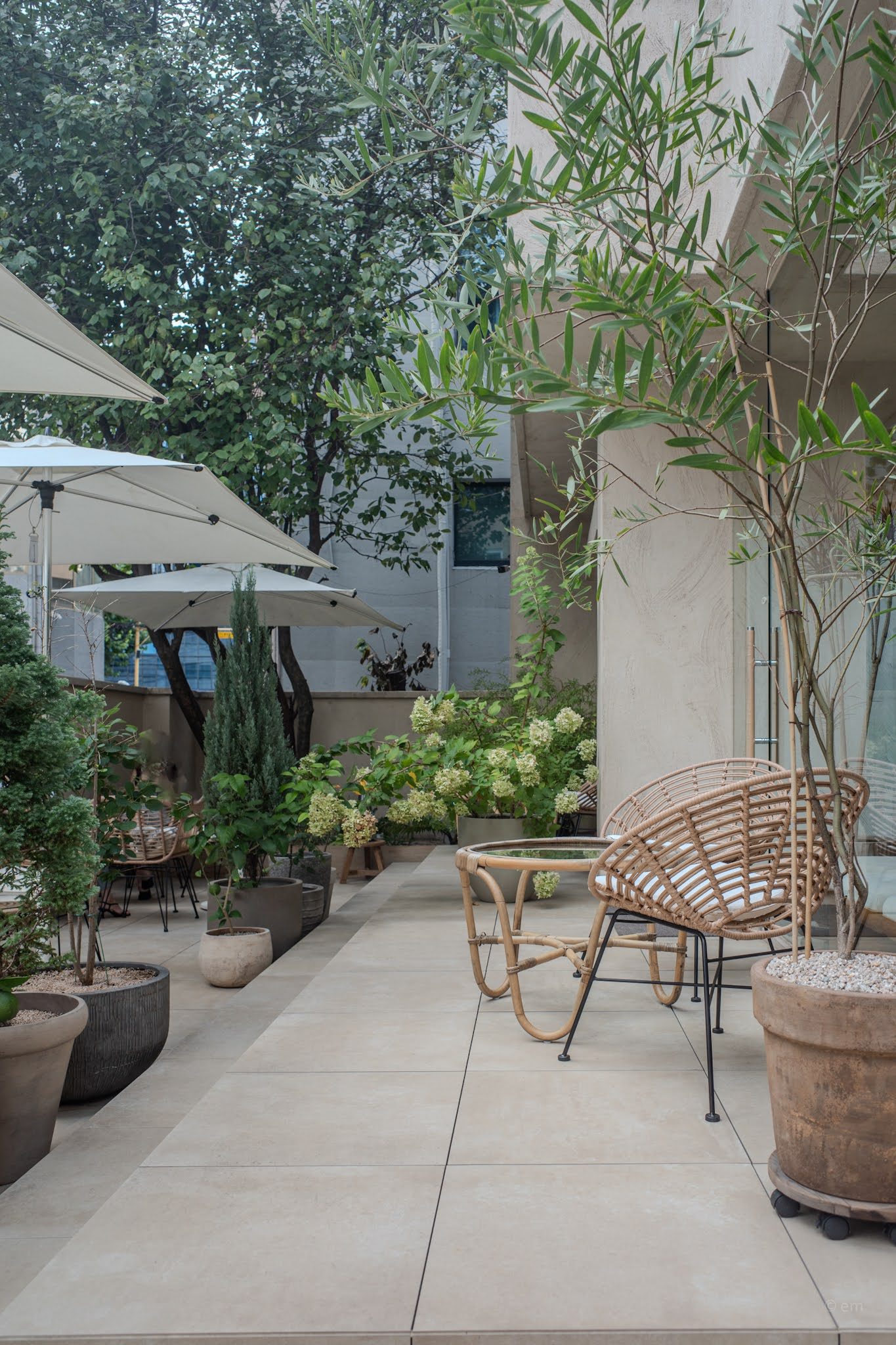
Step through and the building opens sideways before it opens up. A generous garden terrace runs along the front and side of the ground floor, planted densely with olive trees in terracotta urns, hydrangea, cypress, and sculptural bare-branched specimens whose gnarled forms seem deliberately chosen for their art-object quality. Rattan peacock chairs sit on tiered limestone platforms. The whole garden is partially sheltered under the building’s overhanging upper floors, simultaneously outdoors and protected — a covered courtyard in everything but name.
Inside
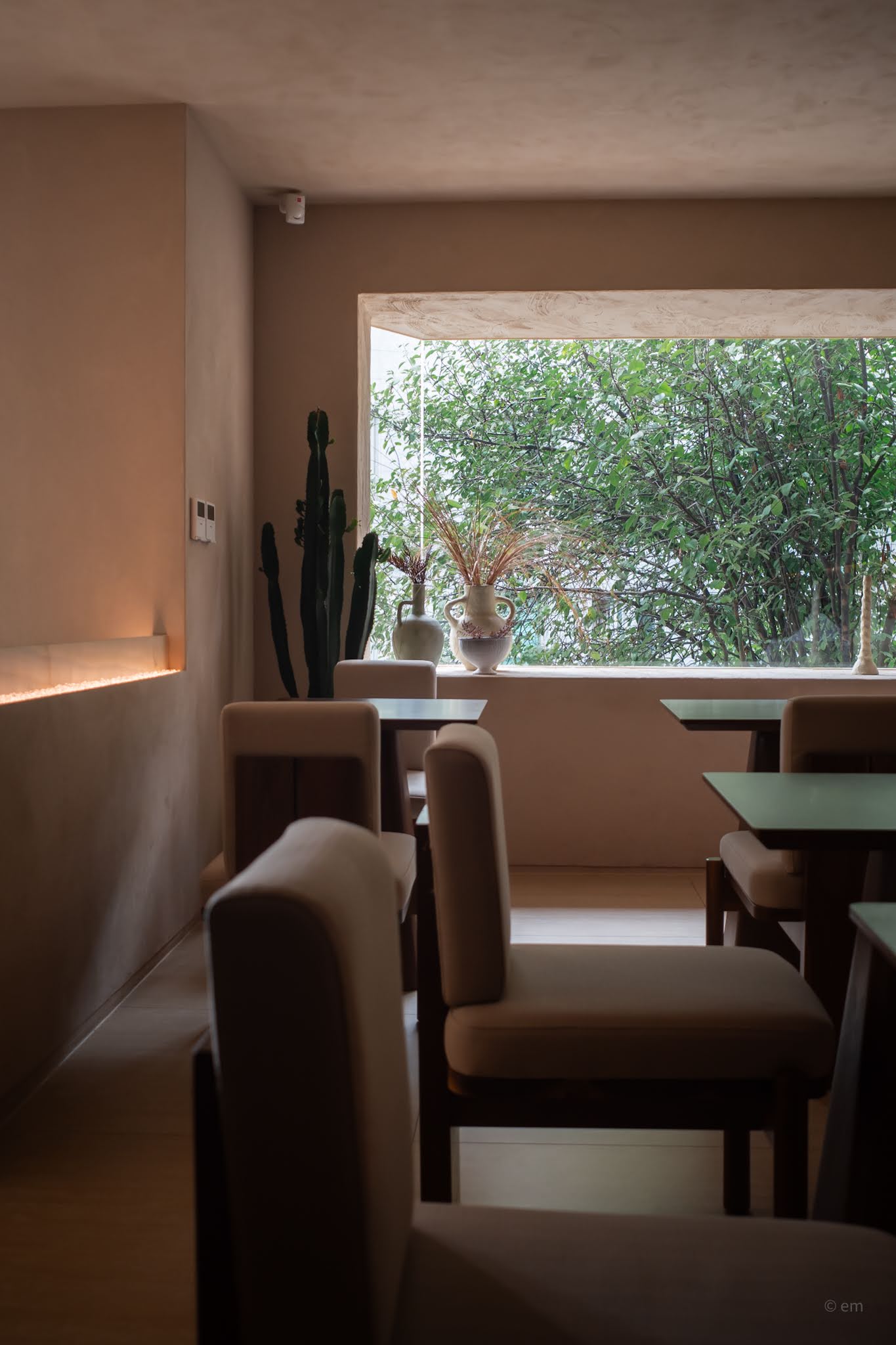
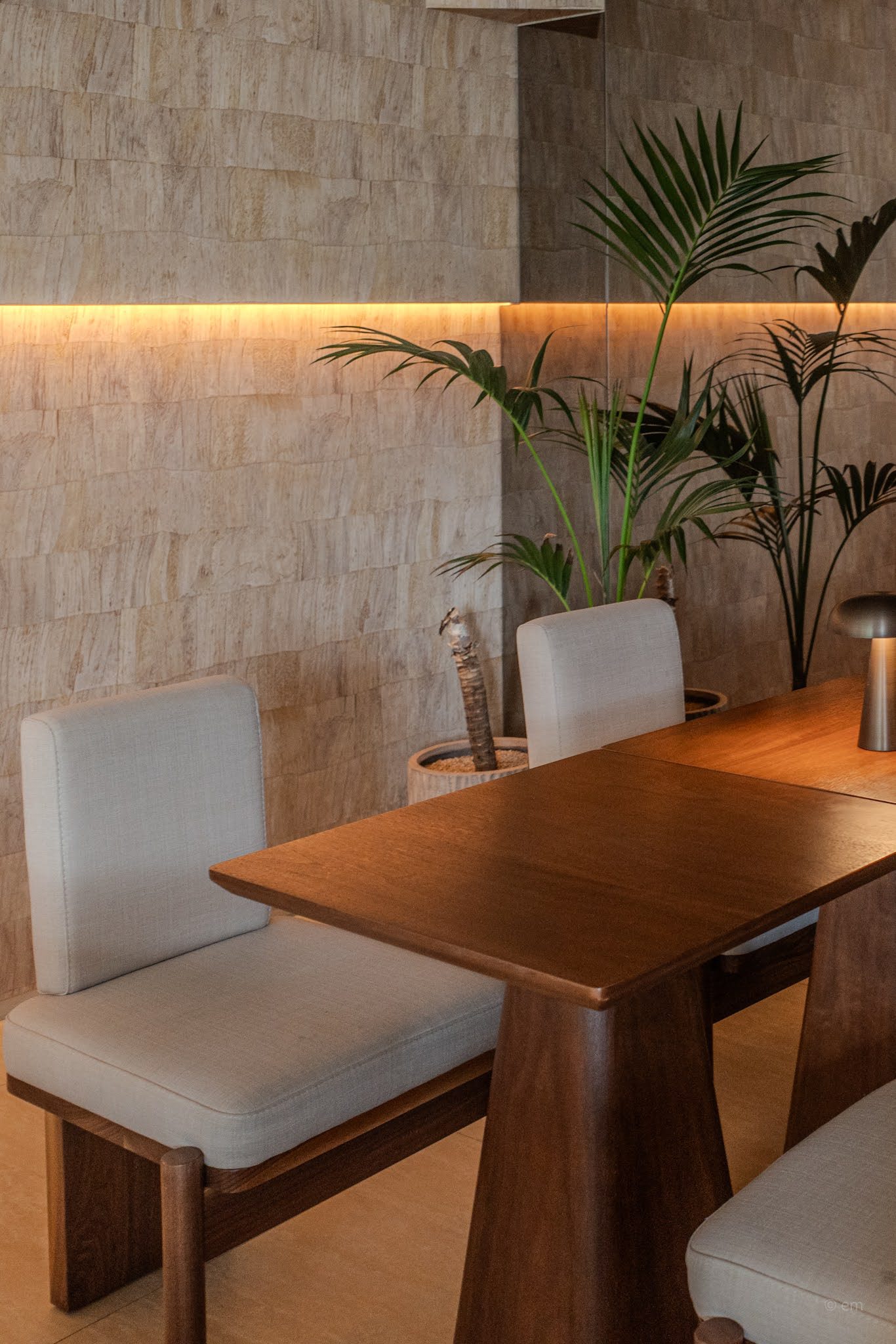
The interior splits across multiple levels, each with its own weight and warmth. The lower rooms are plaster-soft — warm beige walls, upholstered high-back chairs in the same tone, dark green marble-top tables, cacti growing tall in the corners. Strip lighting runs at baseboard level along one wall, casting amber upward. The windows are horizontal and low, framing the garden in landscape ratio like a painting that breathes.
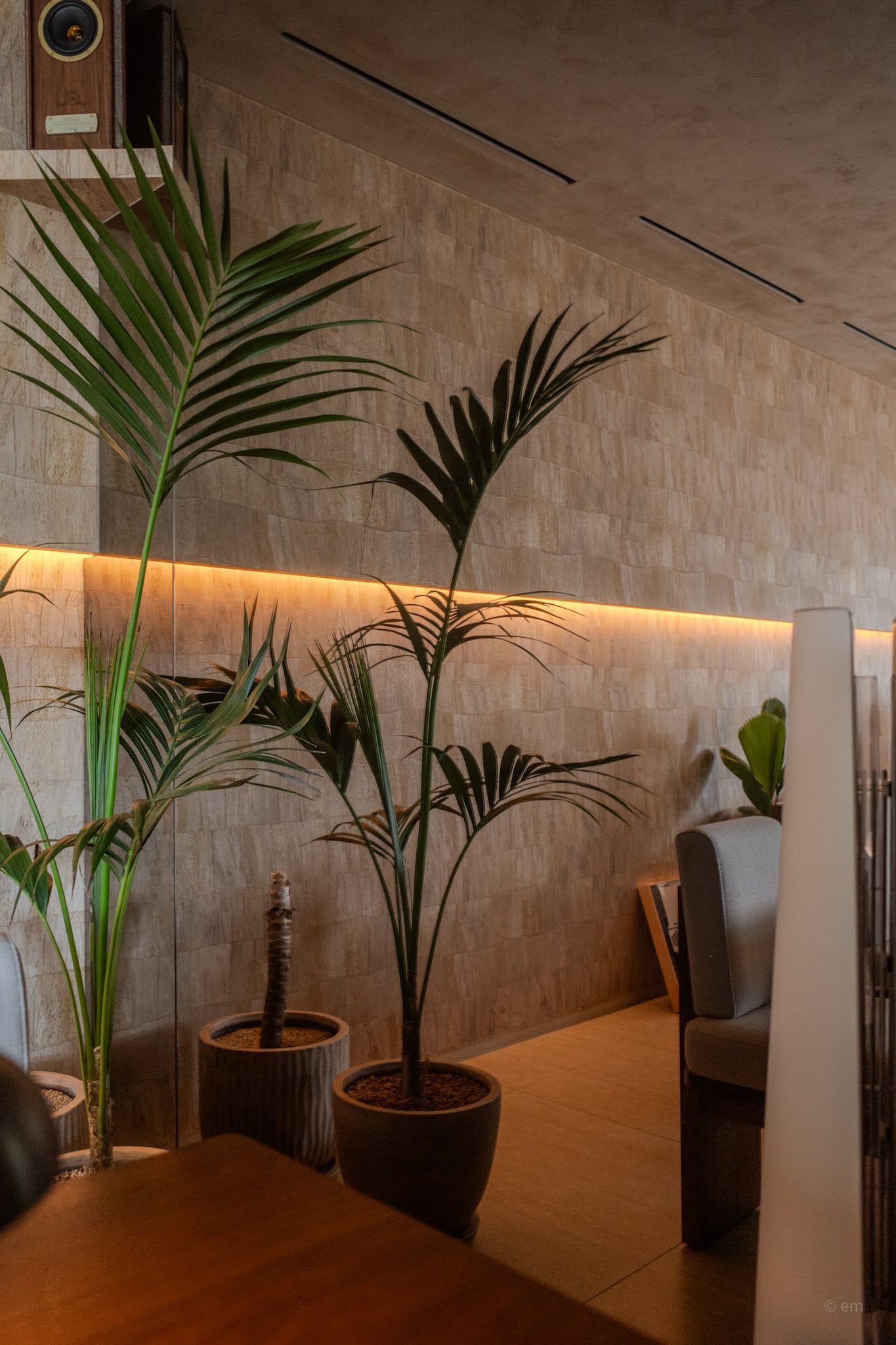
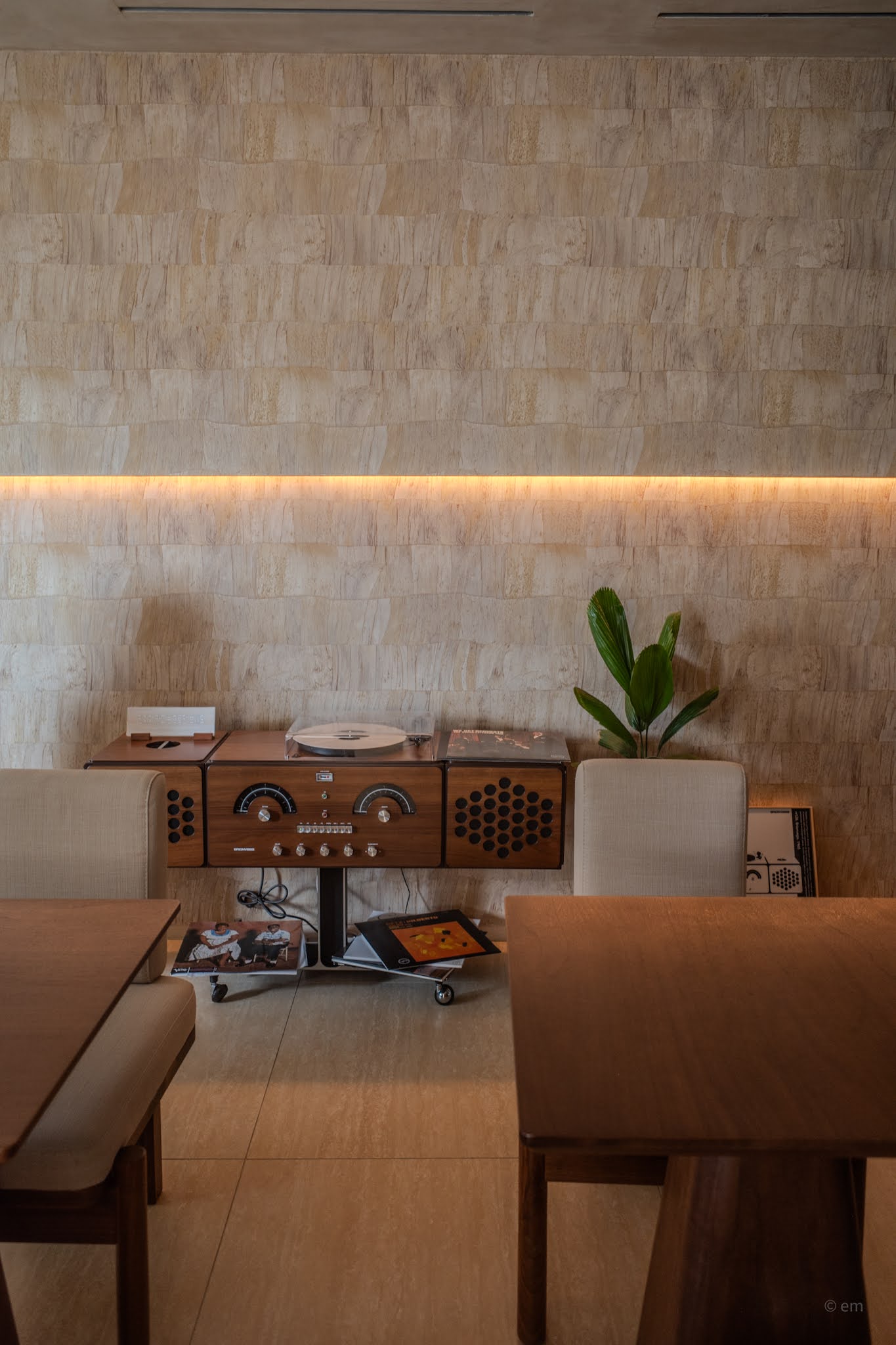
The main room is anchored by a floor-to-ceiling travertine tile wall, its texture rough-hewn and irregular, lit from below by continuous cove lighting that turns the whole surface gold. Against this wall, the room’s centrepiece: a Brionvega RR-126, the iconic 1965 Italian hi-fi console designed by Achille and Pier Giacomo Castiglioni — walnut cabinet, rotary dials, dot-matrix speaker grilles — sitting on its original rollable stand with records propped casually against its base. It plays. The furniture around it is walnut and linen, built low and generous. Kentia palms rise between the seating clusters.
The Rooftop
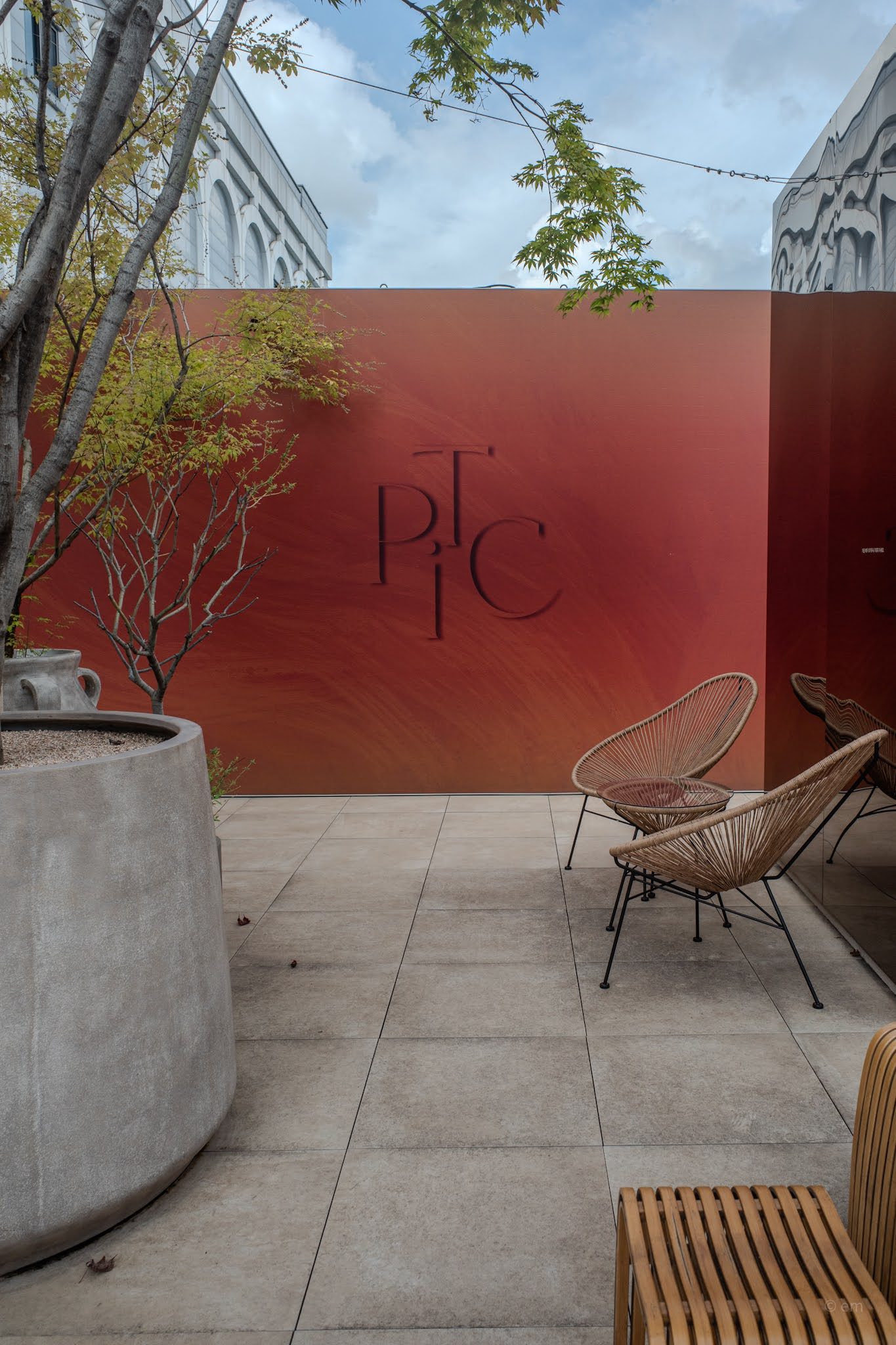
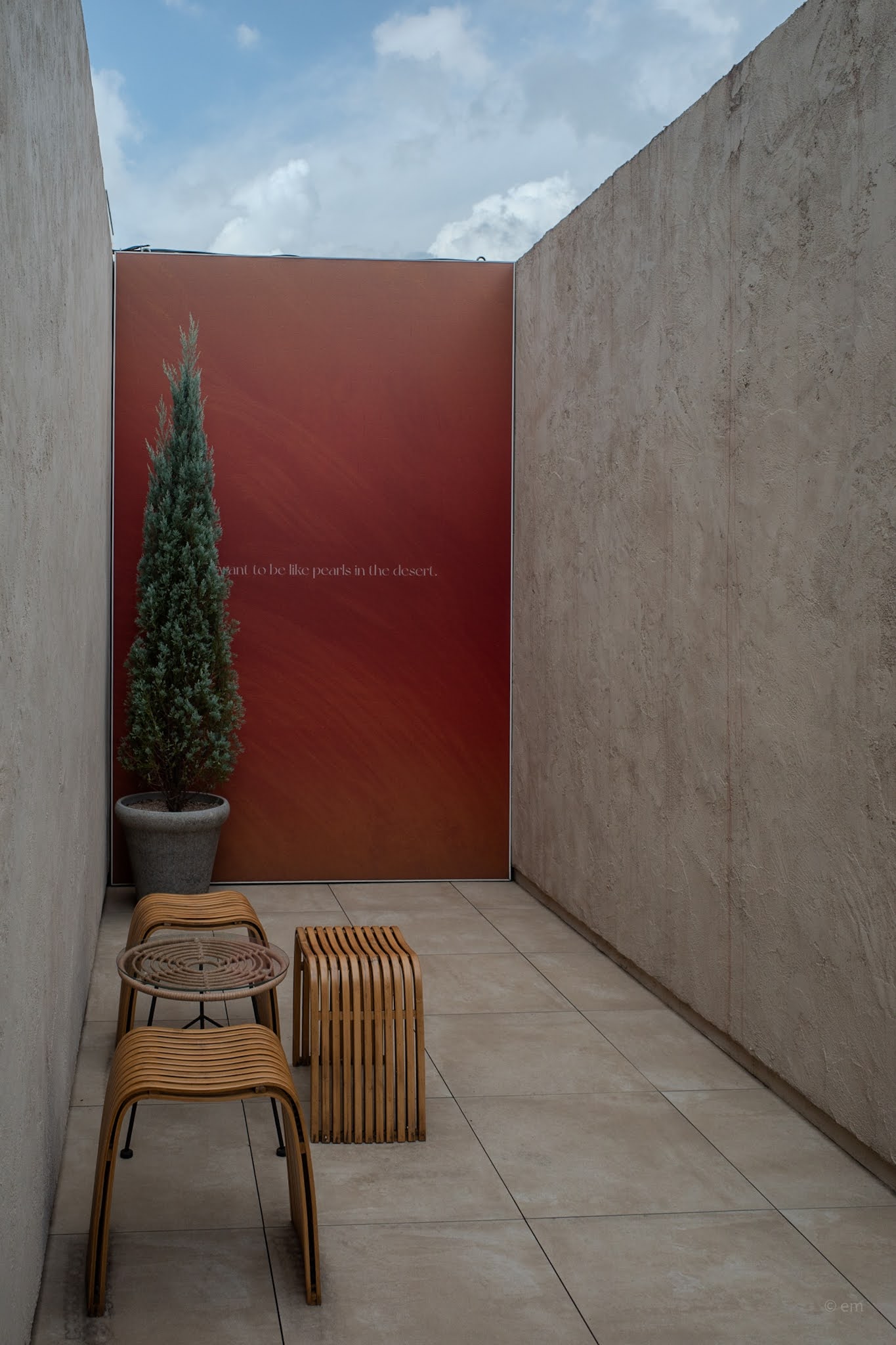
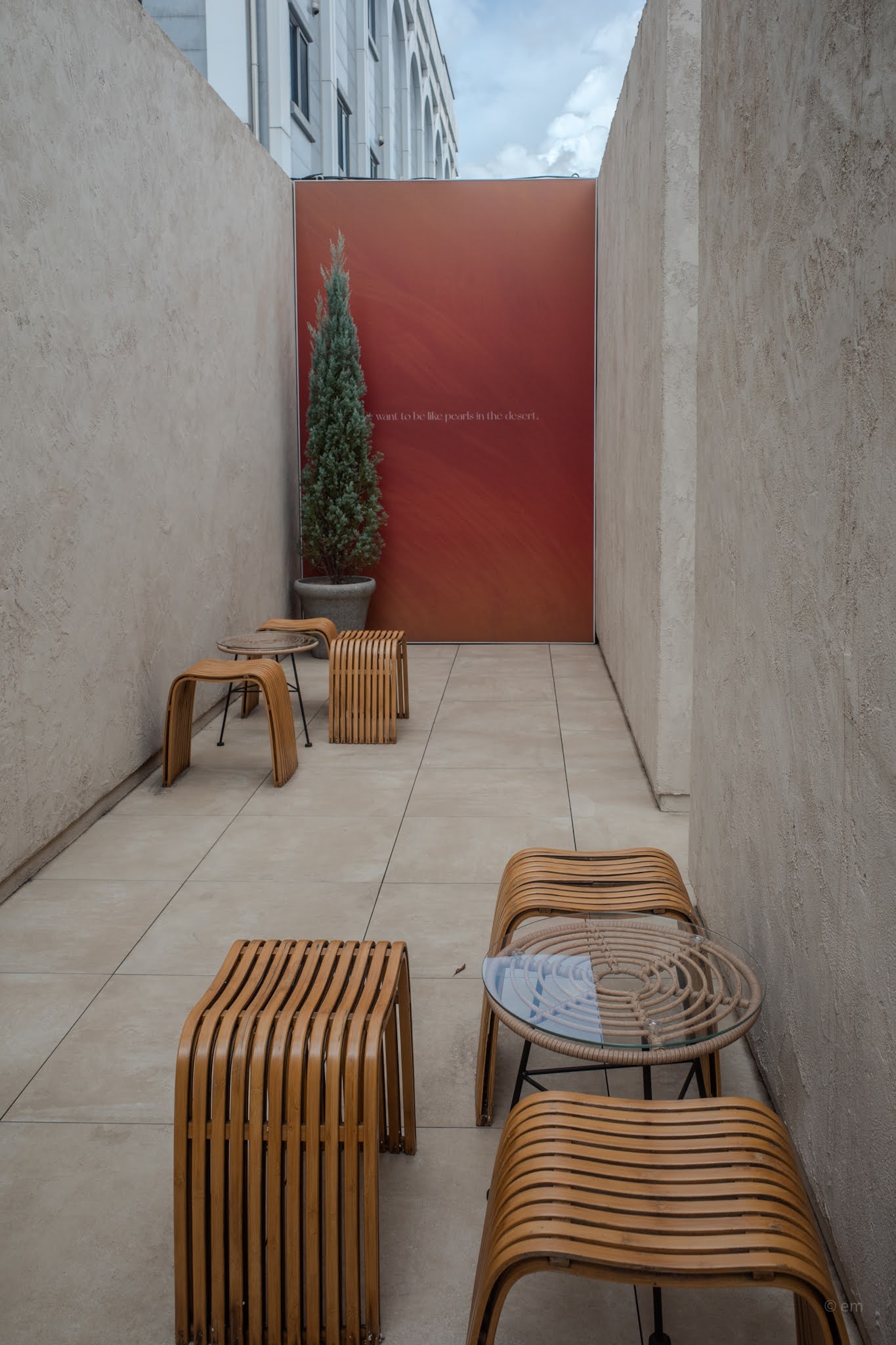
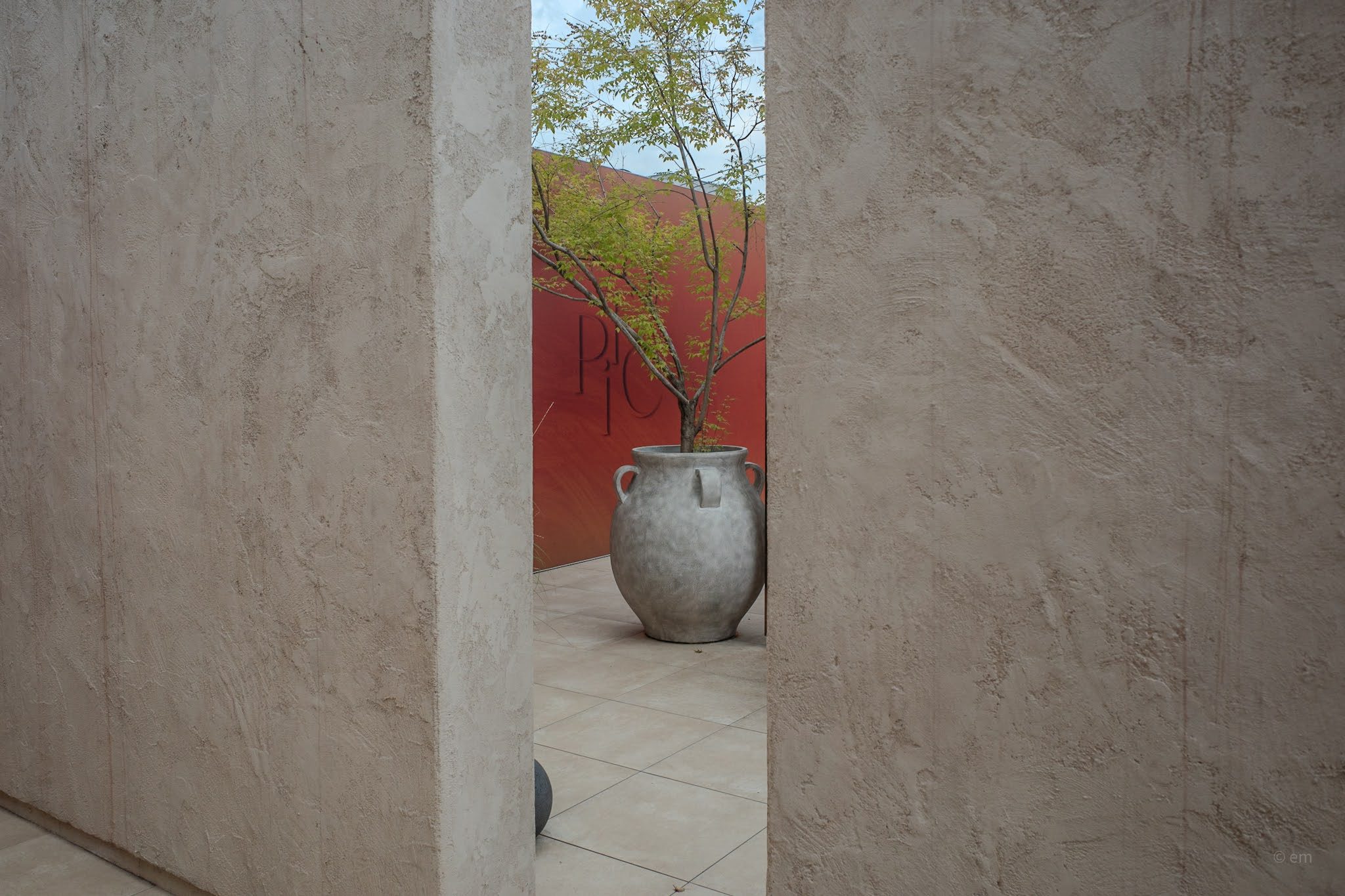
Stairs carry you up through the building and out onto a series of connected outdoor terraces. Here the concept becomes explicit. One level opens into a narrow canyon passage — raw plaster walls rising on either side, a sliver of sky above, bentwood stools arranged along the length — and at its far end, a burnt-sienna red wall closes the frame. The text printed on it, in small italic letters: we want to be like pearls in the desert. A lone cypress stands in a concrete planter in front of it.
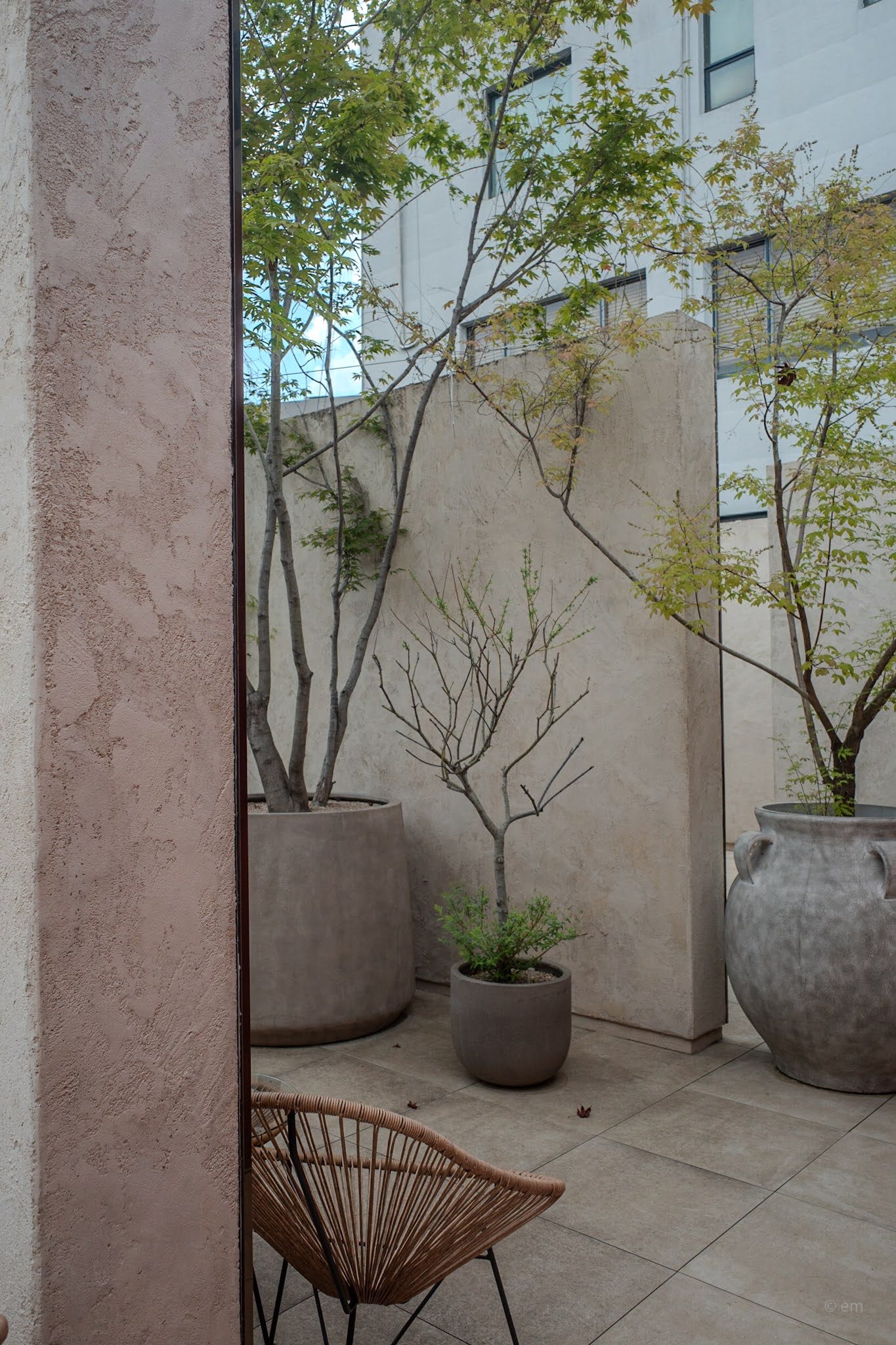
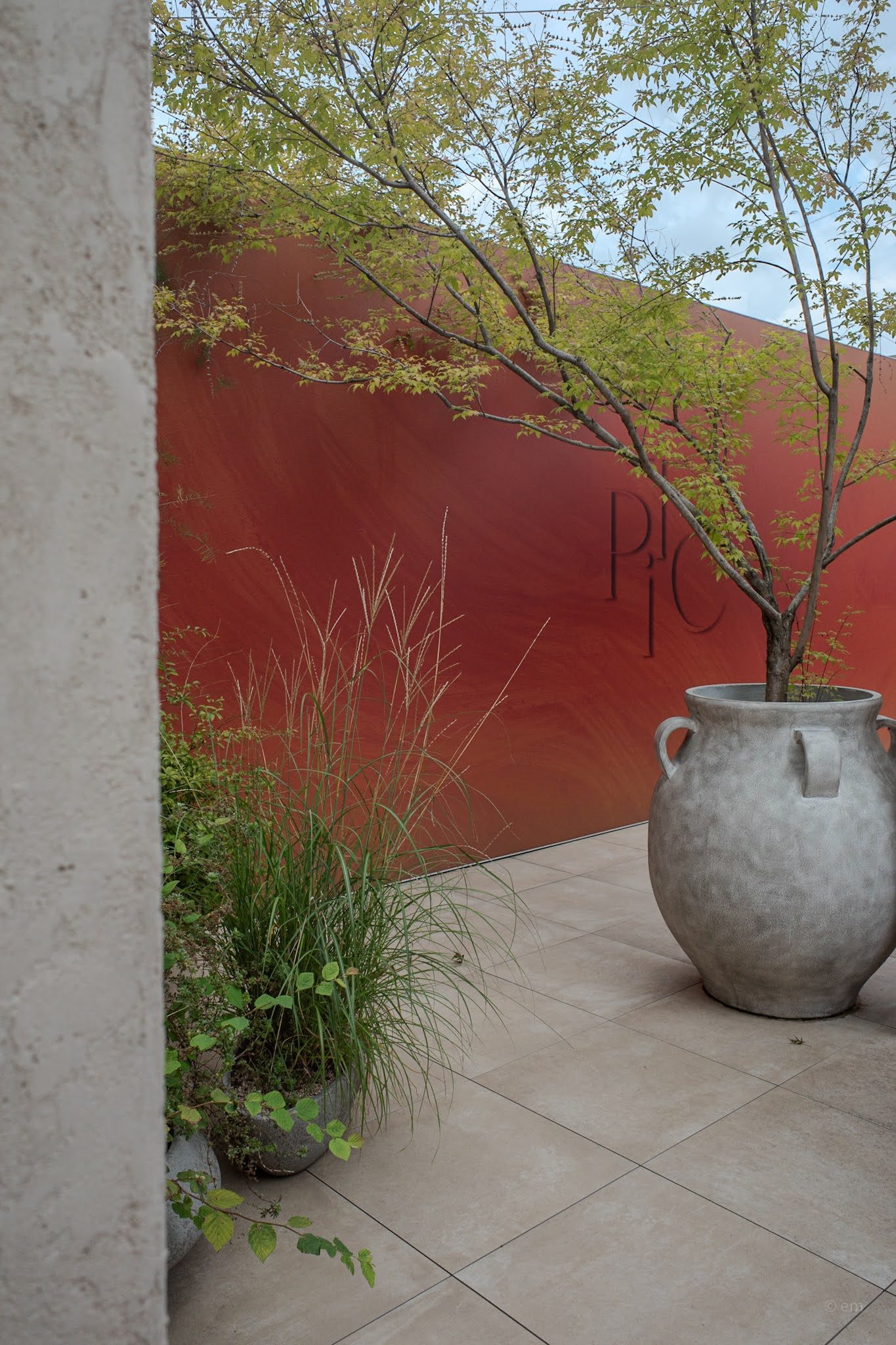
The wider rooftop terrace wraps around this passage, with Acapulco chairs, ceramic amphora-style planters holding bare-branched trees, and views back into the building’s architecture — its stacked planes, its glass railings, the arched windows of the building next door rising behind it. The contrast between the red wall and the sand-coloured everything else is the most legible piece of visual branding in the building.
The Drinks
Served in branded glassware — tall clear cylinders printed with the monogram and the café’s full name — the drinks lean botanical and refreshing. The iced matcha with soda was a clean, layered build, bright green settling through carbonation, served with a turned wooden stirrer. Desserts include kunafa in plain and pistachio, alongside basque cheesecake and seasonal cake options.
PITC (Pearl In The Clay)
Address: 13 Seongsanno 11-gil, Seongsan-dong, Mapo-gu, Seoul
Hours: Daily 11:00–21:00 (last order 20:00) · Closed 4th Monday of each month
Instagram: @pitc_official
No parking · No kids · No pets (takeout only)
The desert, as it turns out, is a 12-minute walk from Hongdae station.