Some doors don’t belong where you find them. That’s what makes them worth remembering.
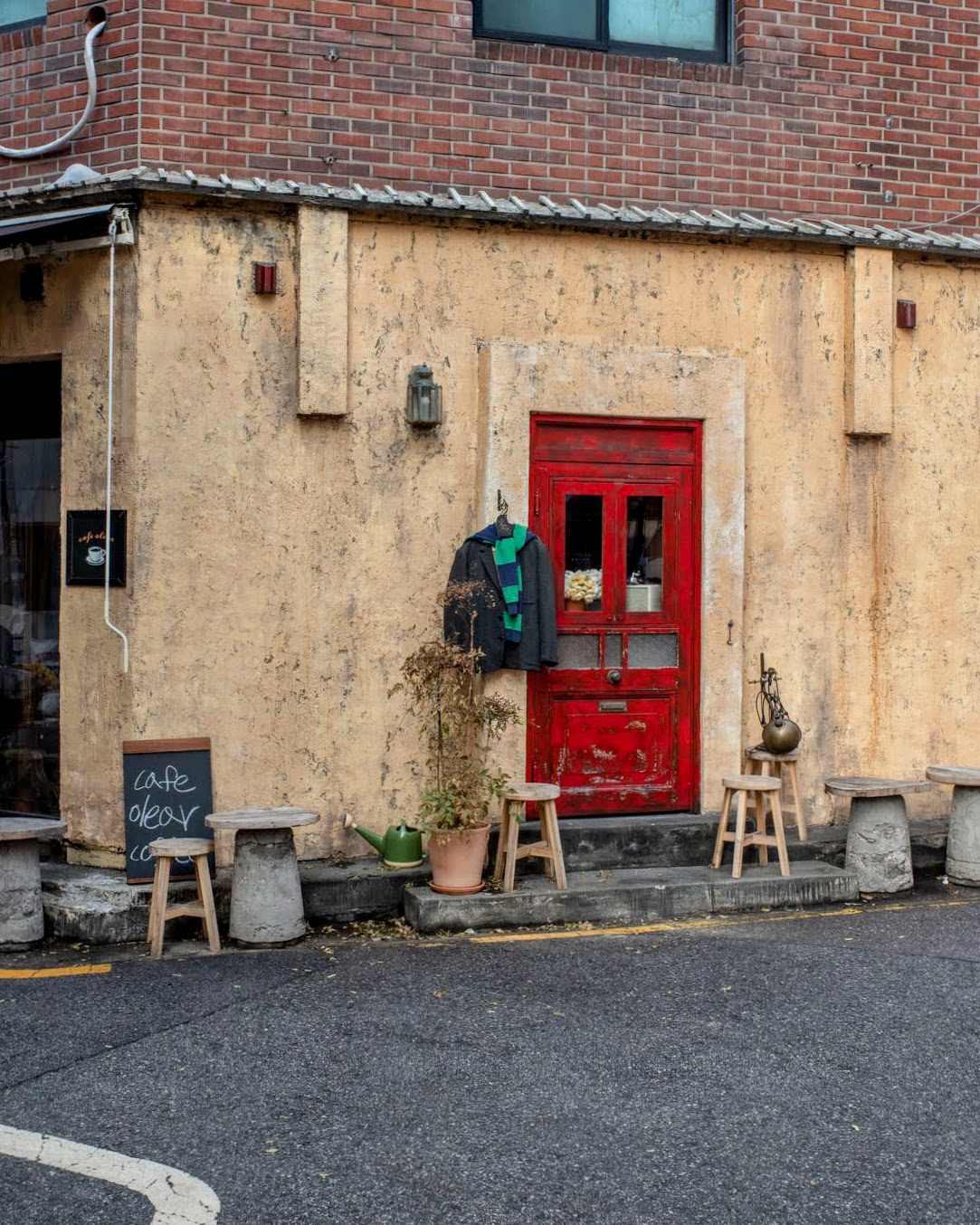
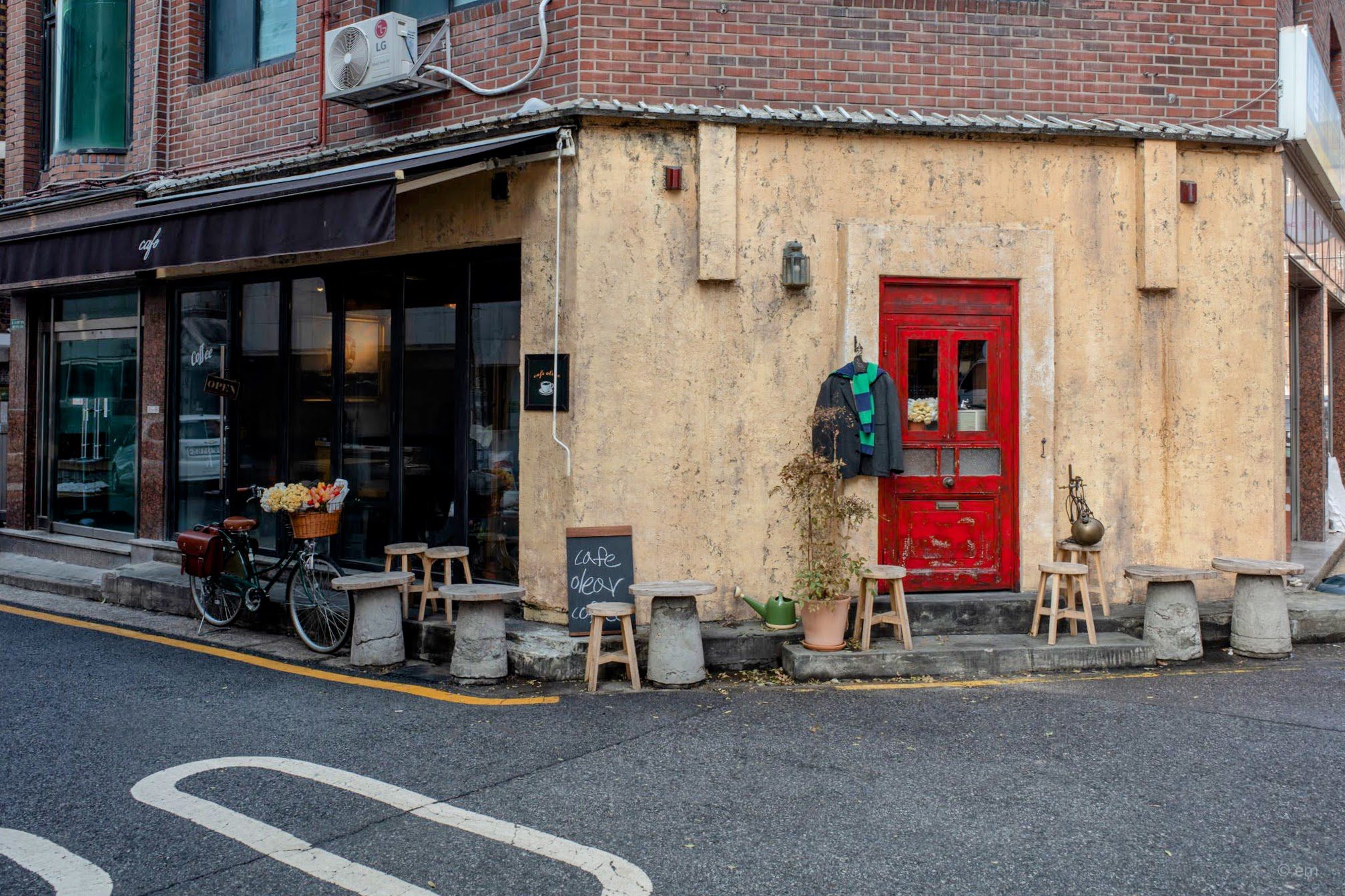
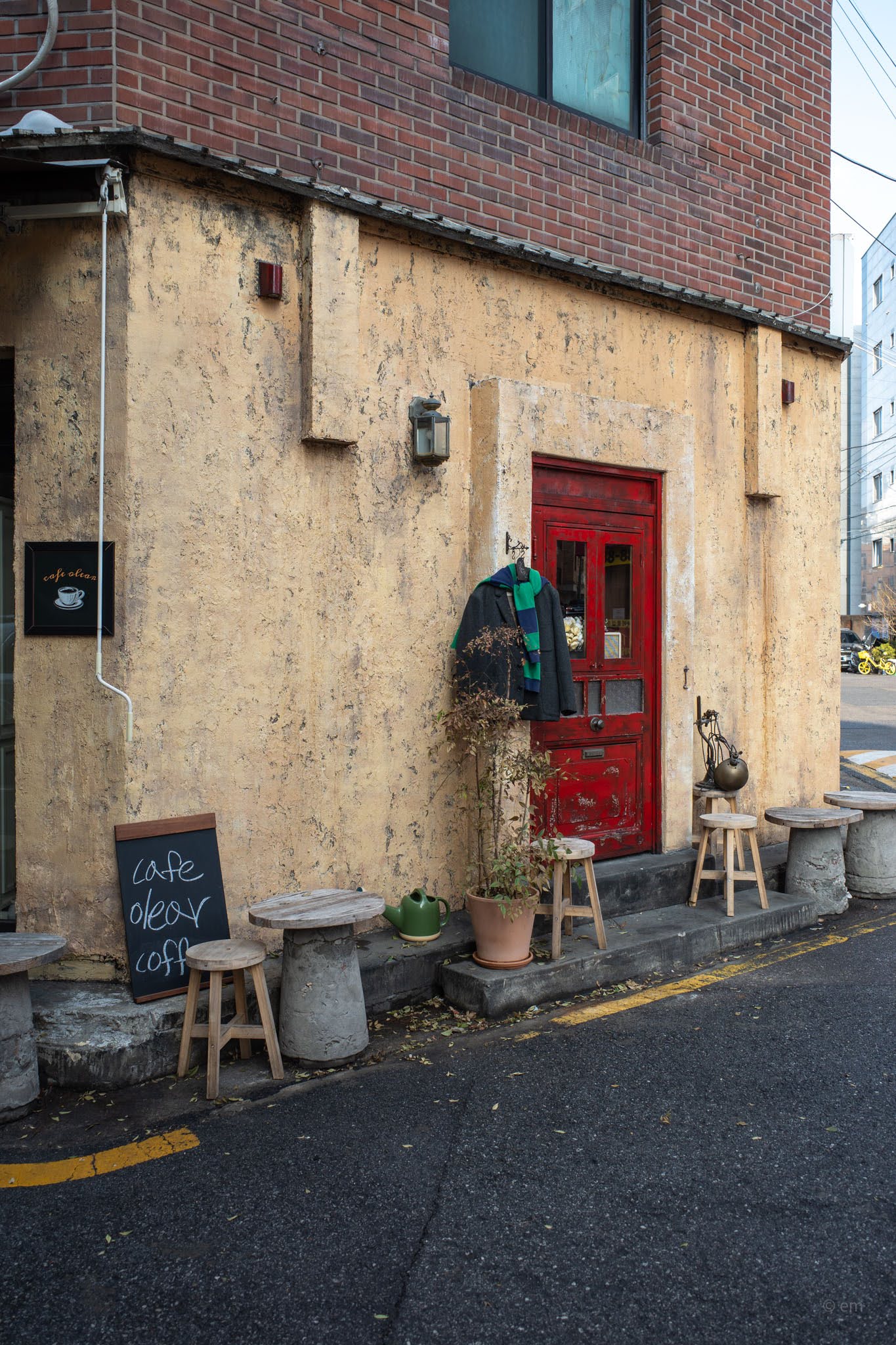
In Gangdong-gu — a district better known for apartment complexes and commuter practicality than for café culture — there was once a building that looked as though it had been dropped in from somewhere further away. The walls were the color of dry earth, the plaster worn in long uneven patches that read less like neglect than like weather and time. A lantern hung above the entrance. The door was red: deeply, unmistakably red, the lacquer cracked and peeling in a way that made it look like a prop rescued from a European film set. This was Cafe Olear.
The Façade That Stopped You
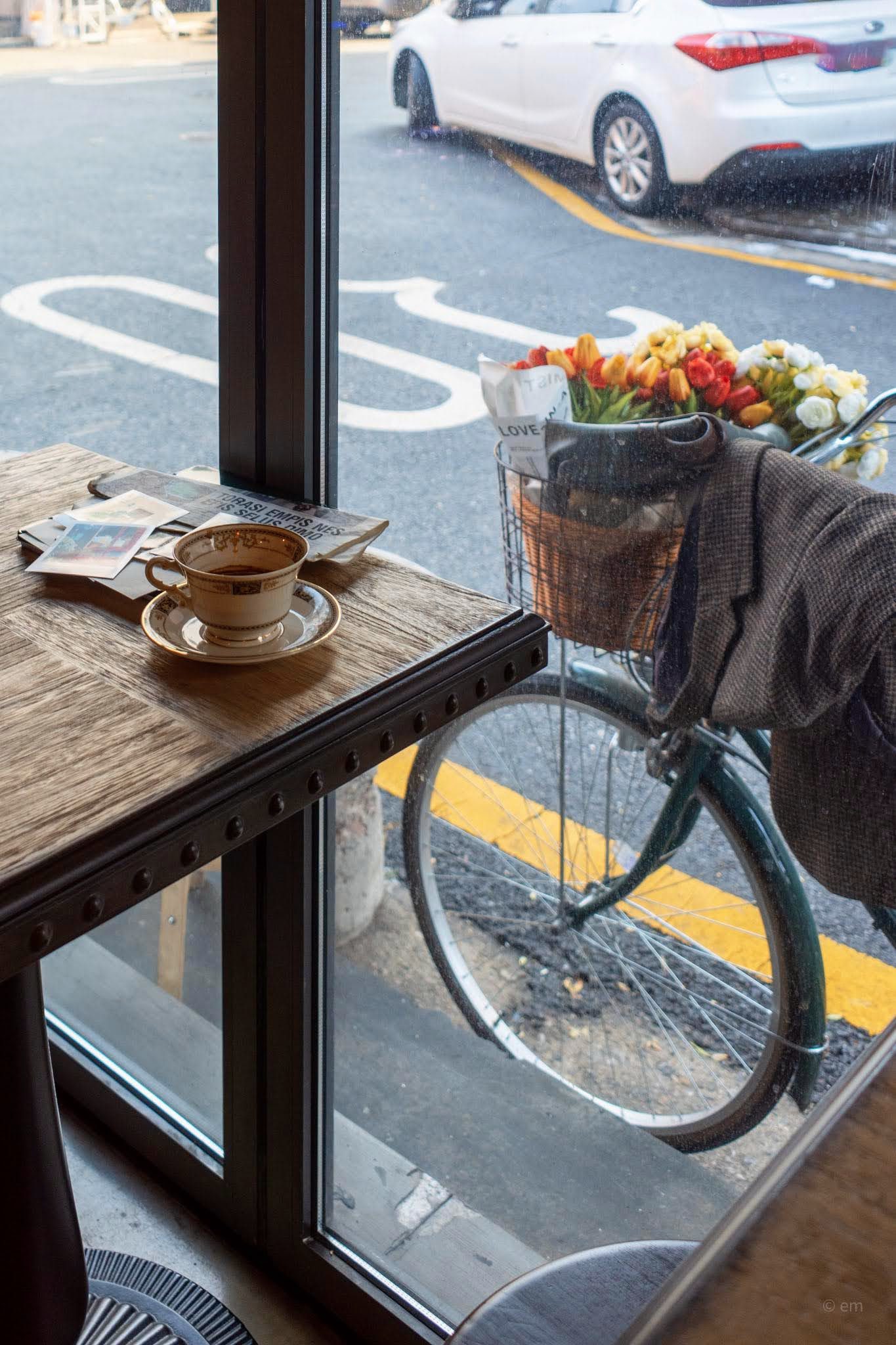
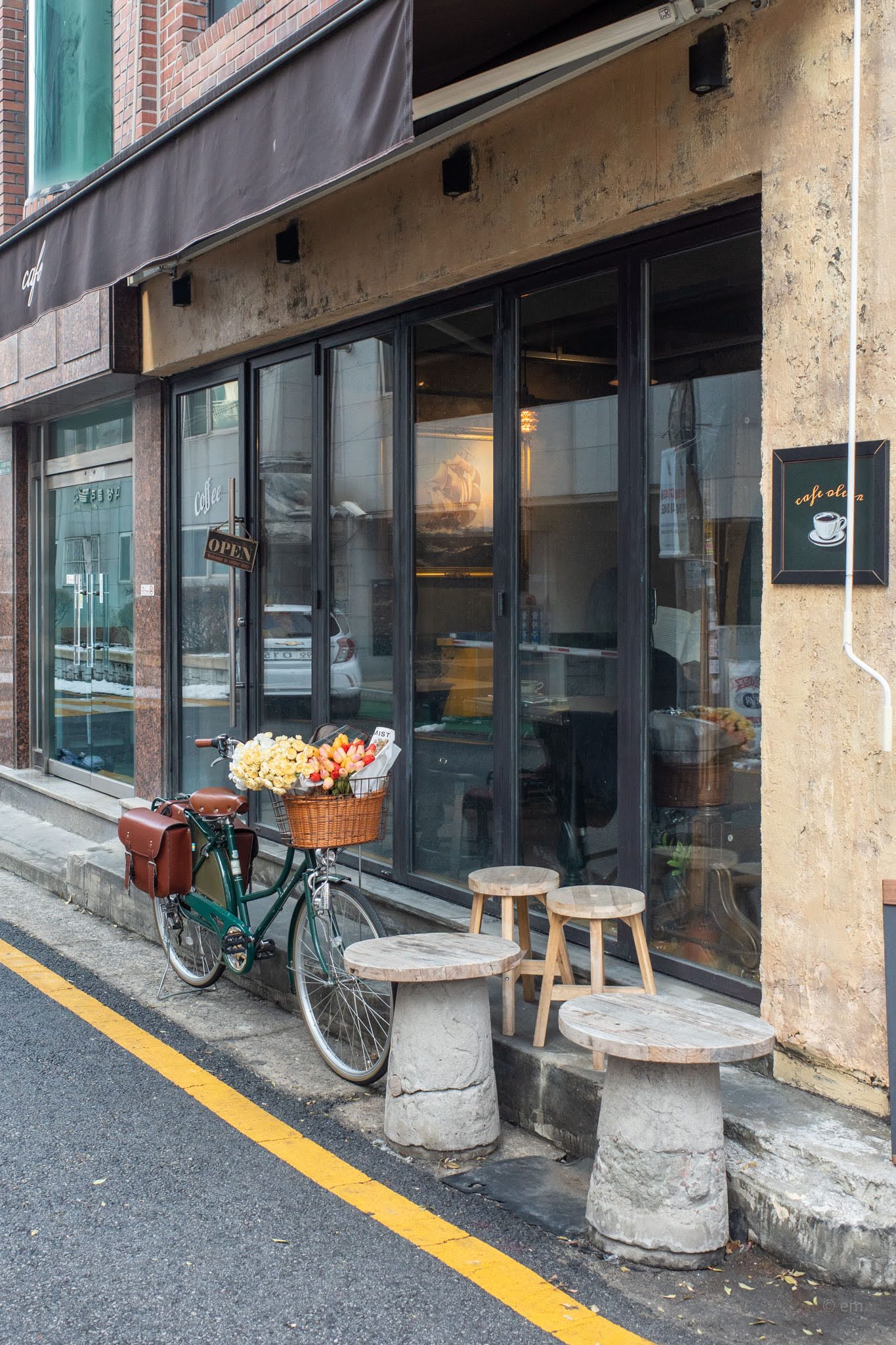
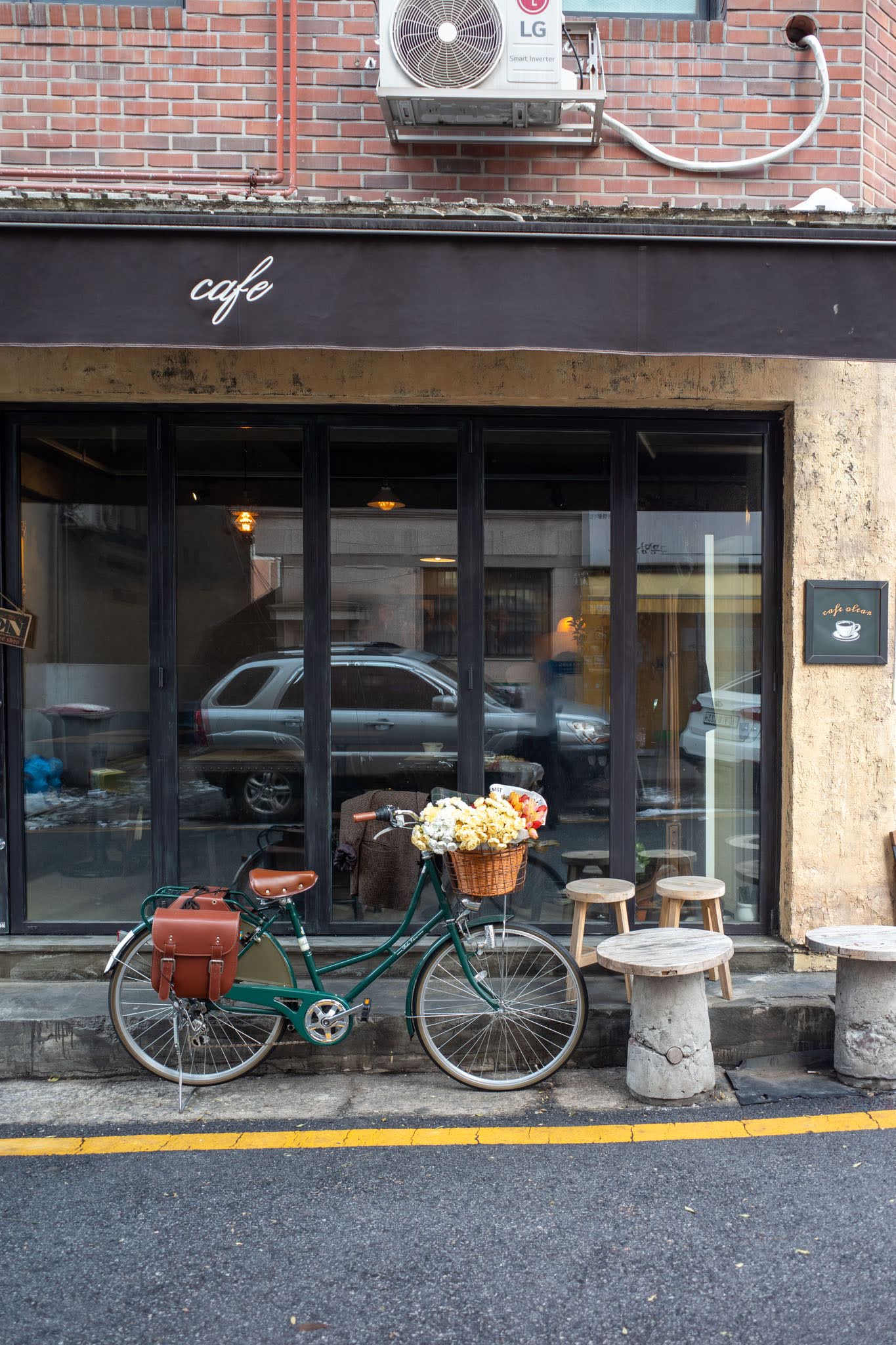
It wasn’t subtle. At street level, the building occupied a corner, its chalky stucco exterior completely out of register with the neighborhood around it — the kind of thing that made you slow down mid-step and check whether you were still in Seoul. Outside, concrete pedestal tables sat low on the pavement beside wooden stools, and a dark chalkboard announced the name in handwritten chalk. A green vintage bicycle leaned against the storefront, its wicker basket spilling flowers, a tweed jacket draped over the rear rack. On the side wall, the red door — flanked by a potted plant and a small coat hook doing double duty — made the whole corner feel like a stage set waiting for its actors.
For a lot of visitors, the exterior was the reason they came. It photographed beautifully: the ochre wall against the red door, the lantern, the mismatched street furniture. Social media did what it does.
What Was Actually Inside
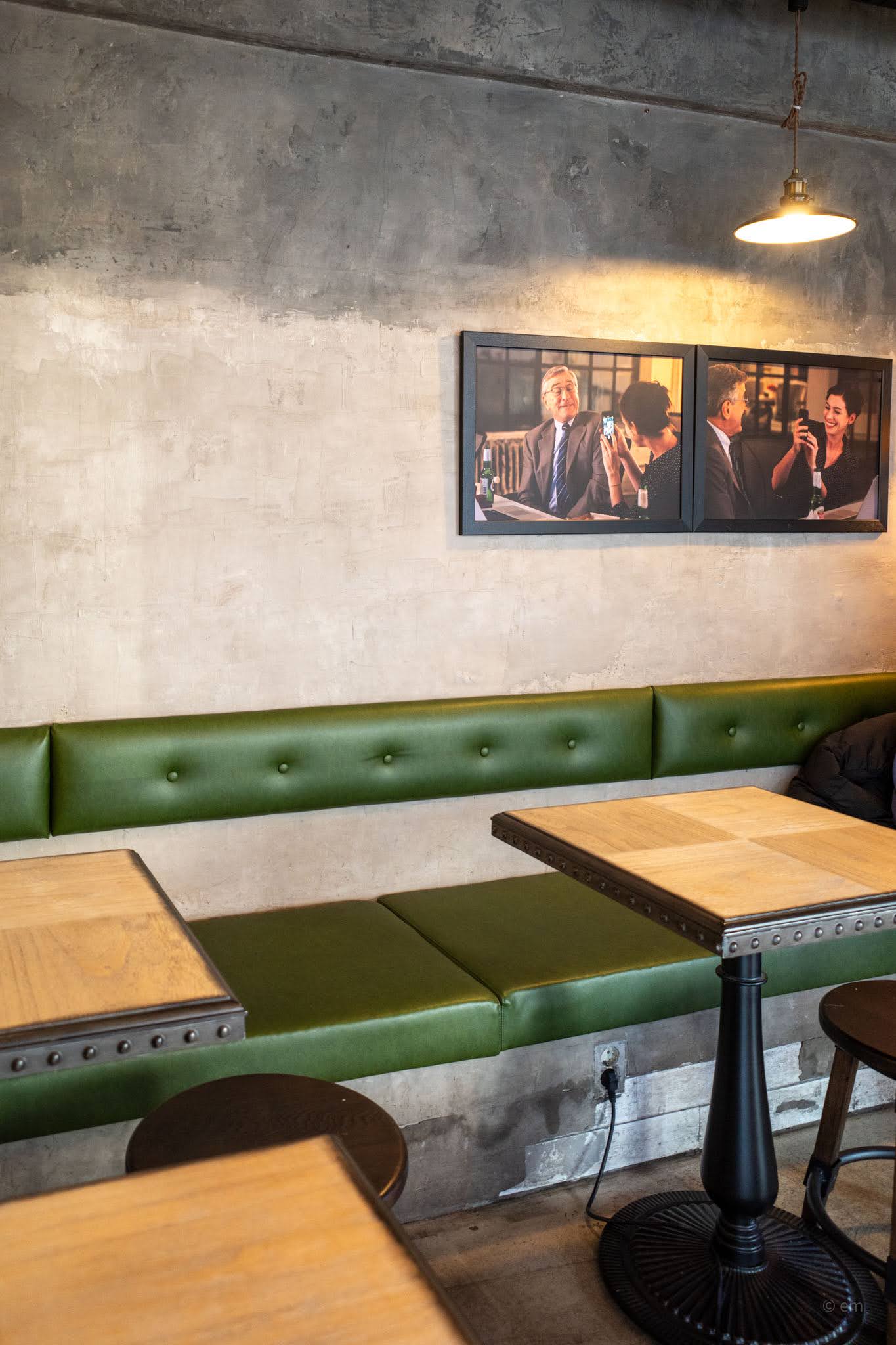
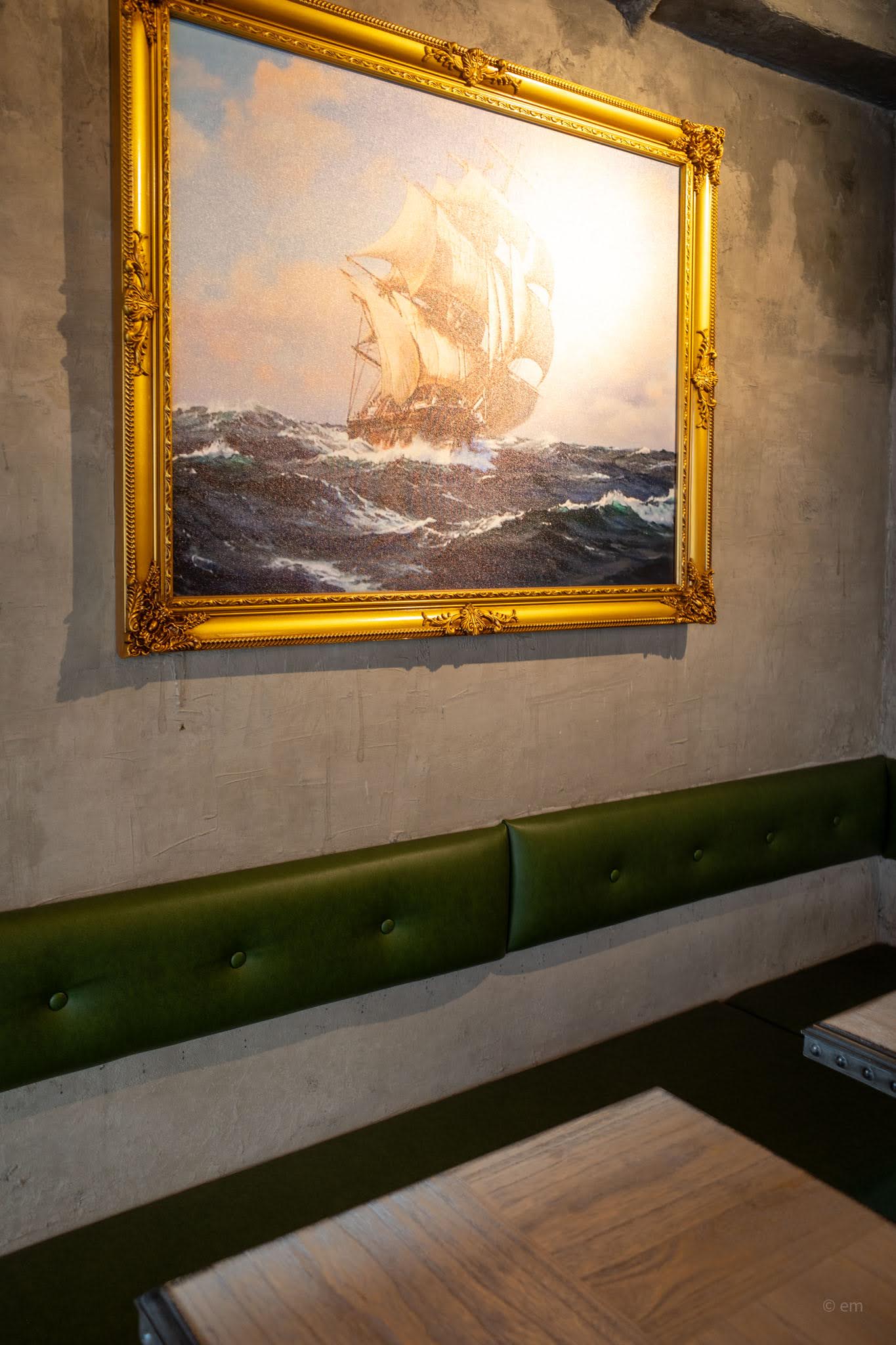
What was surprising — and what those photographs couldn’t quite capture — was how quiet it was in there. Cafe Olear didn’t perform for its audience. The interior was modest and warm, the walls continuing the same roughcast concrete and plaster finish as outside, worn to a grey-beige that felt like the inside of an old coastal building. A live-edge wooden counter ran along one side, above it a copper pipe rack hung with crystal glasses and clusters of dried flowers. A gold-framed painting of a tall ship battling heavy seas filled one wall above the green leather banquette — the kind of oil reproduction that belongs in a library or a colonial hotel, wildly incongruous, entirely right. Photographs on the opposite wall showed strangers at café tables, the everyday intimacy of public spaces captured and frozen. In a corner near the glass front, a sunflower painting leaned against a stool beside a stack of books. Near the door, an ornate dark wood mirror reflected the street outside.
The owner was unhurried and approachable in the way that owners of genuinely personal places tend to be — not performing hospitality, just present. The music was good. The con panna was the thing people came back for.
A Neighborhood Café That Looked Like an Import
The gap between the exterior and the experience was part of what made Olear interesting. It announced itself dramatically and then delivered something smaller and more considered. It wasn’t trying to be a destination in the conventional sense — no long queues, no hour-long waits, no coordinated aesthetic content strategy. It was a corner café in Gangdong that happened to have an Iberian fever dream of a façade and a gold-framed tall ship above the banquettes, and somehow that was enough.
Places like this exist in the margins of every city, a little too idiosyncratic to scale, a little too specific to last. Cafe Olear is gone now, the red door presumably repainted or removed, the chalky corner returned to ordinary function. What remains is the photograph — always the photograph — of a door that didn’t belong there and a lantern that kept the light on anyway.
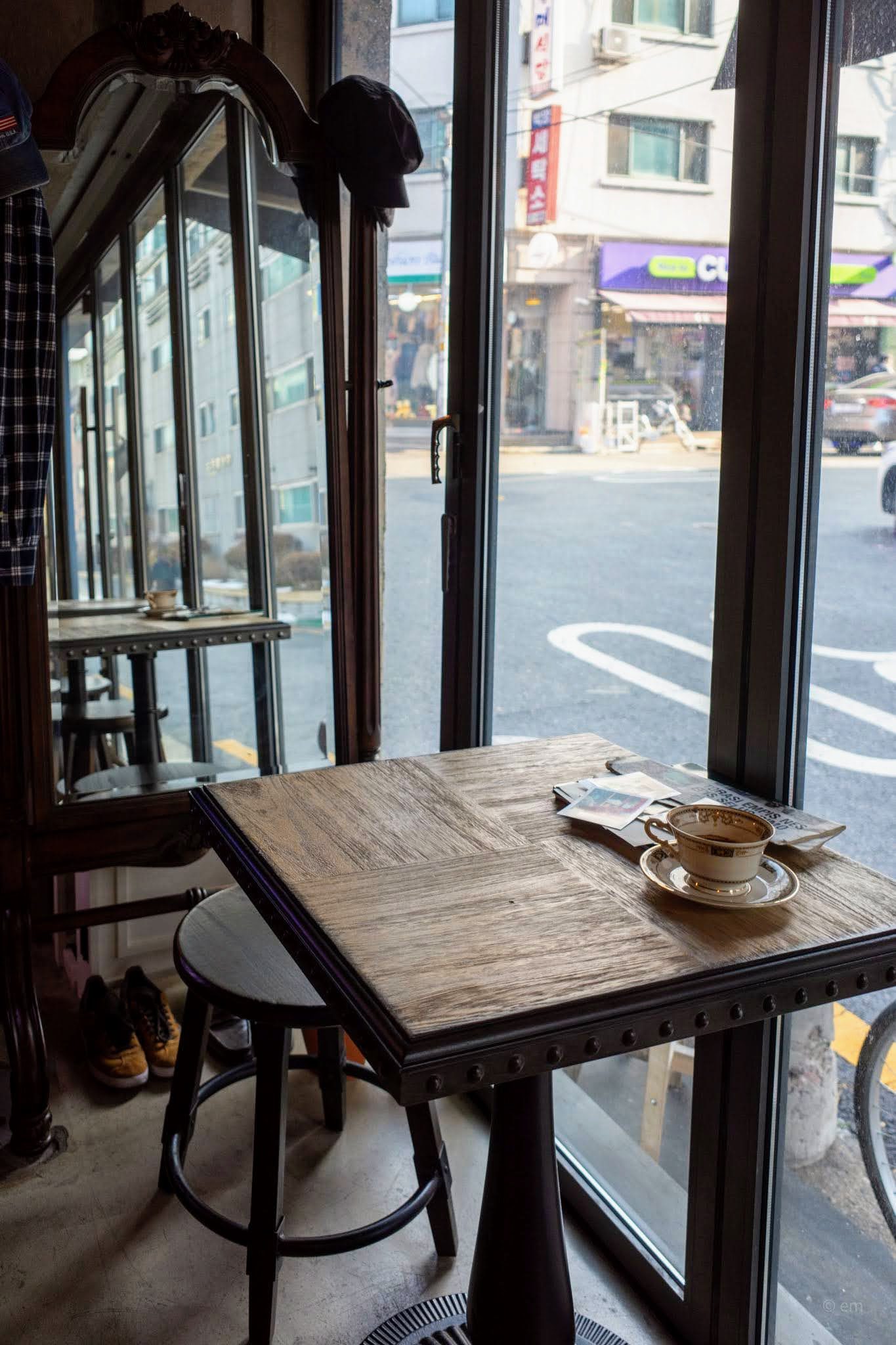
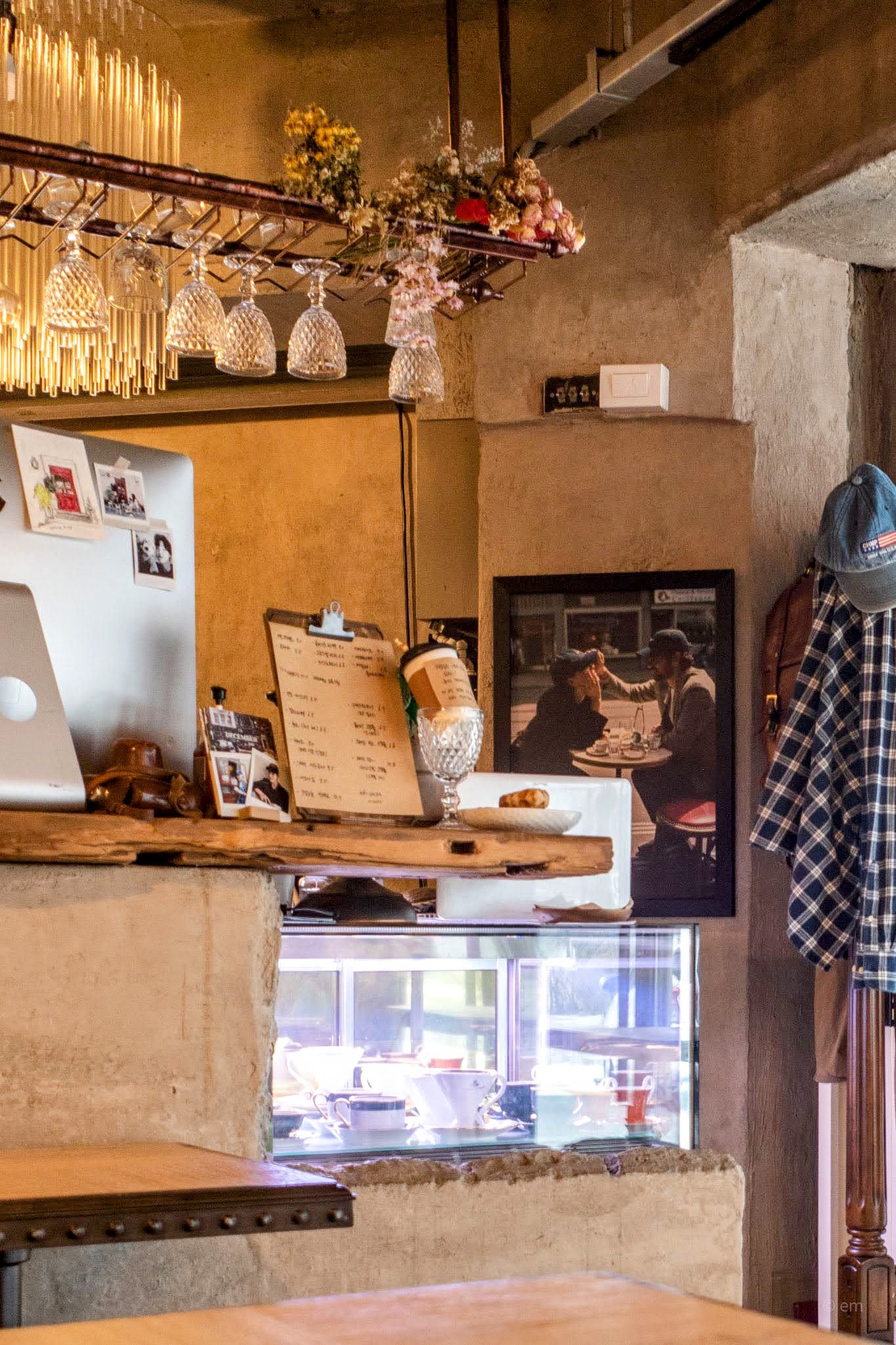
Cafe Olear was located at 24 Cheonjung-ro 50-gil, Gangdong-gu, Seoul, near Gildong Station.
Instagram: @cafeolear (inactive). Now closed.
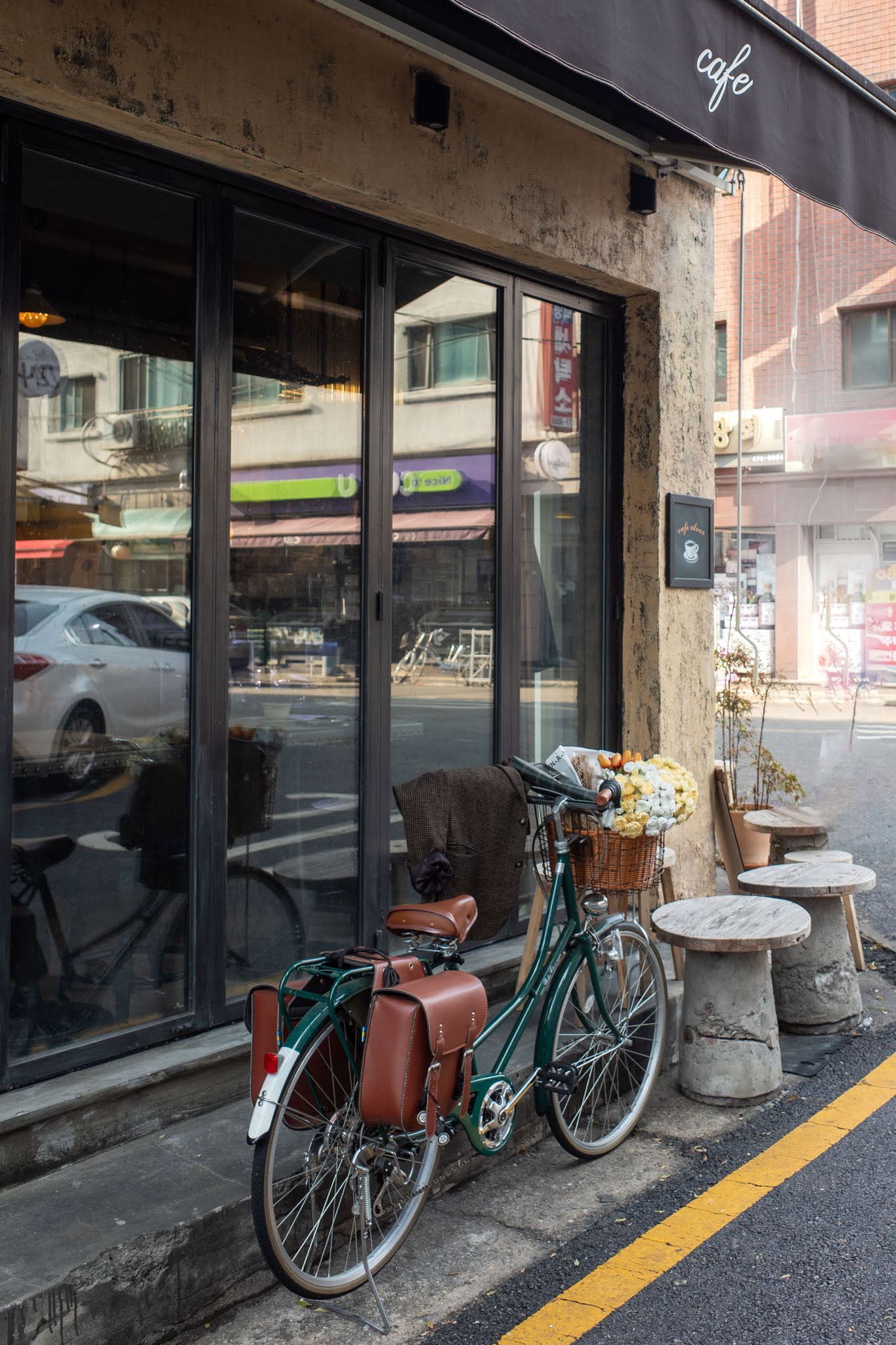
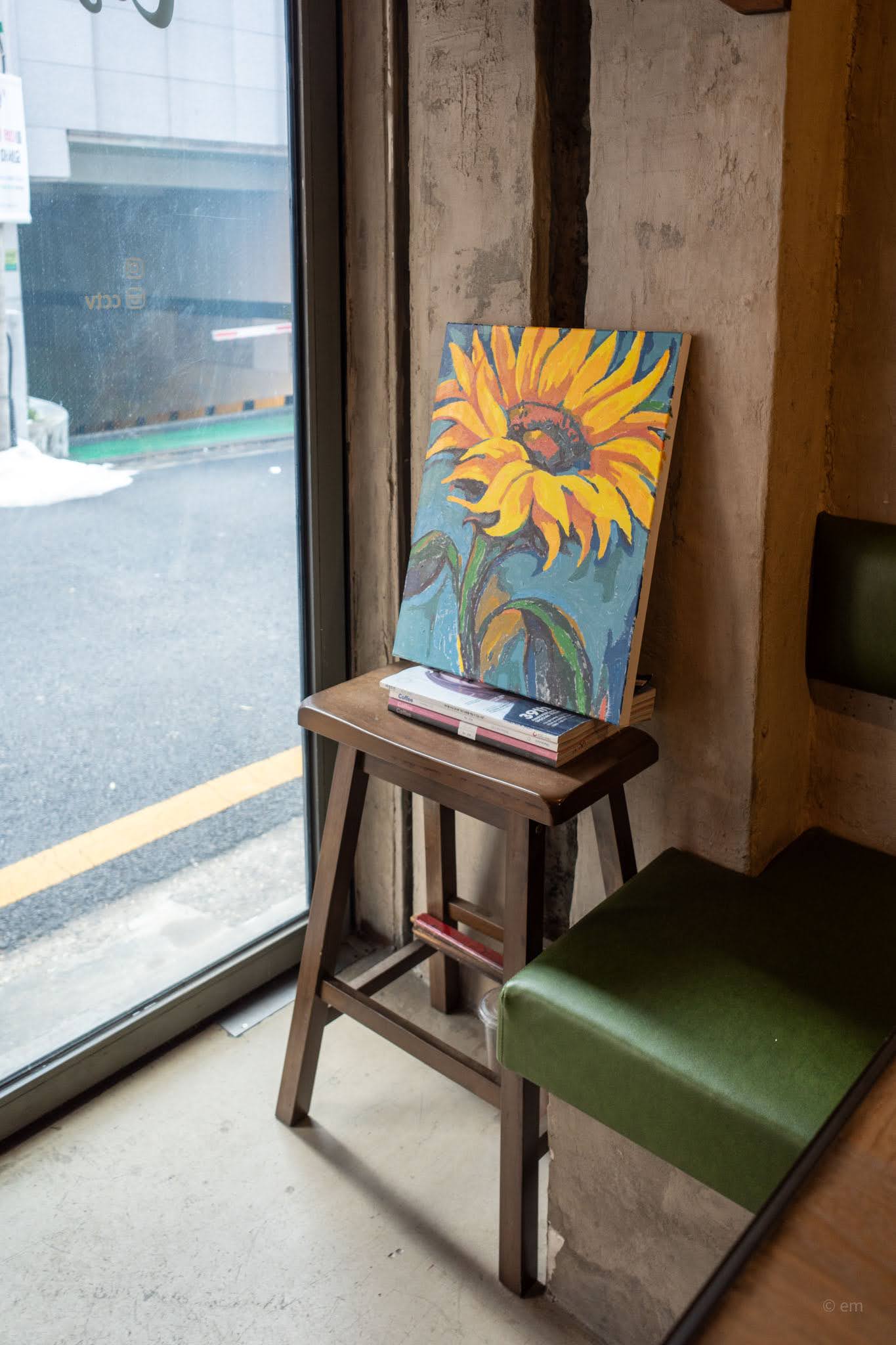
The door was the first thing you noticed. It was also the last thing you thought about after.
![[Lost] Whales Donut](https://hiddencollector.space/wp-content/uploads/2025/08/WHALES-DONUT-200x300.png)
![[Lost] Lujain Espresso Bar, Yangjae-cheon](https://hiddencollector.space/wp-content/uploads/2026/03/R0018314-200x300.jpg)
![[Lost] Califhouse, Dosan: A Beverly Hills Dream, Now Closed](https://hiddencollector.space/wp-content/uploads/2026/04/R0004011-2-200x300.jpg)
![[Lost] The Most Holy Pizza Ever: Pizzus Crust, Seochon](https://hiddencollector.space/wp-content/uploads/2026/03/R0004246e-300x200.jpg)