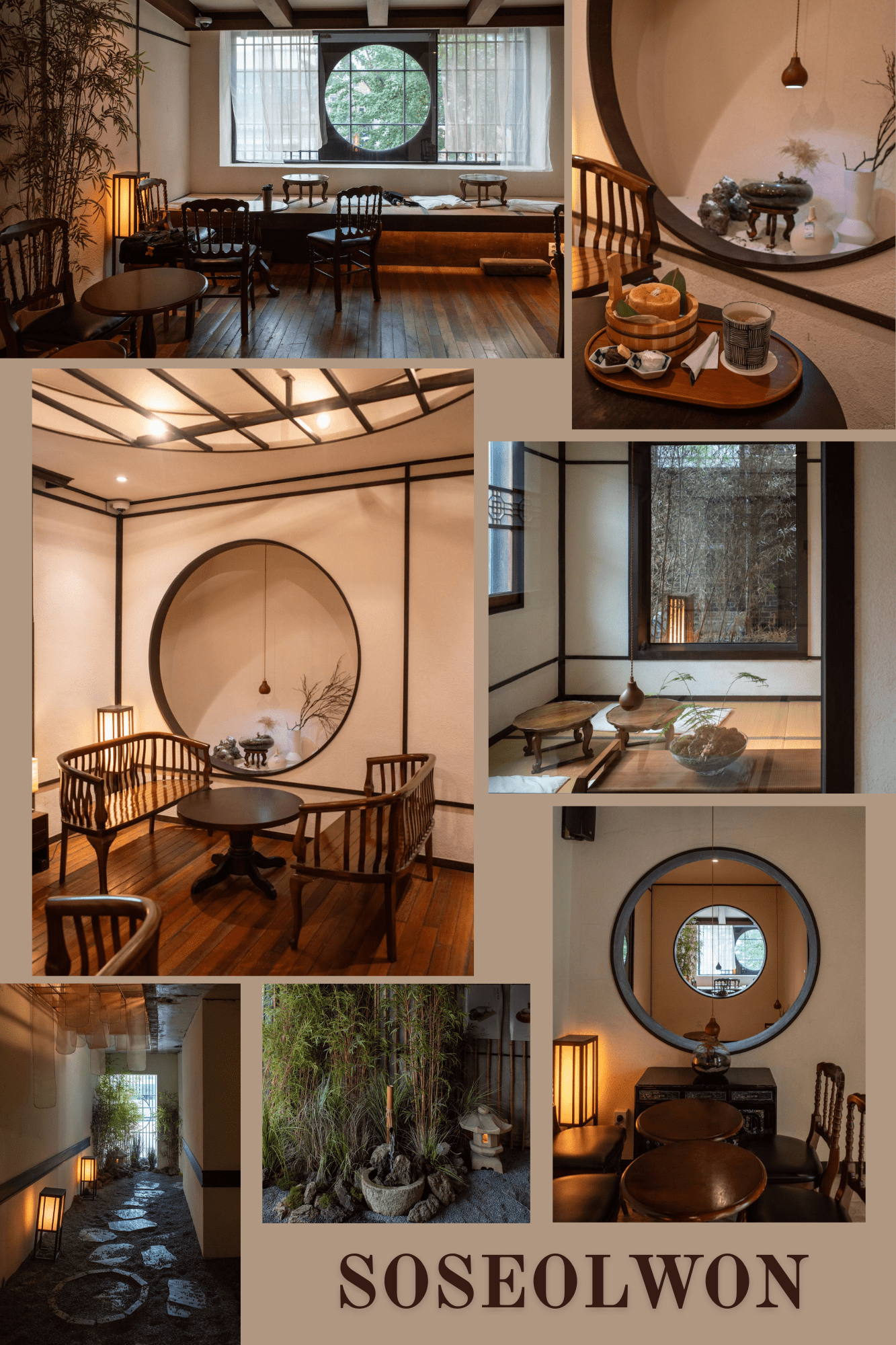
Permanently Closed
A small garden with falling snow. That is what the name meant. The garden is gone now.
There is a particular kind of café that refuses to behave like furniture. Soseolwon, the original Hongjae-dong location, was that kind of place. Not a backdrop. Not a set. It thought in circles — literally — and the thinking was precise.
The brand behind it, Glow Seoul, built a language out of the moon window: the enso-like circle borrowed from East Asian garden architecture, where a perfect opening in a wall doesn’t frame a view so much as consecrate one. At Soseolwon’s founding Hongjae-dong space, that language was spoken on every floor, in different registers.
The Circles
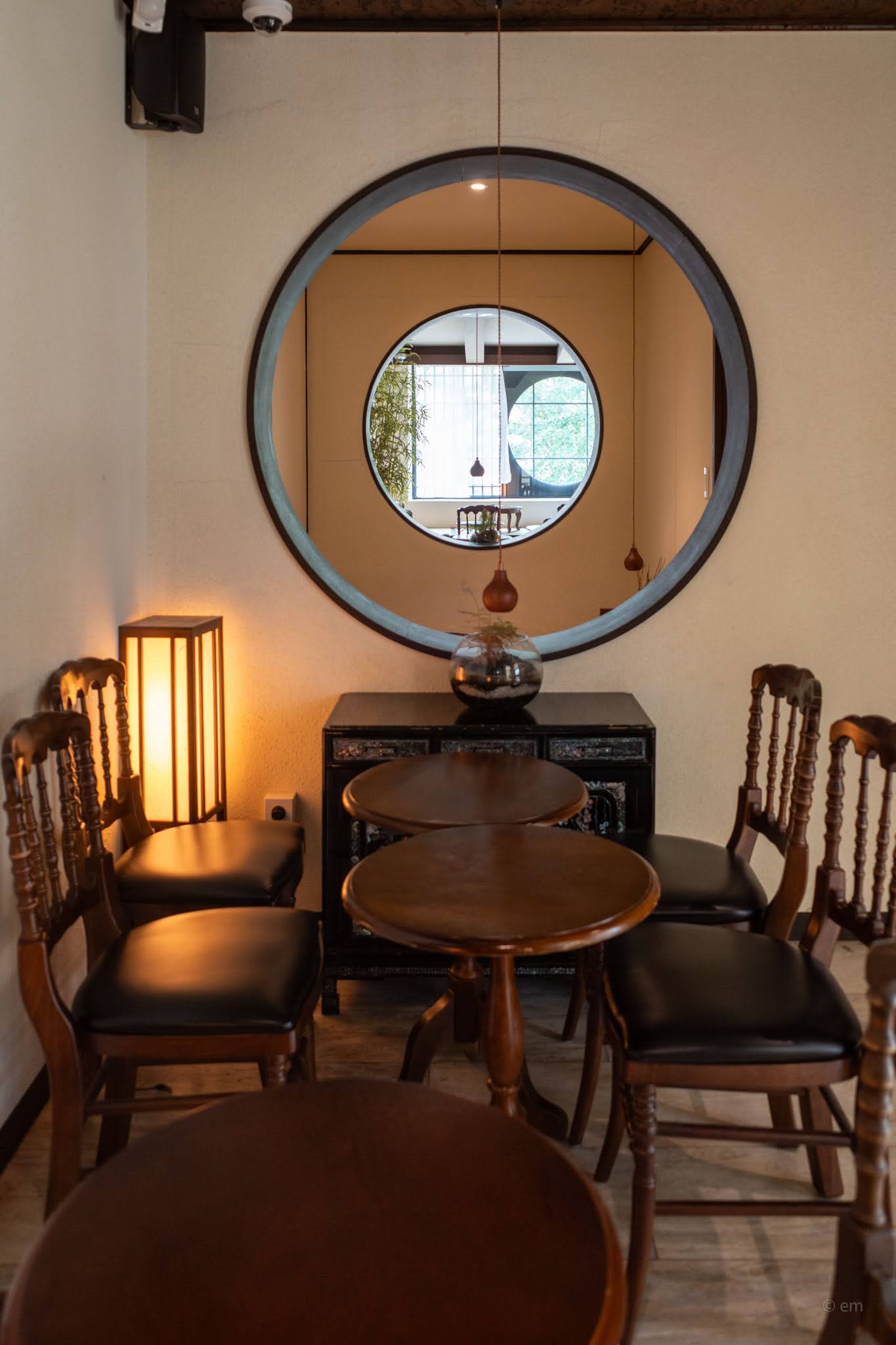
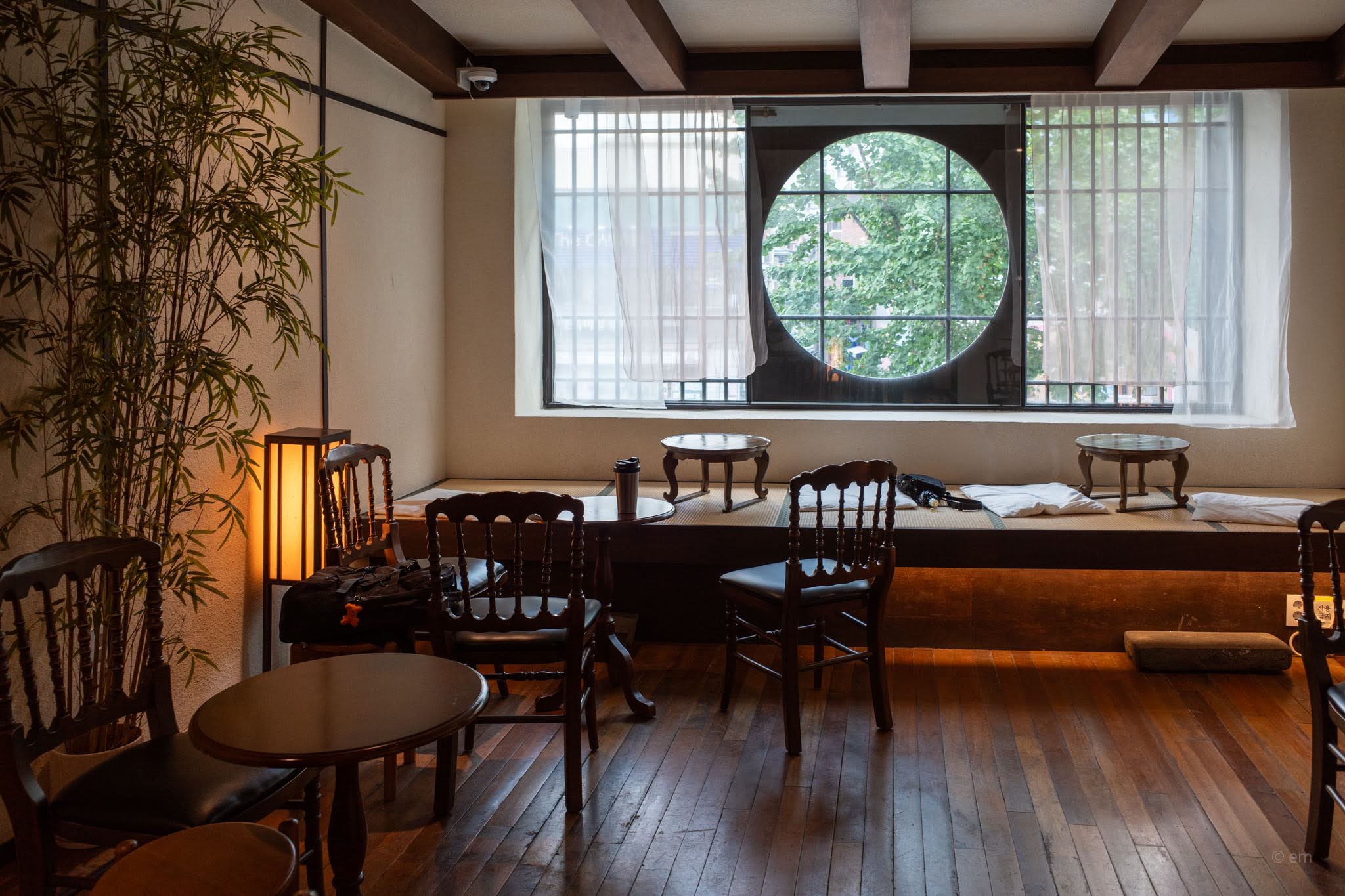
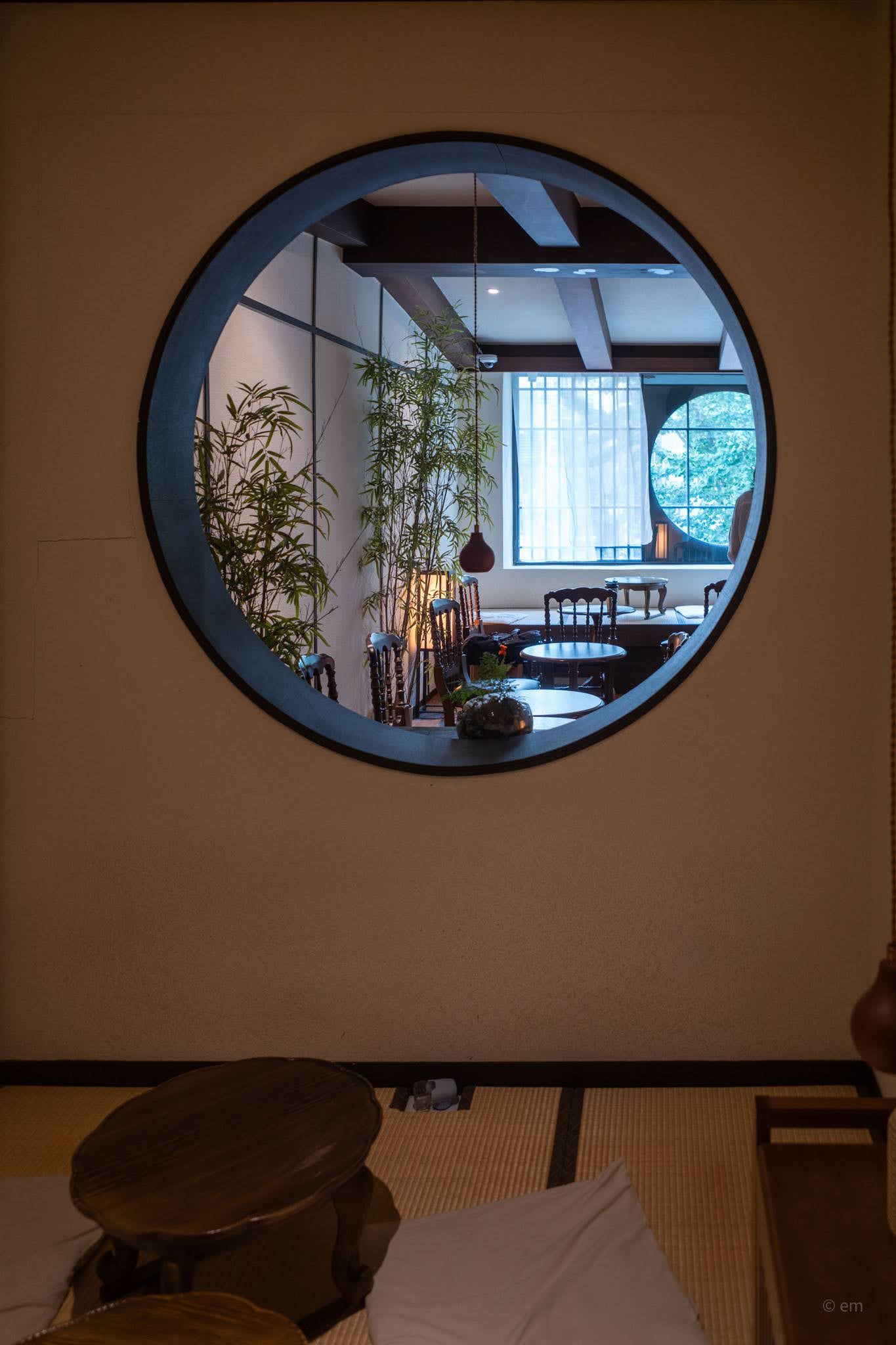
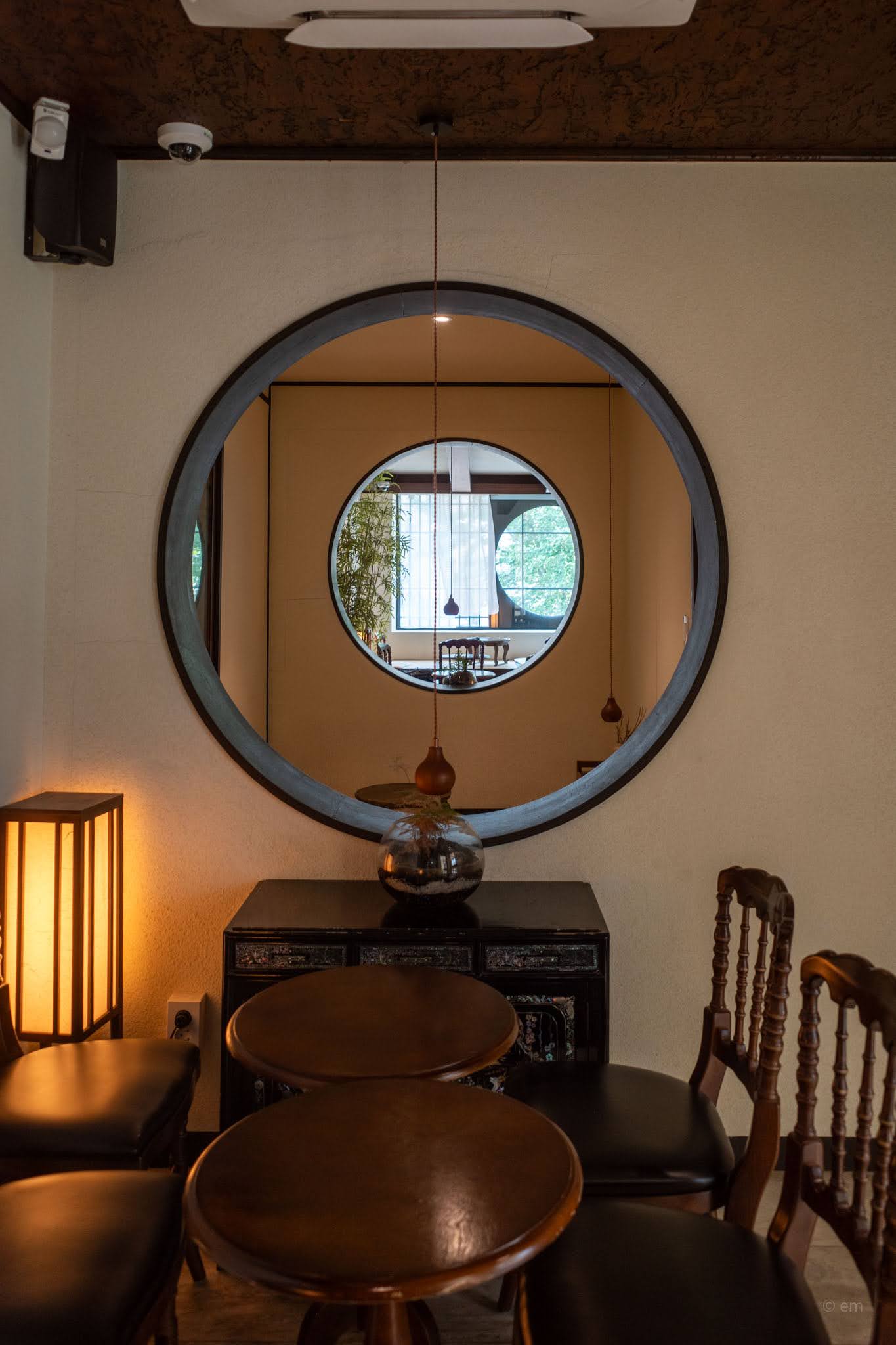
On the ground floor, a large circular aperture was cut through an interior wall — not quite a door, not quite a window — linking two atmospheres. On one side: dark wood, lacquered furniture, a mother-of-pearl cabinet, round café tables attended by spindle-back chairs. On the other: a bamboo stand, an ondol-platform seating area, a view through a second circular window to the trees outside. Look through the first circle and you saw the second. The effect was of infinite framing — rooms nested in rooms, each a contained world.
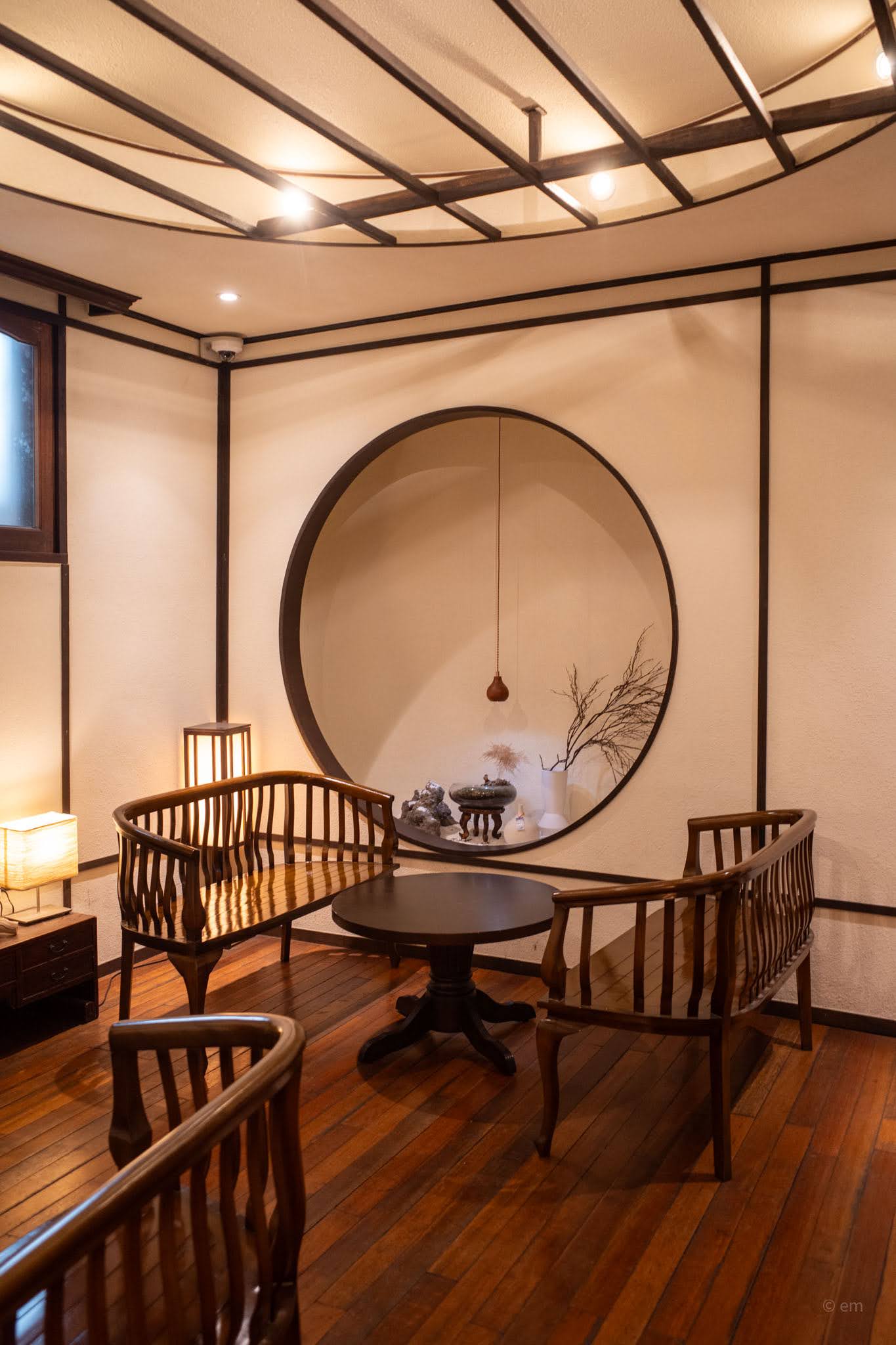
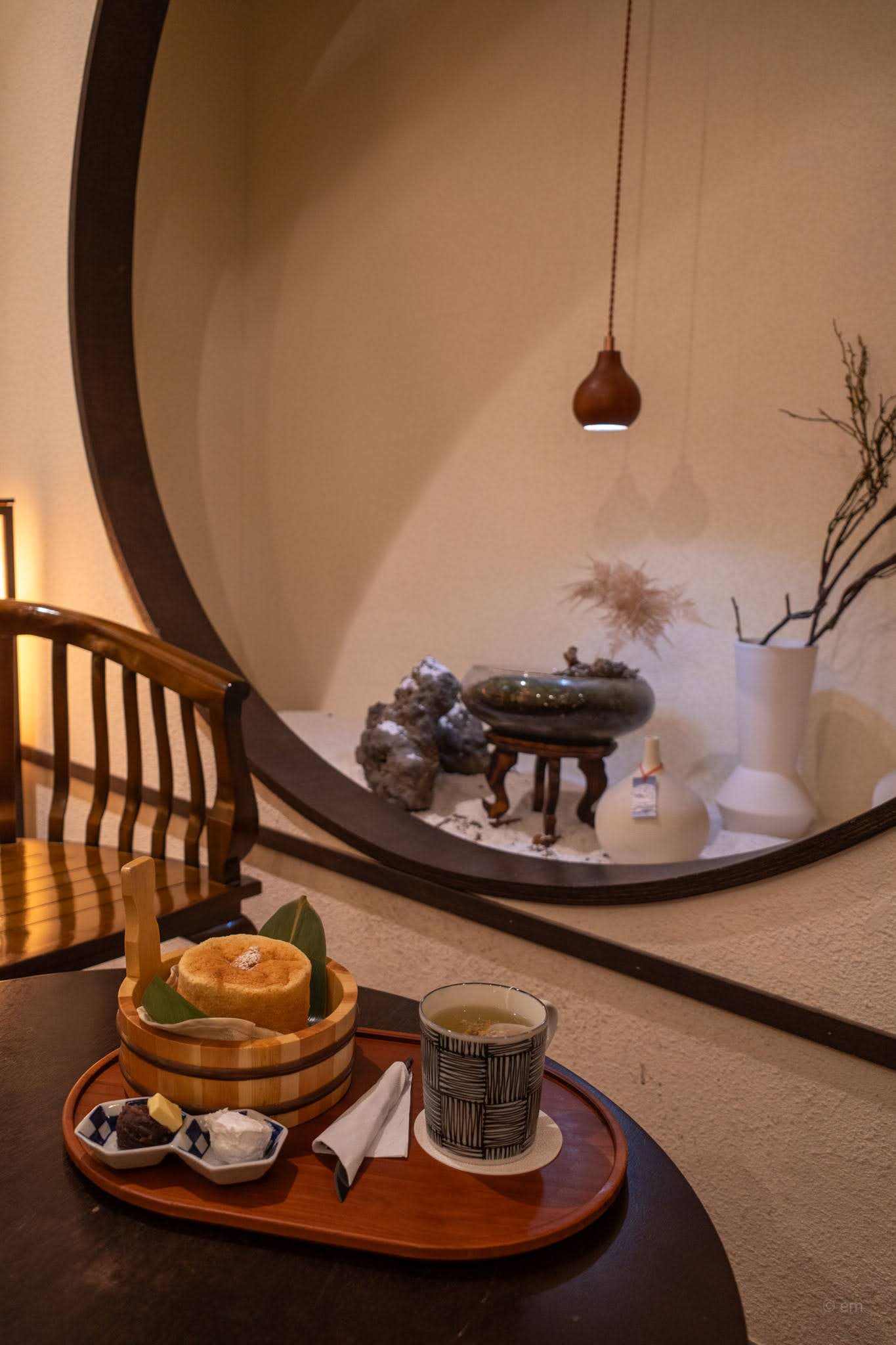
The upper floor played the same motif in a different key. Here, a circular niche was recessed into the white plaster wall — not a passage but a shrine. Inside it: a dry rock garden, a celadon incense burner on a carved stand, dried grass and bare branches in a white ceramic vessel. A small gourd pendant light hung from within. The ceiling above was a grid of dark exposed beams, and the walls were outlined in thin black wood that suggested the structure of a shoji screen without imitating one. It was Korean in feeling, Japanese in precision, and finally neither — just itself.
The Furniture
The wooden furniture on the upper floor was immediately recognizable as something made rather than bought. The settees had curved backs with undulating slats, their arms bending in a slow organic arc. The chairs downstairs were more antique in register — turned legs, high backs — but the combination of different eras and traditions in one room felt deliberate rather than careless. This was not eclecticism as collecting. It was more like a considered conversation between time periods.
The Food
The signature serving arrived on a red lacquer tray: a hotteok steamed in a small wooden tub, resting on a folded leaf, accompanied by a cup of tea in a slip-glazed mug patterned with a grid of marks that rhymed with the ceiling above. Small side dishes held a few sweets. The presentation was ceremonial without being fussy — everything scaled to the space, everything placed with intention.
What Remains
The Hongjae-dong original has closed. The Seoul branches have followed. But the Soseolwon concept — the moon windows, the Eastern aesthetic, the attention to spatial grammar — survives in one place: Soseolwon Mansu, in Incheon, which carries the same language of circles, tatami rooms, and garden-making into a space of its own. The snow, in some sense, still falls somewhere.
other branch: Soseolwon Mansu (소설원 만수)
840 Inju-daero, Namdong-gu, Incheon Hours: Daily 11:00–21:00 (Last order 20:30) @soseolwon_mansu
The original garden is gone. But someone kept the shape of the opening.
![[Lost] Whales Donut](https://hiddencollector.space/wp-content/uploads/2025/08/WHALES-DONUT-200x300.png)
![[Lost] Cafe Scene Cafe: The Projector Has Gone Dark](https://hiddencollector.space/wp-content/uploads/2026/04/IMG_0835-200x300.jpg)
![[Lost] Diver Chu! — The Churros Café That Took the Plunge](https://hiddencollector.space/wp-content/uploads/2026/03/R0012489-300x200.jpg)
![[Lost] Cafe Olear, Gangdong: The Red Door at the End of the Block](https://hiddencollector.space/wp-content/uploads/2026/04/R0019744-EDIT.jpg)