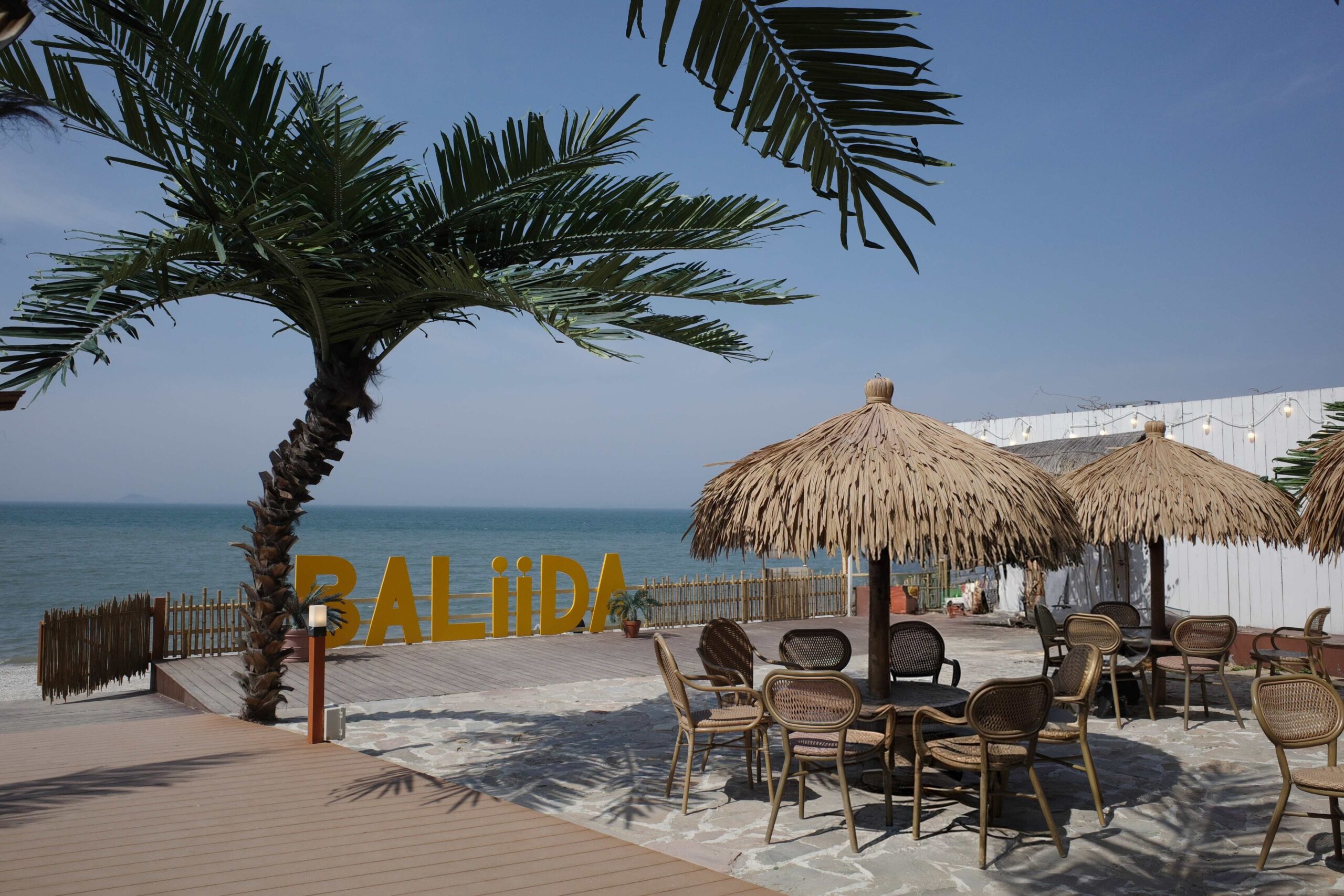
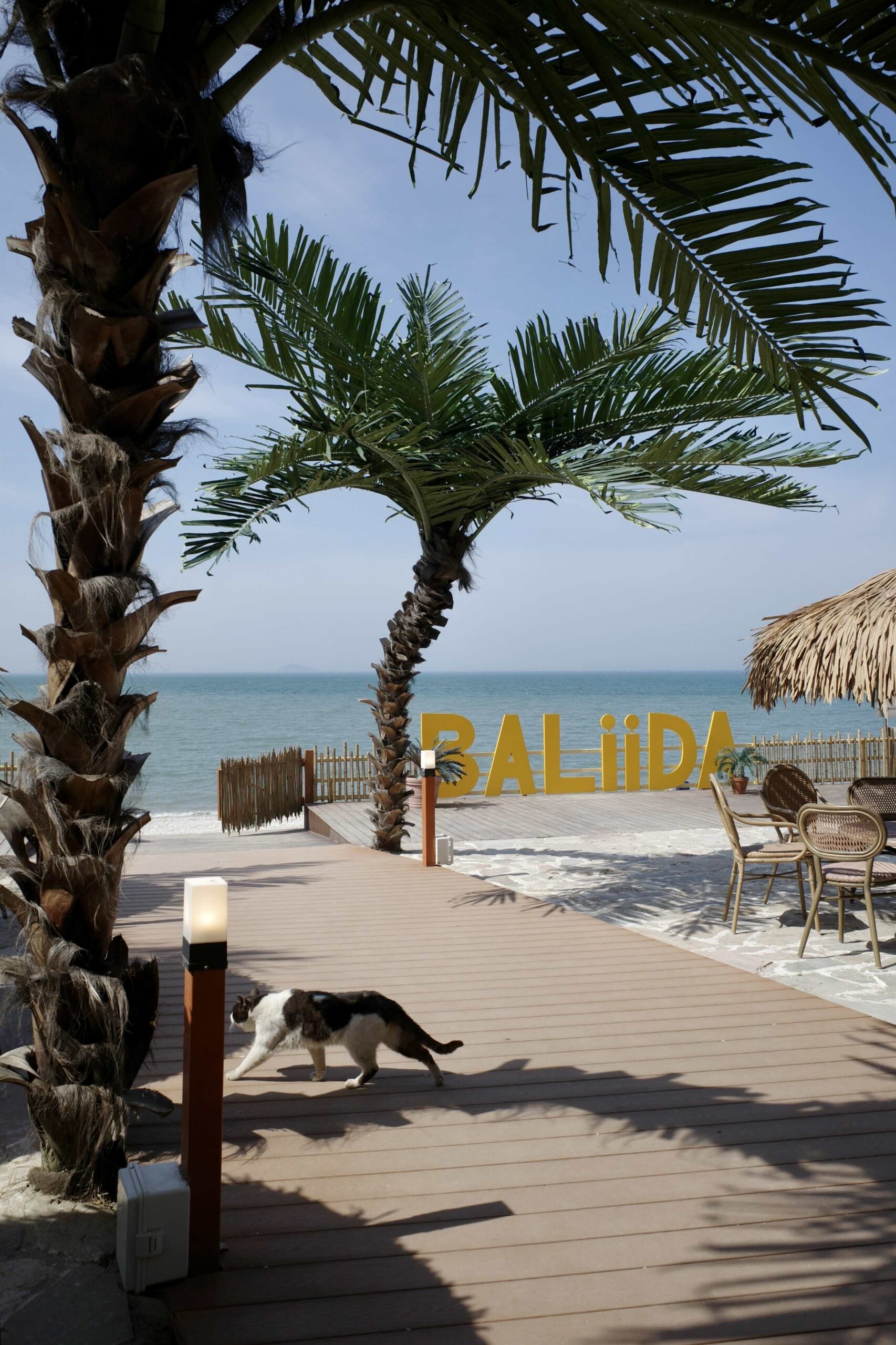
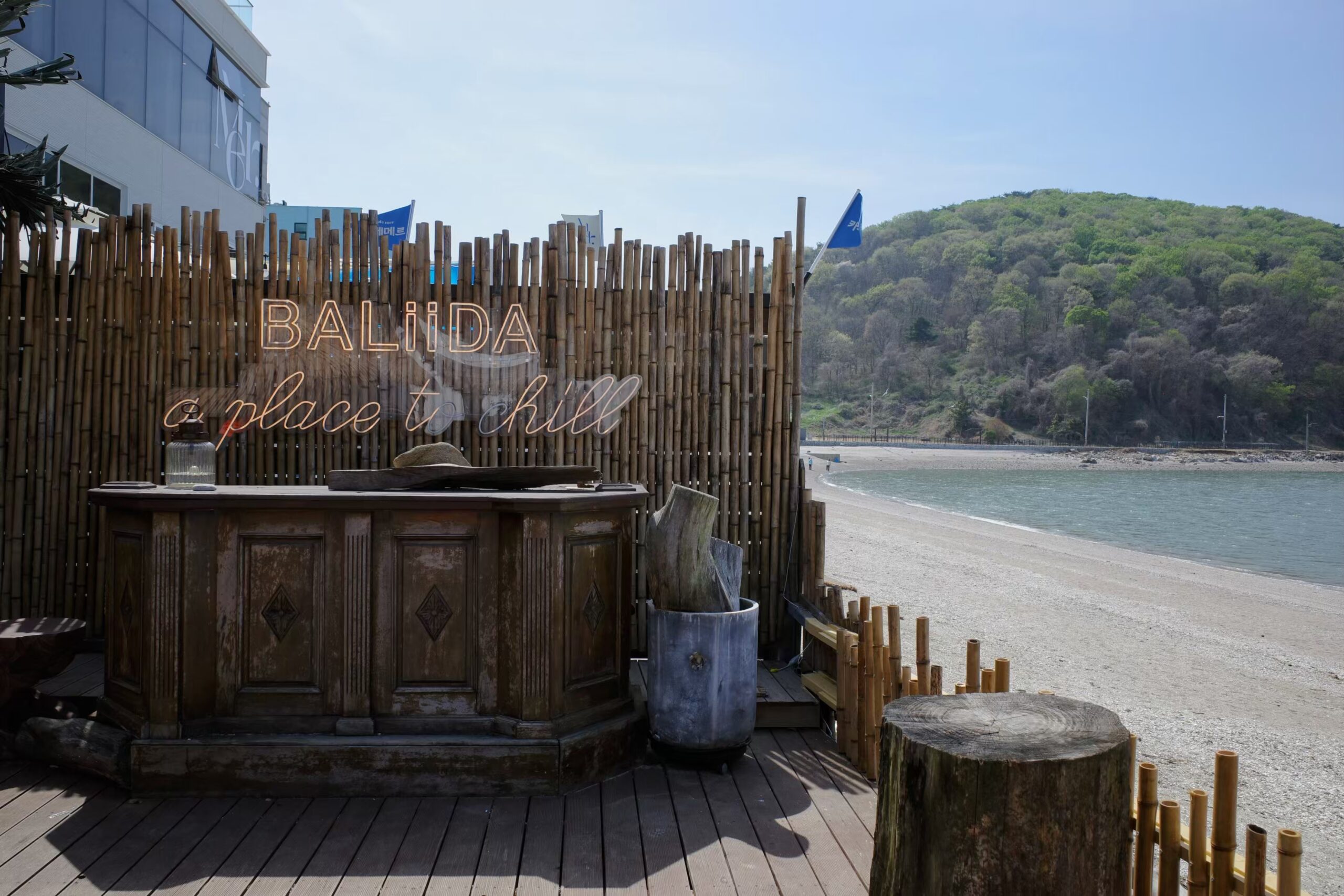
The sign says Bali. The water behind it is distinctly, unmistakably Korean.
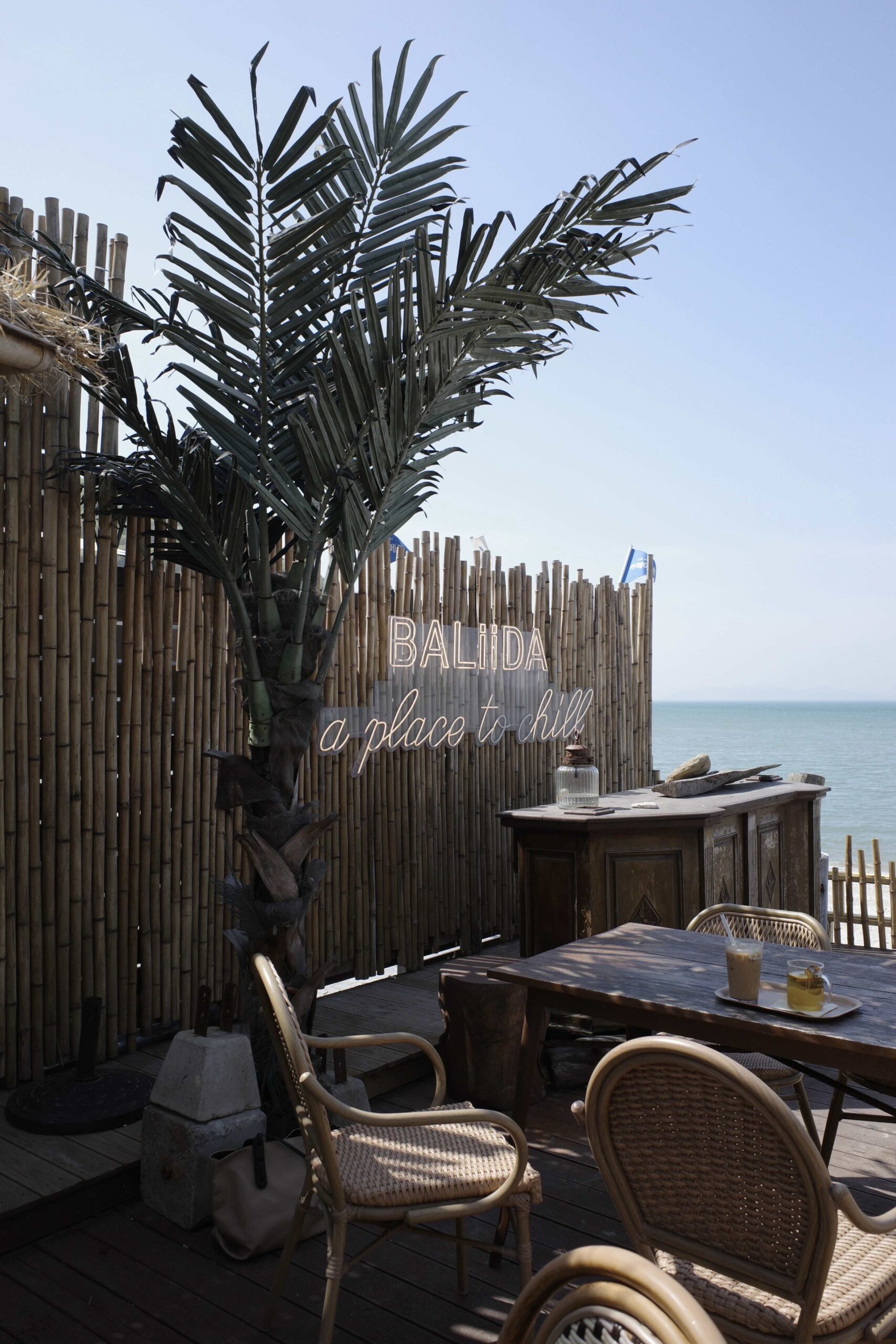
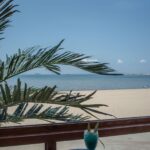
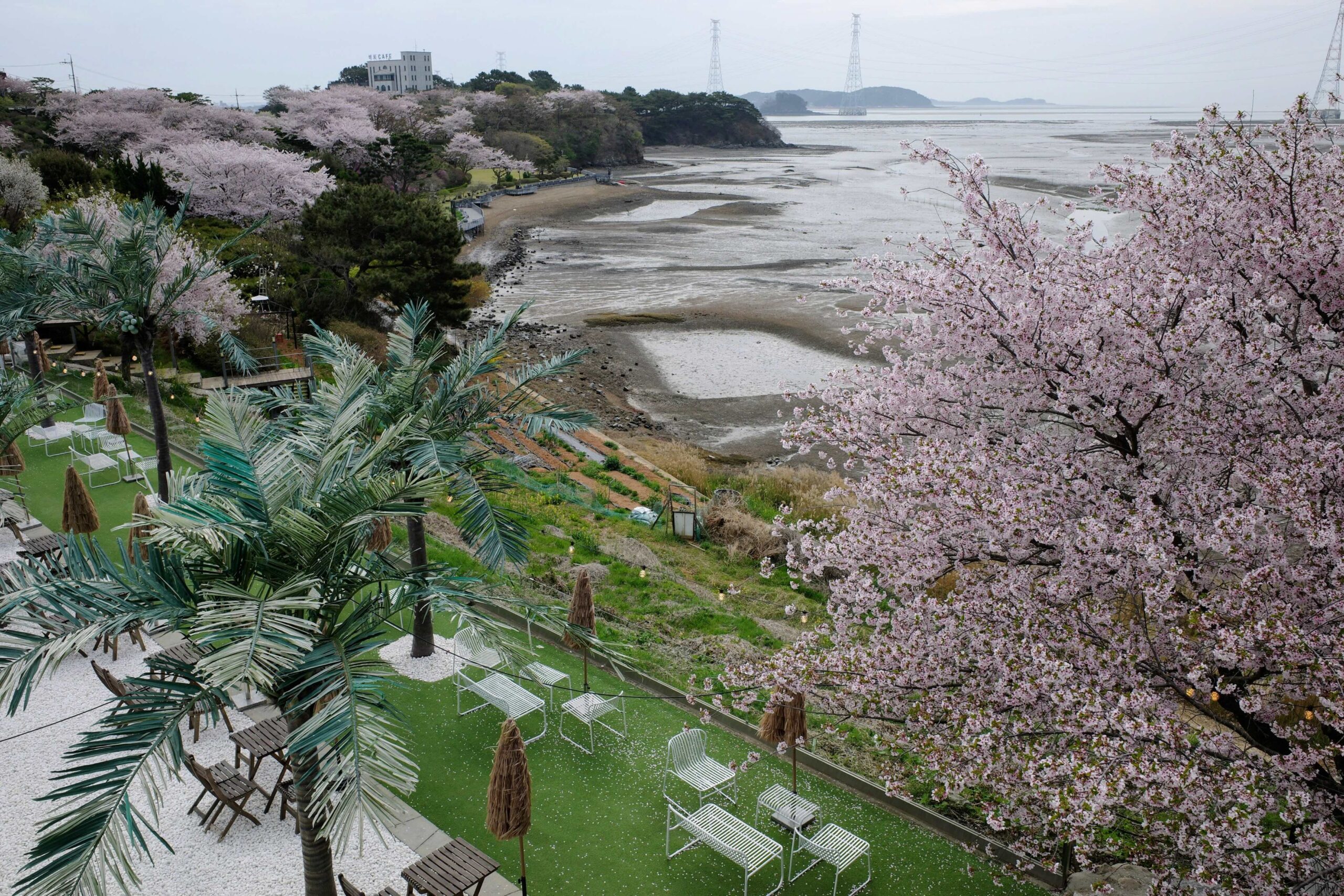
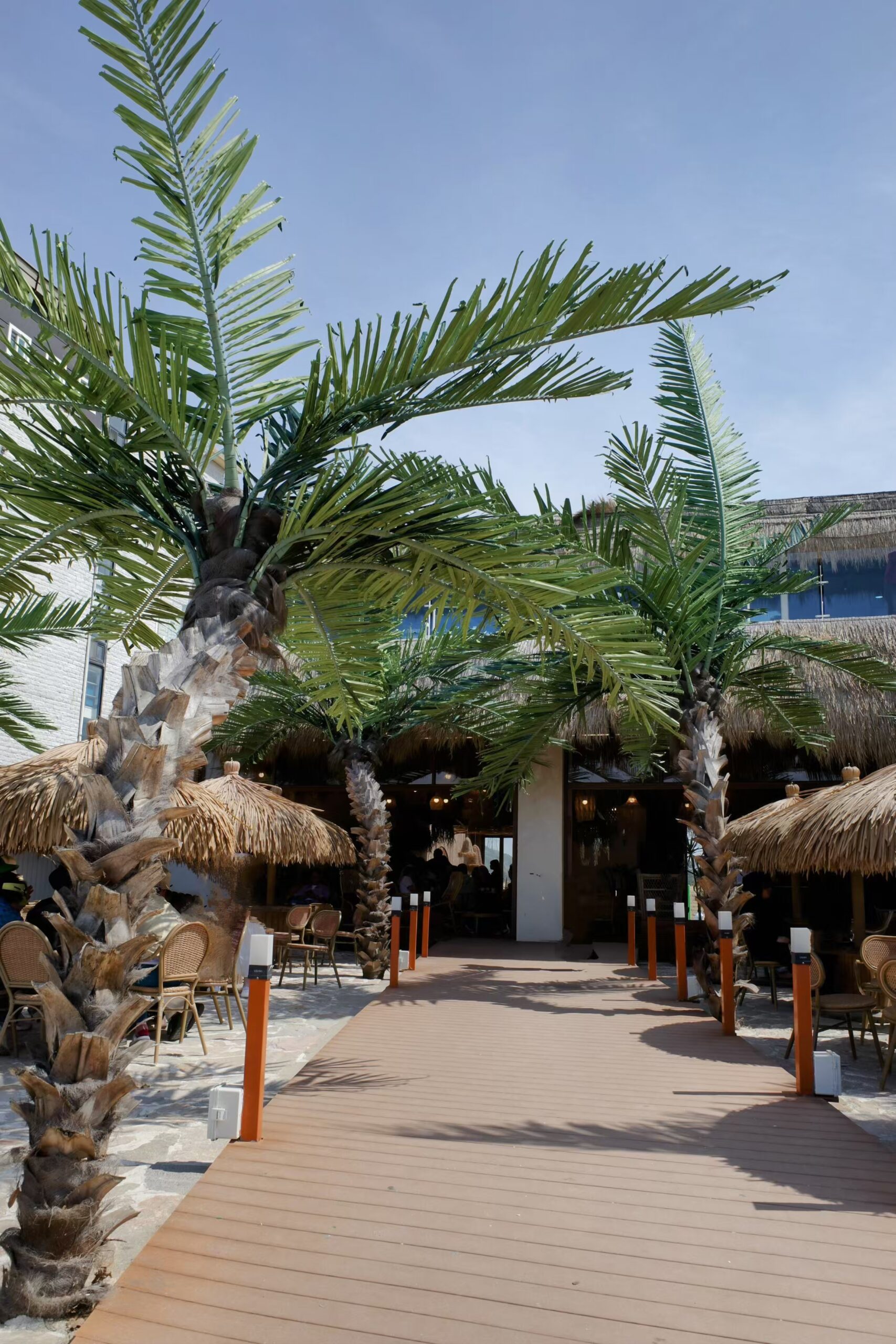
There is a particular genre of place that thrives on the dissonance between where it is and where it wants to be. BALiiDA, sitting squarely on the pebbled beach at Gubong-do on Daebudo Island, plays this game more earnestly than most — and somehow gets away with it. The West Sea stretches out flat and green-grey beyond the bamboo fencing. The palm trees are real. The thatched parasols are real. The neon script on the bamboo wall that reads a place to chill glows warmly in the afternoon light. Whether or not any of it resembles Bali is beside the point.
Reading the Layers
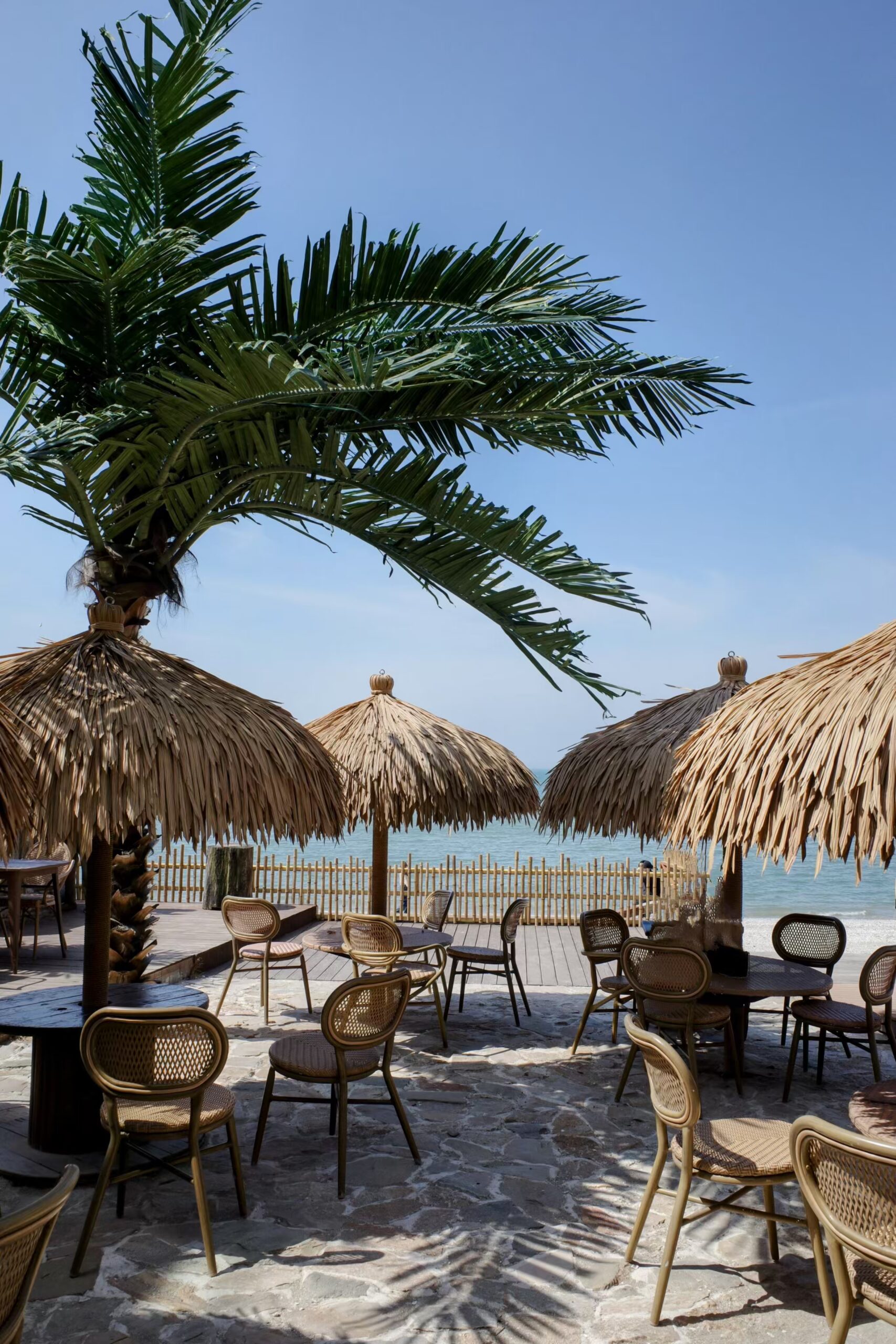
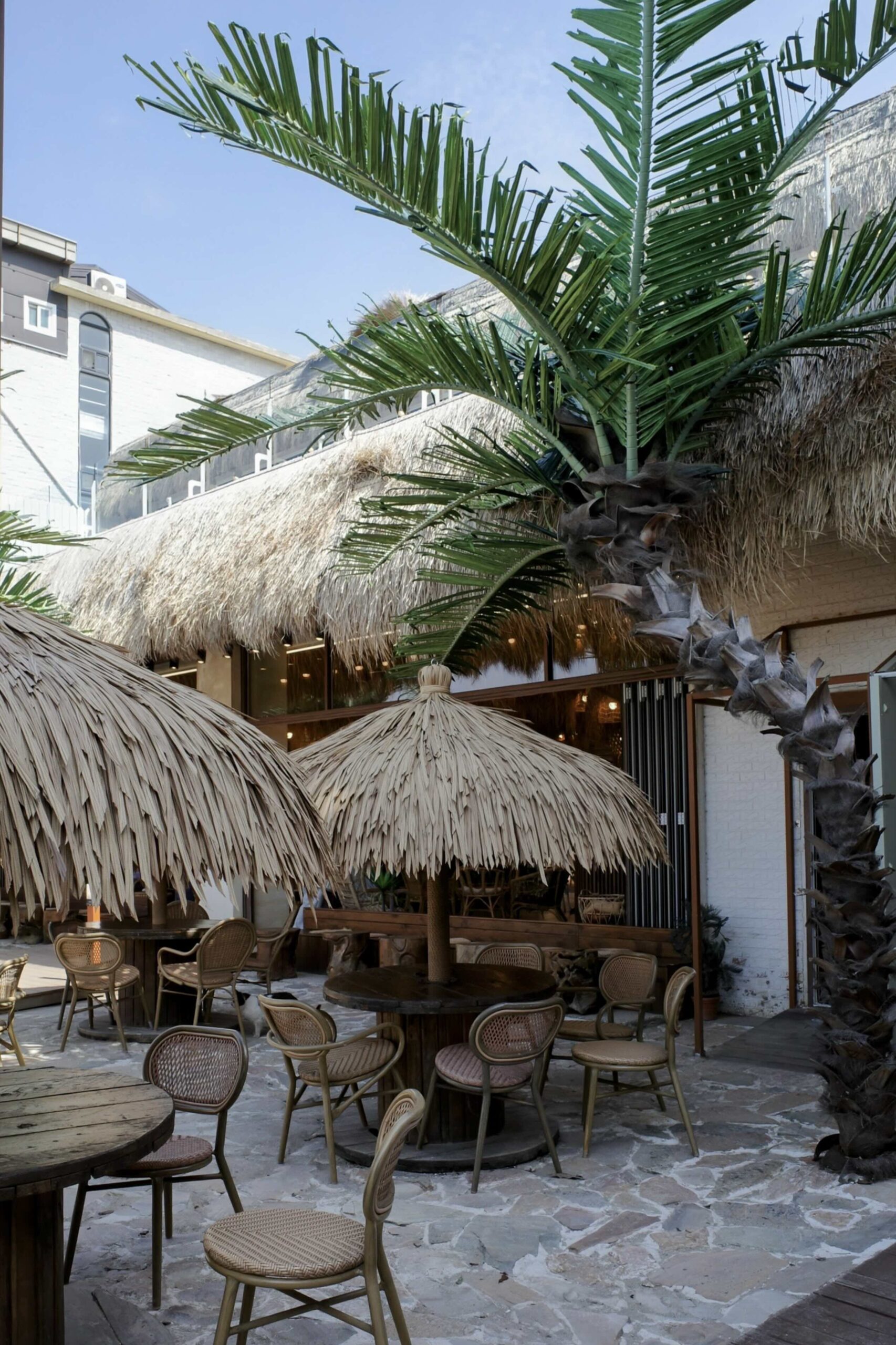
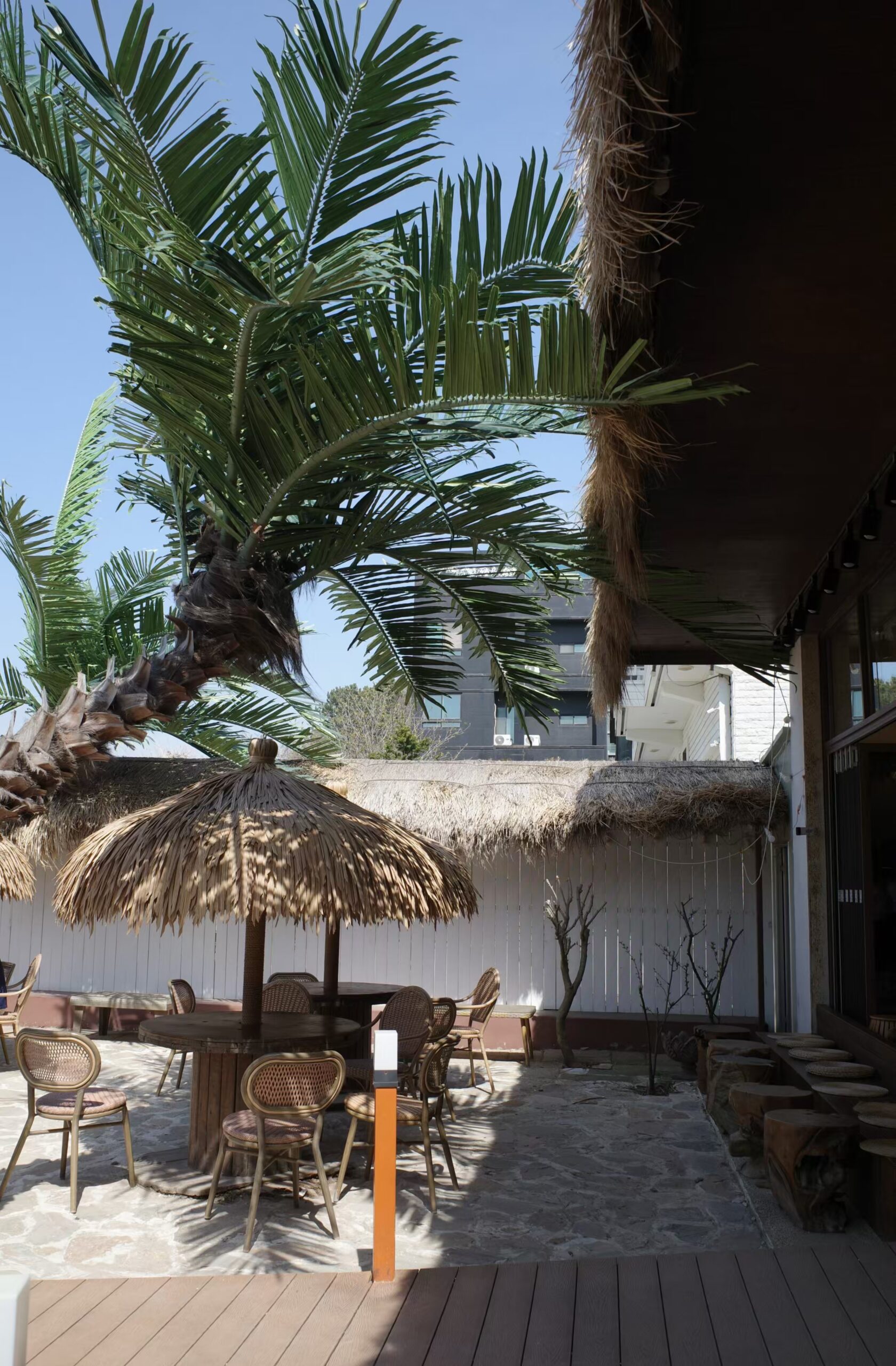
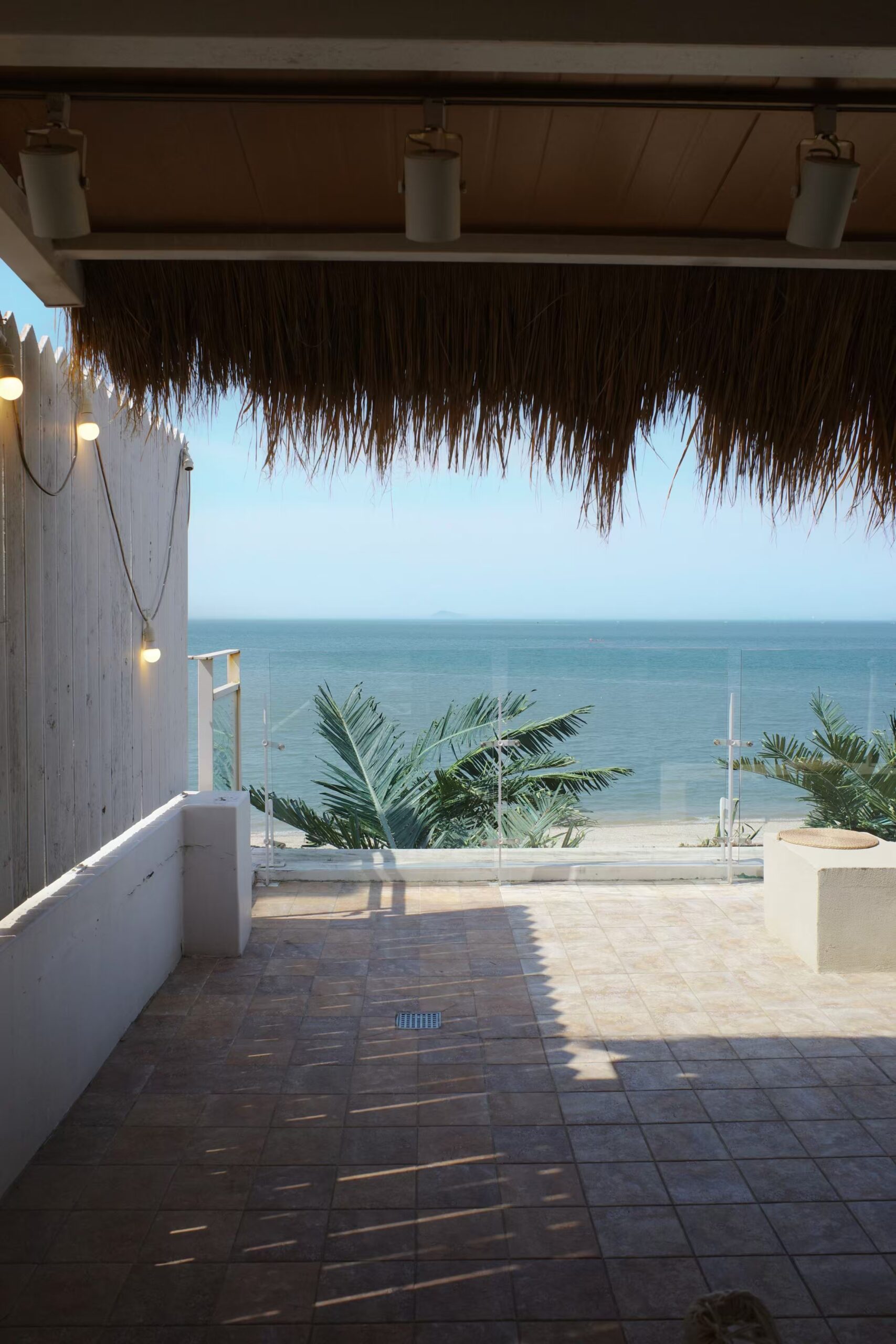
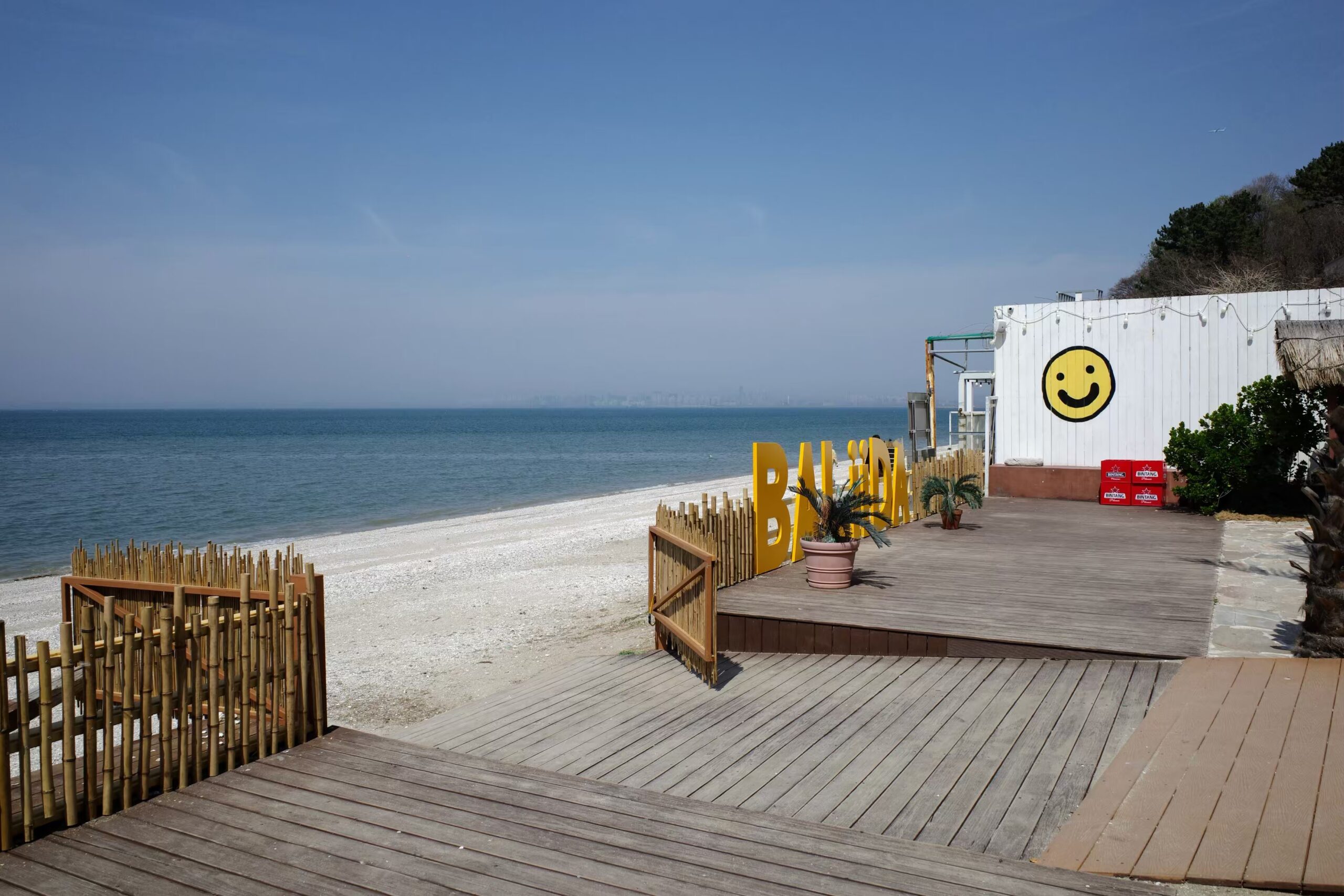
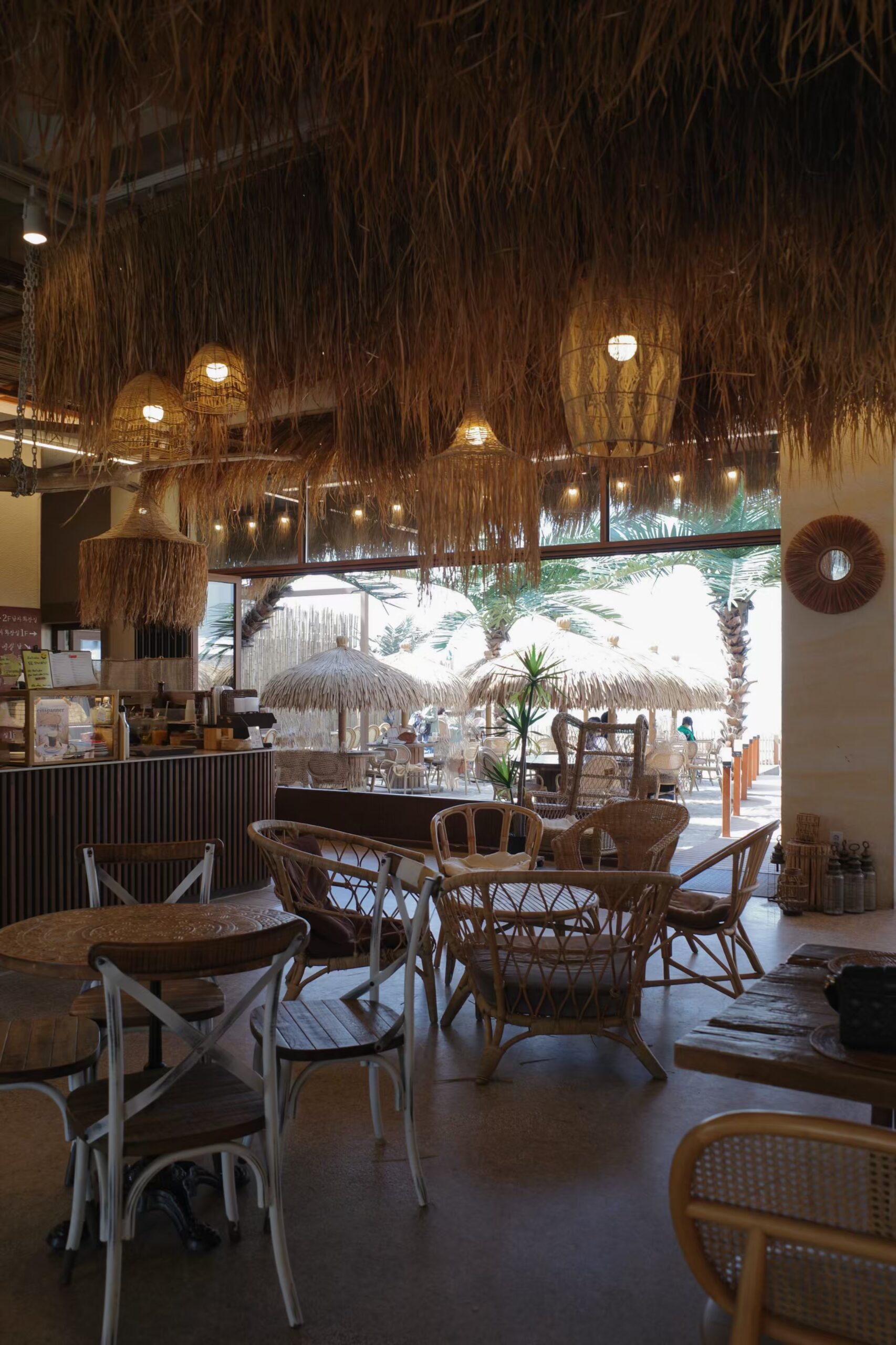
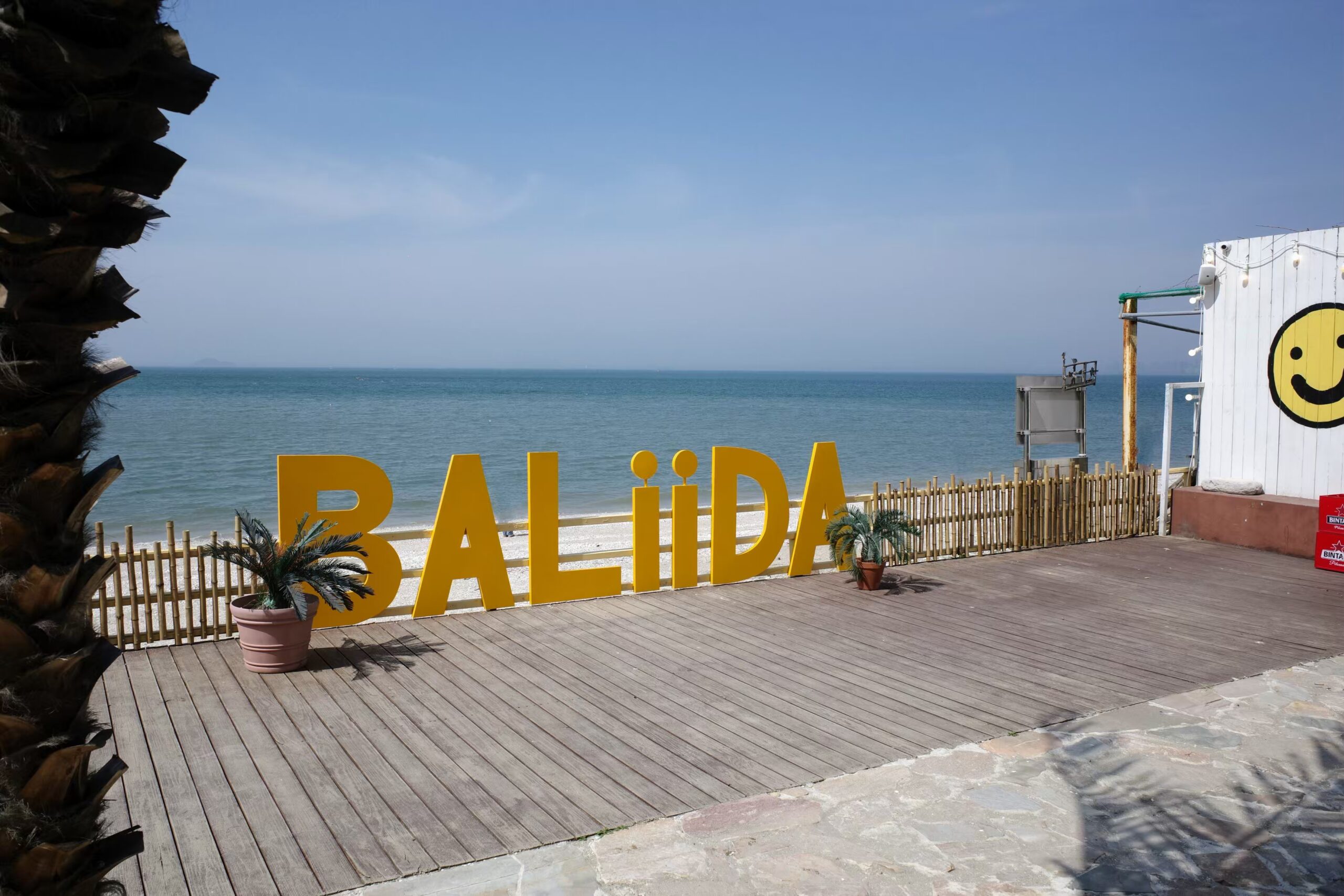
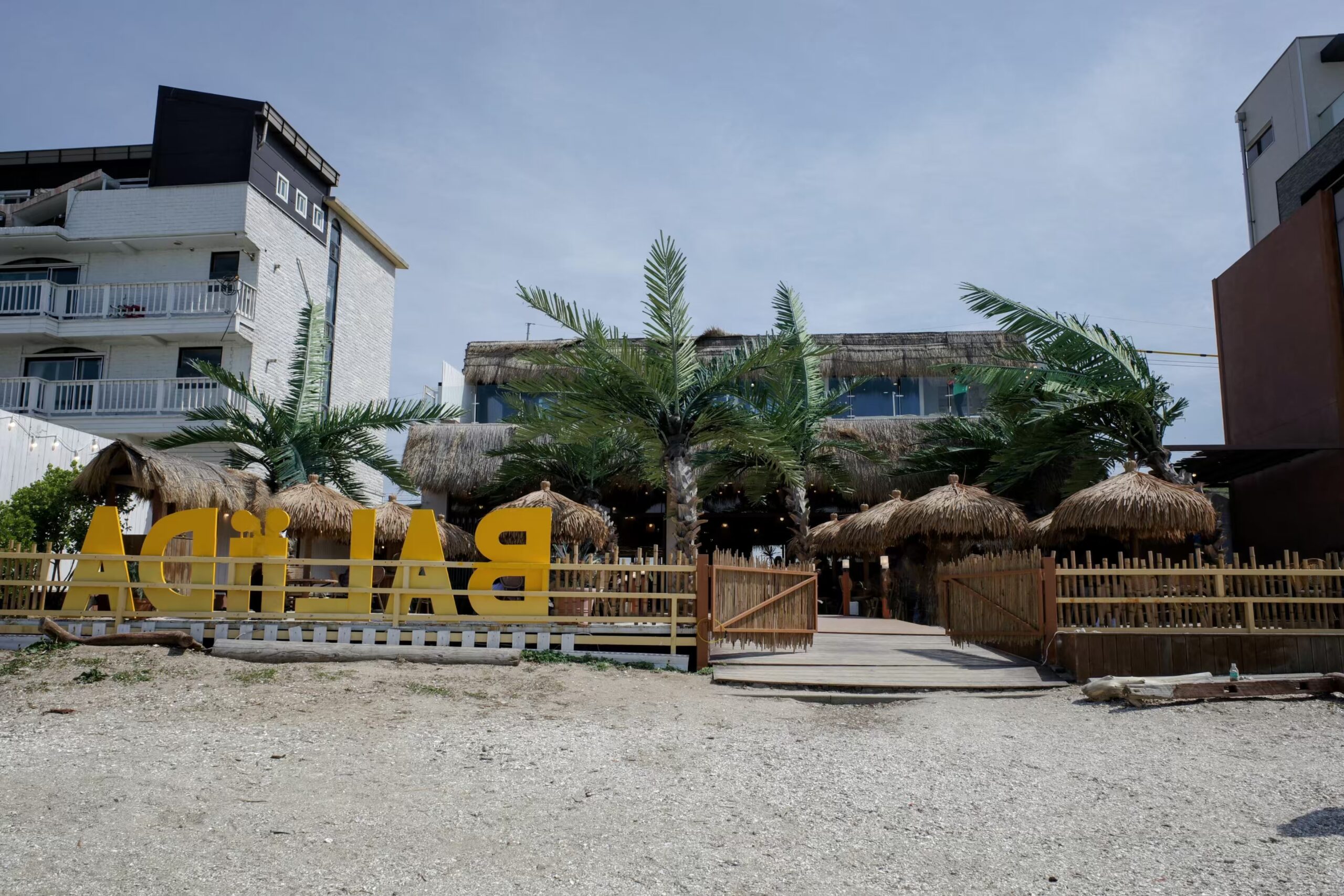
The complex unfolds in stages rather than all at once. From the beach approach, the first thing you register is scale: yellow block letters spelling BALiiDA against open sky, a grove of phoenix palms that have no business being this far north, and a horizon of sea that stretches in a long, uninterrupted line to the west. The outdoor terrace is the visual anchor — a stone-paved and timber-decked expanse of thatched parasols and rattan chairs facing directly onto the water, the whole thing ringed by bamboo fencing that catches the wind and rustles like it means it.
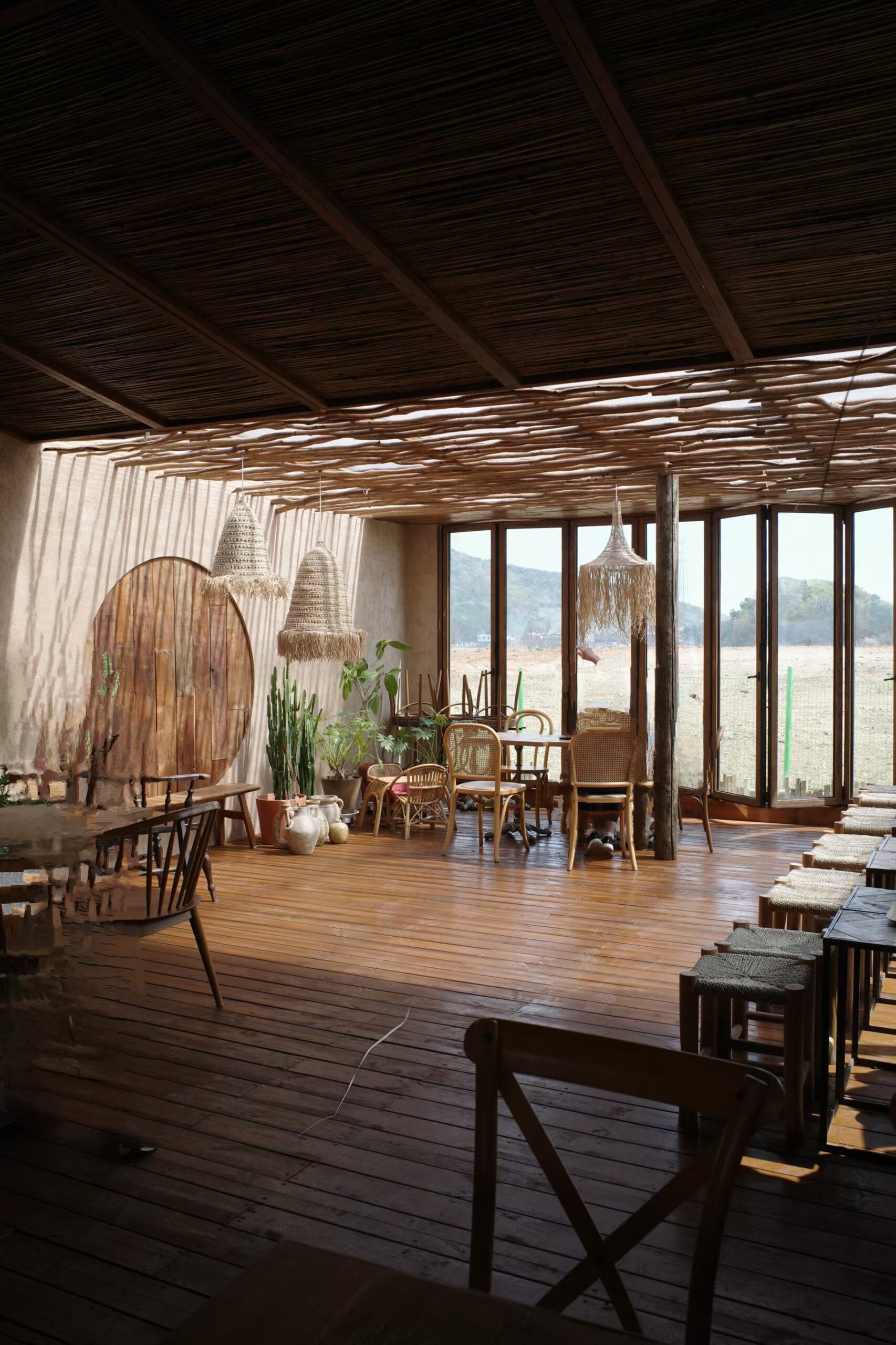
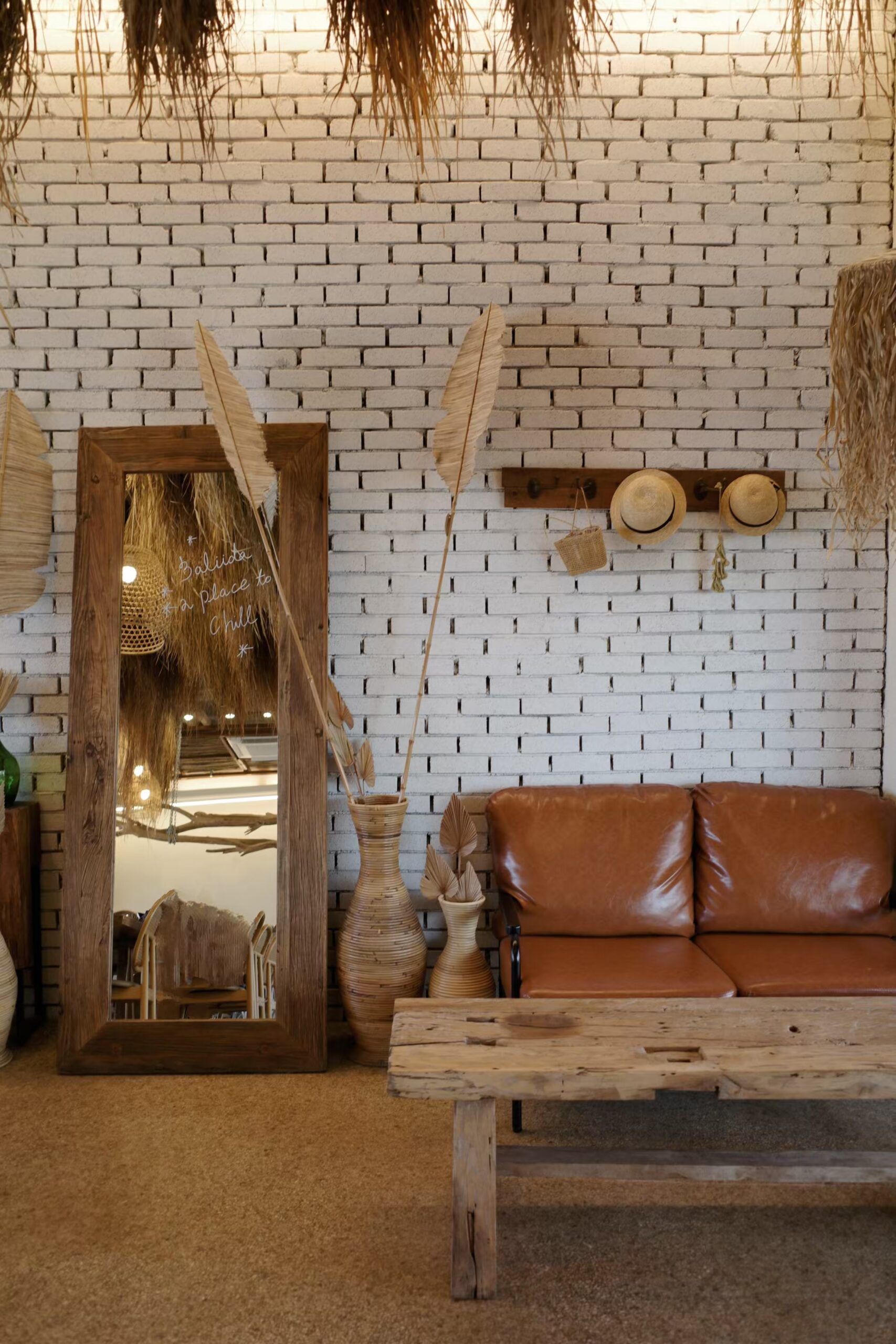
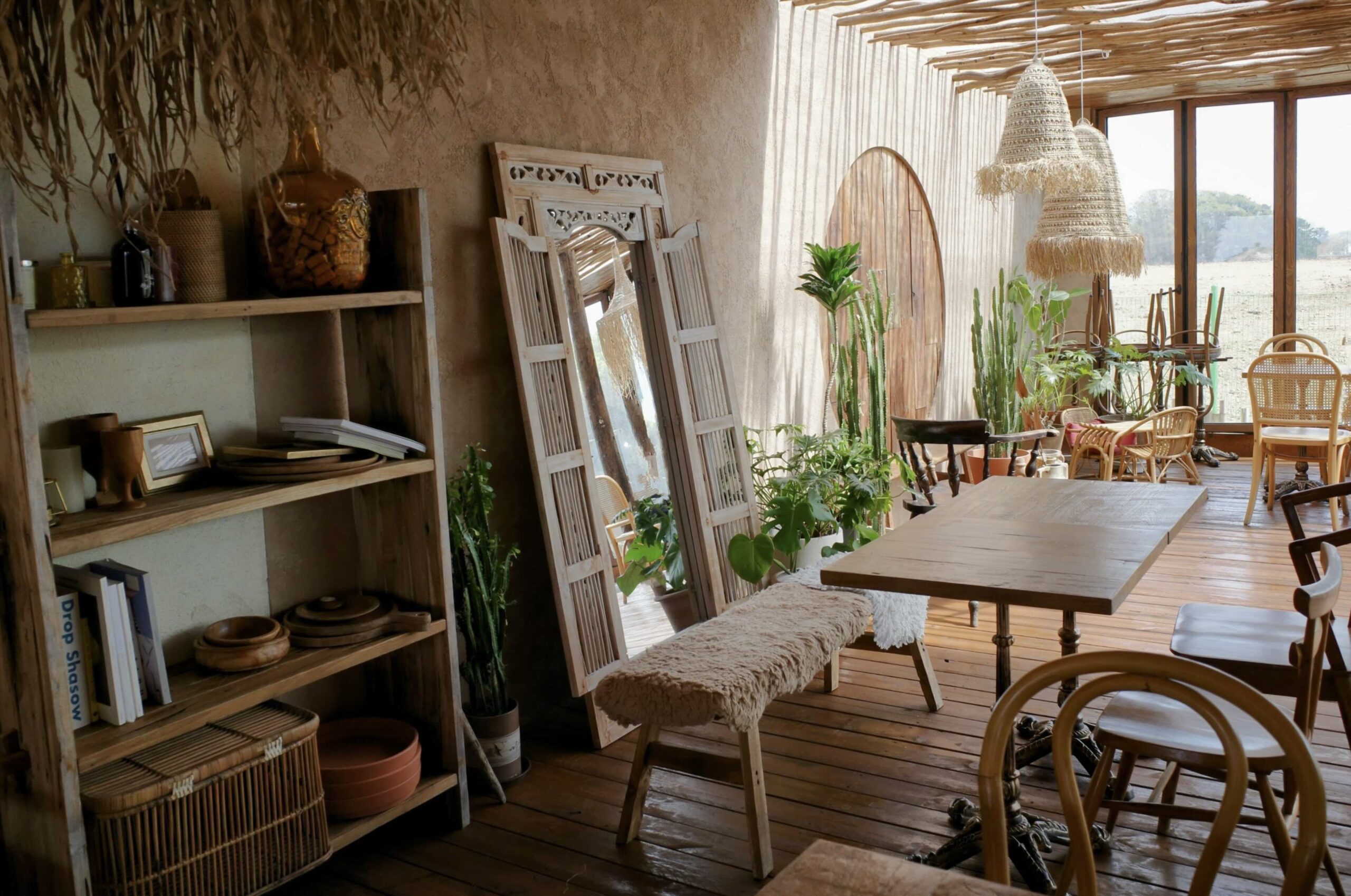
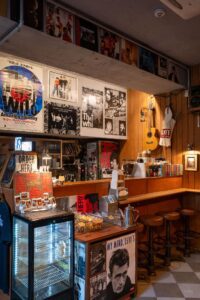
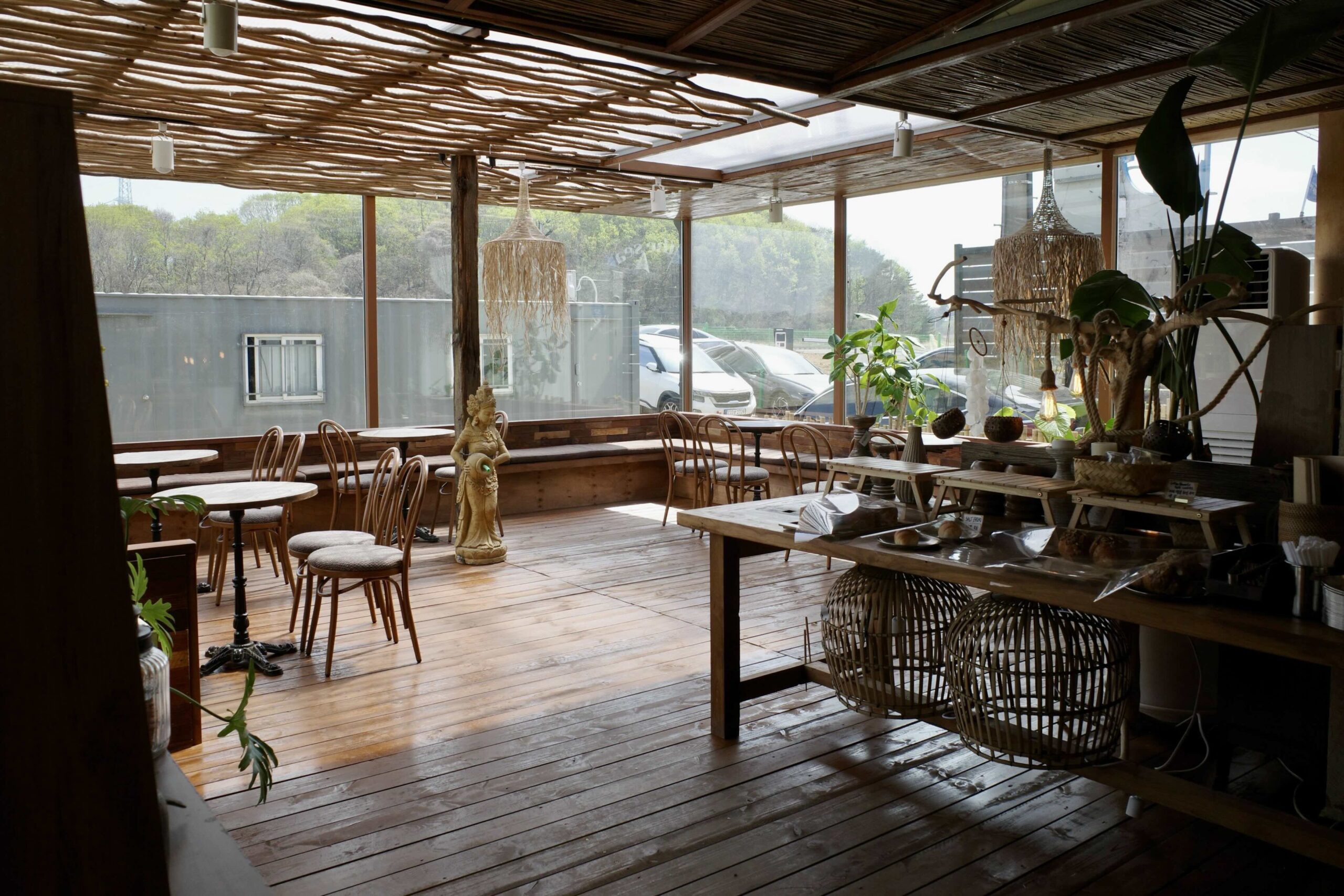
Inside, the spatial language shifts but the commitment to texture stays constant. The first floor is layered in the kind of collected, unhurried way that reads less like decoration and more like accumulation: a carved stone Balinese goddess stands mid-floor beside woven pendant lights and a branch-lattice ceiling that lets the light through in pale, shifting intervals. Against one wall, a wooden bookshelf holds ceramics and stacked volumes beside an ornate mirror leaning at a casual angle. Cacti gather in terracotta pots around a large oval wooden panel that serves as a room divider and focal point simultaneously. A white brick wall in the lounge zone carries a floor-length mirror etched with the BALiiDA tagline; beside it, straw hats hang on wall pegs, dried palm fronds cascade from a woven vase, and a worn tan leather sofa invites the kind of sitting that turns into staying.
The Second Floor
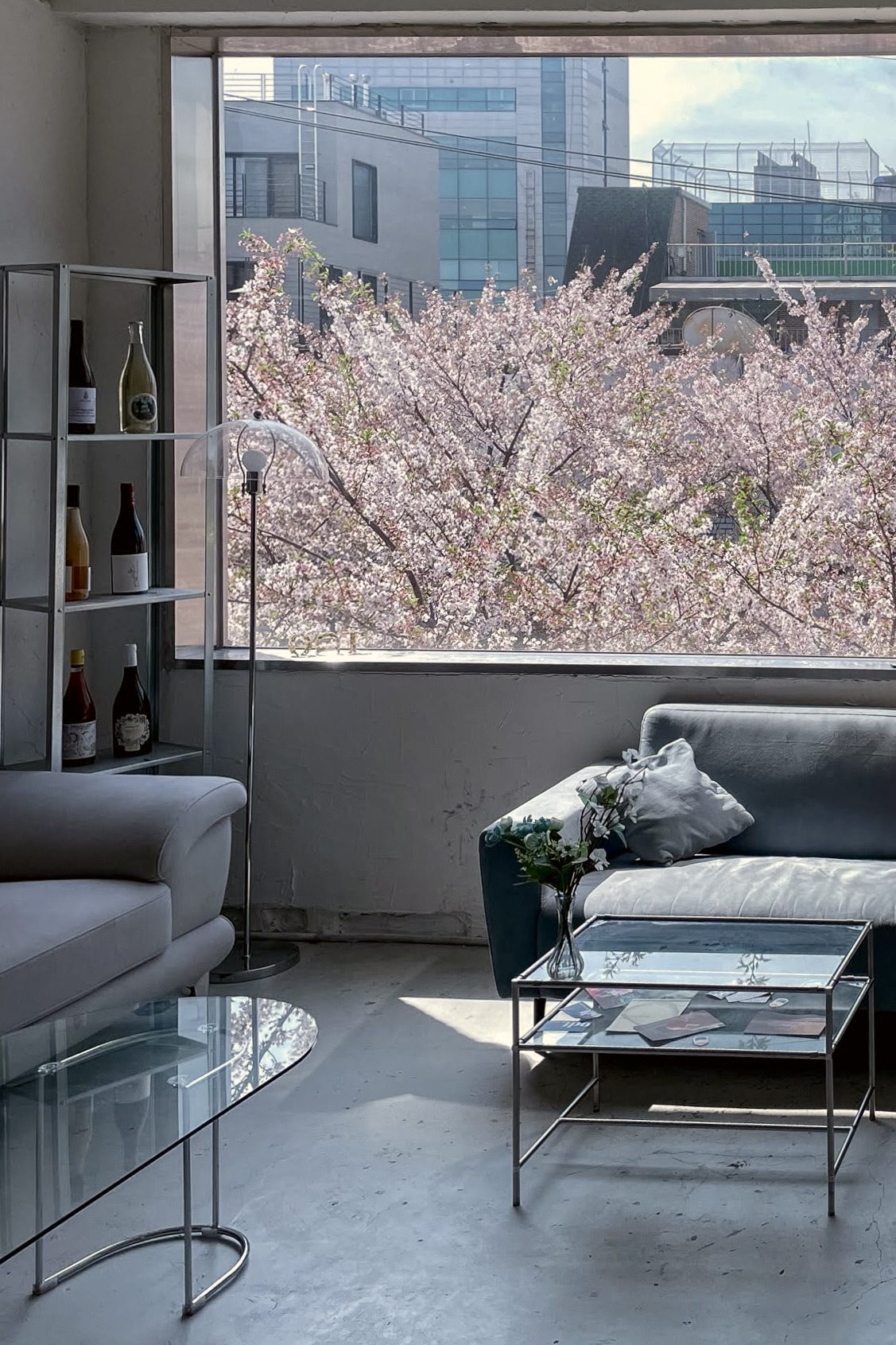
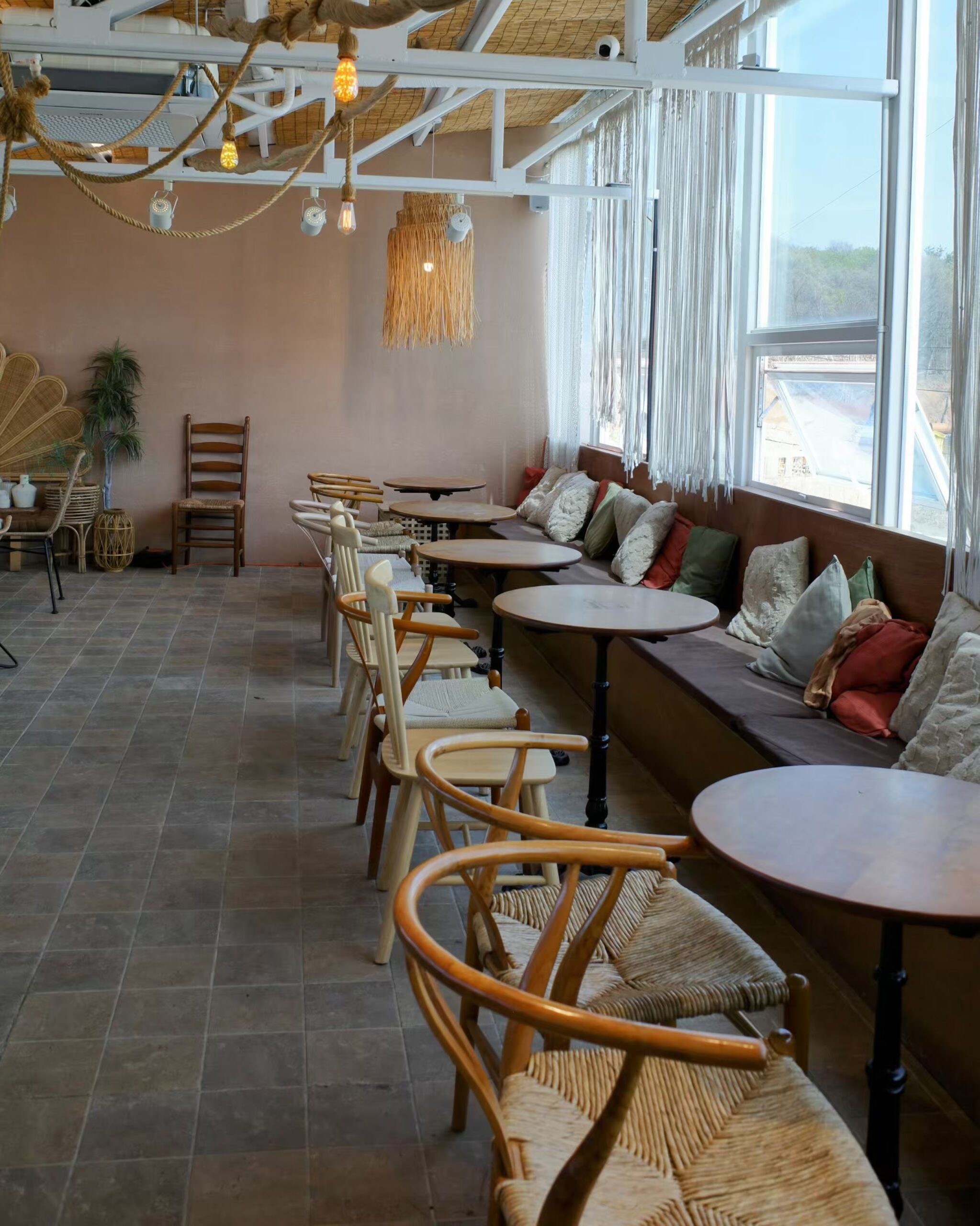
The second floor operates differently — a no-kids zone that trades the ground floor’s eclectic density for something quieter. Dusty rose plaster walls, a long banquette upholstered in brown running the full length of the window wall and scattered with velvet cushions in rust, sage, and grey, and wishbone chairs in varying pale woods pulled up to pedestal tables on cast-iron bases. Fringed rattan pendant lights catch the afternoon light from the sea-facing windows.
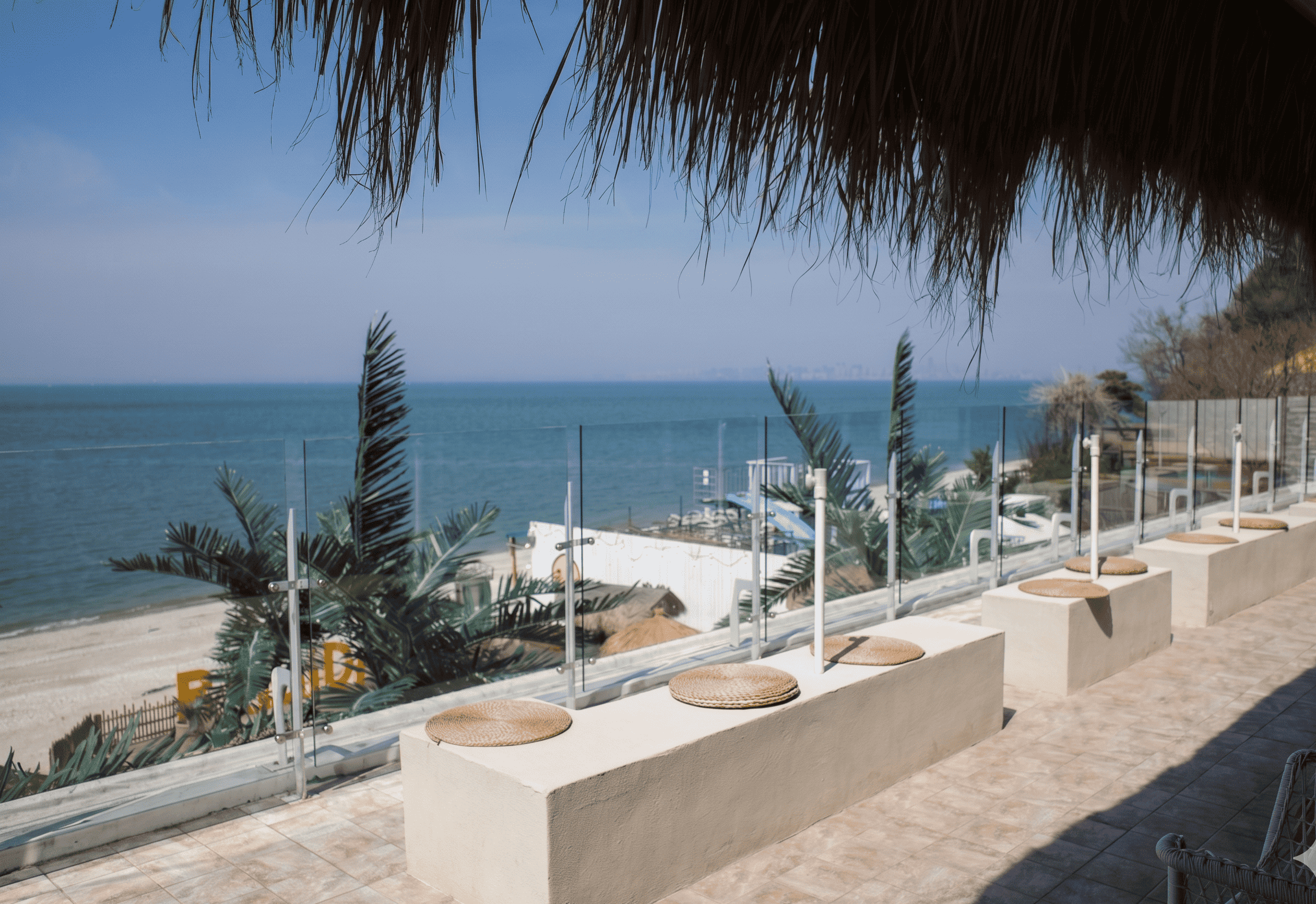
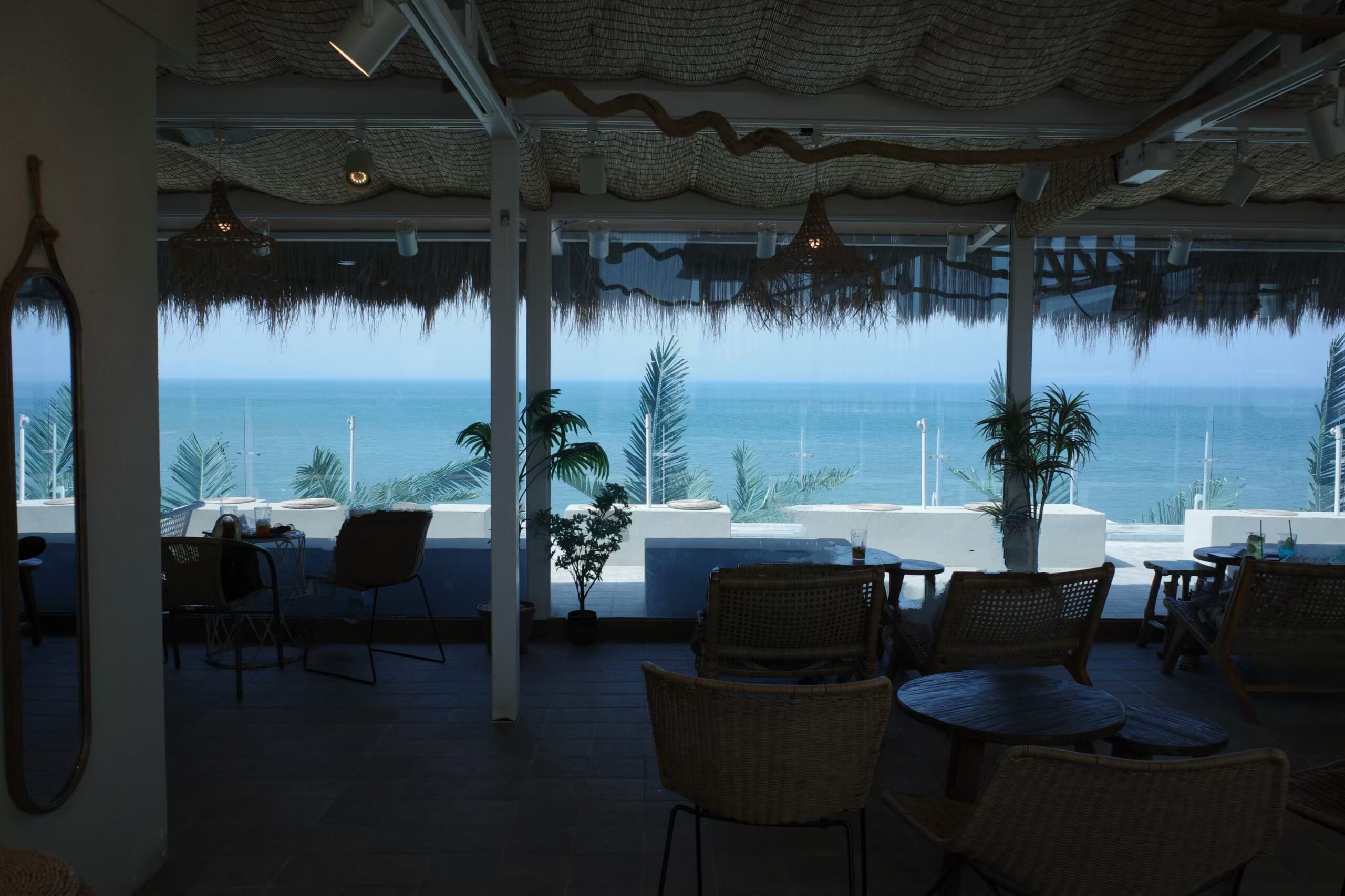
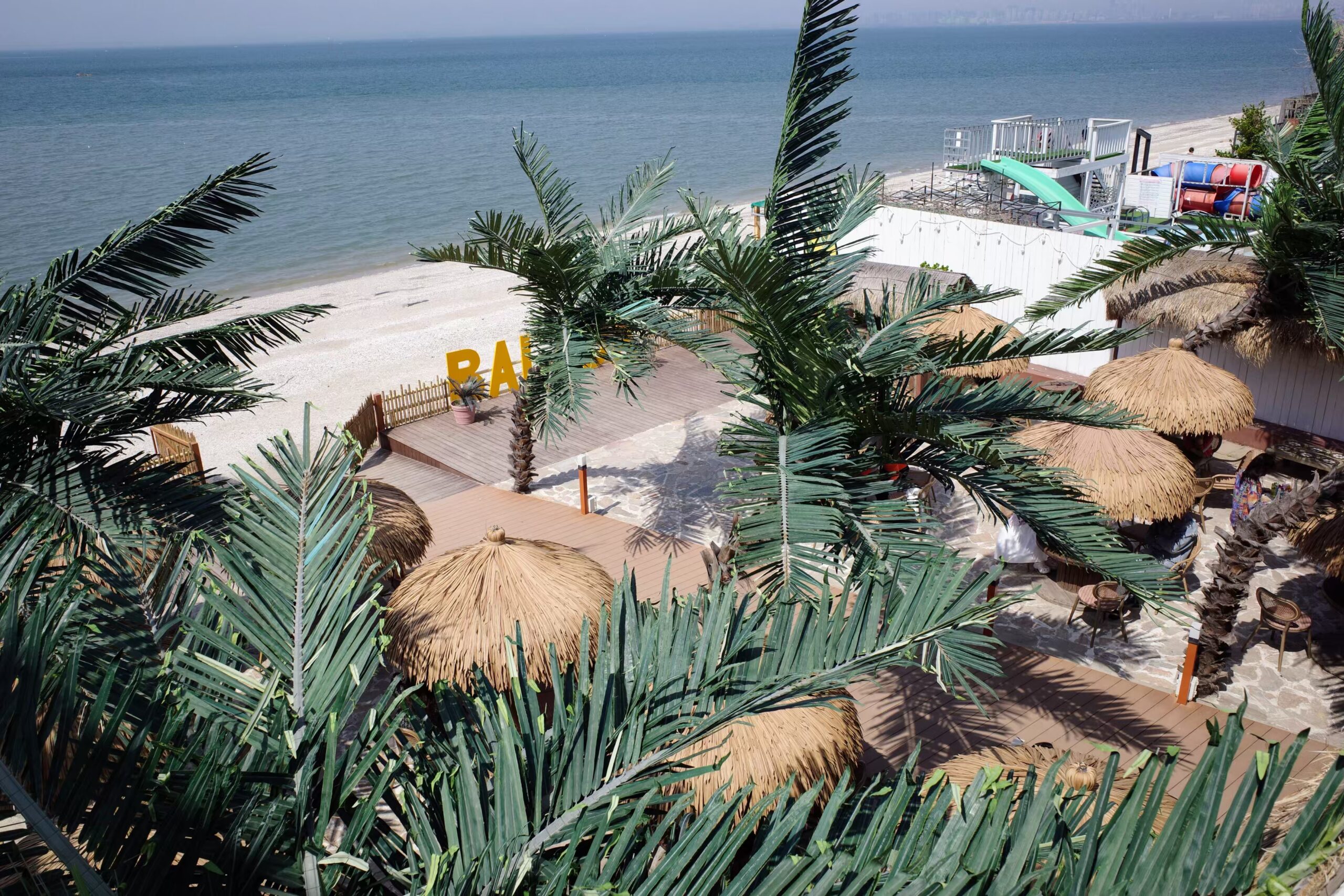
Step out onto the open terrace and the full picture comes into focus: a low concrete ledge lined with rattan cushions runs along a glass balustrade, the thatched eave overhead, and below — the entire outdoor ground level laid out in one glance, palms cutting across the frame, the BALiiDA letters visible on the deck, and the sea beyond all of it.
On the Beach
The outdoor ground-level seating is the space most people come for and the one that photographs best. BALiiDA has placed its yellow letters at the water’s edge facing back toward the building — a neat inversion that turns the café itself into the backdrop. The thatched parasols cluster in irregular groupings across stone and timber decking; rattan chairs with caned backs circle dark round tables. On a clear spring or summer day, the scene is as close as Daebudo gets to anywhere else.
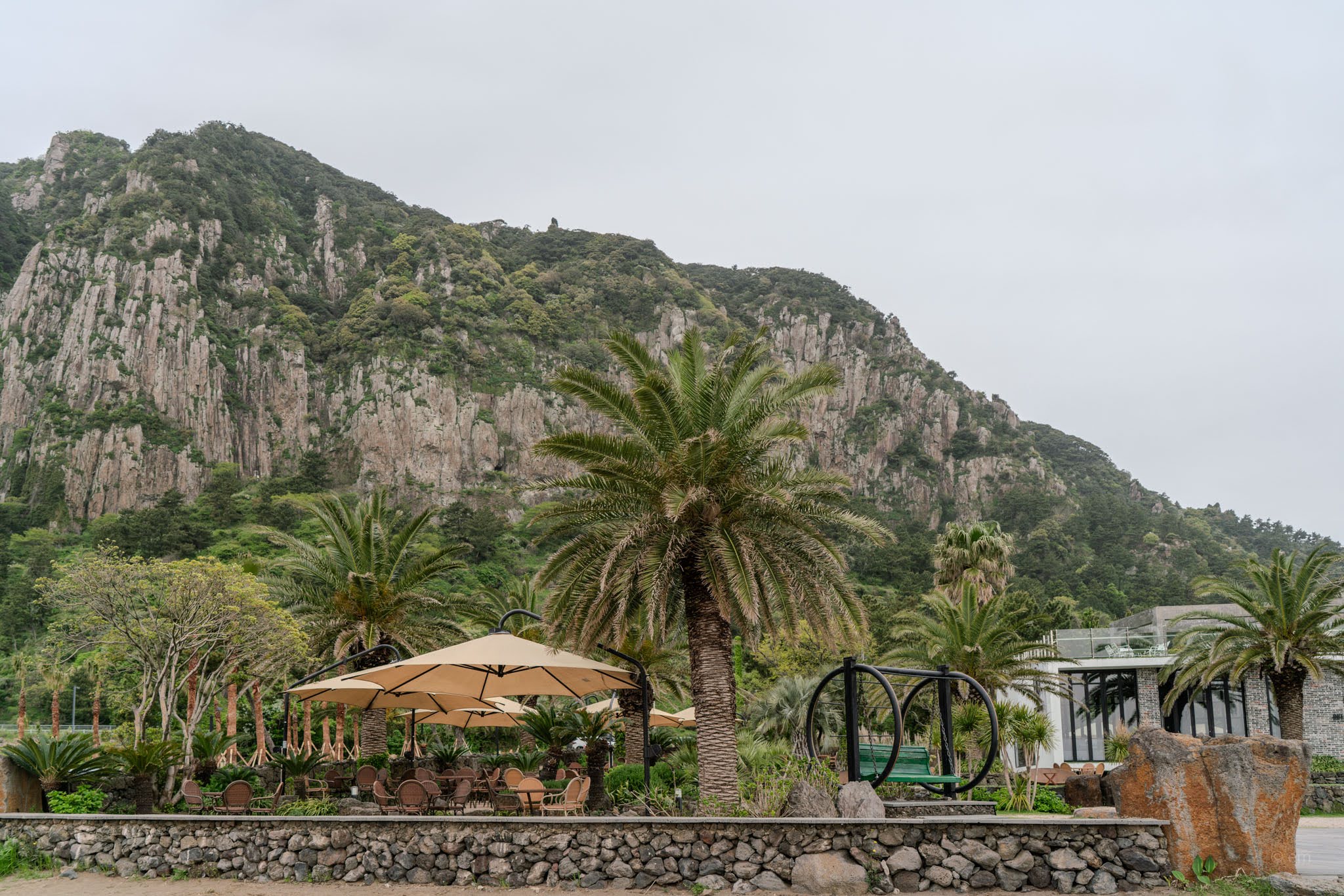
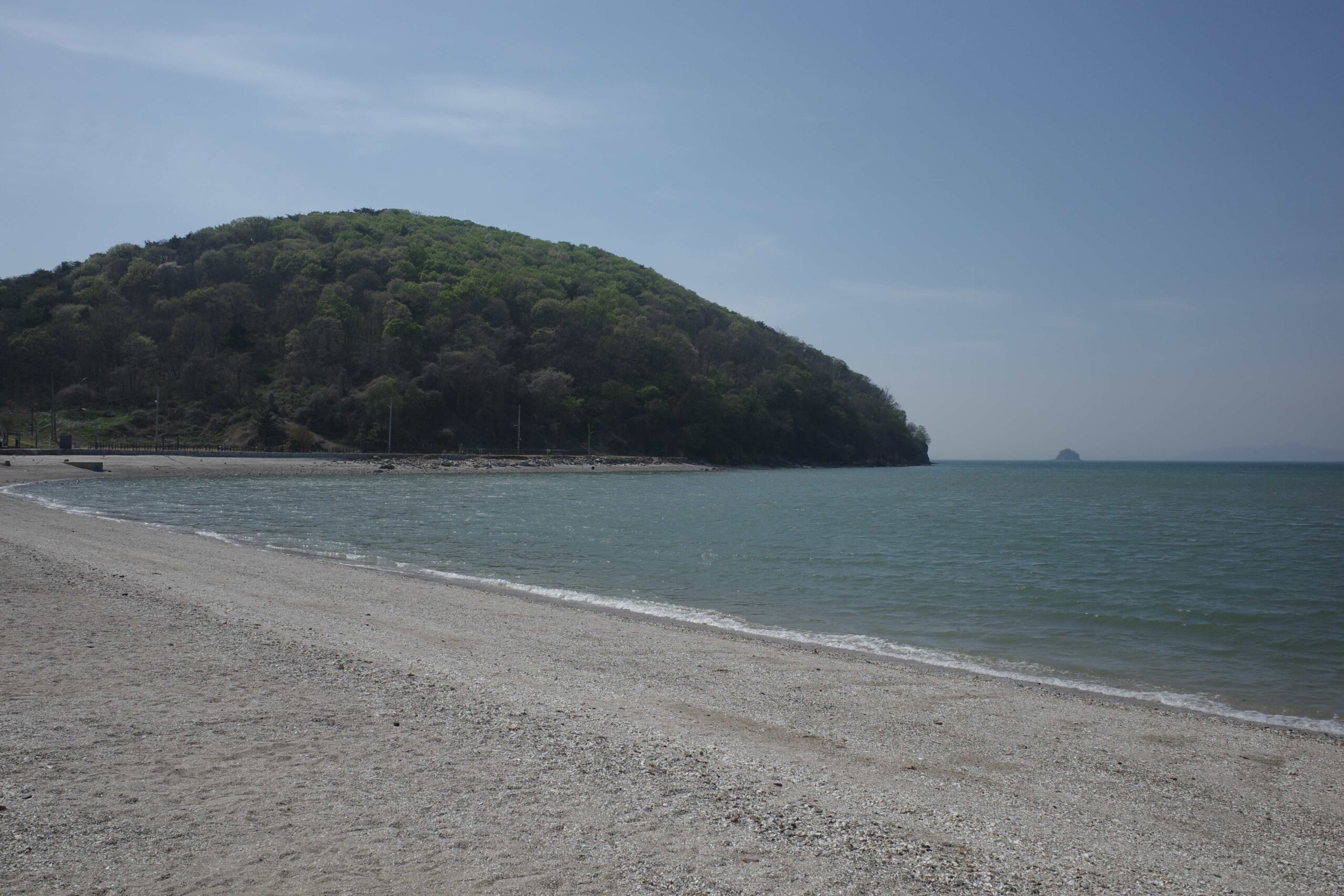
The beach beyond the bamboo fence is the Gubong-do shoreline — a long quiet crescent of pebble and sand, ending in a densely forested headland. The water here is the West Sea, which means shallow, tide-sensitive, and on certain days more green than blue. That honesty is, in its own way, part of the atmosphere.
What to Order
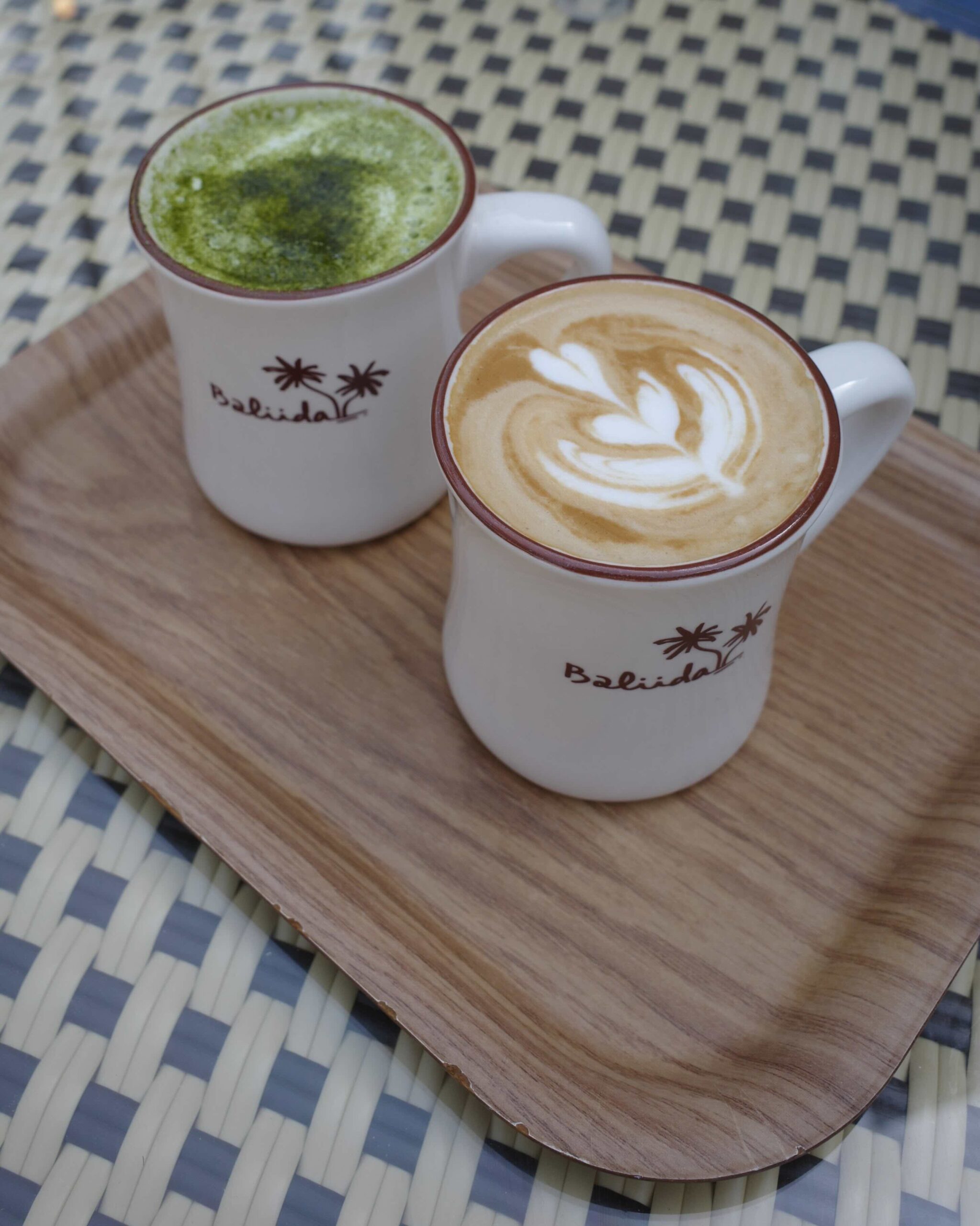
The drinks menu leans decisively into the resort premise. The house signature is the Dust Brown — a layered dirty café mocha built with espresso, dark chocolate powder, and dense cream, more visual statement than subtle coffee drink. The tropical fruit options are where the concept gets most earnest: Tropical Pine is a sweet-tart pineapple drink, while Orange Sunrise and Pink on the Beach (dragon fruit and mint) are built for the outdoor light and the camera. The Lime Mojito reads as a beach club standard and functions accordingly. For something plainer, the Americano is available, and an einspänner rounds out the coffee end. Food runs to bagels, scones, and sandwiches with the occasional coconut-inflected item that fits the room better than anything more elaborate would.
A Family Affair
BALiiDA shares its owner with Café Hawaiida at Bangameori Beach — another Daebudo venue with a similar tropical register and the same ~iida naming logic. The two cafés occupy different ends of the island and different visual moods, but the sensibility connecting them is unmistakable.
The palm trees don’t care that the view is West Sea. They’ve decided.
BALiiDA
- 57 Gubong-taun-gil, Danwon-gu, Ansan-si, Gyeonggi-do
- Weekdays 10:30am–7:30pm
- Weekends & holidays 9:30am–7:30pm (last order 7:20pm)
- Open year-round
- 1F kids welcome | 2F no kids | No pets
- Instagram: @cafe_baliida