The classical music was already playing when the door opened.
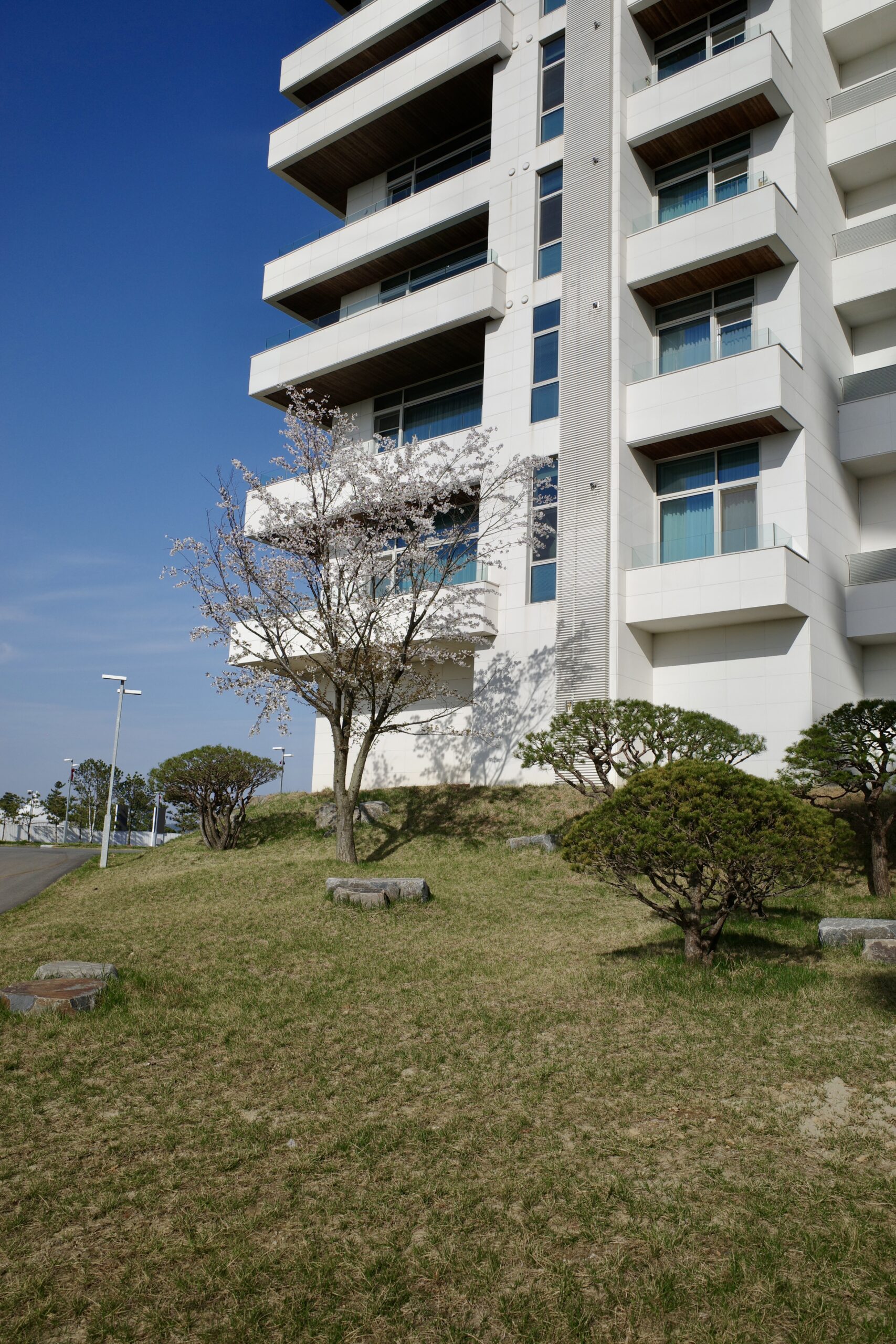
The Heaven Resort sits on a hill on Daebudo, an island in the West Sea just over an hour’s drive from Seoul. The premise is straightforward: a private golf and residence resort on a site surrounded on three sides by water, where every room faces the sea. The 27-hole course is the only one in Korea where all holes carry an ocean view. Most guests come for the golf. That is, probably, the intended guest.
The Grounds
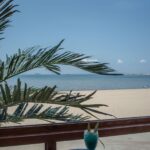
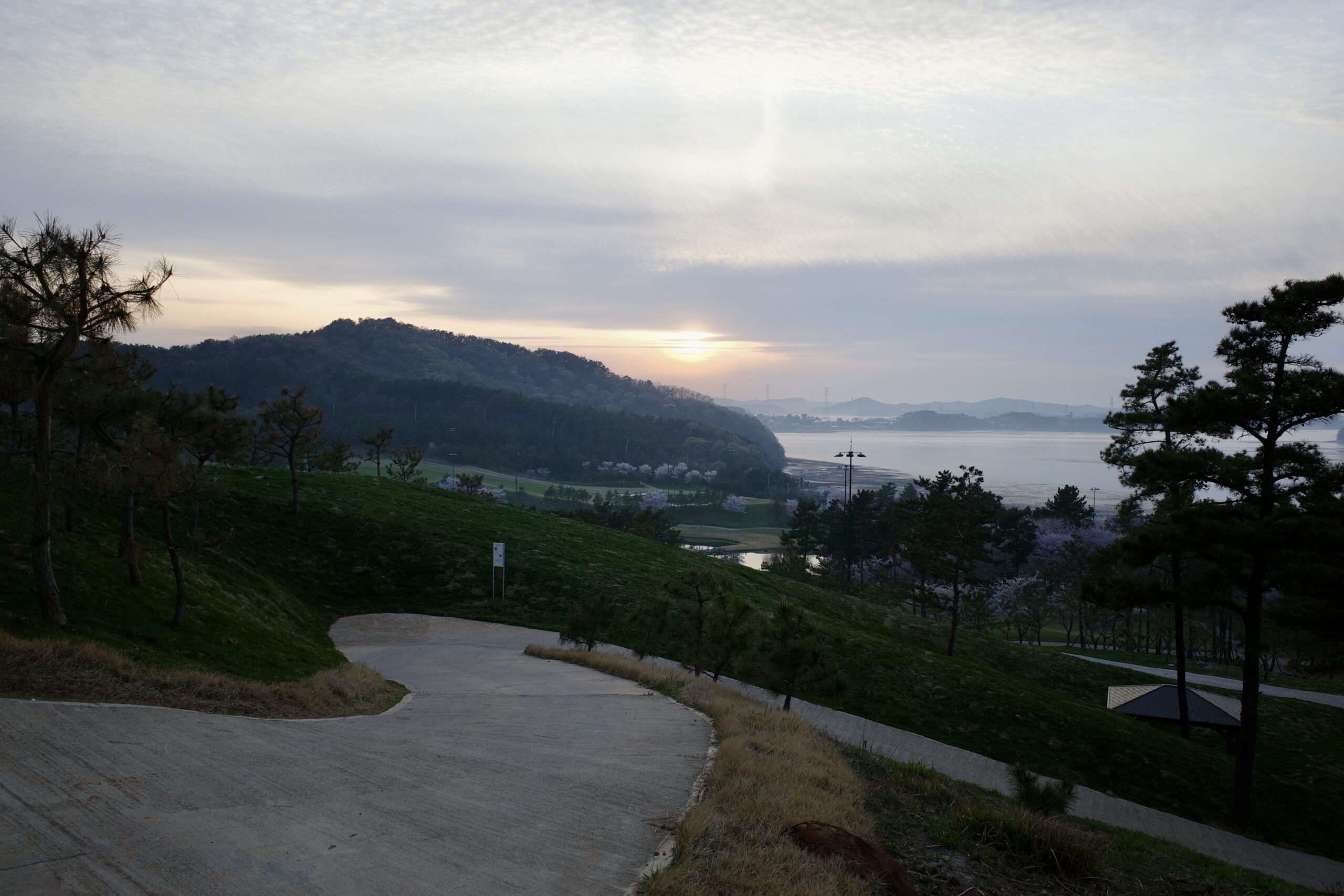
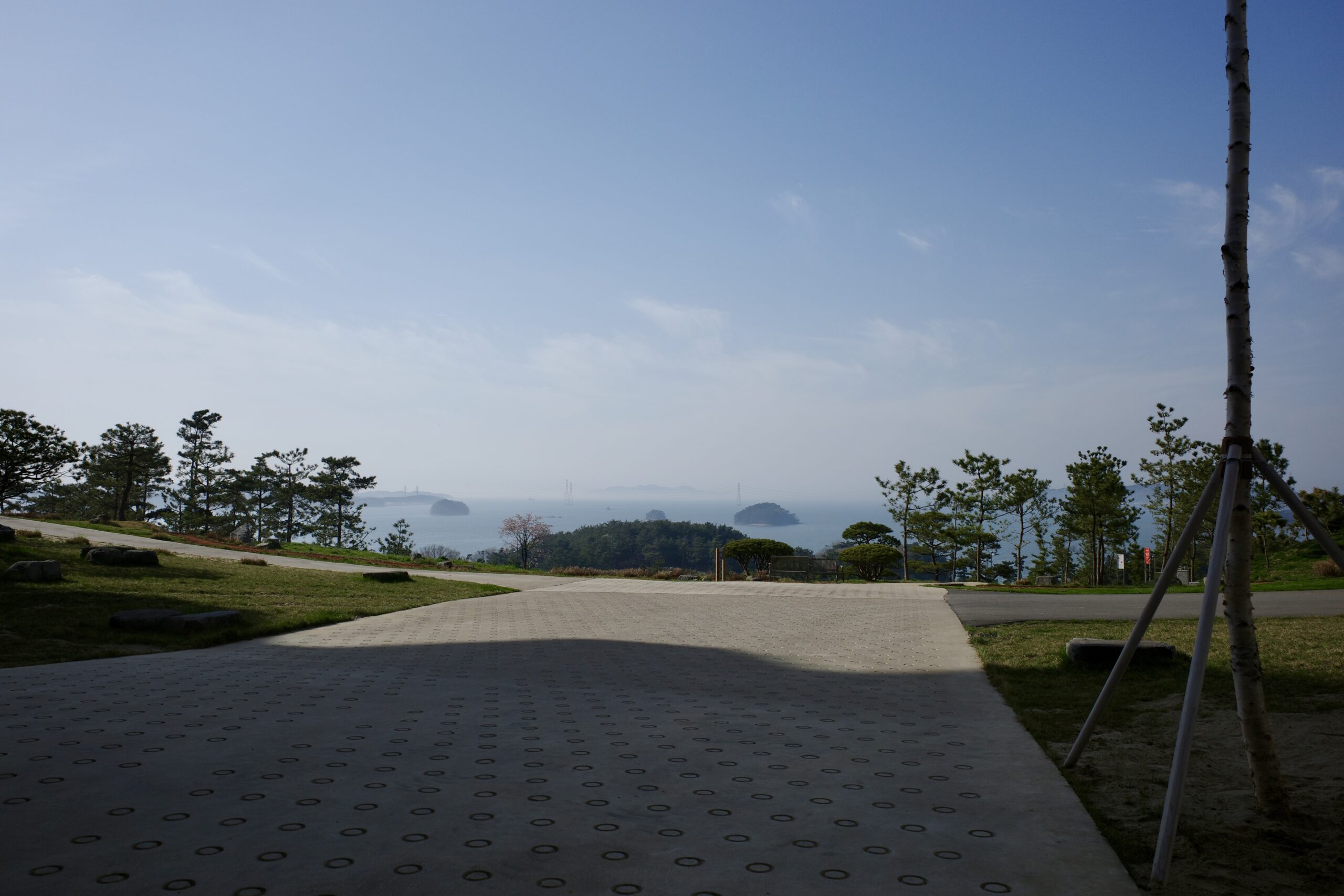
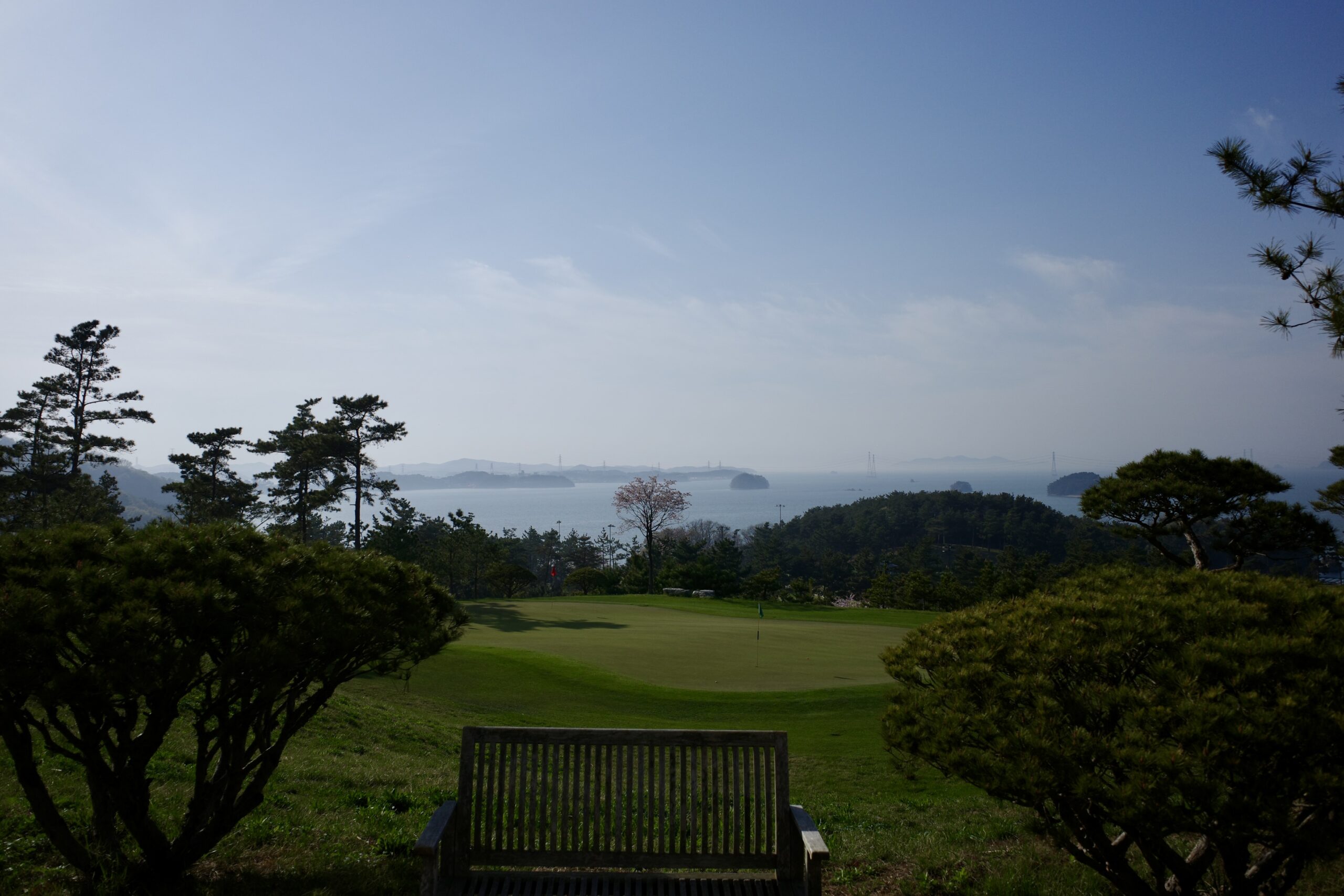
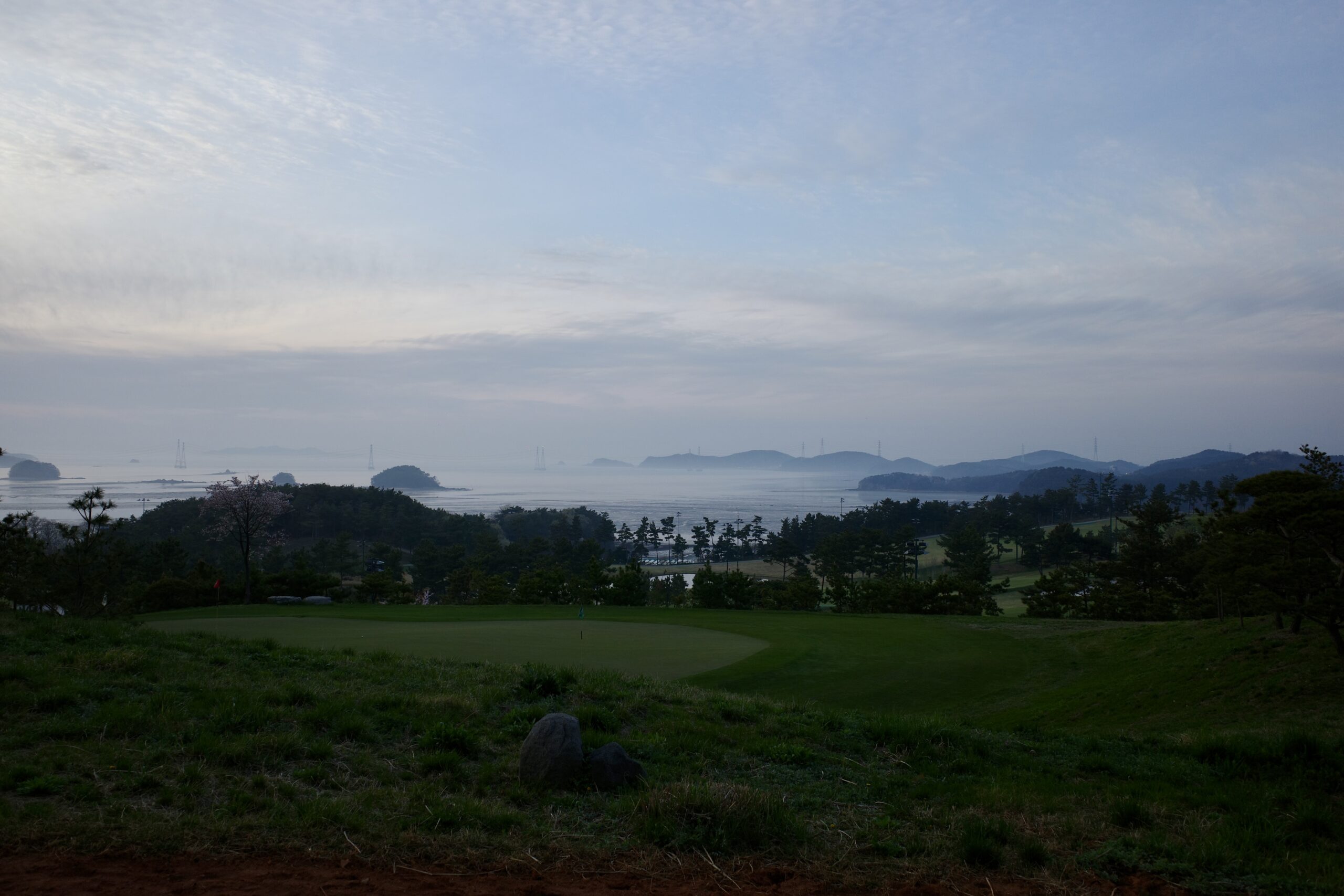
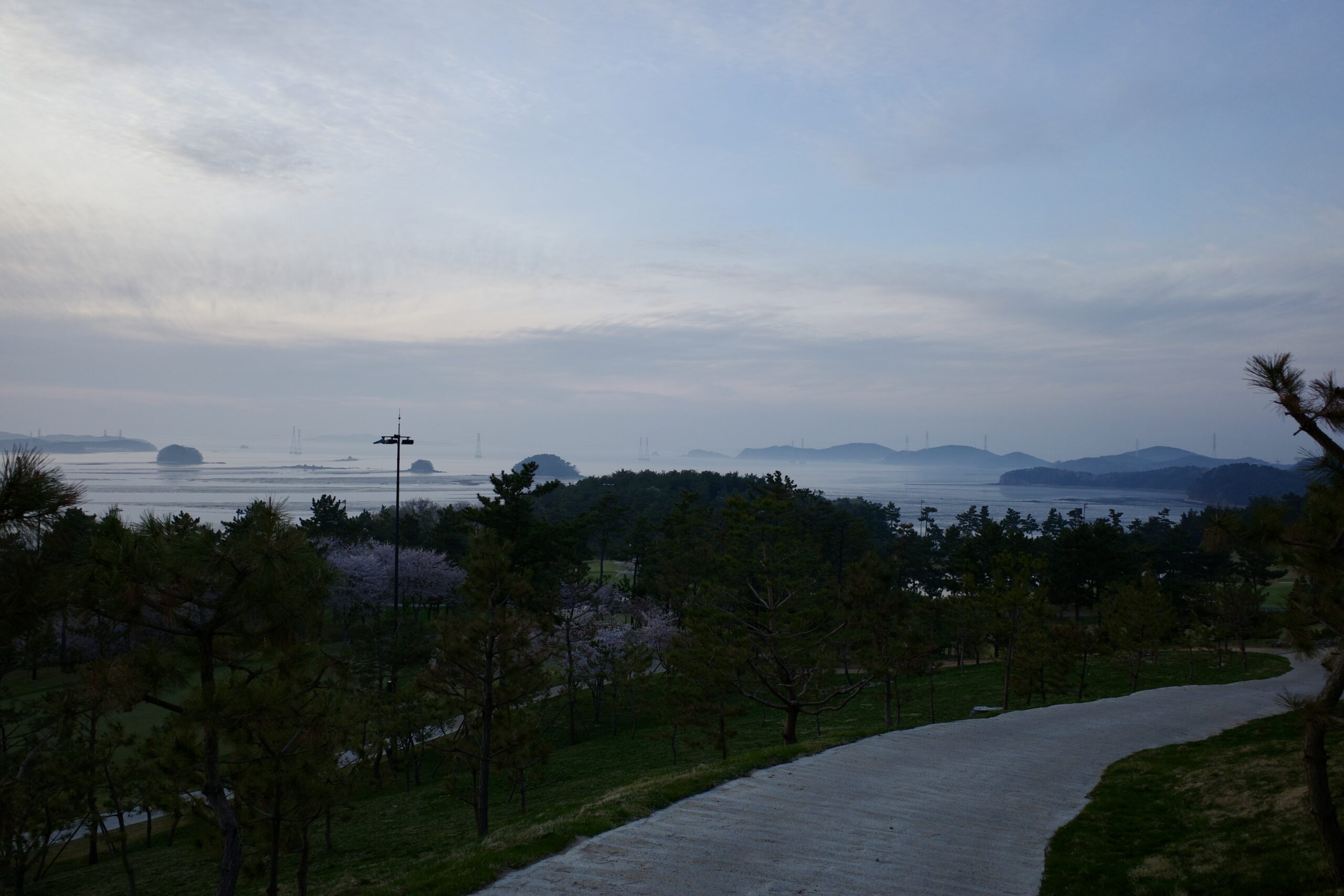
From the parking level, the resort opens with no transition. One moment you are in an underground garage; the next, the West Sea is directly ahead, spread across the horizon beyond a cascade of golf greens and pine-covered hills. Small islands float in the distance. At the right time of day the whole thing reads less like a view and more like a hallucination — the kind of landscape that seems too composed to be accidental. The resort claims the name The Heaven without apparent irony, and standing at that edge in early spring with cherry blossoms behind and tidal flats ahead, the name holds.
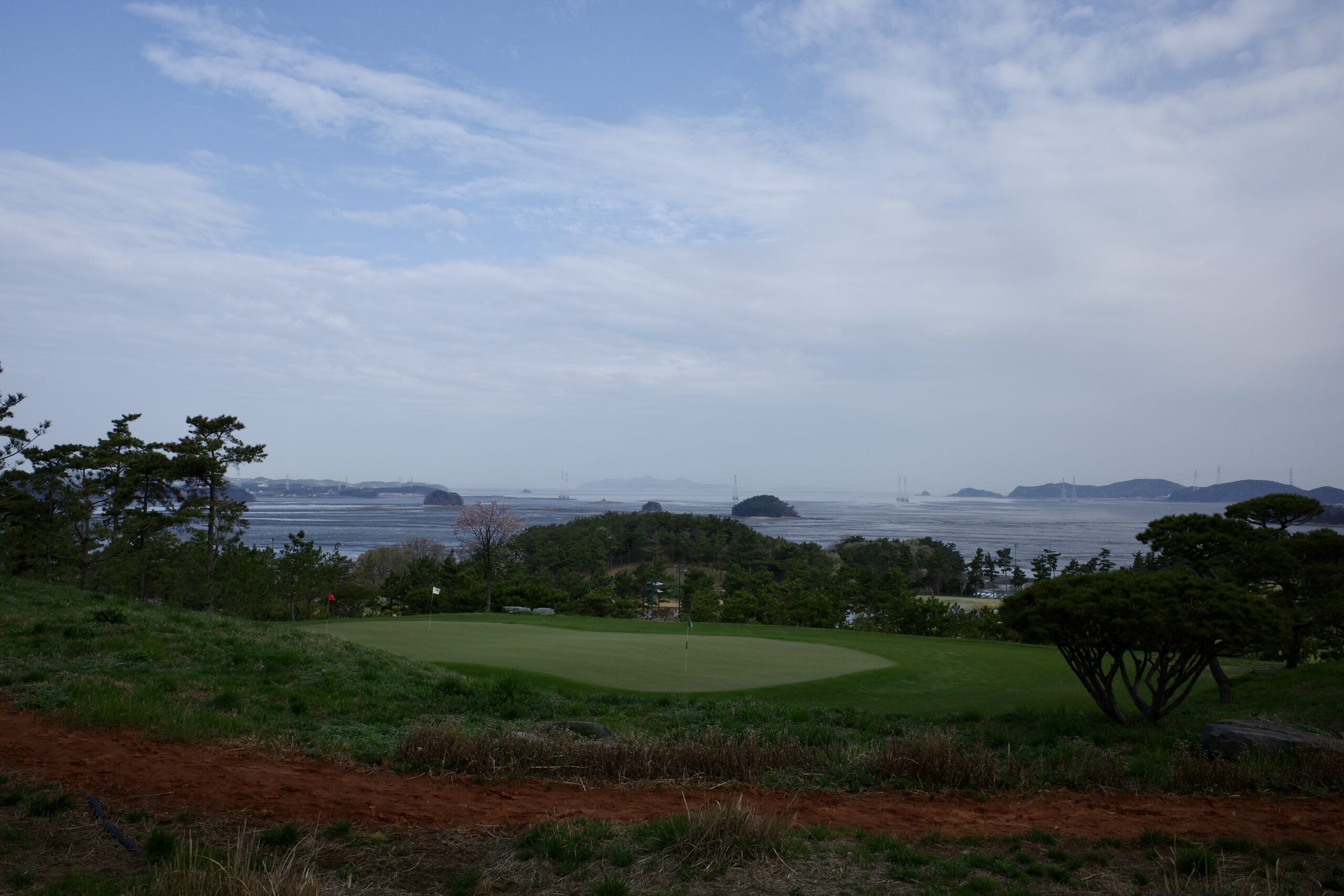
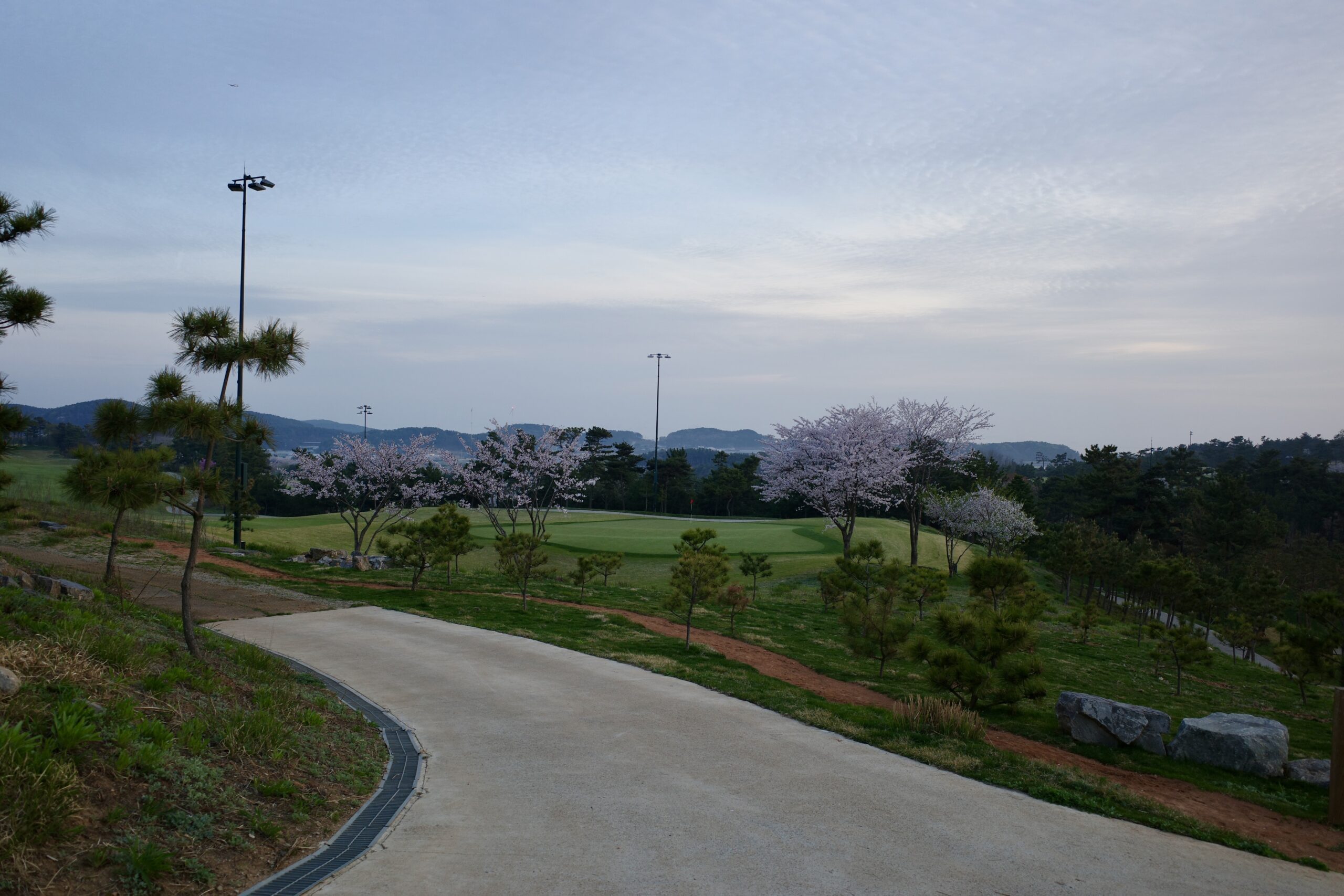
The 27-hole course wraps the hillside in every direction, each hole facing the sea — the only course in Korea designed this way, by golf course architect David Dale. Walking the grounds at dusk, the sky over the water turns pale and flat, islands dissolving into haze, the greens going dark from the bottom up.
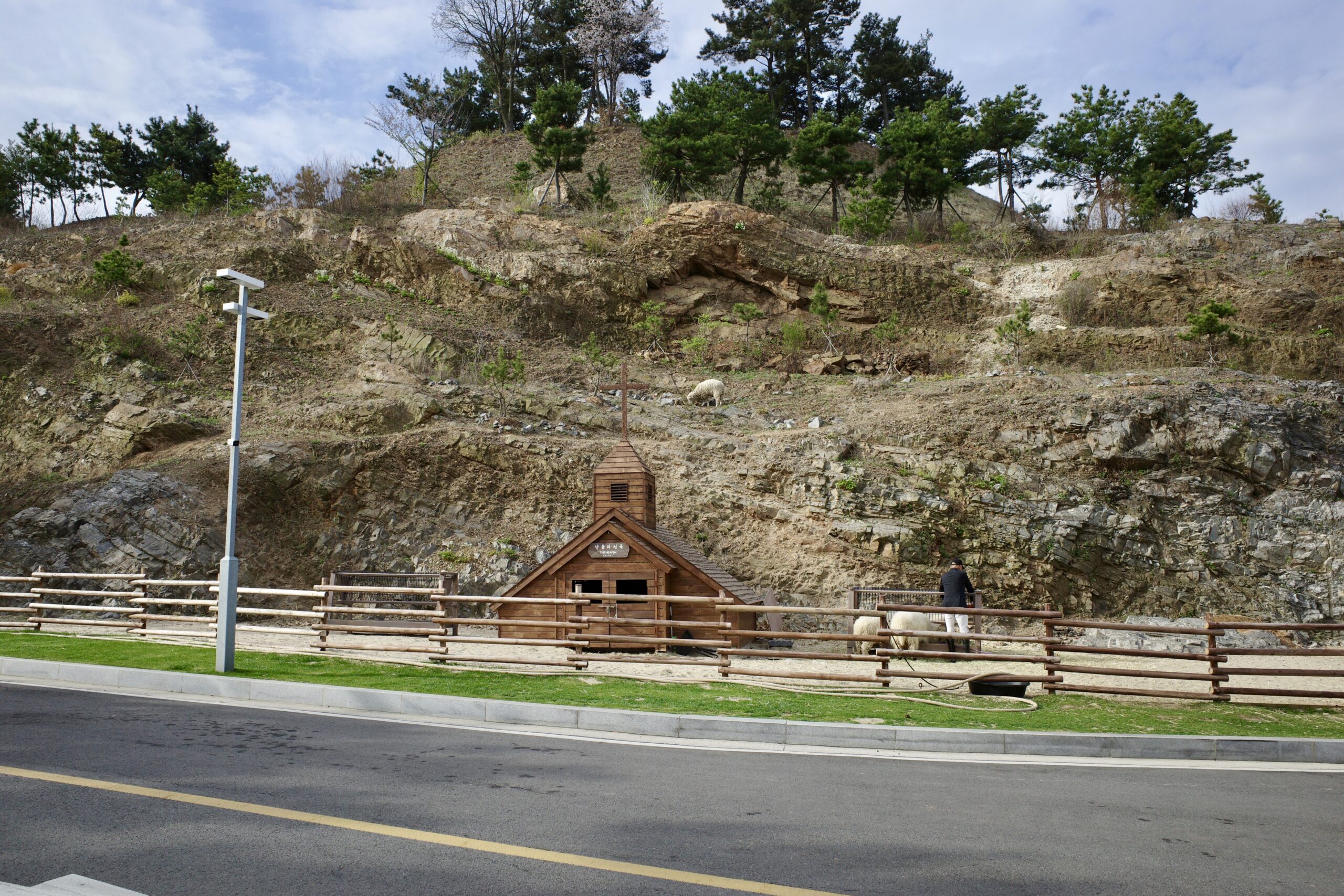
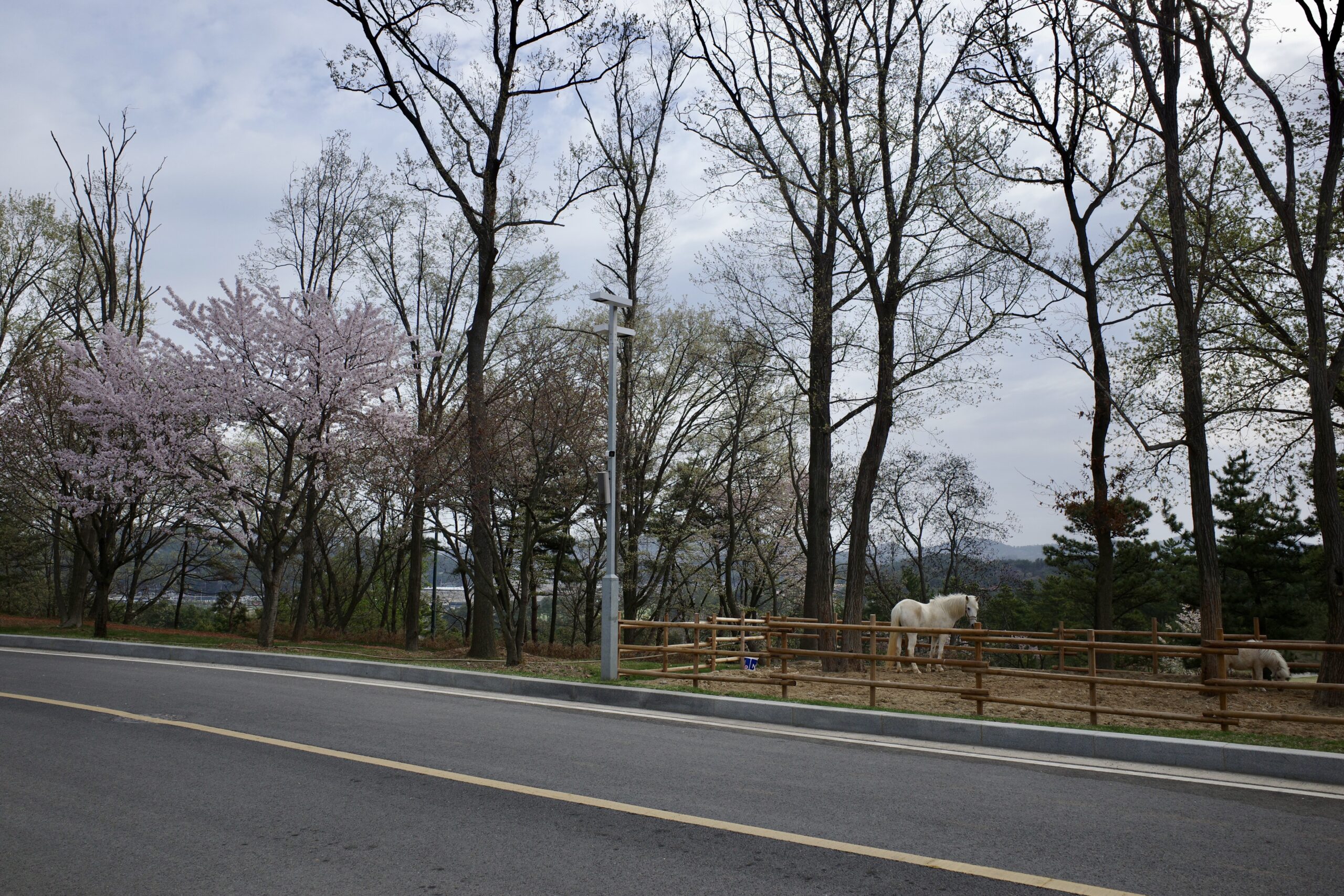
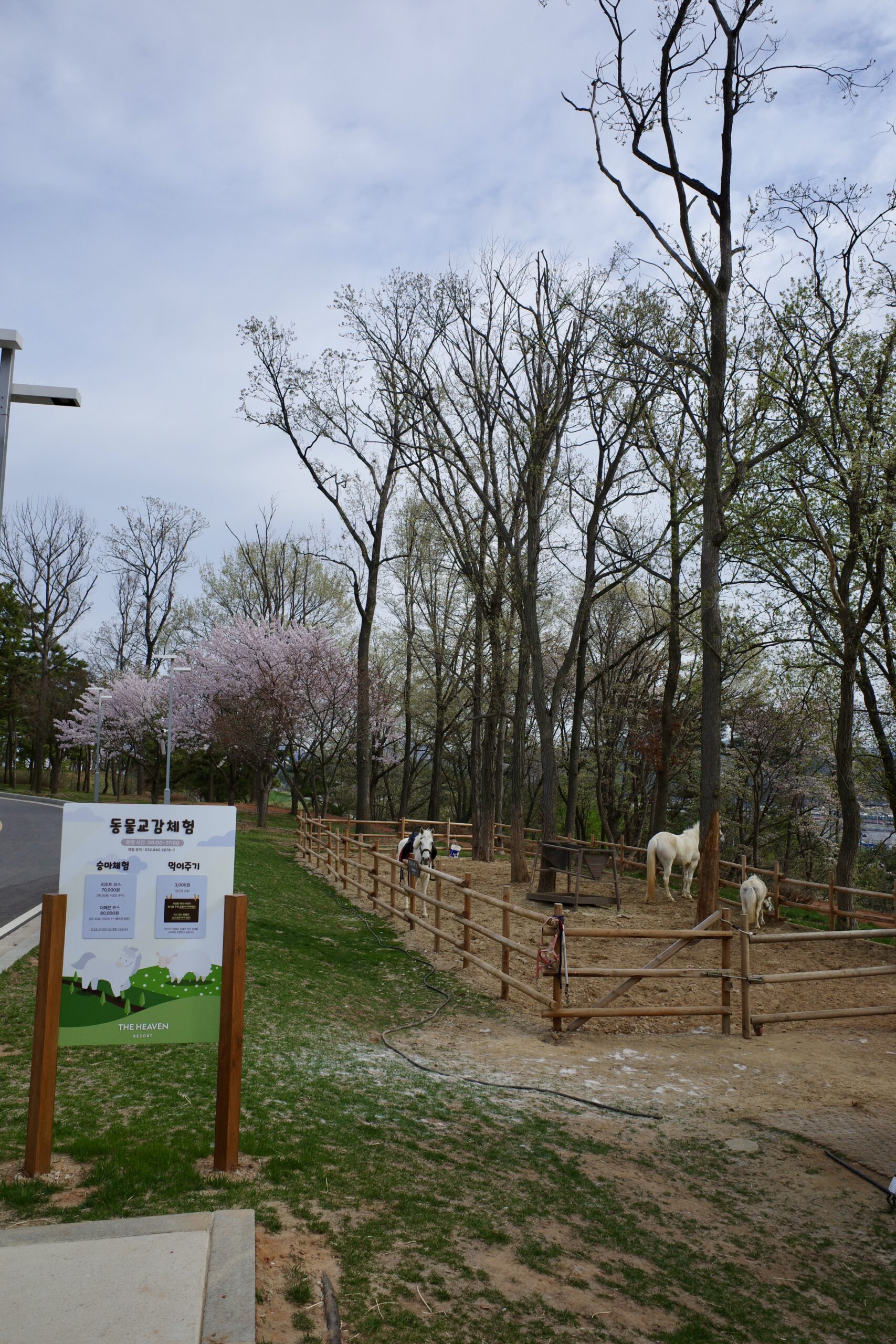
Along the road near the resort entrance and residential towers, a small animal enclosure sits against a bare rock face — white horses, a timber barn, sheep grazing on the slope above. The resort offers riding experiences here for younger guests. It is an unexpected detail in what is otherwise an uncompromisingly premium environment, and it gives the place a slightly surreal quality that the sea views alone might not.
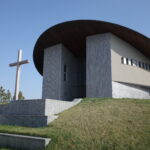
One caveat worth naming: the resort carries a faint but present religious register, from the Ark Church on the grounds to the name itself. It may not read as anything at all for most guests, but it is there. The environmental footprint of a 27-hole course on an ecologically sensitive tidal island is a different question, and one that the resort positions as addressed through eco-friendly design — though that claim is taken on faith.
The Rooms
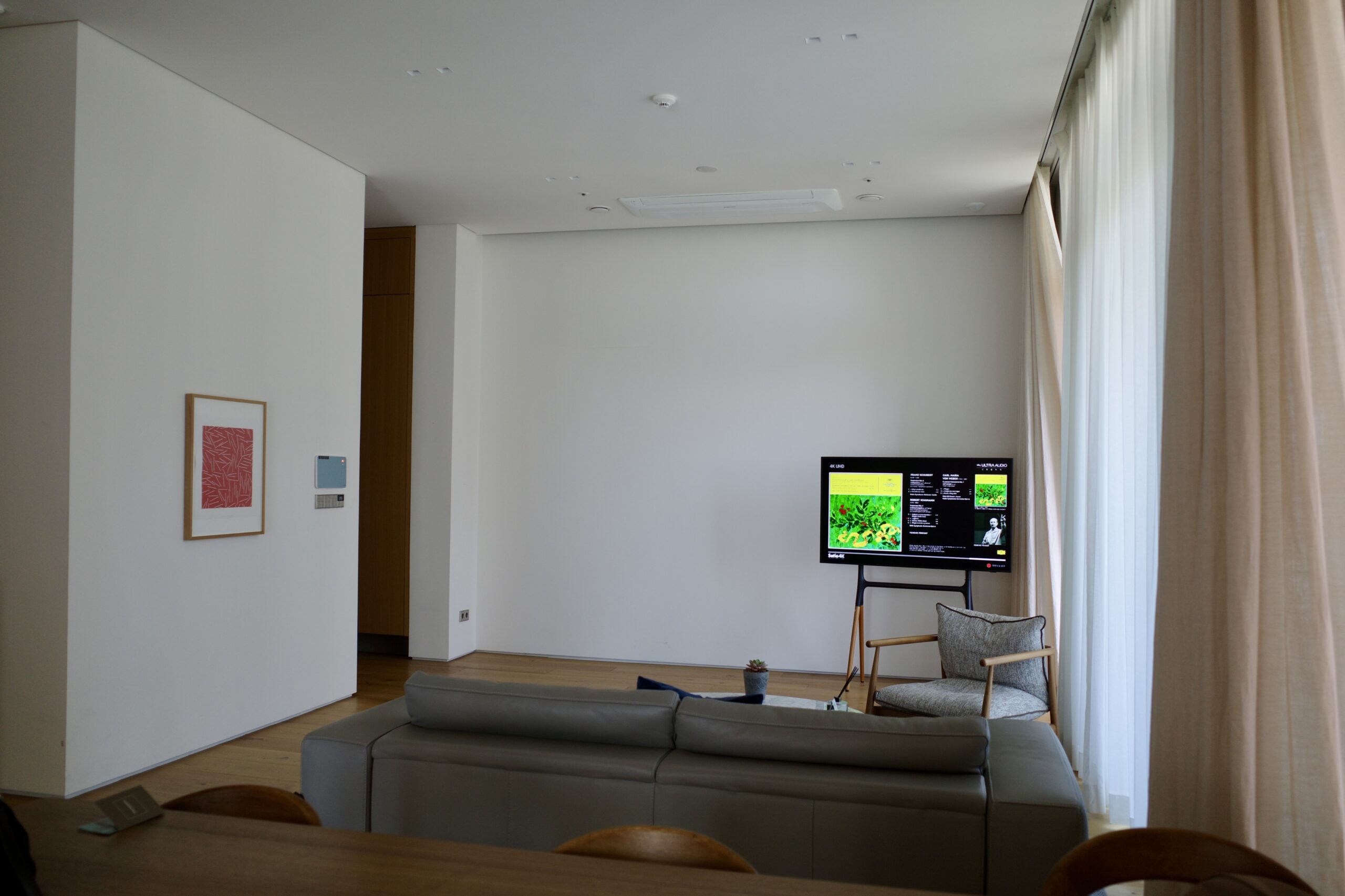
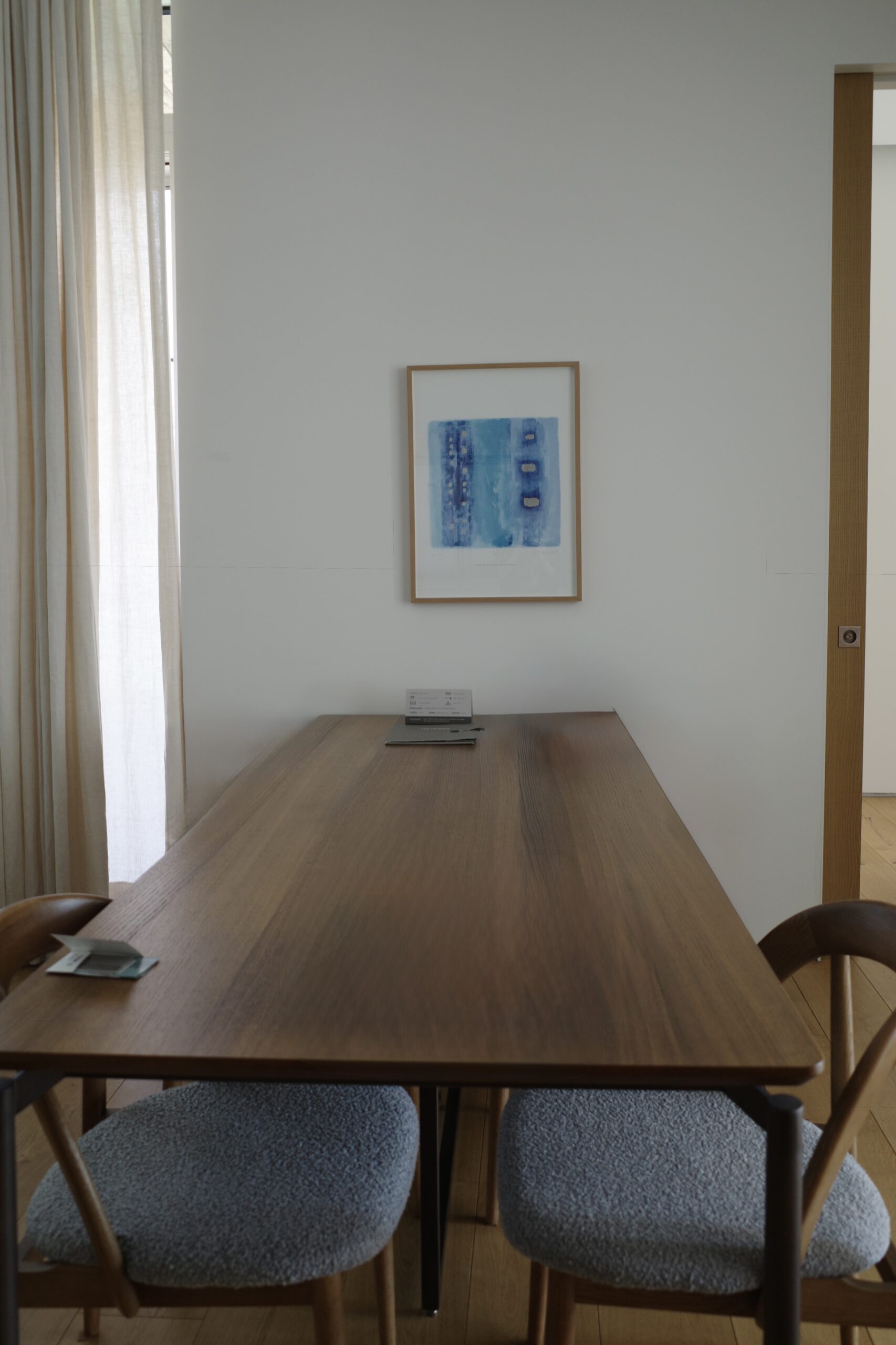
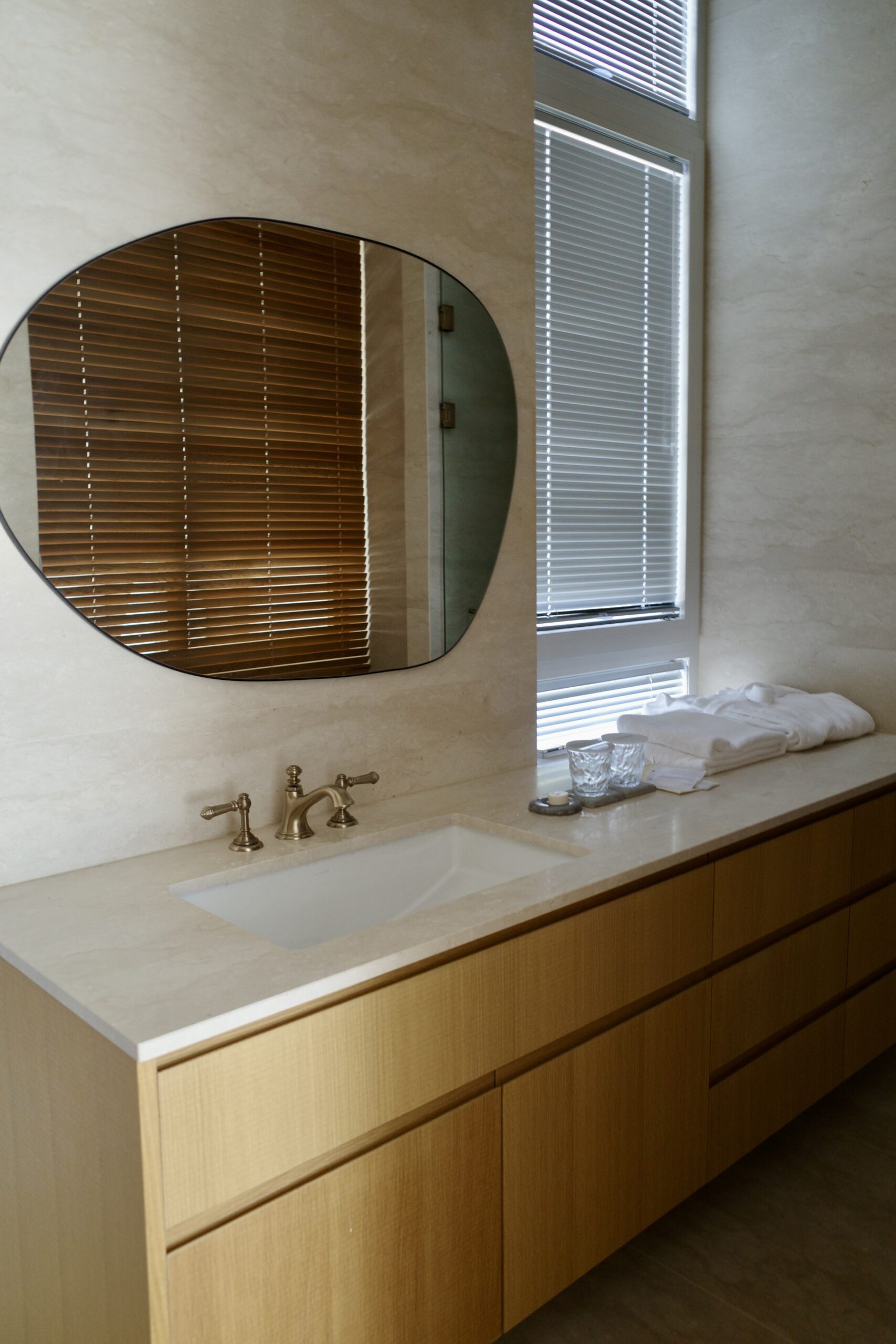
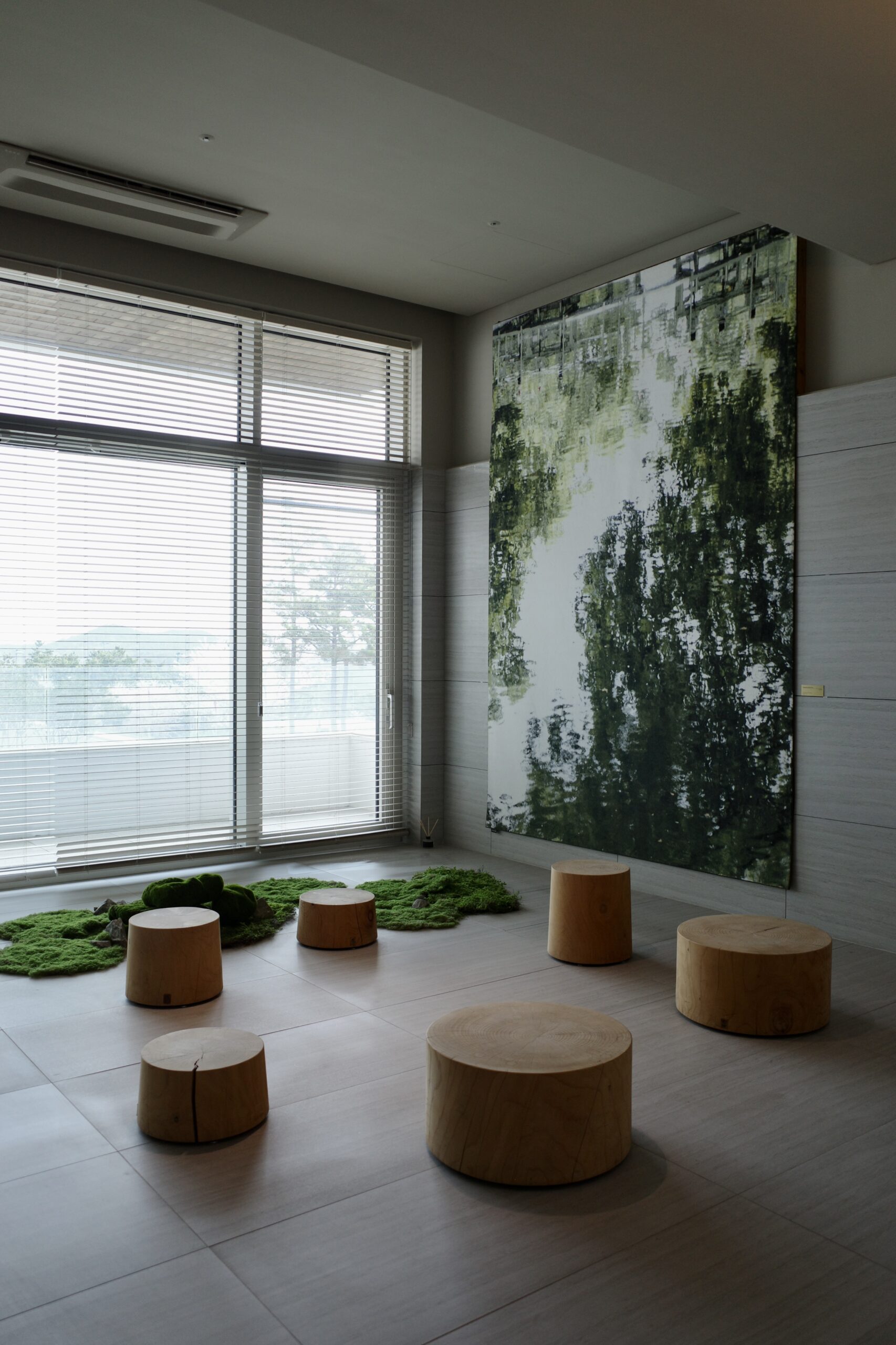
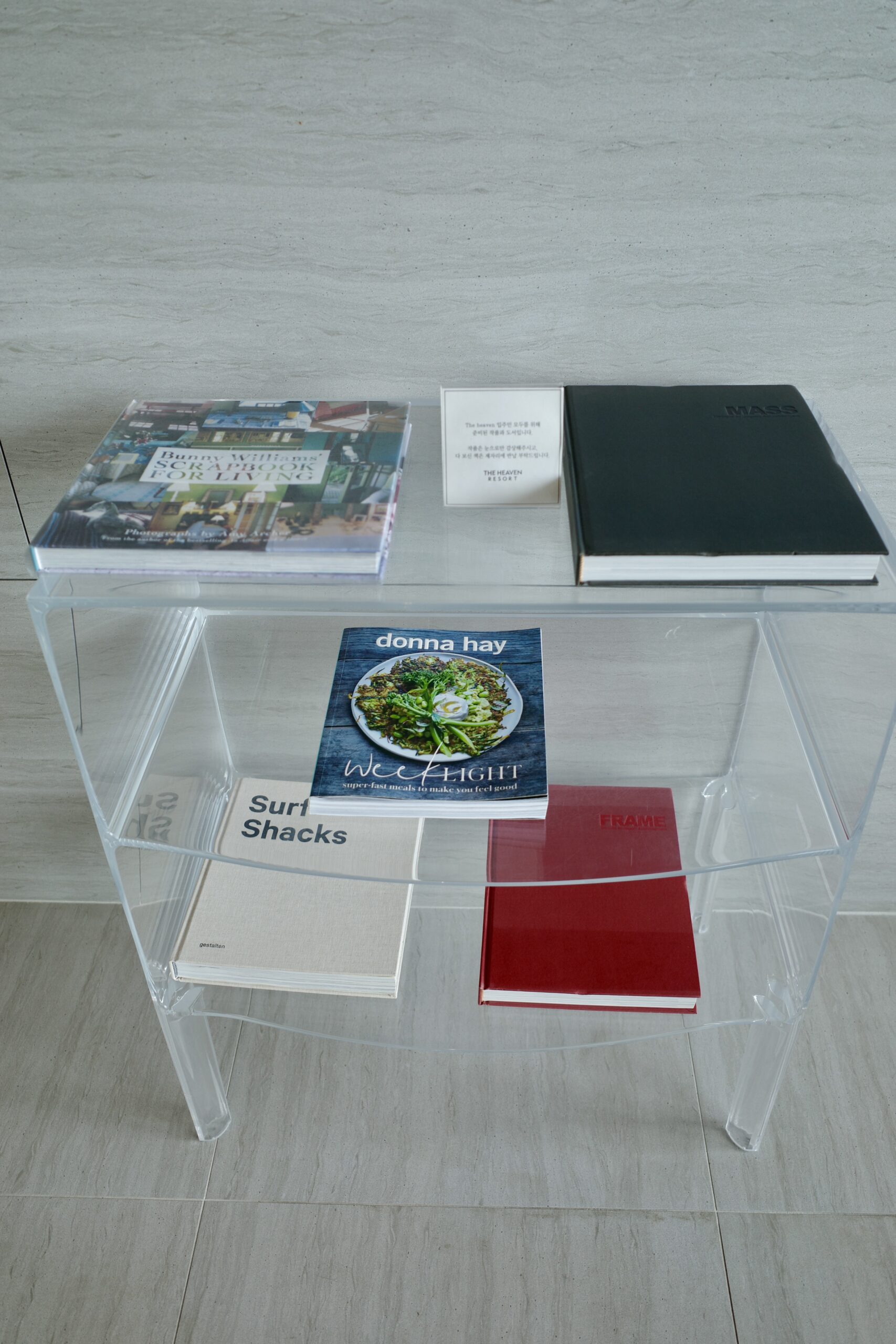
The room is large and unhurried. Pale walls, oak floors, clean-lined cabinetry — the kind of interior that asks nothing of you. Art hangs on the walls at measured intervals: a blue watercolor in the dining area, a red abstract print in the living room, a large gestural painting in the corridor corner where wood stump stools are arranged around a forest-scaled canvas. The building has opinions about what a room should feel like, and those opinions run consistently through every detail, from the brushed brass faucet fixtures in the bathroom to the acrylic side table stacked with issues of Frame and Surf Shacks.
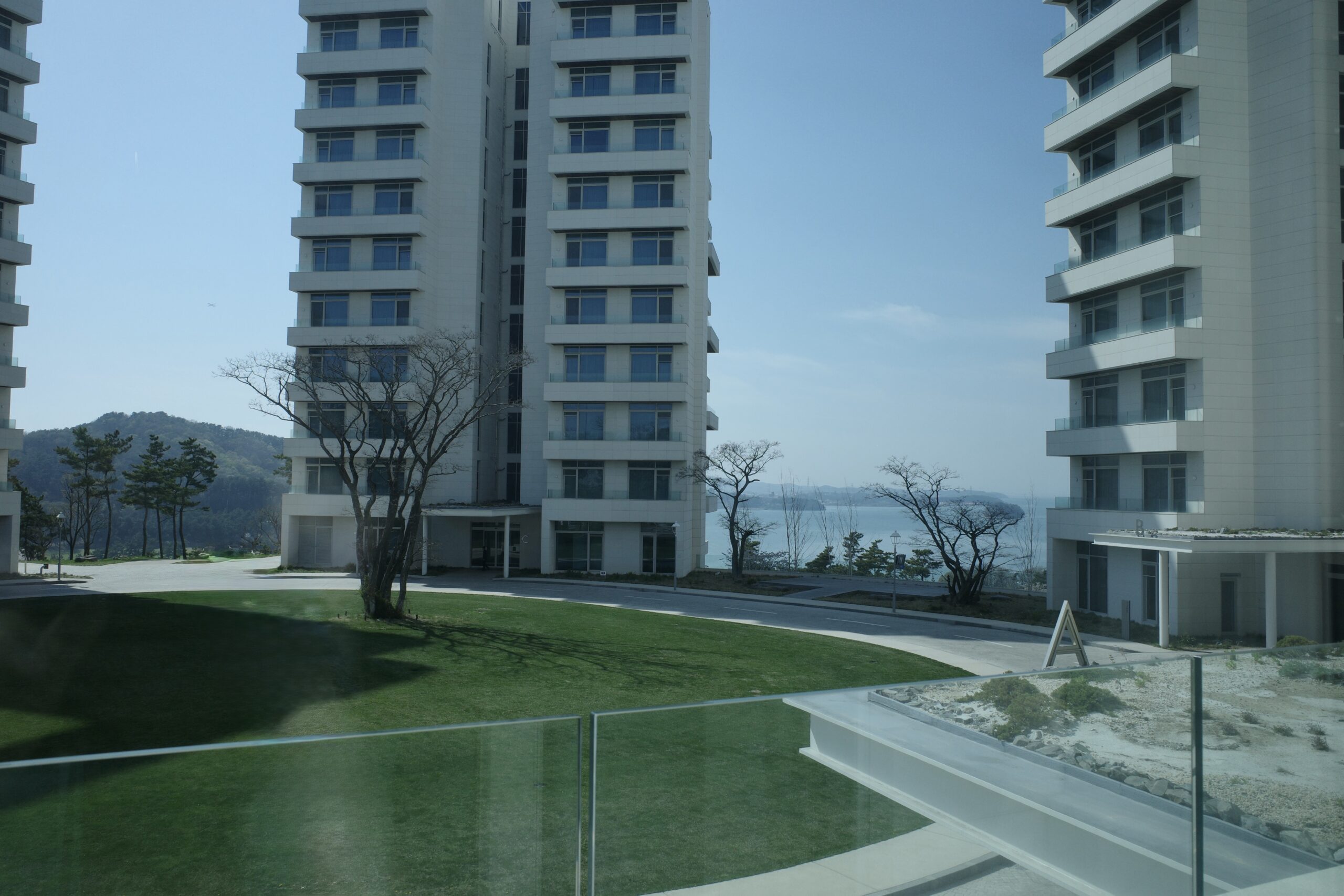
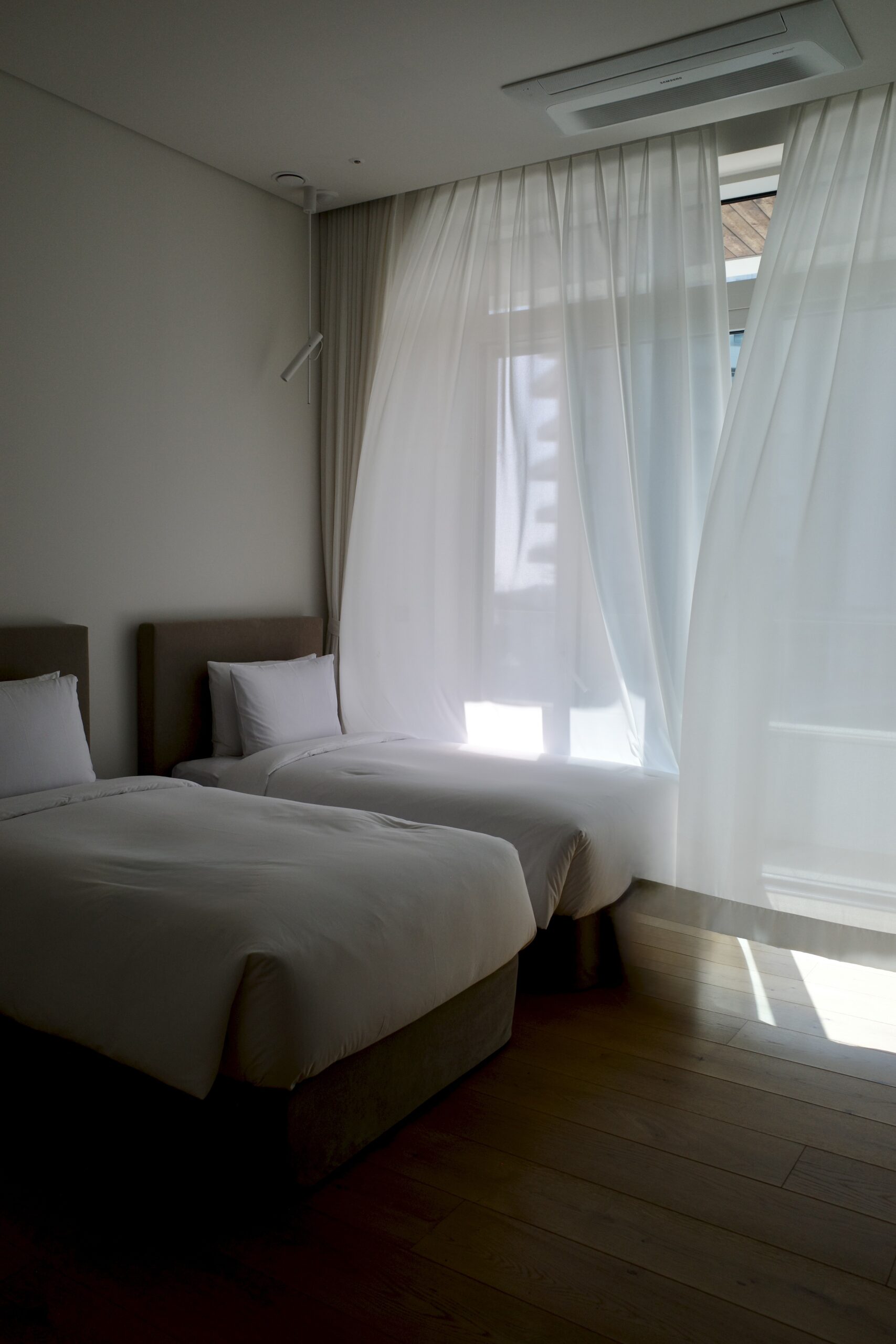
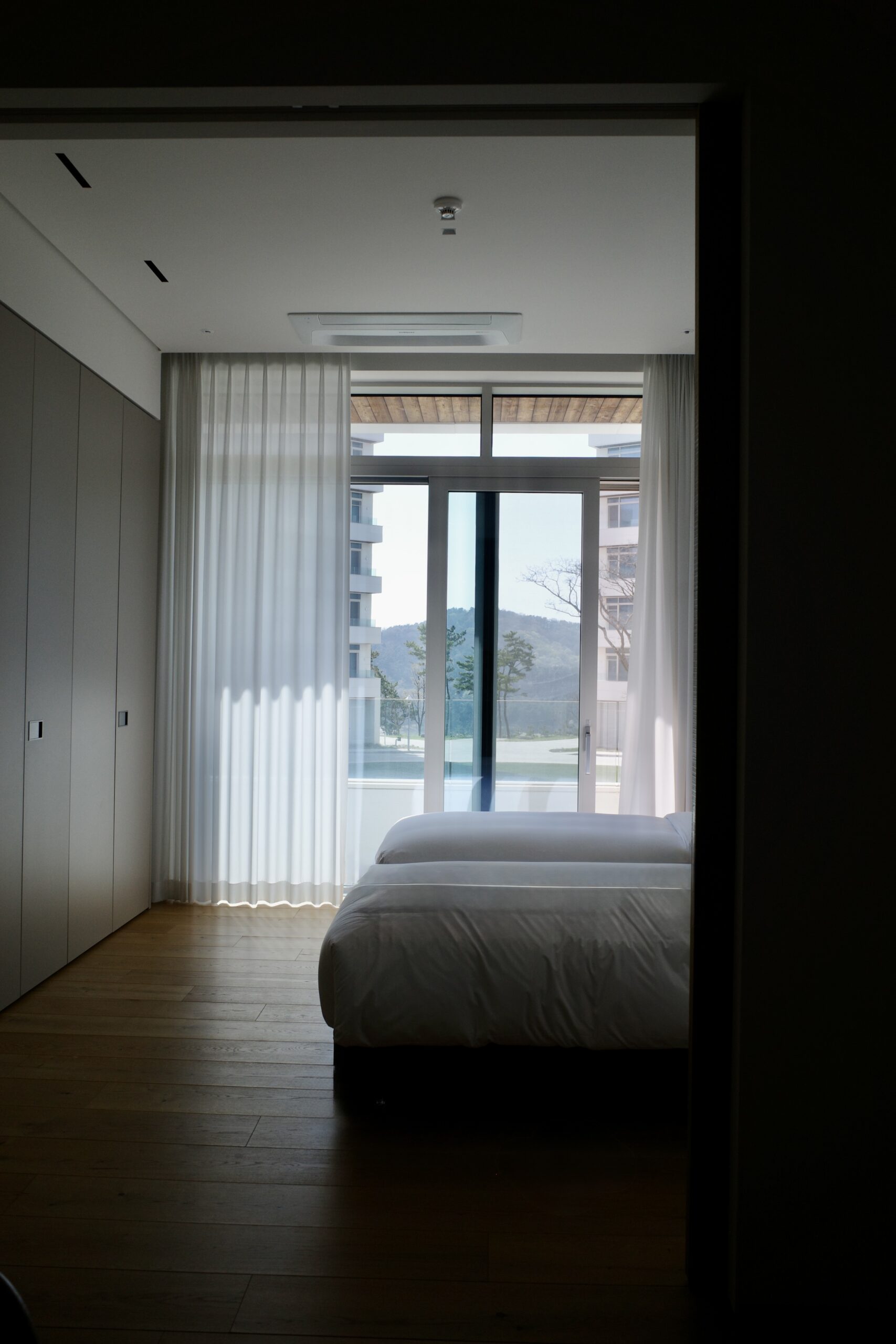
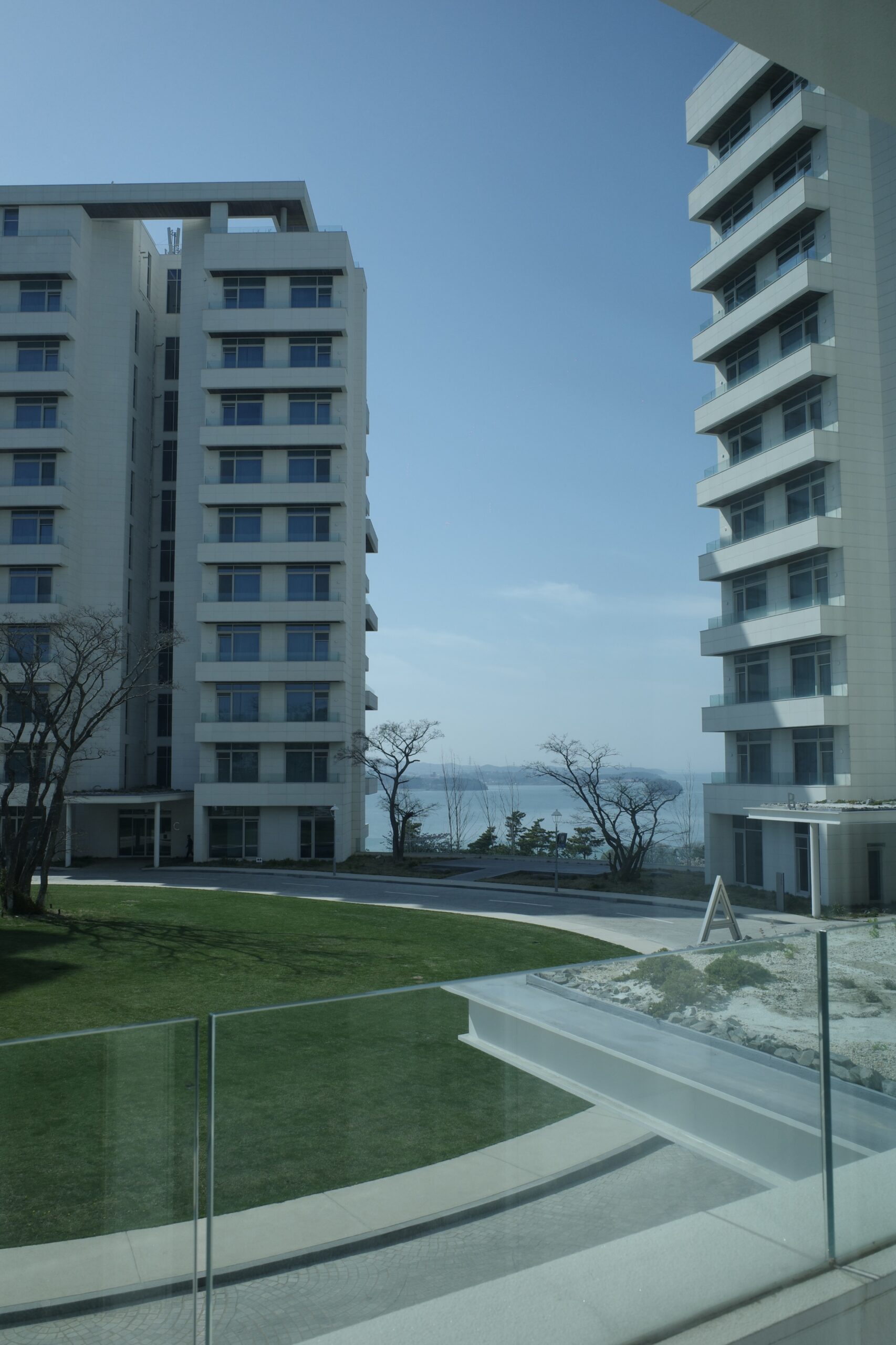
Even the Lower-floor rooms carry a partial sea view — the West Sea appearing at the edge of the frame between the resort’s residential towers, cut with bare trees in early spring. Through the bedroom’s sheer curtains, the light came in sideways, slow and coastal.
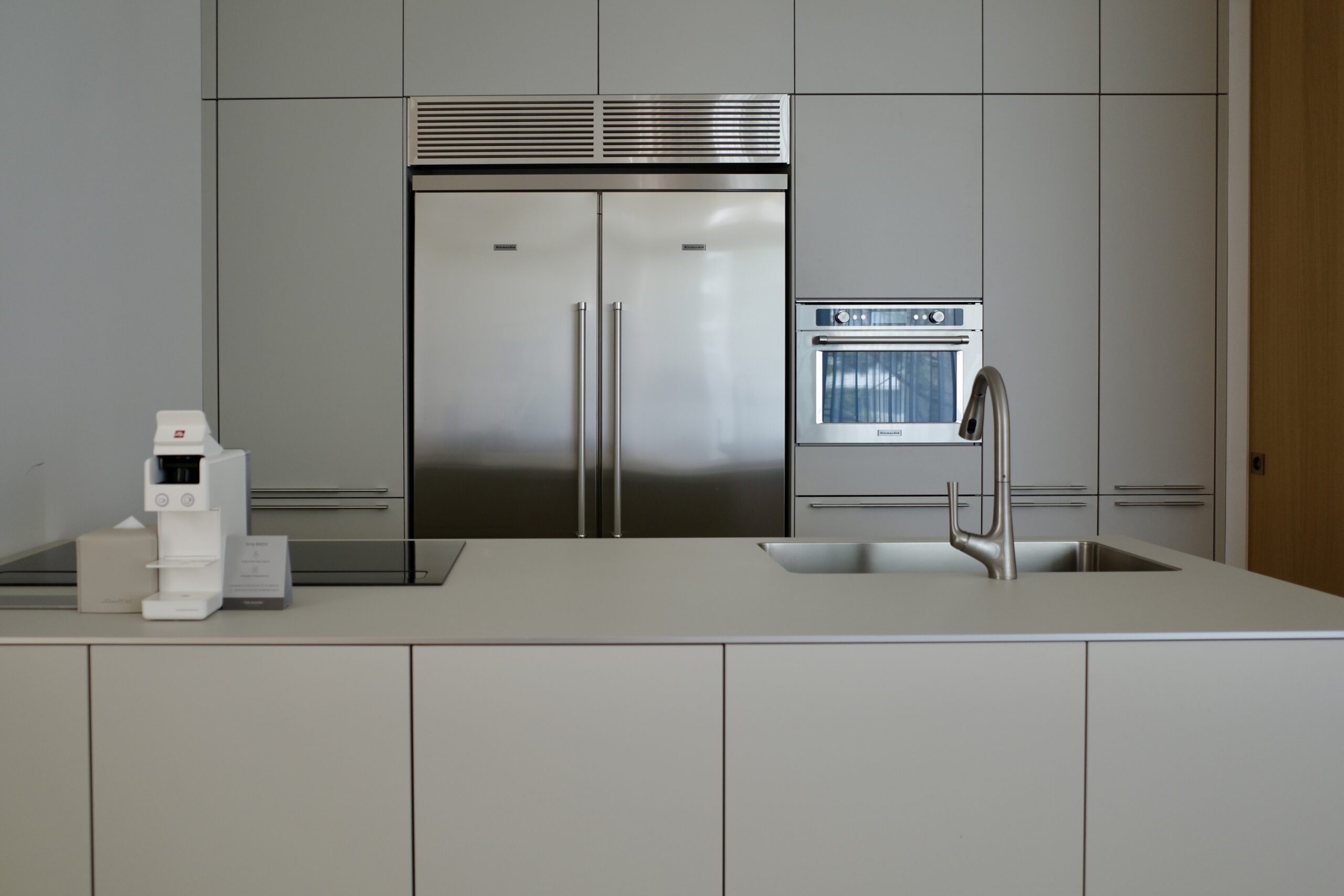
The kitchen is fully equipped: a Sub-Zero refrigerator, an illy machine, an integrated oven. It reads less like a hotel room and more like someone’s second apartment — the kind of place designed to be inhabited rather than occupied. That said, the kitchen is largely for show: induction use is restricted, and the setup functions more as a display of what the room could be than an invitation to actually cook in it.
Between the Room and the Cafe
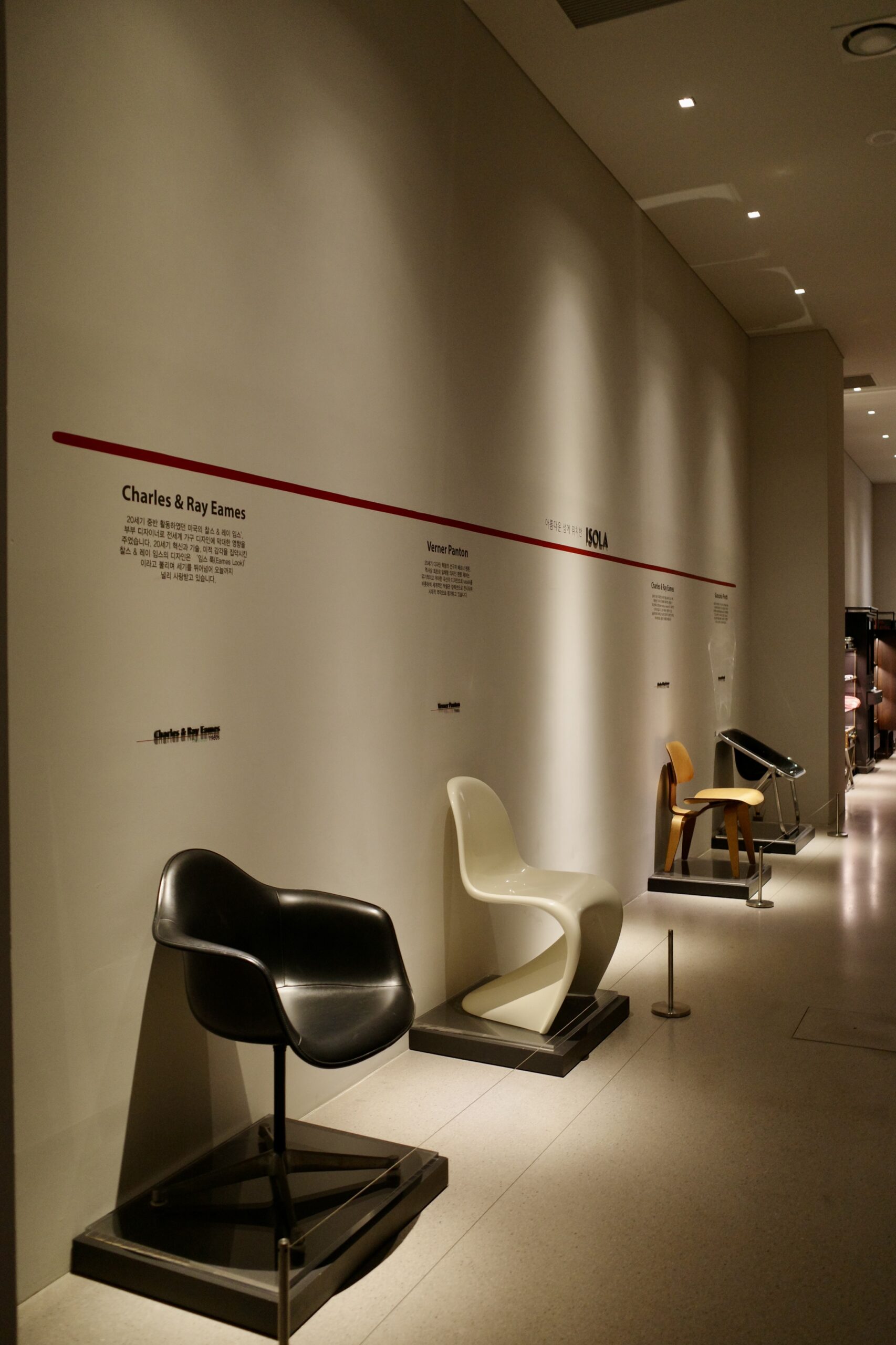
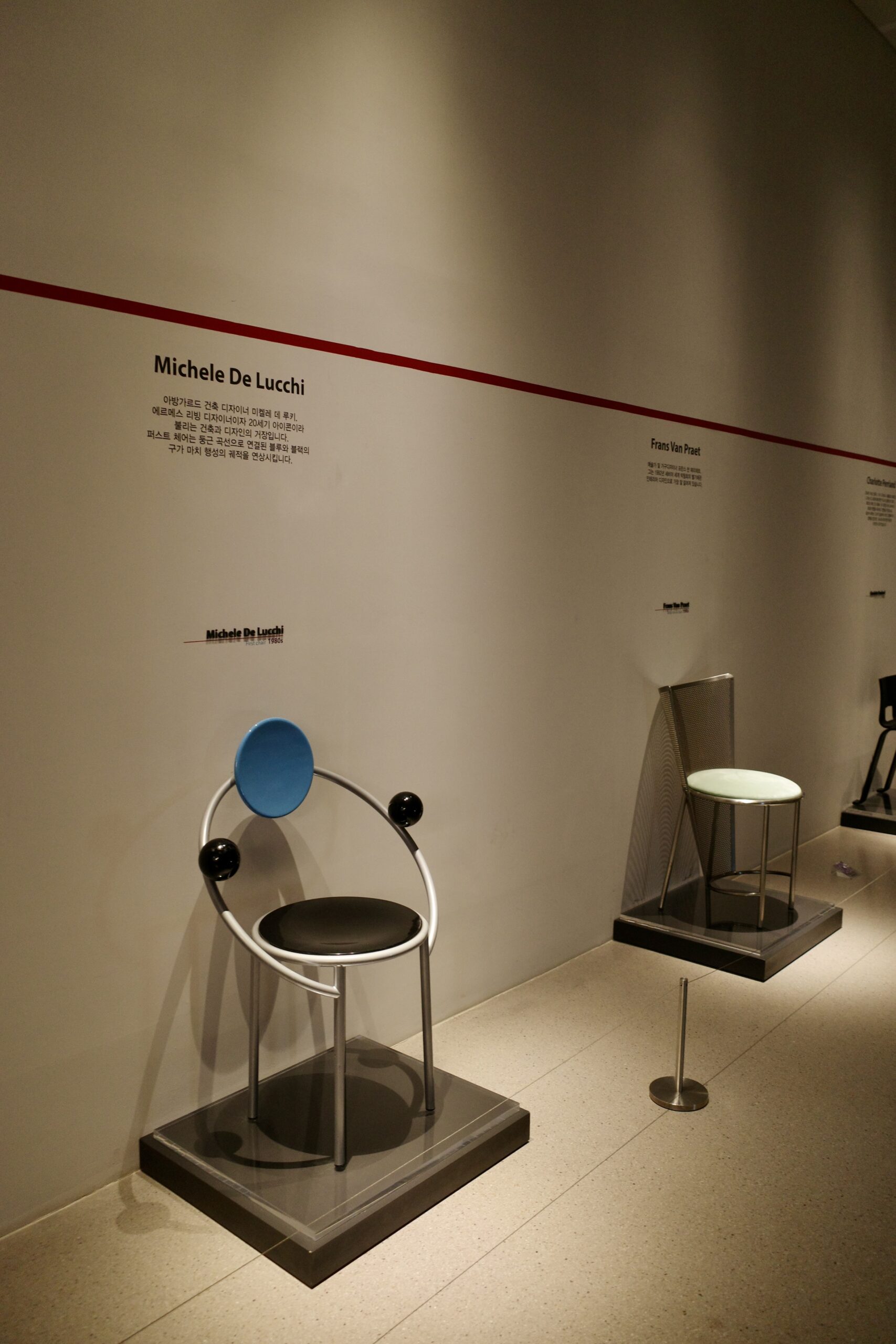
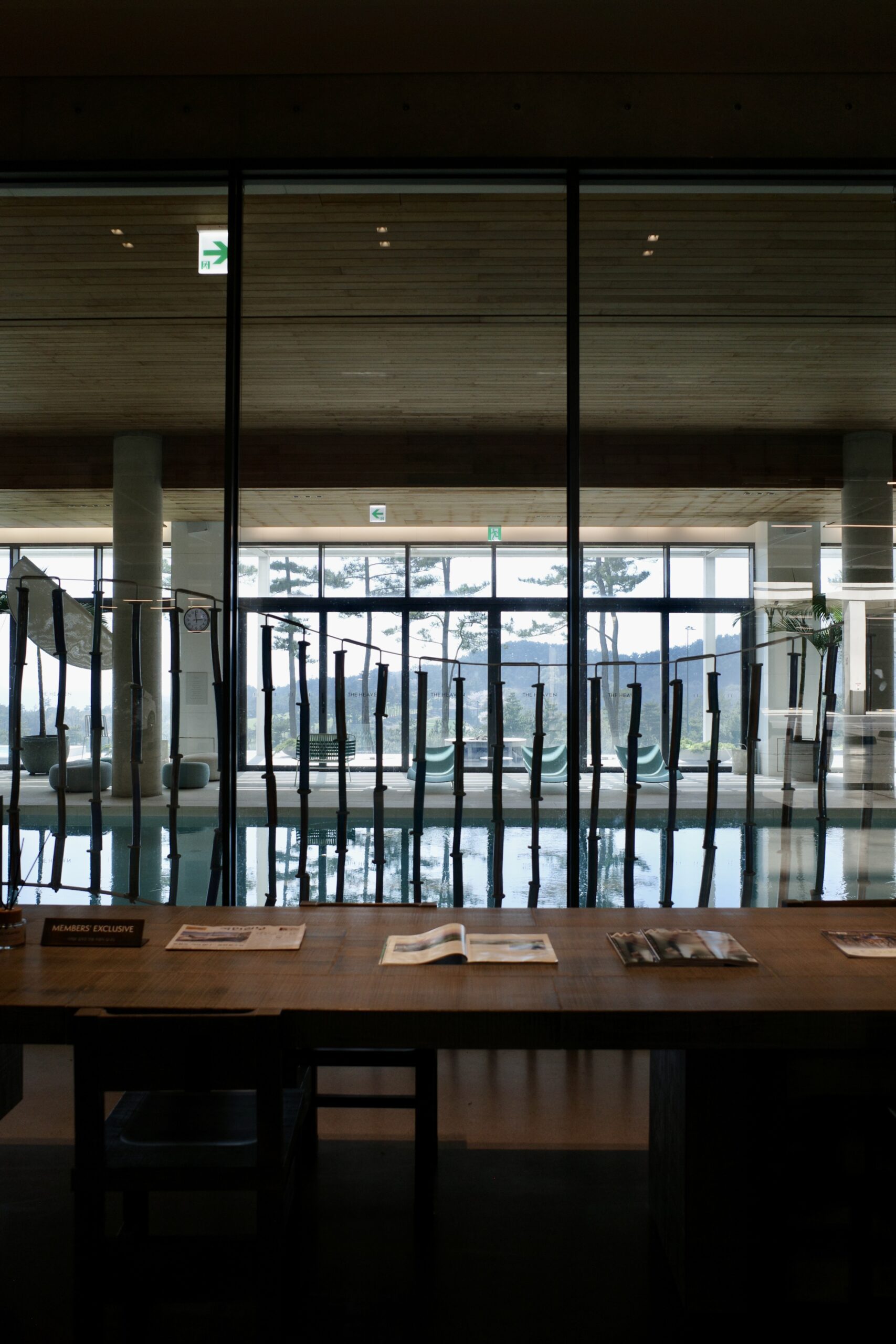
The corridor leading toward ISOLA passes through a long gallery of designer chairs, each on its own low plinth with a red line running along the wall at shoulder height. Charles & Ray Eames, Verner Panton, Michele De Lucchi, Frans Van Praet — the collection reads as a compressed history of twentieth-century seating, installed in what amounts to a resort hallway. It is a quietly strange thing to encounter on the way to breakfast.
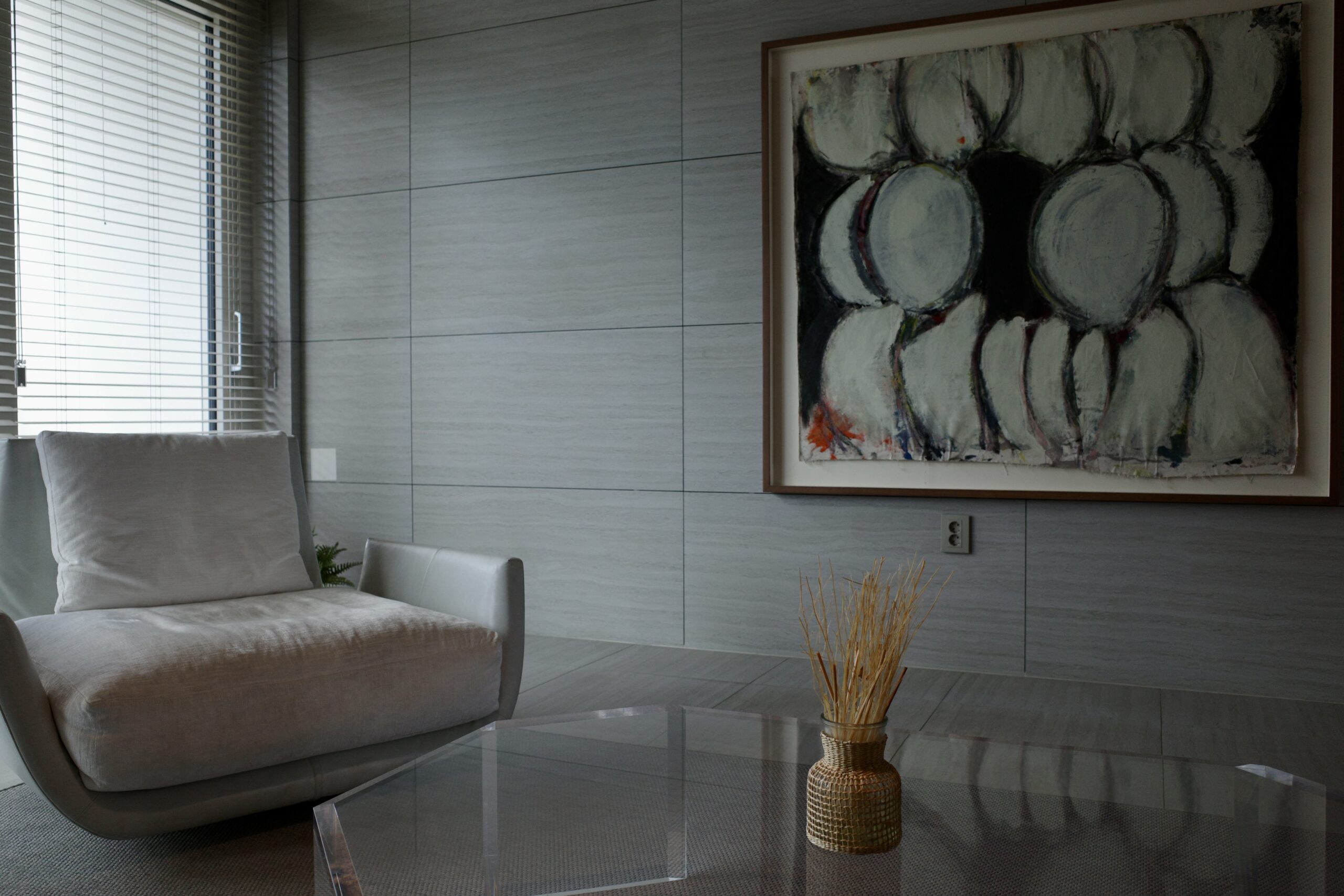
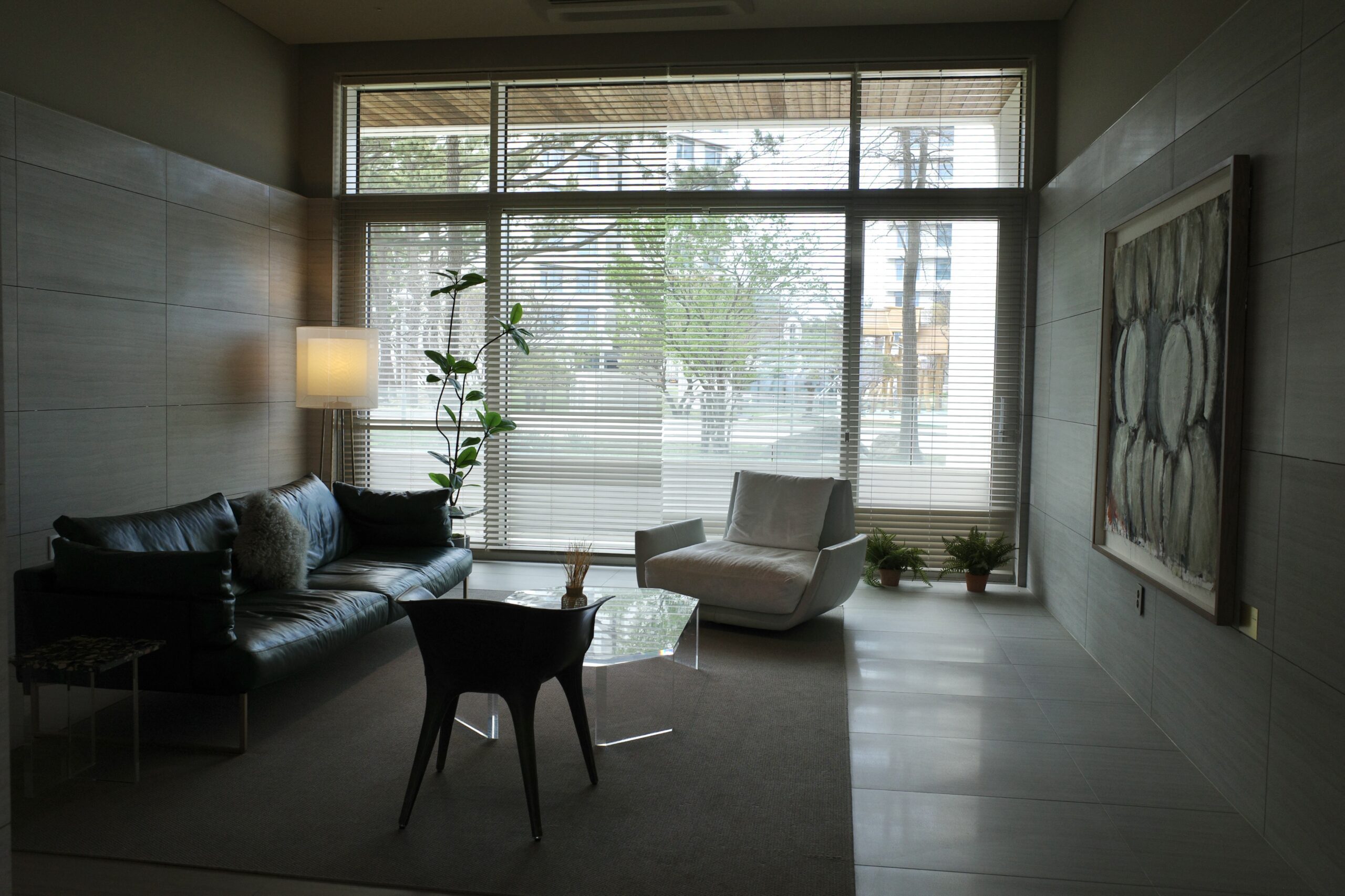
The tower lobby has a different register: leather sofas in dark navy, a large abstract canvas in a warm wood frame, a floor lamp casting amber light into a corner where the blinds are half-drawn. It is the kind of lobby that does not try to impress anyone.
Café ISOLA
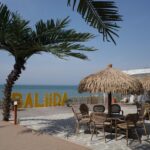
ISOLA occupies the basement level of the resort’s main building, accessible from the check-in lobby by passing through the sauna corridor and the designer chair gallery. The name means “island” in Italian, which the resort’s founders apparently took to heart at every scale.
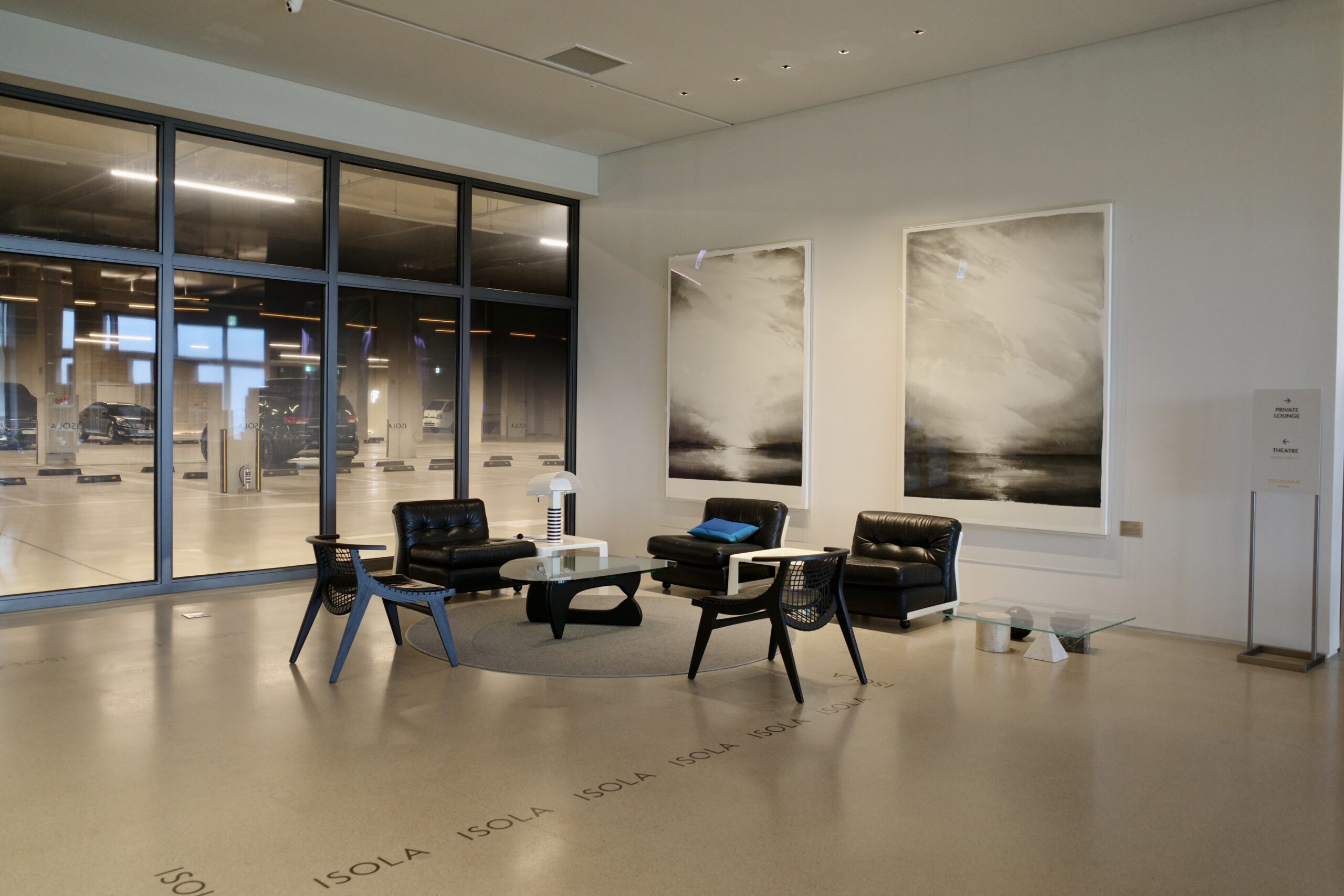
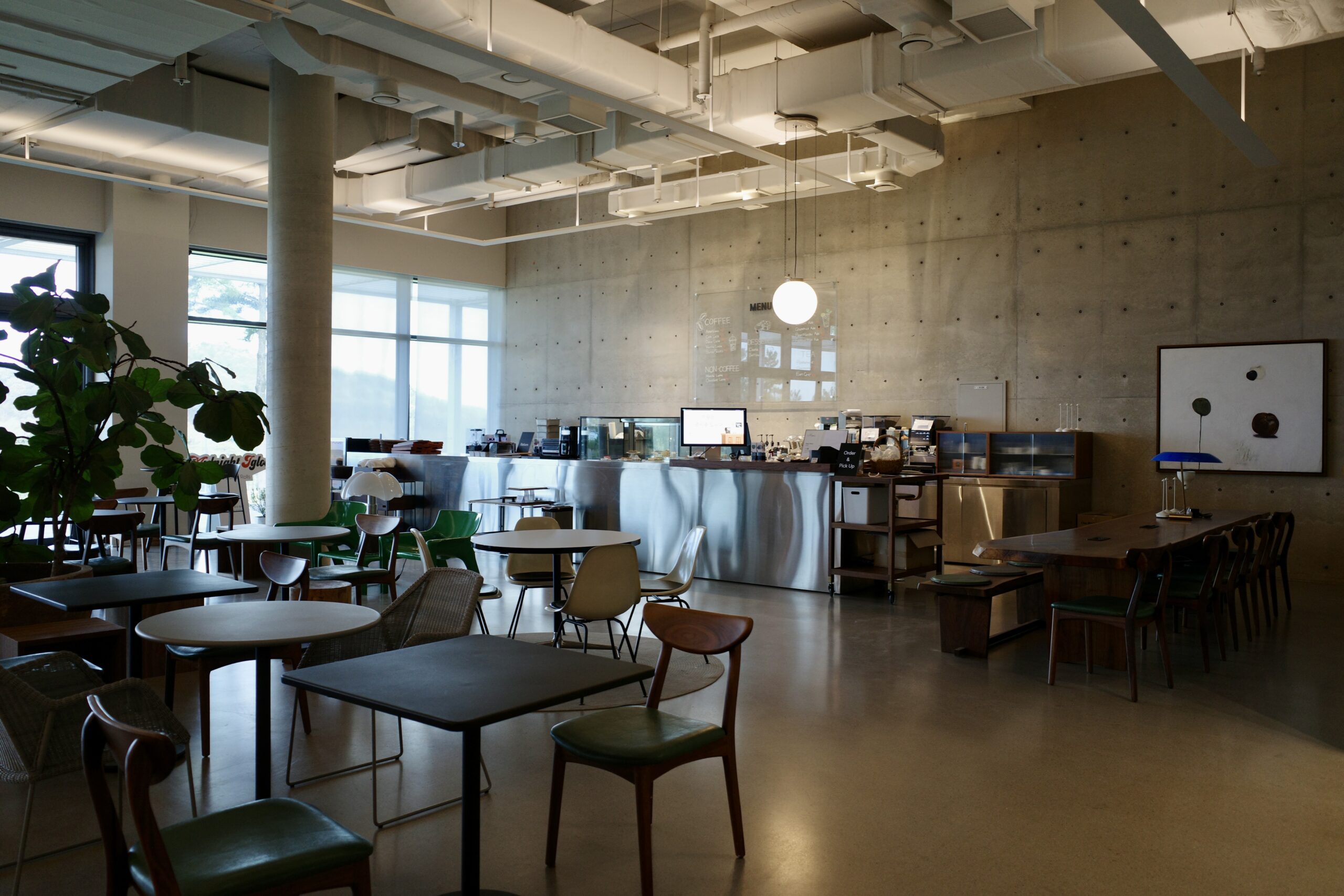
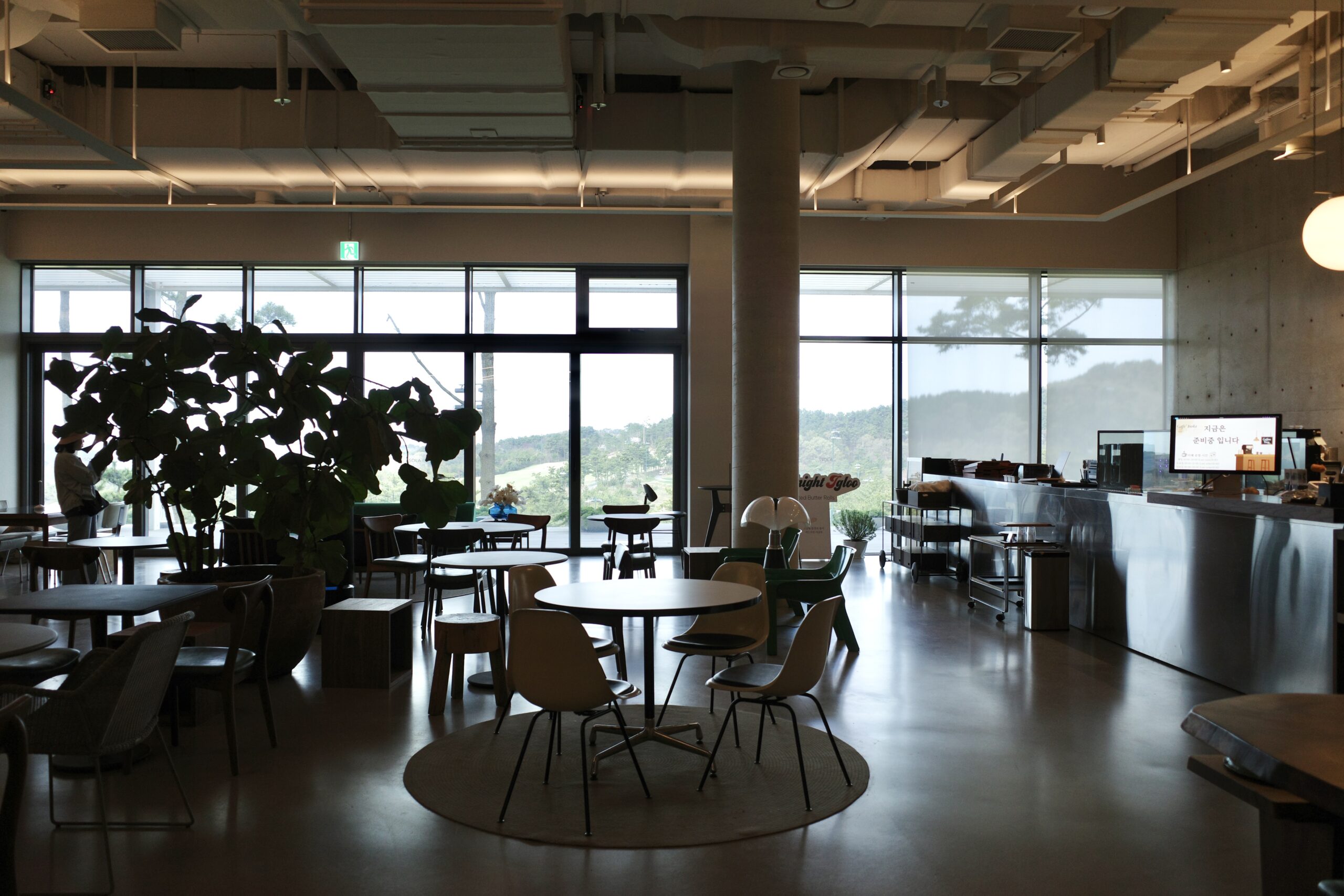
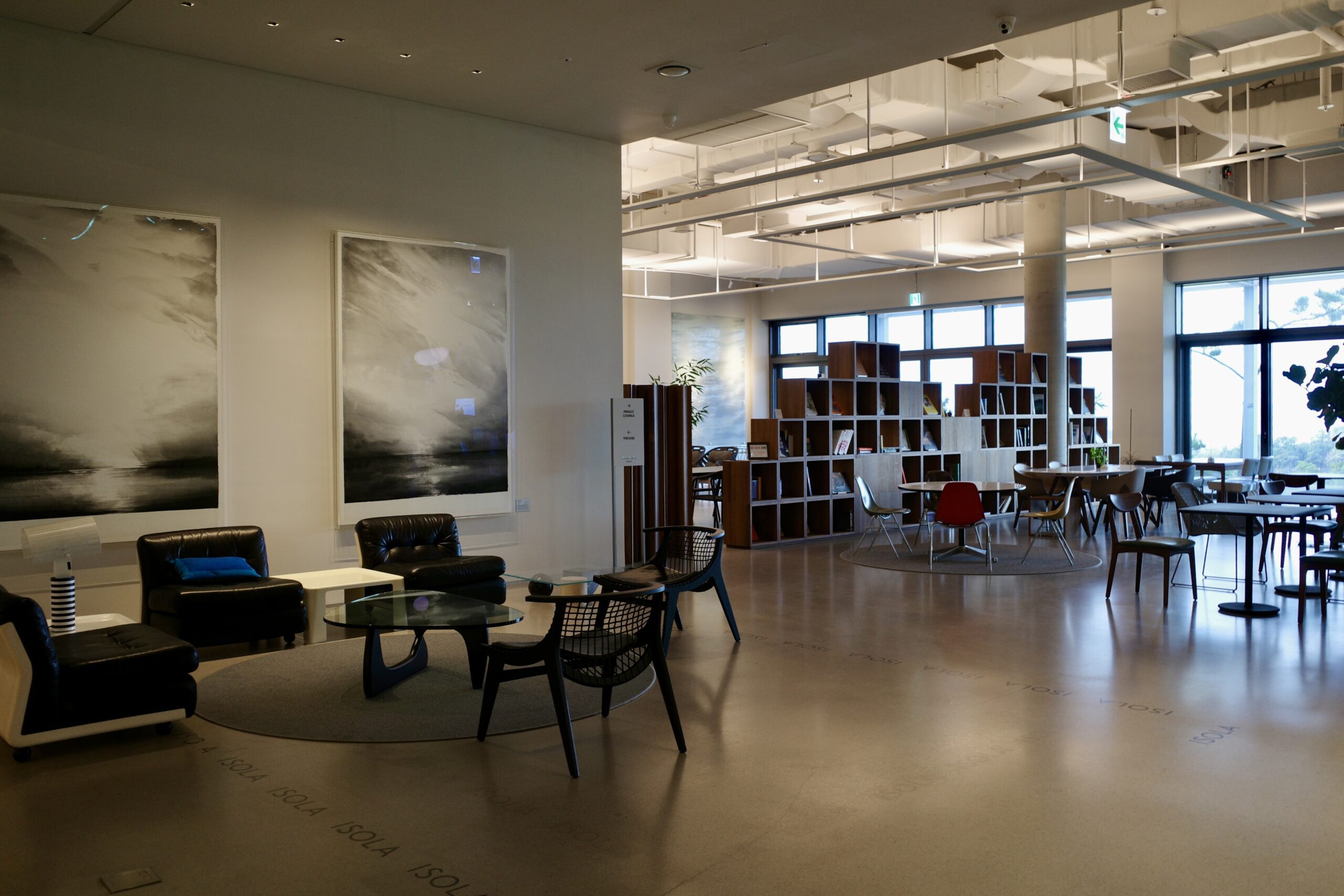
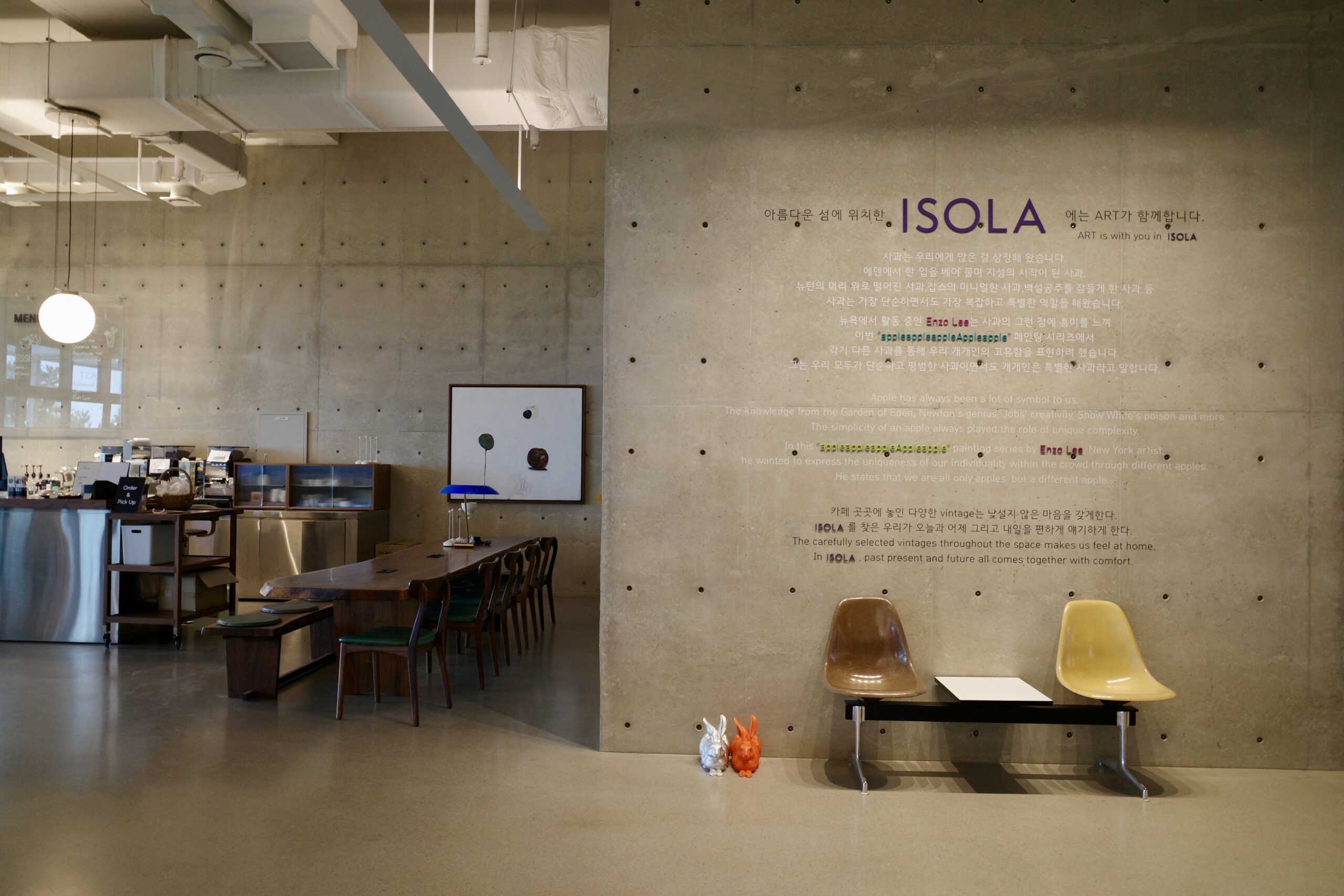
The space is larger than it reads from any single angle. The entrance opens onto a foyer with “ISOLA” stamped repeatedly into the polished concrete floor, large atmospheric sky-and-sea paintings hanging opposite floor-to-ceiling glass that faces the parking structure — a deliberately inside-out gesture, as if the space knows exactly where it is. Beyond that, the café expands into several distinct zones: a bookshelf library section dense with art and design volumes, a bar area with a long stainless-steel counter backed by a concrete wall bearing the menu in chalk-style lettering, a communal live-edge walnut table running the length of one wall with apple-themed paintings above it, and a series of seating clusters each with a different furniture character.
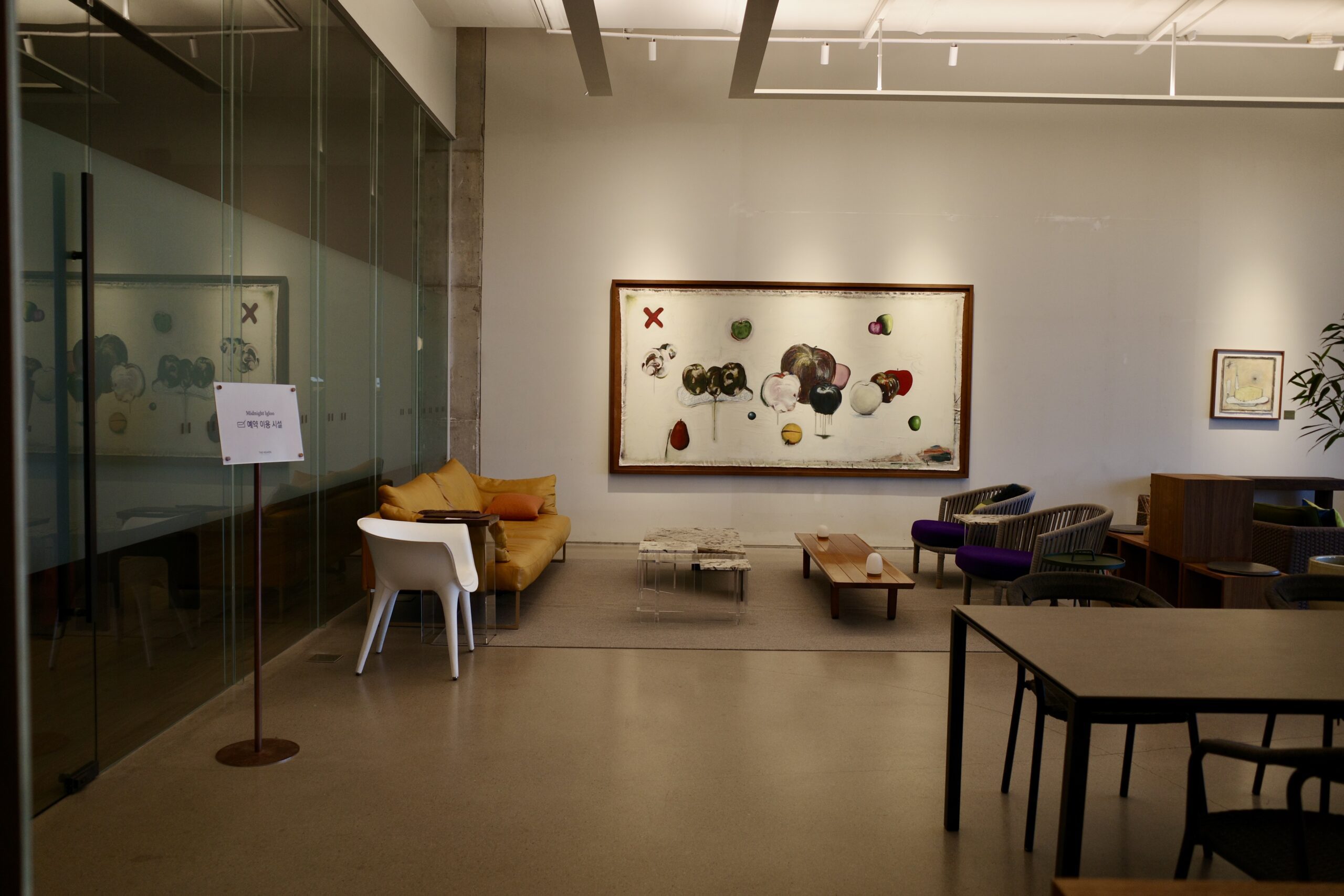
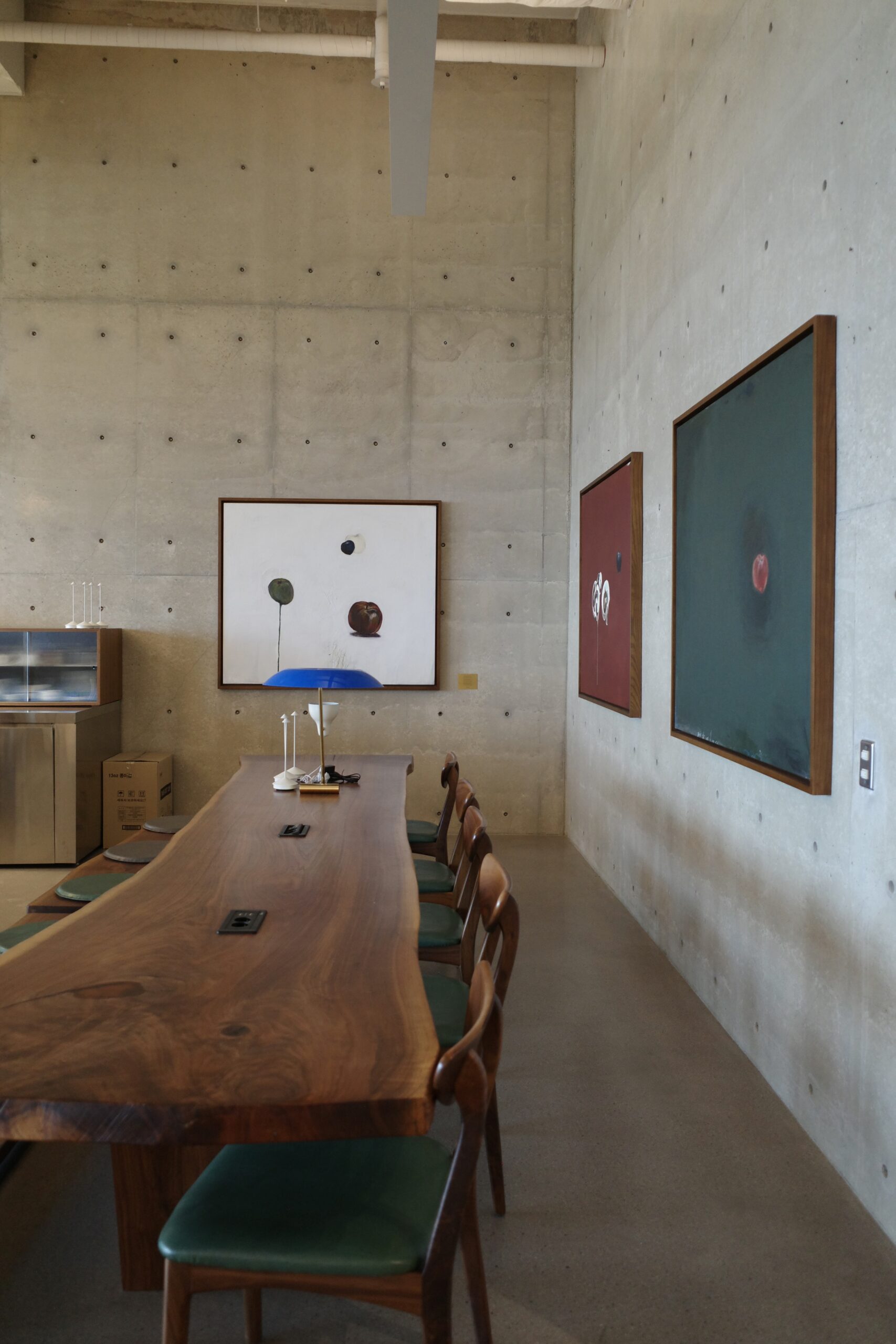
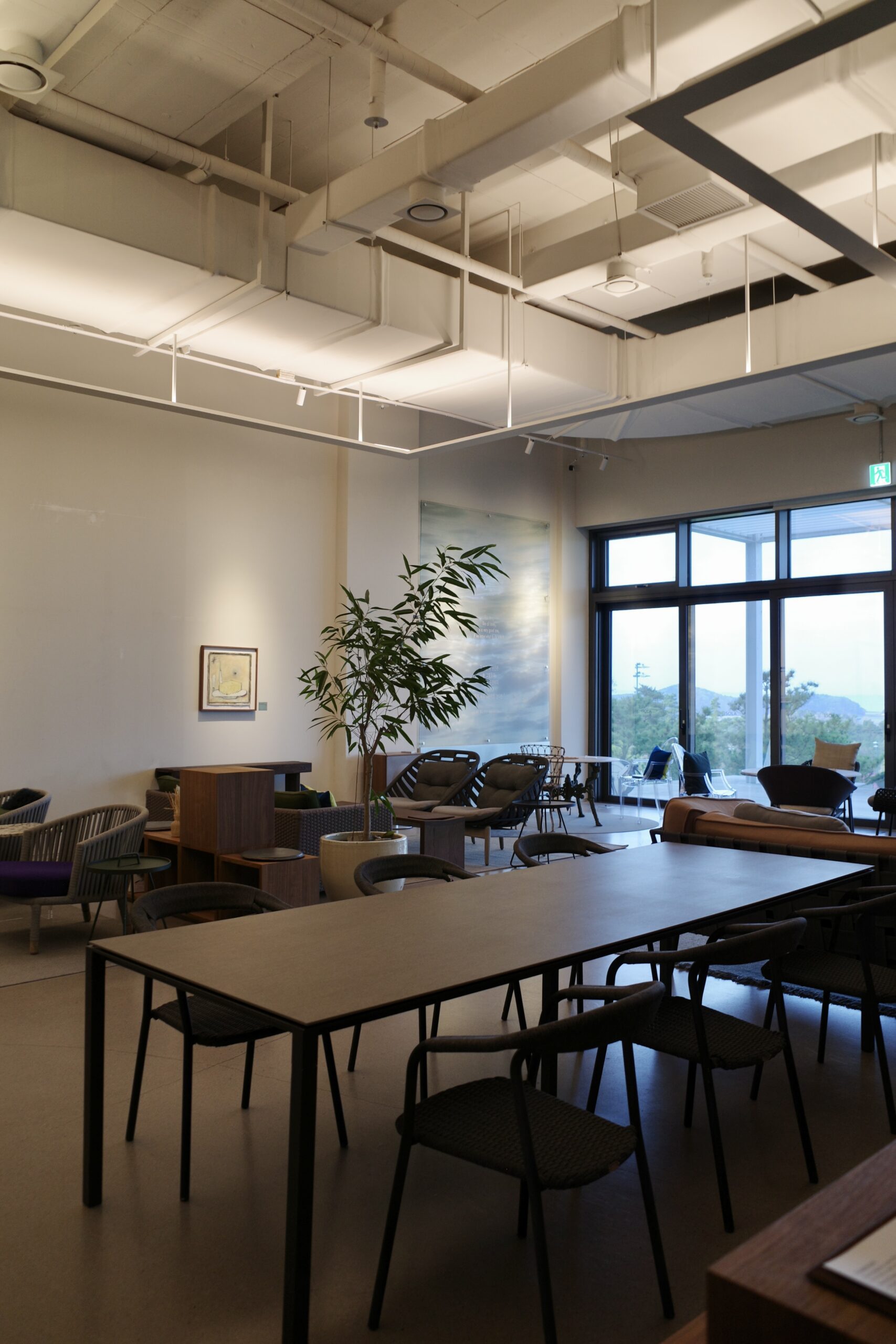
The curatorial logic is apples. An ongoing exhibition by New York-based artist Enzo Lee anchors the space — works that treat the apple as a symbol of knowledge, creativity, and individuality. It is an unusual editorial decision for a resort café, but it gives ISOLA a coherence that most resort food-and-beverage spaces lack. The wall near the entrance spells it out in both Korean and English: art is with you here.
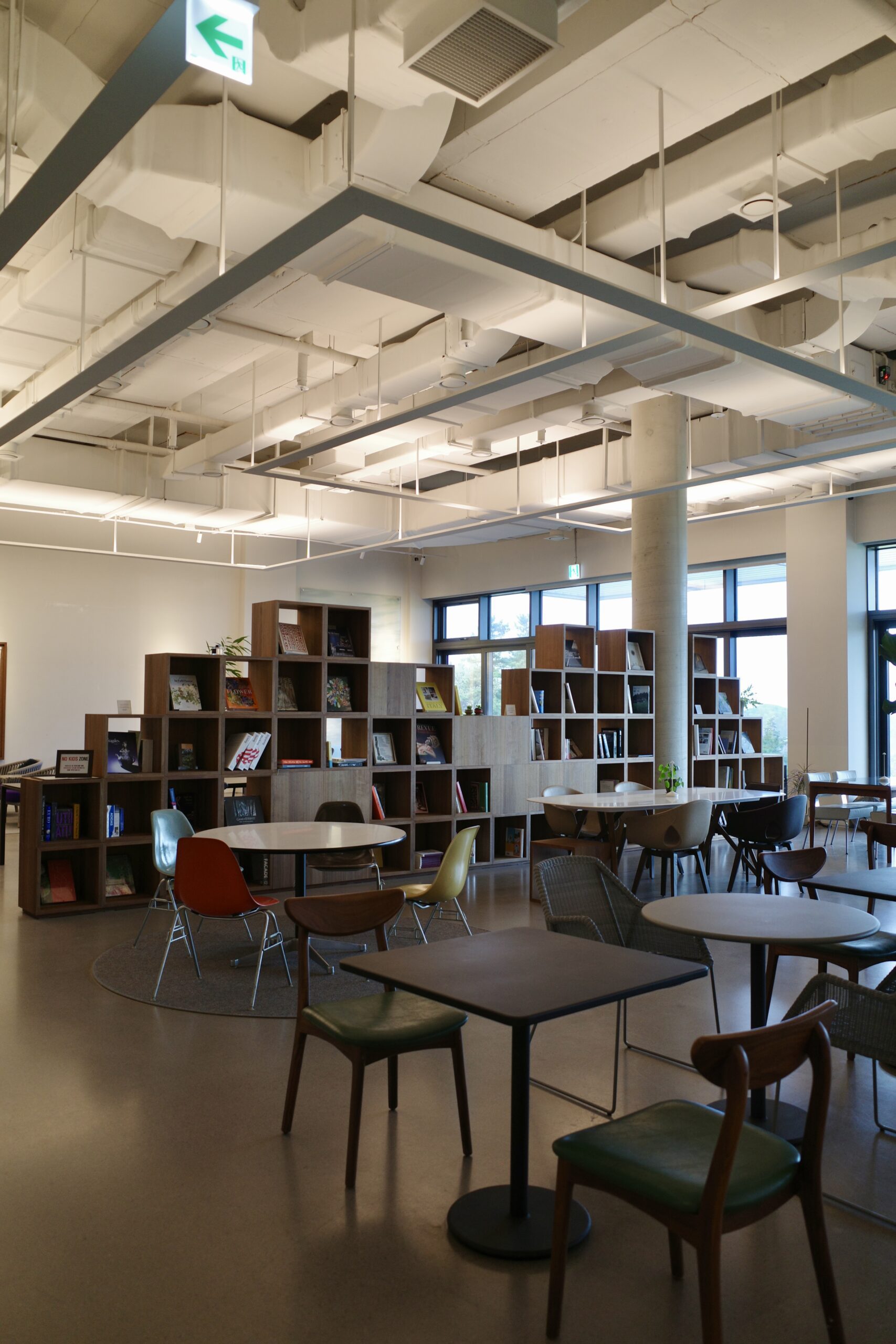
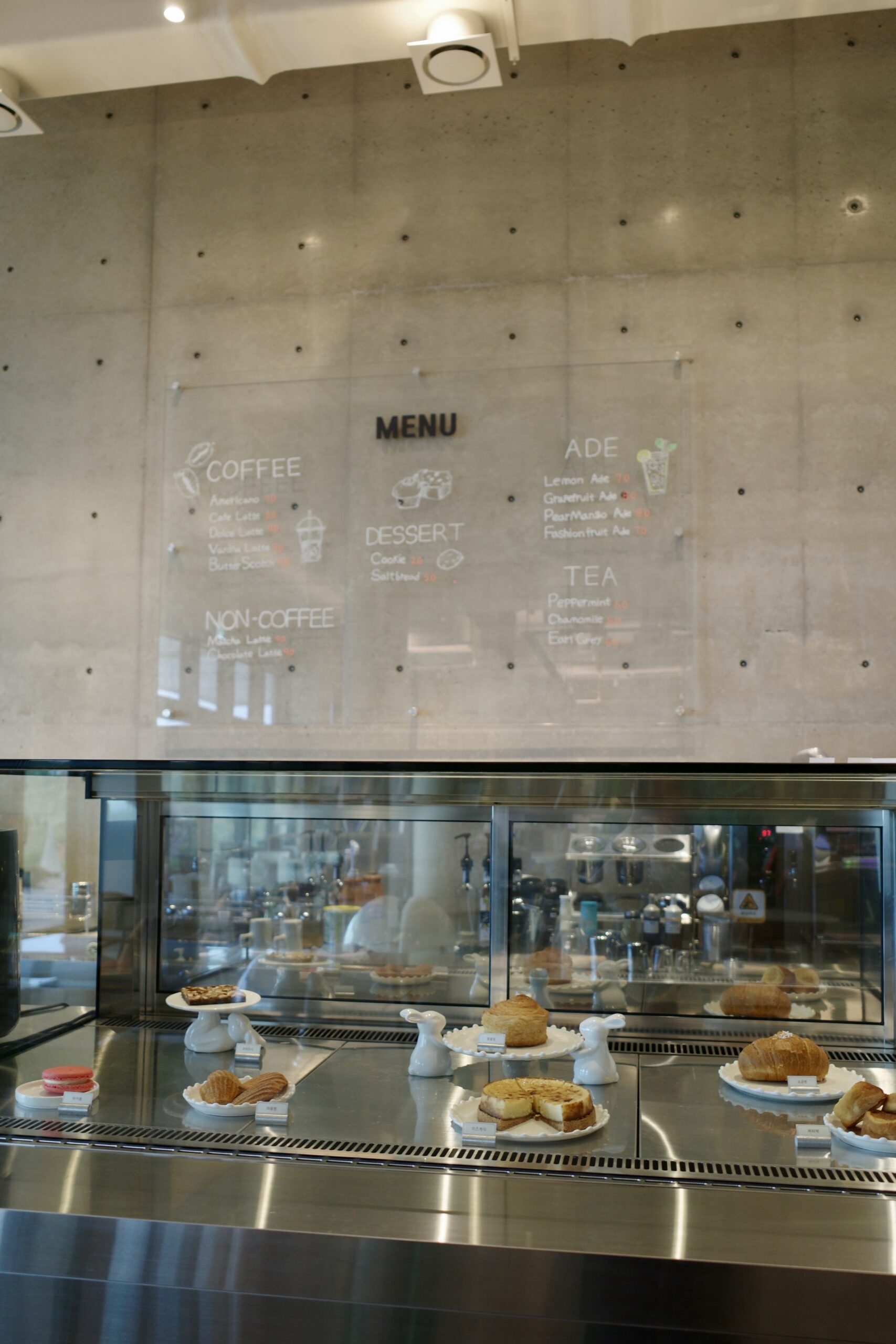
The chairs throughout are genuinely good — a mix of vintage pieces and contemporary designs that reads less like a curated selection and more like a collection that grew over time. The coffee menu is standard specialty-café range: espresso drinks, non-coffee options, seasonal ades, pastries from the counter display.
Glasshouse
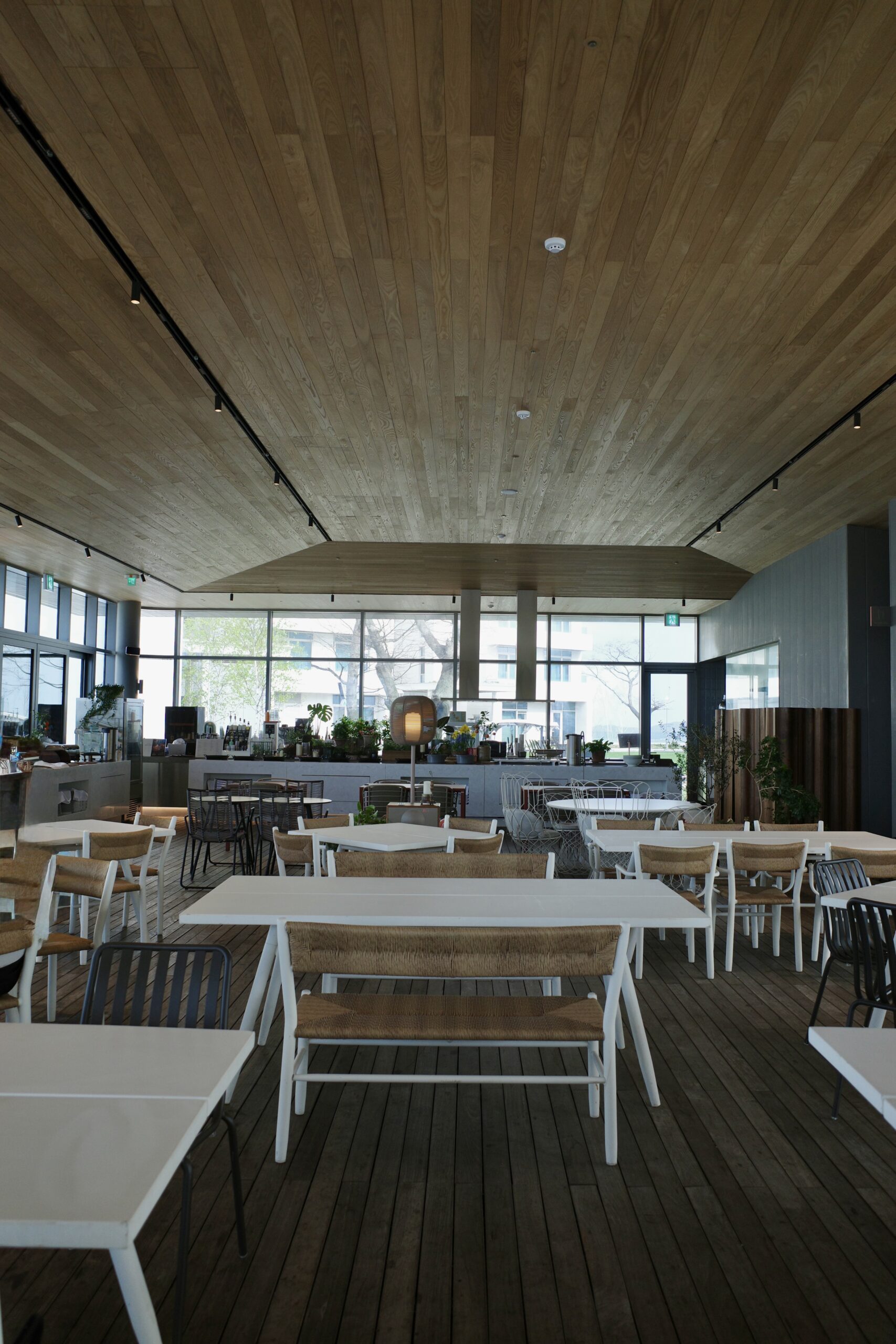
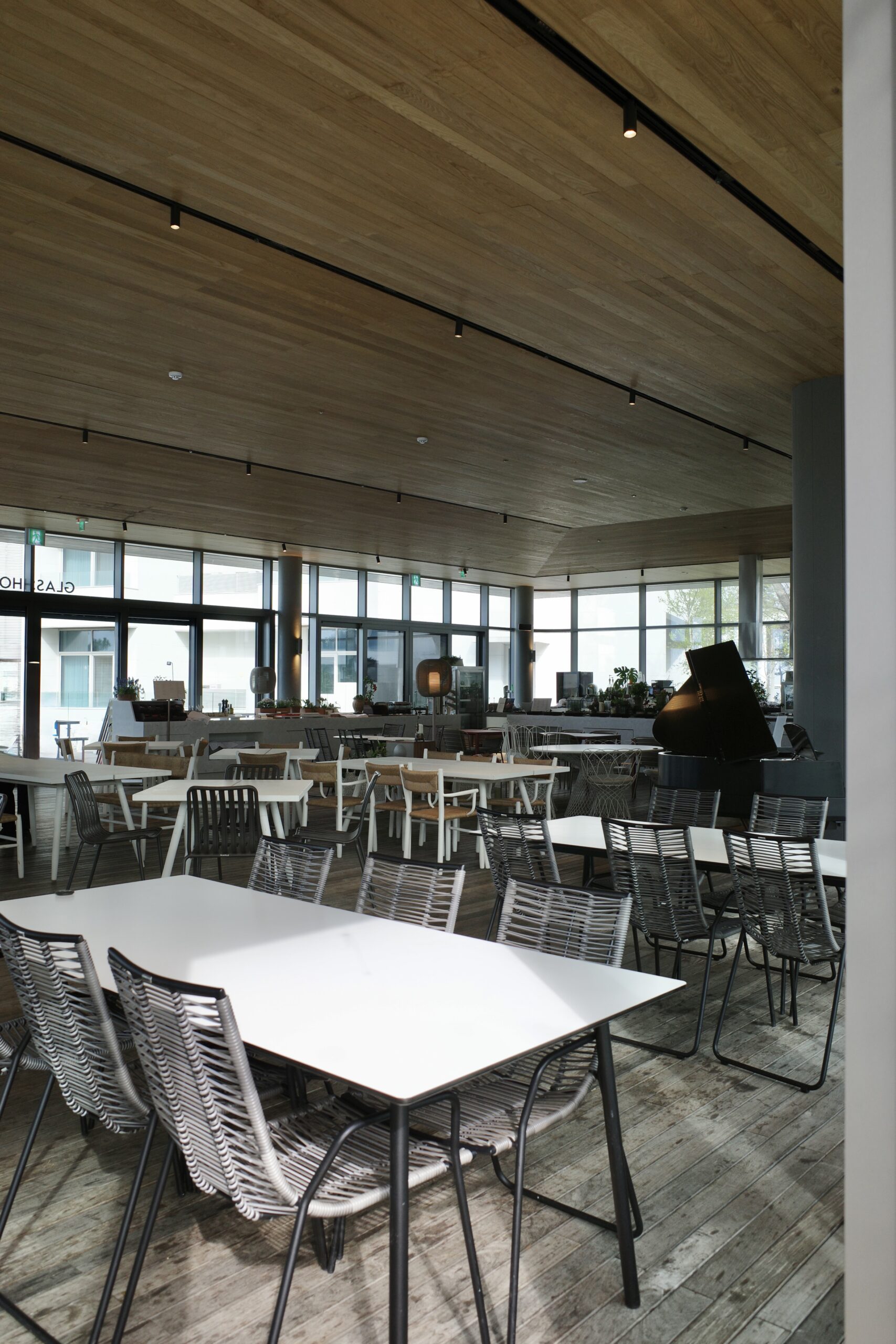
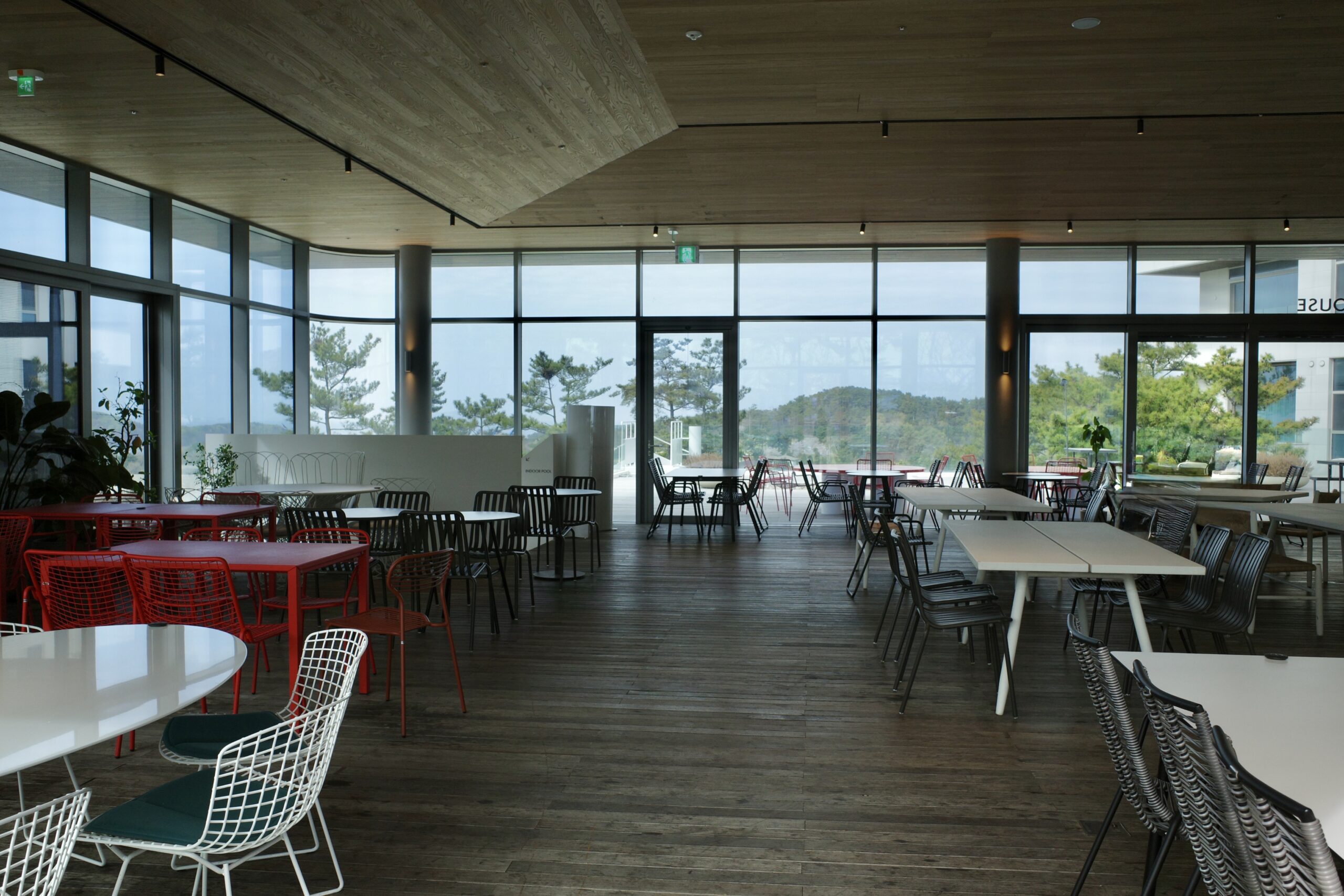
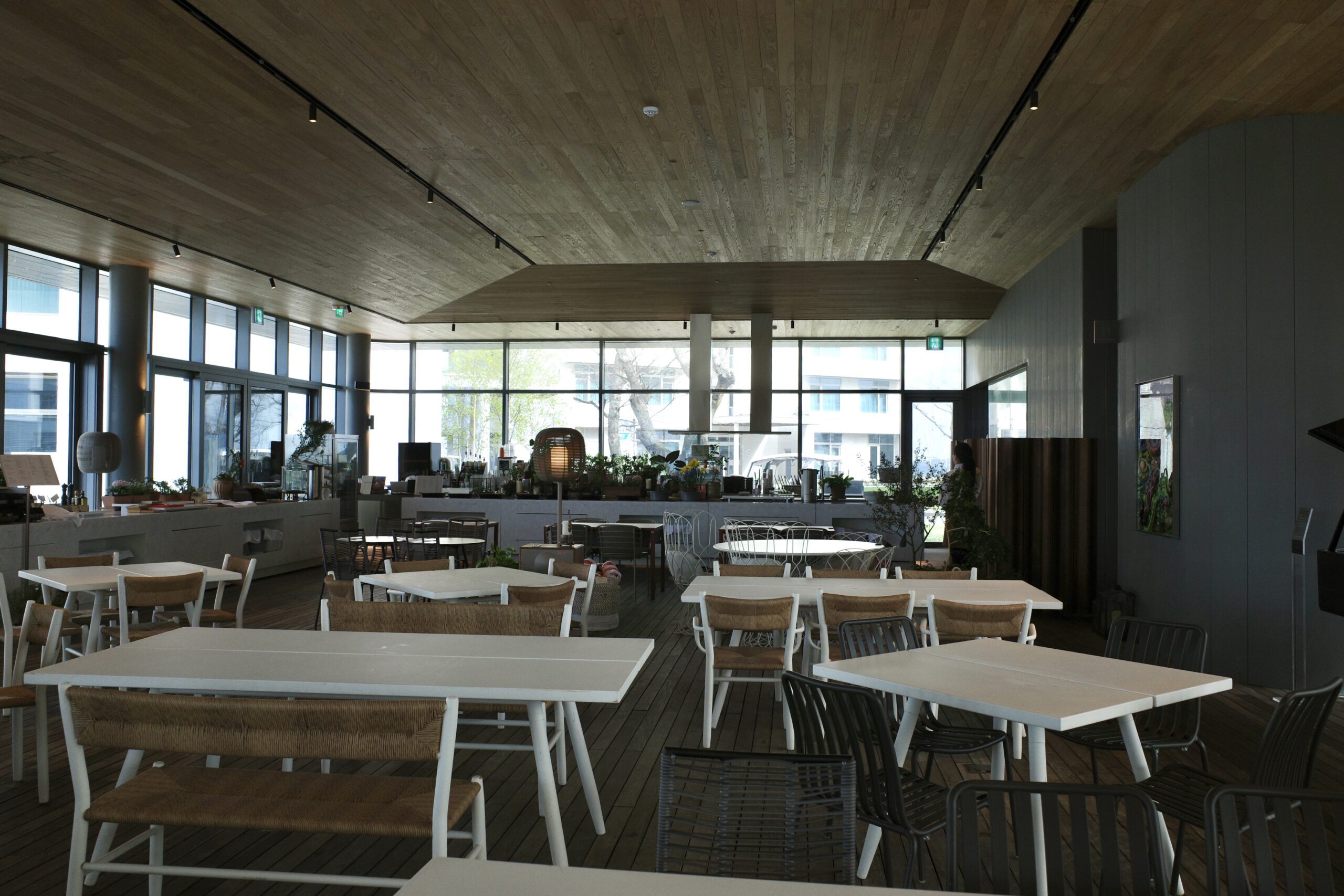
The breakfast room is glass-walled on two sides, with a pale wood ceiling that rises and curves at the center. Chairs here are not uniform — wire Bertoia chairs alongside red powder-coated frames alongside rattan-seated bistro pieces, a grand piano against the far wall. The room has the casual plurality of a place that hasn’t decided to take itself seriously, which makes it comfortable.
A Note on Who This Is For
The resort is genuinely premium and prices accordingly. It operates primarily as a members’ club for the golf course, and the amenities — indoor pool, sauna, fitness center, and an outdoor infinity pool currently under development — are sized for a residential-stay crowd rather than casual visitors. The proximity to Seoul means a day trip is possible, which paradoxically makes an overnight stay feel slightly harder to justify if you’re not here for the golf.
That said: the rooms are clean and spacious, the views are real, and the architecture — including the Ark Church on the grounds, covered separately — makes the place worth the drive even without a handicap. For those who find the Jeju resorts too far and too crowded, Daebudo is a reasonable answer.
The Heaven Resort (더헤븐리조트)
Address: 466 Daeseon-ro, Danwon-gu, Ansan-si, Gyeonggi-do
Tel: 032-884-1004 (main) / 032-885-1004 (reservations)
Check-in / Check-out: 15:00 / 11:00
Website: theheavenresort.com
Café ISOLA: B1F, open daily 09:00–21:00 (last order 20:30)
Glasshouse (breakfast): Between residential towers — hours vary; confirm at check-in
It turns out an hour from Seoul can feel like considerably more.