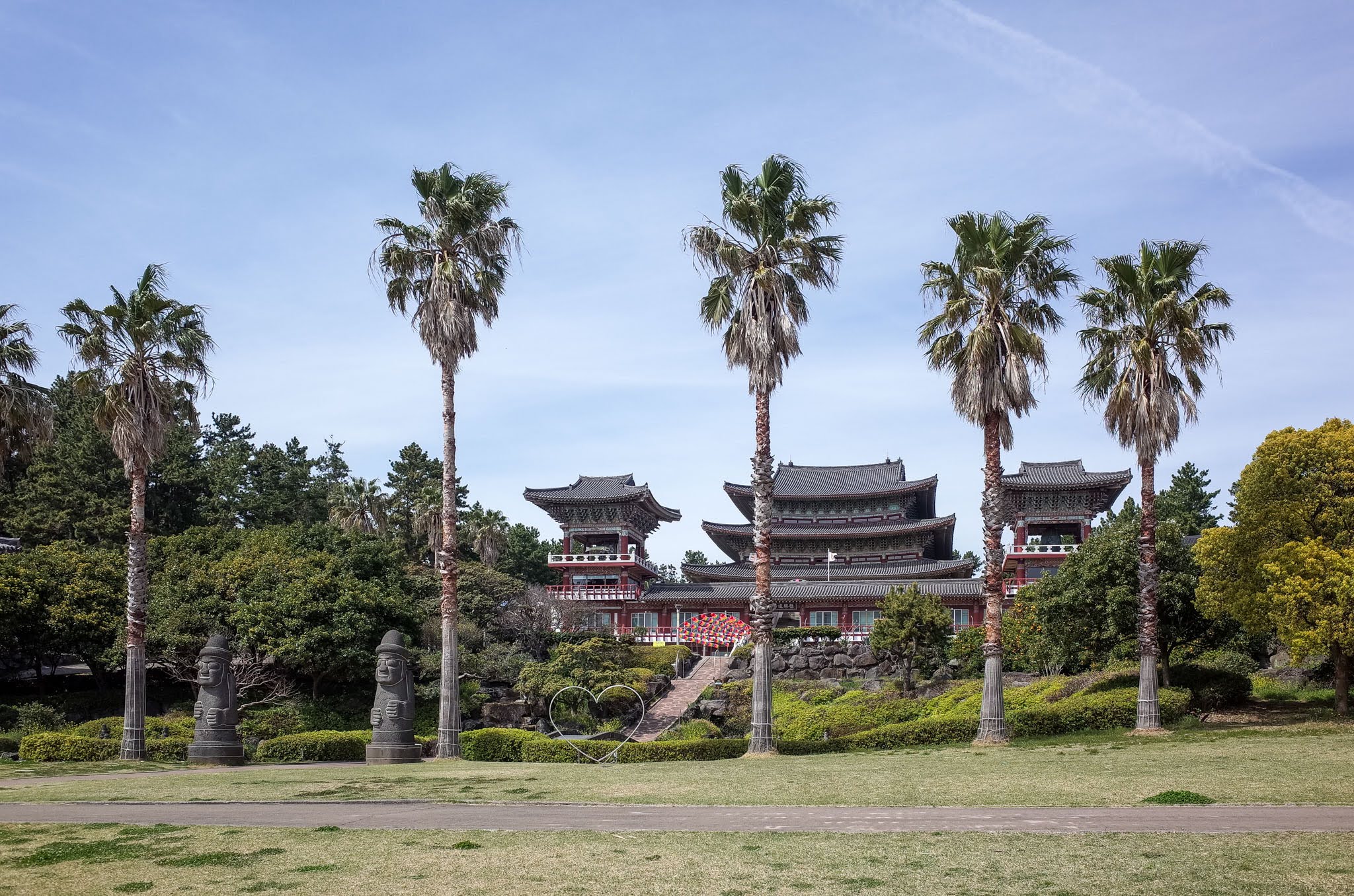
The first thing you see isn’t the temple. It’s the palm trees.
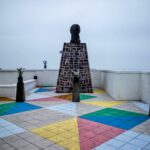
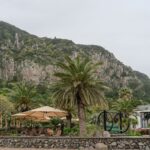
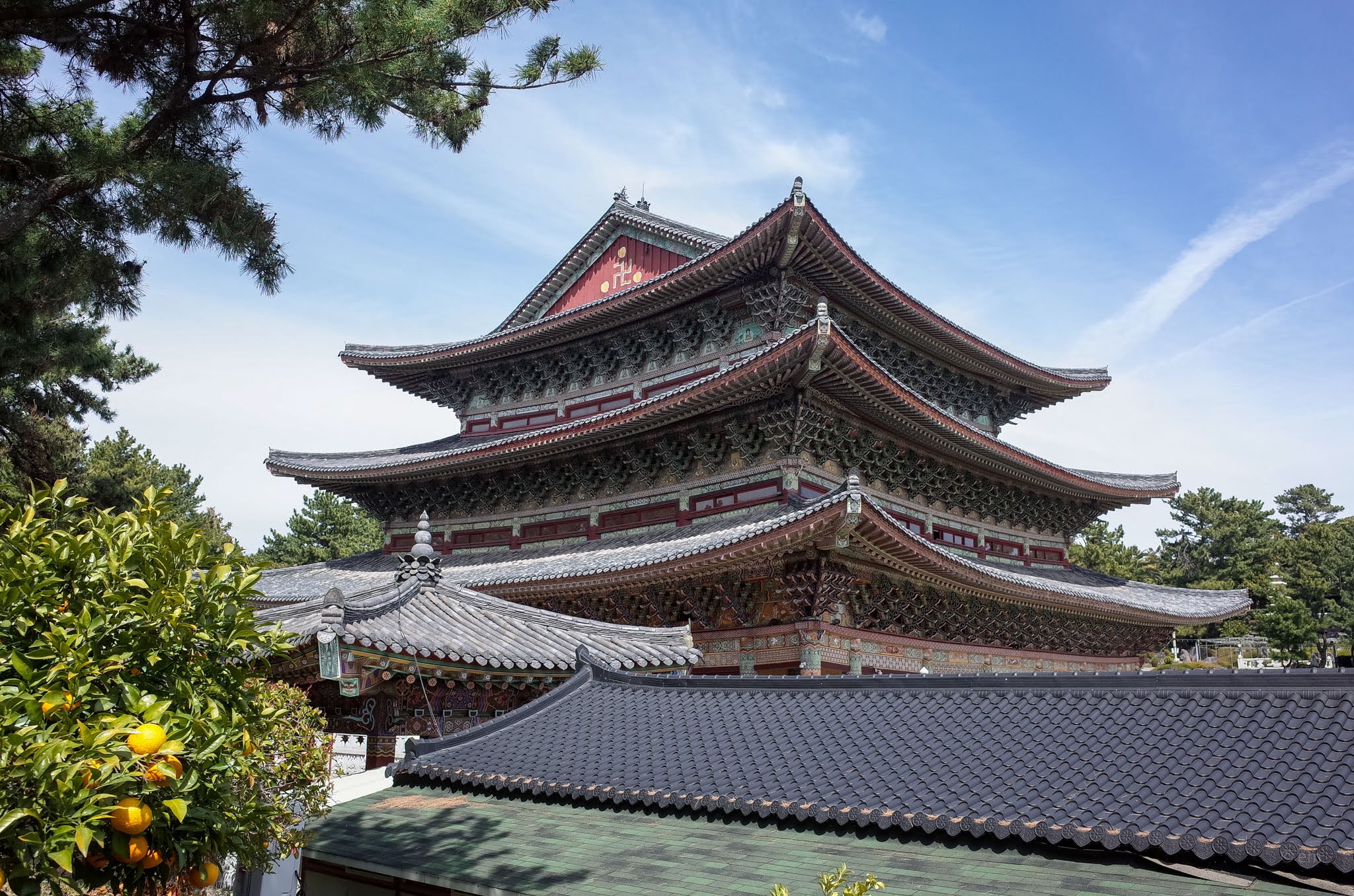
Coming from the coastal road, the approach to 약천사 (Yakcheonsa) reads as a landscape before it reads as a religious site. A row of tall fan palms lines the open grounds, and behind them, terraced up the basalt-rock hillside, rises something enormous — red lacquered columns, layered sweeping eaves, three stories of dancheong ornamentation that somehow looks more intense in bright sunlight than it has any right to. Two dol hareubang stand at the base of the approach, which places you squarely in Jeju, in case the palm trees hadn’t already done that. Everything here is layered like that: Korean traditional, subtropical island, spring bloom, Buddhist color — pressing together simultaneously, refusing to resolve into a single register.
The Scale of It
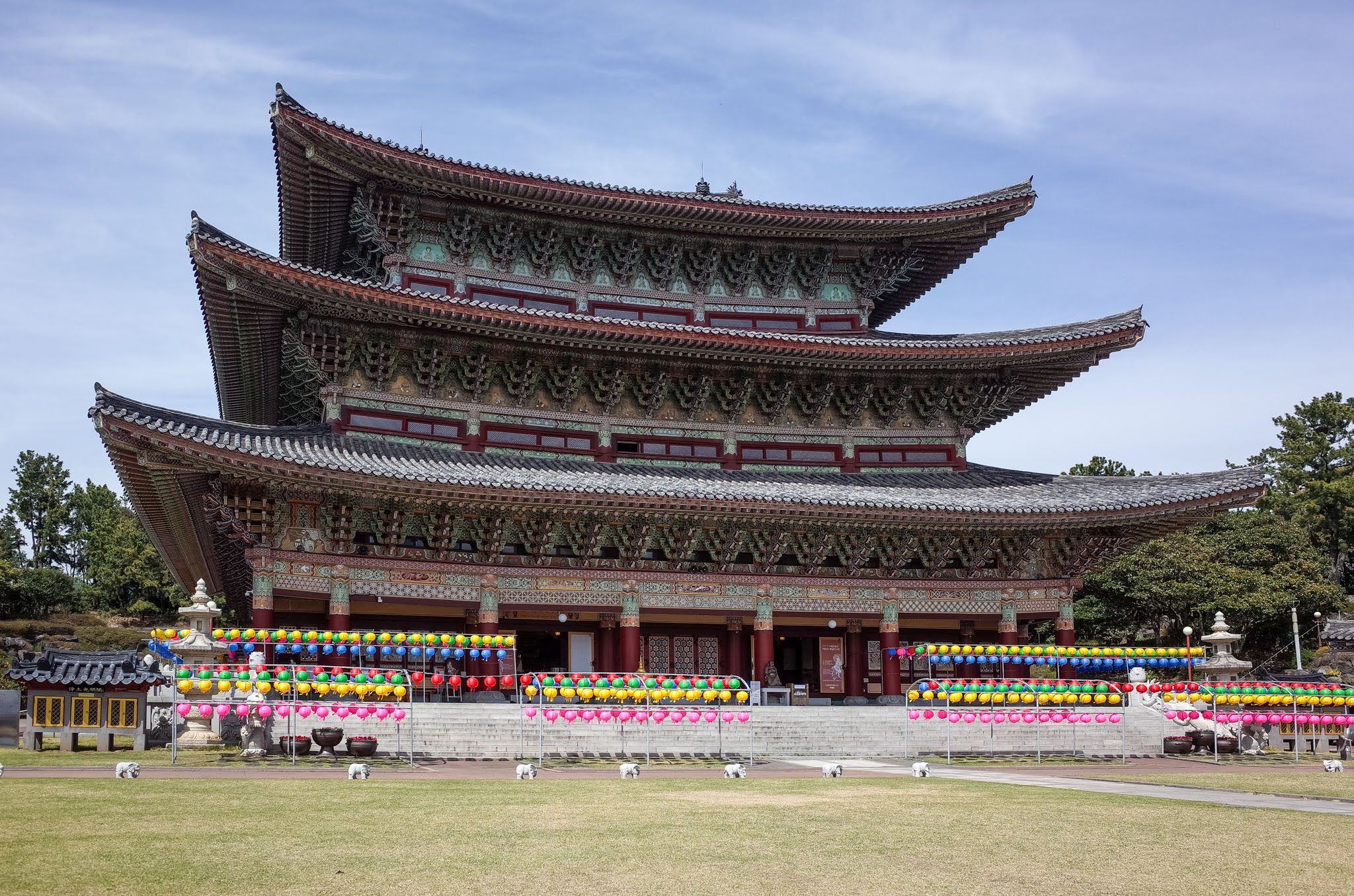
Yakcheonsa’s main hall was completed in 1996, built in the style of early Joseon Dynasty Buddhist architecture. At over 30 meters high, the main hall — the Daejeokgwangjeon — is among the largest Buddhist prayer halls in East Asia. That claim is easy to dismiss until you’re standing in the courtyard looking up at it. Then it becomes undeniable. Three tiers of ceramic-tiled roofs sweep outward in overlapping arcs, each eave line dense with bracket clusters painted in green, red, and ochre. The surface reads almost chaotic up close — pattern upon pattern, detail upon detail — but at any distance it settles into something monumental and coherent.
The temple is not old. Construction began in 1981 and concluded in 1996. There is nothing weathered or mossy about it; the lacquer is vivid, the stonework clean. But the newness doesn’t diminish the effect. If anything, it heightens the visual intensity — the colors haven’t softened yet.
Lanterns and Stone Elephants
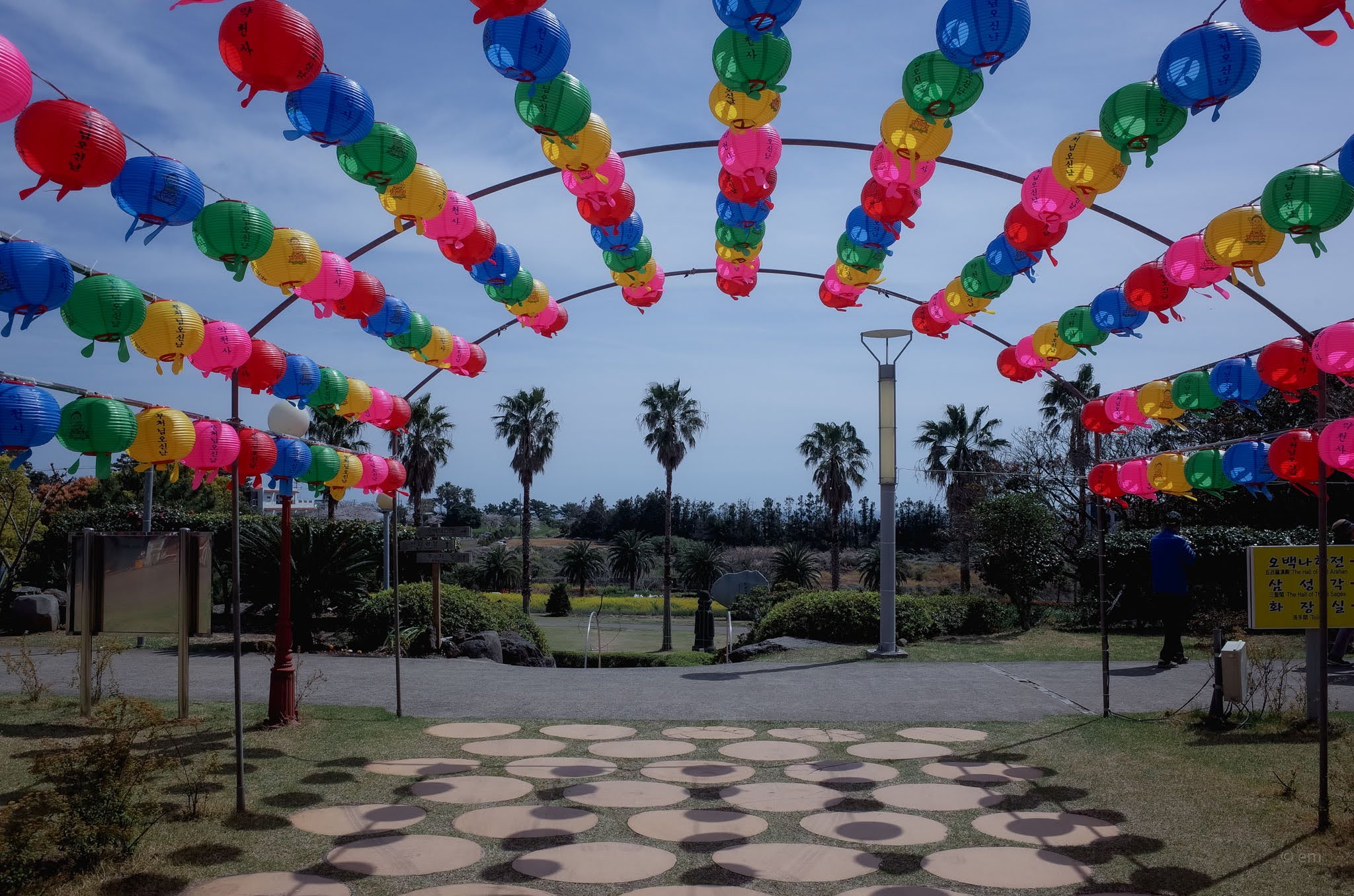
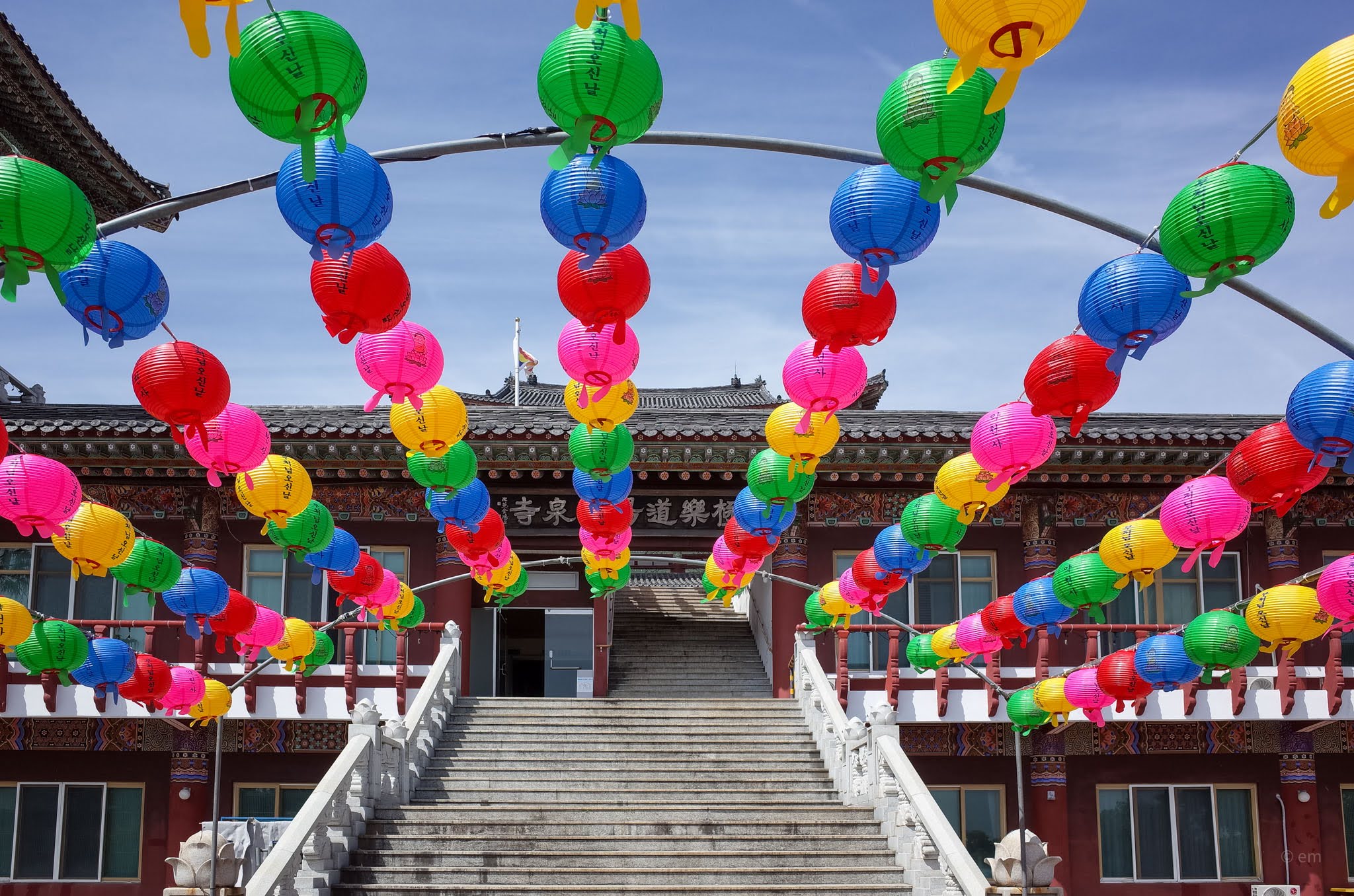
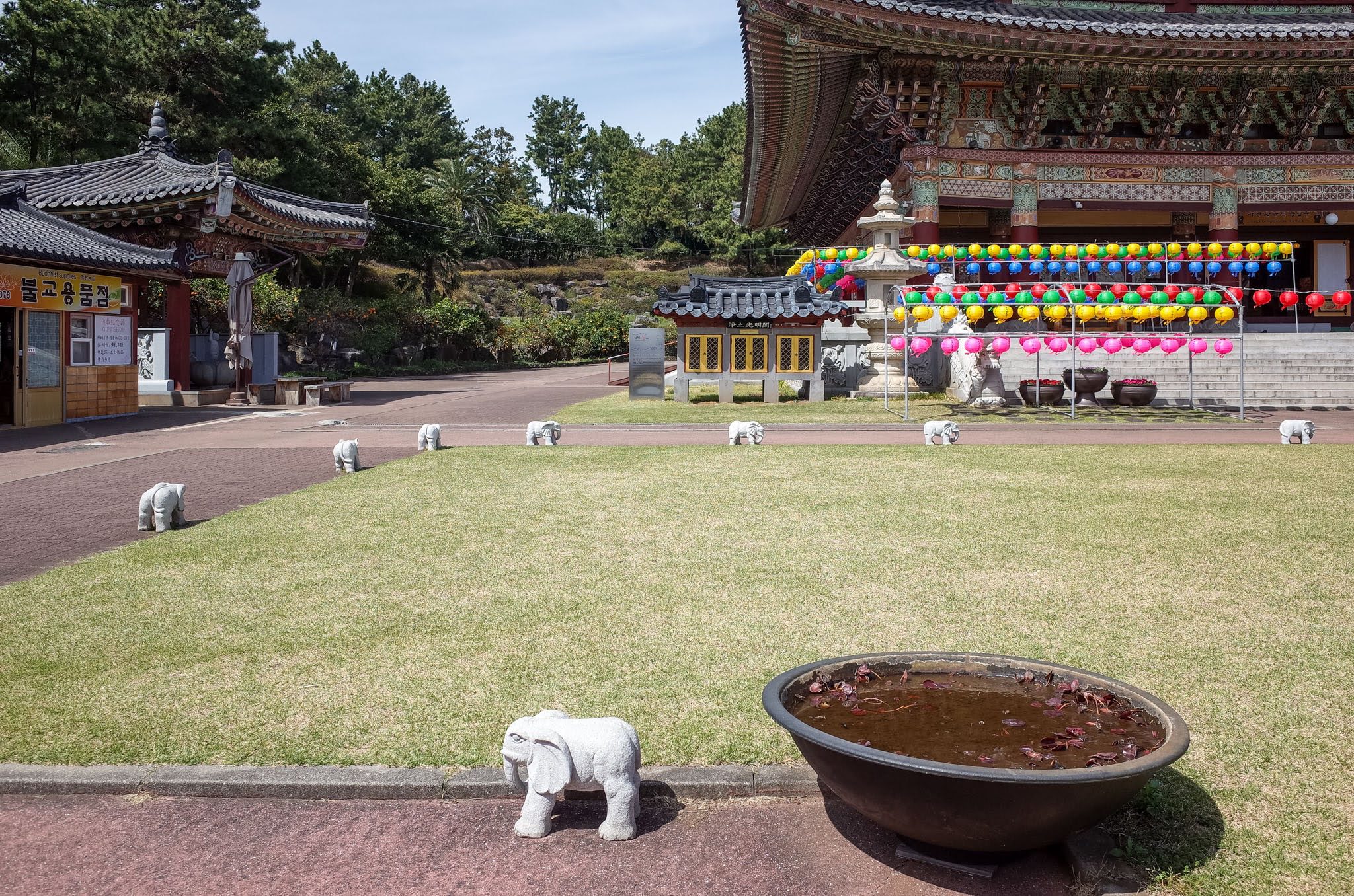
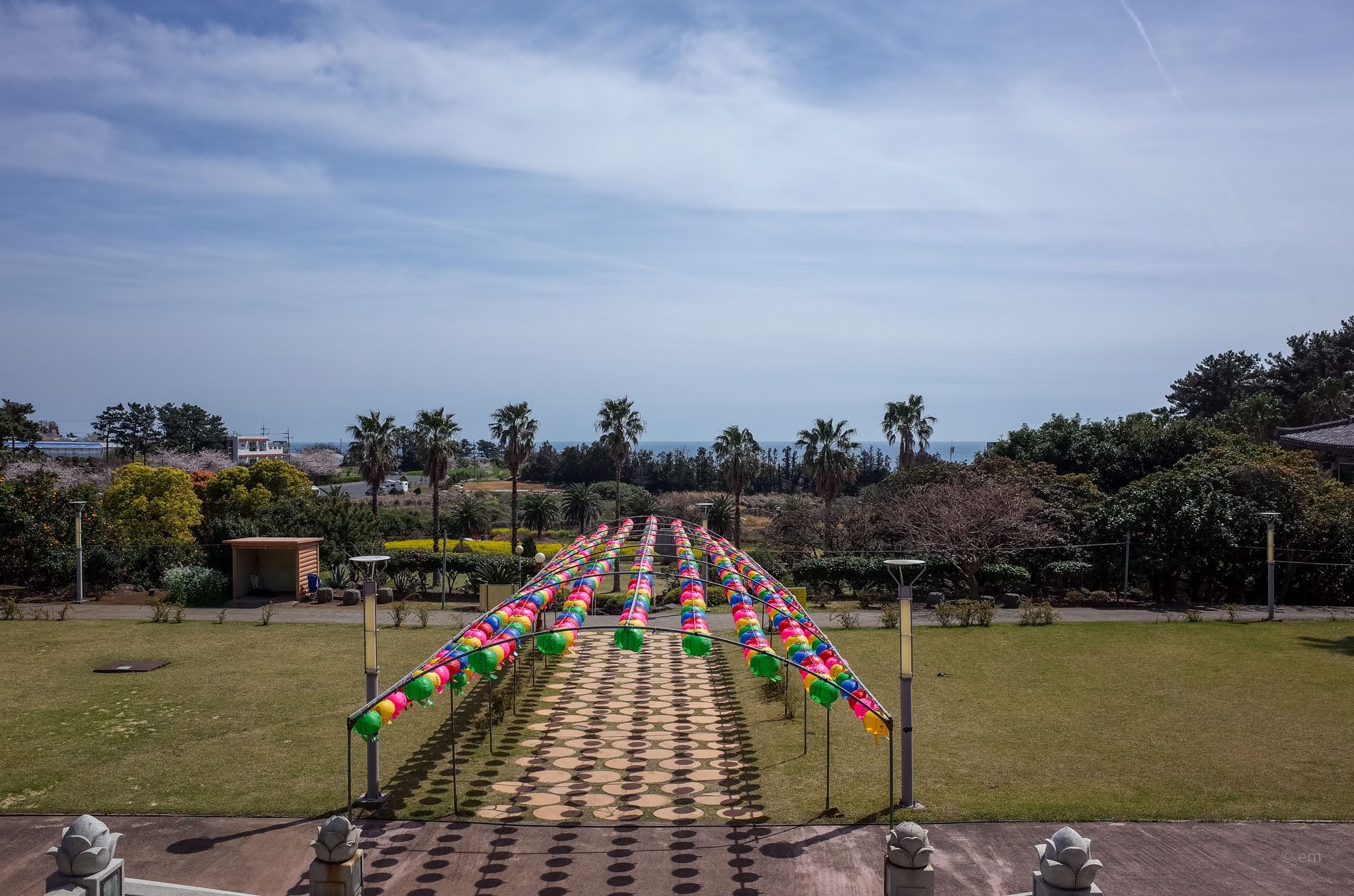
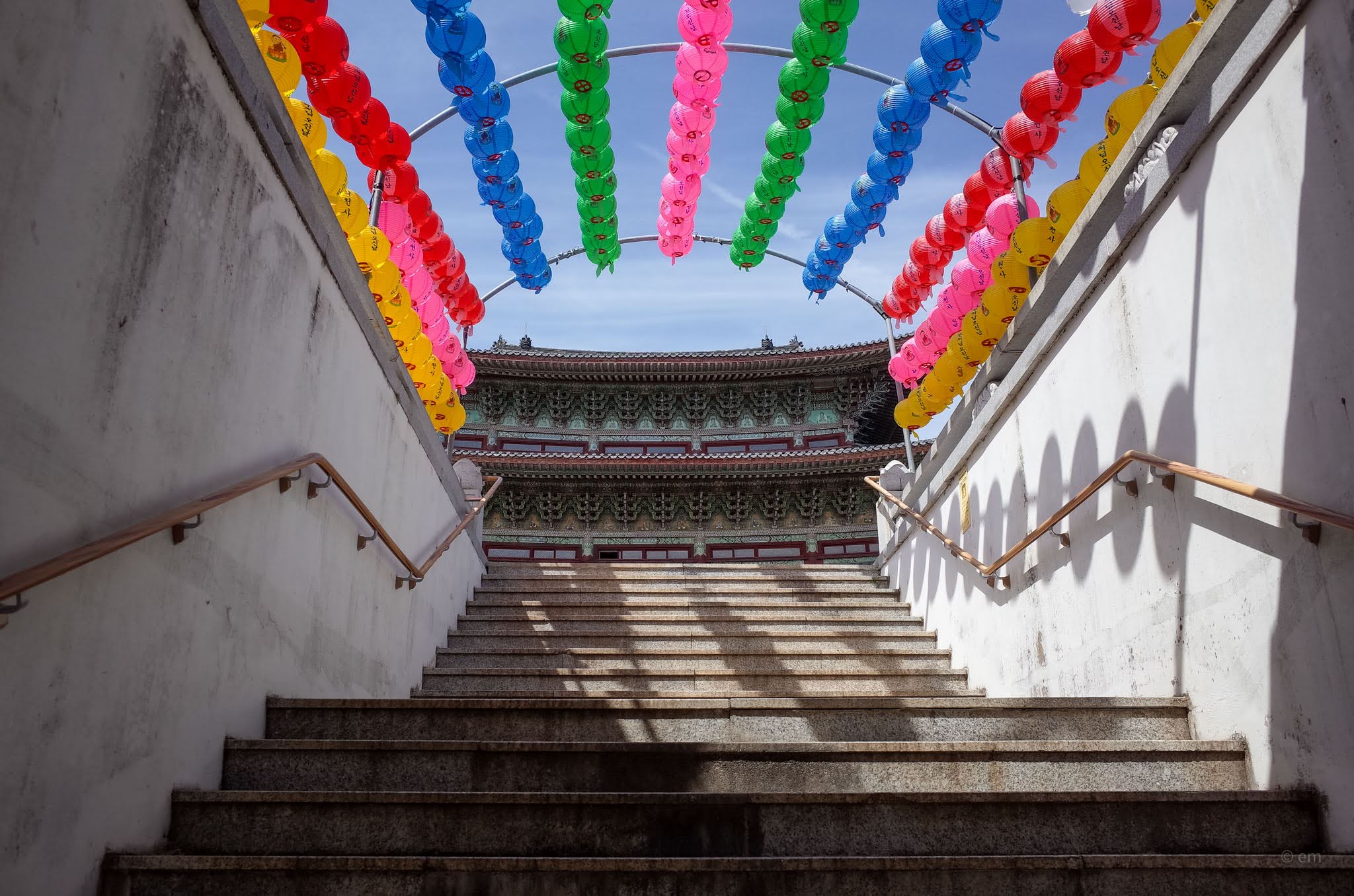
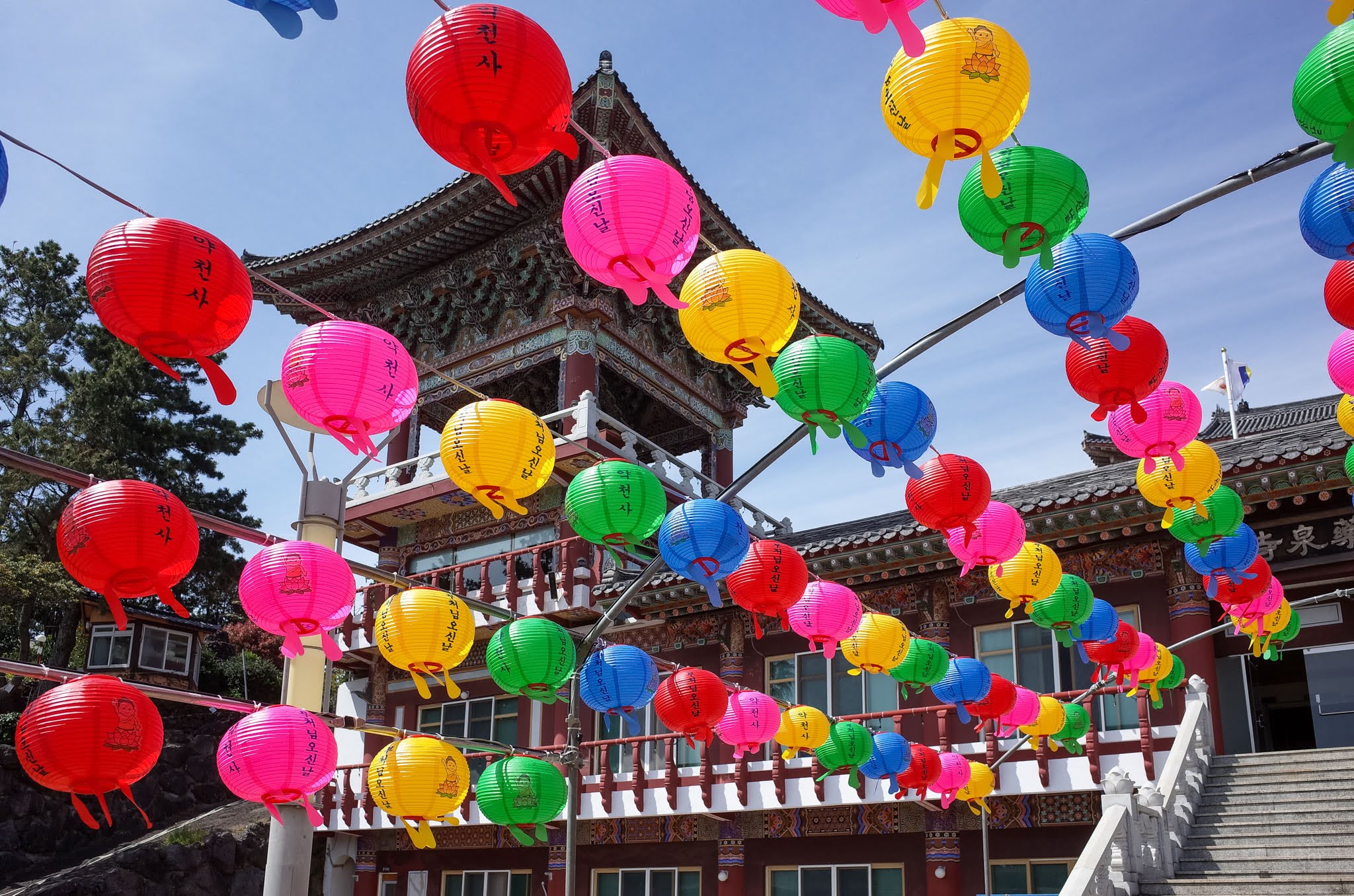
The courtyard in front of the main hall is an open grassy rectangle, and in the weeks before Buddha’s Birthday it becomes something else. Colorful paper lanterns are staged across scaffolding along the full facade of the main hall and the bell pavilion, stacked in rows of red, pink, blue, green, and yellow. More lanterns hang in arched tunnels over the staircase passages — look up from the steps and they close overhead like a vaulted ceiling, casting circular shadows down the white stone walls.
Scattered across the grass, unhurried and evenly spaced, are small stone elephant statues. They face no particular direction. They appear to be grazing. The combination of the massive lantern-wrapped hall behind them and the miniature white figures arrayed across the lawn has a quiet surrealist quality — a kind of sacred scene that has been subtly, unexpectedly rearranged.
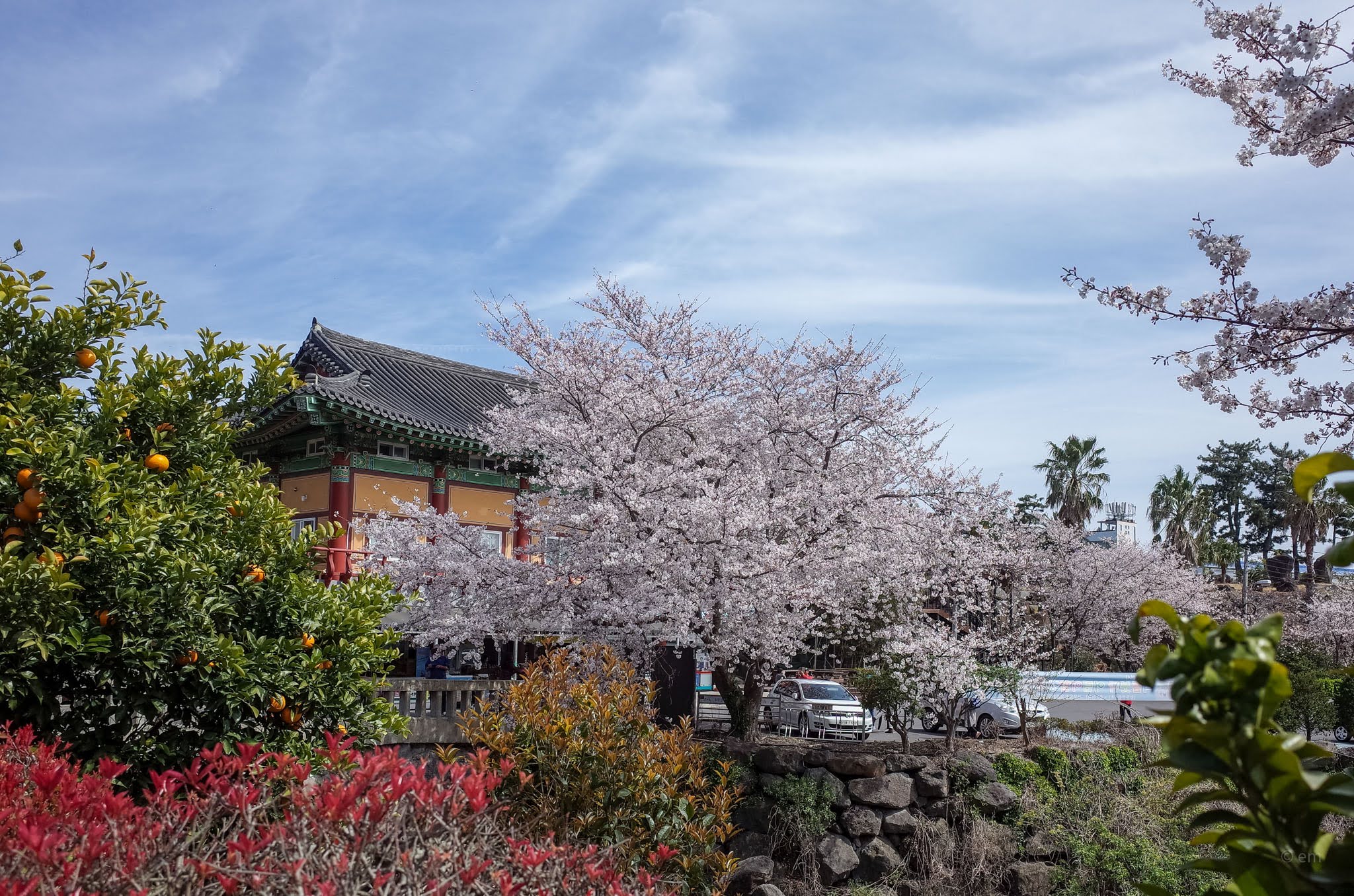
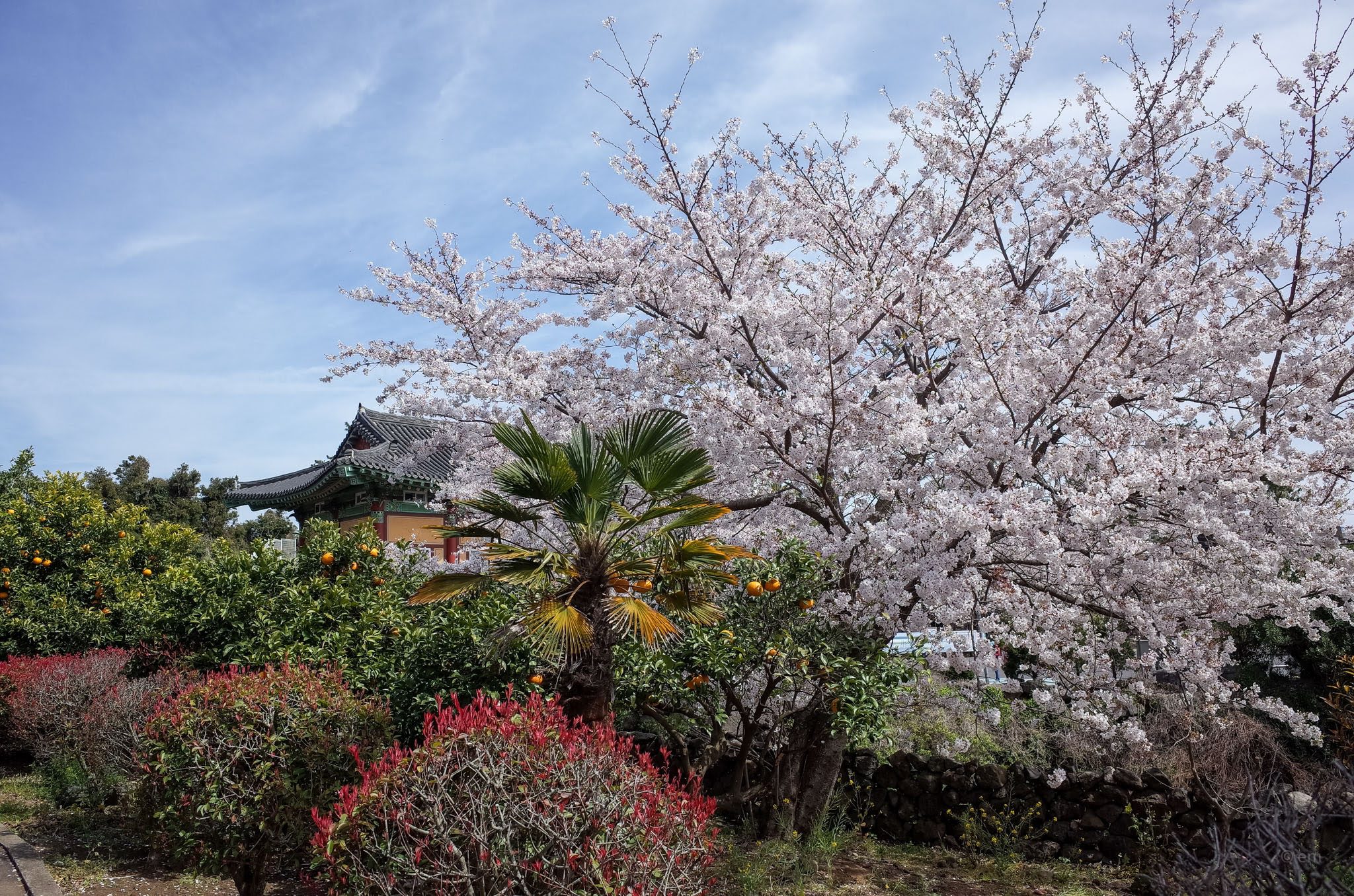
A large iron water basin sits near the base of the stairs. Fallen petals collect on the surface. Mandarin orange trees with fruit still clinging to the branches grow along the garden edges, and somewhere in the lower grounds, a small fan palm presses up between a cherry tree in full bloom and an ornamental hedge. The grounds were apparently growing before anyone decided what to call the aesthetic.
Looking Outward
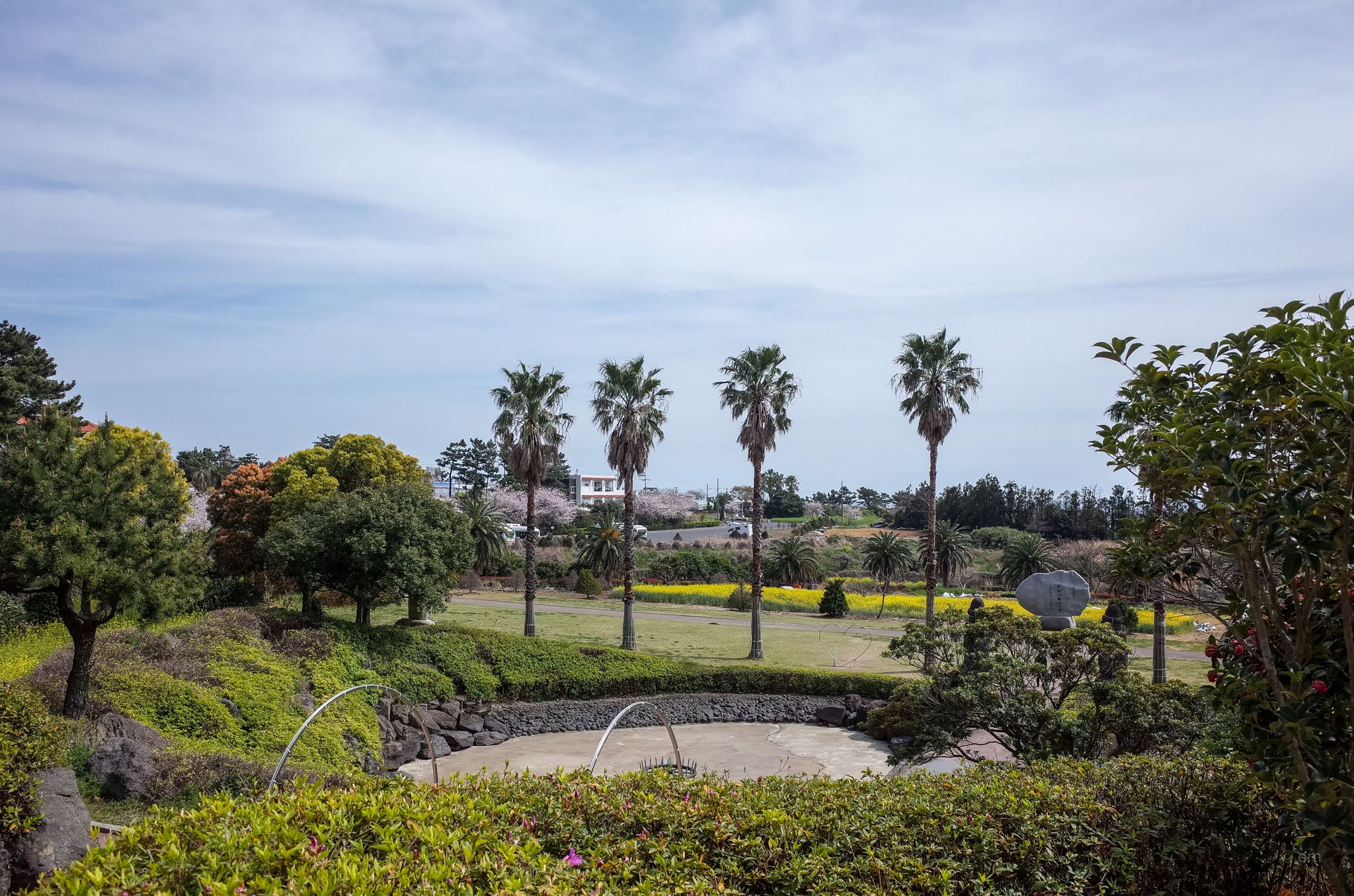
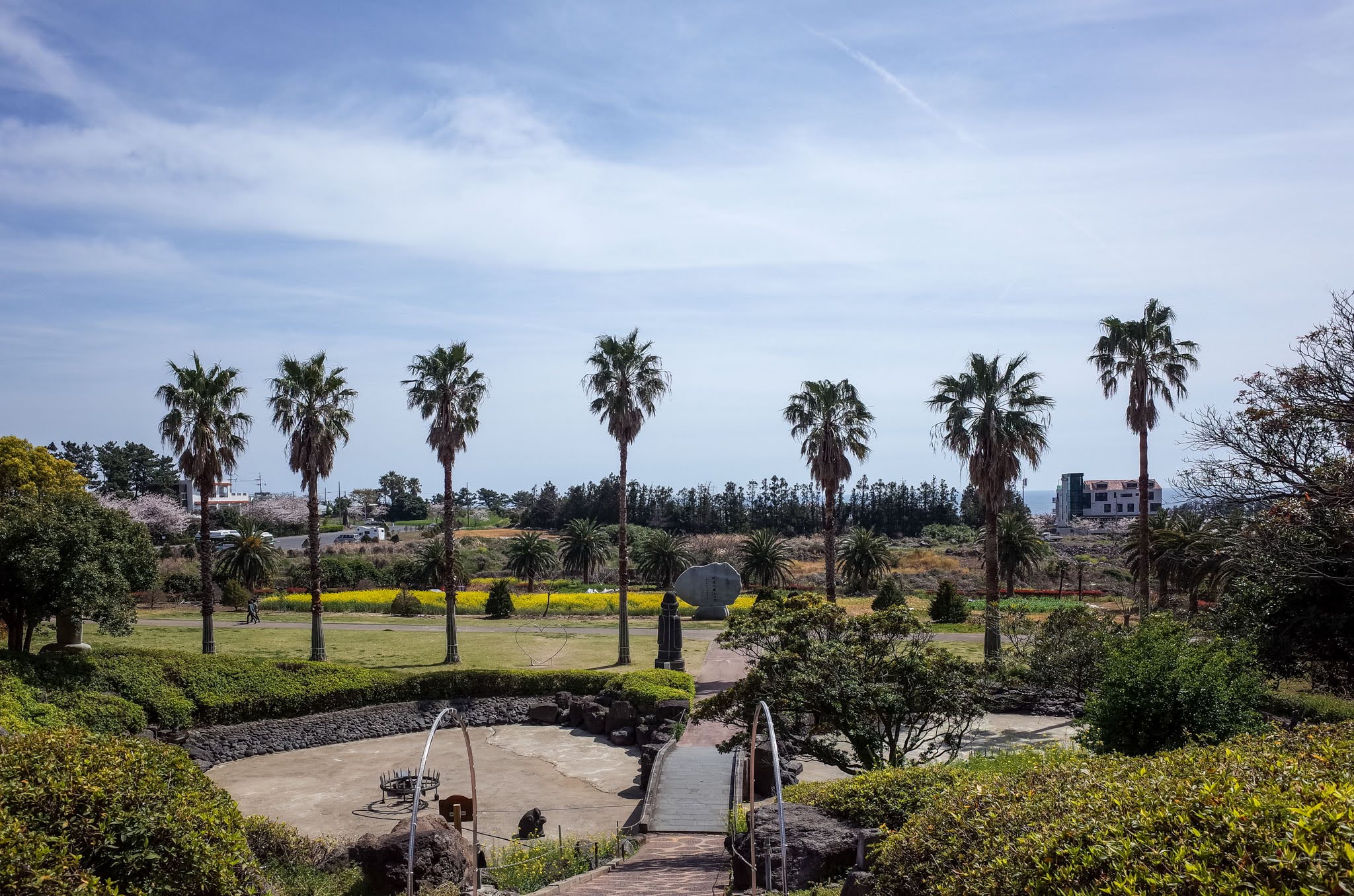
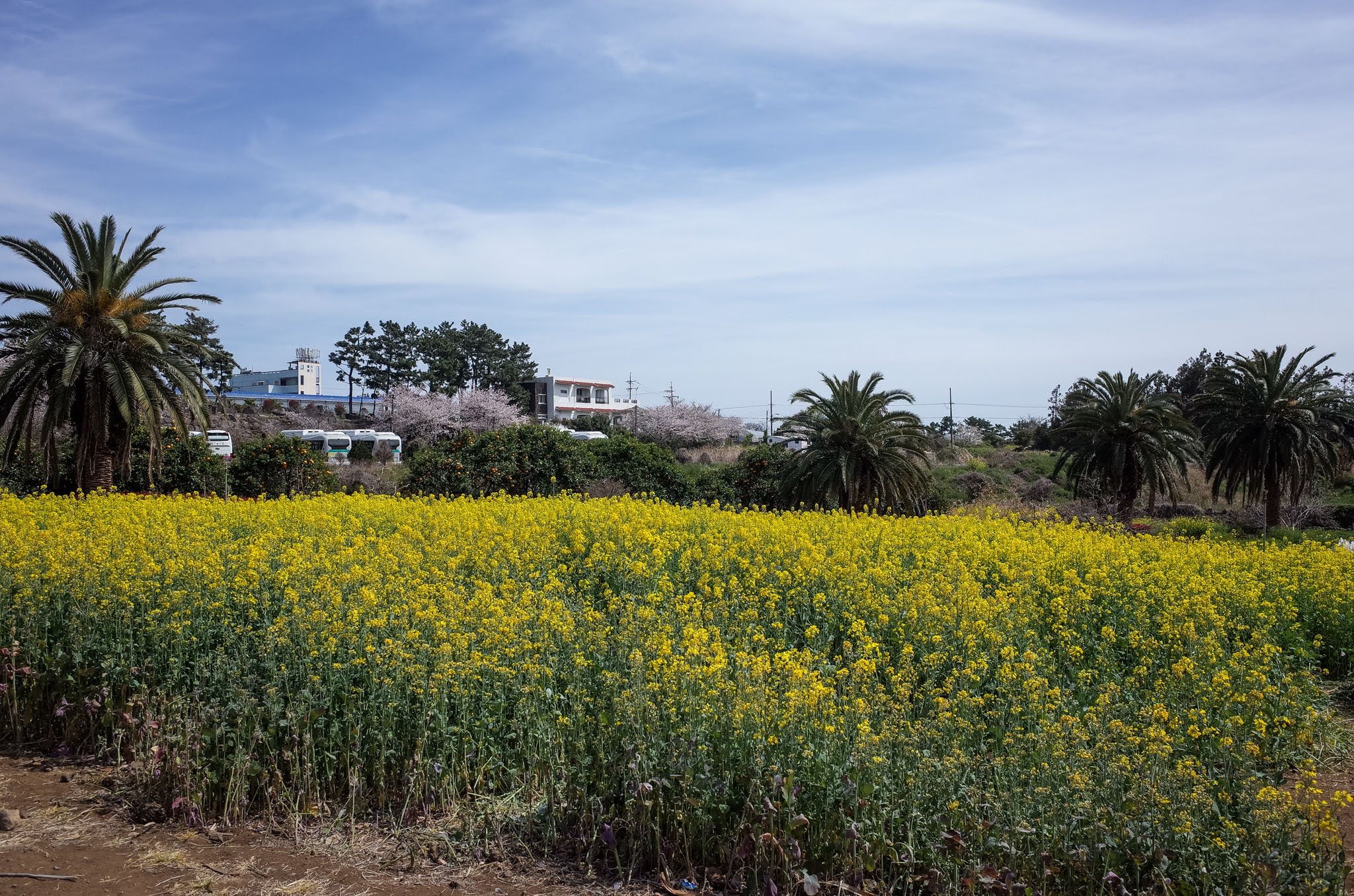
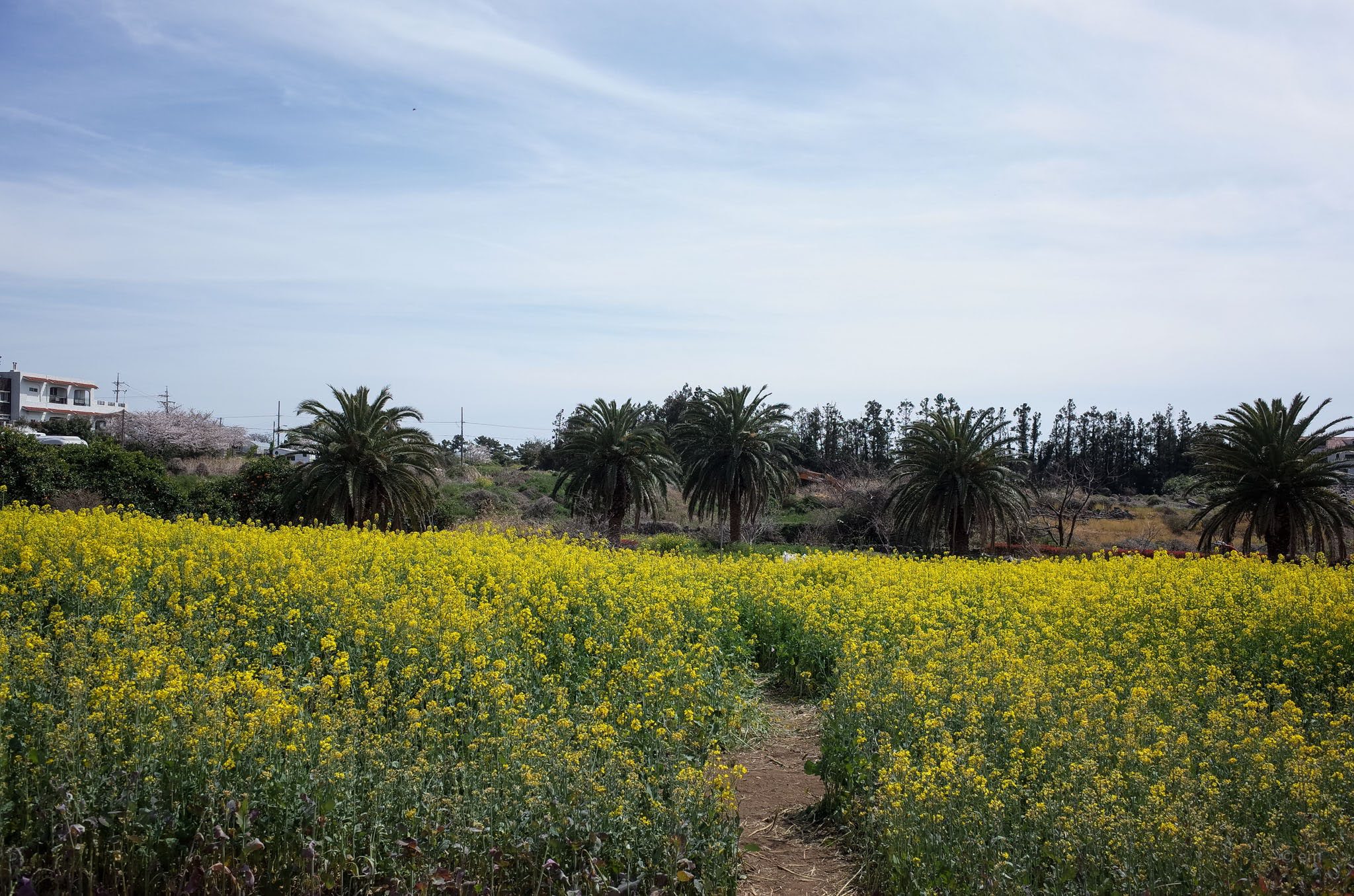
The most arresting thing about Yakcheonsa might not be the temple itself but what you see when you turn away from it. From the elevated terrace at the front of the main hall, the view opens over the entire southwestern coastal plain of Jeju. Immediately below: the ceremonial path, its round stone tiles receding between two rows of lanterns. Then the flat open field, bright with canola in bloom. Then a line of tall palms. Then, past all of it, the sea.
Standing at that elevation with the ocean on the horizon and palm trees in the middle ground and yellow rapeseed filling the flatland between — the temple behind you, the island spread out ahead — the experience doesn’t map neatly onto any category of place. It isn’t solemn in the way mountain temples are solemn. It isn’t tourist-picturesque in the usual way either. It’s just very, very present: everything in Jeju’s April happening at once, from a position high enough to see most of it.
In Season
Yakcheonsa sits at the meeting point of two of Jeju’s most reliable spring signals. The canola fields that spread across the flatland below the temple terrace — visible from the upper grounds as a band of solid yellow between the palms and the road — are the same fields that draw visitors to the island’s southern coast every March and April. Here they aren’t a destination in themselves but a backdrop, something that happens to be in the frame when you look outward. Cherry trees grow along the garden perimeter and in the approach road; at peak bloom they press white against the red lacquer of the lower hall buildings, and against the still-orange mandarin fruit that hasn’t yet dropped. The combination of canola yellow, cherry white, citrus orange, and lantern primary colors — all present simultaneously in the same grounds — shouldn’t work as well as it does. On Jeju in April, it just does.
약천사 (Yakcheonsa): 293-28 Ieodo-ro, Daepo-dong, Seogwipo-si, Jeju-do |
Open daily | Free entry | Temple stay programs available | On Jeju Olle Trails 7 and 8
Spring in Jeju lasts about two weeks. From here, you can see most of it at once.