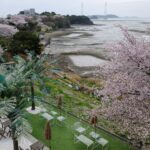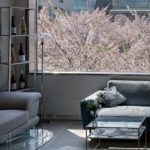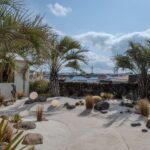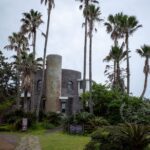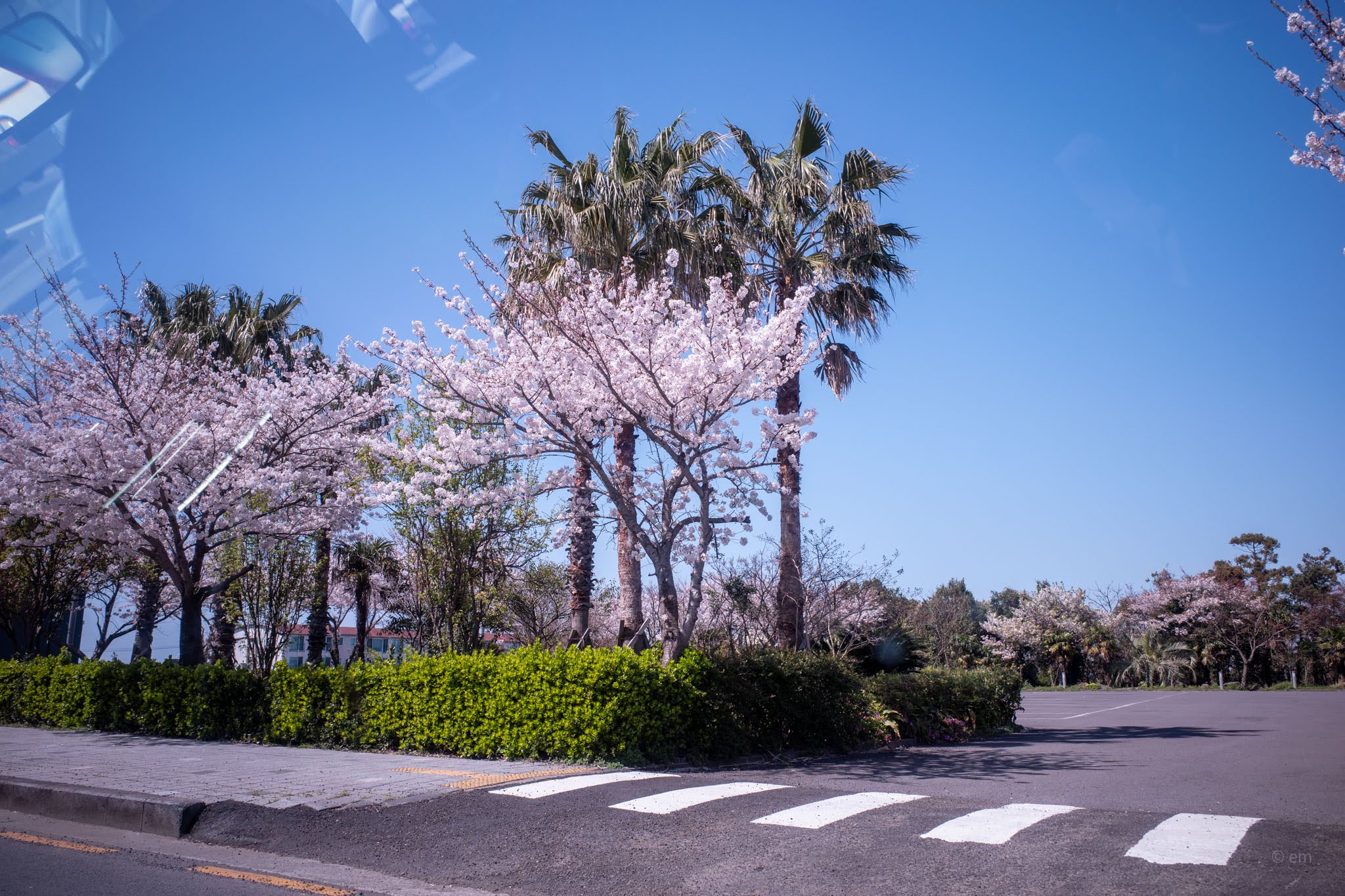
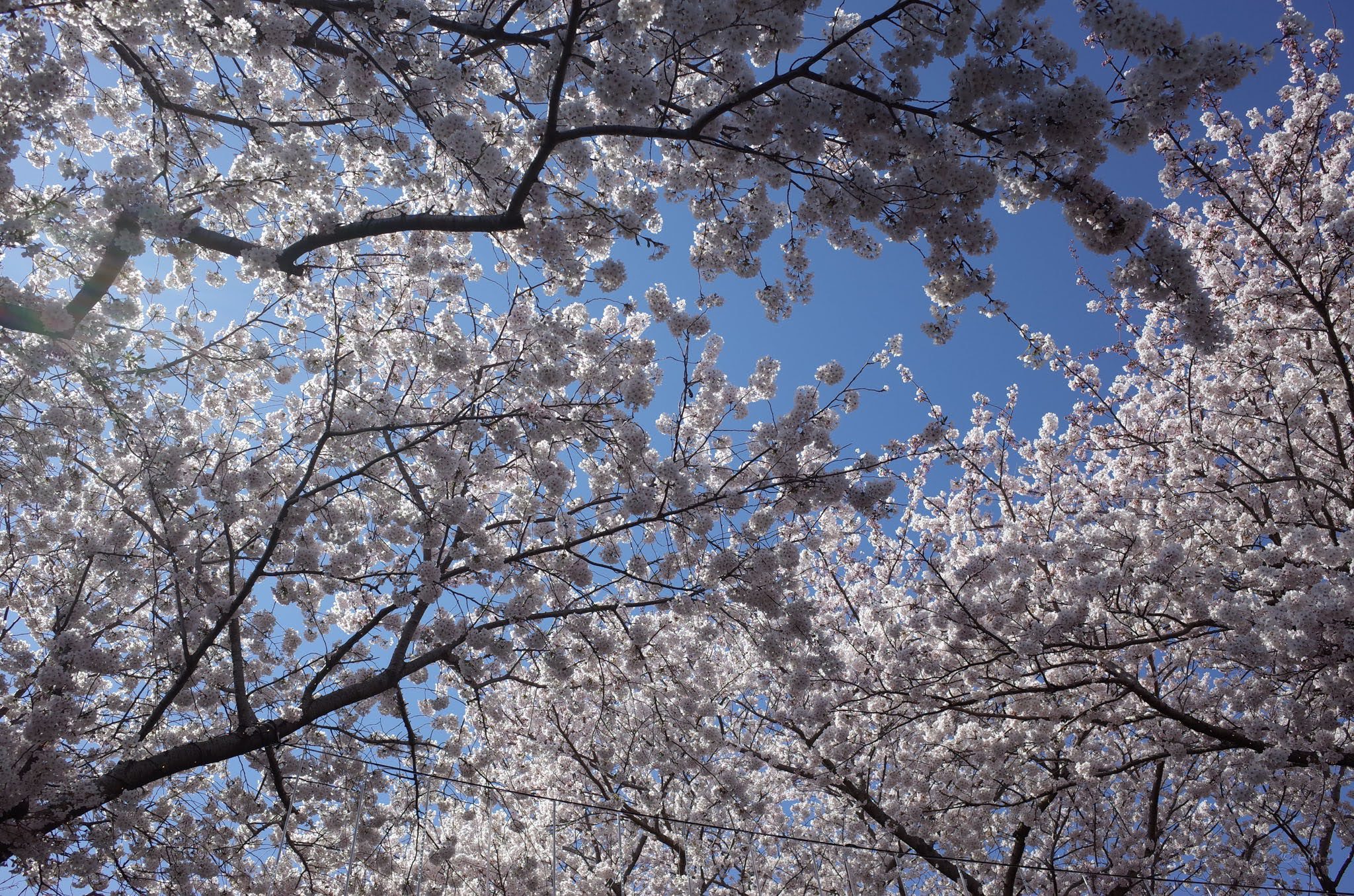

Not every cherry blossom view in Jeju comes with a tour bus behind it.
Jeju-daero in peak bloom is unmistakable — a boulevard-length wall of white and pink that every spring itinerary routes through. But Jeju also has a quieter version of the season, one that falls on working churches and neighborhood hilltop parks rather than designated viewpoints. These photos are from one of those days: overcast, petals already releasing, the crowds elsewhere.

Sammu Park
Ildoidong, Jeju City, Jeju Island
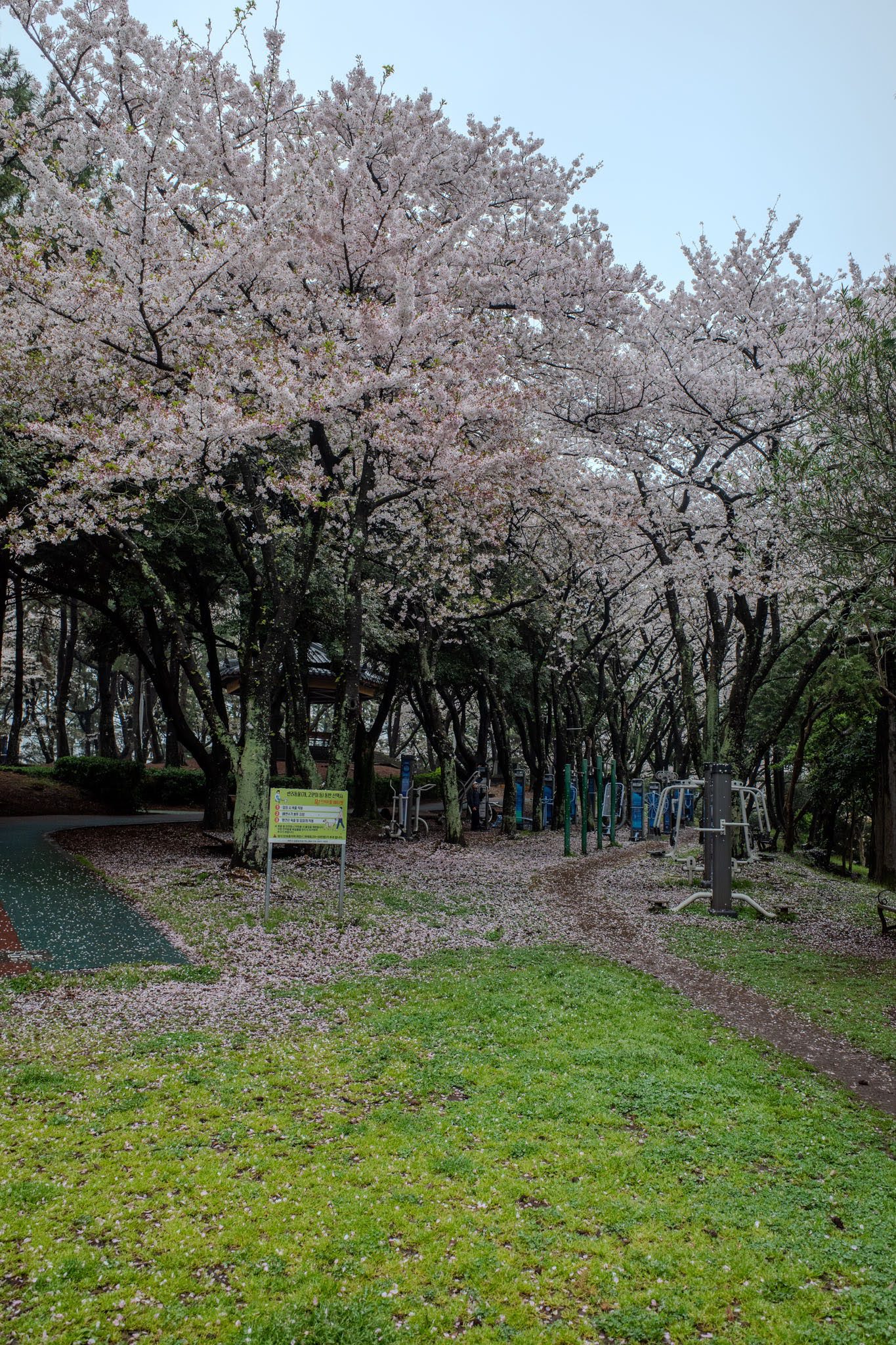
삼무공원 (Sammu Park) sits on a hill in central Jeju City, the kind of green space locals use and visitors don’t bother to find. The park’s name comes from Jeju’s old identity as the island of “three absences” — no beggars, no thieves, no gates — and its main draw for most people is a preserved steam locomotive displayed somewhere in the upper grounds. On this particular visit, the locomotive was behind a construction barrier and completely out of sight.
What remained was the infrastructure around it. A tall signal post — iron fittings, ornate black hardware, the kind of thing that reads as prop rather than utility — stood at the edge of an open clearing surrounded by pine trees. Weeping cherry trees grew near it, their branches hanging in a deeper, more saturated pink than the pale standard varieties elsewhere in the park. Together, the combination had a strangely cinematic quality: the lone post, the curtain of blossoms, the flat overcast light.
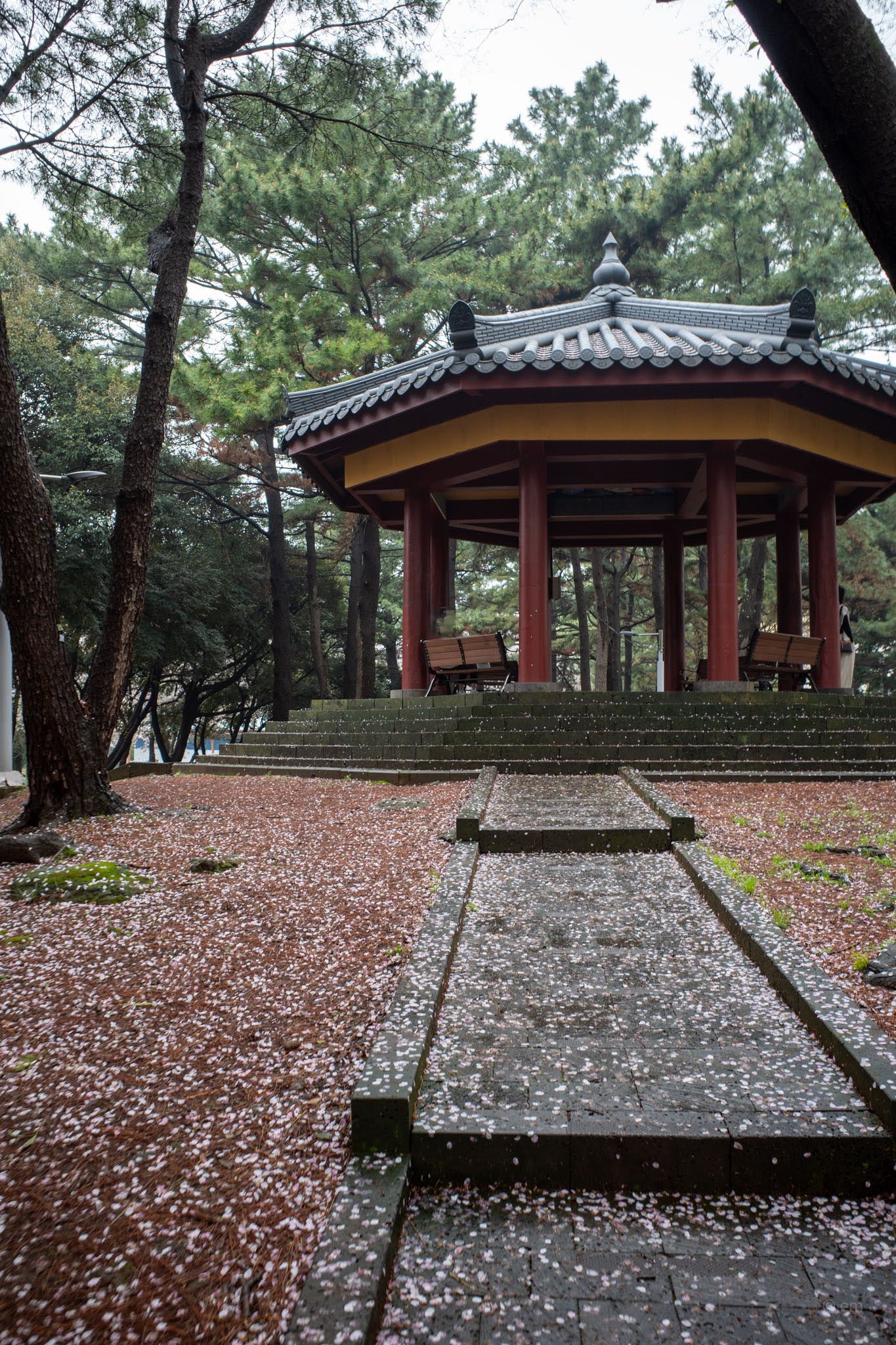
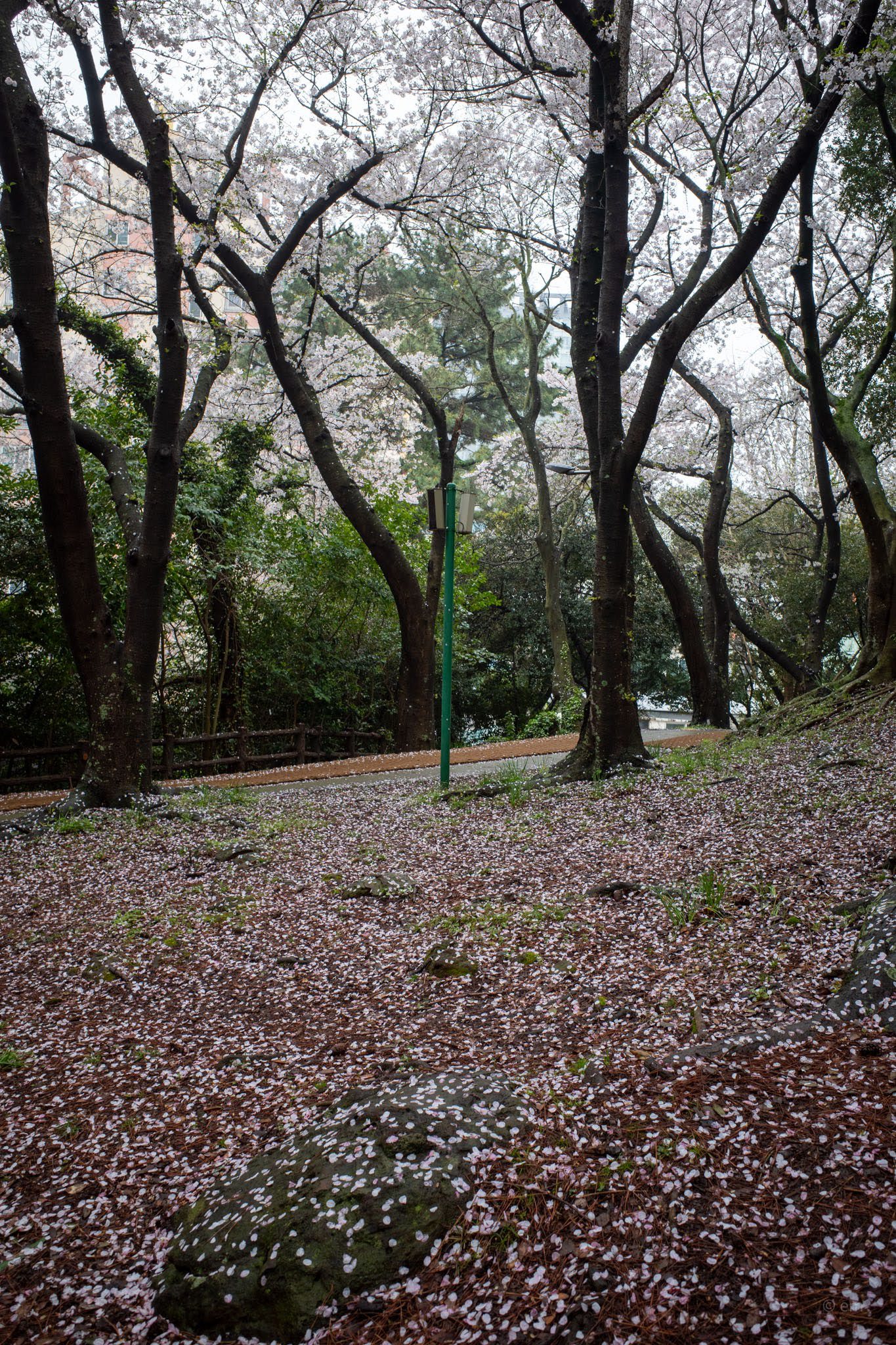
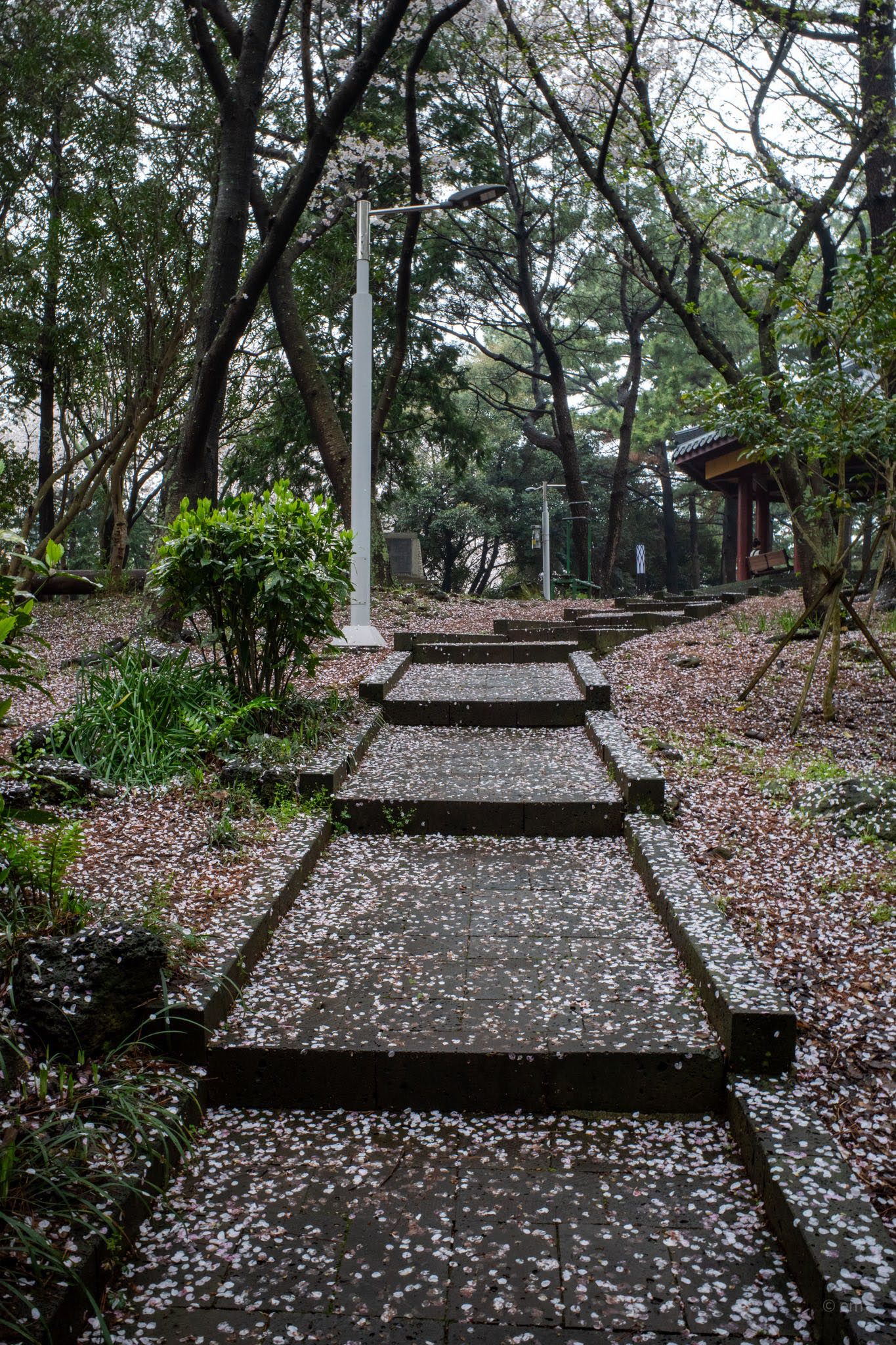
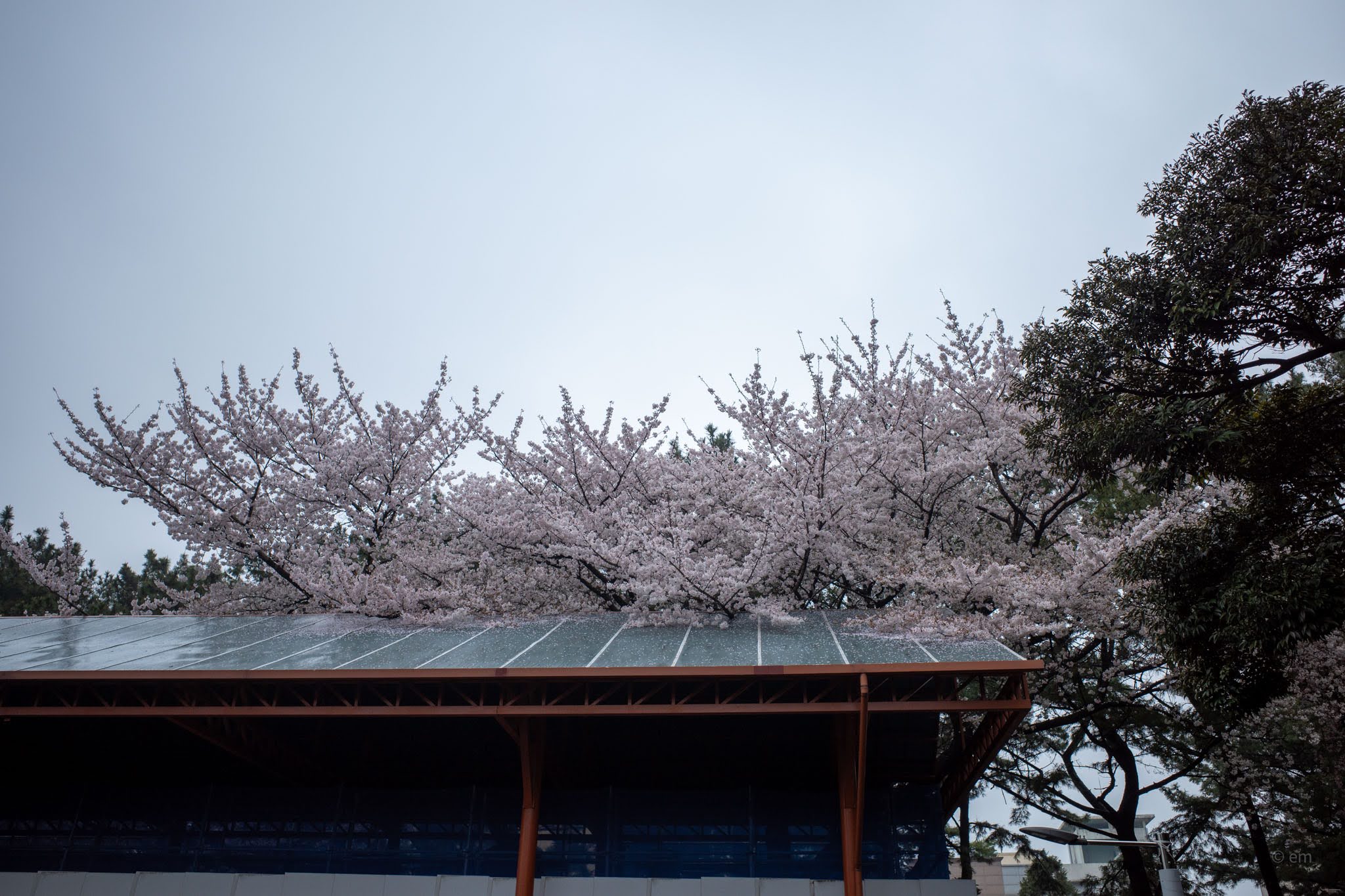
Elsewhere in the park, every horizontal surface had received the same treatment — stone steps, packed earth between tree roots, the approach to the traditional pavilion near the top of the hill. The pavilion itself sat in the middle of a petal-covered clearing, benches empty, looking like a stage with no audience. The cherry canopy above it, when looked at straight up, was dense enough to nearly block the sky.
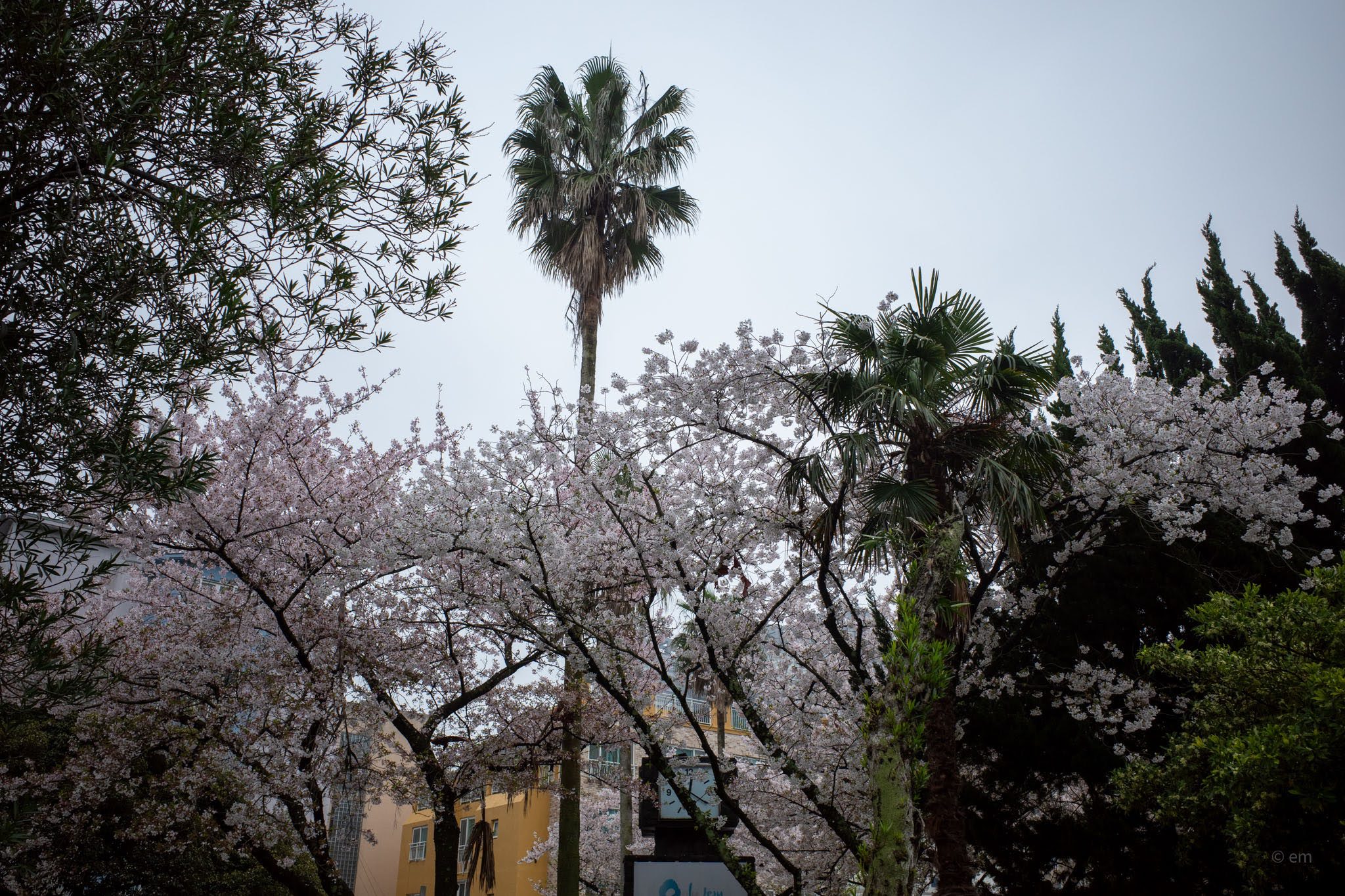
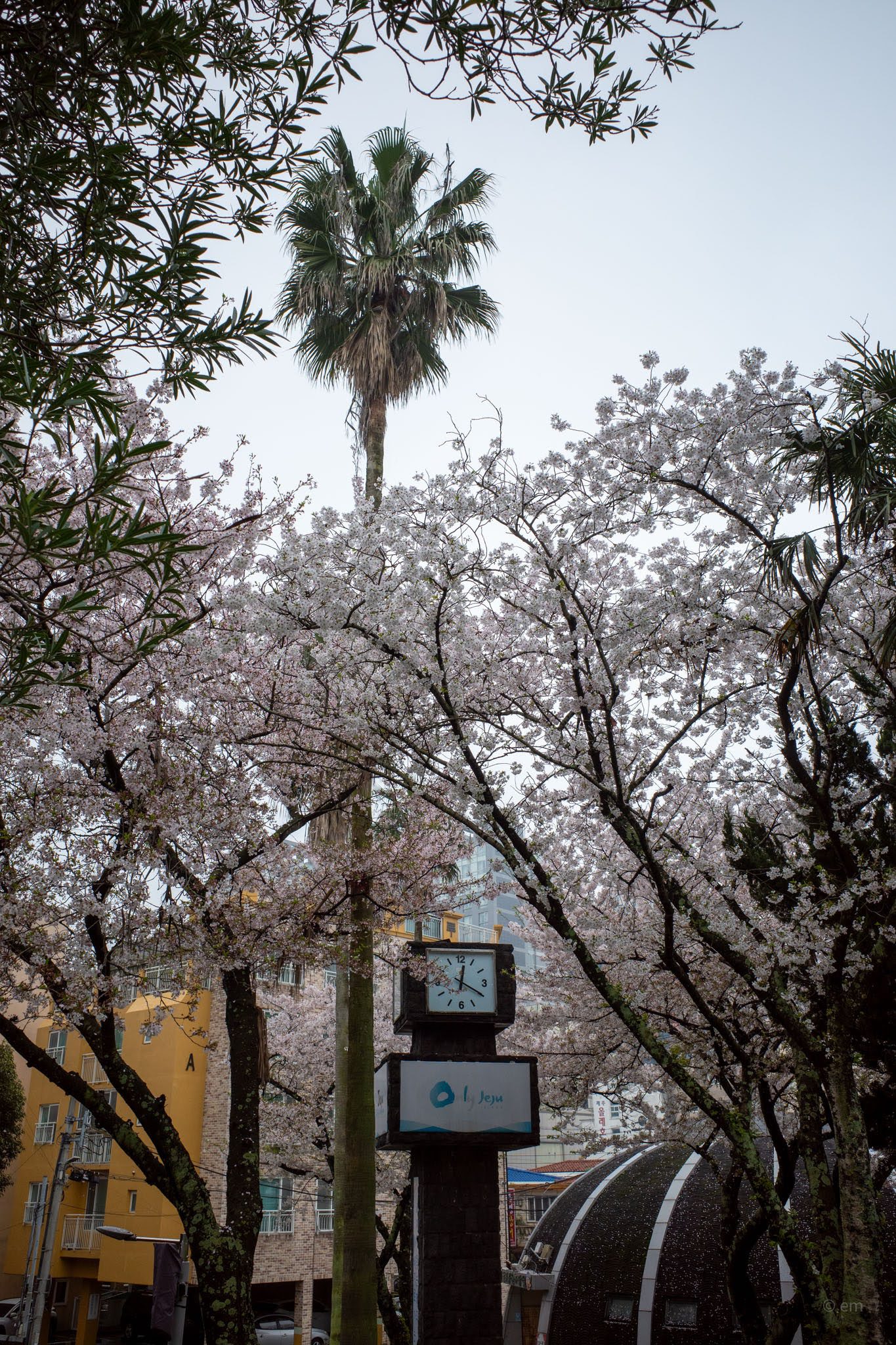
Near the entrance, a Jeju city clock stood at an intersection of paths, a palm tree rising directly behind it through the blossom cover. That particular frame — tropical crown, pale pink cloud, municipal signage — feels like a specifically Jeju image. Somewhere between island resort and residential neighborhood, between mainland spring and something more subtropical.
Sinjeju Catholic Church
Sinjeju-ro, Jeju City, Jeju Island
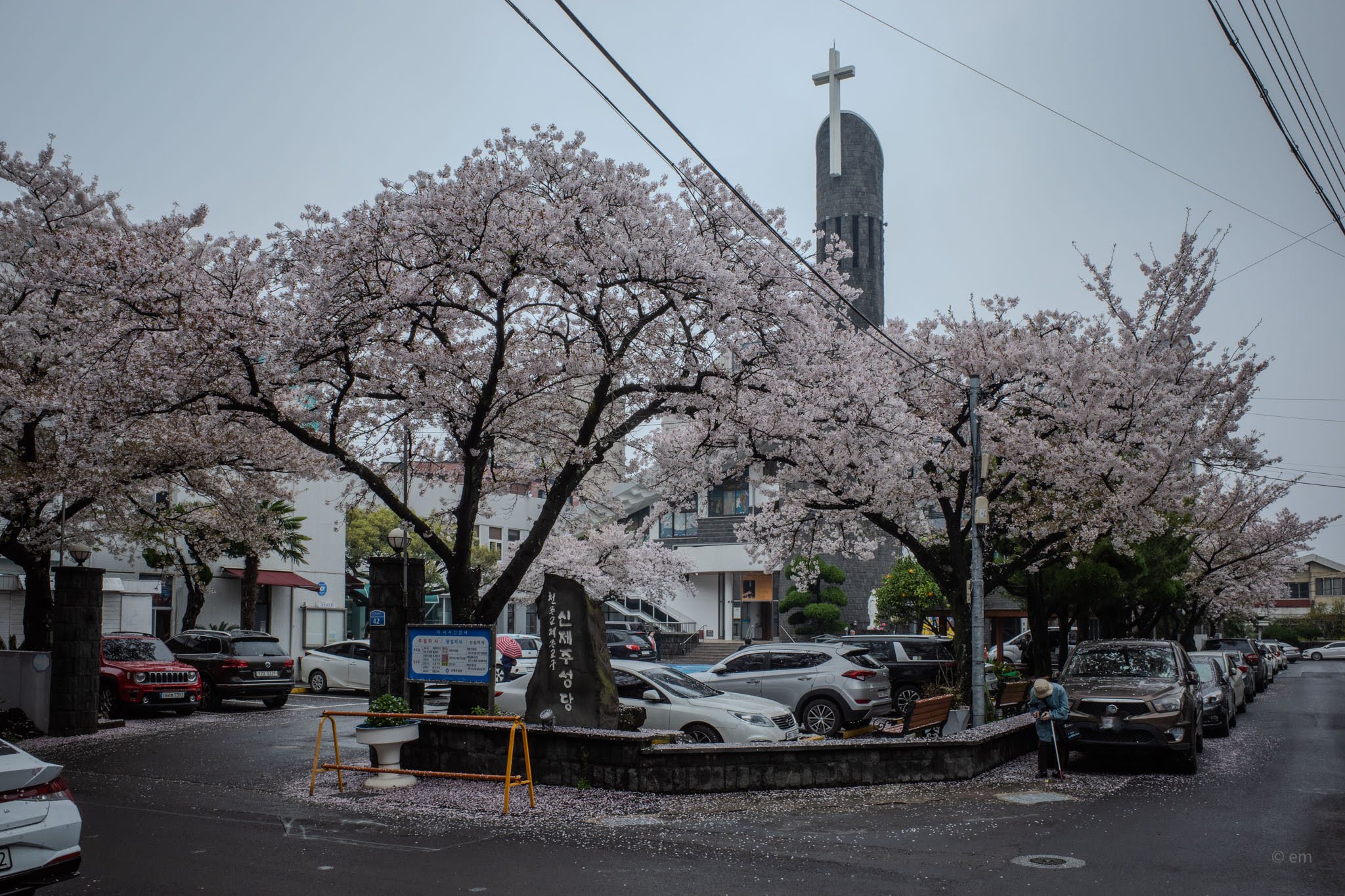
신제주성당 (Sinjeju Catholic Church) is a working parish in the newer part of Jeju City, not a tourist destination by any reading. What makes it worth a detour in spring is the trees: mature cherry specimens that have had decades to reach full spread, the kind that arch over the entrance approach and fill the forecourt with something closer to atmosphere than ornament.
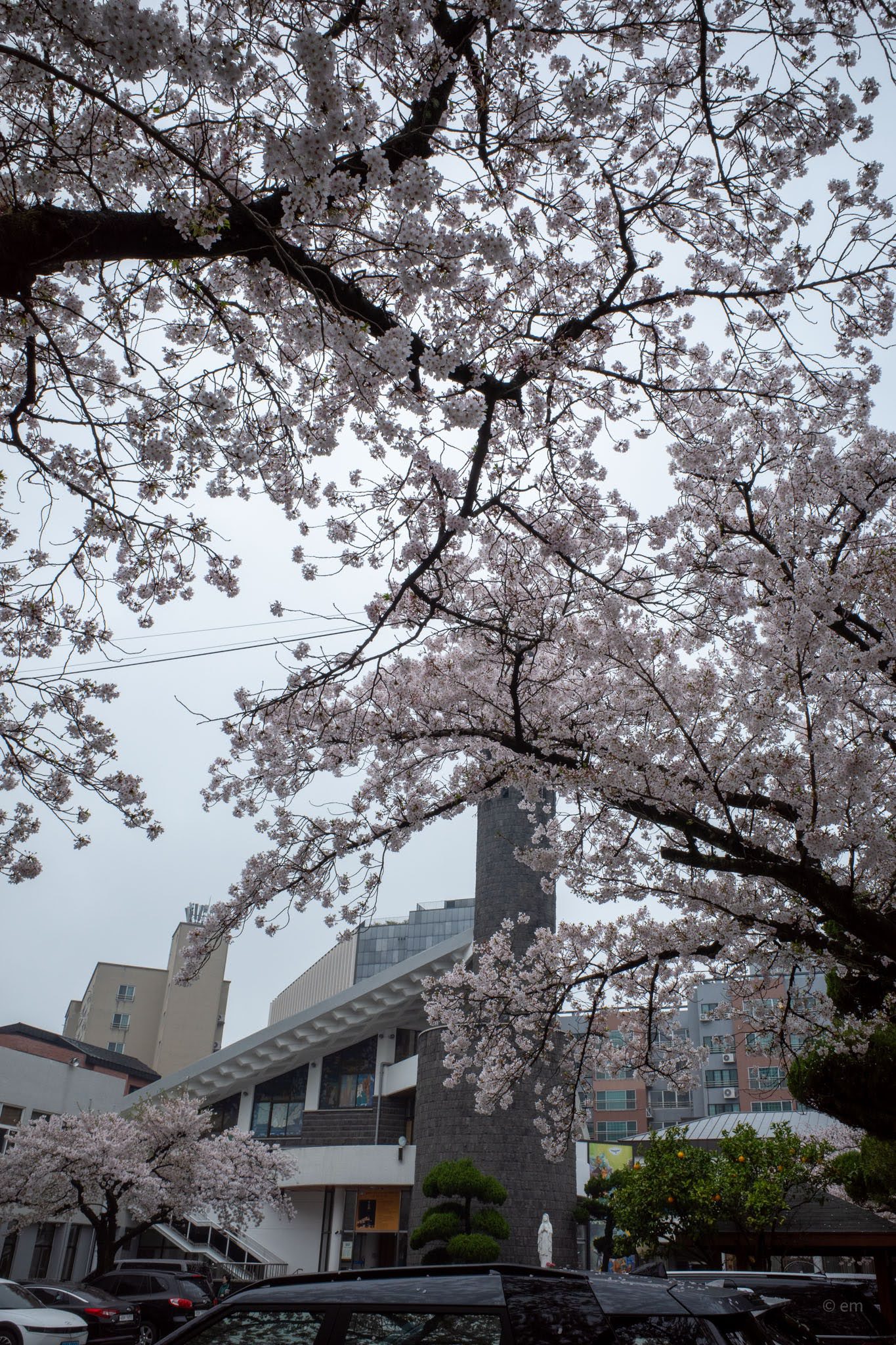
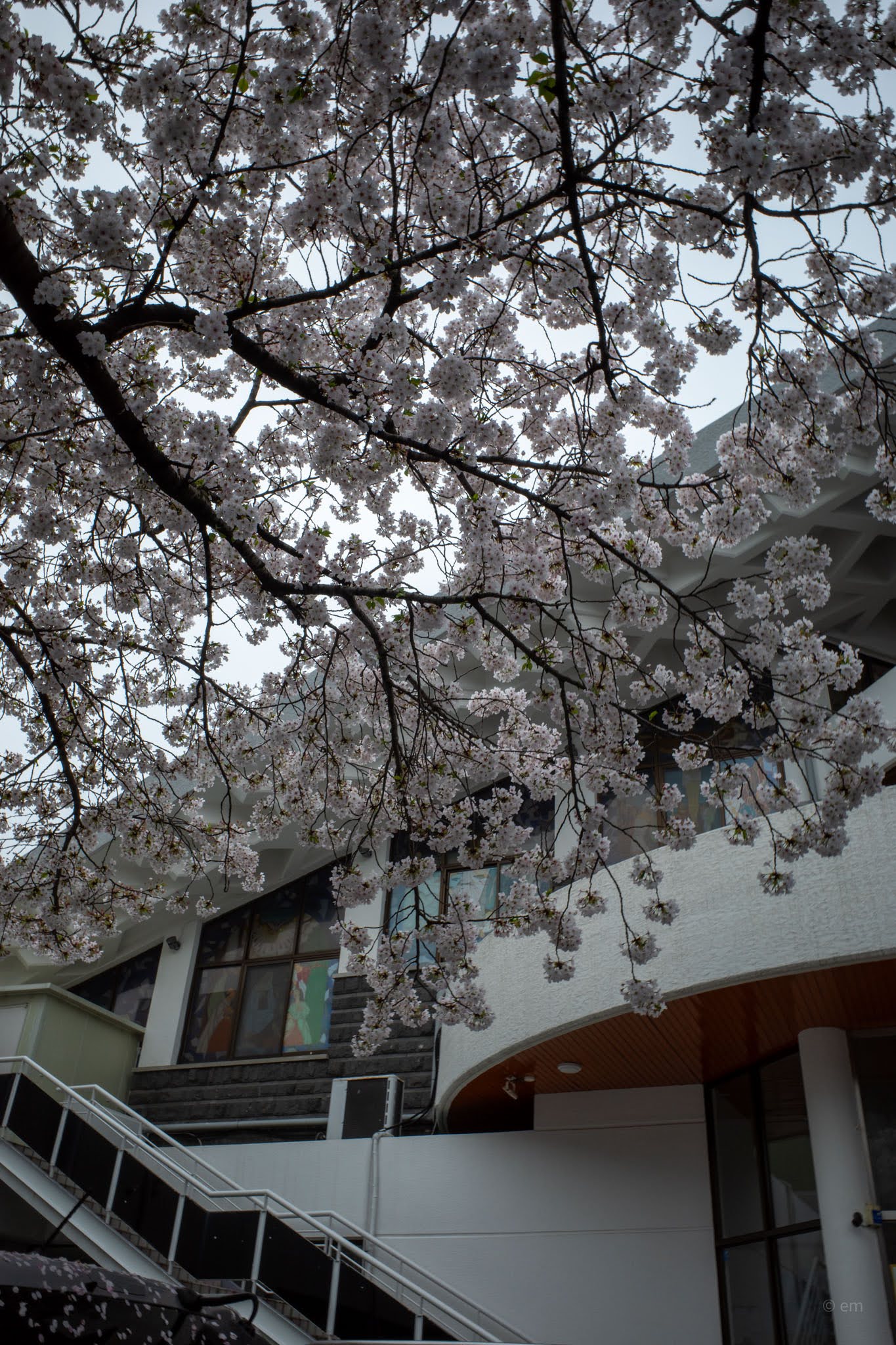
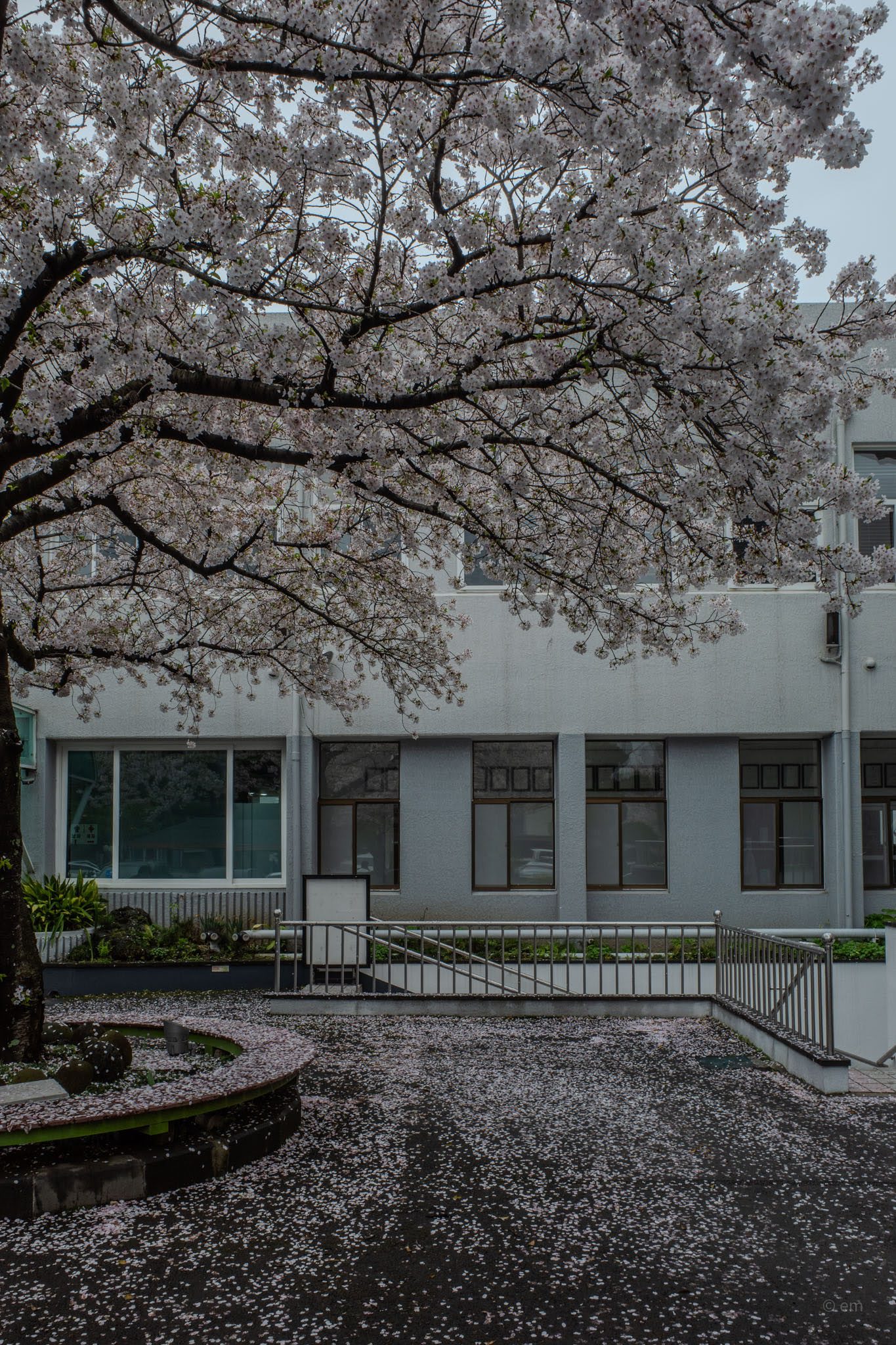
The church building is clean and modern — white plaster, geometric lines, a dark stone bell tower with a plain cross at its peak. There’s no Gothic revival here, no stained glass. But the formality of the grounds, combined with the blossoms pressing against the stone and a white statue of the Virgin Mary standing in the forecourt, creates a quietly striking contrast. The carved stone marker at the entrance reads 신제주성당. Petals had settled on the pavement around the statue’s base. Cars came and went from the lot.
The church didn’t perform spring for anyone. The cherry blossoms just happened to it, briefly and completely, the way they happen to everything else on the island in April.
Also in April
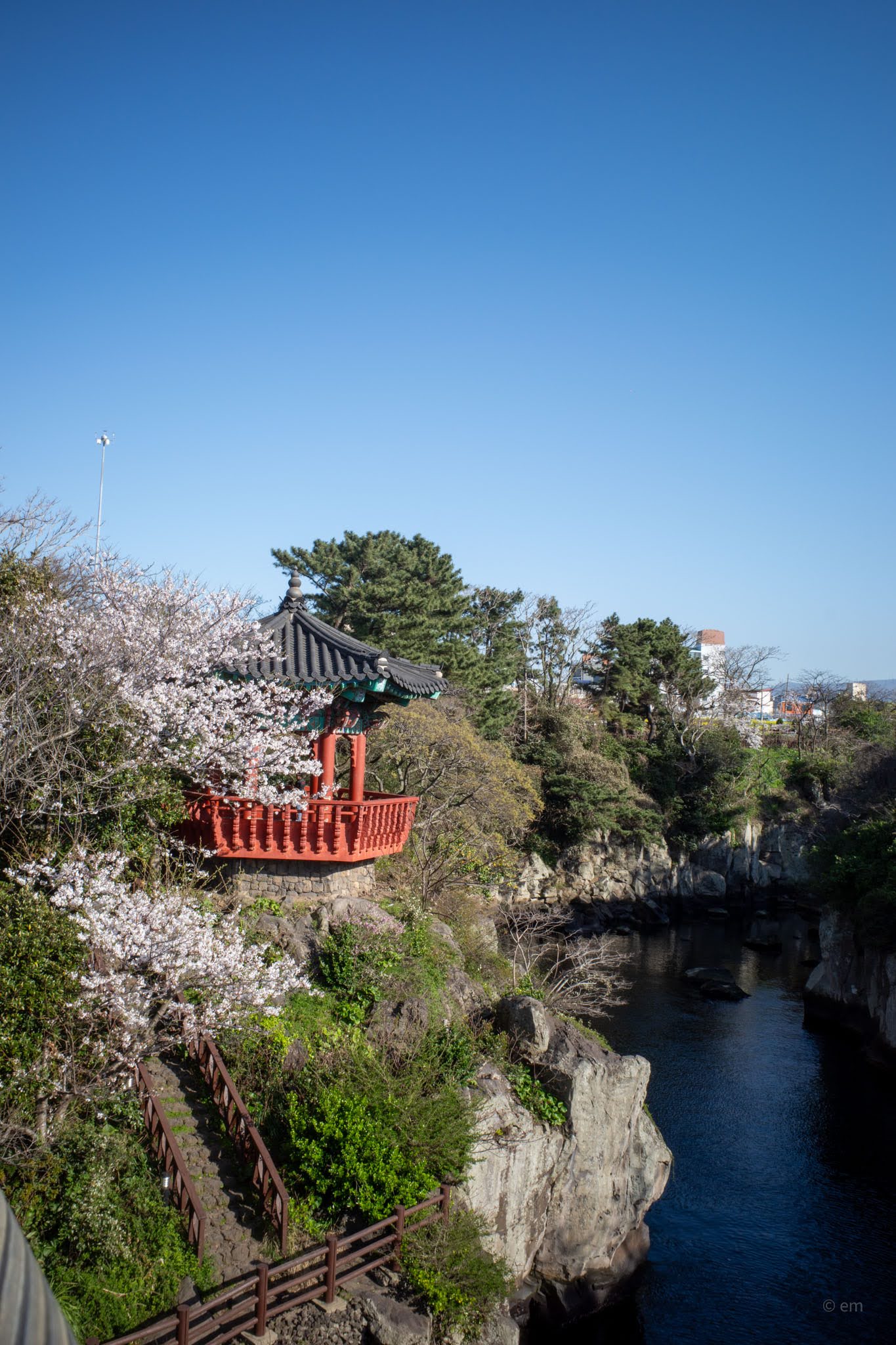
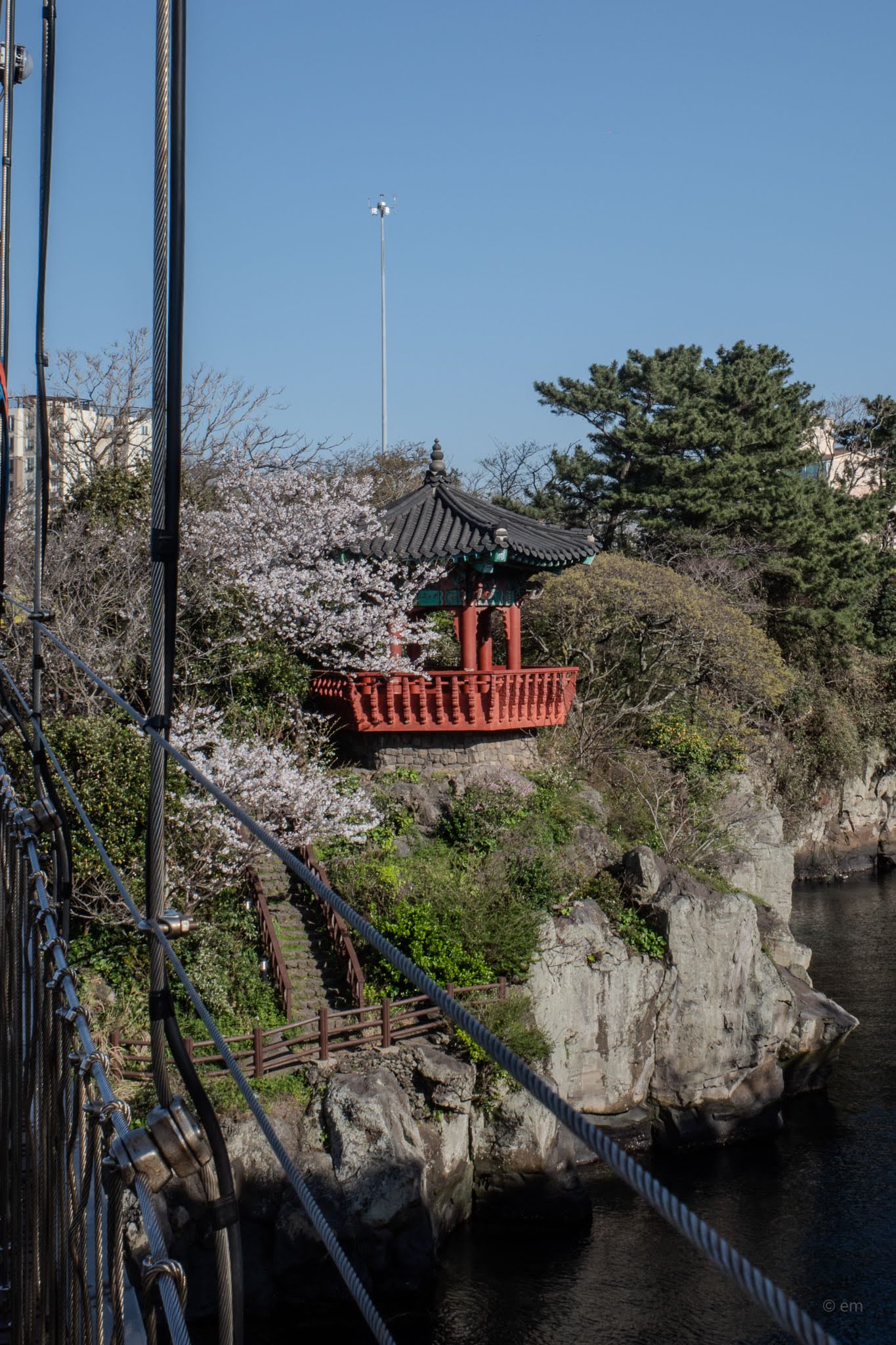
Yongyeon Gorge (용연계곡) is the kind of place that looks composed even without trying. The pavilion — red-pillared, tiled roof, built directly onto the basalt cliff face — sits above the stream as though it’s been waiting for exactly this lighting. In cherry blossom season, the white bloom pressing in from the left side of the frame turns the whole thing into something almost too pictorial to believe.


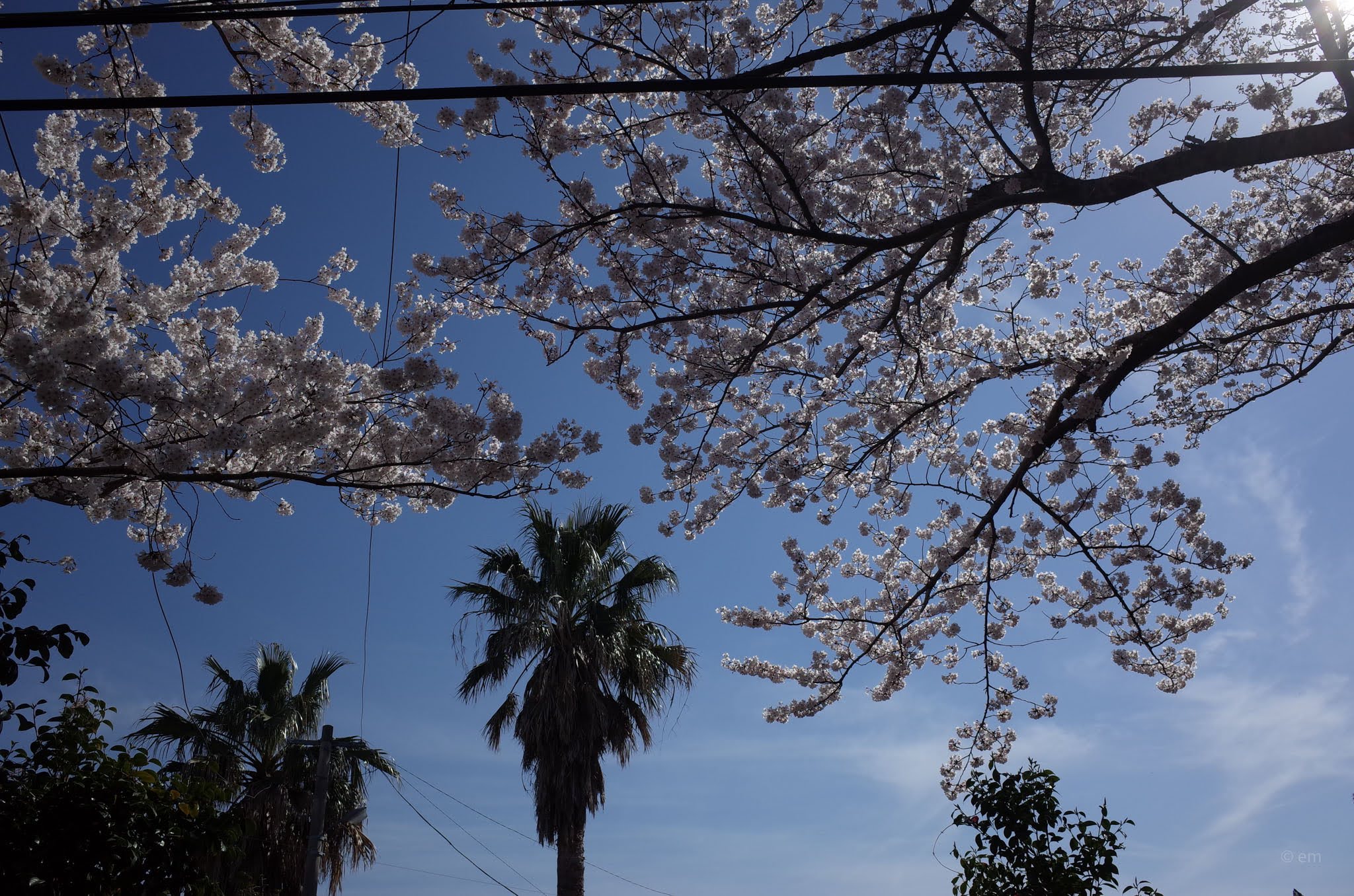
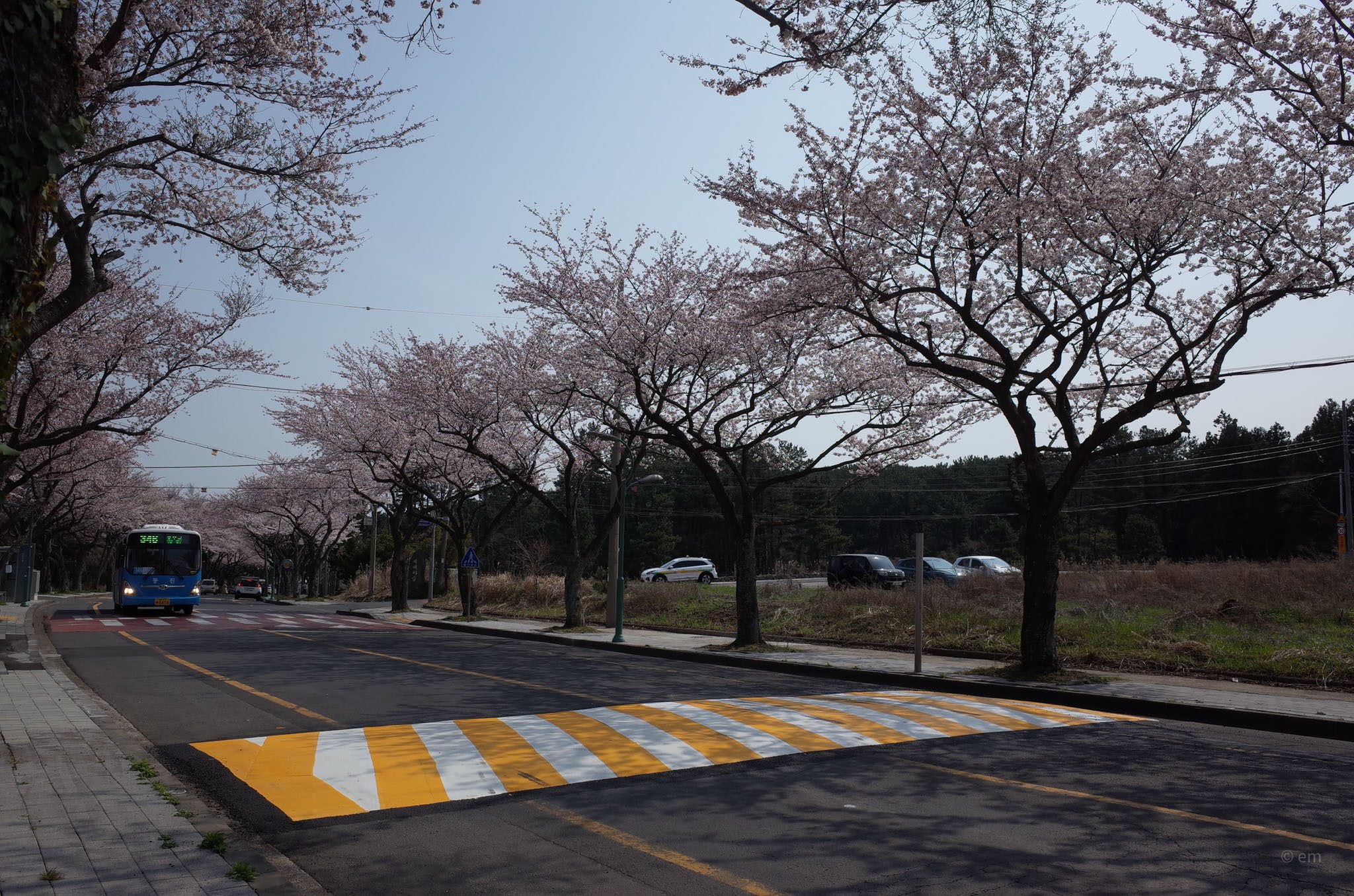
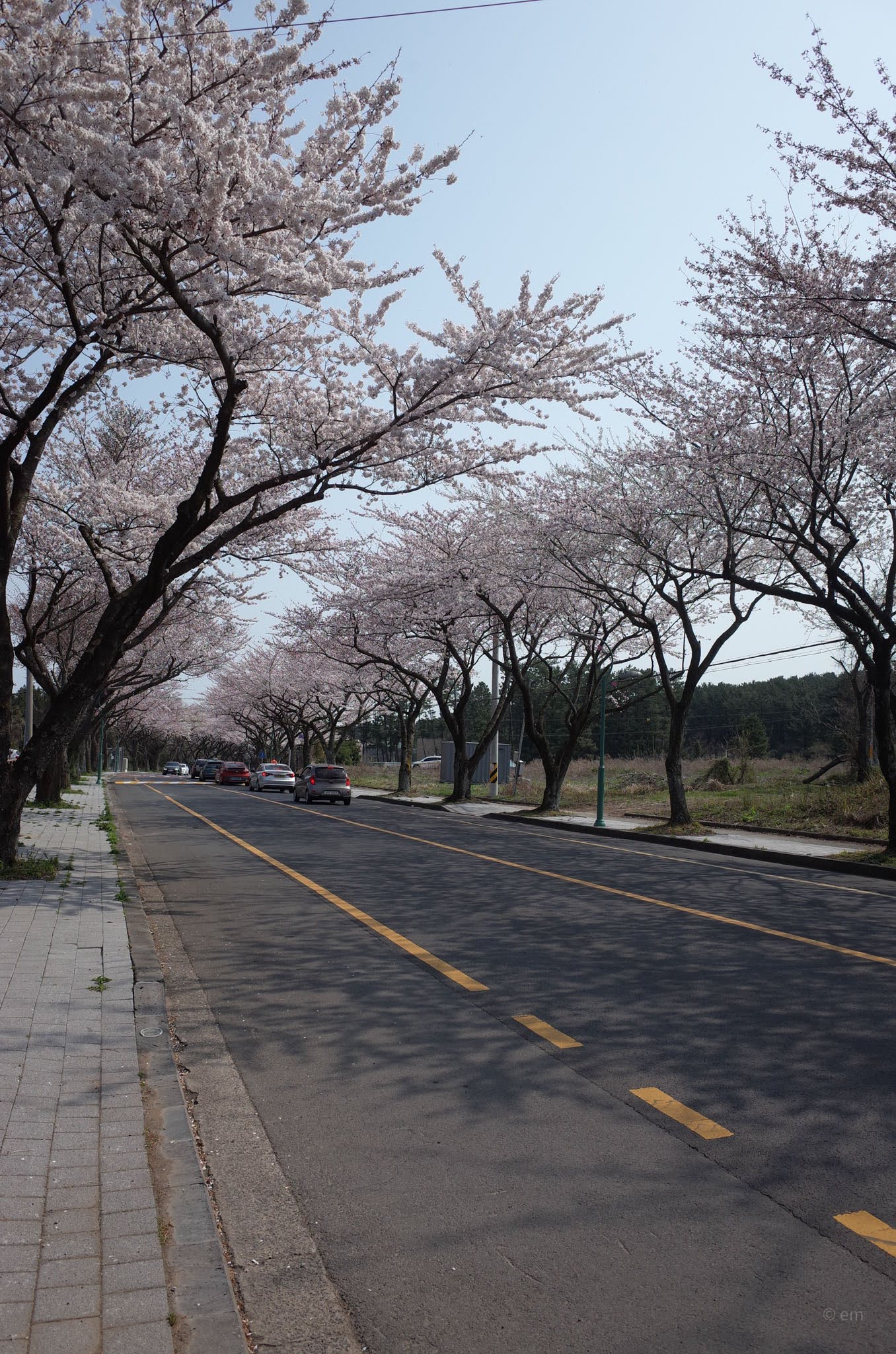
Jeju National University’s cherry avenue is legitimately famous, and the reason reveals itself immediately when you look up: the canopy closes overhead against a blue sky, and somewhere in the gap between branches, a palm tree stands in silhouette. The combination doesn’t resolve into anything familiar. It just sits there, subtropical and spring at the same time.
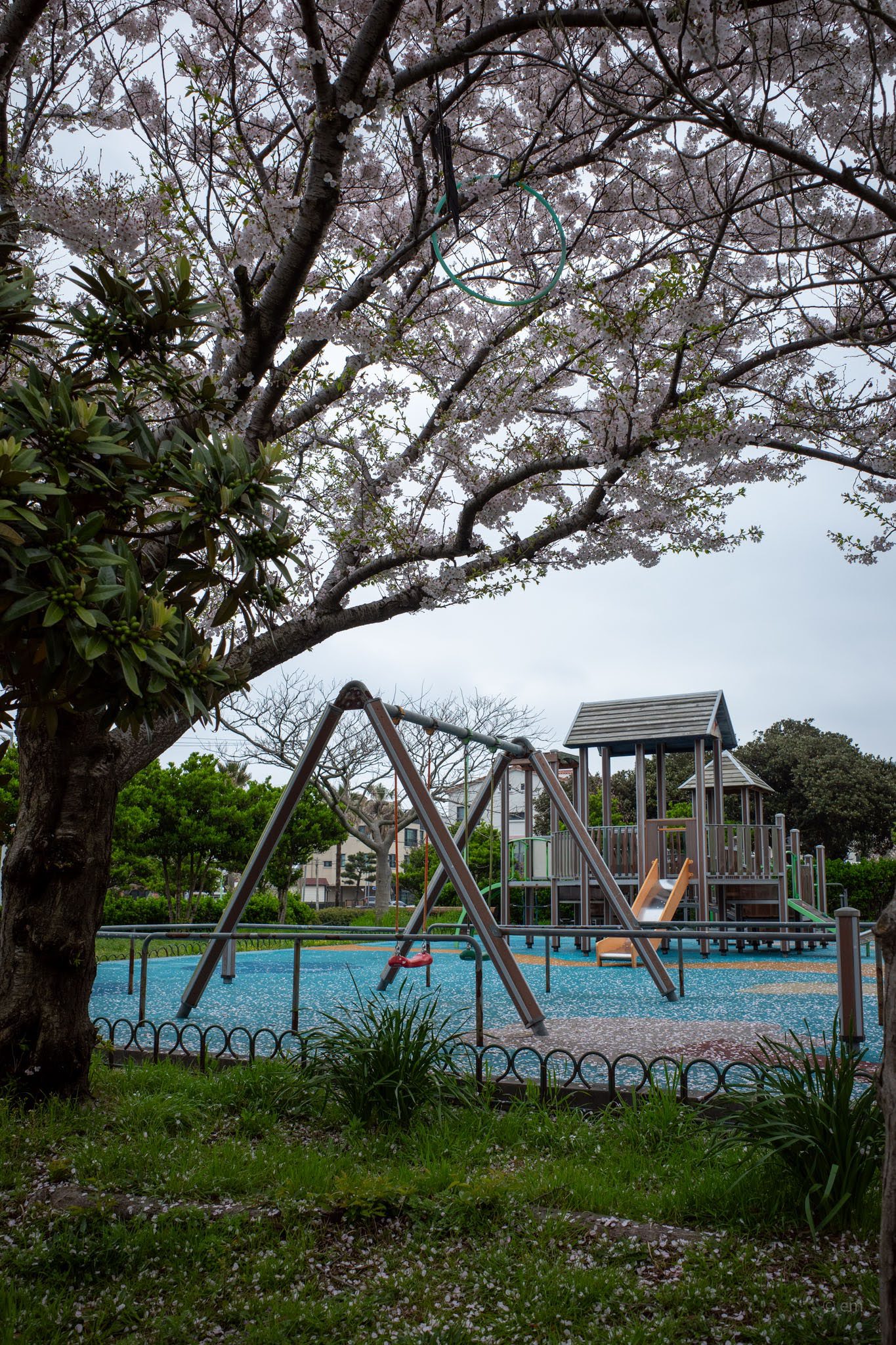
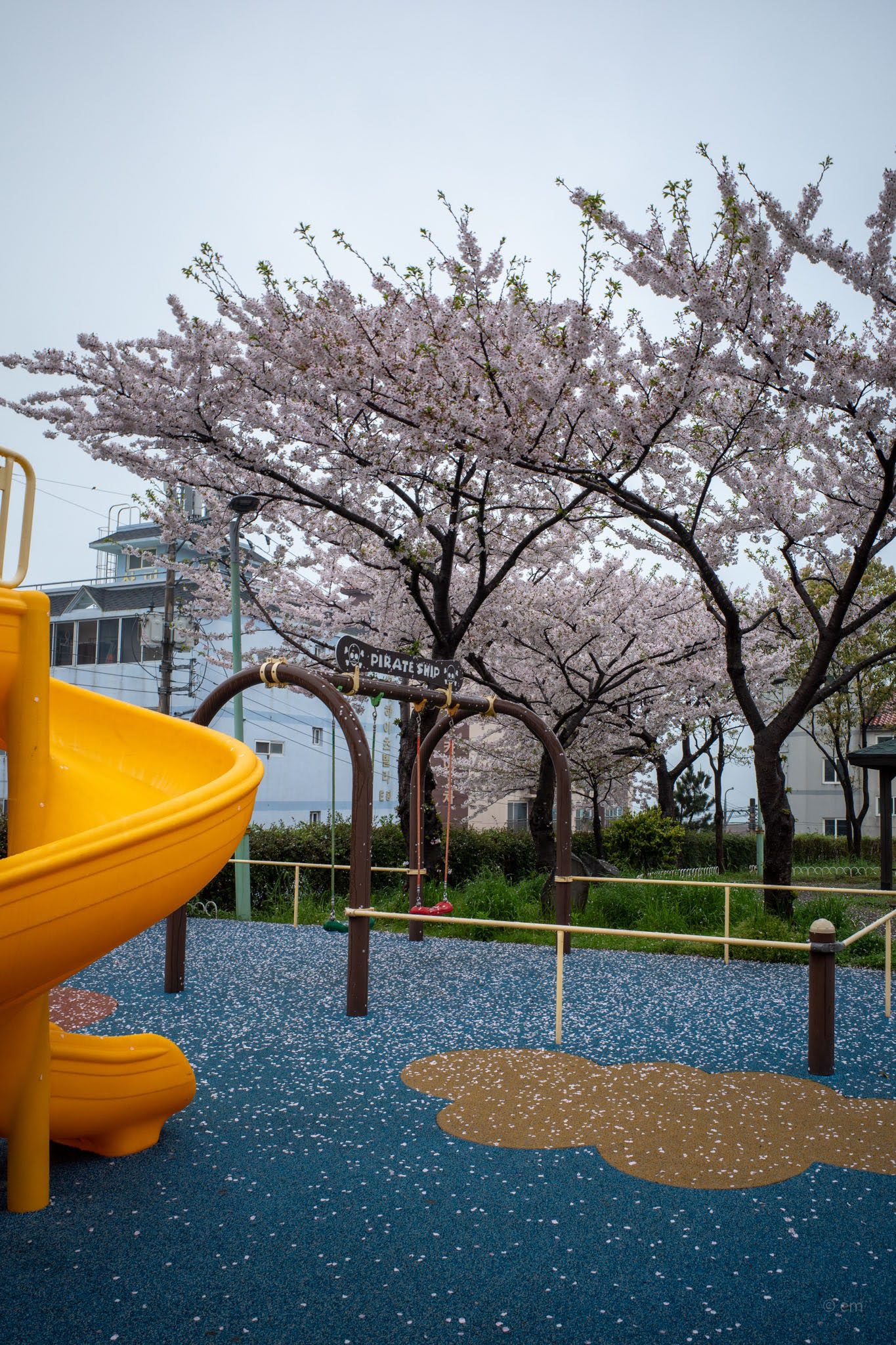
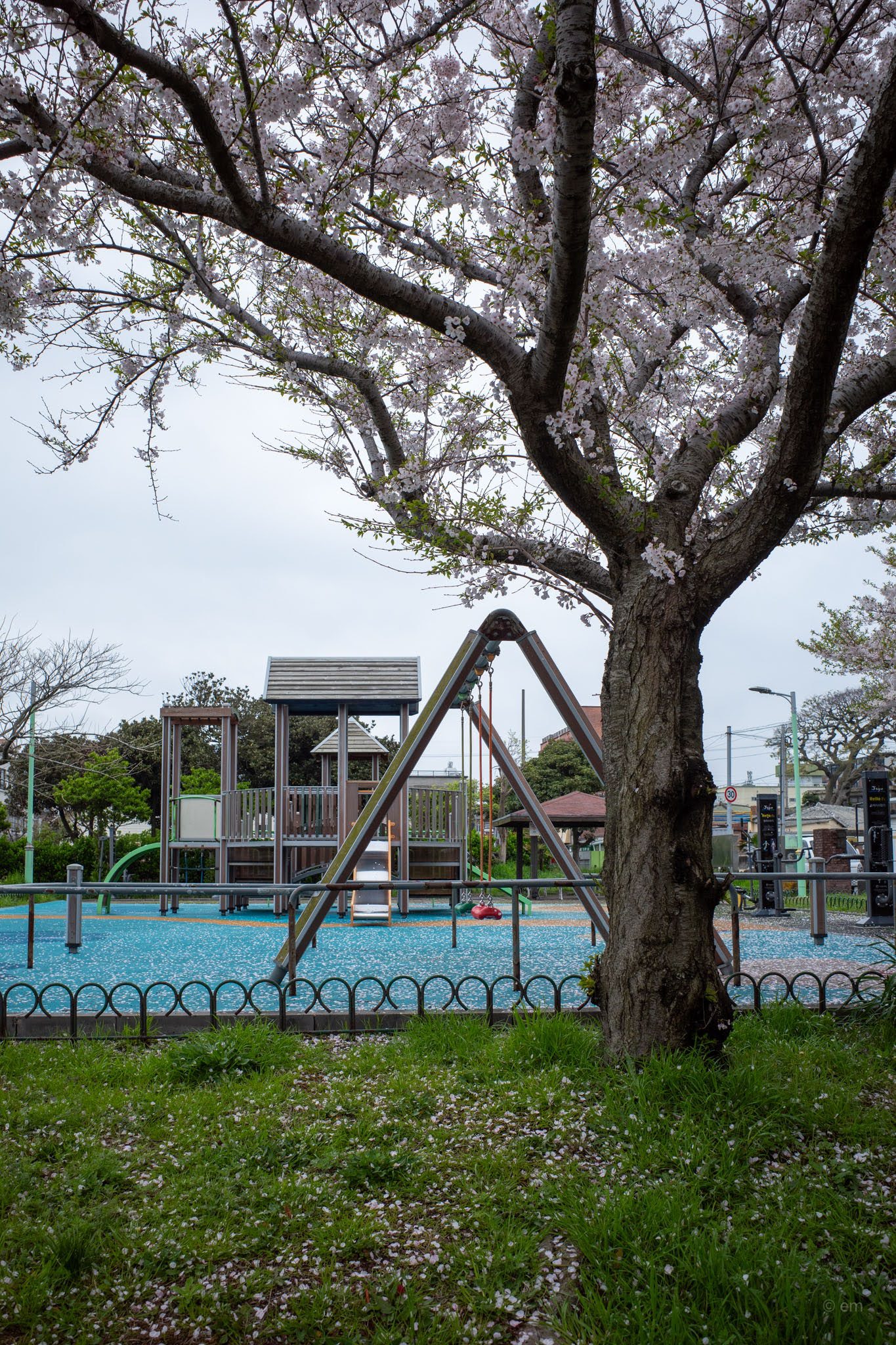
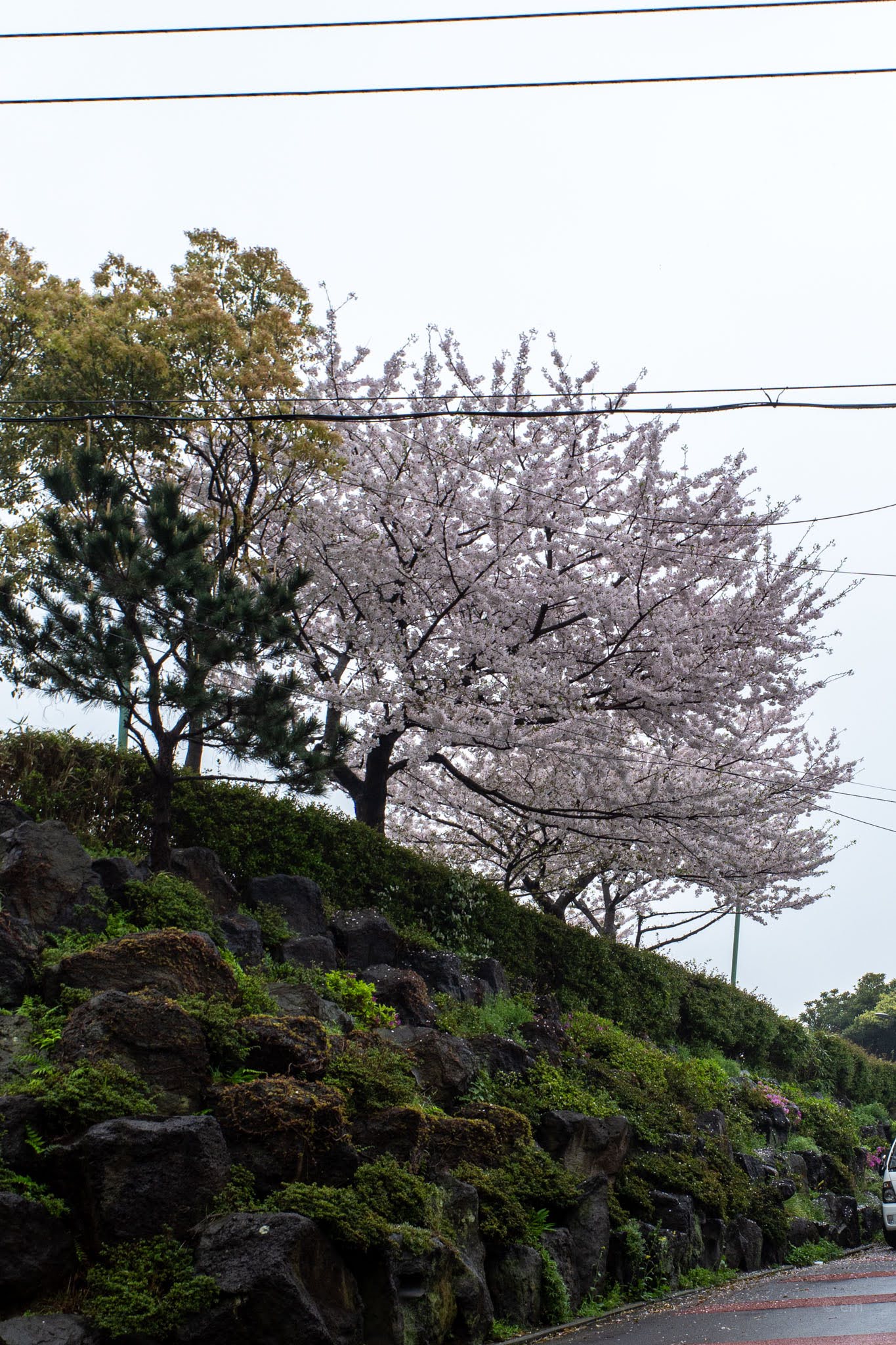
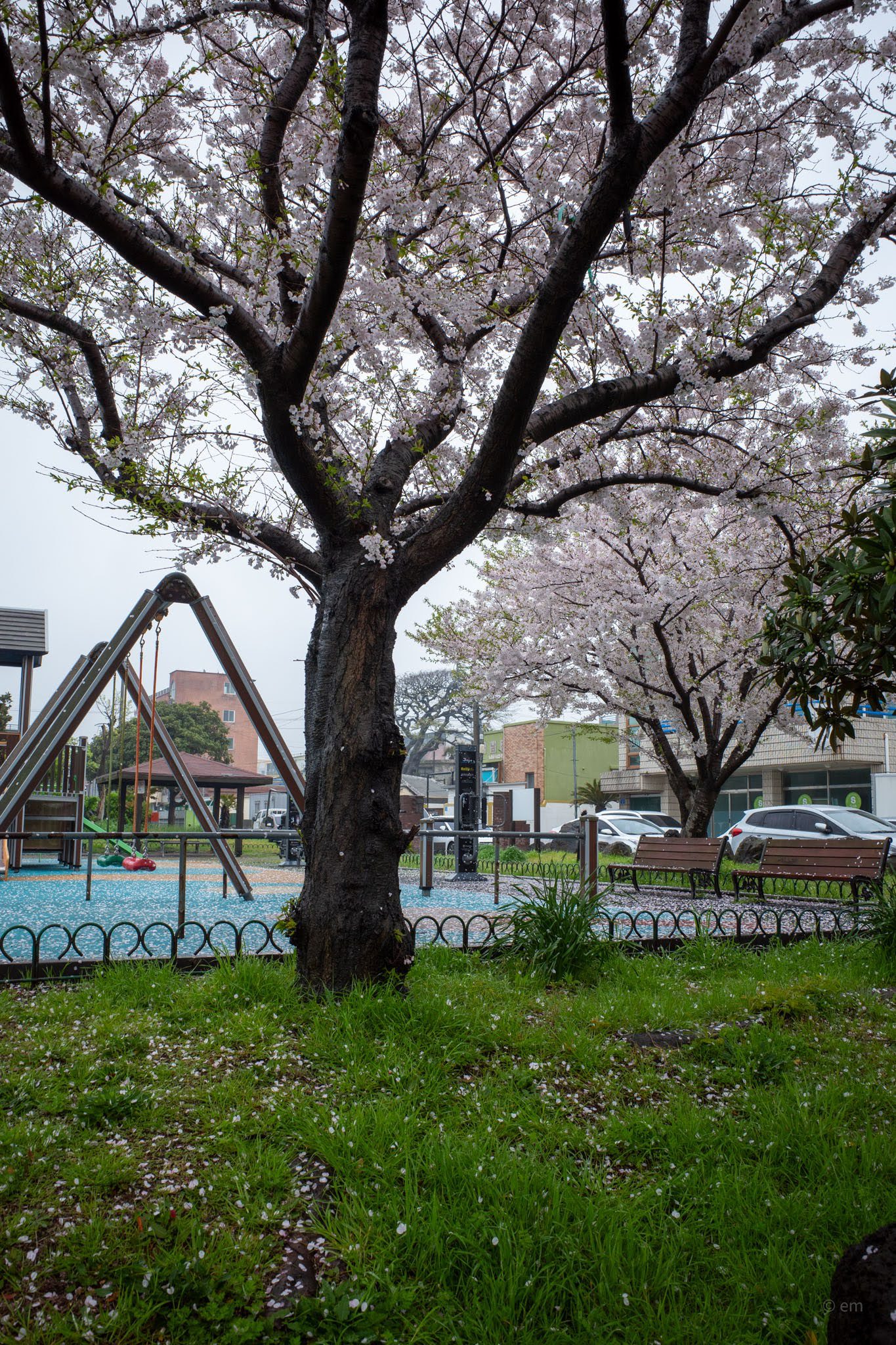
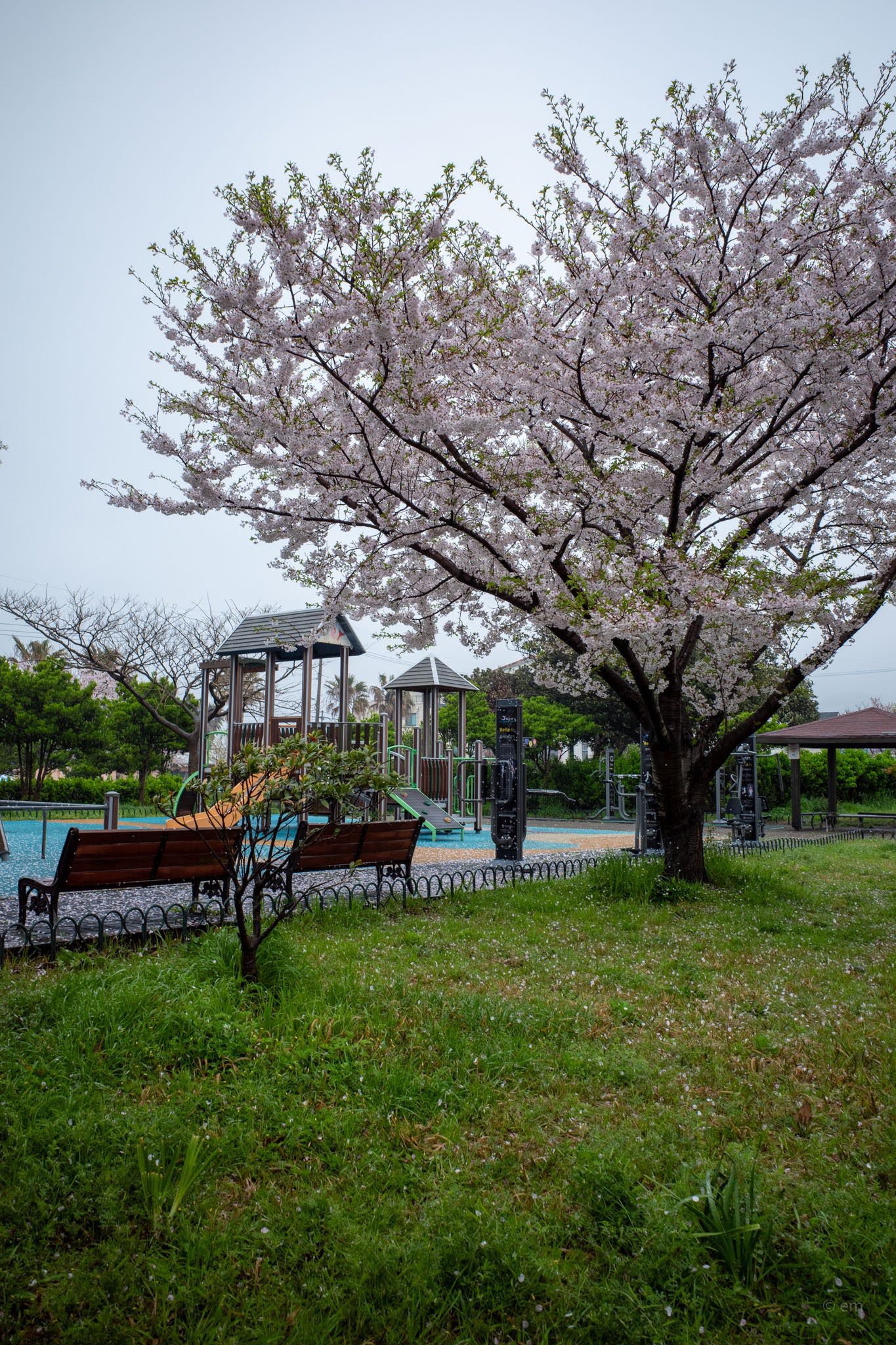
The playground was a passing shot. A neighborhood somewhere between destinations, overcast, petals collecting on the turquoise rubber mat around the swings. Nobody there. The kind of frame that only works because you weren’t trying to find it.
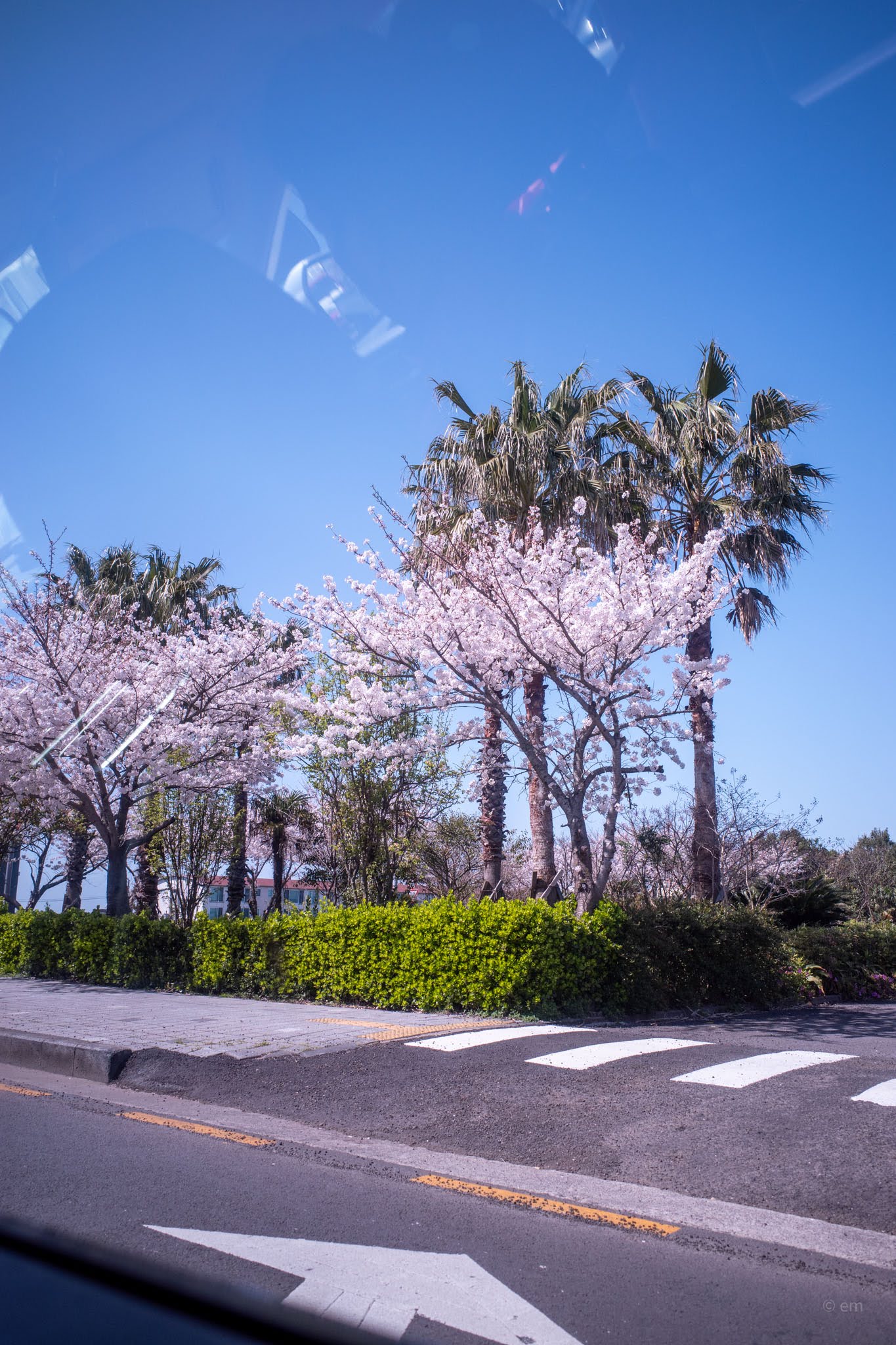
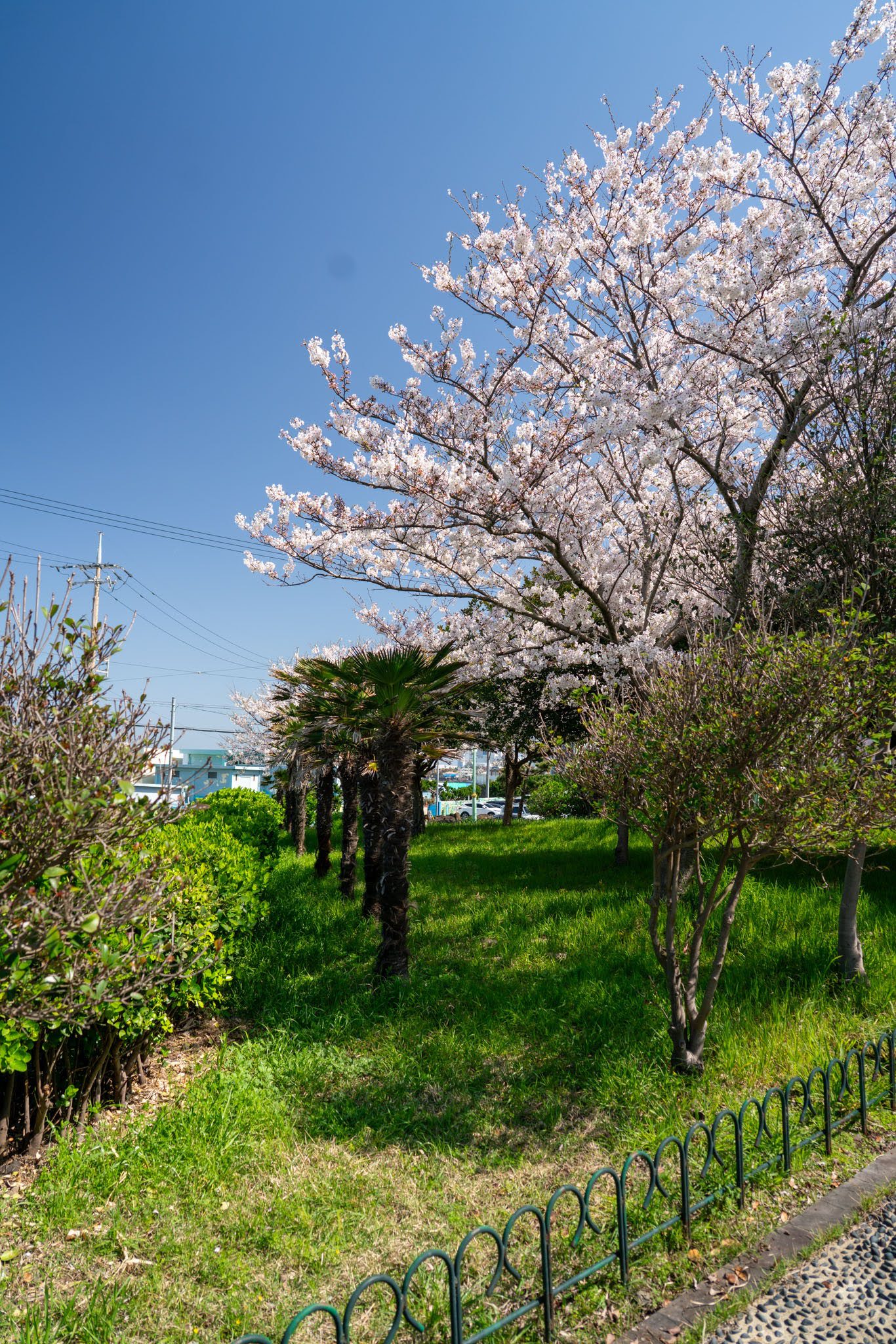
The best version of Jeju’s cherry blossom season is the one you find between scheduled stops.
The island’s other major spring destinations:
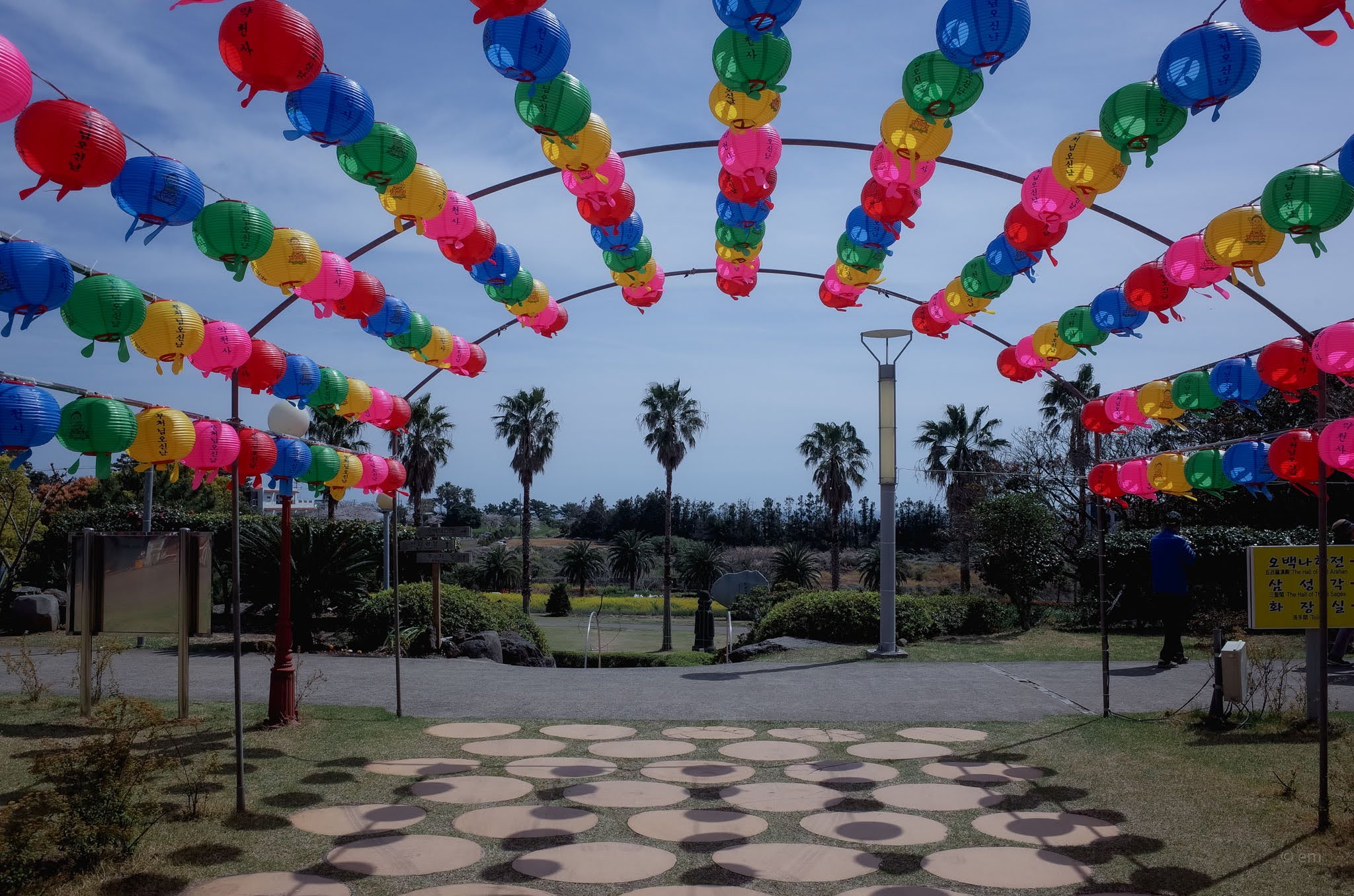
Yakcheonsa, where cherry blossoms and canola flowers frame the temple grounds in soft pastels each April.