Some places are always beautiful. A few places are briefly, explosively beautiful. And if you happen to show up on the right week in april, you get to keep that version of them.
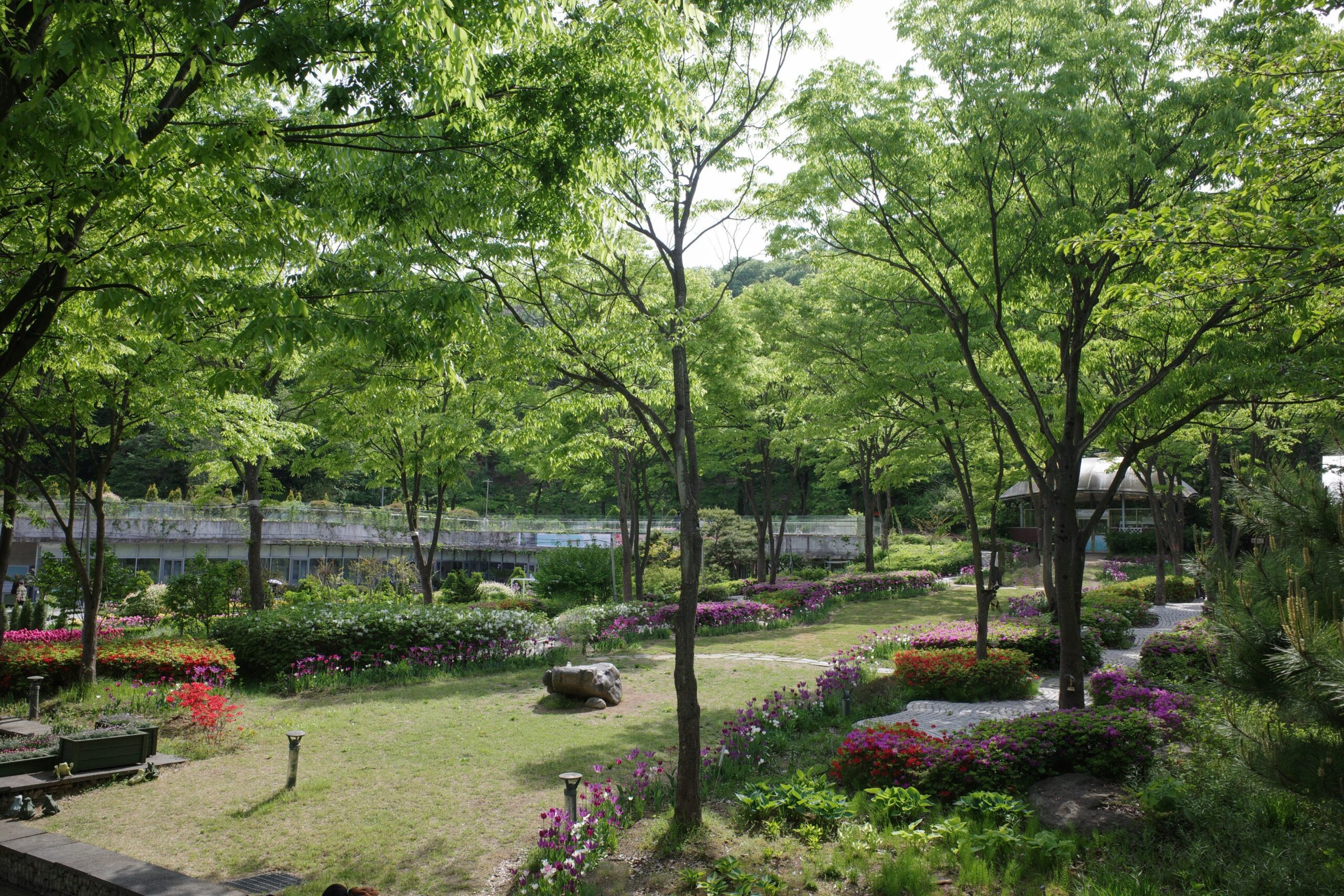
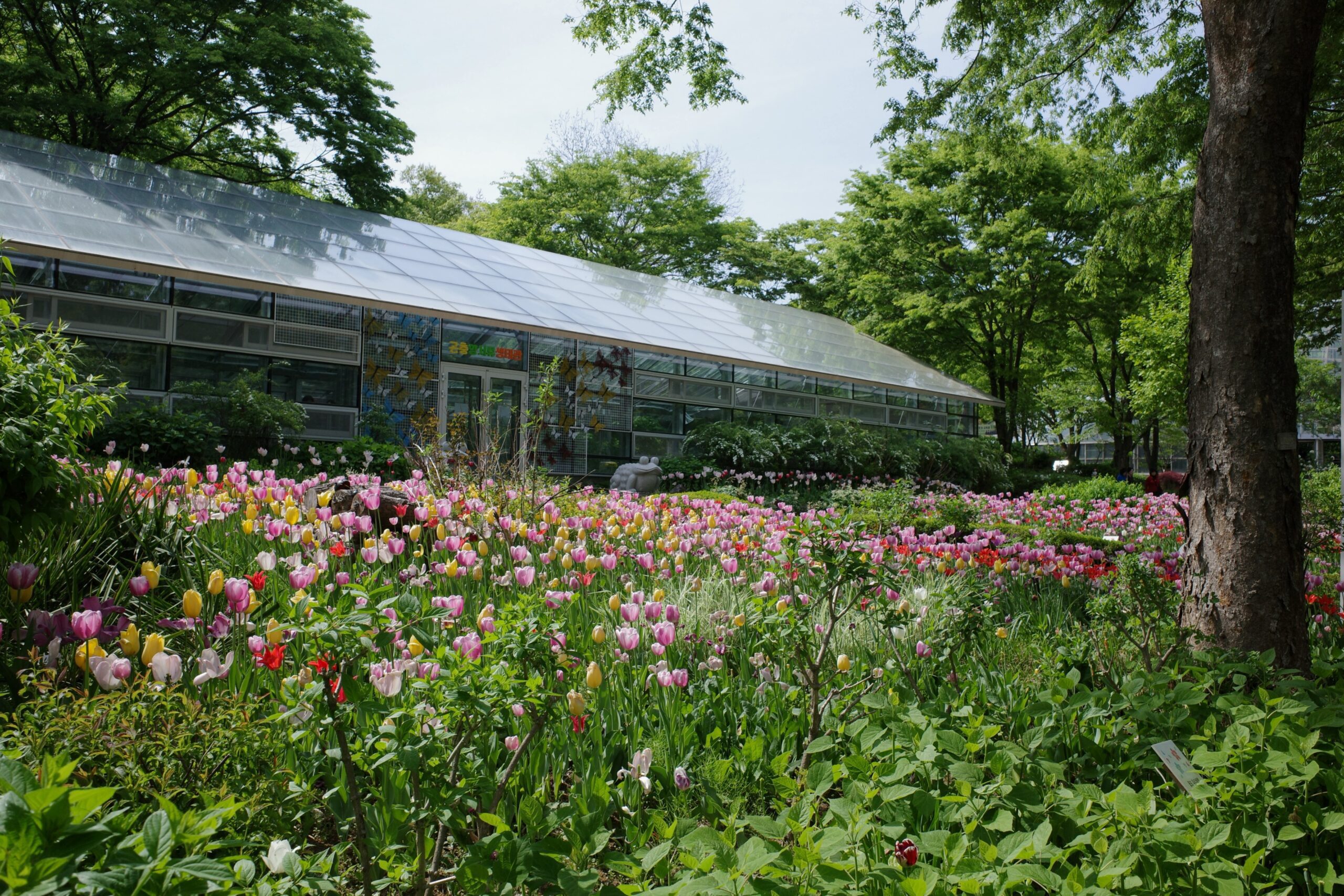
Shingu University Botanic Garden sits in Sangjeok-dong, on the quieter, hillier eastern edge of Seongnam. It belongs to Shingu University — founded, technically, as a farm in 1965 before evolving into a proper botanical garden by 2003 — and it operates with the quiet seriousness of an institution that knows exactly what it is. Scaled at over 580,000 square meters, it’s considerably larger than you’d expect from a university-affiliated green space, and noticeably more ambitious in its design. Close enough to Seoul to be an easy half-day or day trip, far enough to feel genuinely removed from the city.
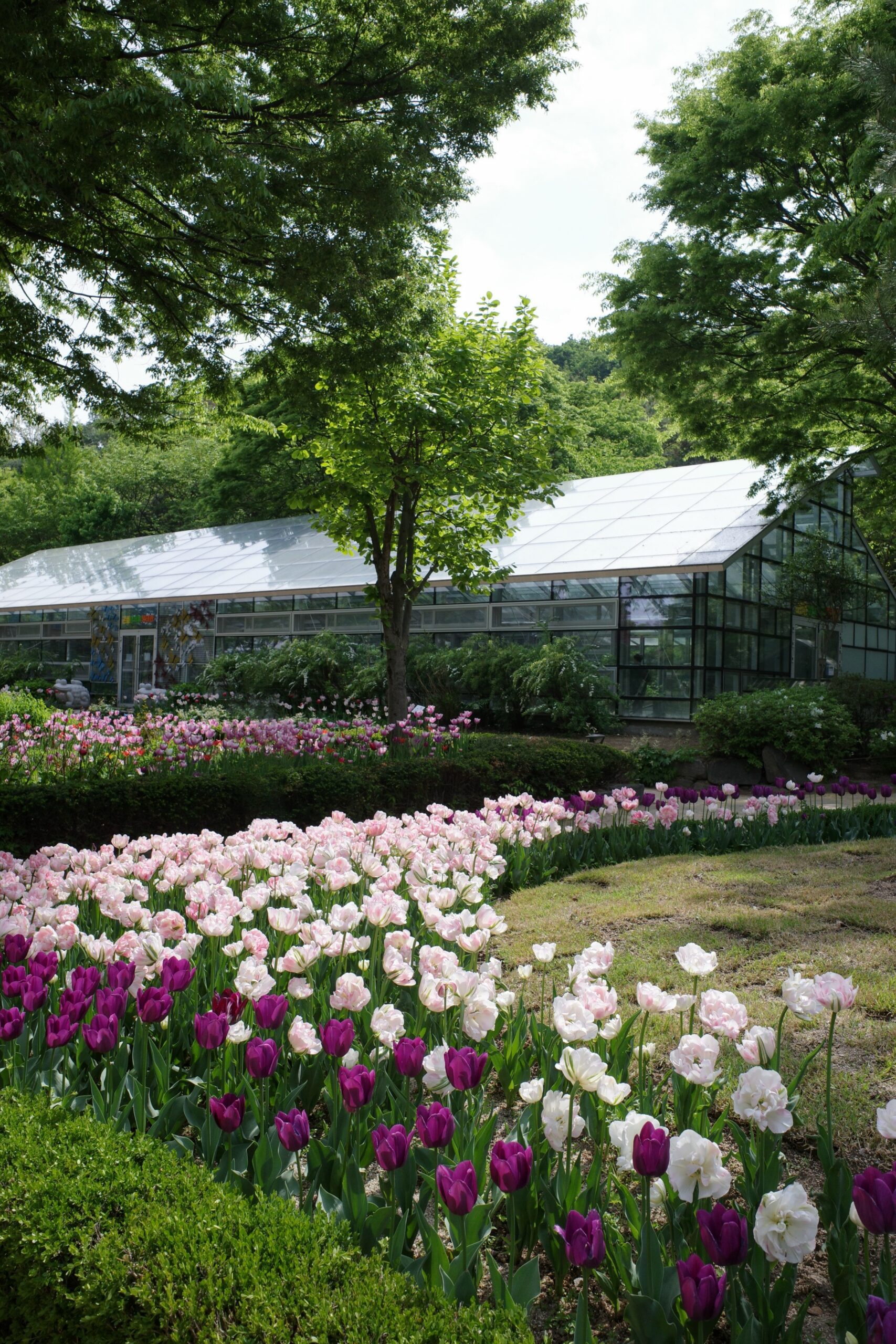
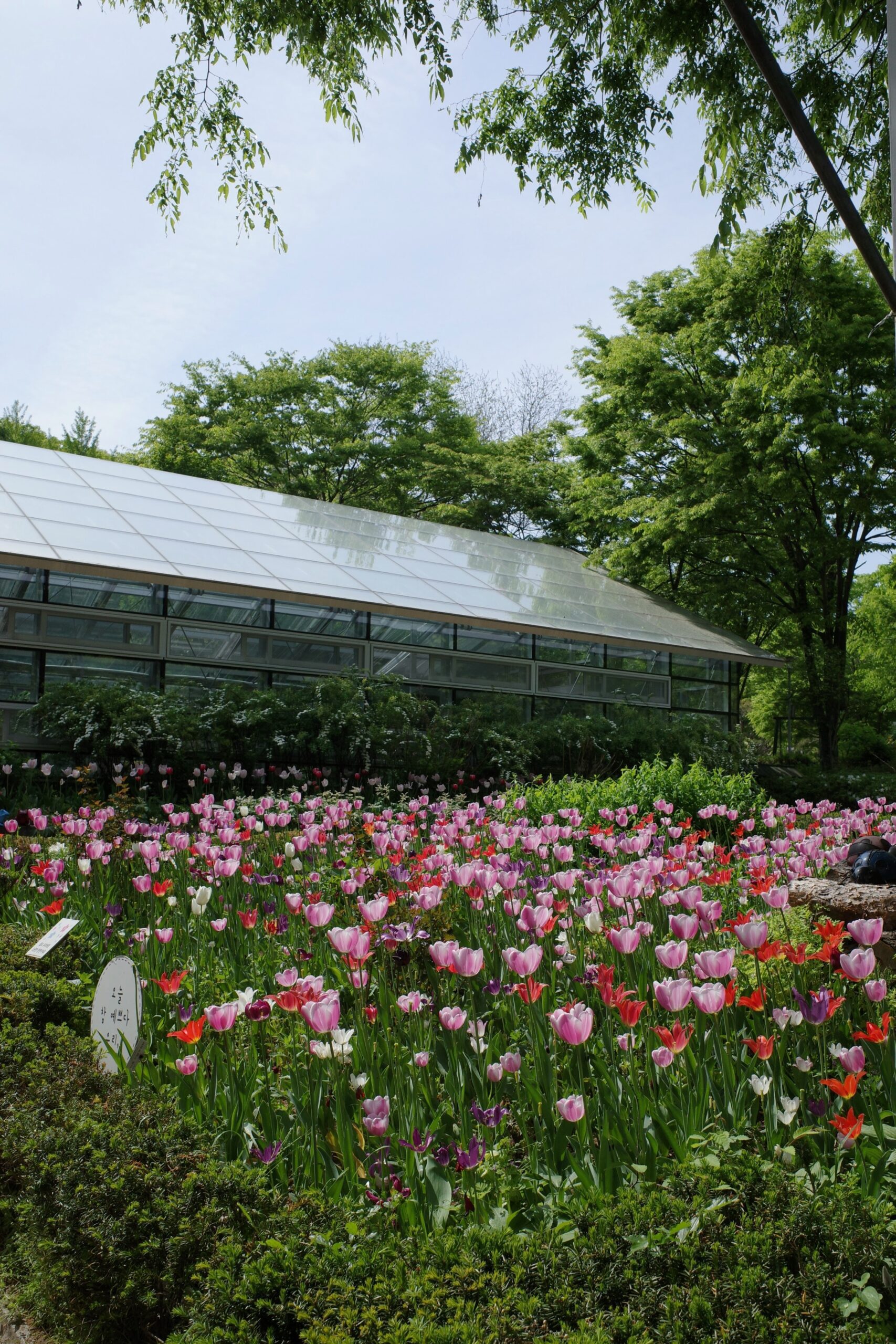
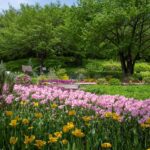
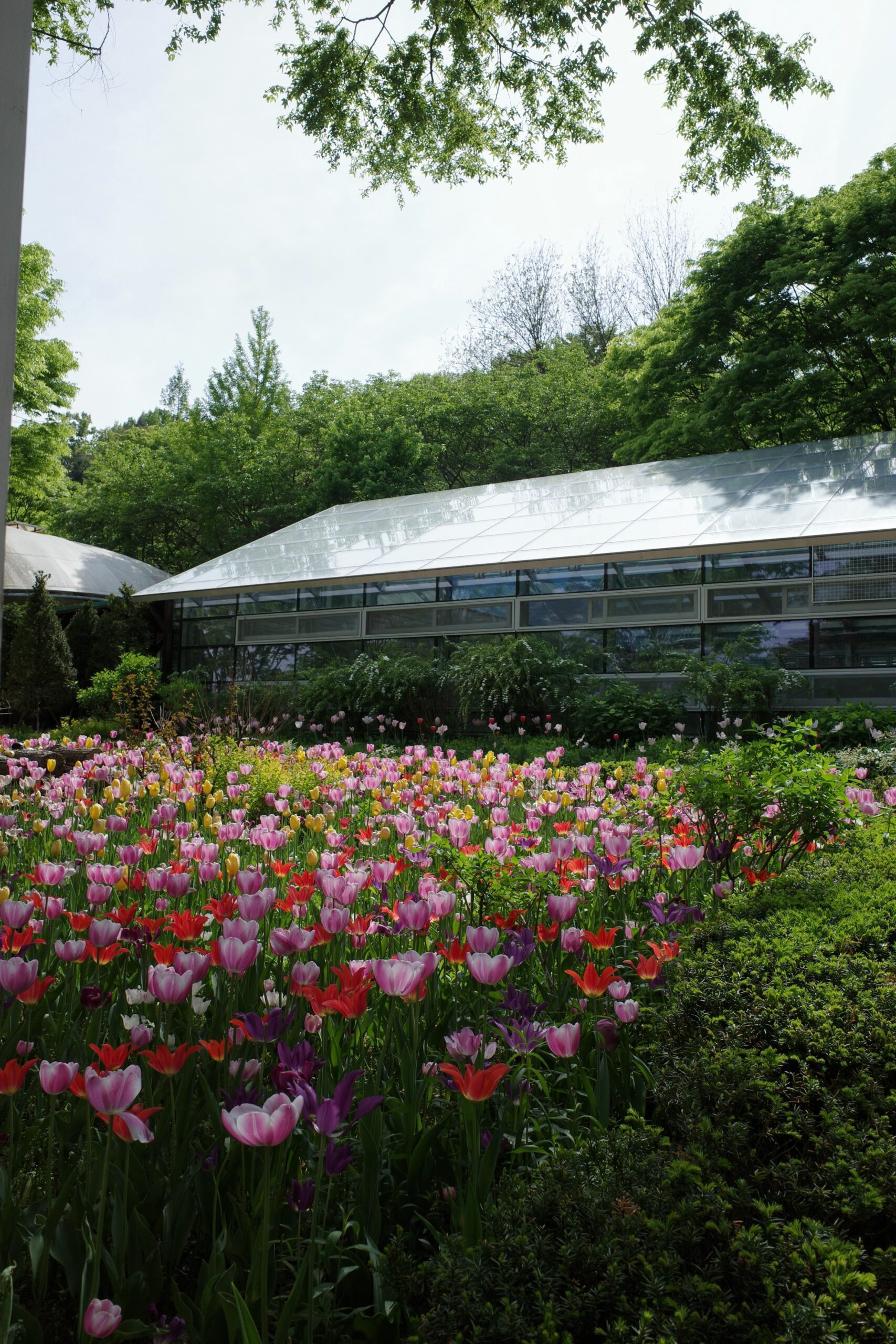
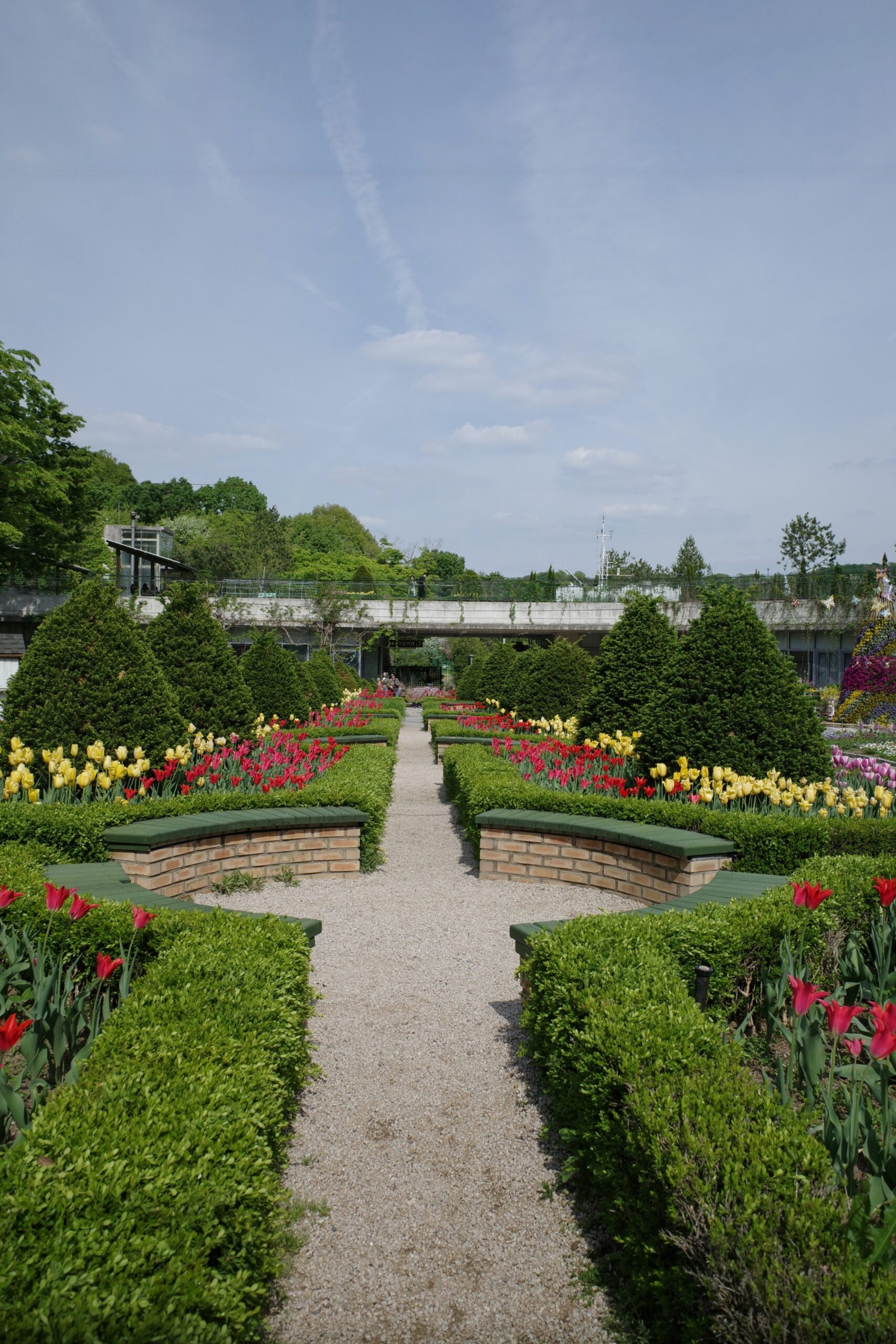
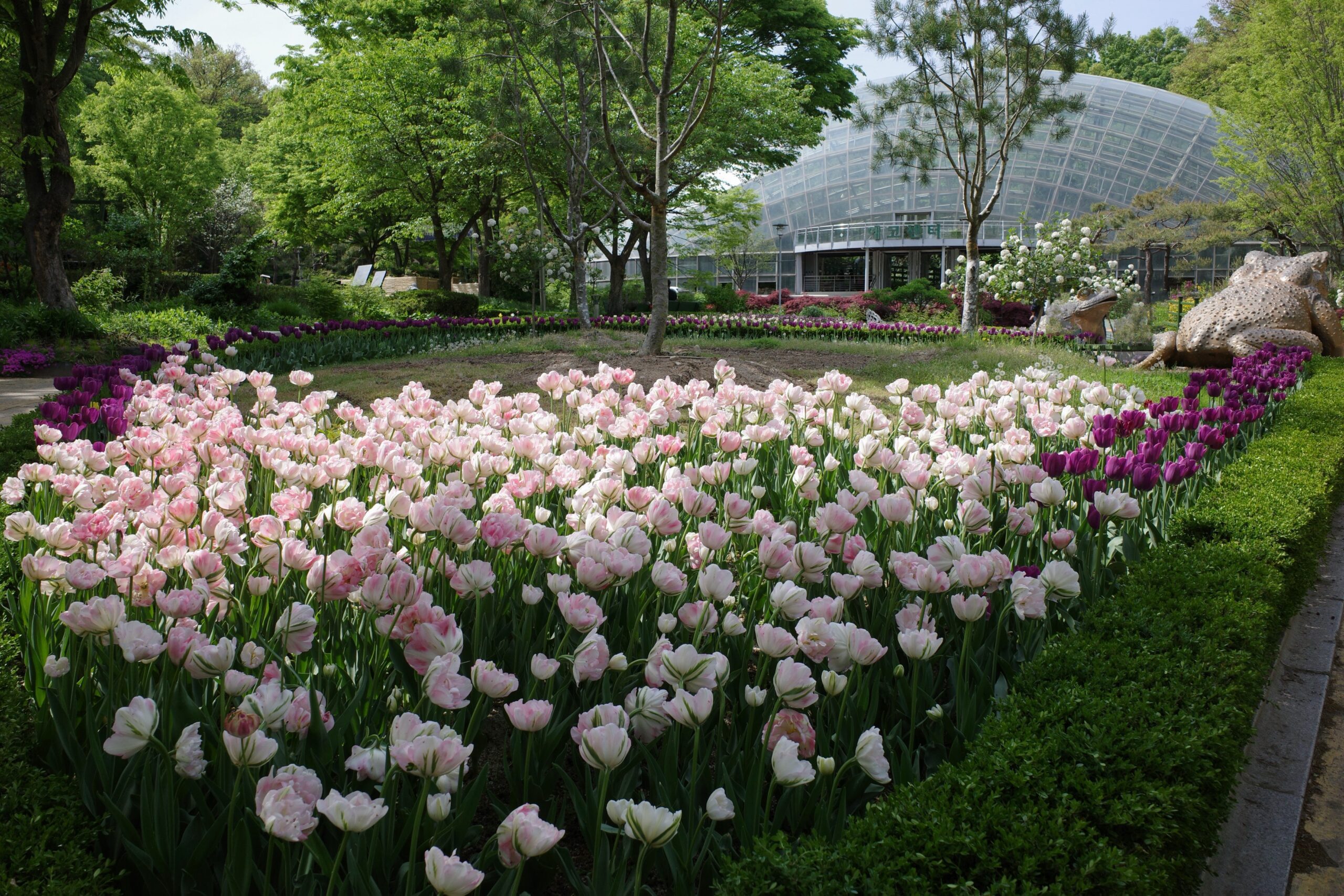
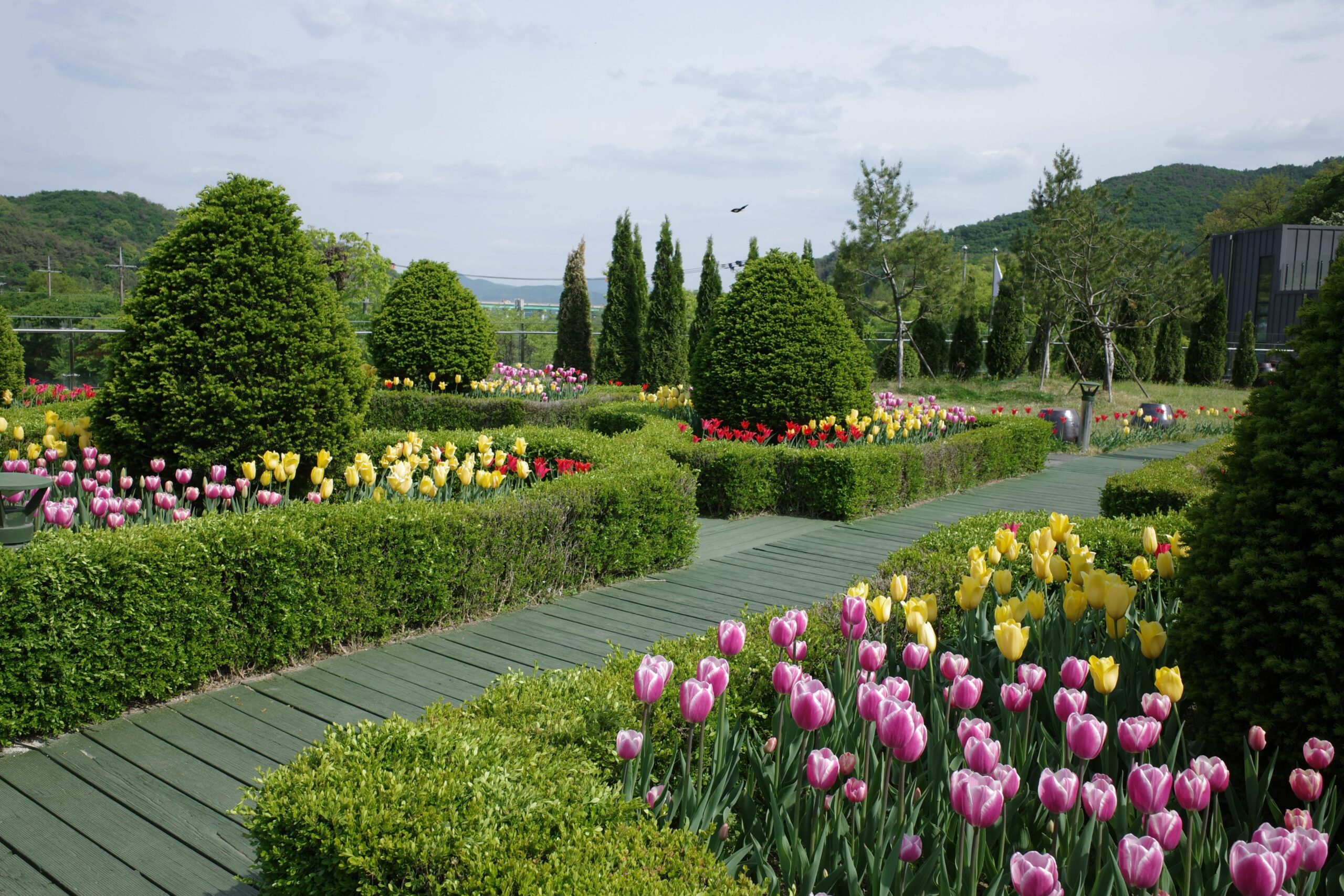
I arrived during tulip season, when the garden was in full bloom across dozens of varieties — pale blush doubles, saturated purples, candy-striped pinks, deep matte reds — and it was one of those visits where you realize you timed something right entirely by accident.
The Formal Garden
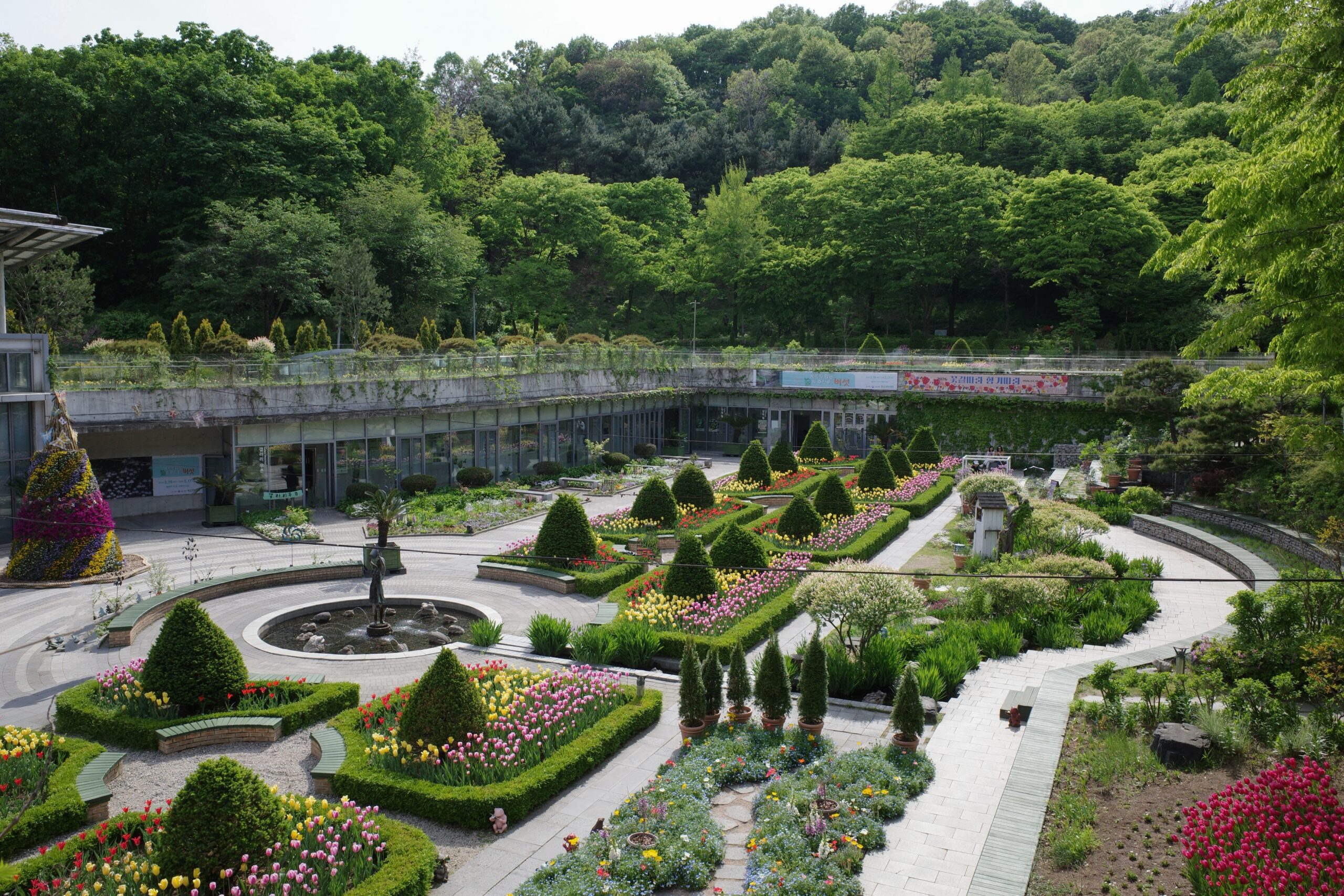
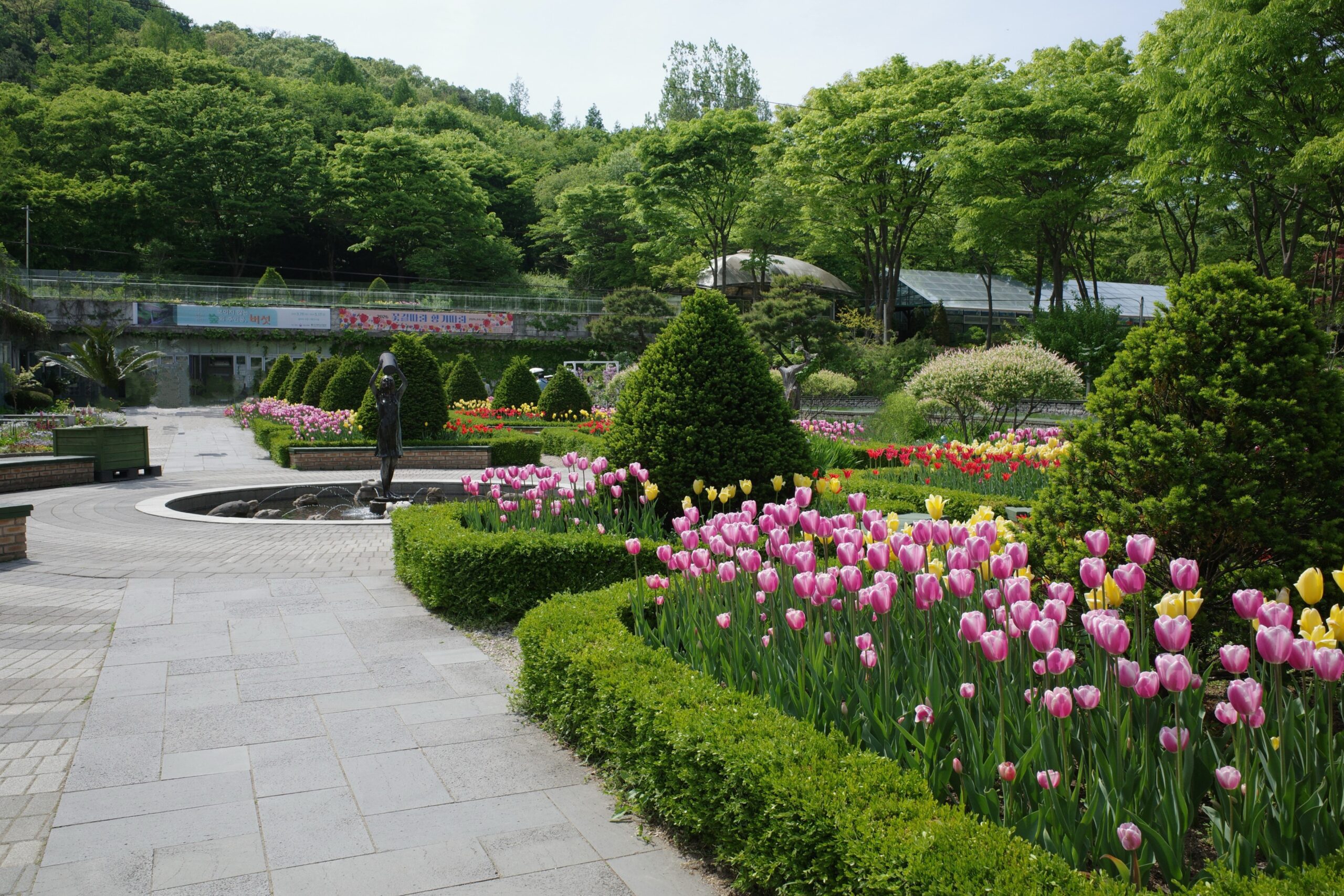
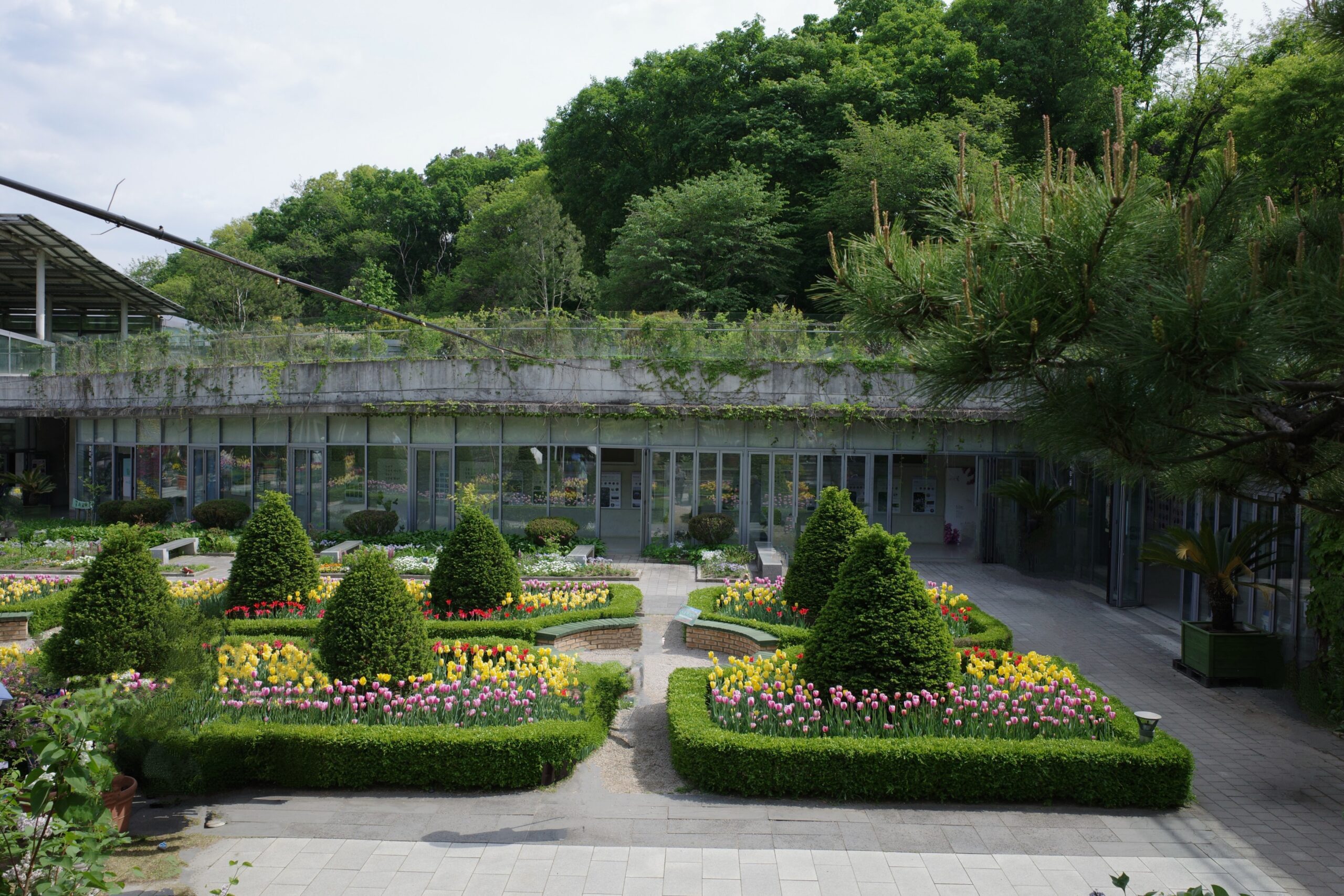
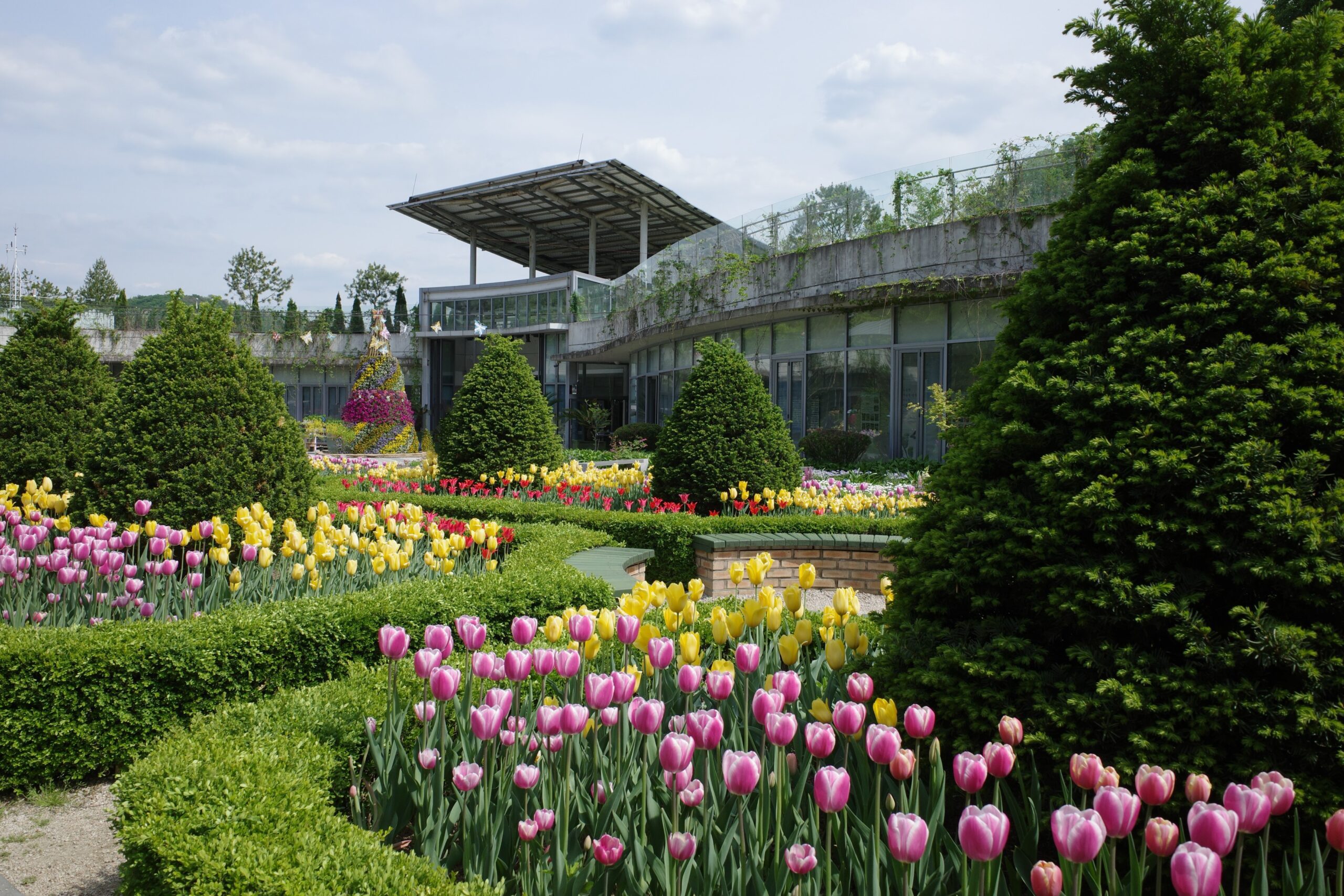
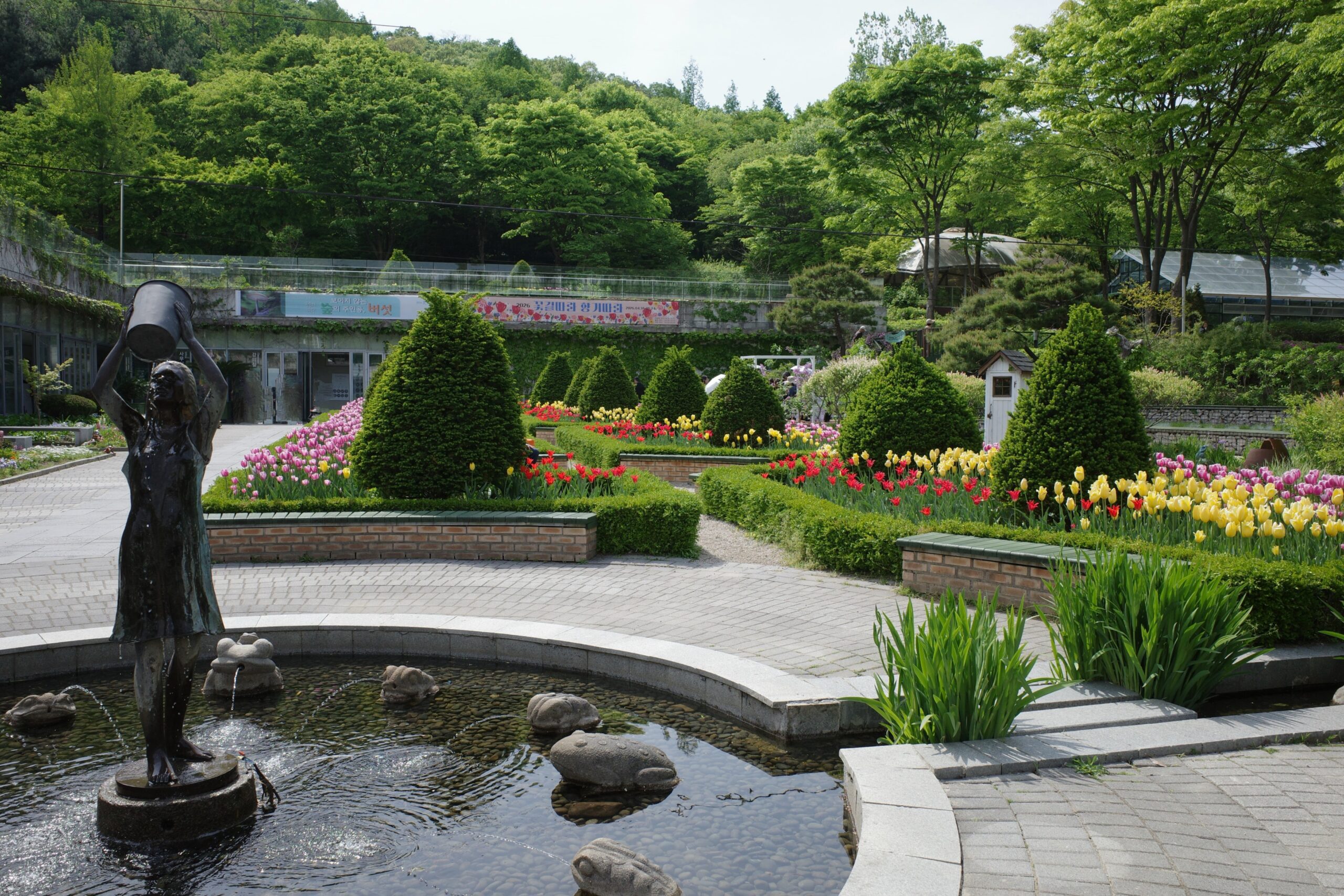
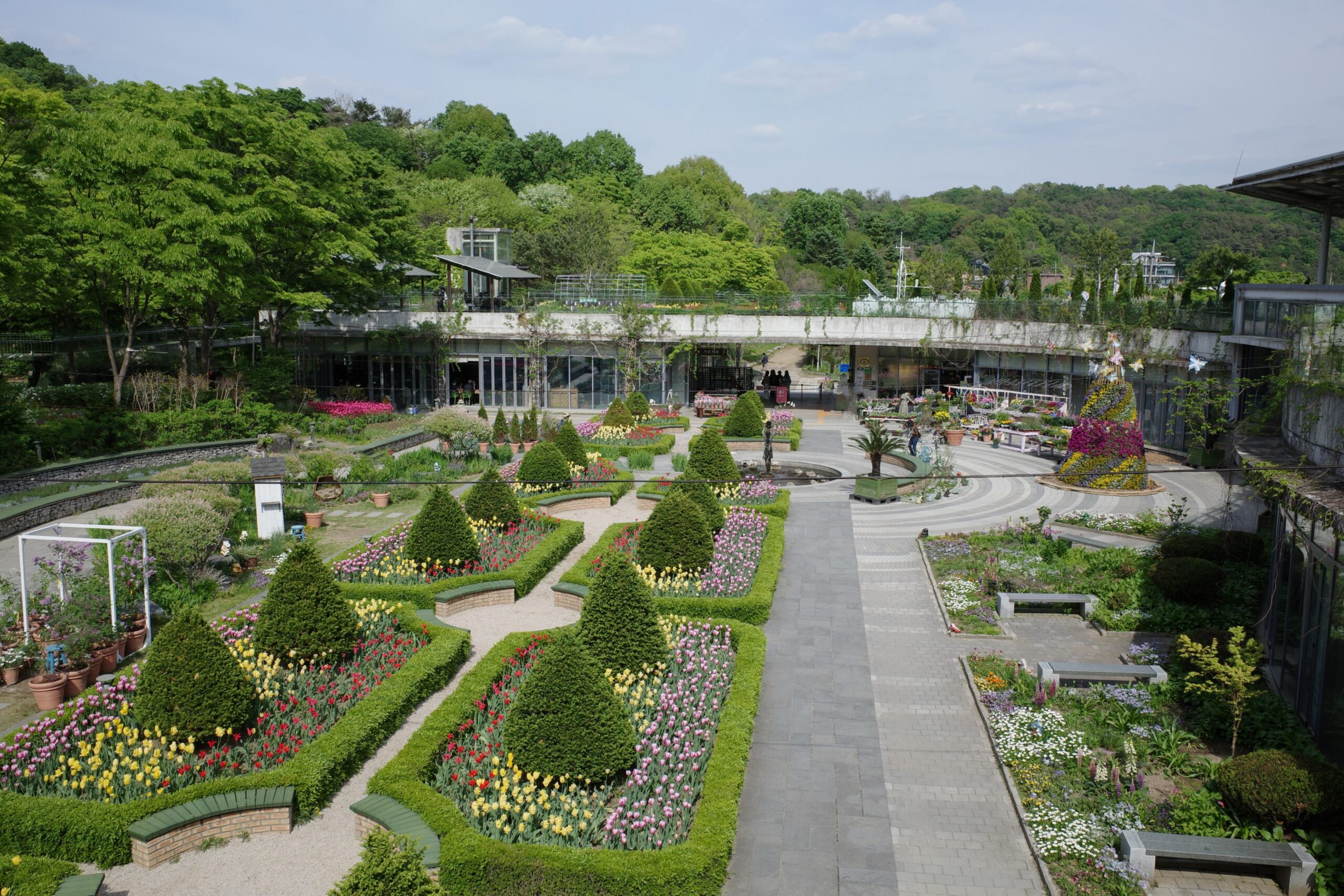
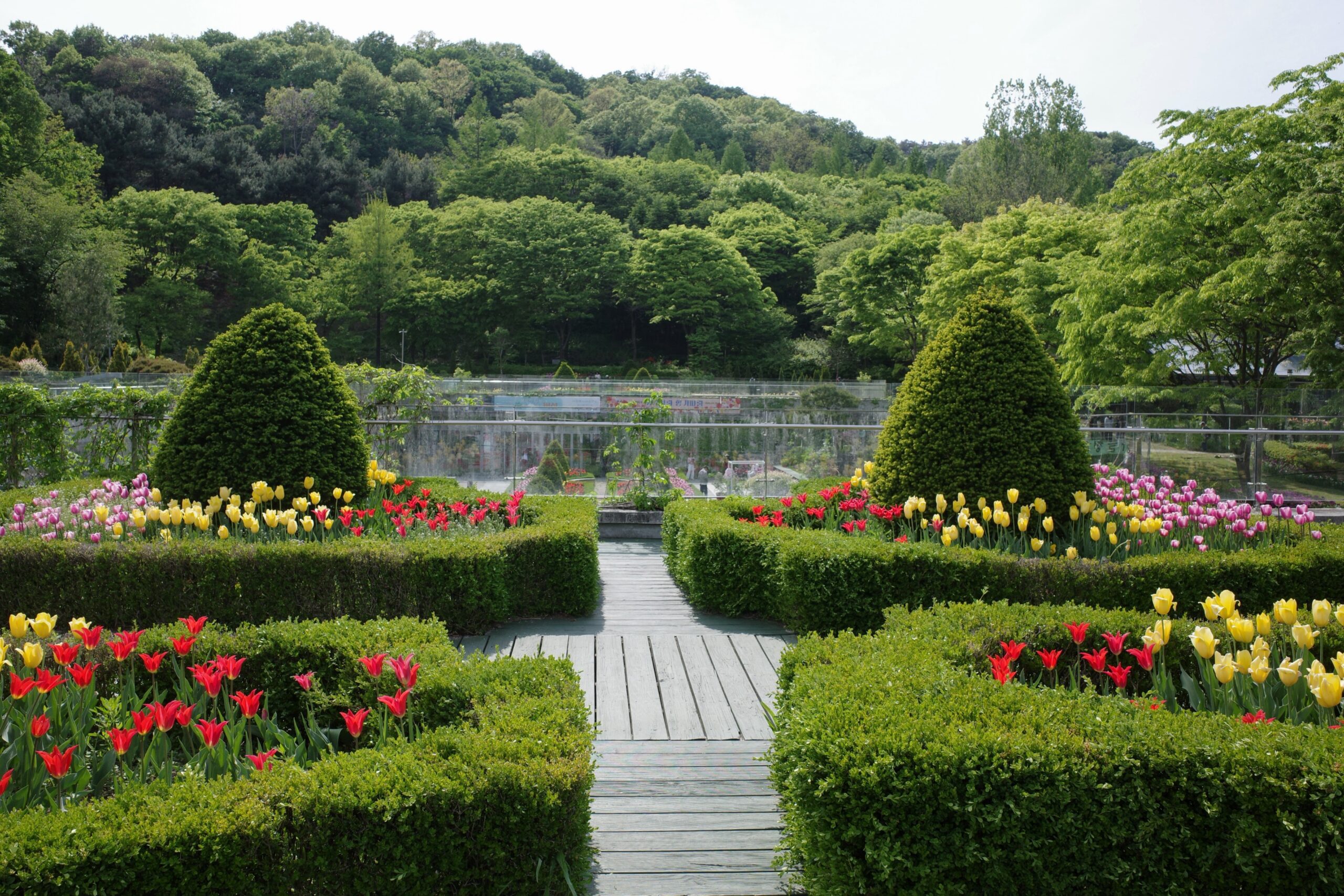
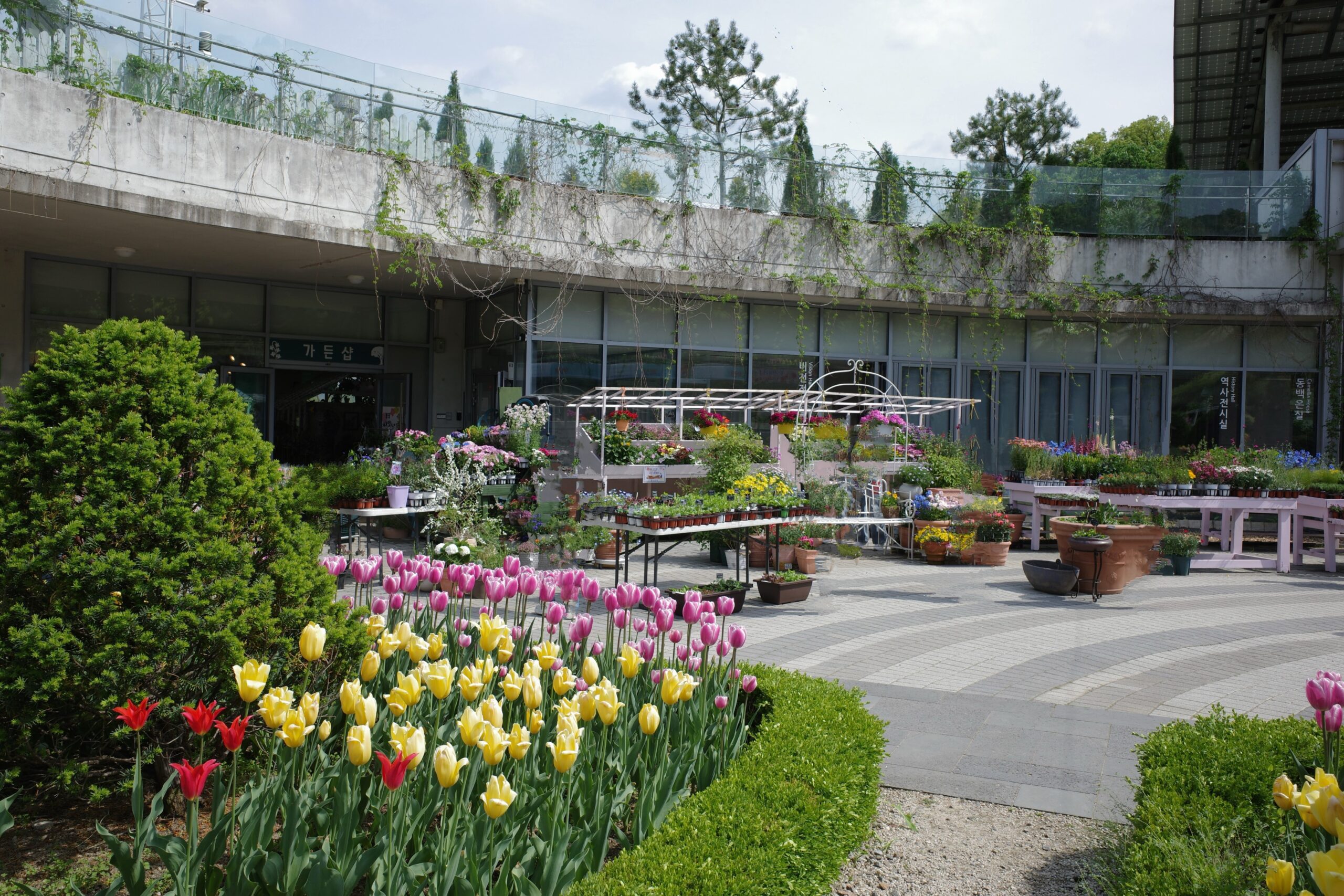
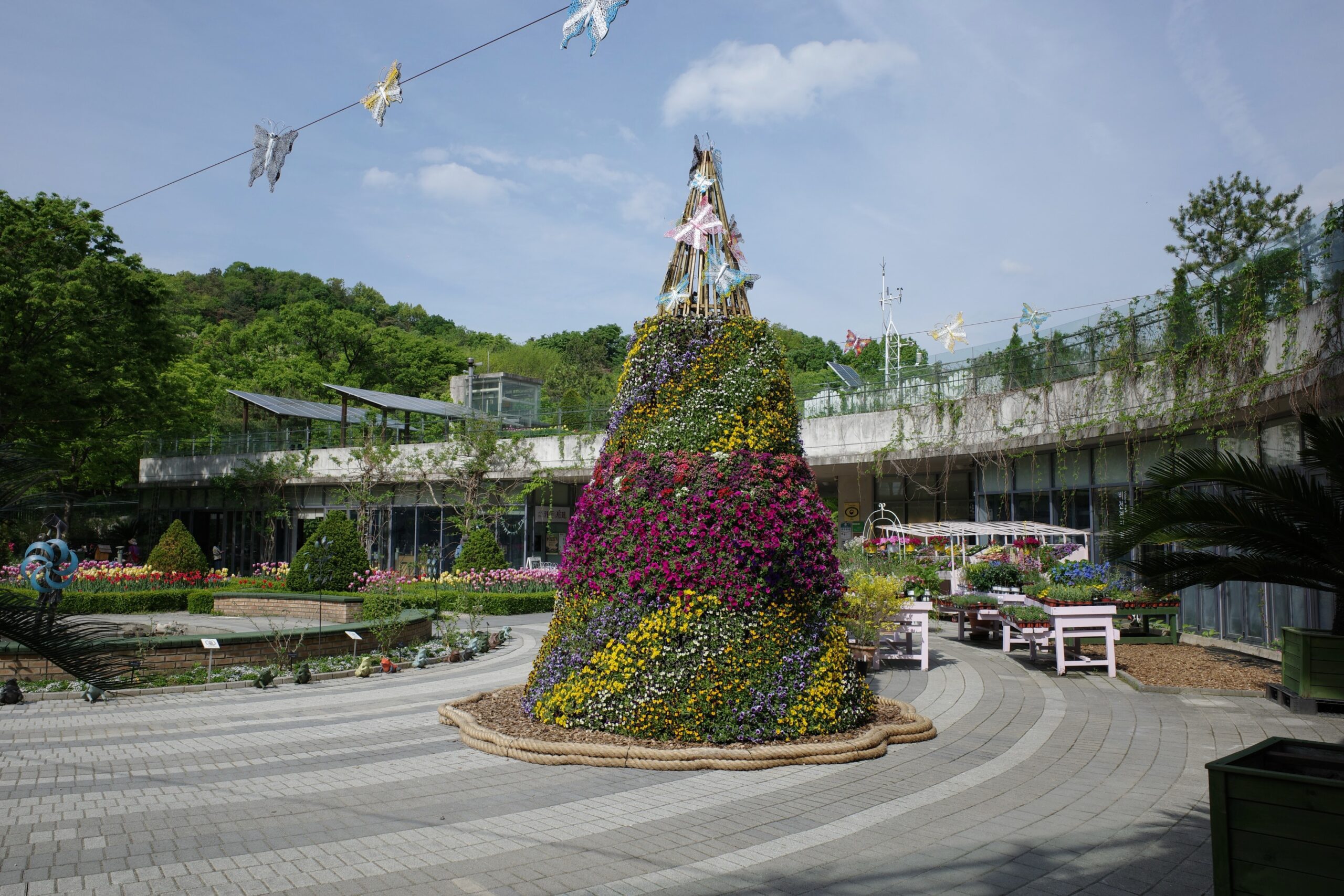
The main approach opens into a structured European-style parterre: geometric beds edged in low clipped box hedges, conical topiary anchoring the corners, a central fountain with a small bronze figure at its center. In spring, the beds are packed with tulips in deliberate color groupings — yellow and pink together, then red and orange, then the pale ruffled doubles that look more like peonies than tulips. The overall effect is tidy and theatrical at once. Viewed from the elevated walkway that runs along the outer wall of the main building, the whole layout resolves into something that belongs on a garden design brief: a low-slung glass-fronted building with a living green roof, terraced beds cascading toward the fountain plaza, the mountain ridge pressing close behind.
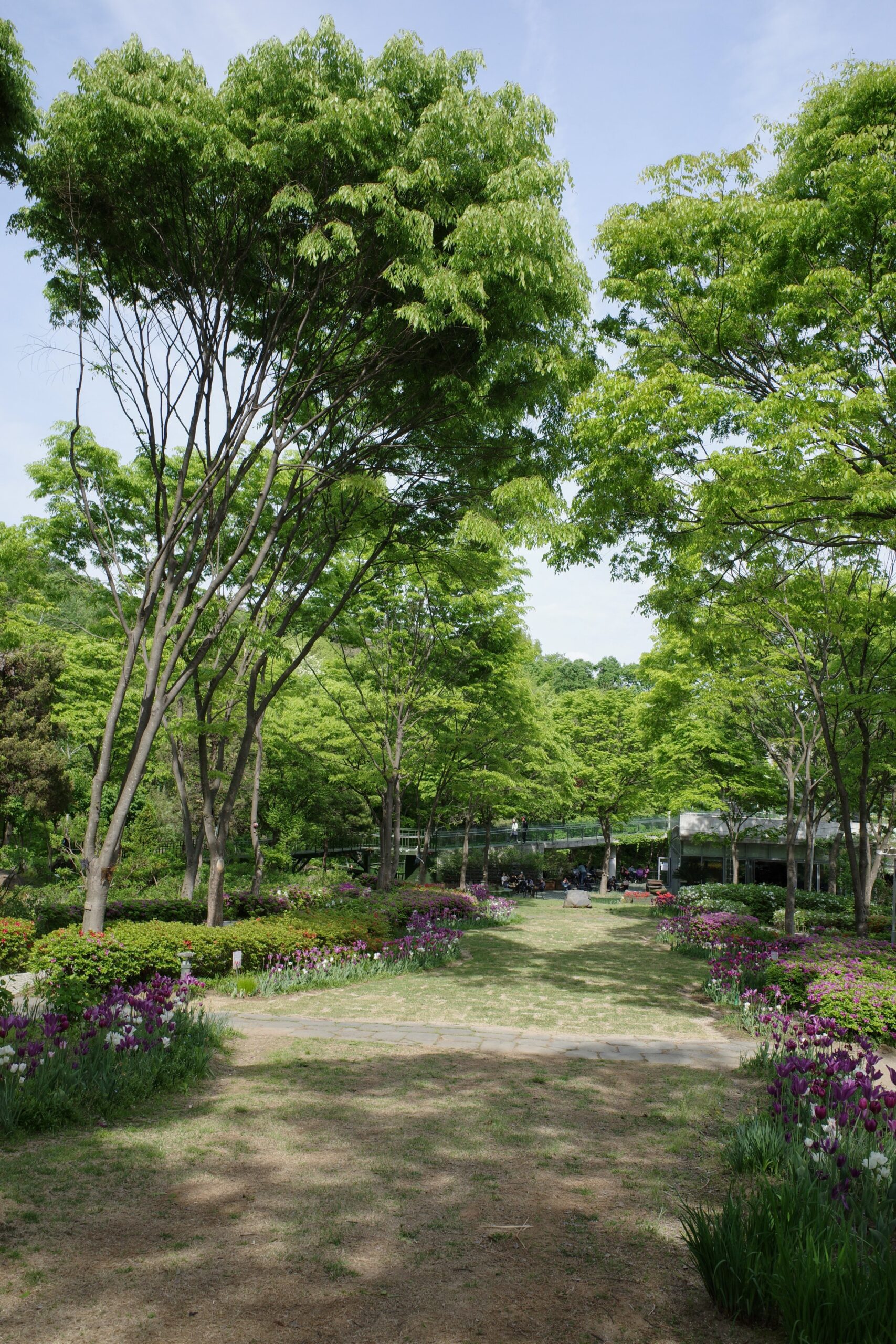
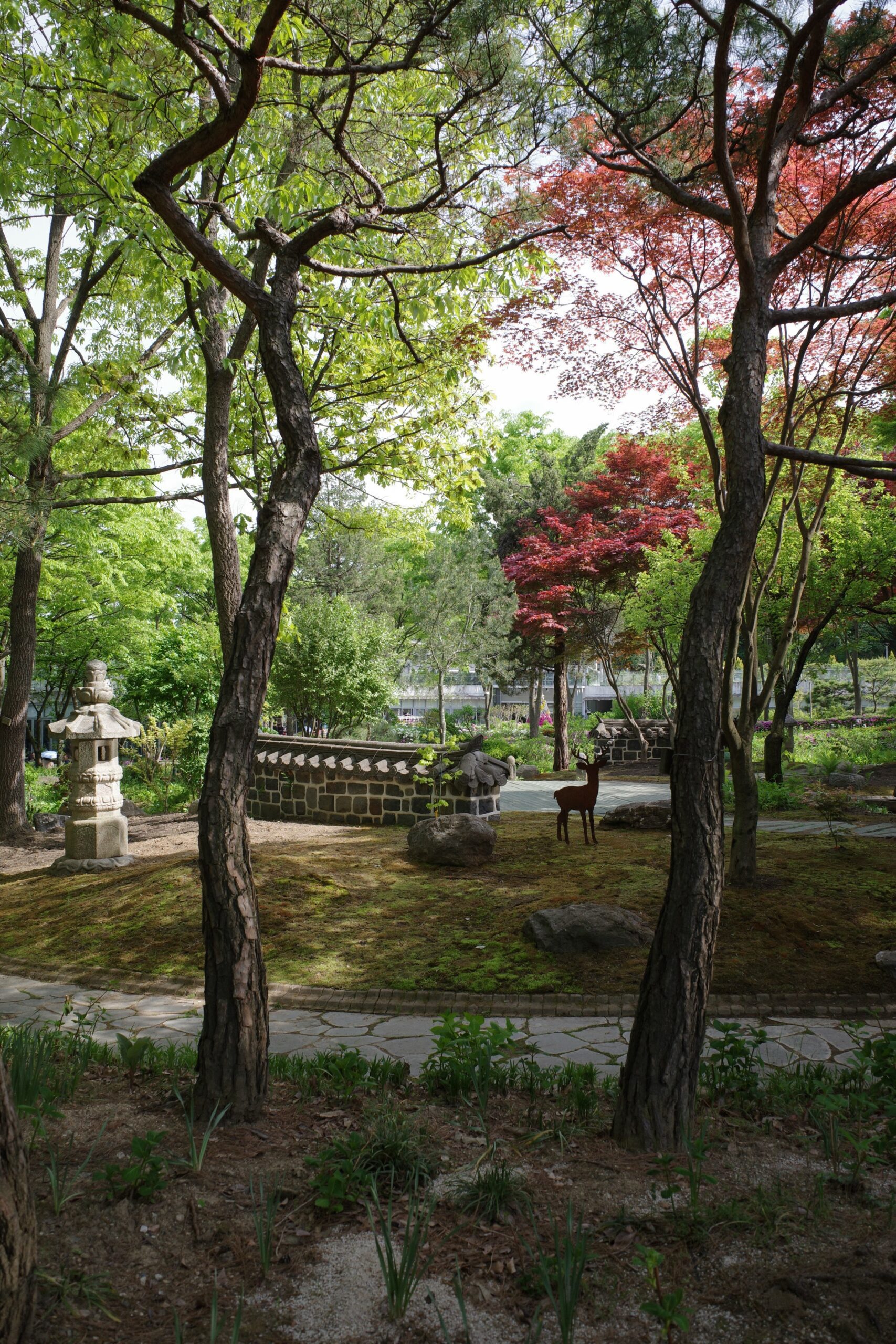
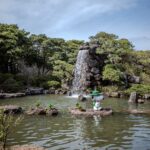
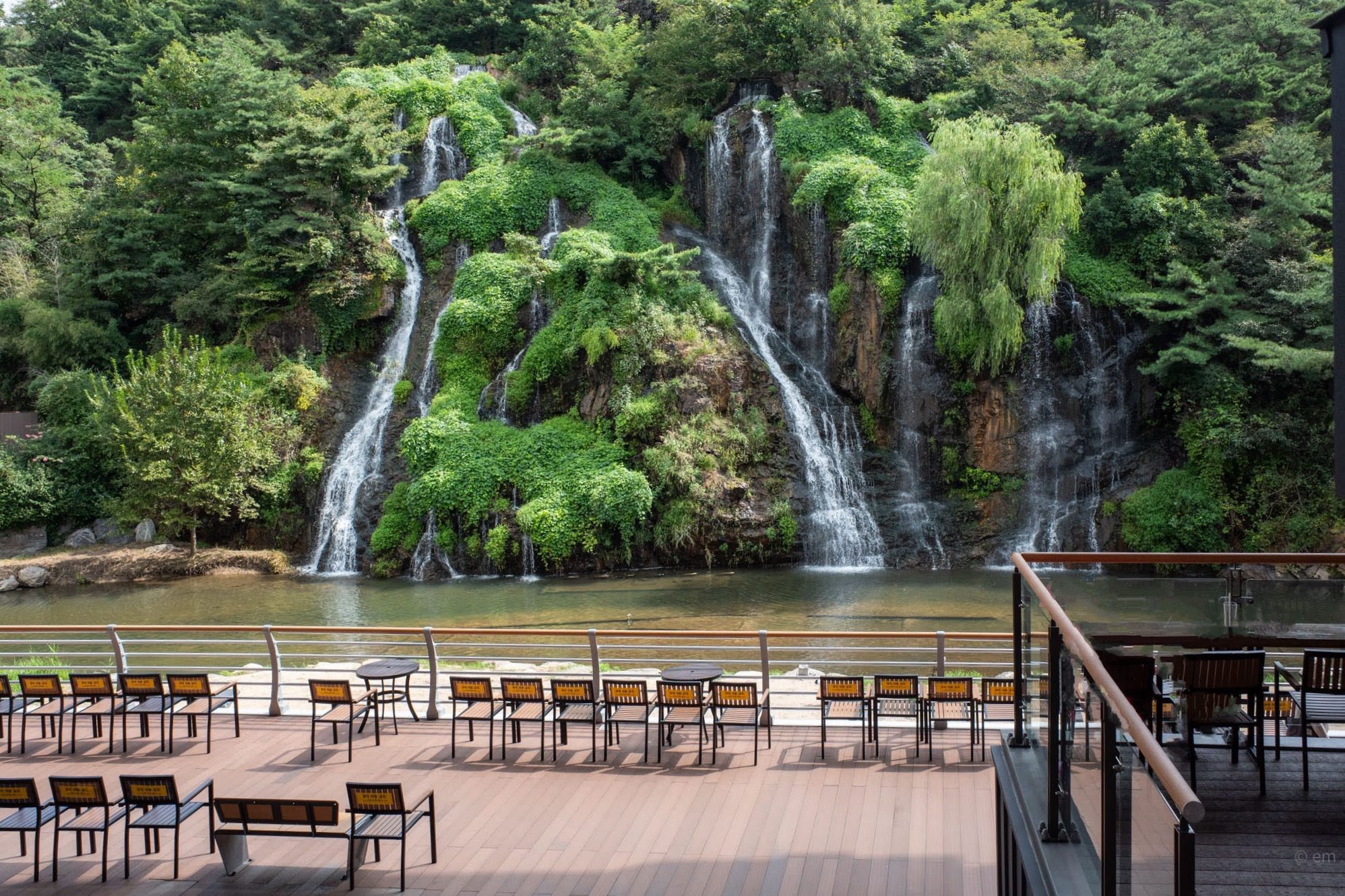
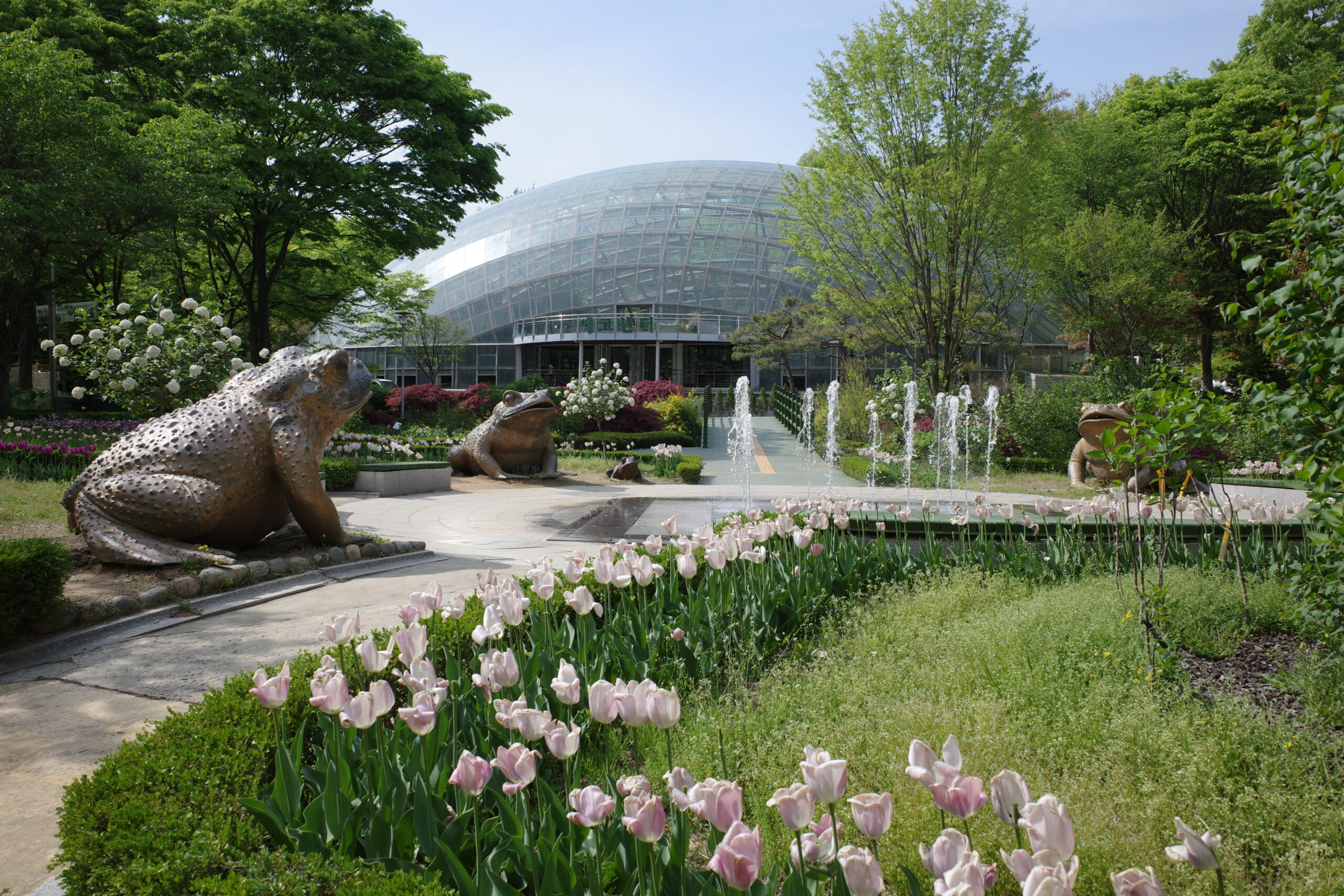
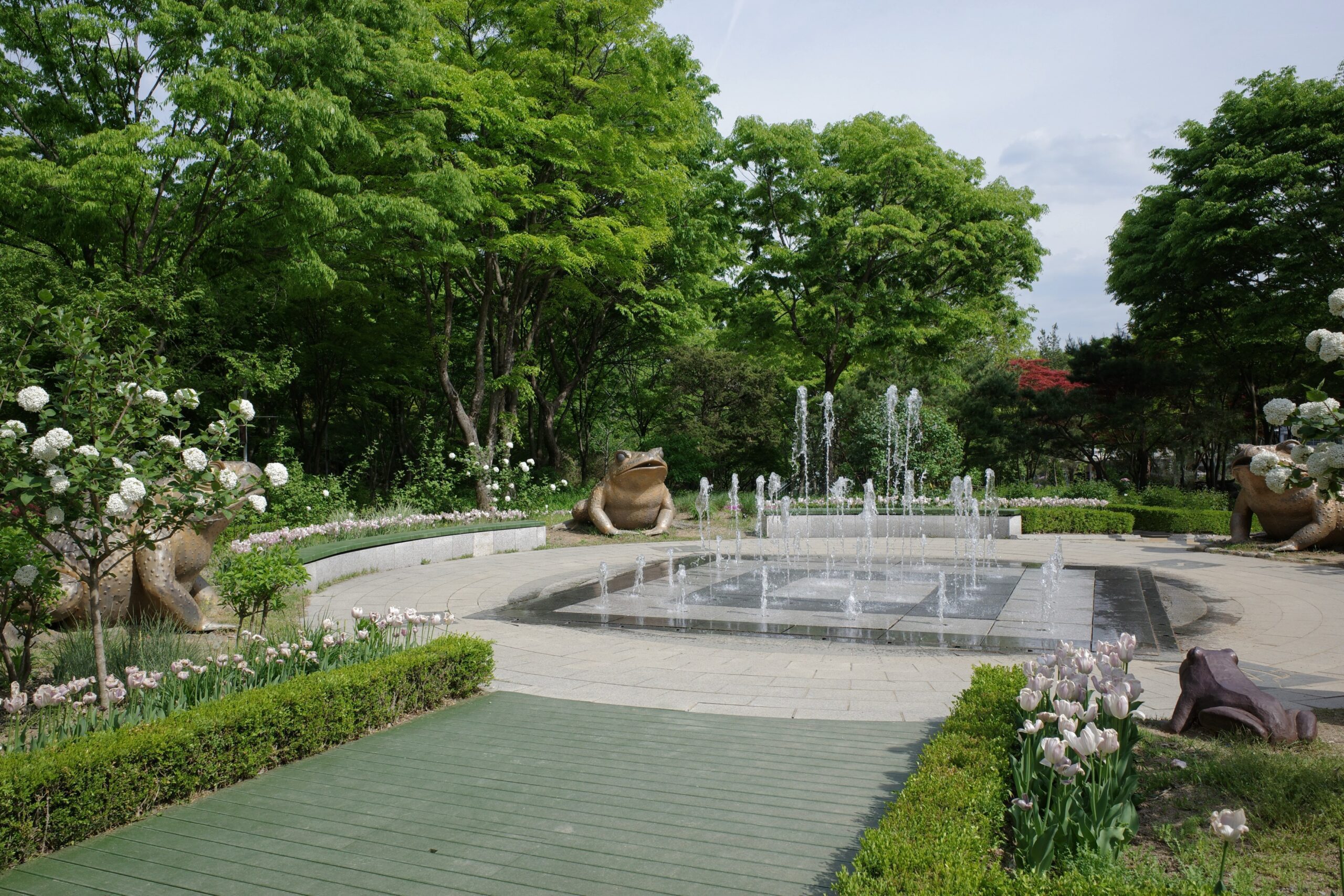
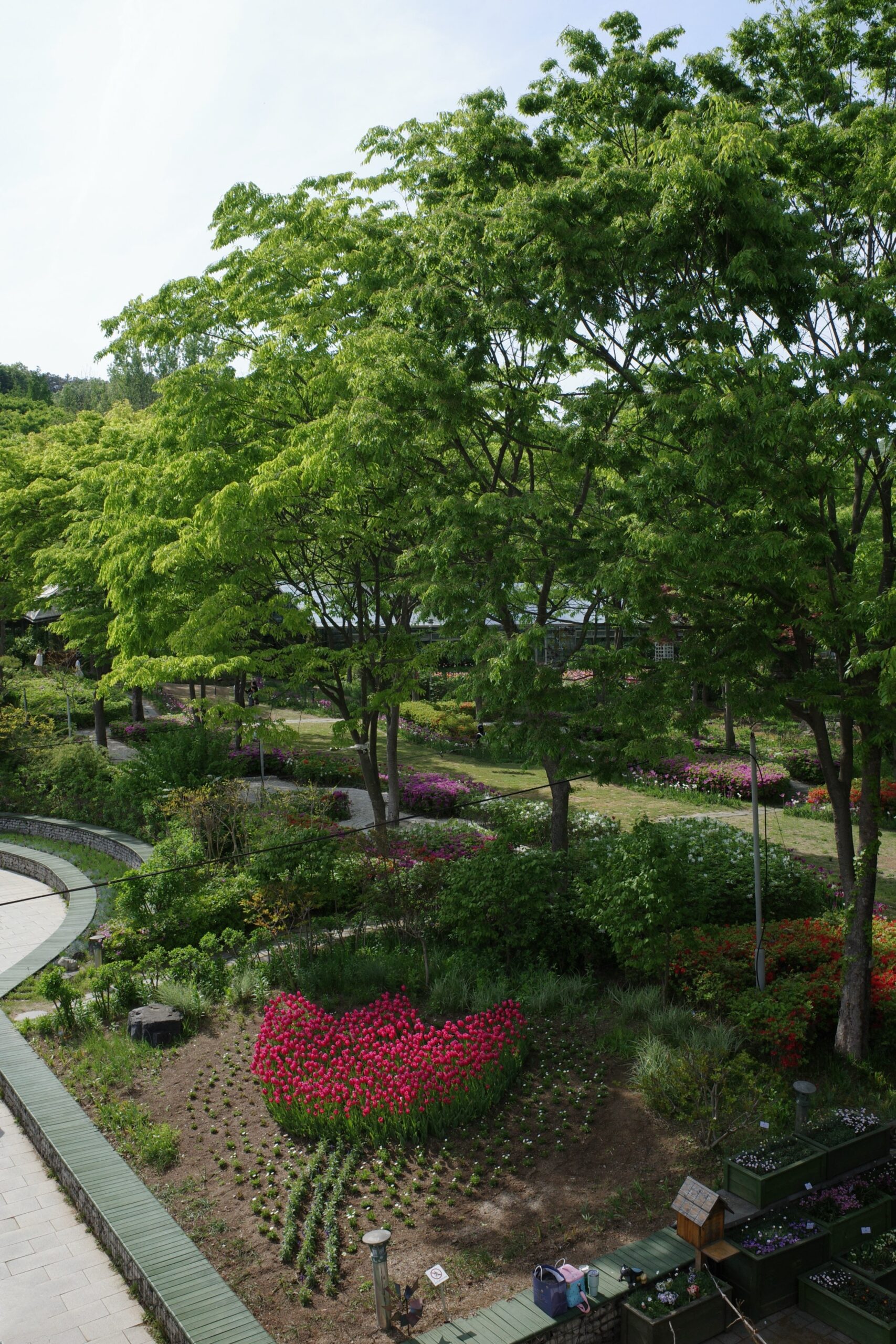
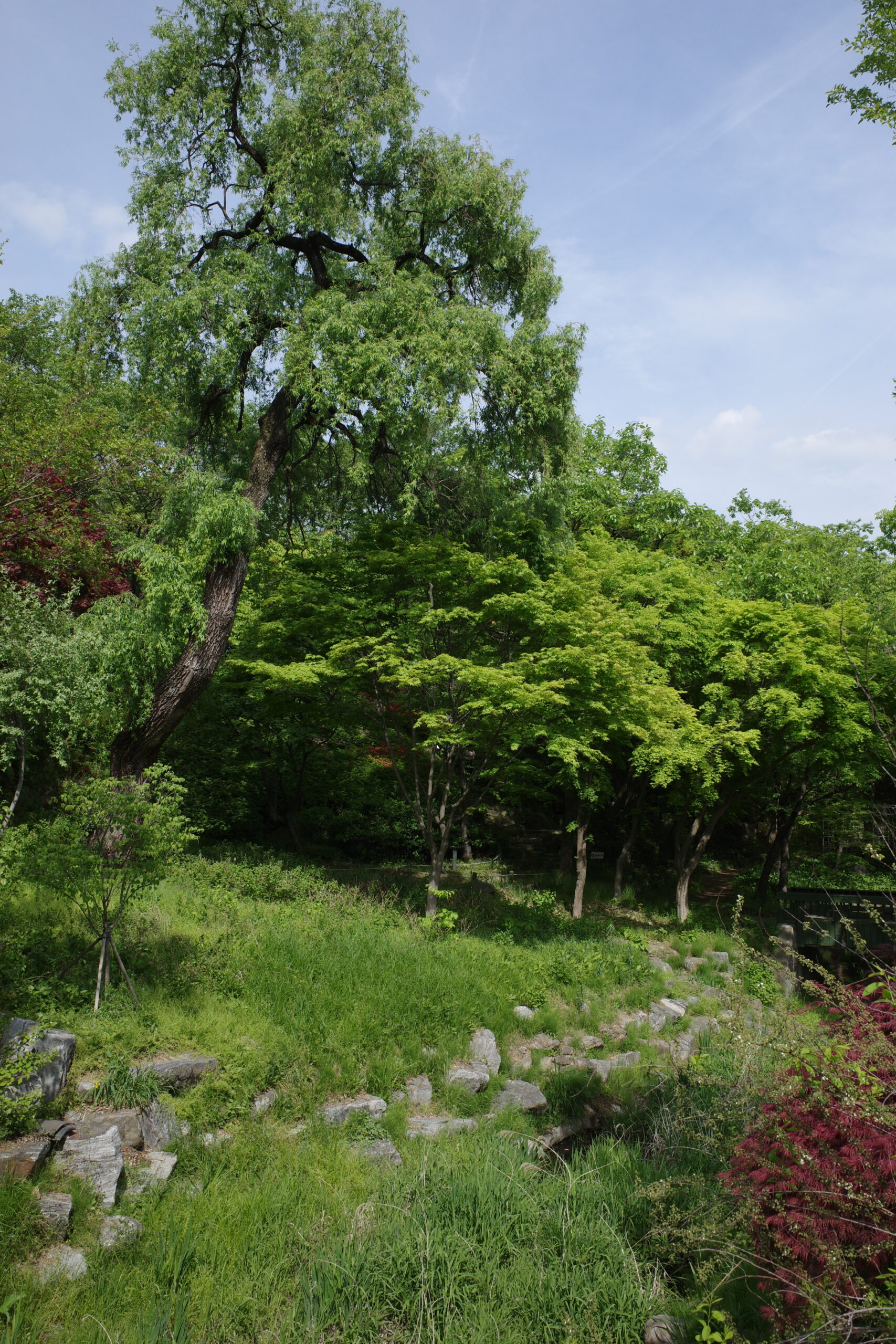
Along the outer edges, the garden gets less formal — naturalistic plantings, mixed perennial beds, clusters of azaleas in deep burgundy, open lawn threaded with gravel paths under a canopy of tall deciduous trees. Bronze toad sculptures appear beside a water feature, unexpected and slightly surreal against the flower beds. There’s a loose quality to these areas, more like a well-kept public park than a botanical institution, and it’s easy to lose an hour just moving through them.
The EcoCenter
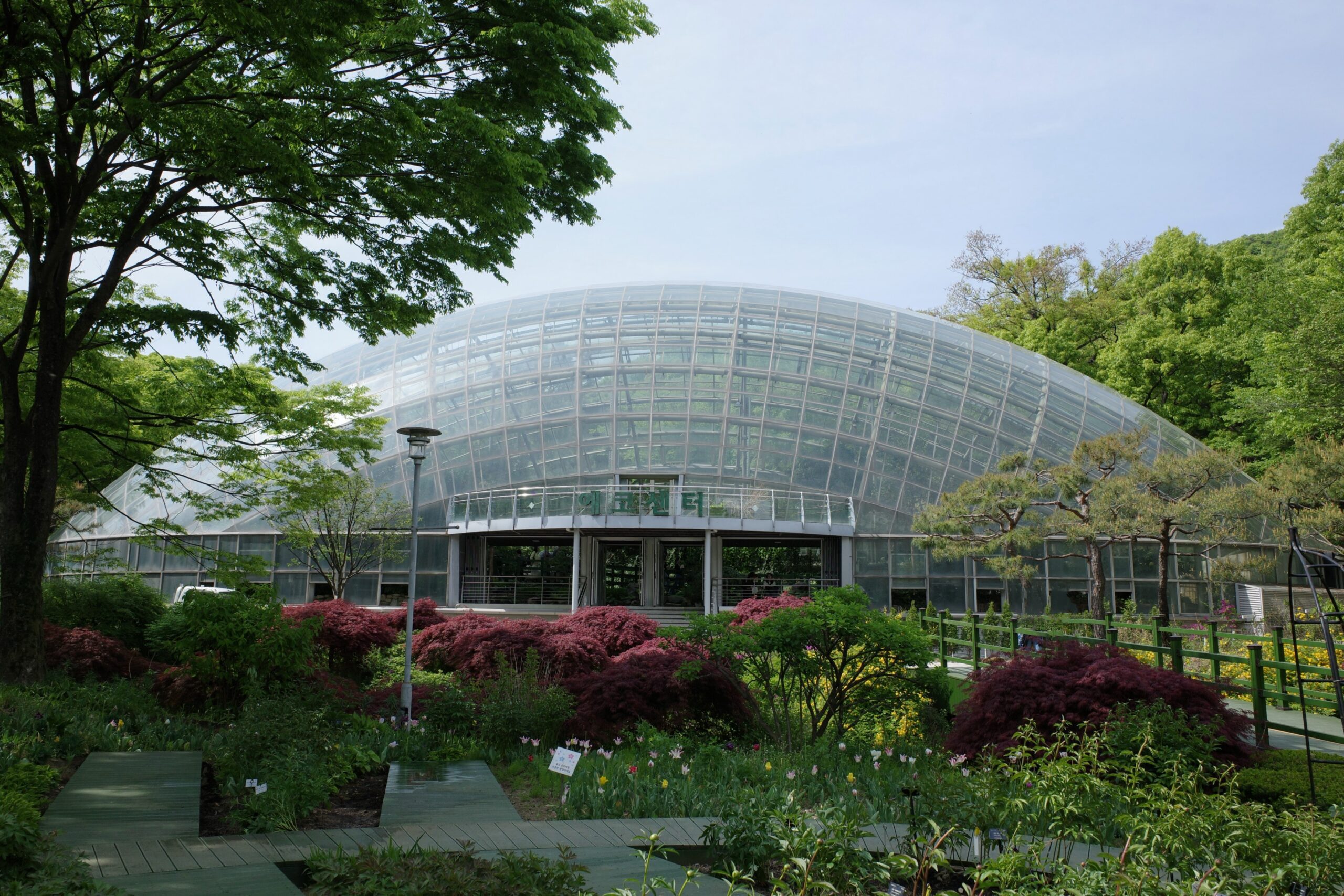
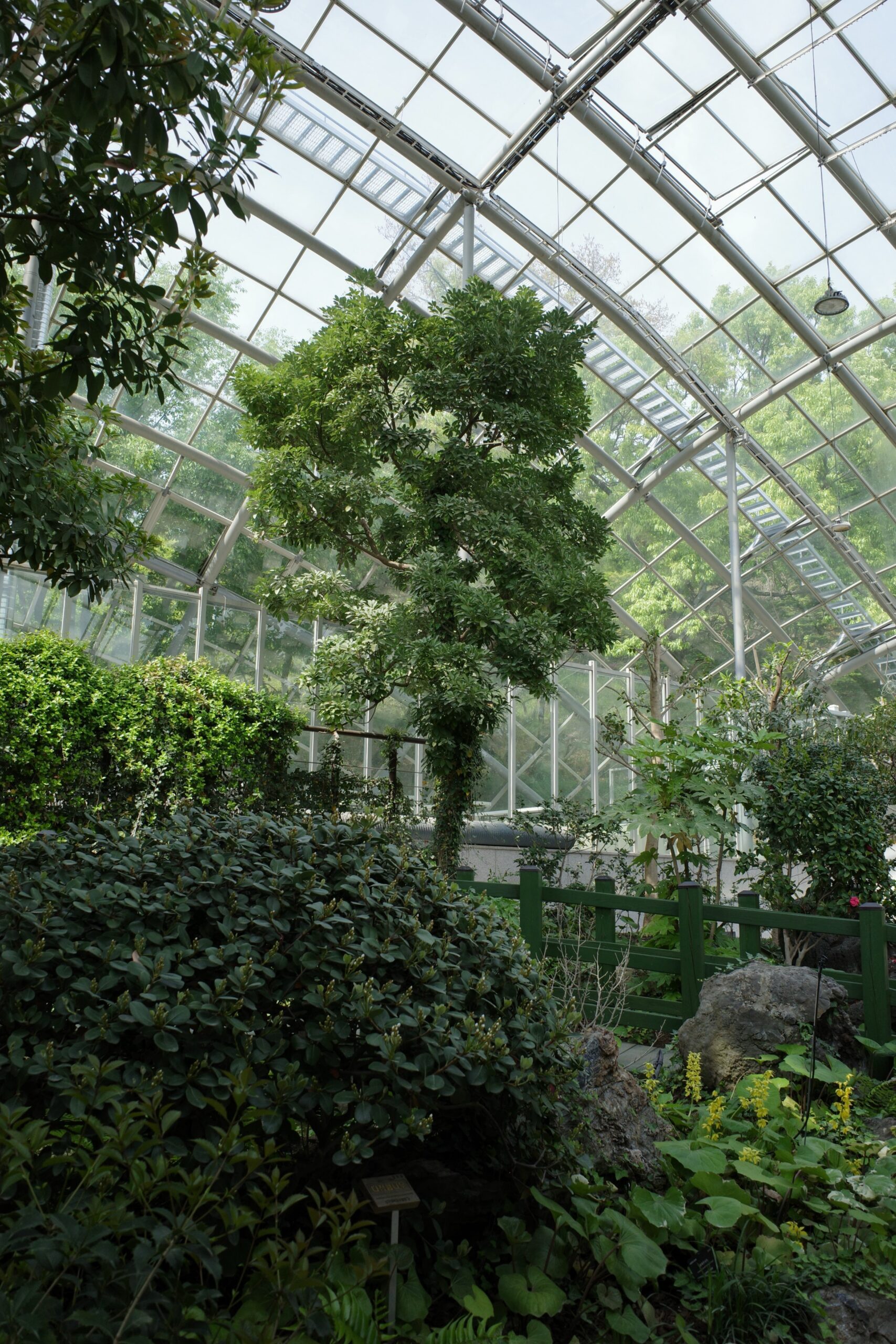
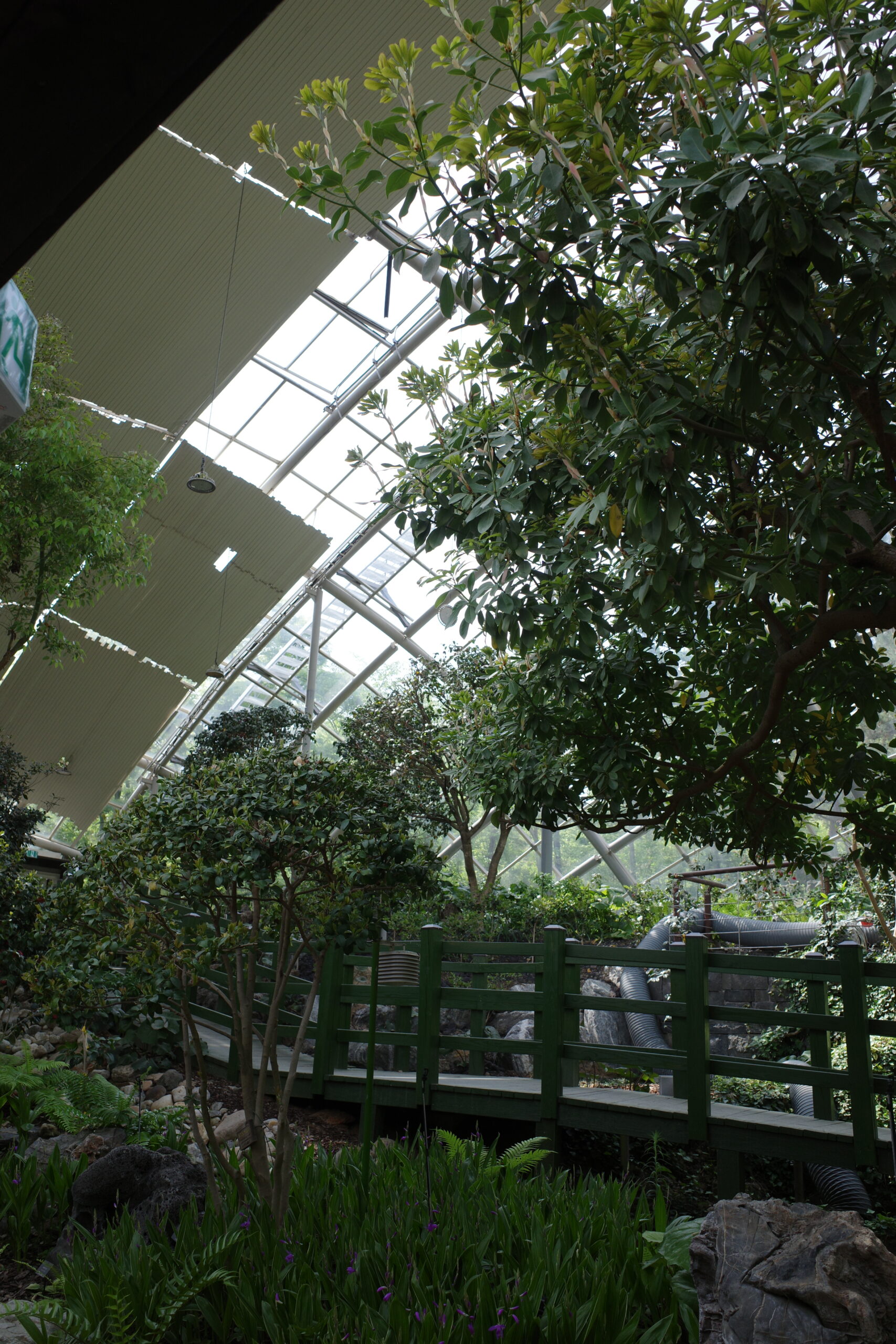
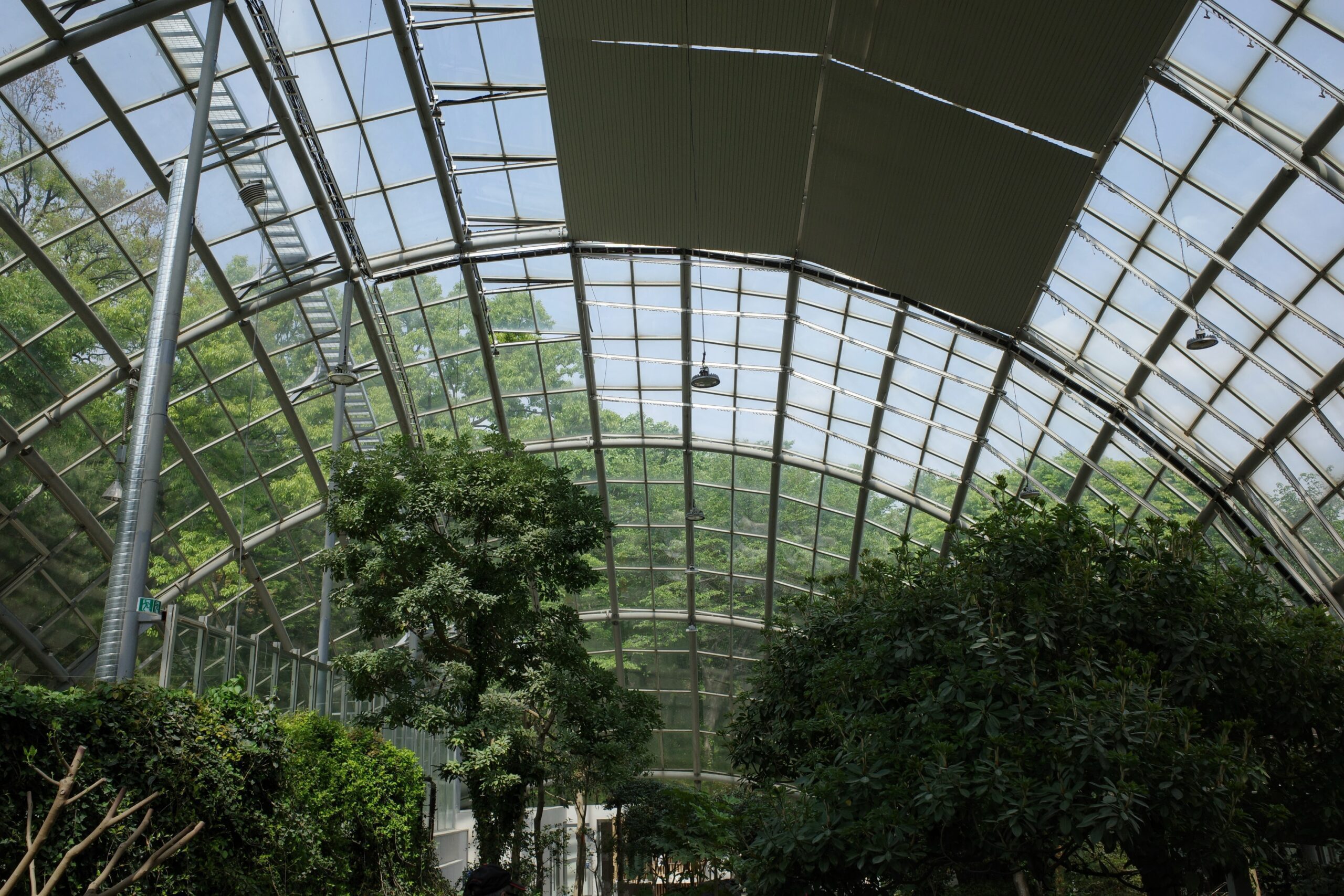
The dome anchors the site. A large glass structure with a curved aluminum lattice roof, labeled 에코센터 and visible from most of the garden, it houses a warm, humid interior planted with southern Korean tree species — broad-leafed subtropical trees that reach toward the glass ceiling, green walkway bridges threading between rockwork and fern beds at ground level. The air inside is noticeably different, denser, warmer. Mist systems run intermittently. It’s the kind of space that reads as a closed ecosystem even from the inside, a compression of a different climate into a glass envelope. It’s not overly curated in feel — some of the exposed infrastructure (pipes, drainage tubing along the rockwork) is visible — but that functional transparency is part of its character.
The Sky Garden and Rooftop
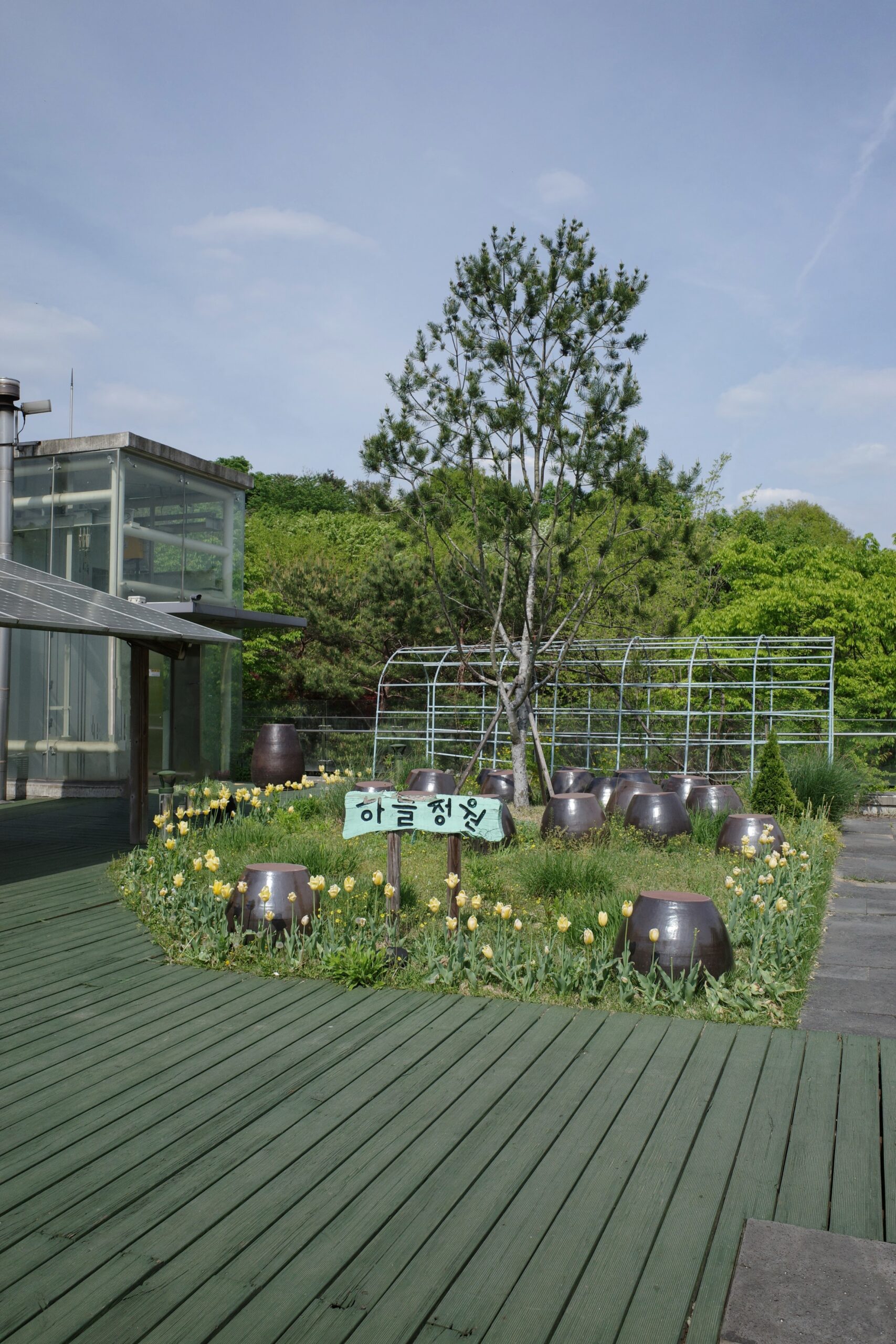
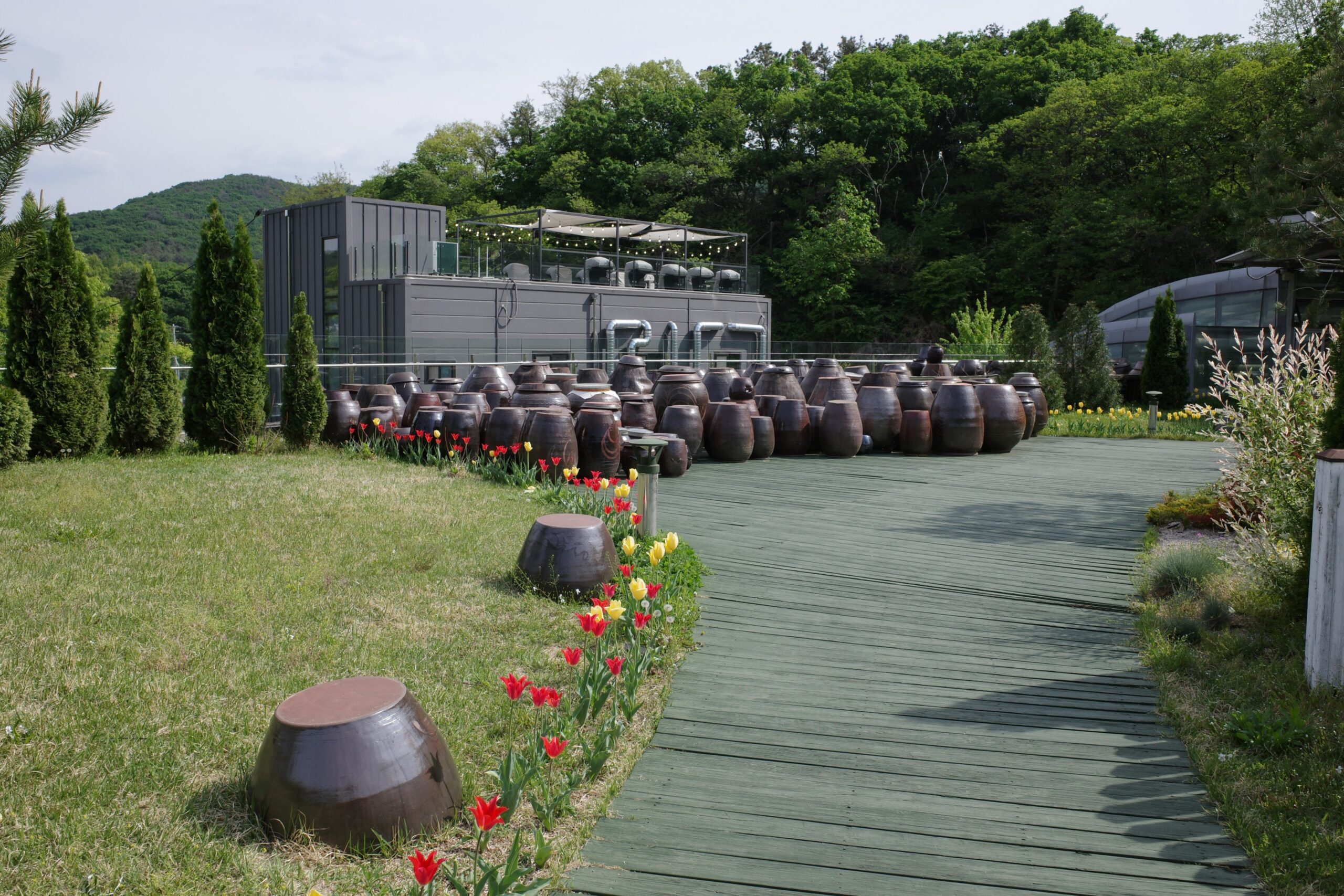
Access to the upper level of the main building reveals a rooftop garden — 하늘정원, sky garden — laid out on a long green deck. Here, rows of traditional Korean onggi jars sit clustered in a small planted mound, surrounded by tulips. Beyond them, a formal box hedge garden extends toward the edge of the roof, where the mountain silhouette opens up across the valley. It’s a quieter register than the main floor, and the view — low hills, a sliver of reservoir in the distance — situates the whole site more plainly within its Seongnam geography.
The Endangered Plant Garden and Education Mission
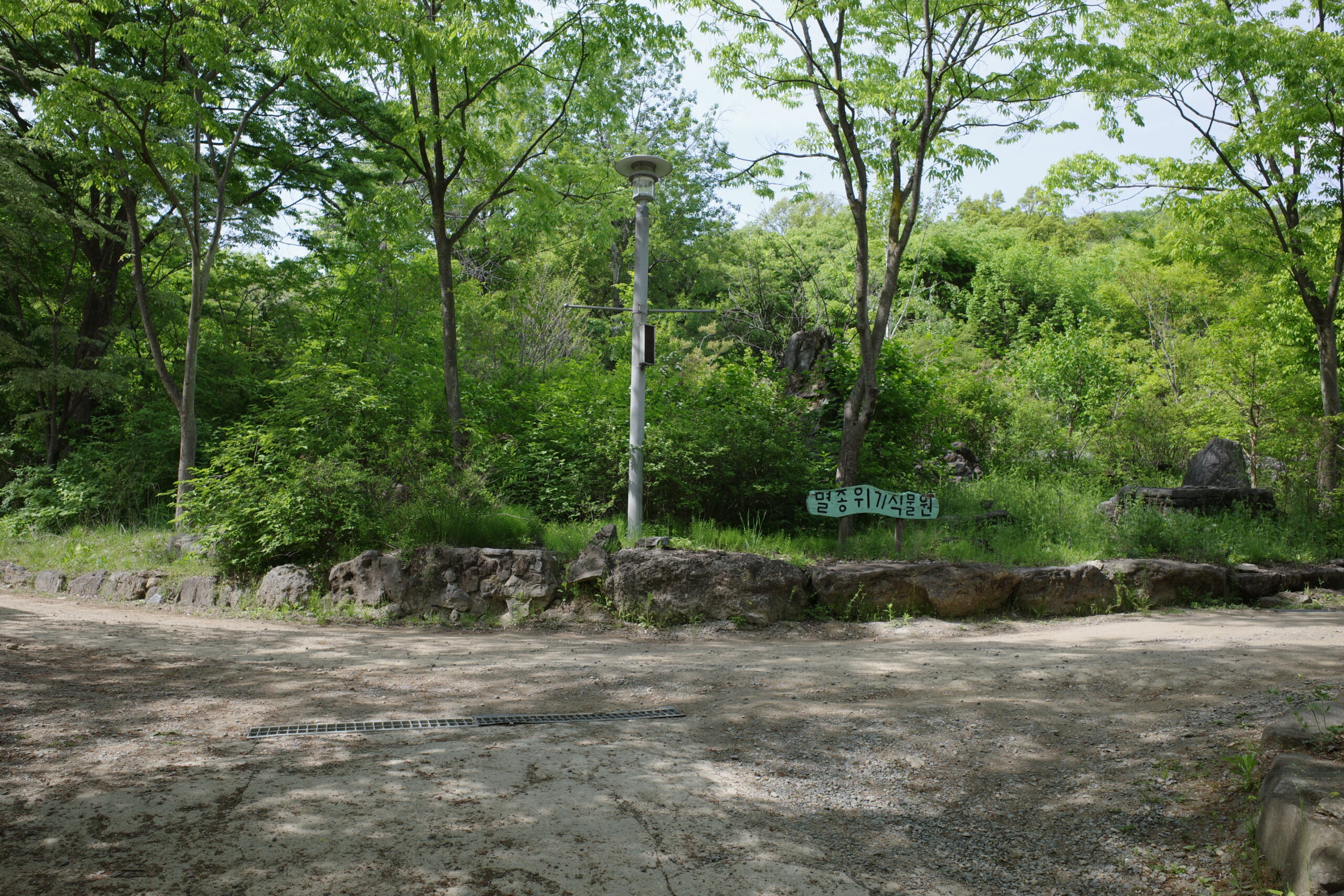
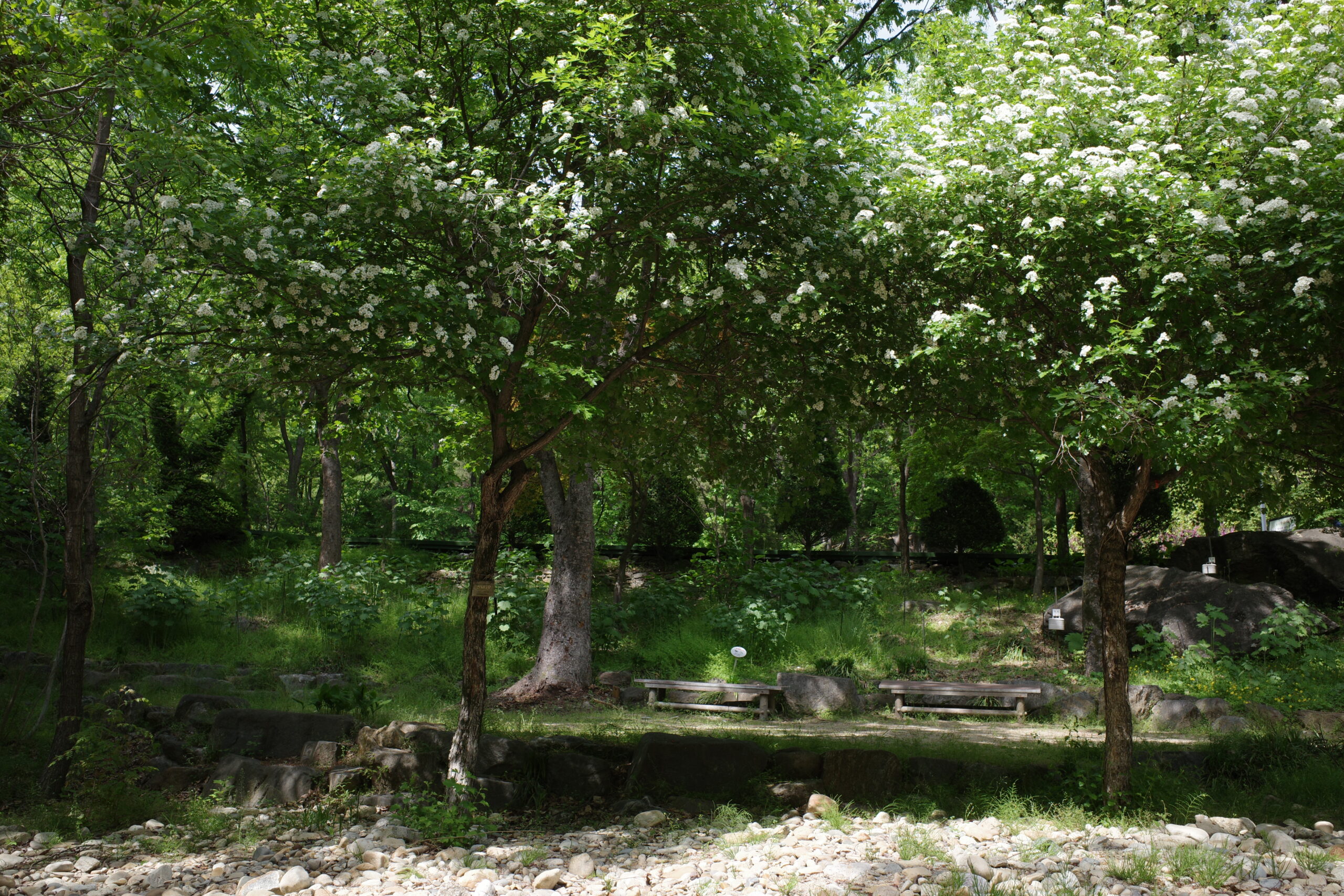
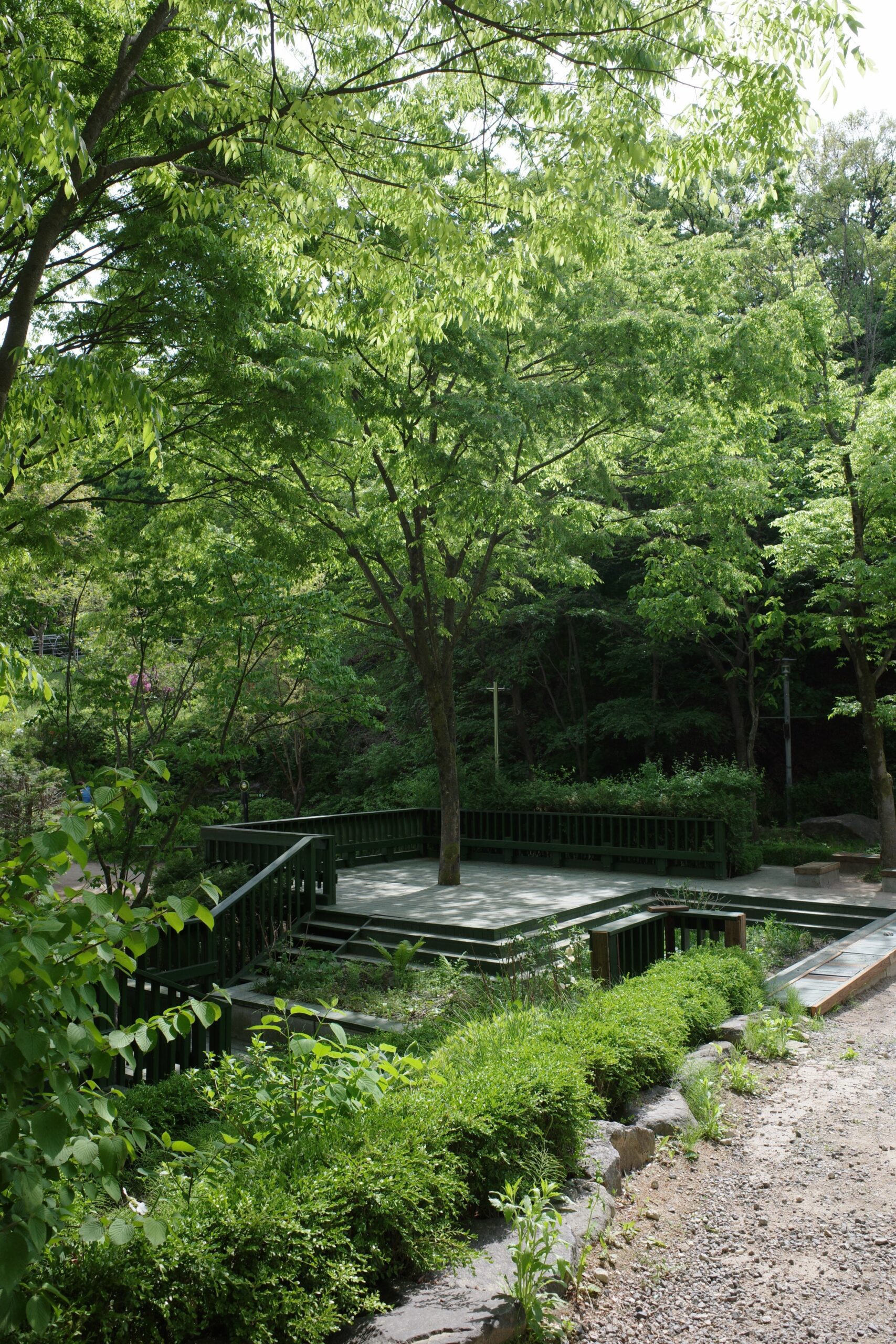
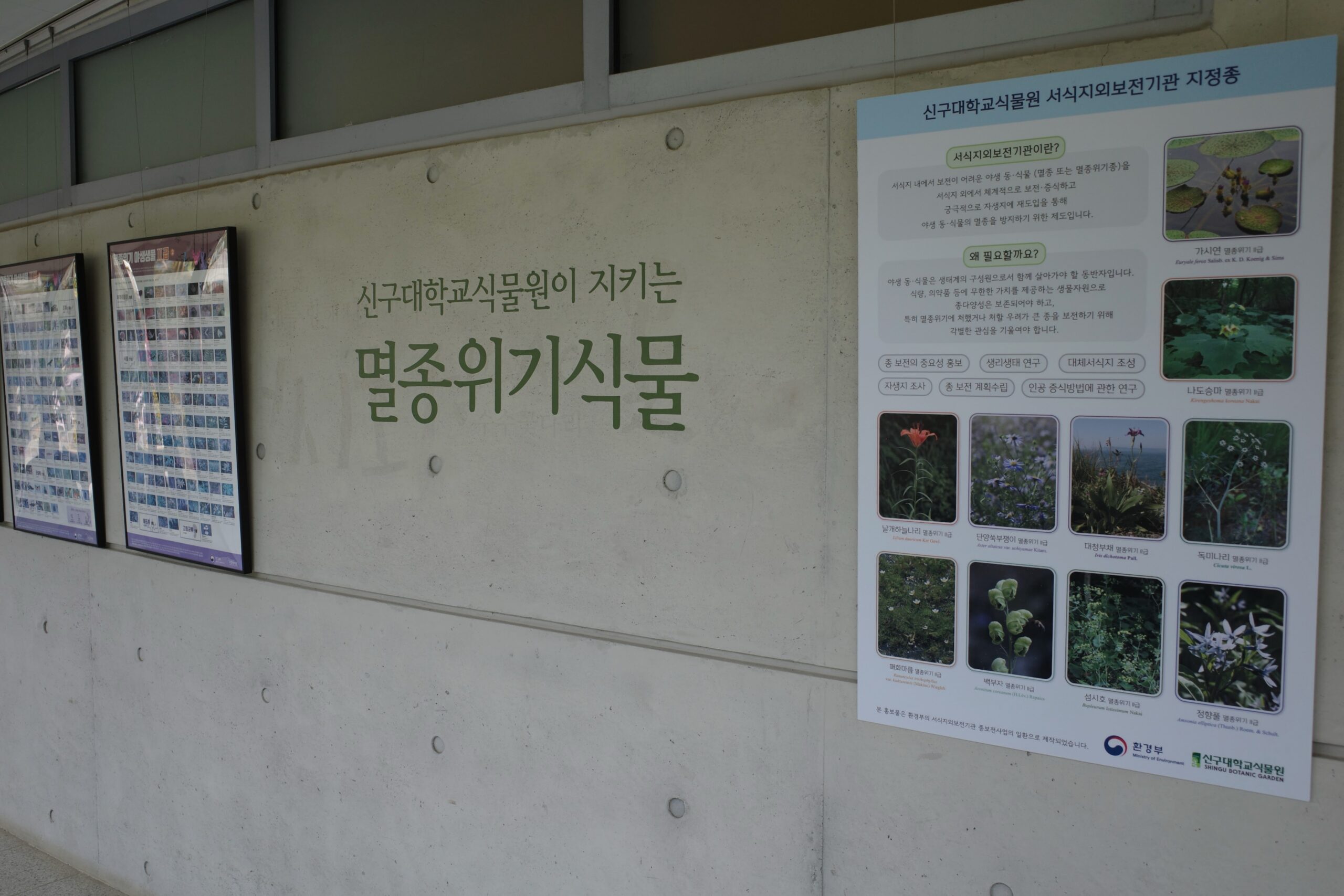
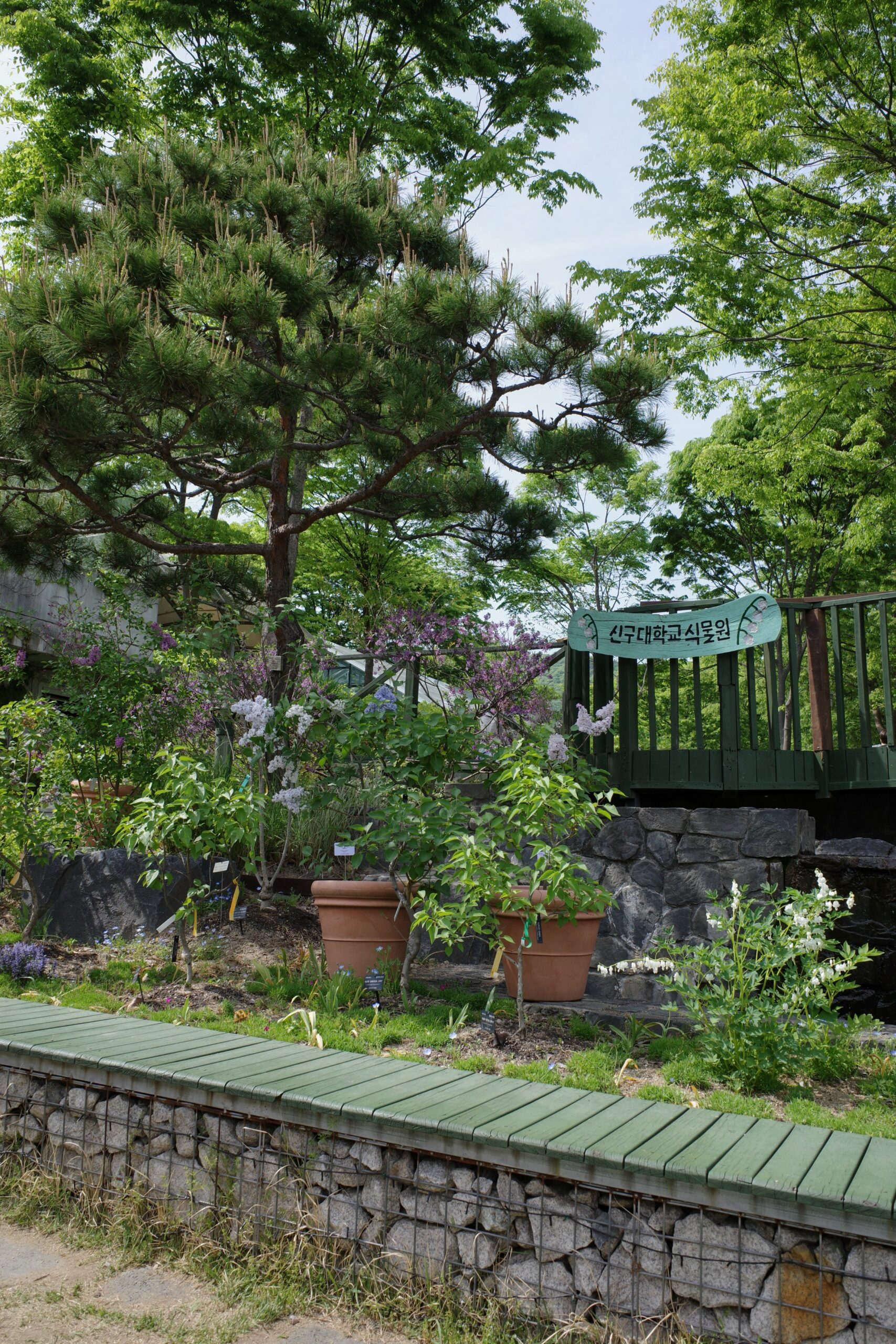
A rougher path leads up into the hillside beyond the main gardens, past a small hand-lettered sign marking the 멸종위기식물원 — the endangered plant garden. The Ministry of Environment has officially designated Shingu University Botanic Garden as a habitat conservation institution for eleven endangered wild plant species, including 가시연꽃 (prickly water lily), 날개하늘나리 (winged tiger lily), and 독미나리 (hemlock water dropwort). These aren’t display specimens; the garden actively maintains breeding and research programs for each. The hillside section has the texture of a working conservation site rather than a landscaped attraction — loose paths, exposed rock, volunteer-looking signage. That quality feels appropriate.
The institution’s educational mandate runs alongside the conservation work. The garden runs professional gardener training through a program backed by the Korea Forest Service, a citizen gardener curriculum commissioned by the Gyeonggi-do government, and seasonal experiential programs for children and families. It functions, in other words, as a school of horticulture with public access — which explains the unusual combination of formal display, ecological research, and plant commerce all coexisting in the same grounds.
The Garden Center and Café
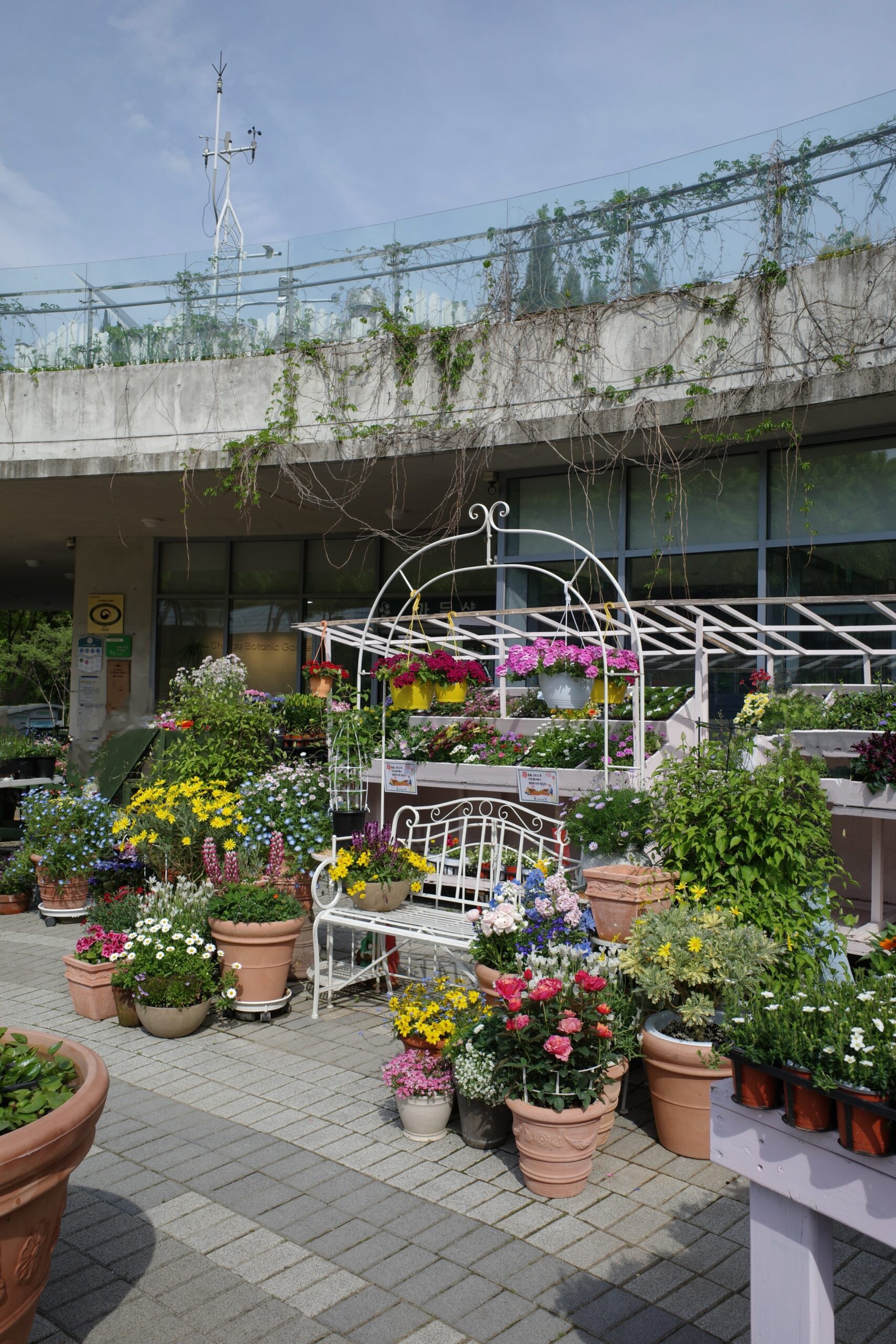
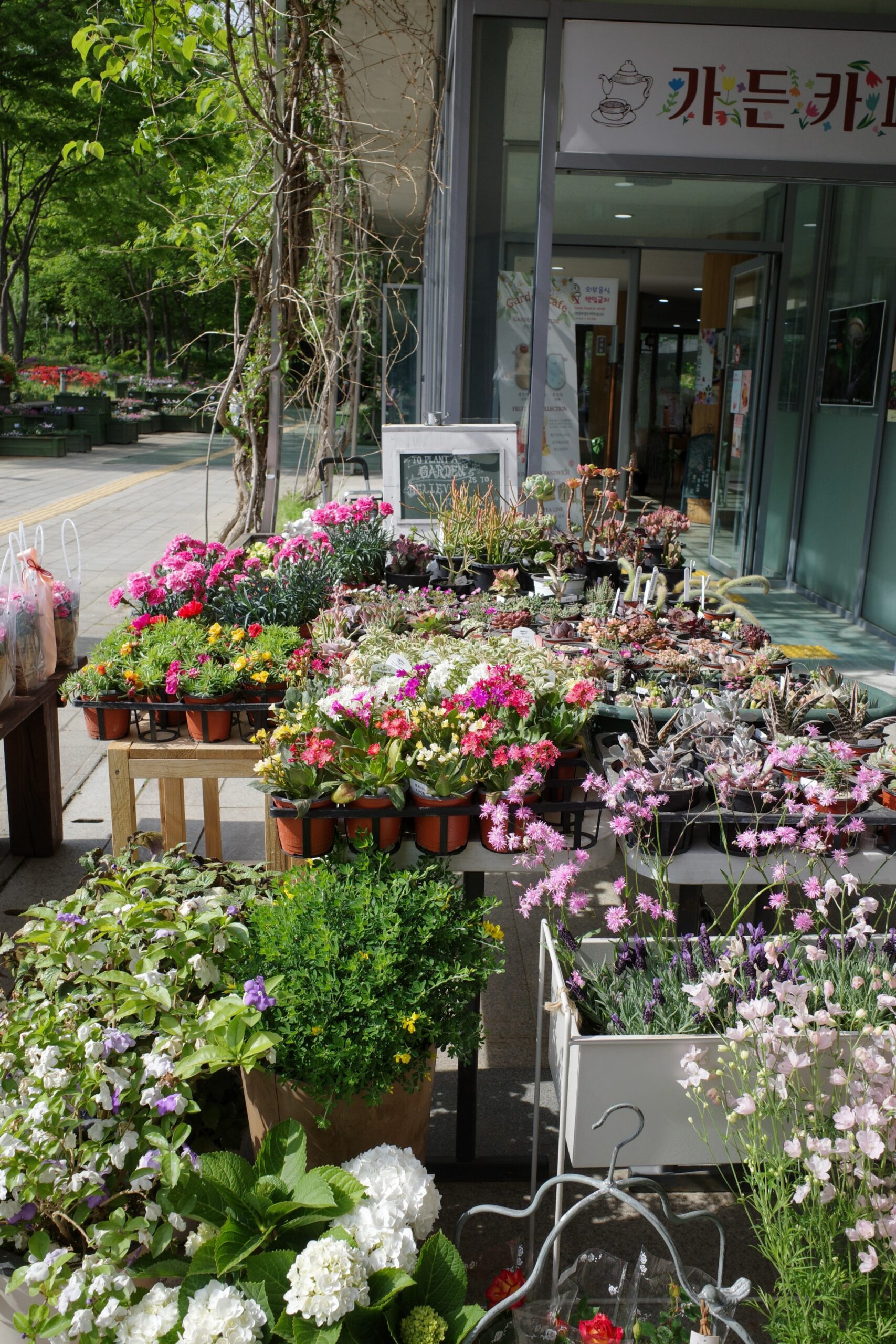
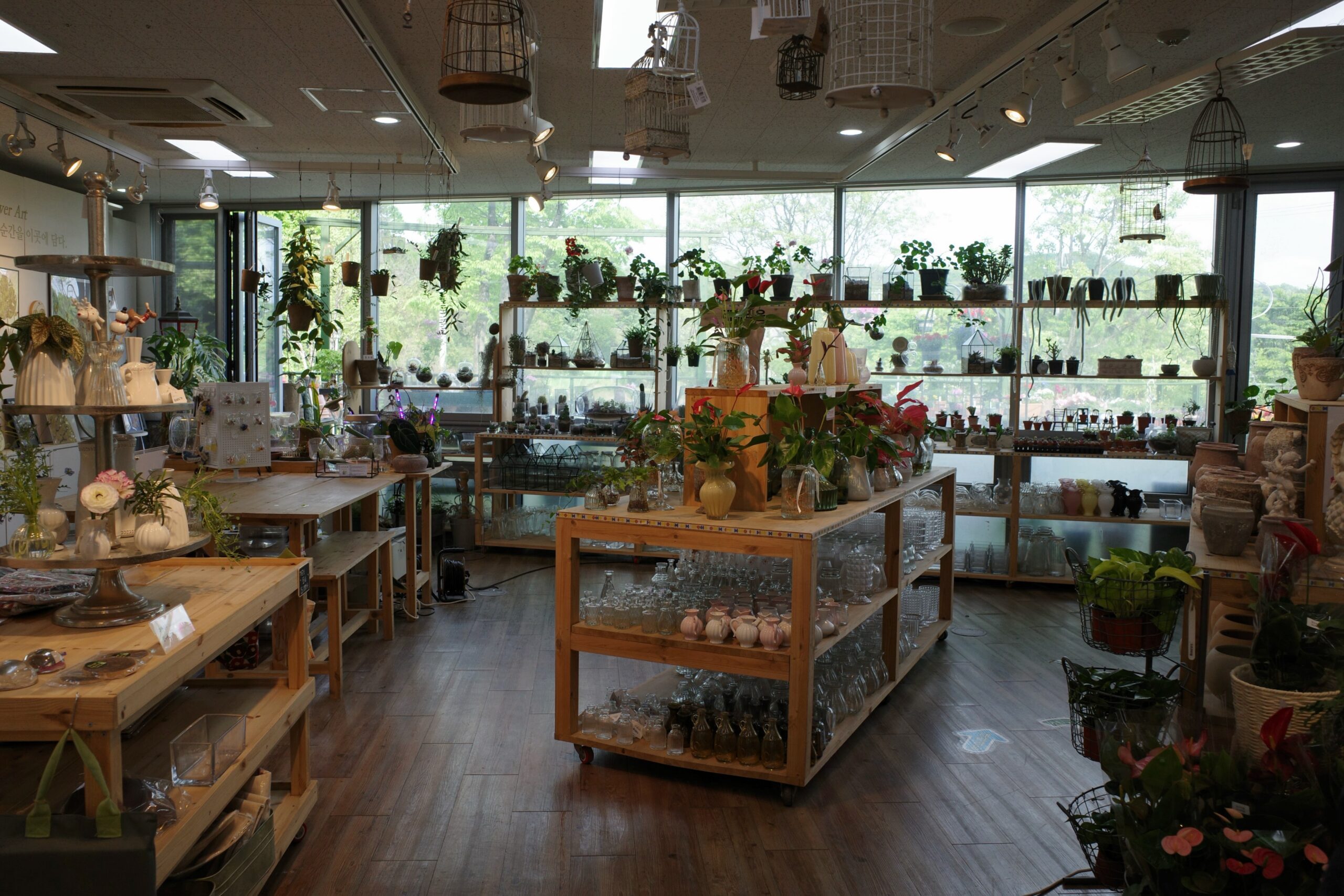
Near the main building entrance, a garden center operates with a double life: inside, wooden shelves and rolling display units carry terracotta pots, glass vessels, bird cage ornaments, and small houseplants in the style of a well-stocked garden lifestyle shop. Outside, the sidewalk tables overflow in spring with flowering annuals, succulents, and potted perennials available for purchase. The 가든카페 (Garden Café) operates just beside the entrance, marked by its own signage and accessible without full garden admission — a practical option for anyone who wants to take the surroundings in at a slower pace.
Practical details
Shingu University Botanic Garden (신구대학교식물원)
- Address: 9 Jeokpuri-ro, Sangjeok-dong, Sujeong-gu, Seongnam-si, Gyeonggi-do
- Hours: 9:00 AM – 6:00 PM (last entry 5:00 PM) / Closed Mondays, open on public holidays
- Admission: Adults 9,000 KRW / Middle & high school students 7,000 KRW / Ages 3–6 & elementary school students 4,000 KRW (group rates available for 20+; winter pricing applies November–February)
- Instagram: @shingu_botanic_garden
- Website: sbg.or.kr / Phone: 031-724-1600
The tulips won’t wait for you — but if you time it right, the wait is over before it starts.