April in Seoul has a secret address.
Seoul Forest doesn’t announce its tulip season. There’s no gate, no admission fee, no festival infrastructure to signal that something extraordinary is happening inside. You walk in from the subway and the trees are just trees — until they aren’t, and suddenly the ground between them is on fire.
What the Forest Does in April
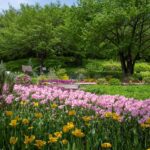
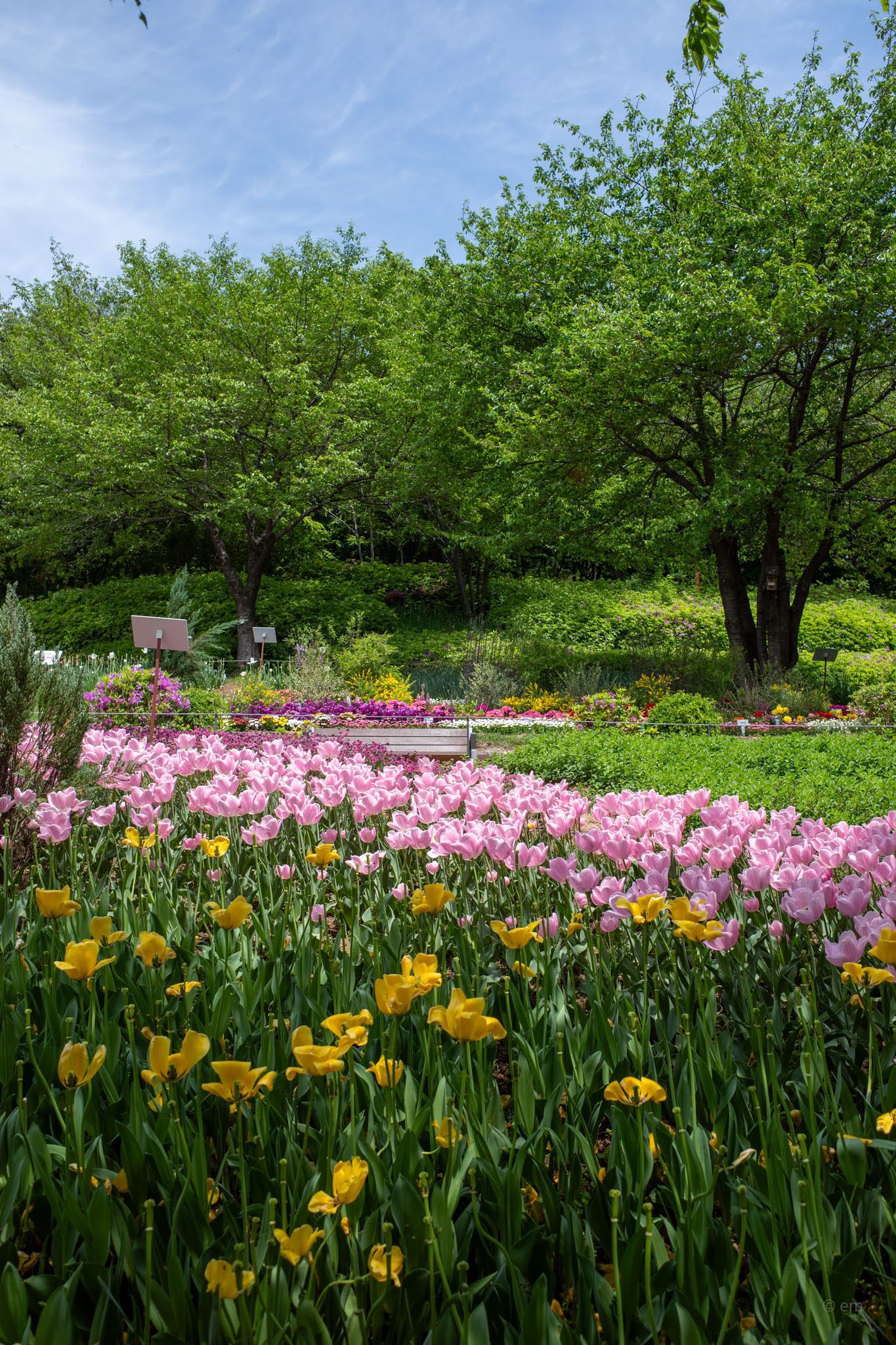
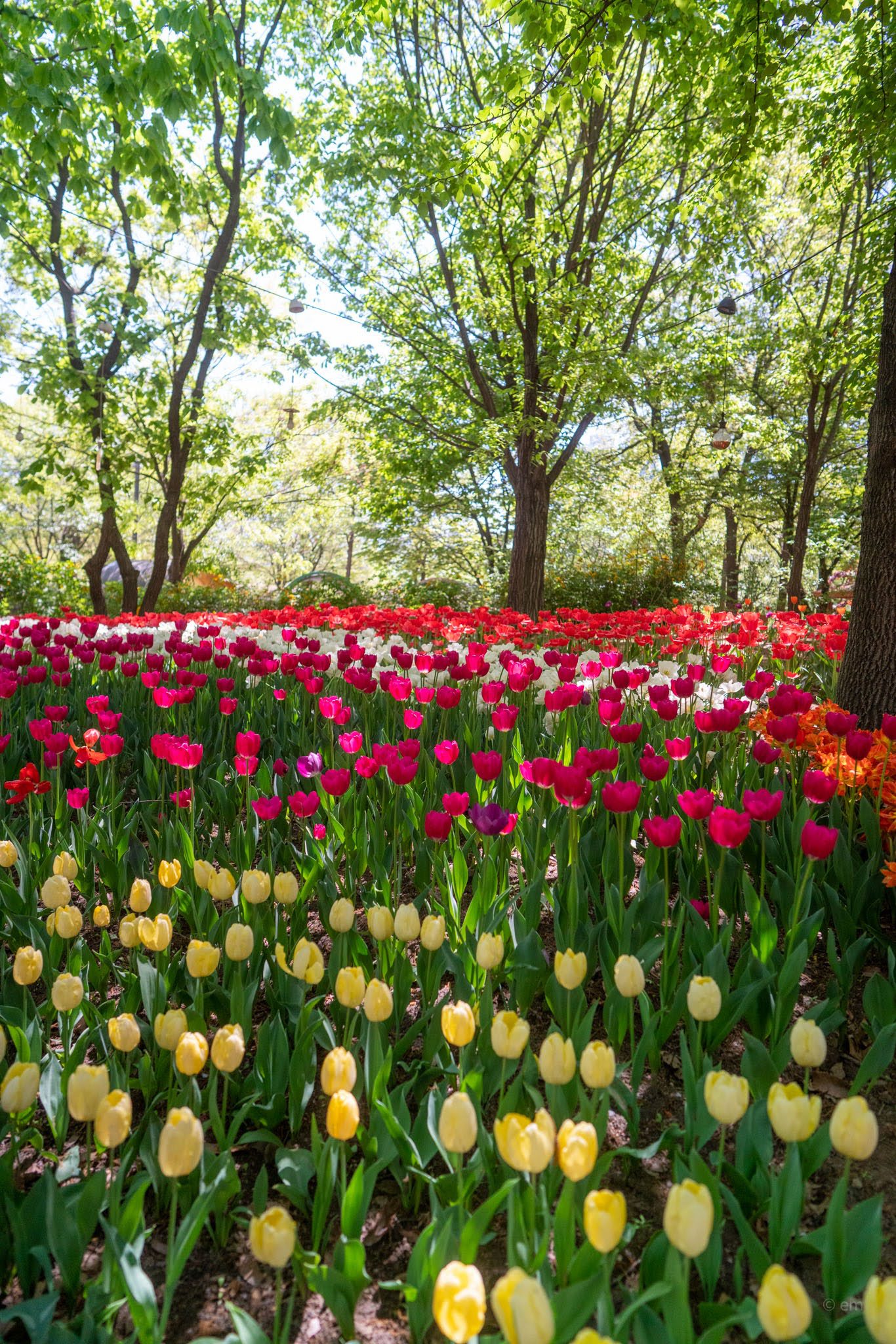
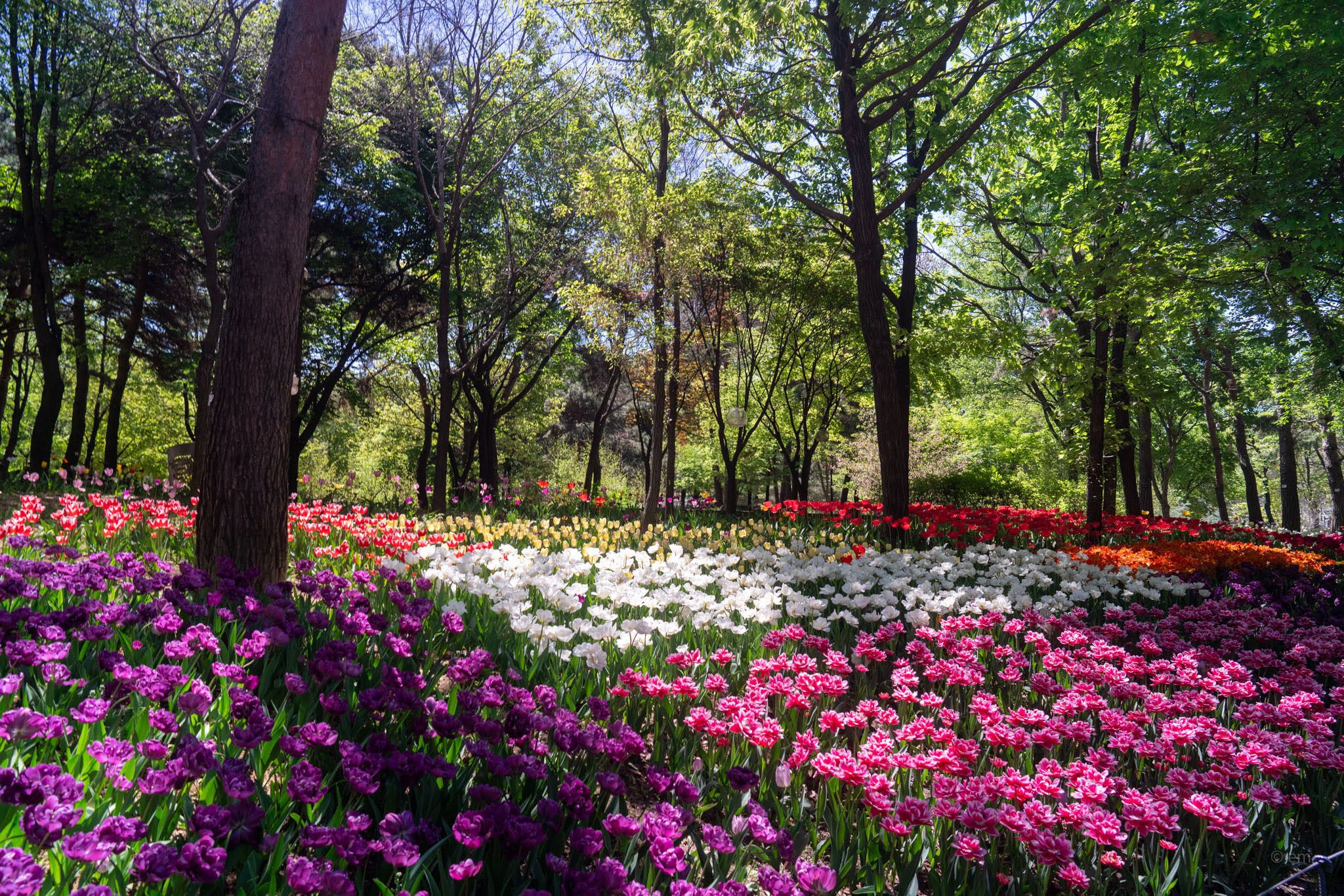
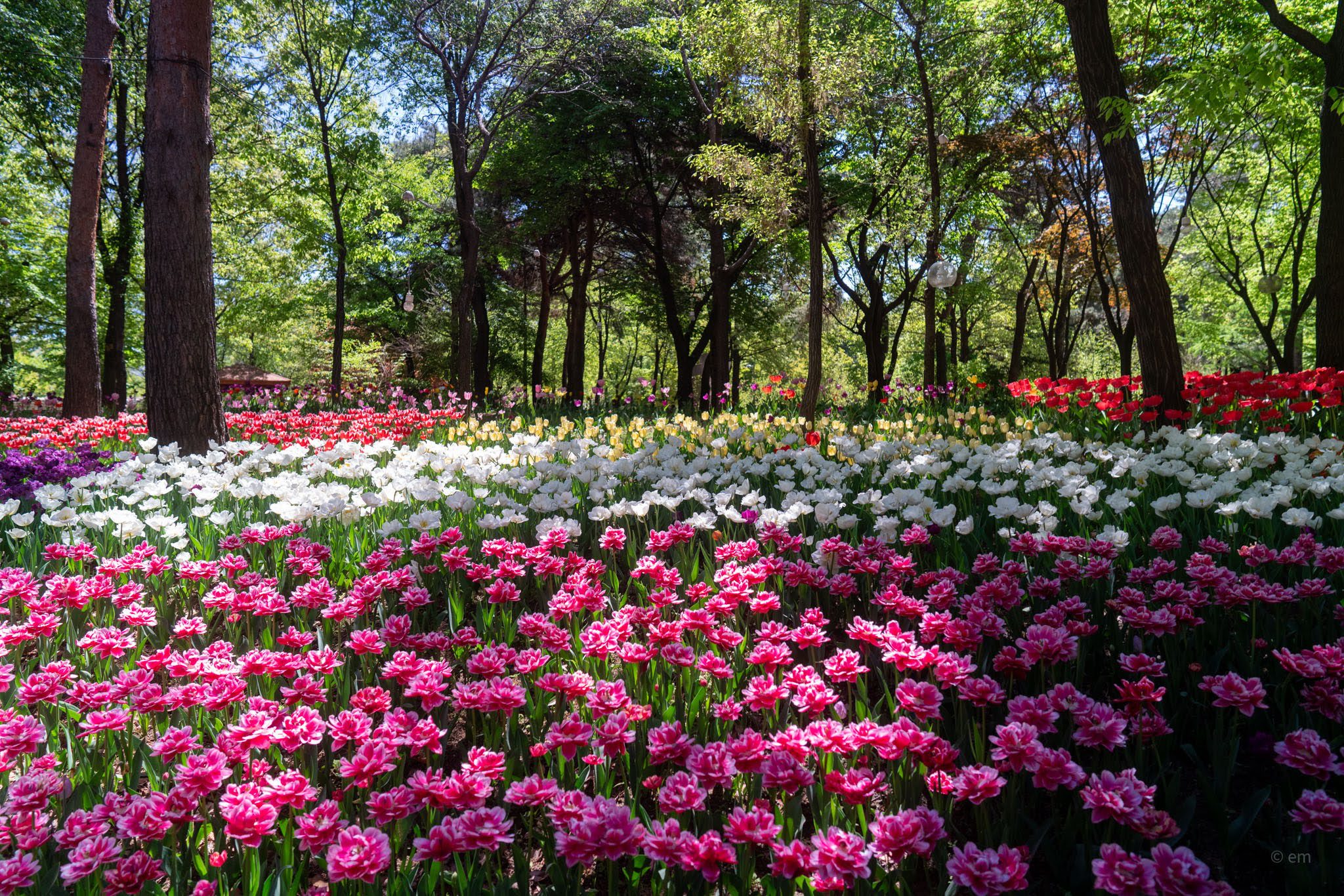
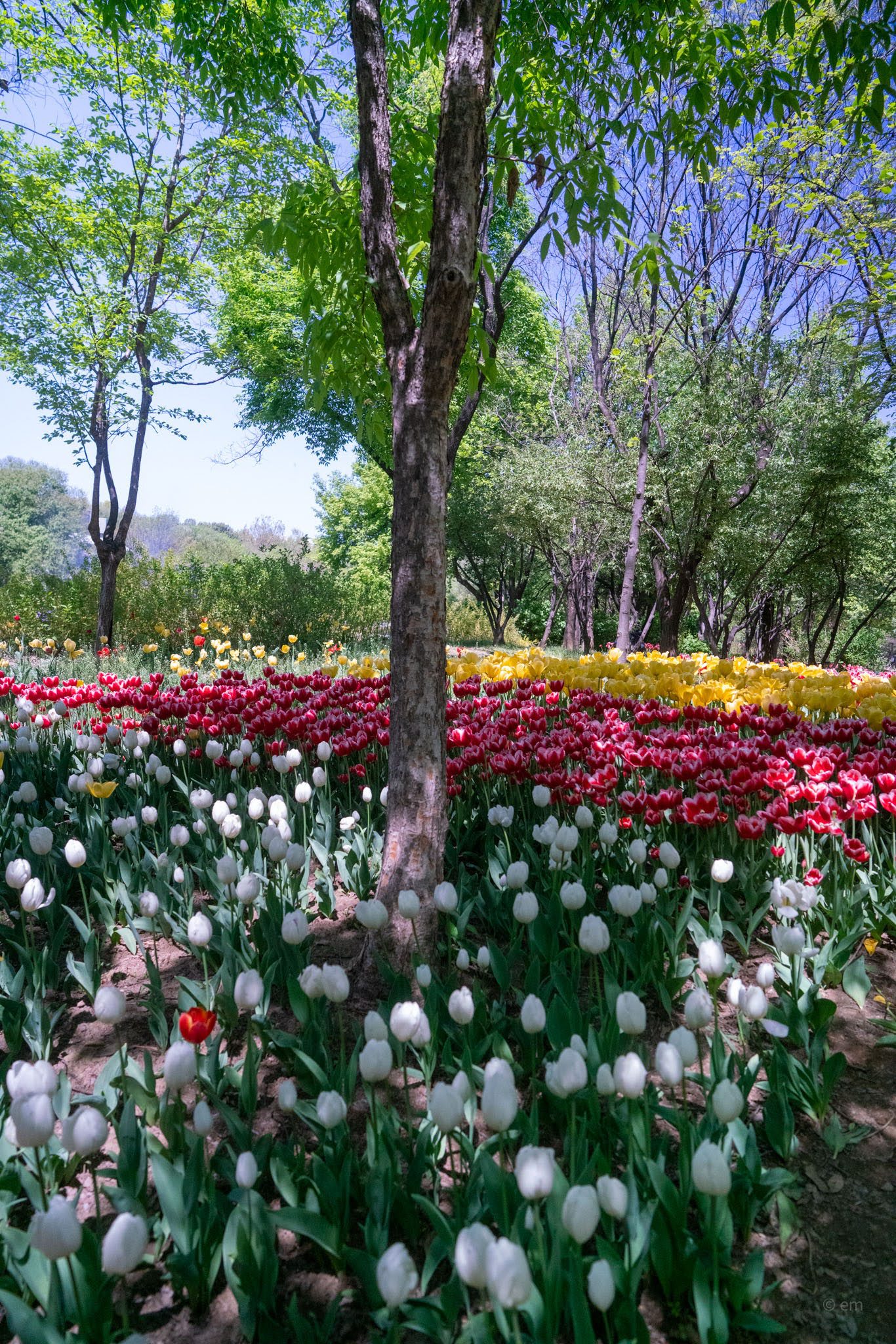
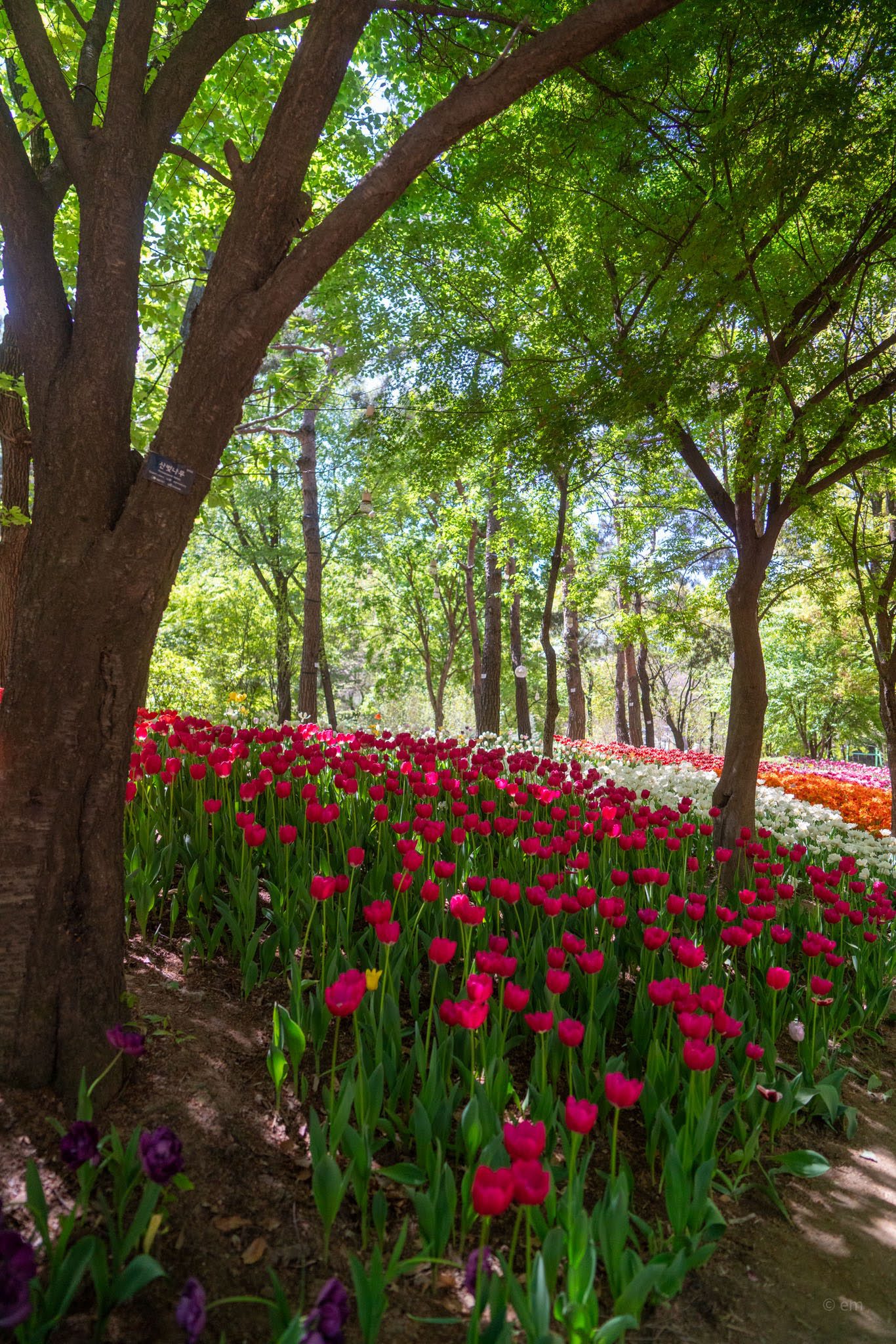
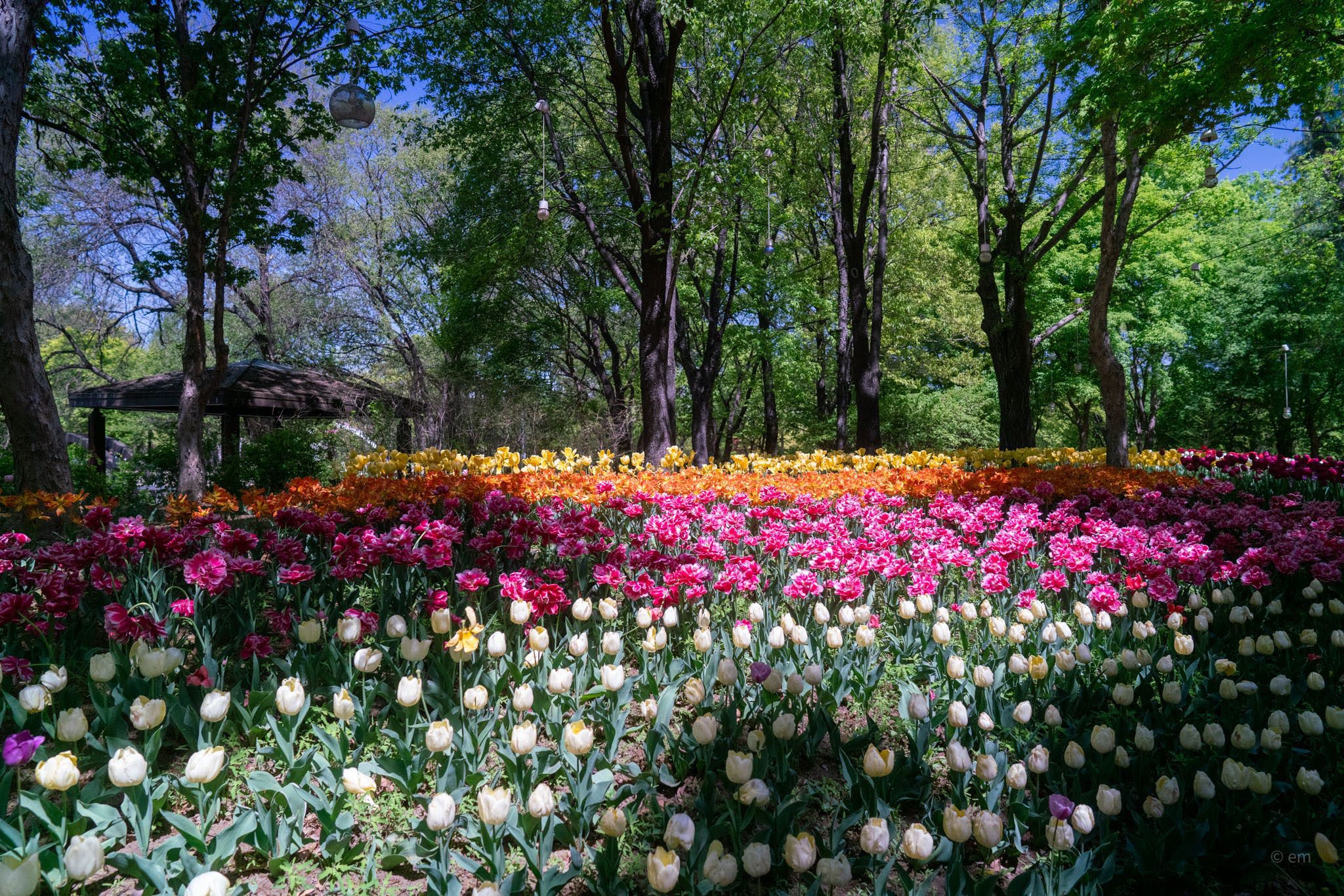
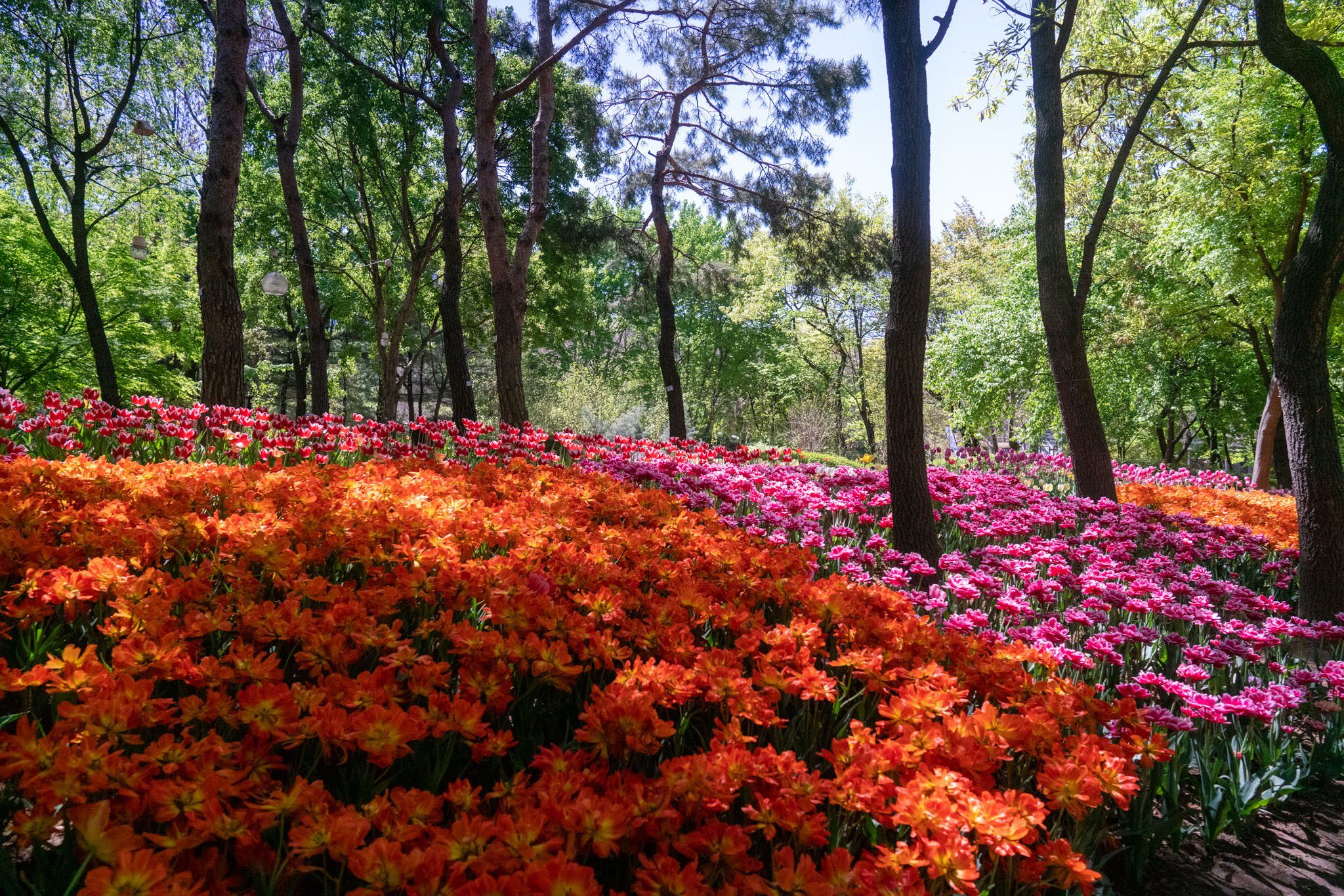
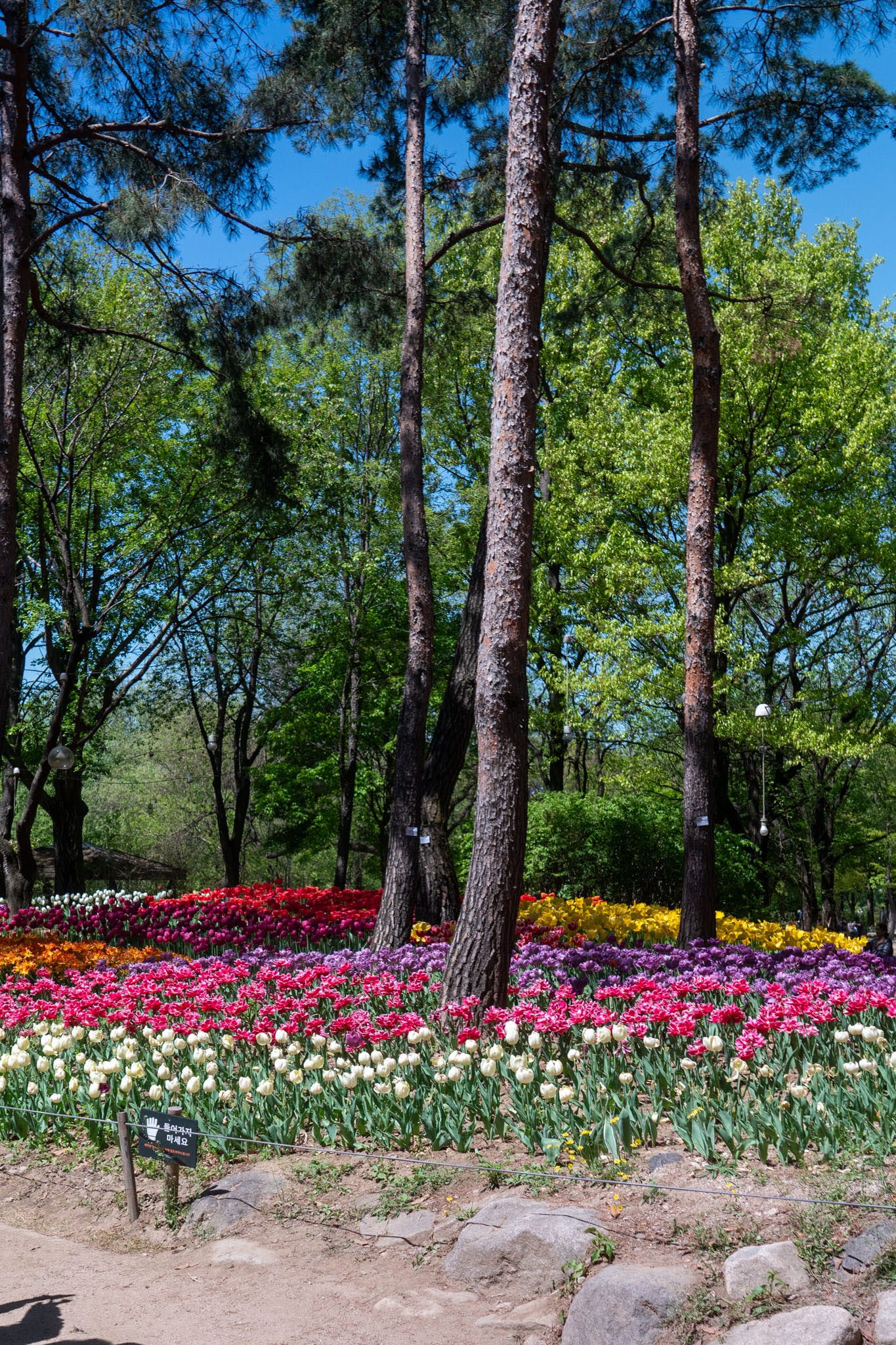
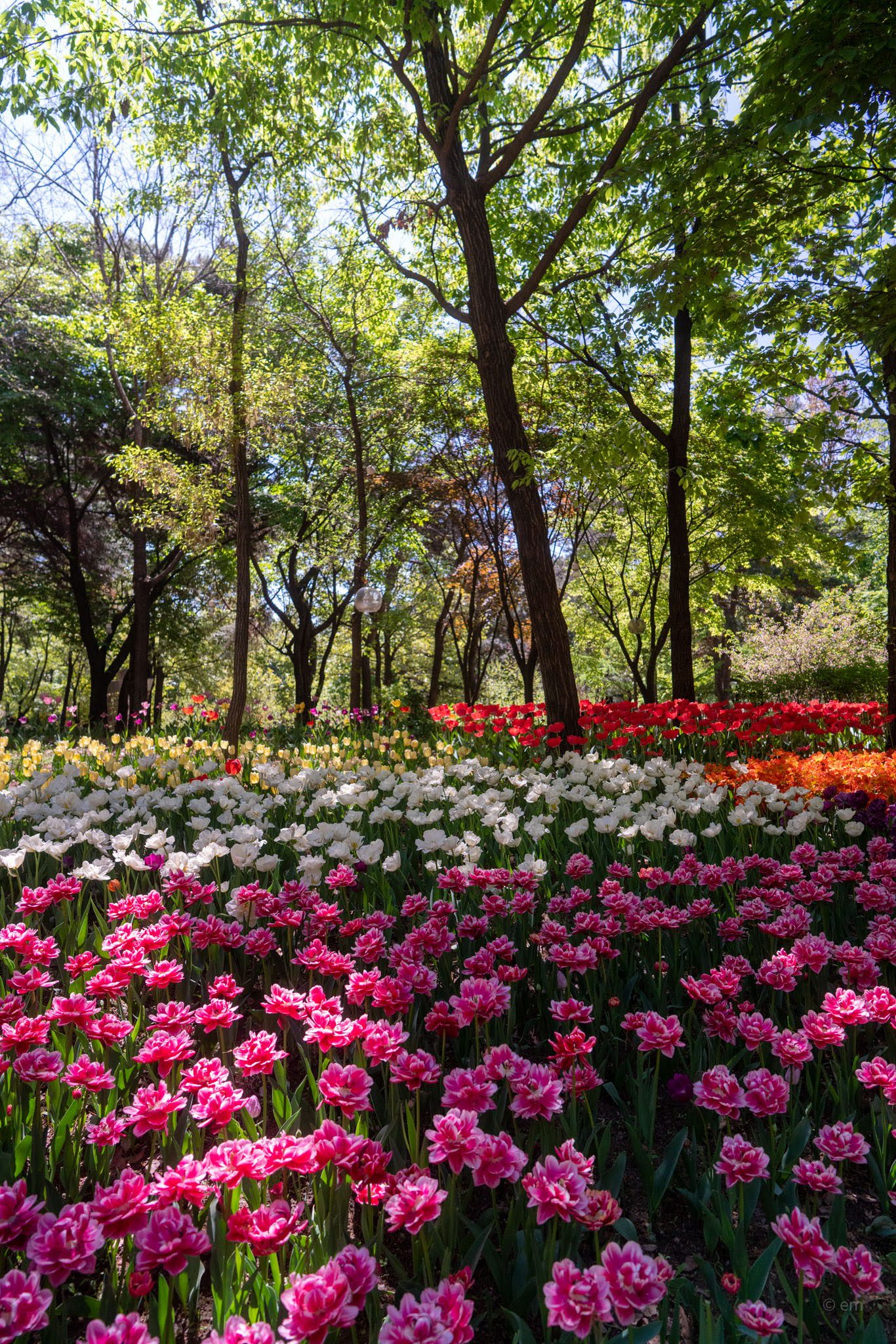
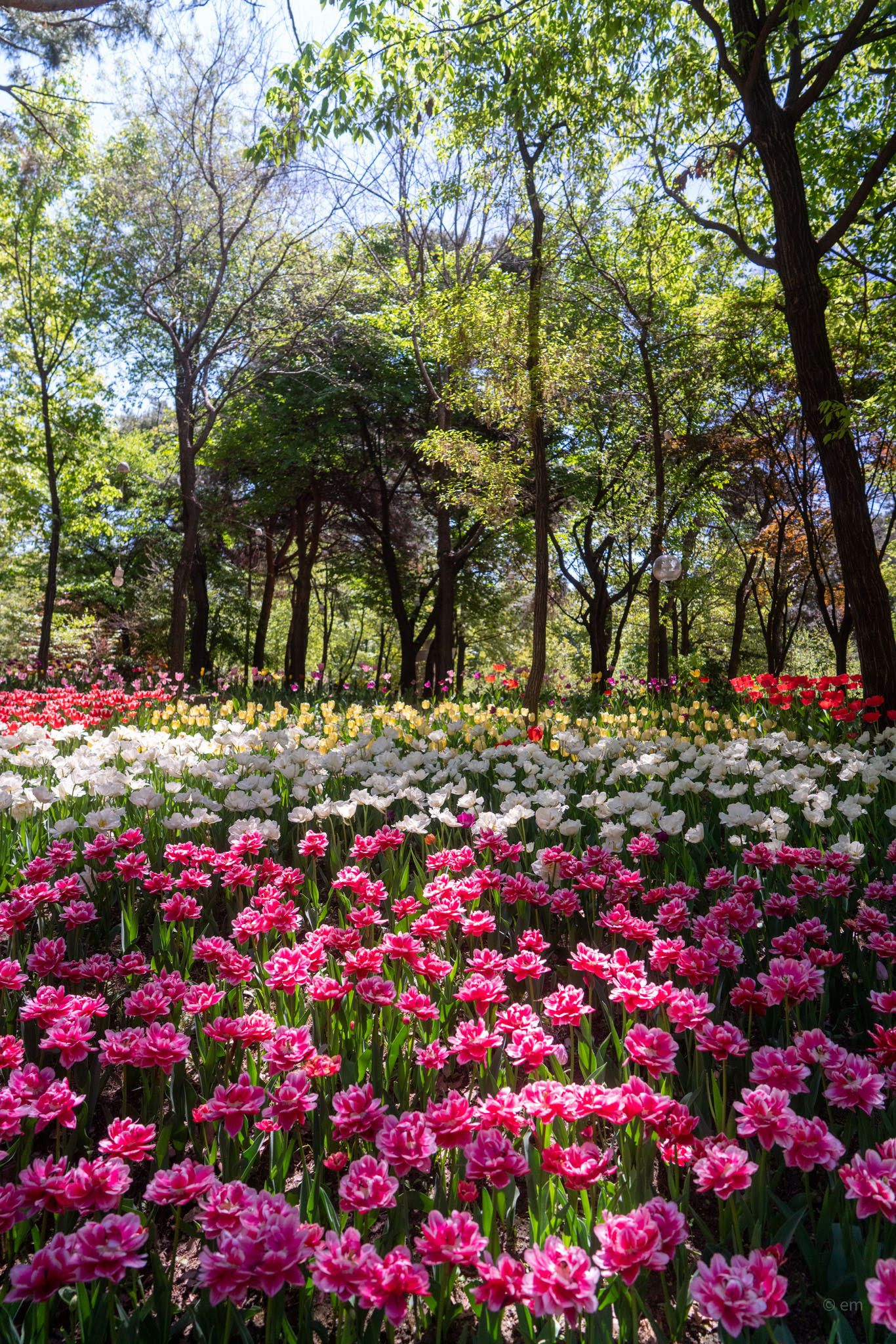
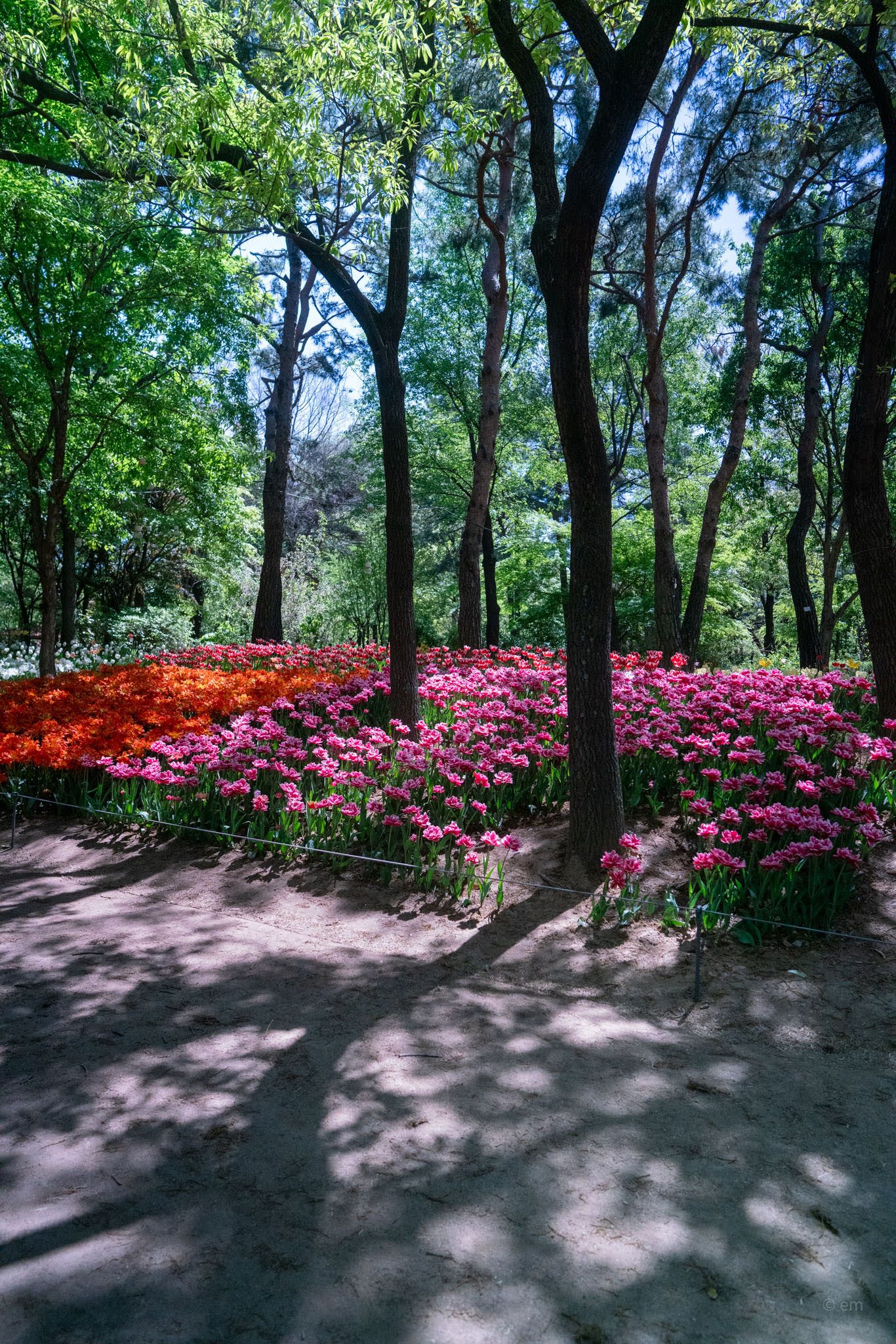
The tulips at Seoul Forest don’t grow in open fields. They grow in the understory, between the trunks of mature pine and plane trees, beneath a canopy that’s just beginning to fill out in the specific pale green of early spring. The combination is what makes this place unlike any other tulip spot in Seoul — the color doesn’t meet the sky, it meets the forest. Horizontal bands of white and cream and yellow give way to magenta and deep burgundy and orange, each color running in wide strips across gentle slopes, the whole composition framed by dark trunks and dappled shadow.
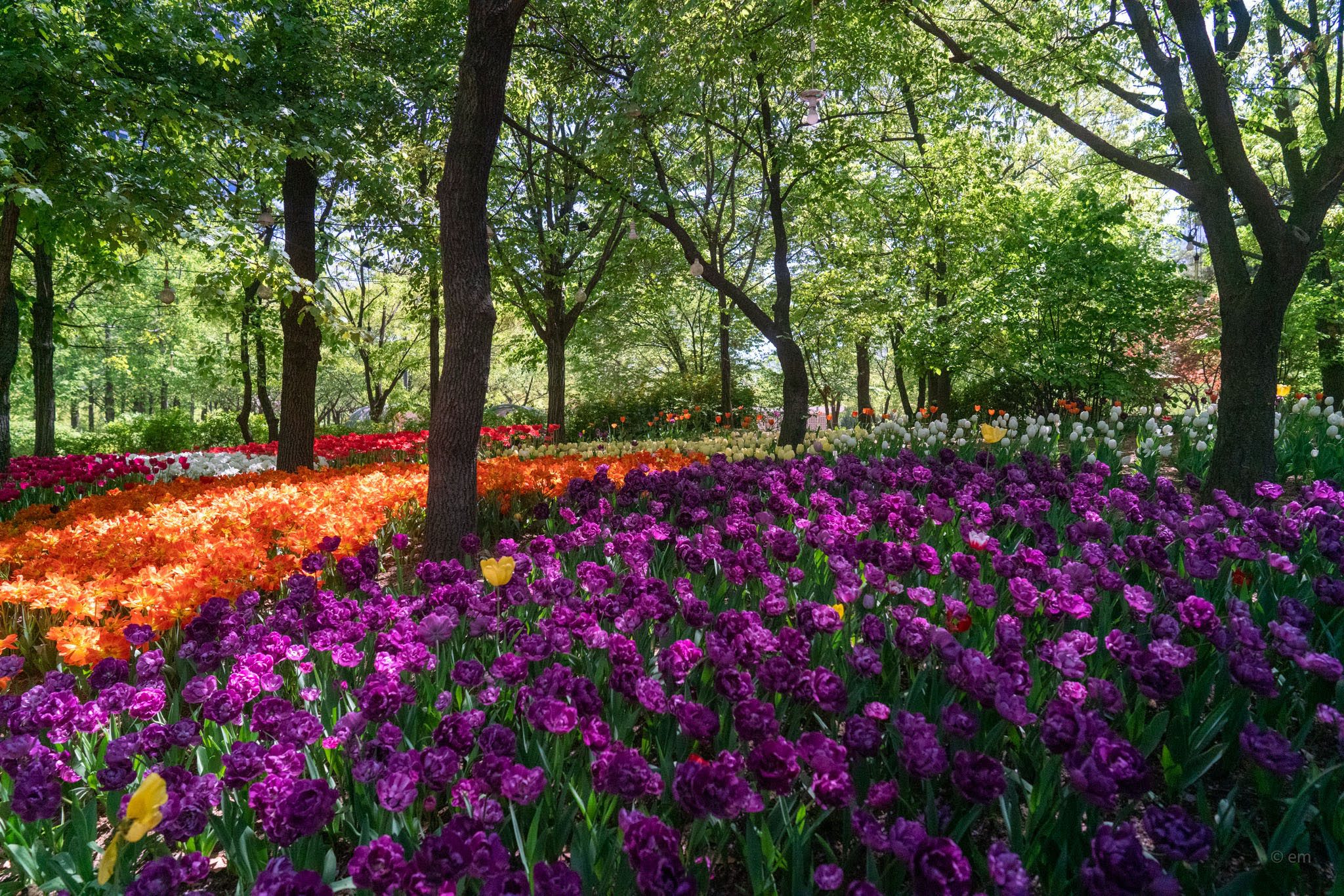
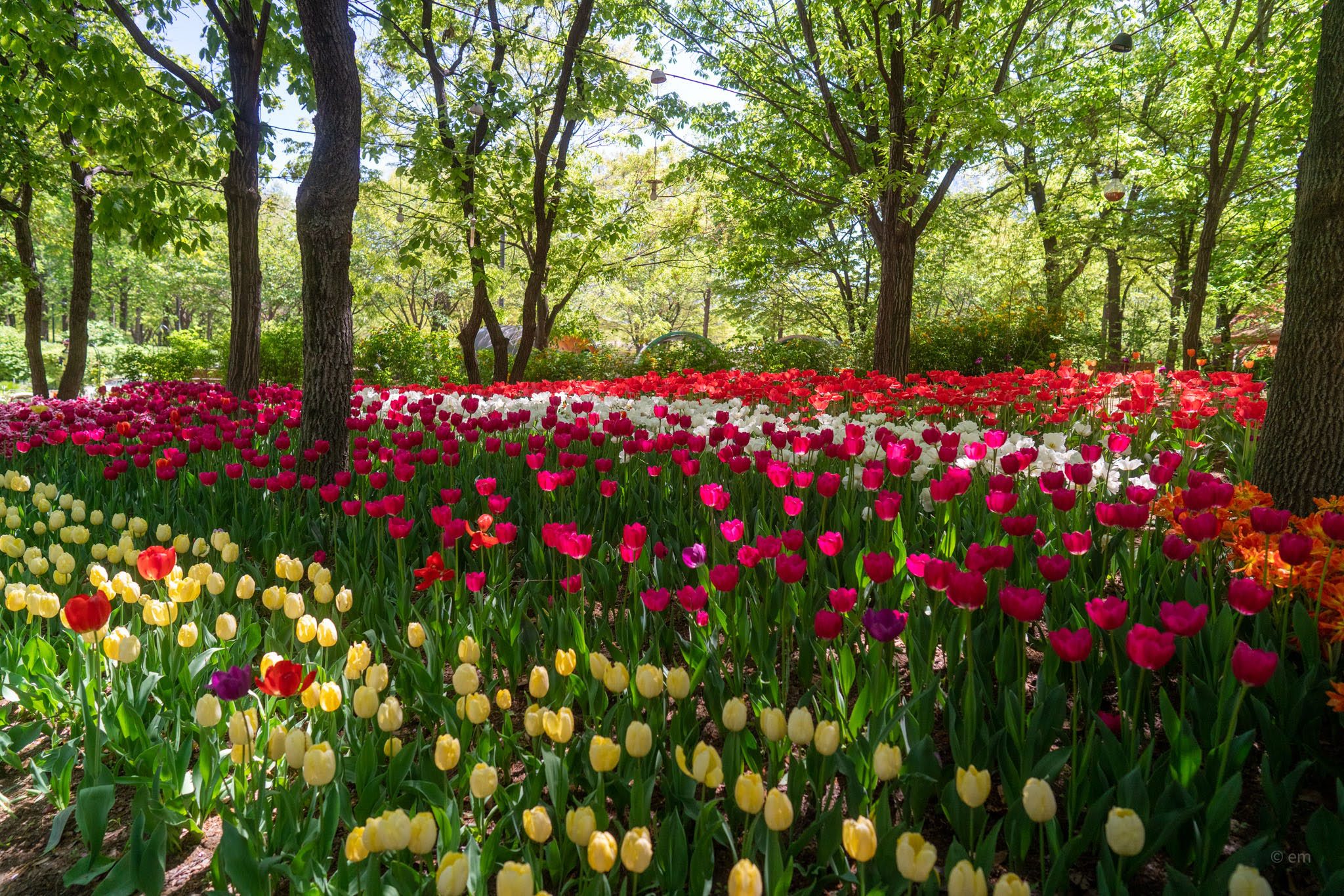
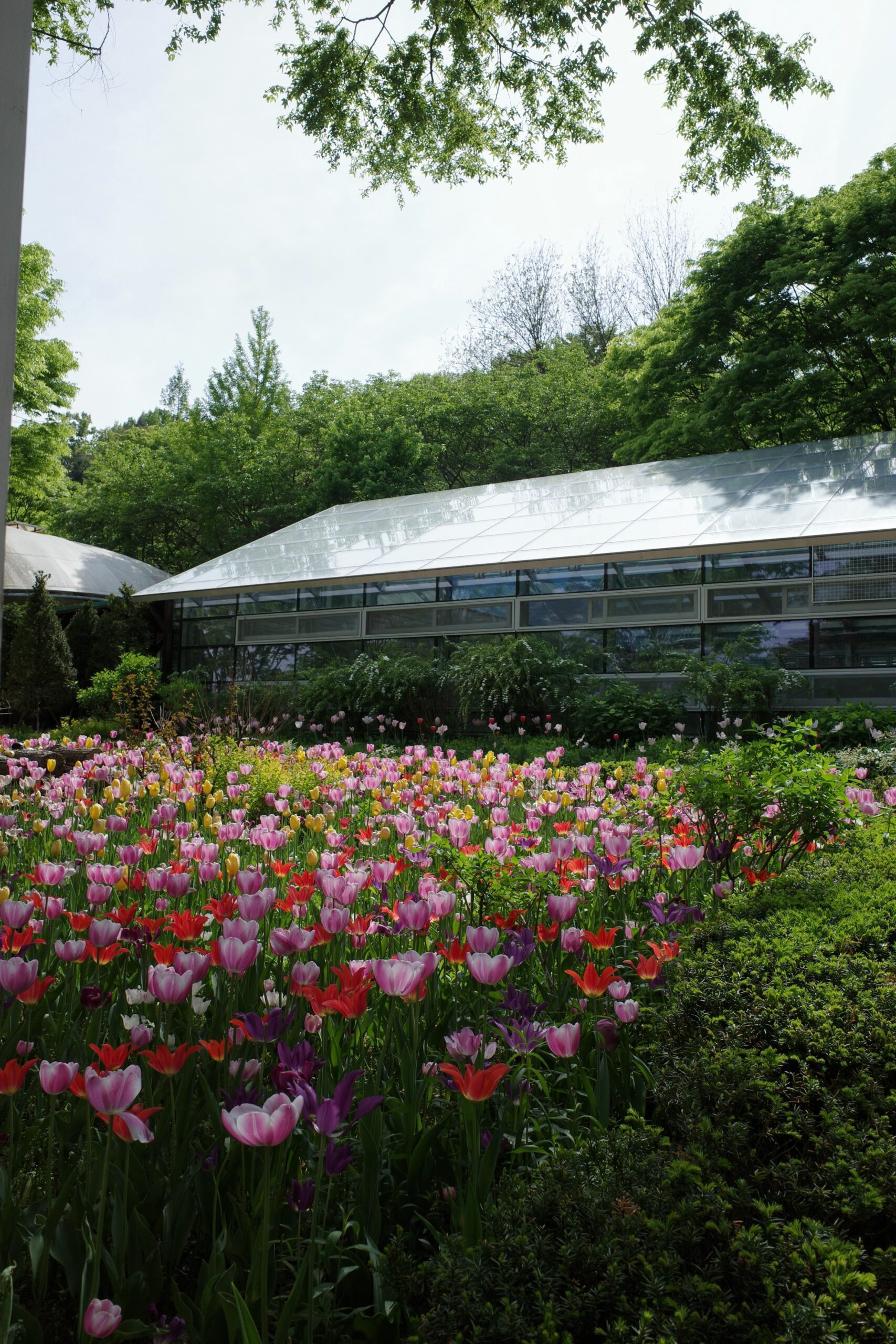
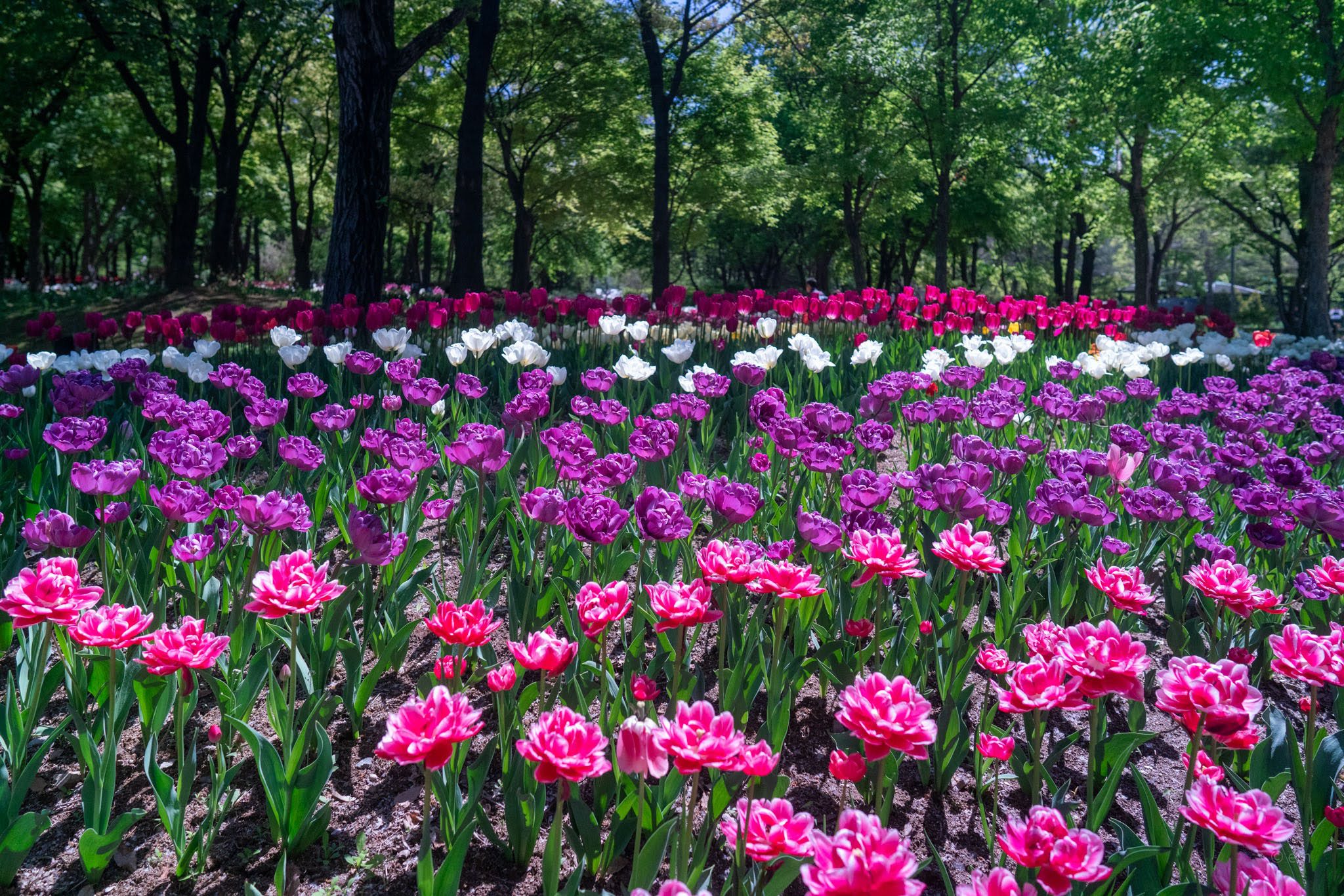
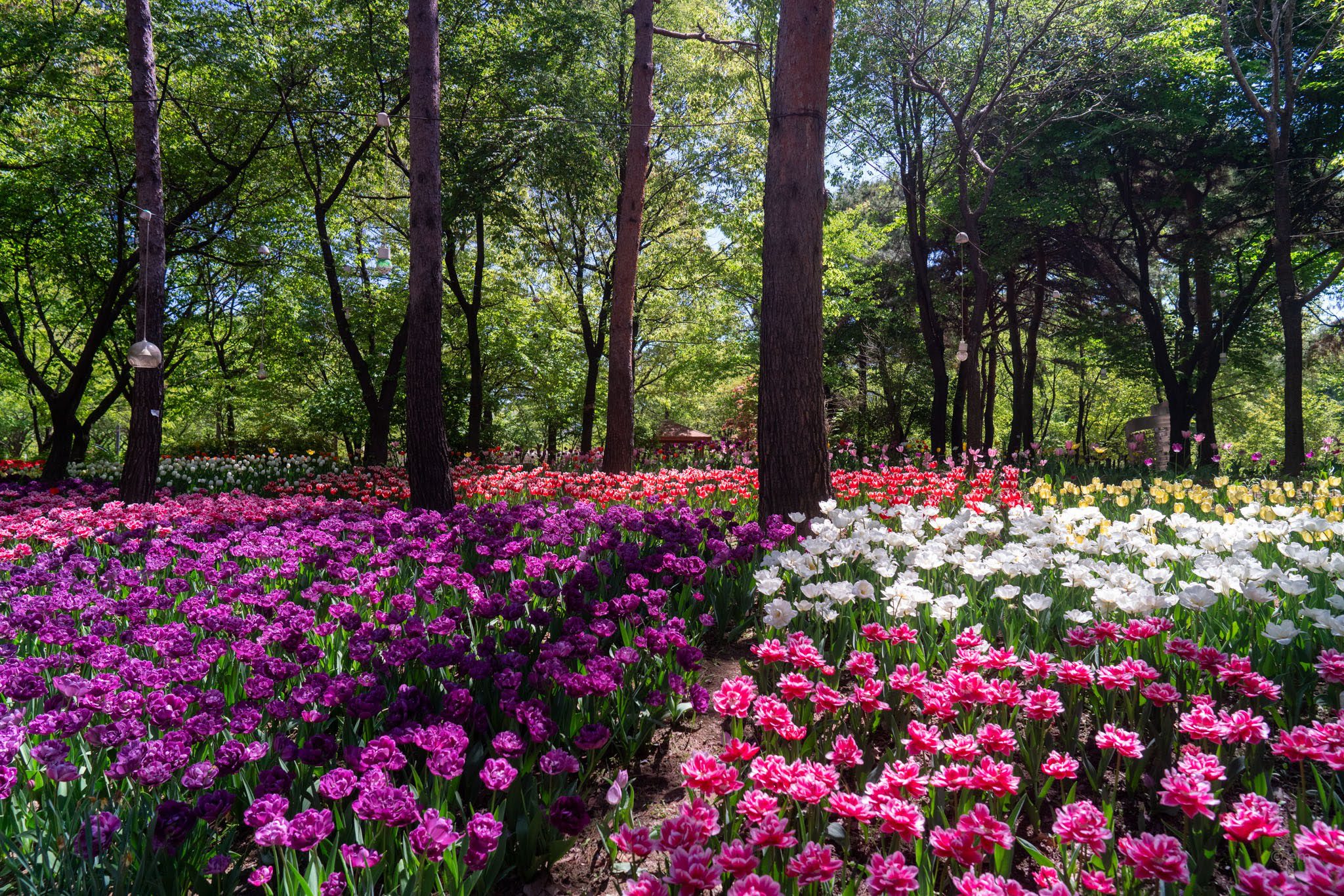
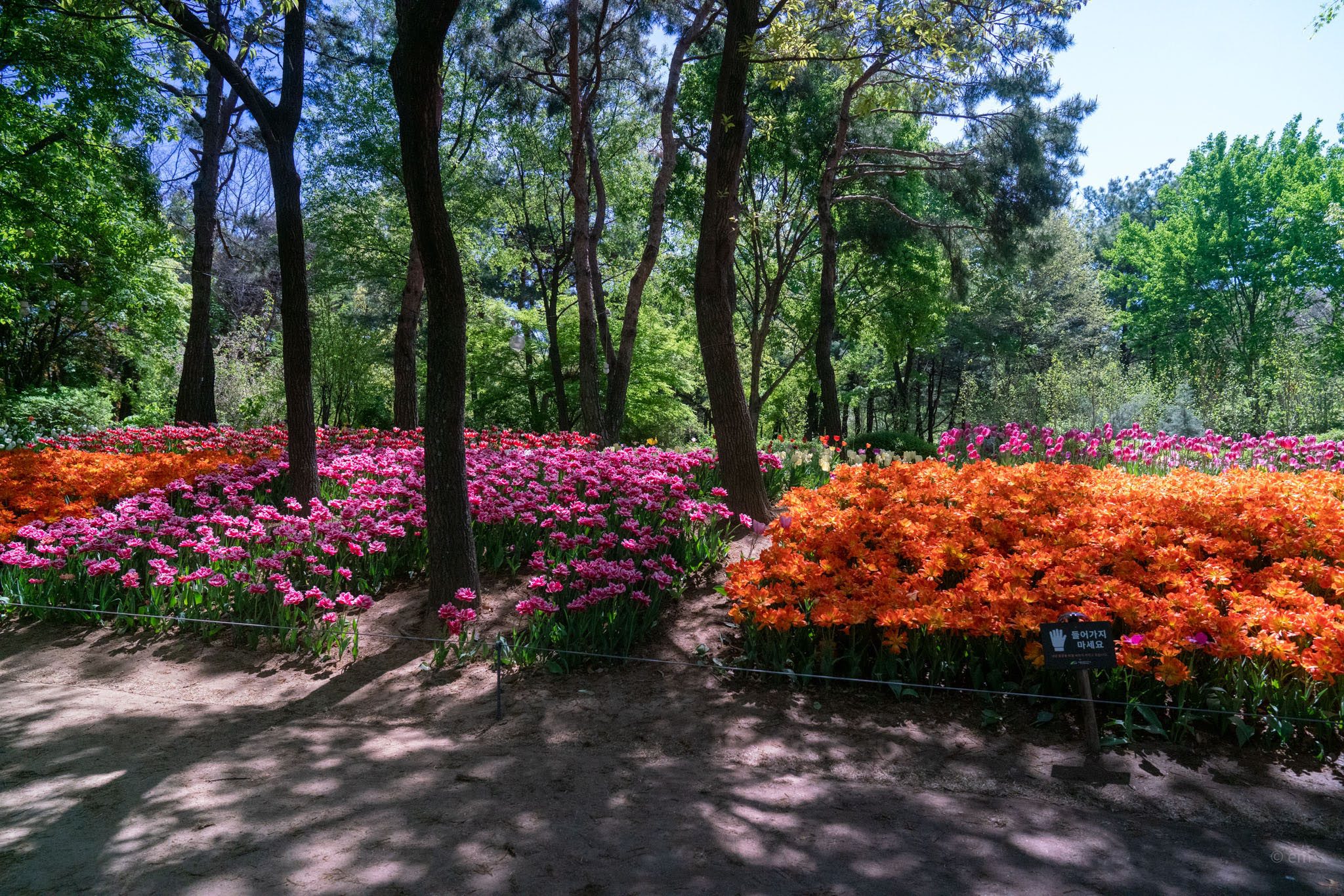
The variety is serious. Simple single tulips crowd the open sections near the Mirror Lake. Move deeper into the Eco Forest and the beds shift to double-peony varieties — the fully ruffled forms in plum, grape, and hot pink that look almost too theatrical to be real. Orange parrot tulips, their petals fringed and twisted, mass in banks between the pine rows. Globe-shaped glass lanterns hang from wires strung between the branches overhead, going mostly unnoticed once the flowers take over.
Two Moods, One Park
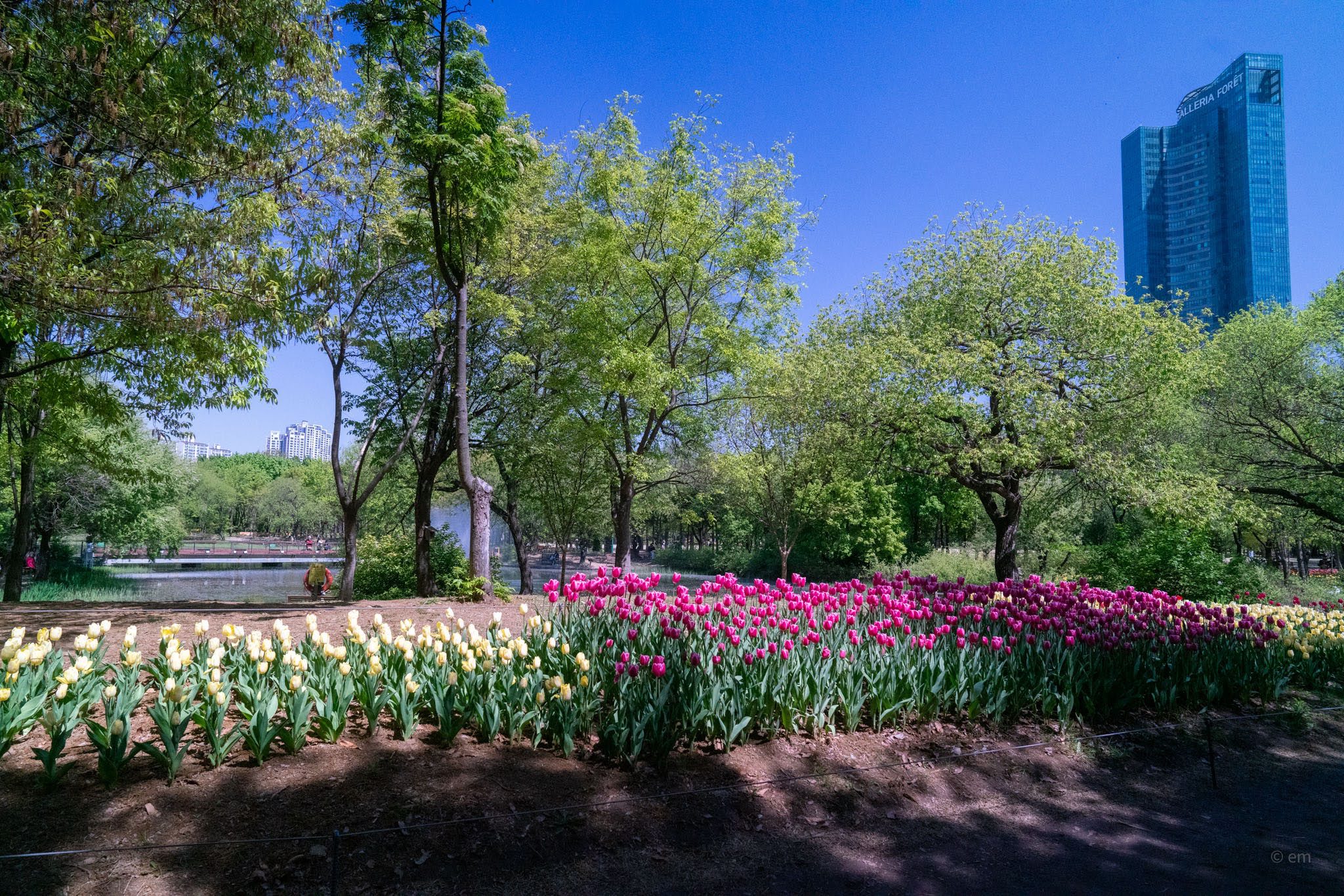
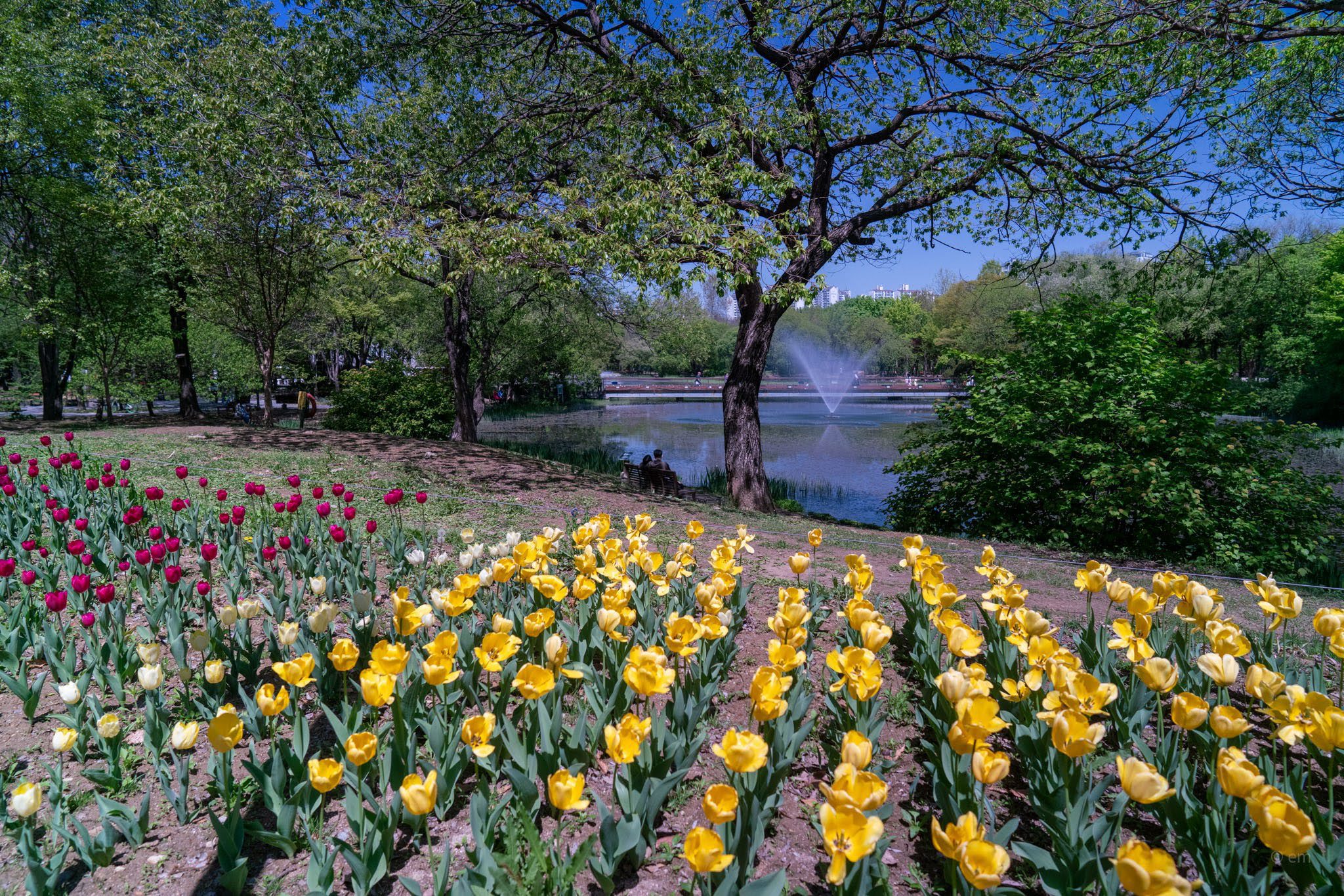
Near the lake the light is open and the beds run wide, the Galleria Forêt tower catching the blue sky beyond the tree line. This is the looser, airier section — a good place to find yellow beds beside cream beside deep red, everything in full sun. Couples sit on benches at the water’s edge. The fountain runs.
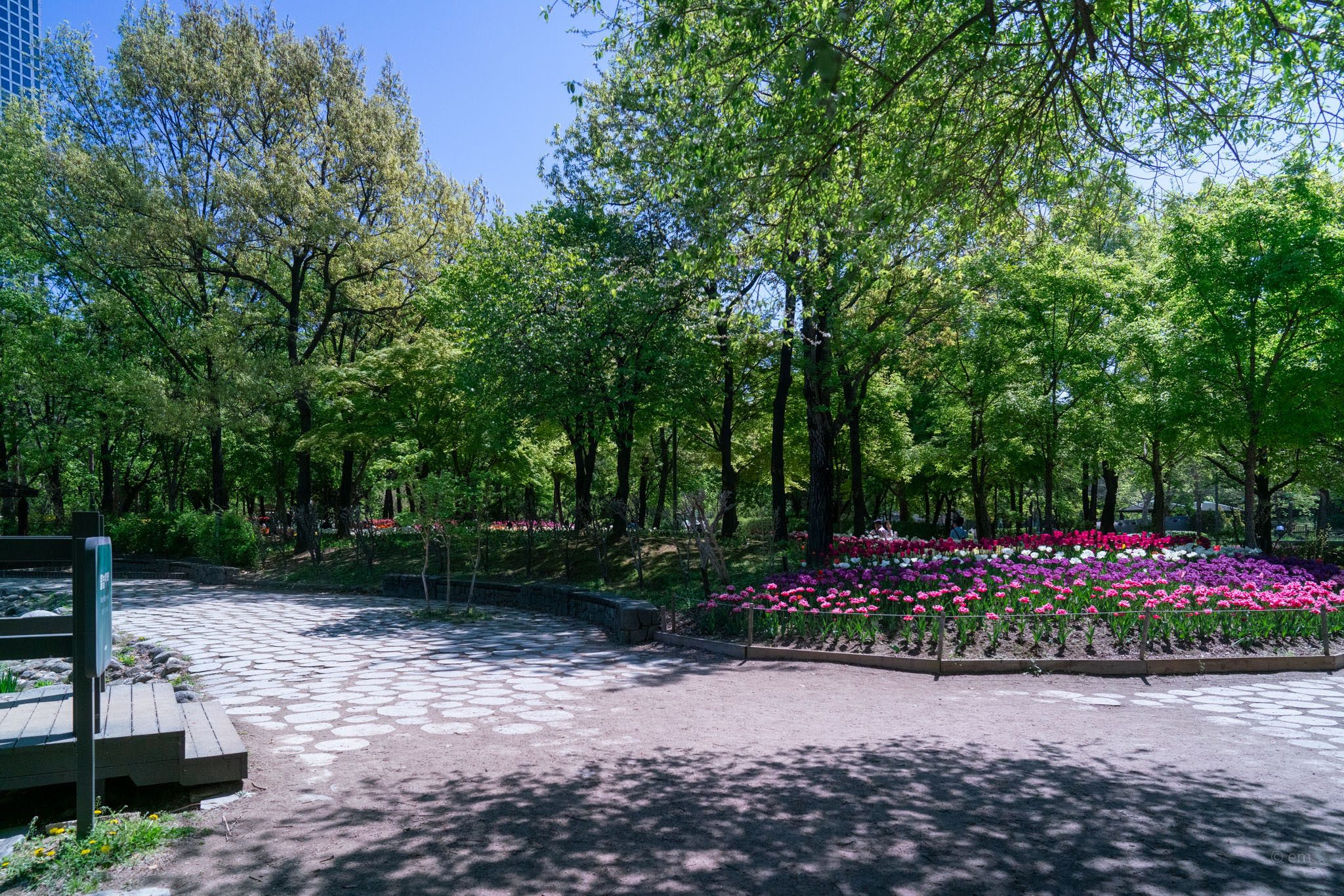
Then the path curves inland and everything changes. The canopy thickens, the pine trunks crowd together, and the tulip beds become almost overwhelming in their density. In this section the flowers grow right up to the bases of the trees, filling every available strip of ground between the roots. Sandy paths run between them, roped off just enough to keep people out of the beds. The scale here is harder to photograph than it looks — the forest absorbs the light unevenly, and what the eye reads as continuous color breaks up into shadow and brightness at close range.
When and How
Bloom typically begins in early to mid-April and peaks in the third and fourth weeks of the month, though the window shifts each year with the weather. The entire display is free. Weekday mornings are quieter; late April weekends draw significant crowds. Morning light in the forest interior — especially on the orange and red beds under the pines — is worth the early arrival.
Address: 273 Ttukseom-ro, Seongdong-gu, Seoul
Hours: Eco Forest daily 05:30–21:30
Access: Suin-Bundang Line, Seoul Forest Station, Exit 4
Admission: Free
The city barely notices. The forest puts on the whole show anyway.