Cross the stream, climb a little, and the city disappears behind you.
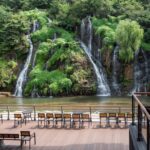
Yeonhui Forest Rest Area (연희숲속쉼터) sits on the lower slopes of Ansan — Seodaemun’s 295-metre neighbourhood mountain — tucked just above Hongjecheon stream and a short walk from the waterfall. The access route says everything about the place: from the café terrace or the watermill, a set of stepping stones crosses the water, a path rises through trees, and within minutes the sound of traffic has receded and the garden opens ahead. For a space this close to the centre of Seoul, the transition is startling.
The area is formally managed as a public rest site by Seodaemun-gu, and it shows — in the maintained planting beds, the wooden boardwalk paths, the small octagonal pavilion overlooking the valley. But it doesn’t feel institutional. The garden has grown into itself over time, and the combination of cultivated flower beds and the broader mountain forest behind them gives it the layered quality of somewhere that has been quietly tended rather than designed all at once.
The Tulip Season
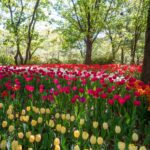
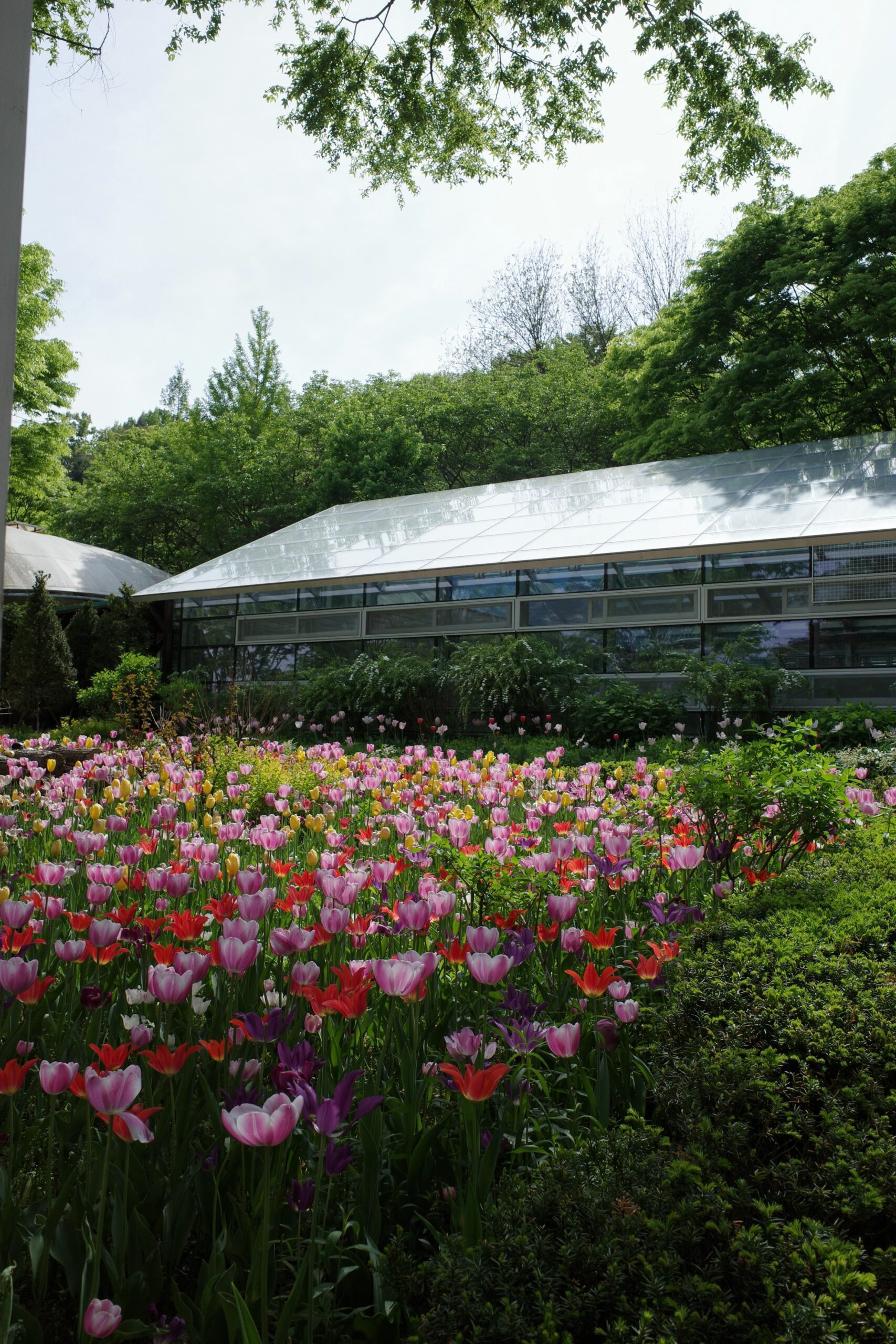
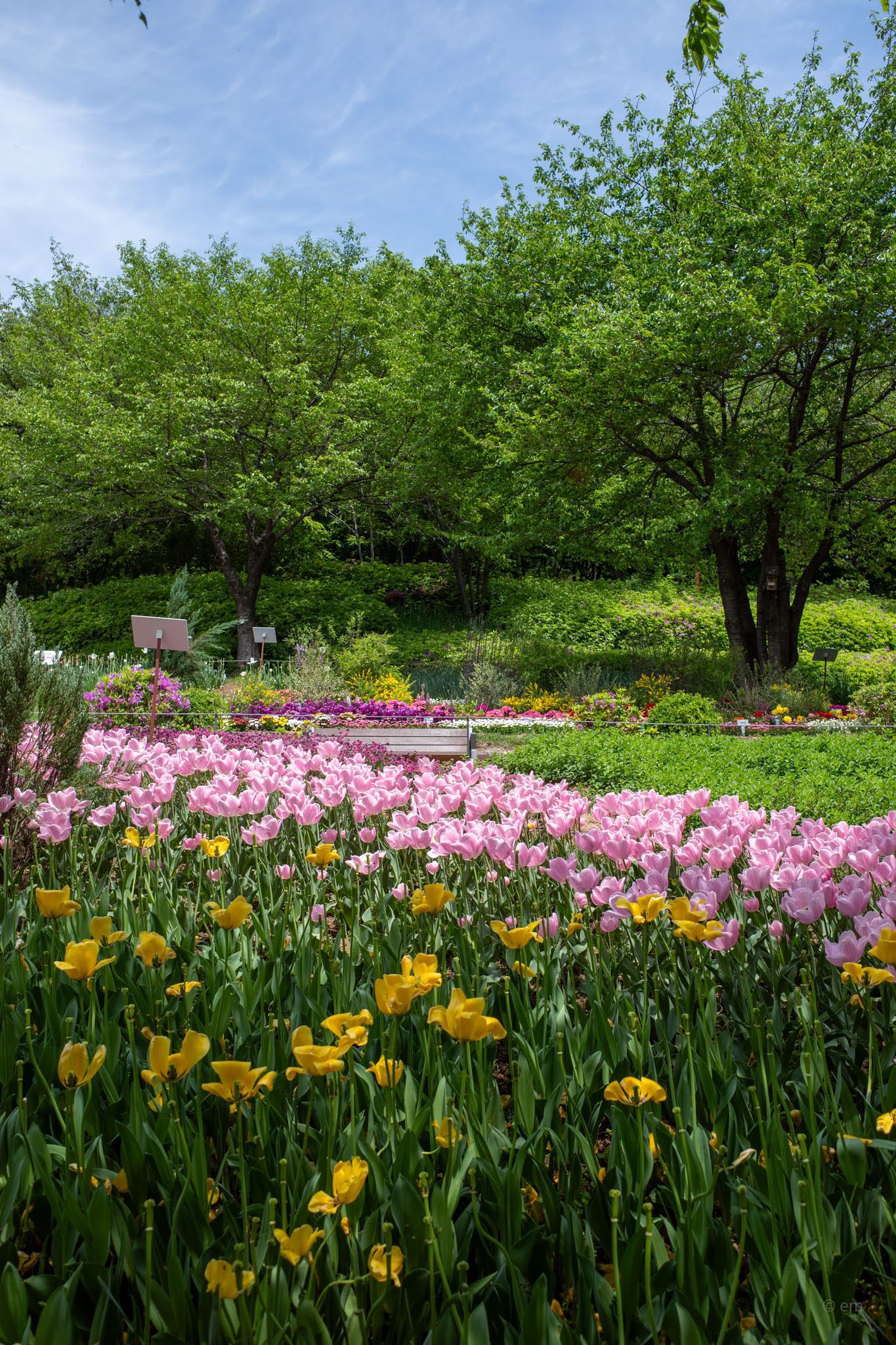
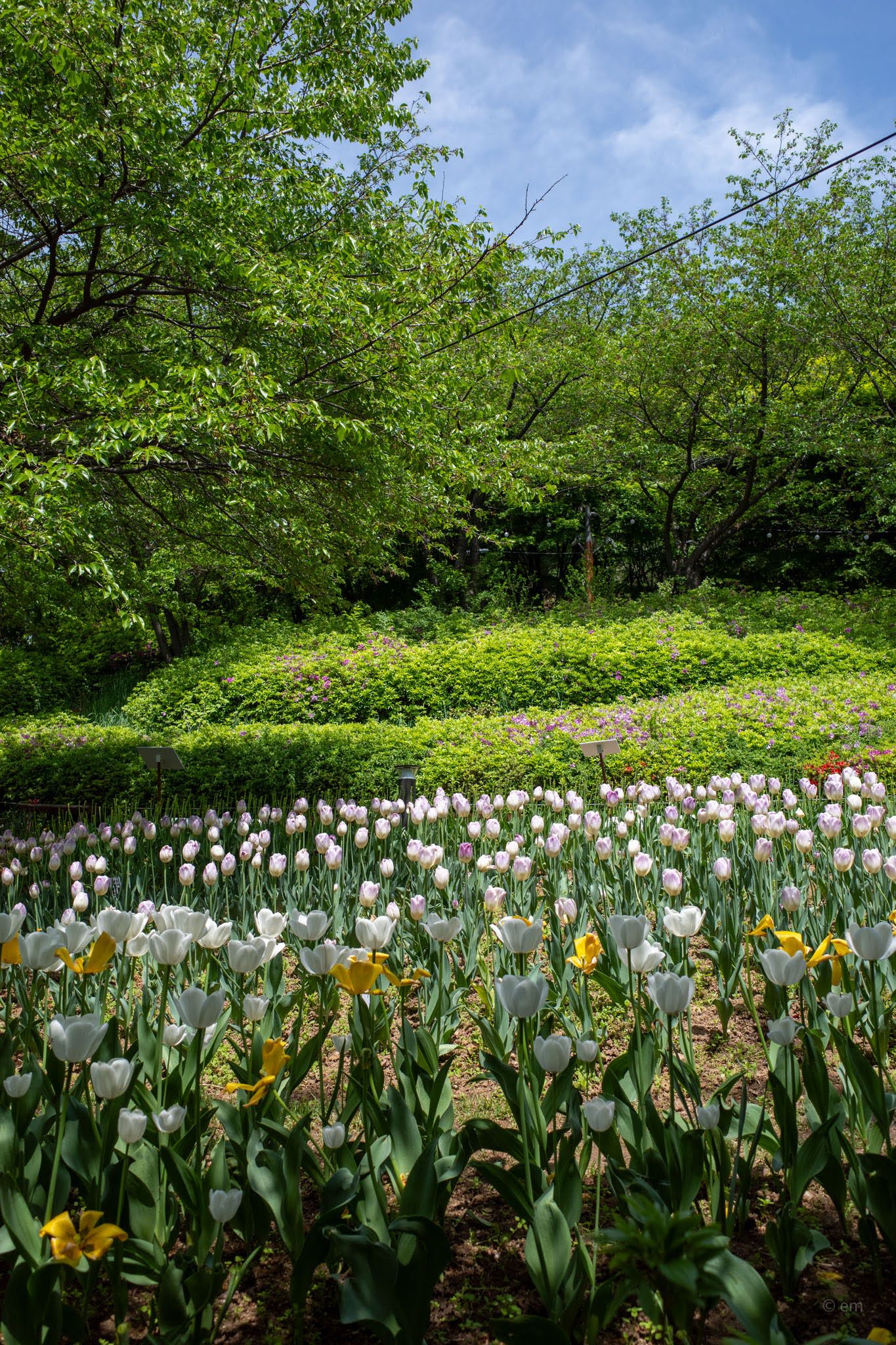
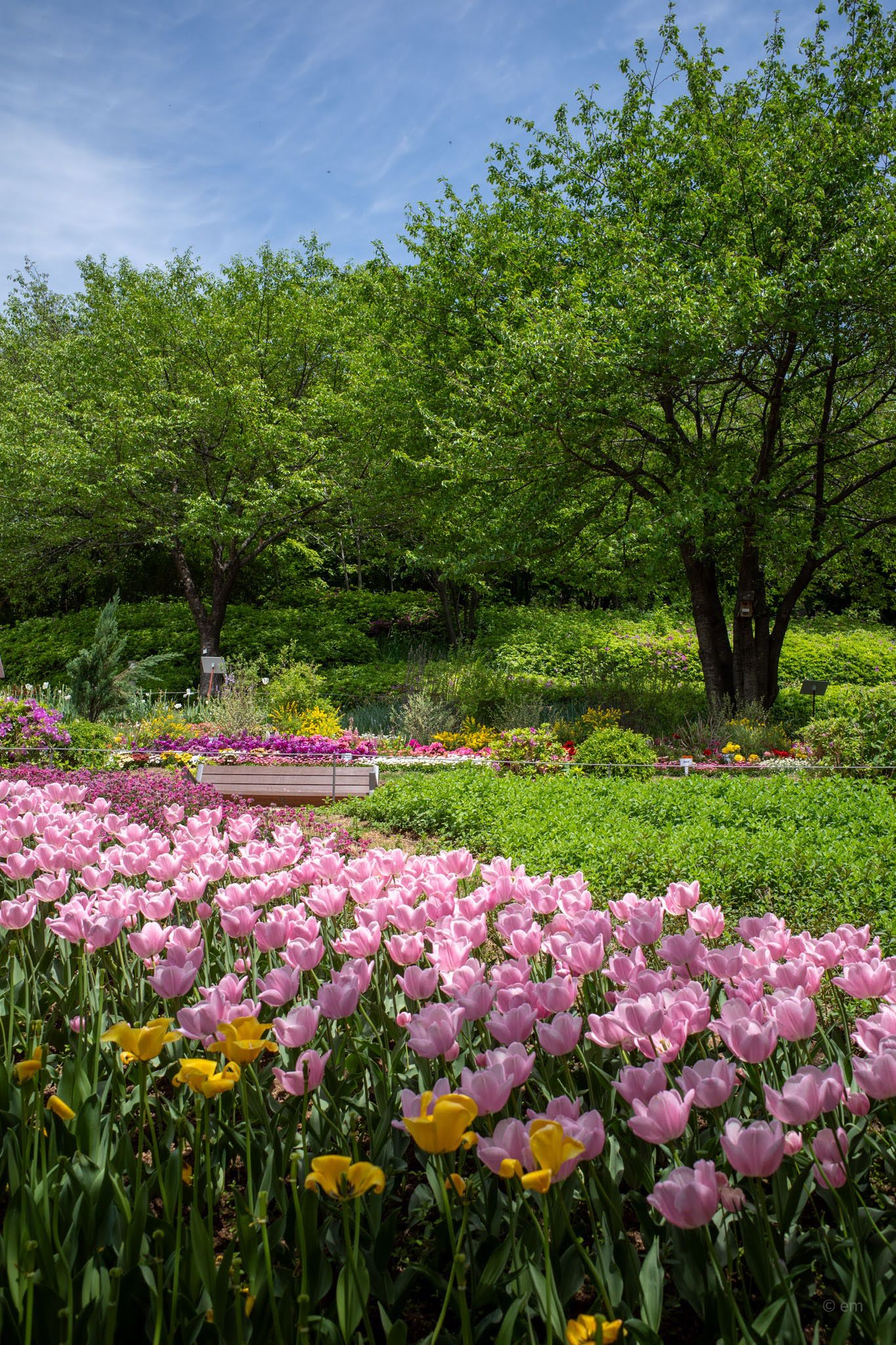
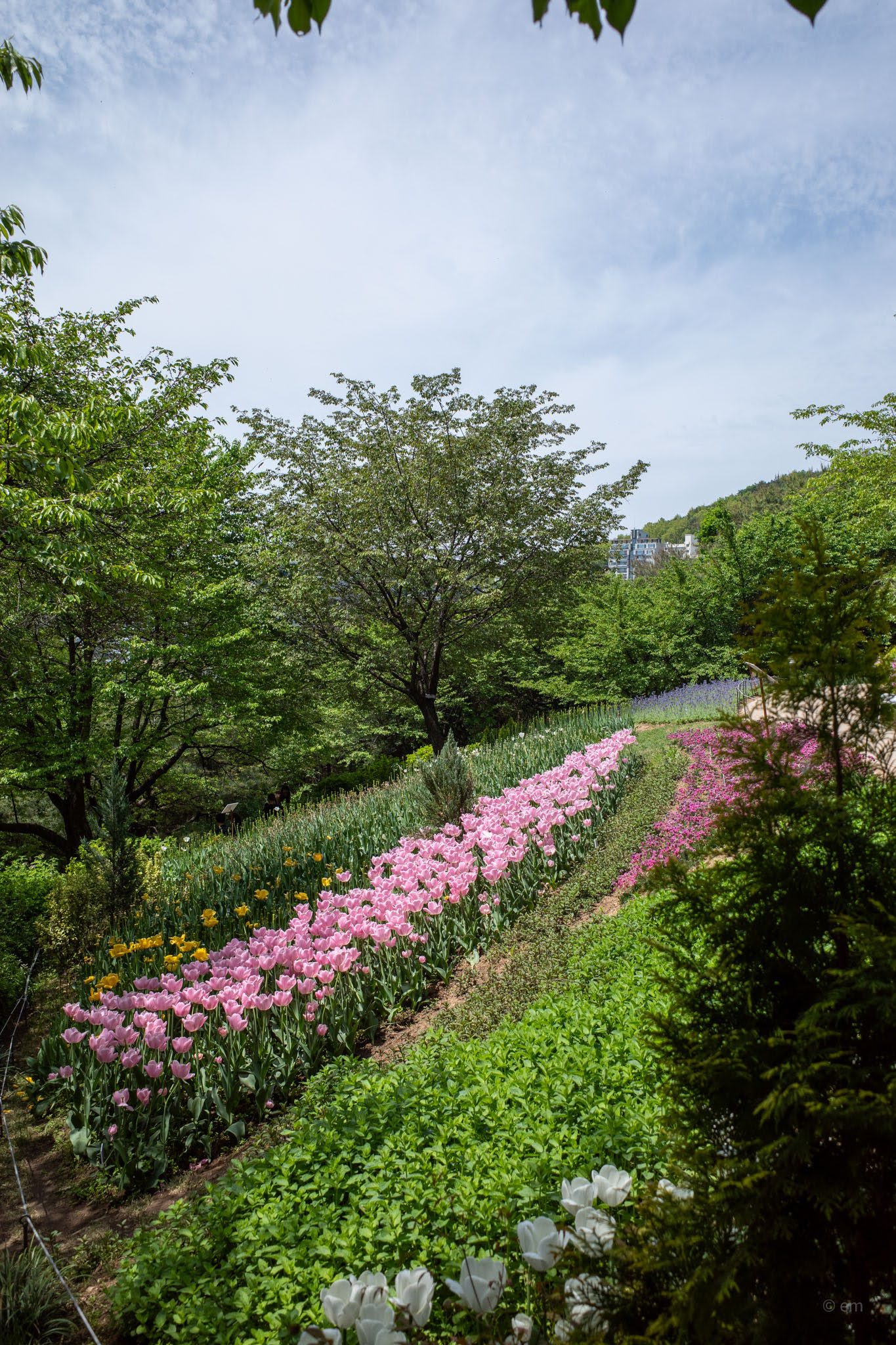
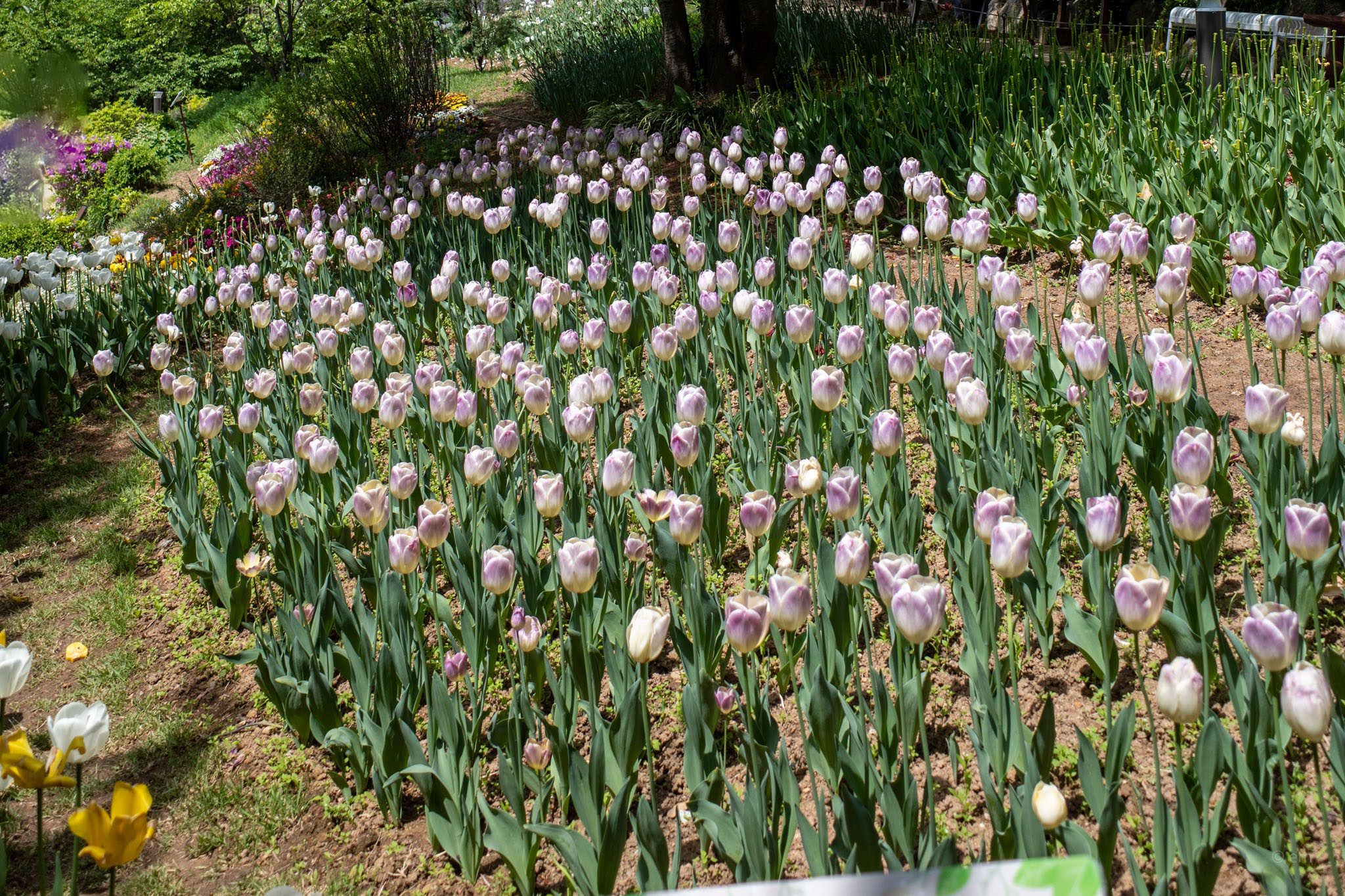
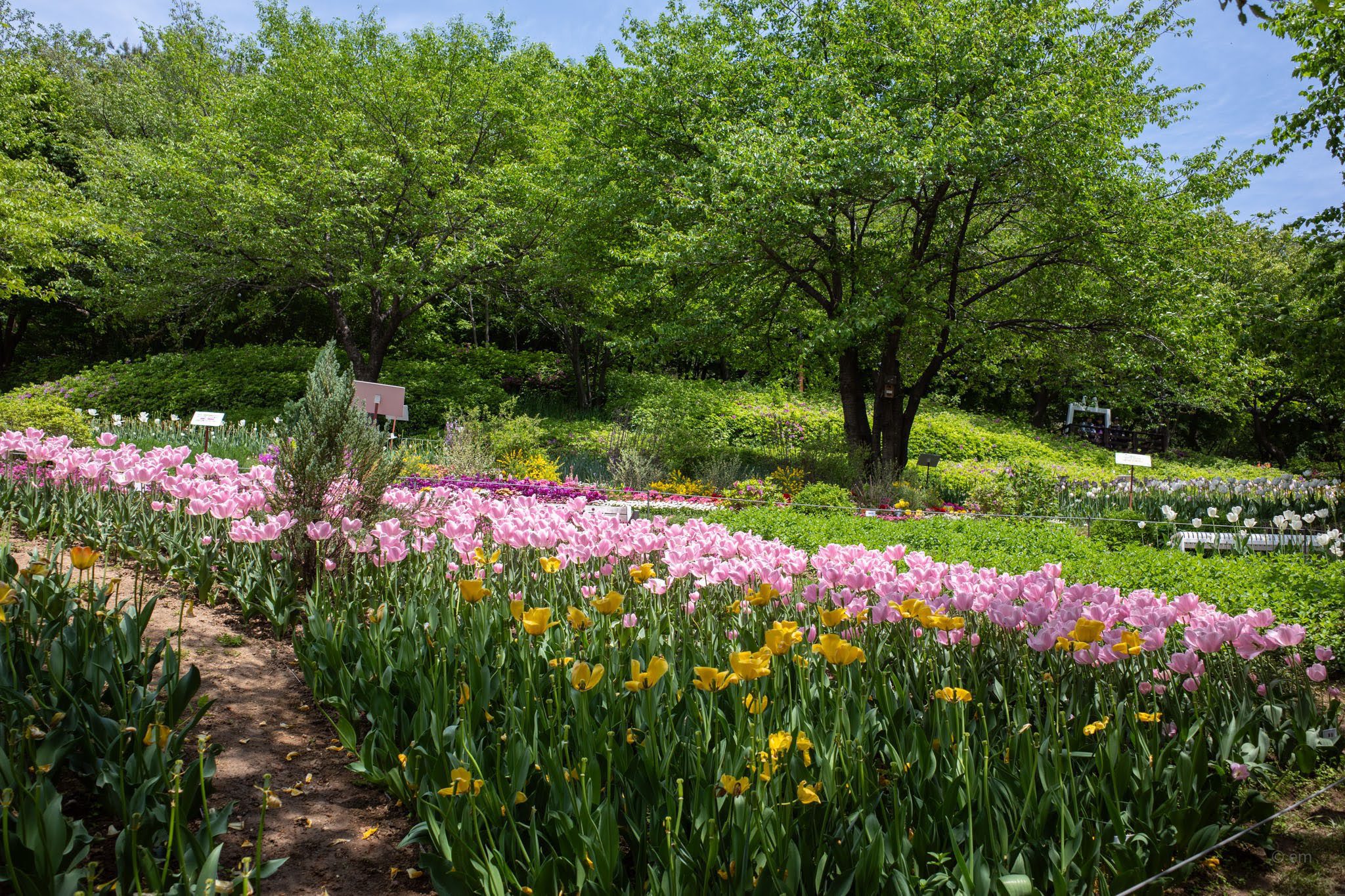
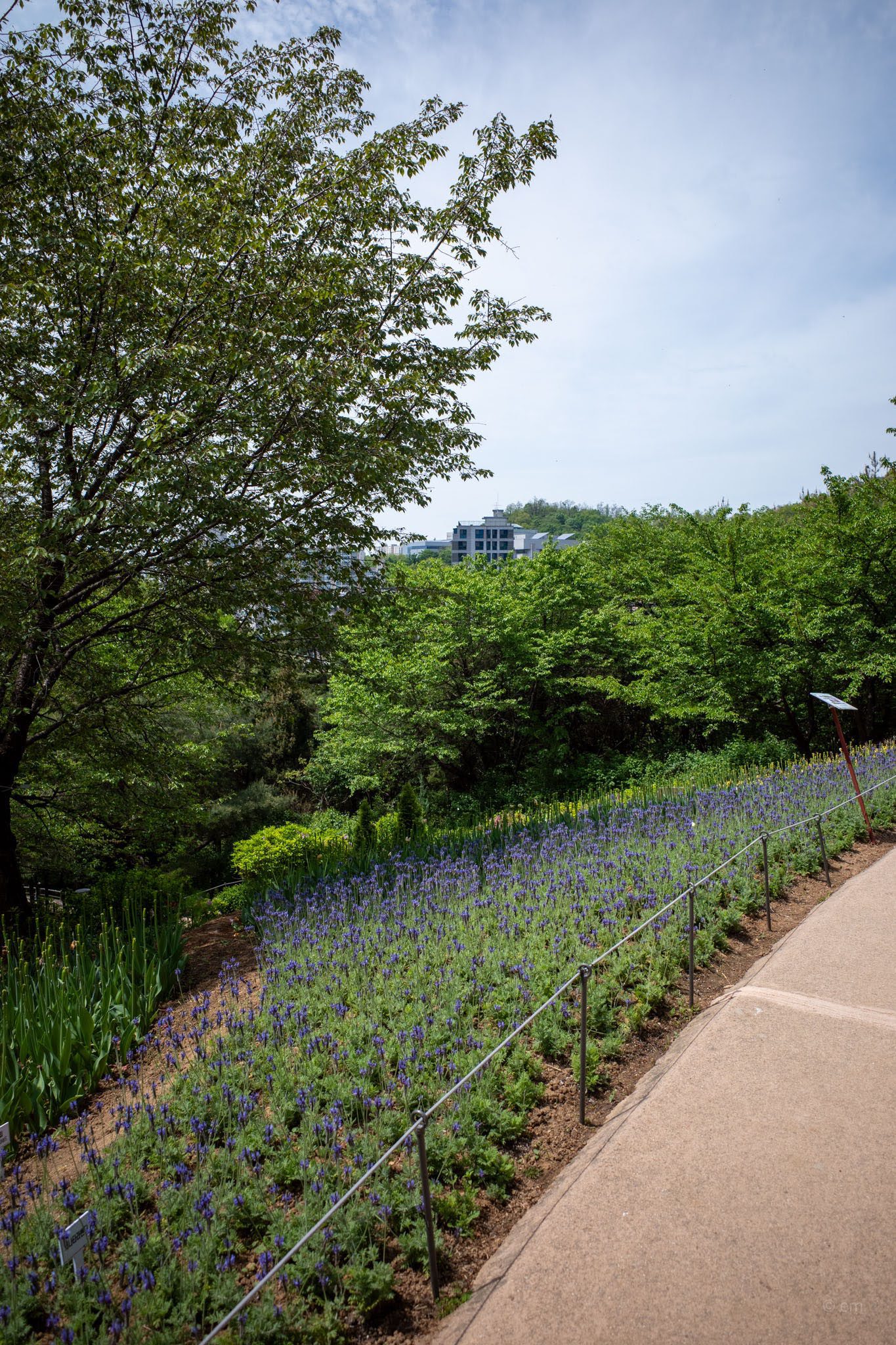
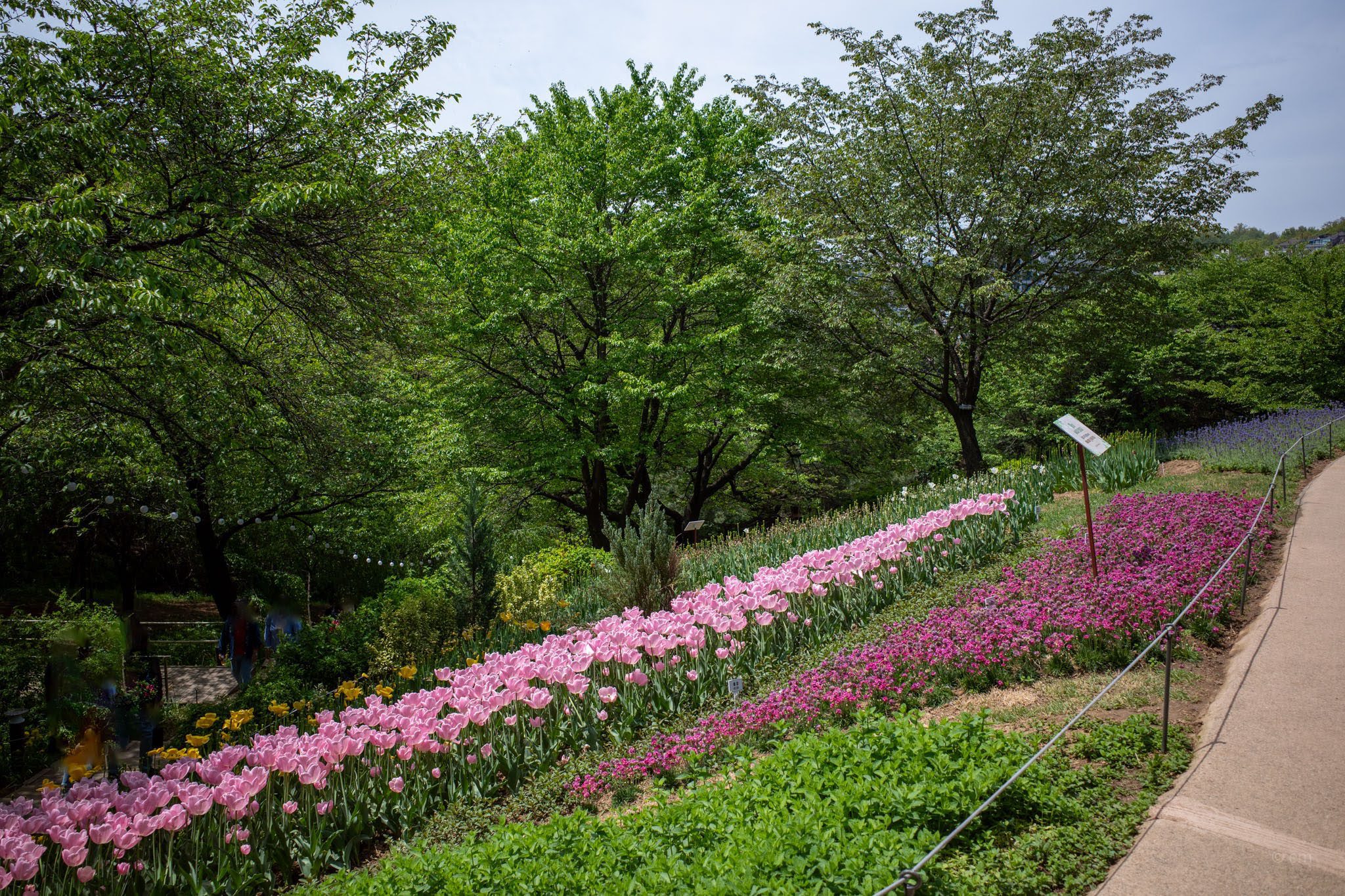
Spring is when the garden earns its reputation. Tulips here run in long diagonal sweeps down the hillside — pale lavender and white in the upper beds, deep pink and yellow below, with a field of purple-blue extending further along the path. The colour sequencing reads almost like topography from above, and in full bloom the effect is dense enough that the beds seem to be pulling the hill downward toward the stream. Cherry trees frame the garden from above; in the brief window when the blossoms are still open and the tulips are at their peak, the two overlap in a way that rarely photographs as well as it looks in person.
The timing is tight. Cherry blossoms tend to peak in late March or early April; tulips follow, usually reaching their height in mid-April. The weekend crowd at peak bloom is substantial — the weekday mornings are quieter, and the paths narrow enough that the difference matters.
Cherry Blossom Season
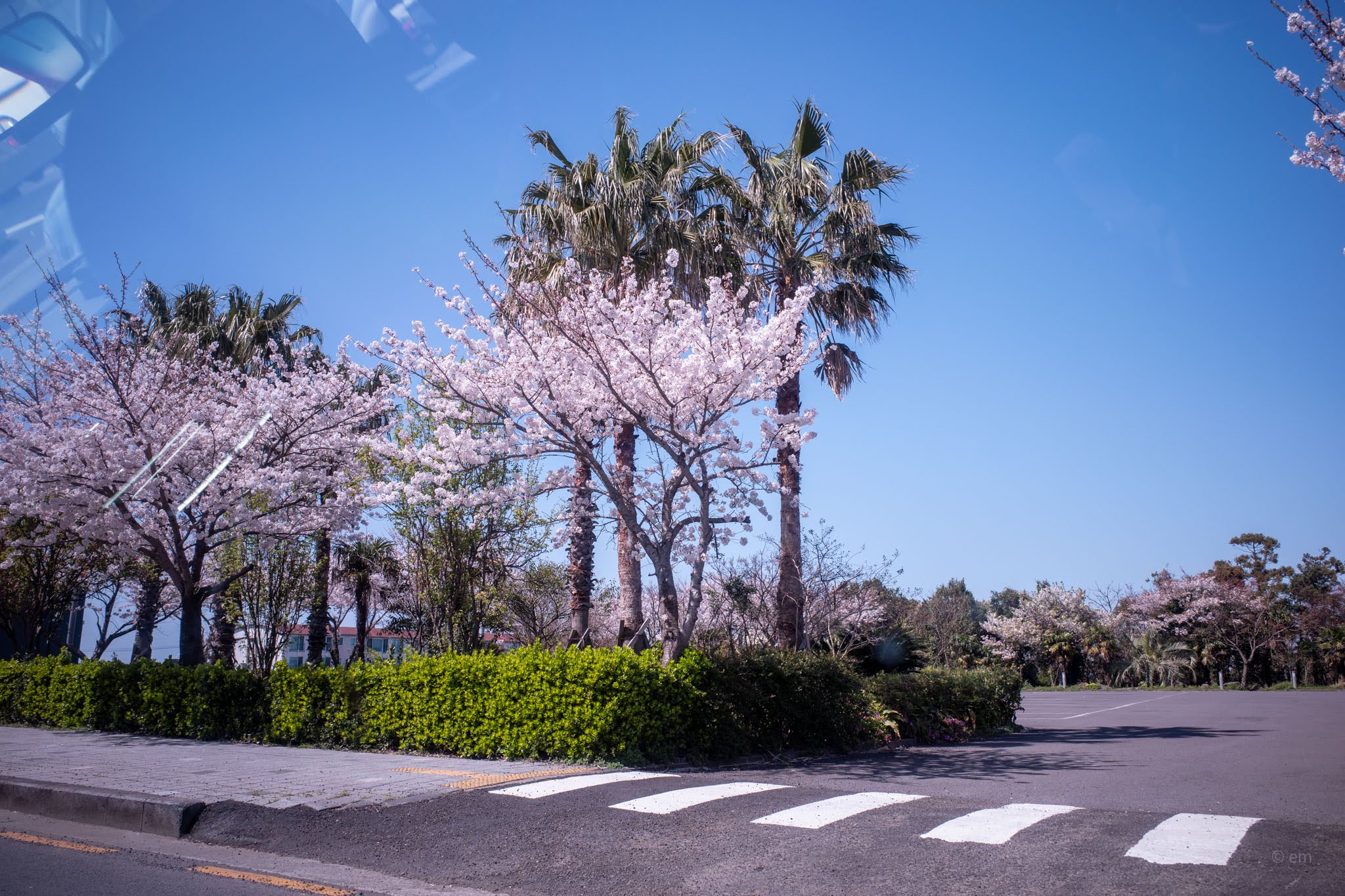
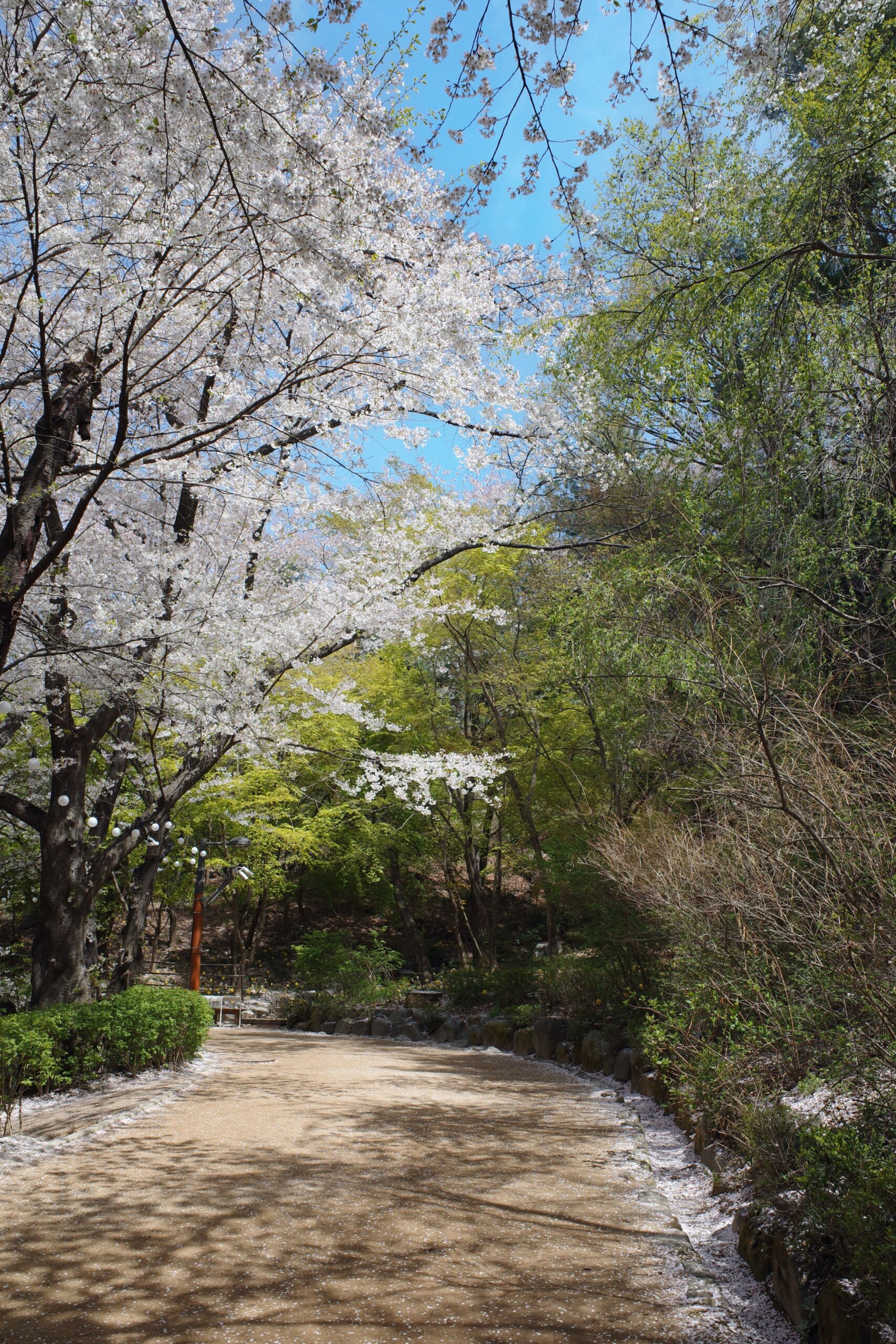
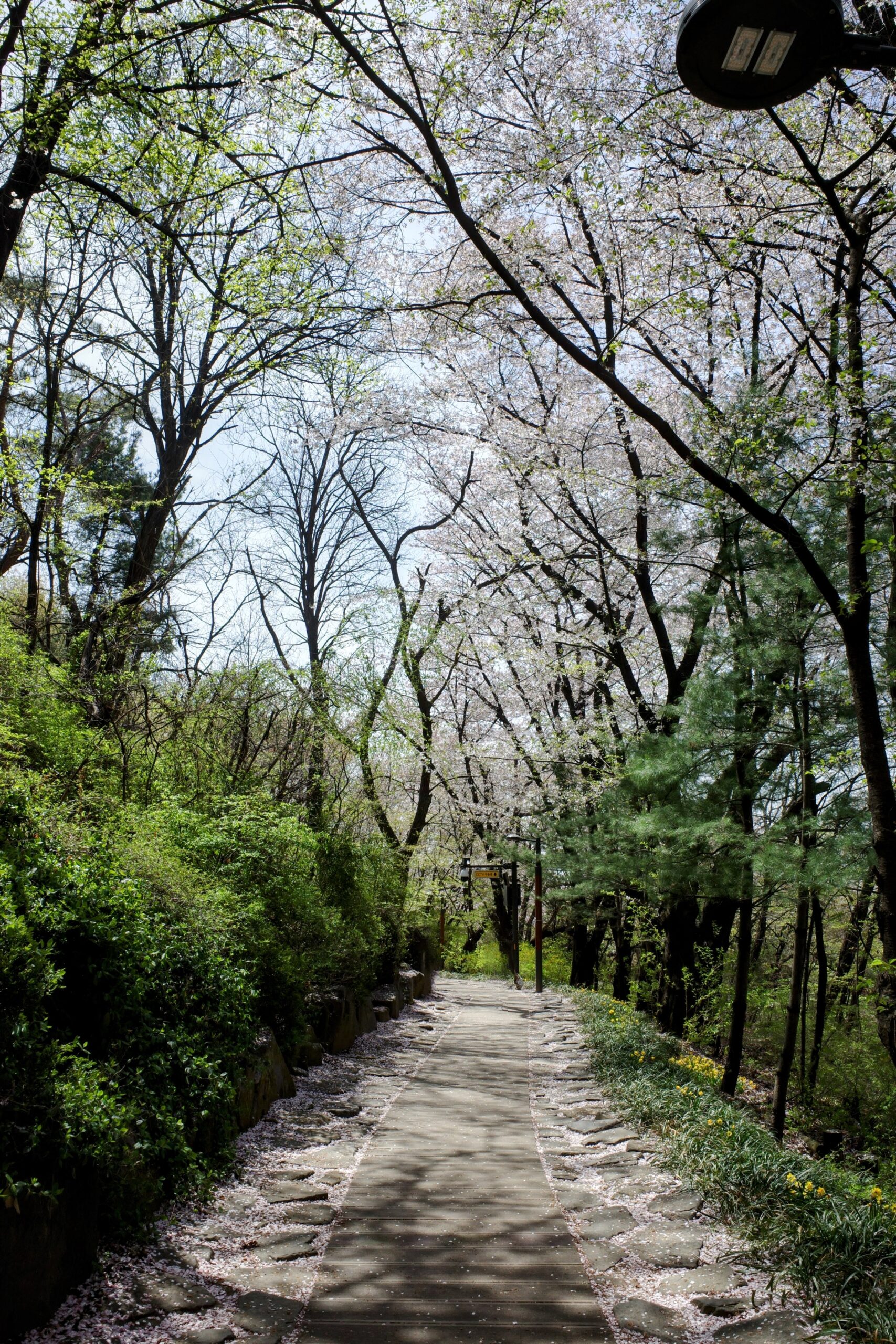
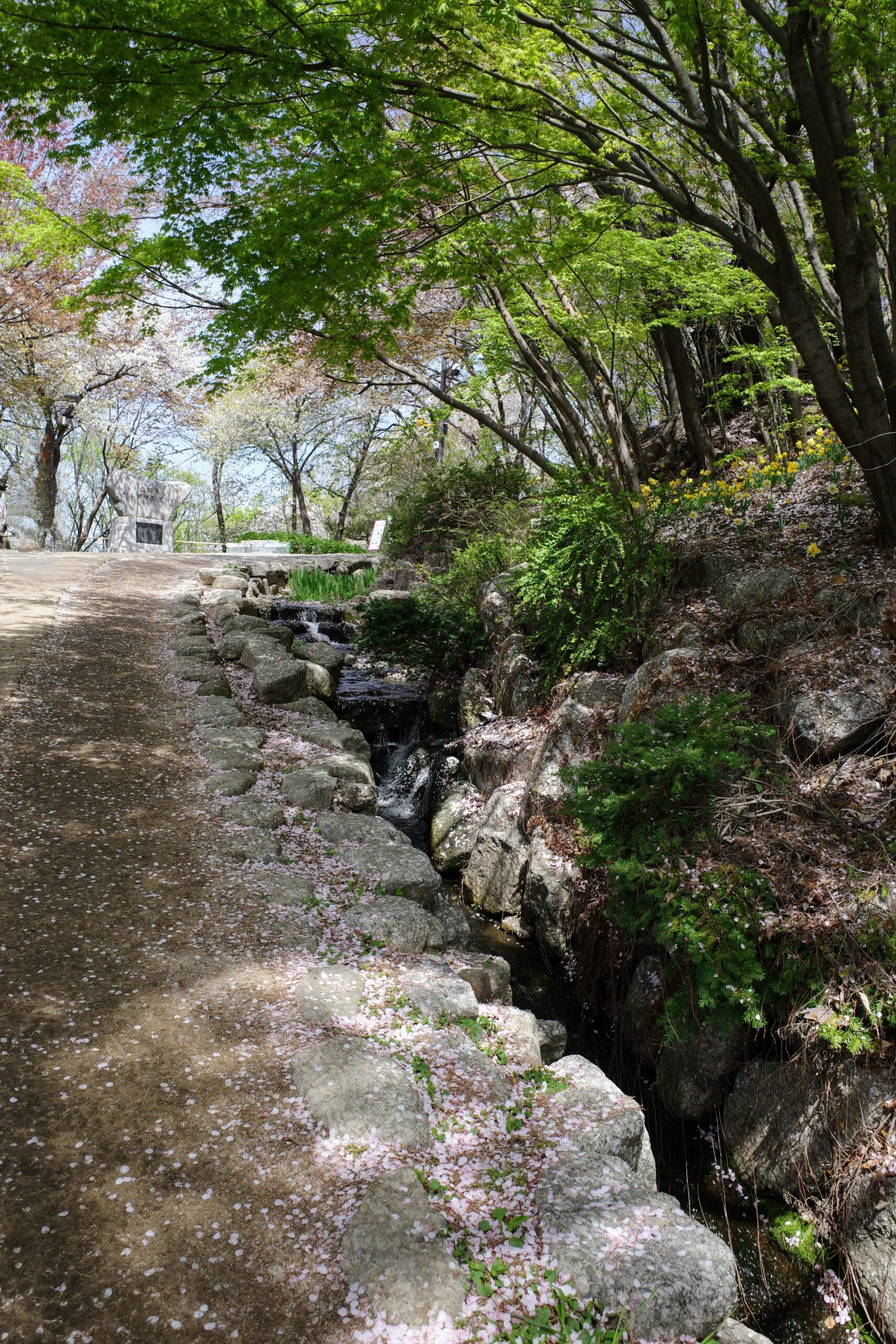
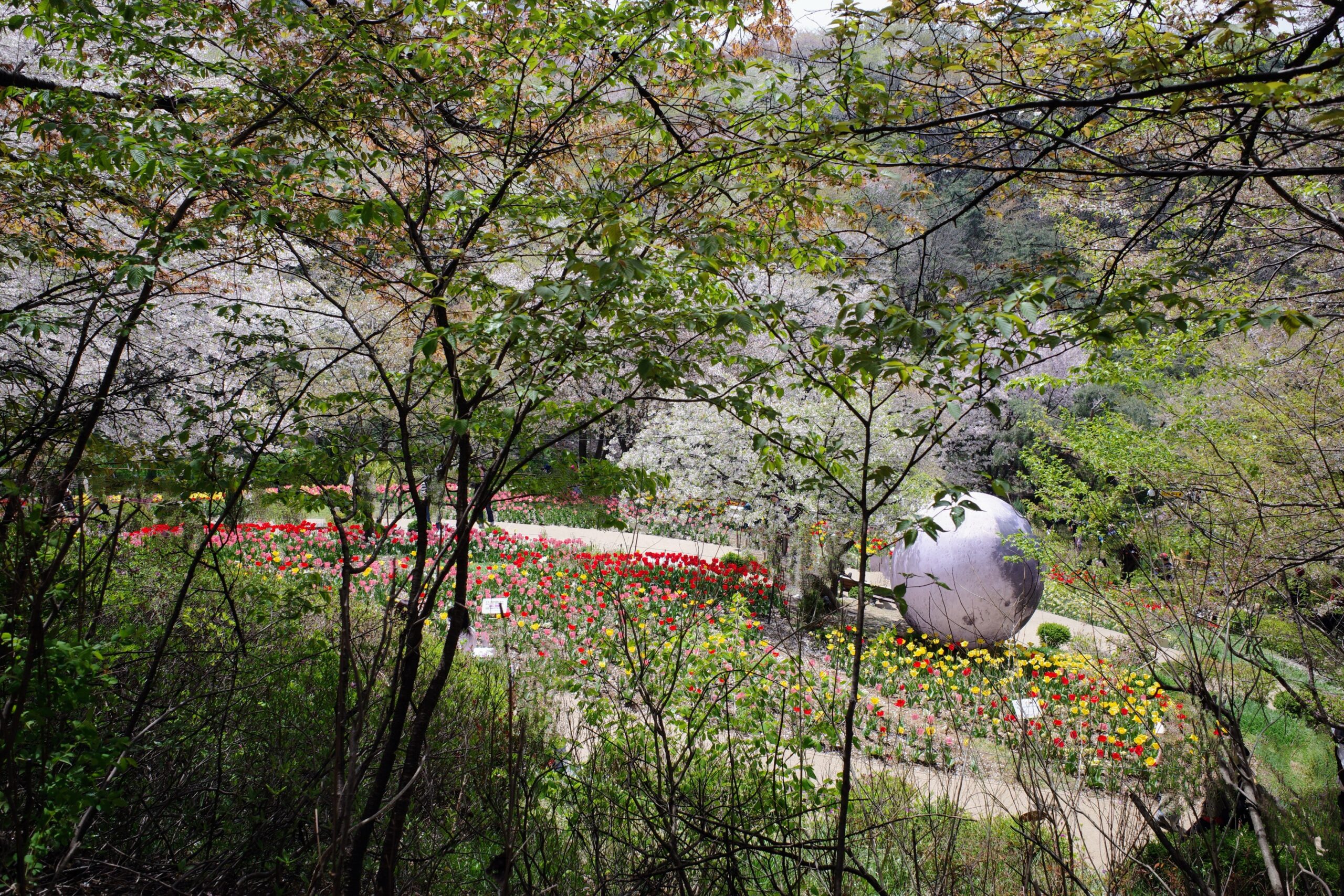
The tulips get the attention, but the cherry blossoms arrive first — and for the few days when both are open at once, the garden holds something close to excess. Yeonhui’s cherry trees are old enough to arch fully over the paths, and at peak bloom the main approaches become tunnels: petals against blue sky, fallen petals whitening the edges of the sandy walkway below. The trees are a mix of varieties — weeping cherry, mountain cherry, yoshino — which means the bloom is not simultaneous but sequential, the garden staying in flower slightly longer than a single-species planting would allow. From the upper trail, looking down through branches still carrying blossom toward the red and pink tulip beds below and the globe sculpture sitting quietly among them, the layers of the garden become briefly and improbably legible all at once. It doesn’t last. A warm afternoon or a day of wind is enough to bring the petals down, and the paths turn pink underfoot before the trees are bare again. Late March to early April is the window, and it closes quickly.
The district marks the season with the Seodaemun Spring Festival, which brings busking performances and small outdoor events to the area during the bloom period — the terrace below at Cafe Pokpo occasionally hosts live sets as well, sound carrying up the hillside through the trees. The combination of an open garden, a stage-like pond platform, and a mountain trail that loops back down to a waterfront café is the kind of civic infrastructure that seems almost accidentally perfect for a day that has no particular agenda.
The Rest of the Garden
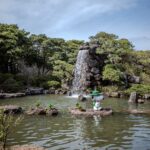
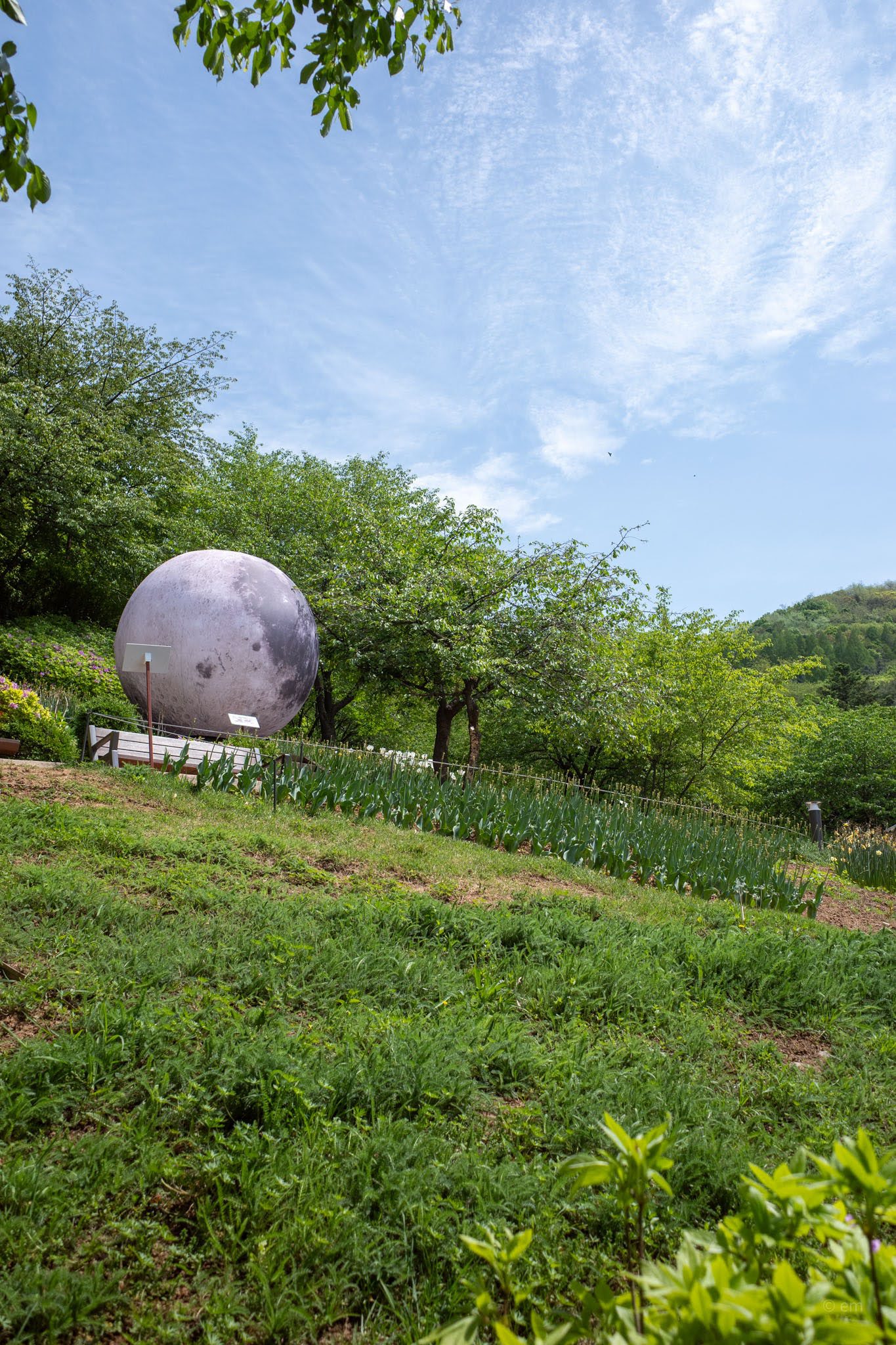
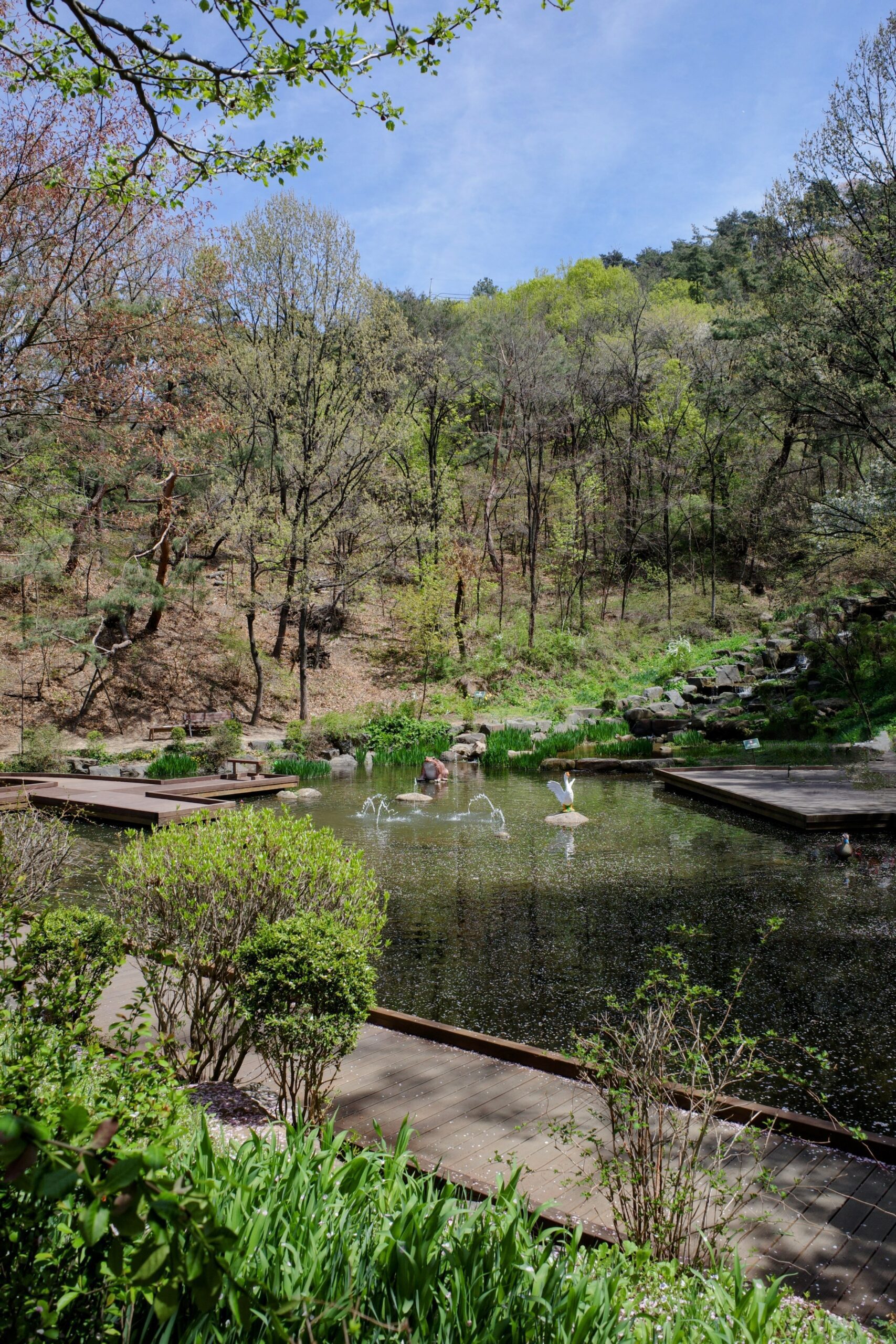
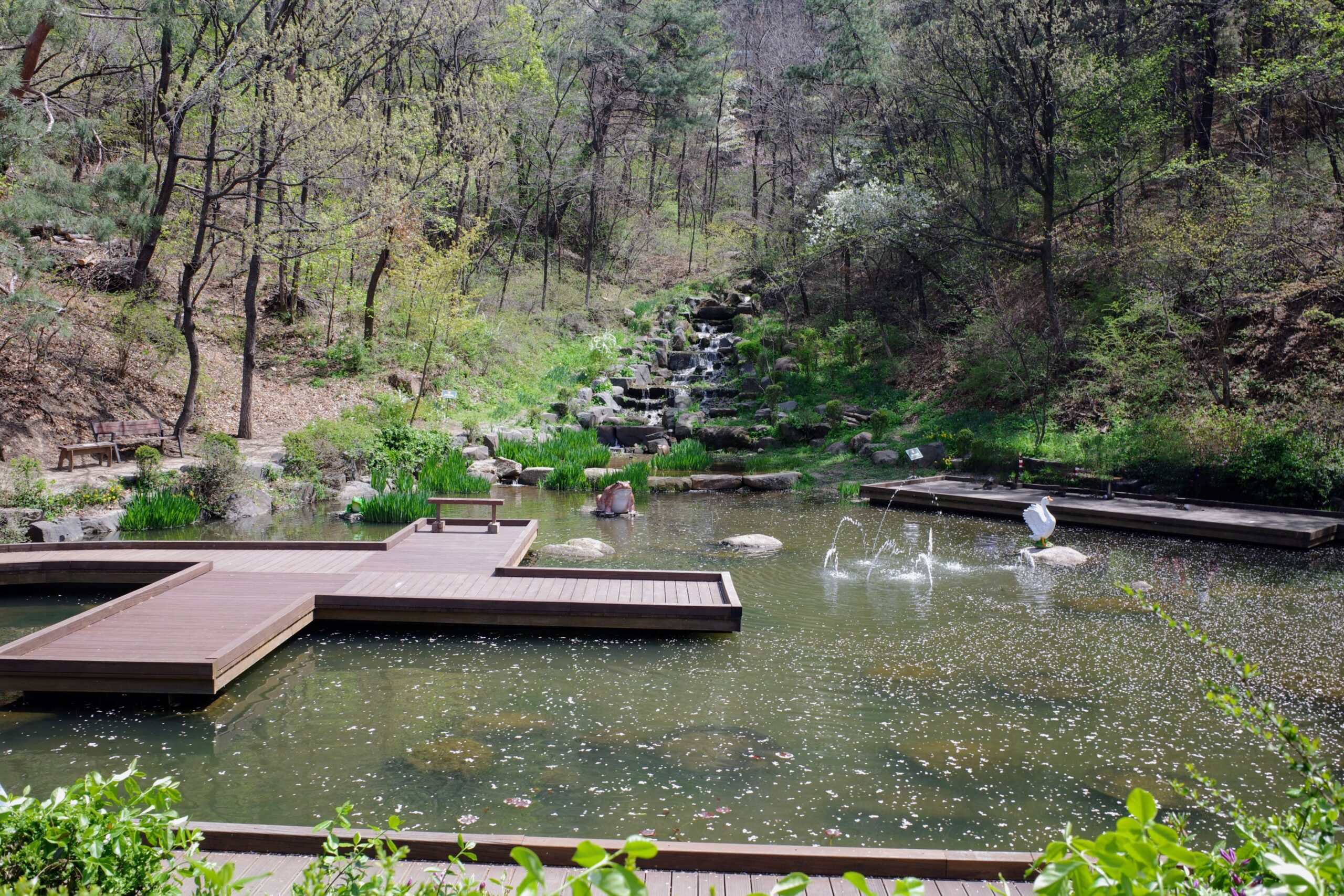
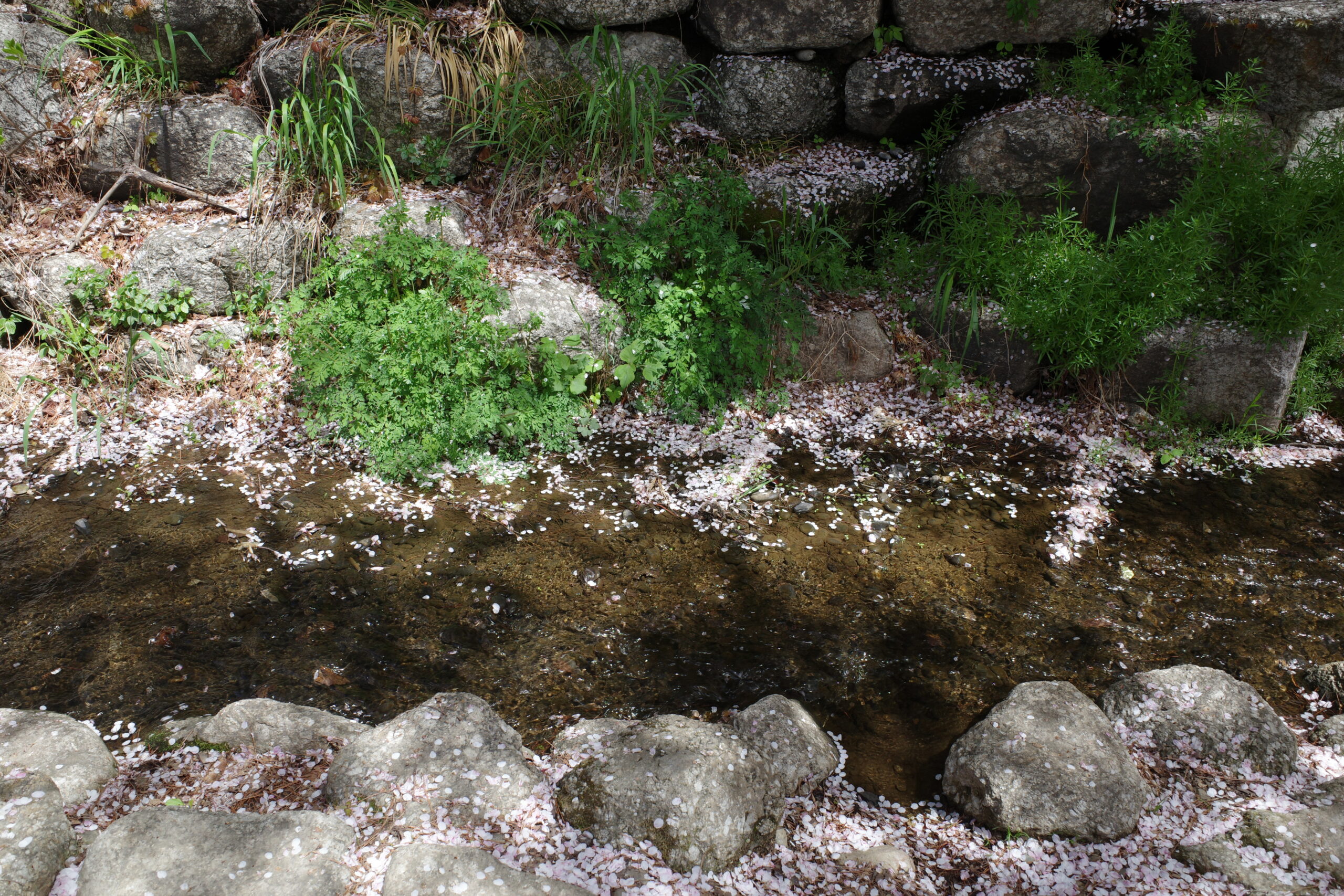
Beyond the flower beds, the garden holds more. A pond sits at the lower end of the path, fed by a small rock cascade — the water clean and still enough to reflect the trees above it in early spring before the leaves fully fill out. Wooden platform decks extend over the water’s edge, and in April the cherry petals collect on the surface in a way that takes some getting used to as an image that is actually real. A large spherical sculpture stands on the upper slope, white and moon-like, visible through the trees from several points in the garden and from the hillside trail above.
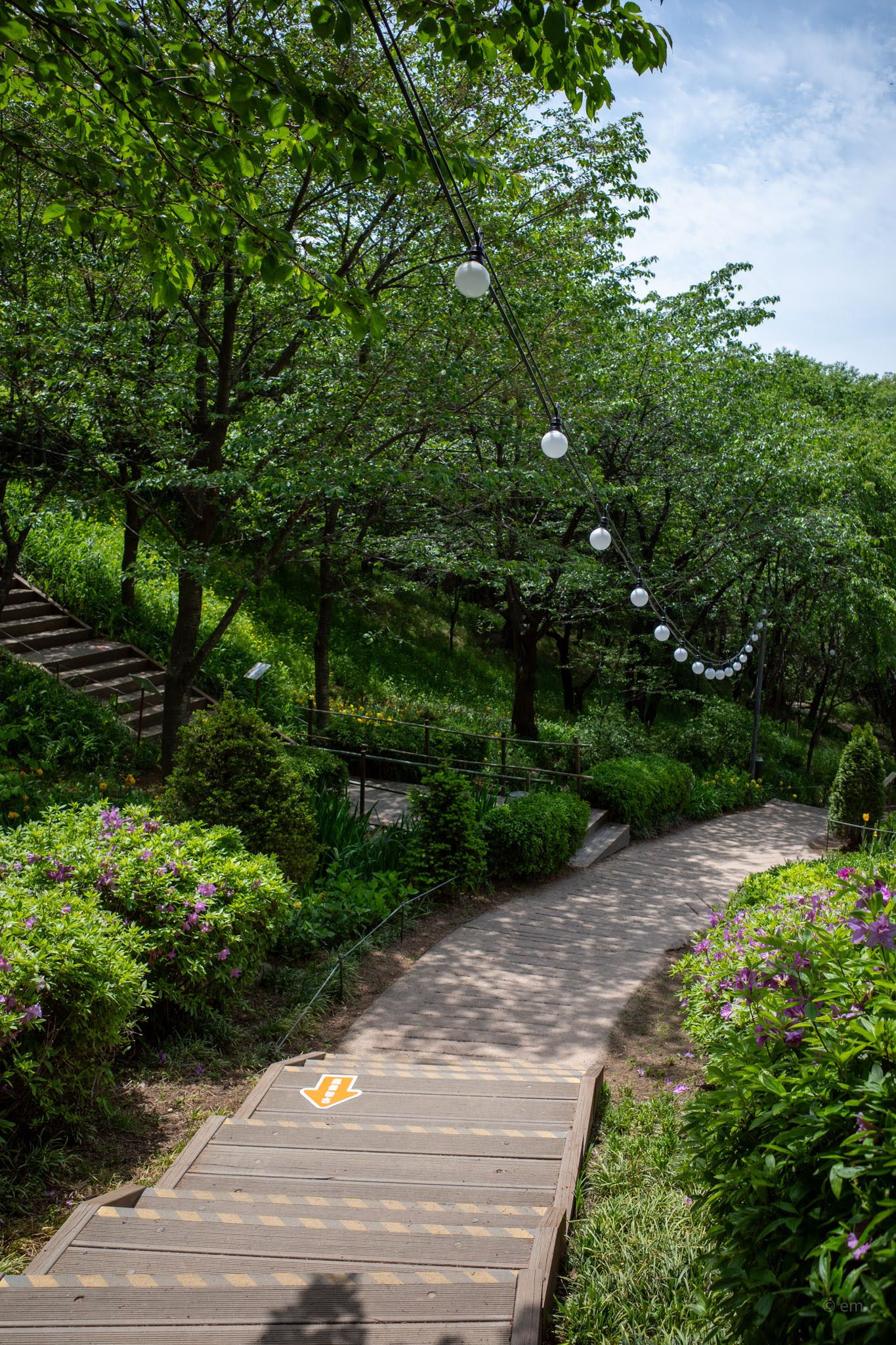
The rest area includes a herb garden, a cherry blossom yard, a forest rest area, a lawn, and the Ansan pond, as well as a small string-light path that connects several sections of the garden under the canopy. The lights are understated by day but mark the route at dusk when the garden stays open later.
Getting There and Connecting Down
The most natural approach from Hongjecheon is across the stepping stone ford near the traditional watermill — a short crossing that puts visitors immediately on the garden path. From there, the route climbs gently through the trees to the main flower beds. The descent back to the waterfall and café terrace is equally simple, and the two spaces read naturally as a single half-day loop: garden in the morning, waterfall and a coffee below when the sun gets high.
The Ansan Jarak-gil trail connects from the upper reaches of the rest area, for those who want to continue higher into the mountain. The full loop trail circles the peak with almost entirely wooden boardwalk underfoot and minimal elevation change — accessible enough that the park explicitly accommodates wheelchair users. The mountain is small by Korean standards, which is precisely the point.
Free, always open, and exactly as far from the city as you need it to be.
Yeonhui Forest Rest Area (연희숲속쉼터)
Yeonhui-dong, Seodaemun-gu, Seoul (안산 기슭, Seodaemun-gu Office rear)
Access from Hongjecheon: cross stepping stones near the watermill
Free admission | Open year-round
Also nearby: Cafe Pokpo (카페폭포) — the waterfall terrace directly below on Hongjecheon