The train from Seoul takes less than an hour, but the world inside is several climates away.
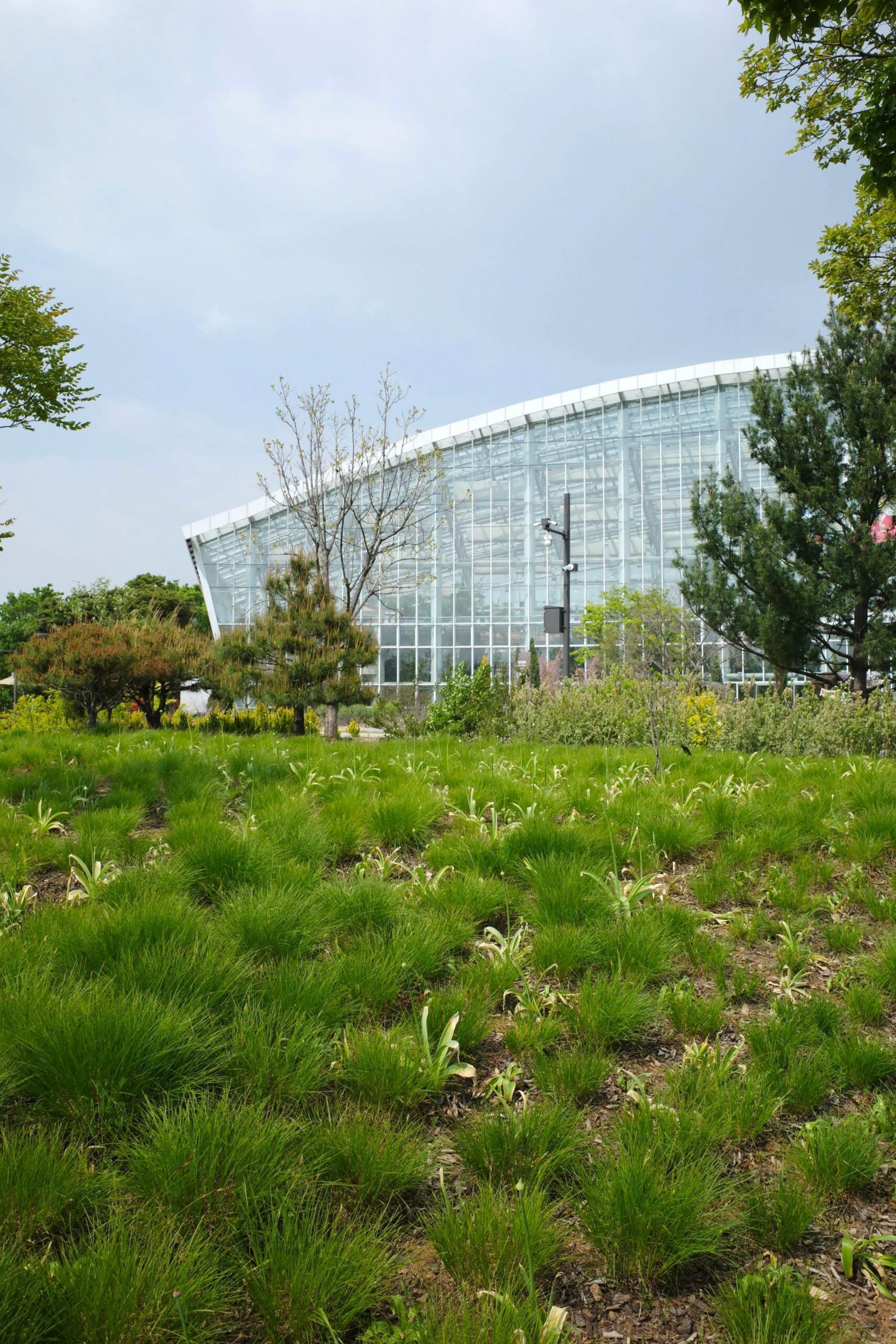
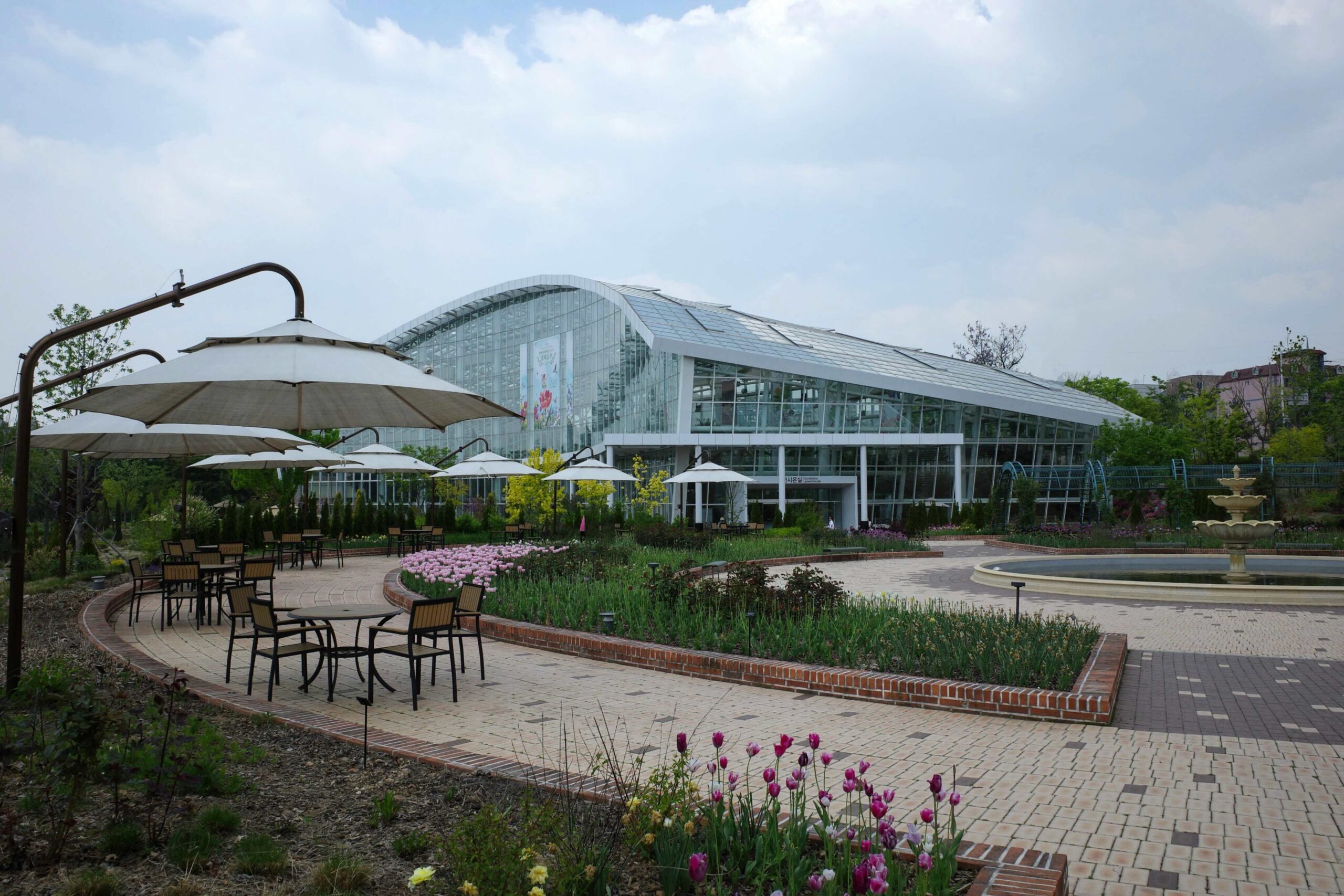
Most botanical gardens announce themselves modestly — a gate, a sign, a modest admission booth. Ilwol Arboretum does something different. It announces itself from a distance, a single vast curve of glass and steel rising above the low rooftops of Suwon’s Jangan district like a structure that got lost on its way to somewhere more monumental. The building belongs to no era in particular. It’s too large for a greenhouse, too transparent for a stadium, too green inside to be either. Whatever you call it, the effect from the path is the same: you walk toward it and the ordinary world falls away.
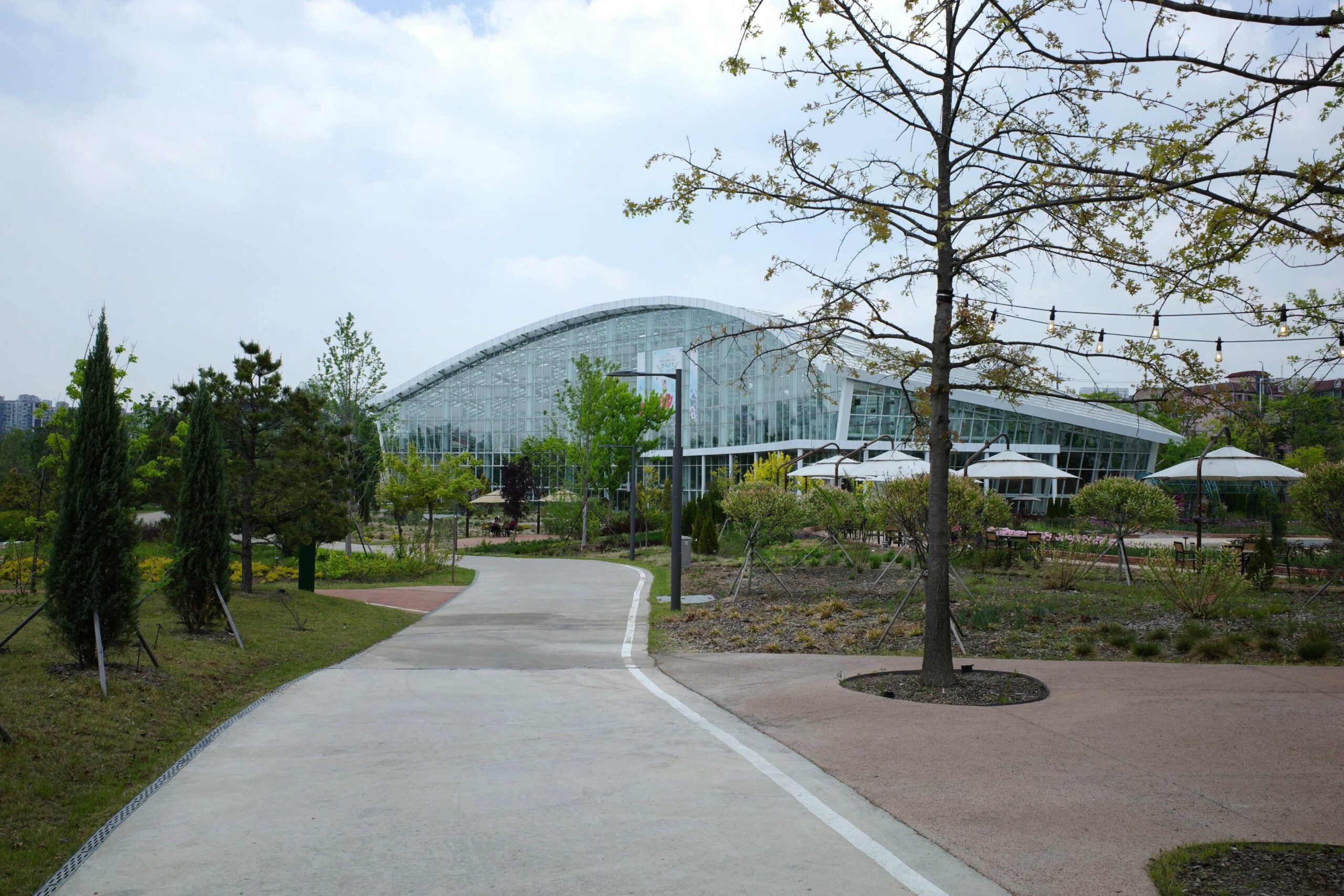
Ilwol (일월수목원) opened in May 2023 after nearly a decade of planning and construction — a public arboretum built on 101,500 square meters inside Ilwol Park, a long-established green corridor in northern Suwon. The name means sun and moon, a quiet philosophy embedded in the site’s rhythms: the outdoor gardens shift through every Korean season, the greenhouse holds summer year-round, and the Ilwol Reservoir on the park’s edge reflects whatever sky happens to be overhead. It is, by design, a place for all of it at once.
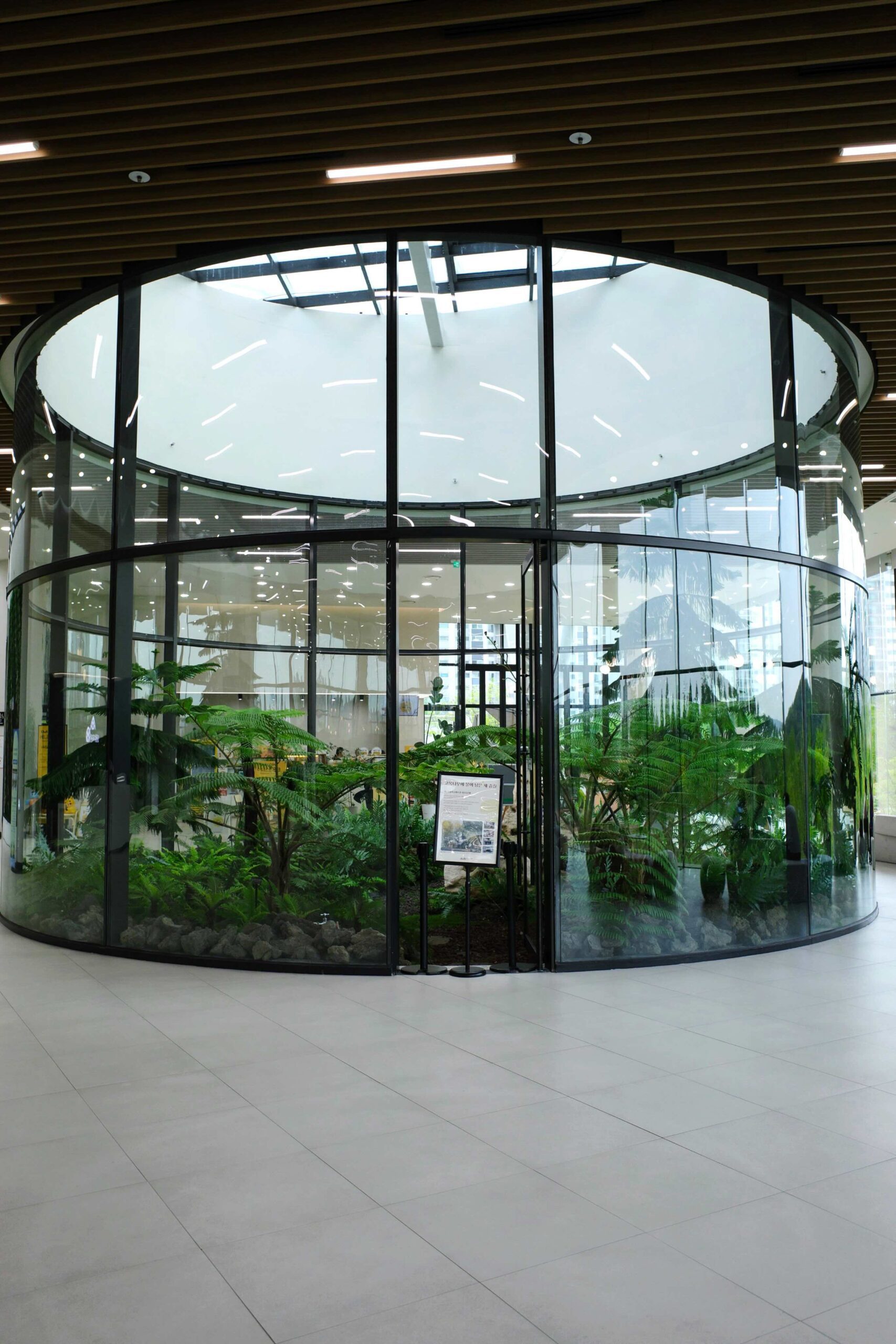
The Visitor Center: Mulbitnuri Hall
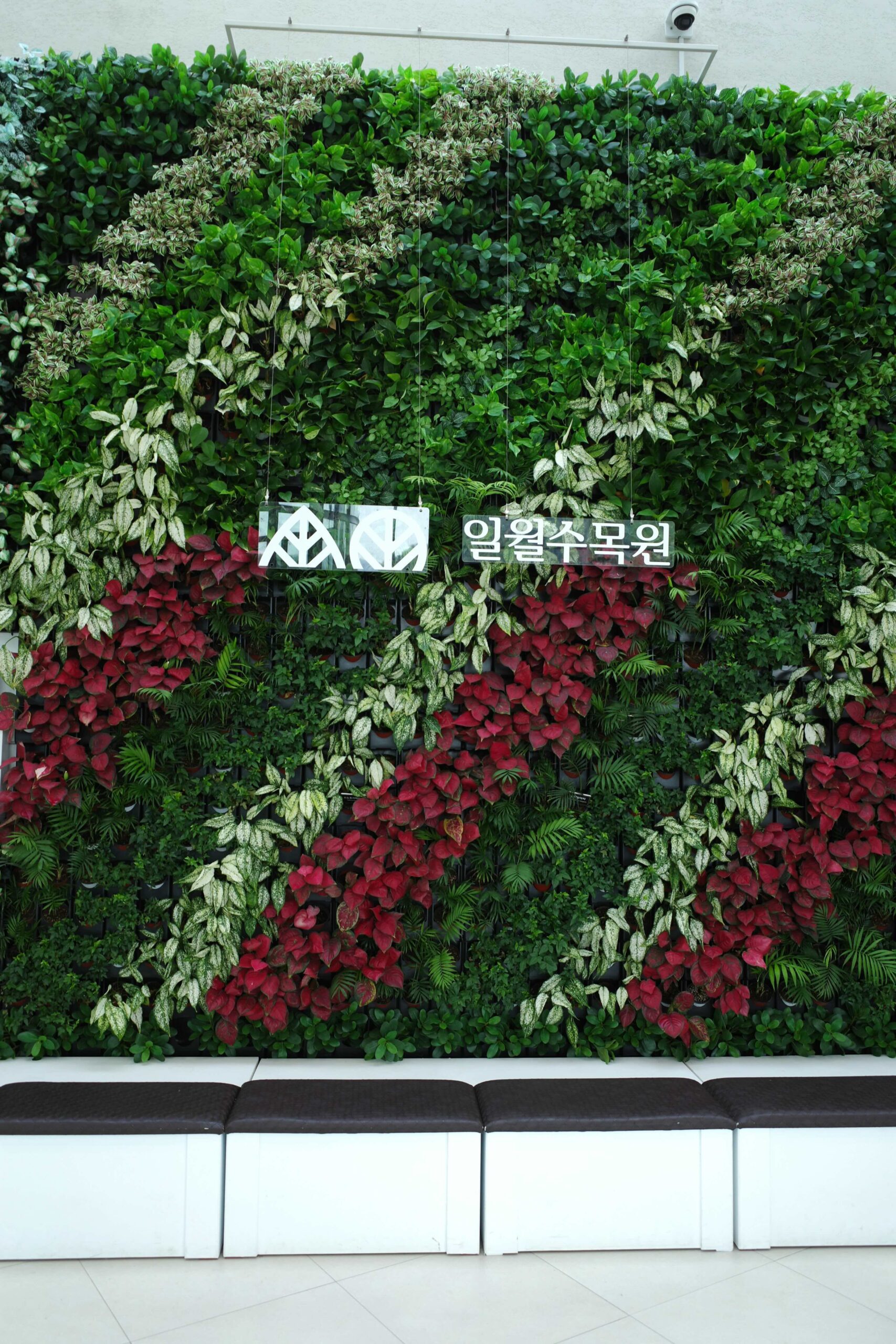
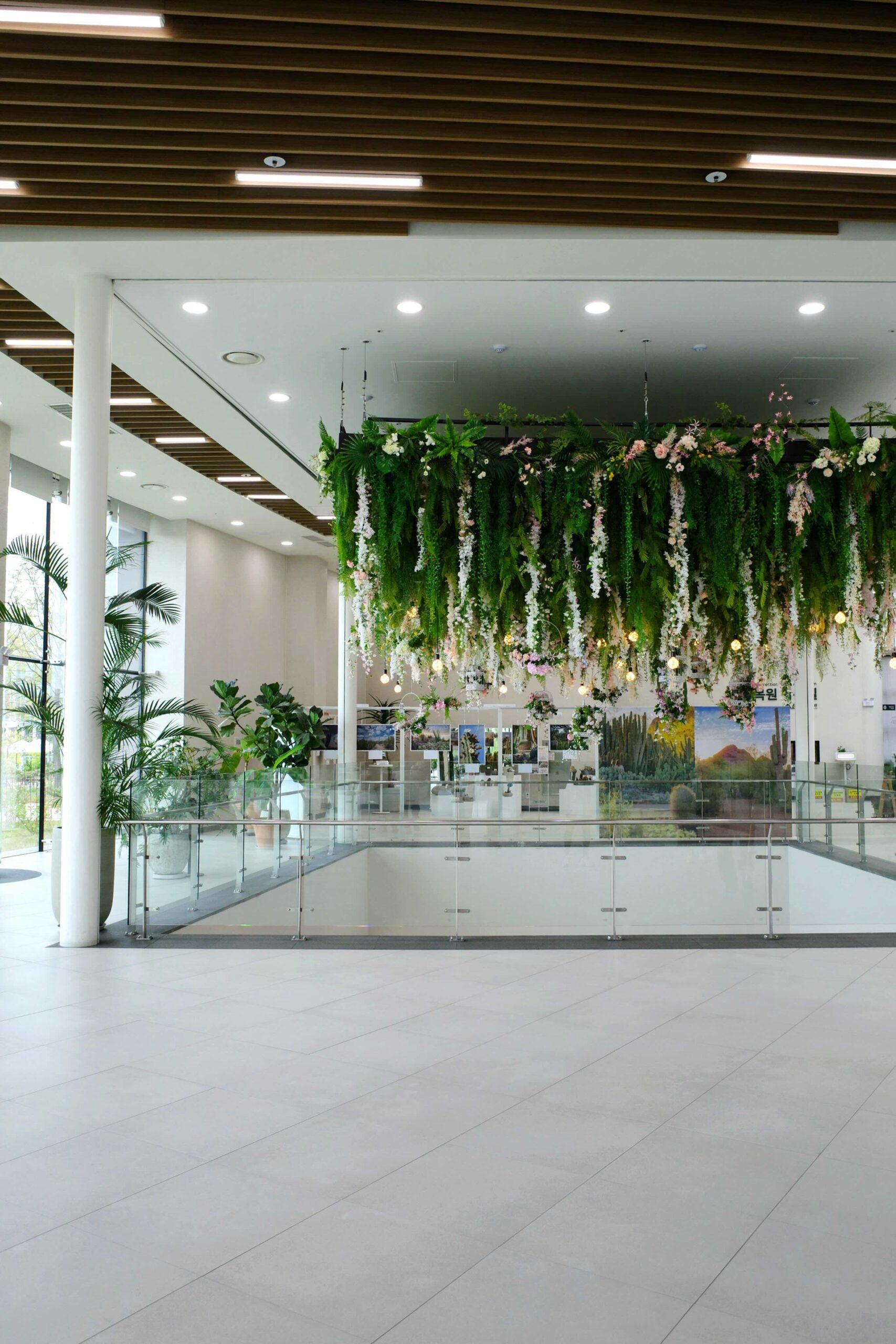
The visitor center is the starting point for the whole site — tickets, café, and orientation all happen here before the outdoor gardens or the greenhouse. It’s a bright, clean two-level building attached to the greenhouse’s lower section, and the lobby — called Mulbitnuri Hall — is the kind of space that stops you briefly for reasons that aren’t immediately obvious. Part of it is the ceiling installation: a dense hanging cloud of ferns, wisteria, and small flowering vines suspended above the central gallery, lit from below with warm globe pendants. Part of it is the quietness of the space, the way the white tile floors and slatted timber ceiling absorb sound rather than bounce it. The building is airy in the way that only genuinely new structures can be.
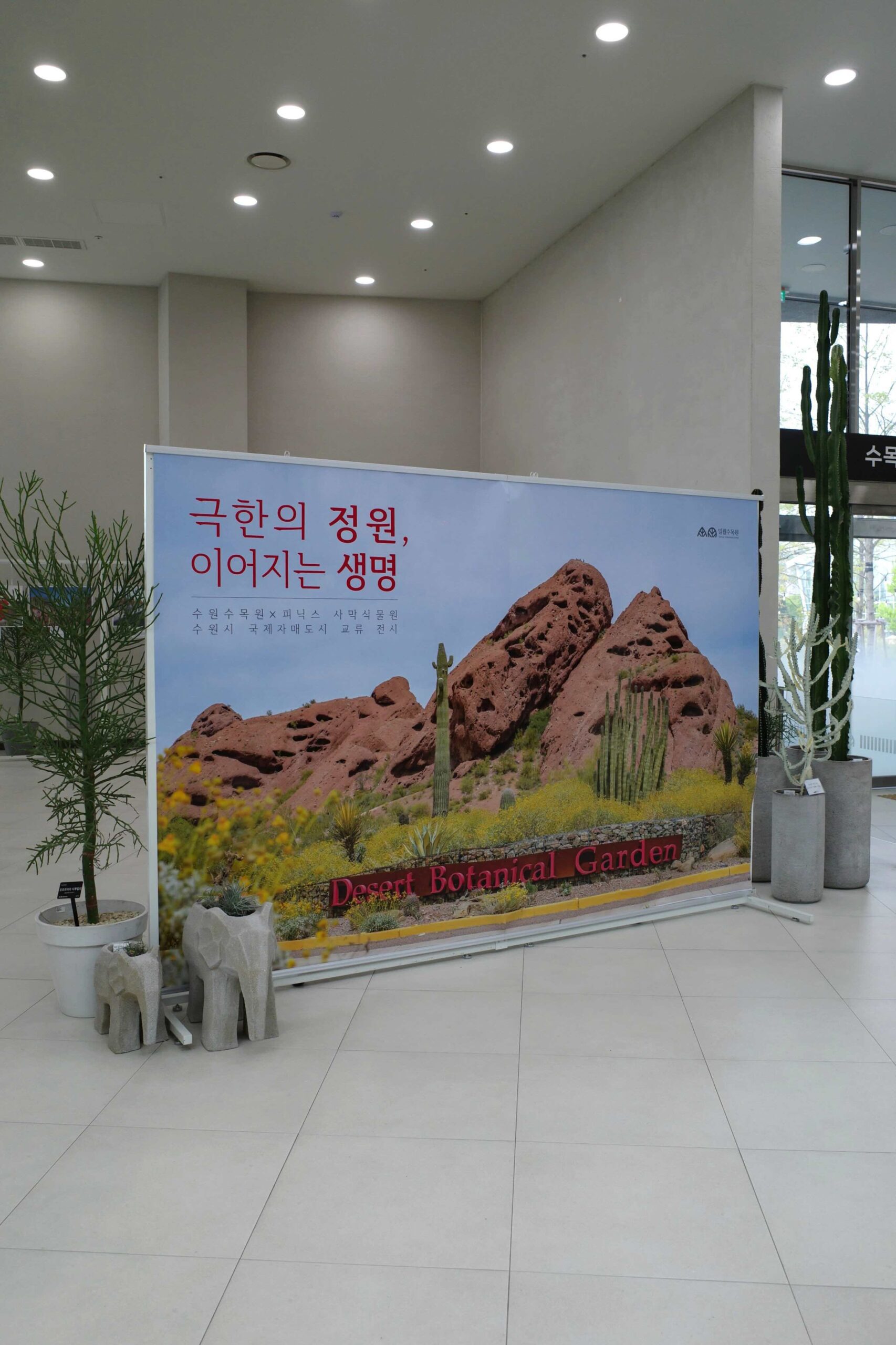
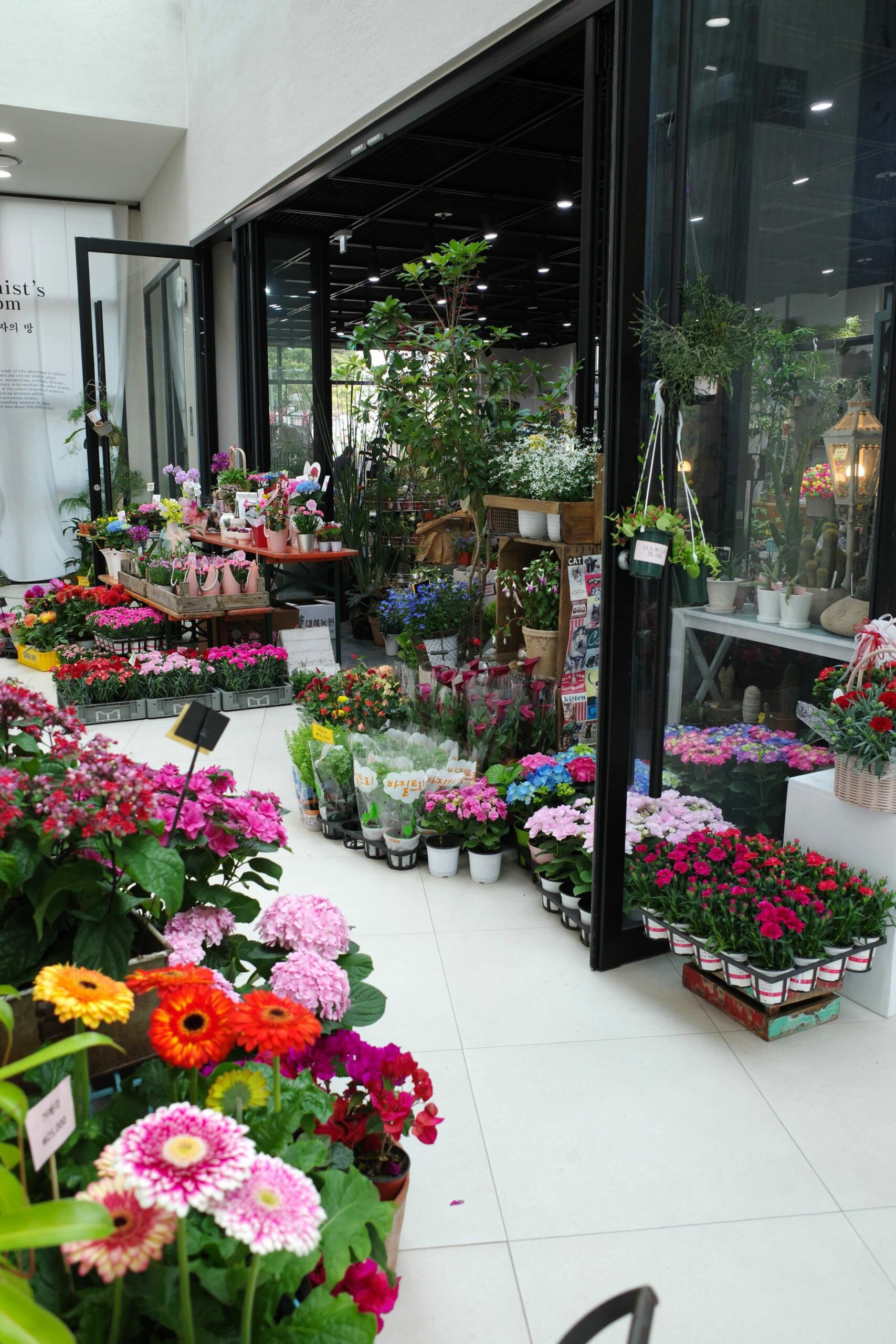
The ground floor holds the café, a gift shop, a nursing room, and a rotating exhibition gallery currently focused on the arboretum’s own plant collection and genetic preservation work. The visitor center also contains what’s labeled the Botanist’s Room (식물학자의 방), a separate planted retail space near the entrance where cut flowers and potted plants crowd a corner of the building in organized abundance — gerberas and hydrangeas stacked alongside trailing philodendrons and hanging baskets, the whole arrangement looser than a conventional florist’s but more curated than a market stall.
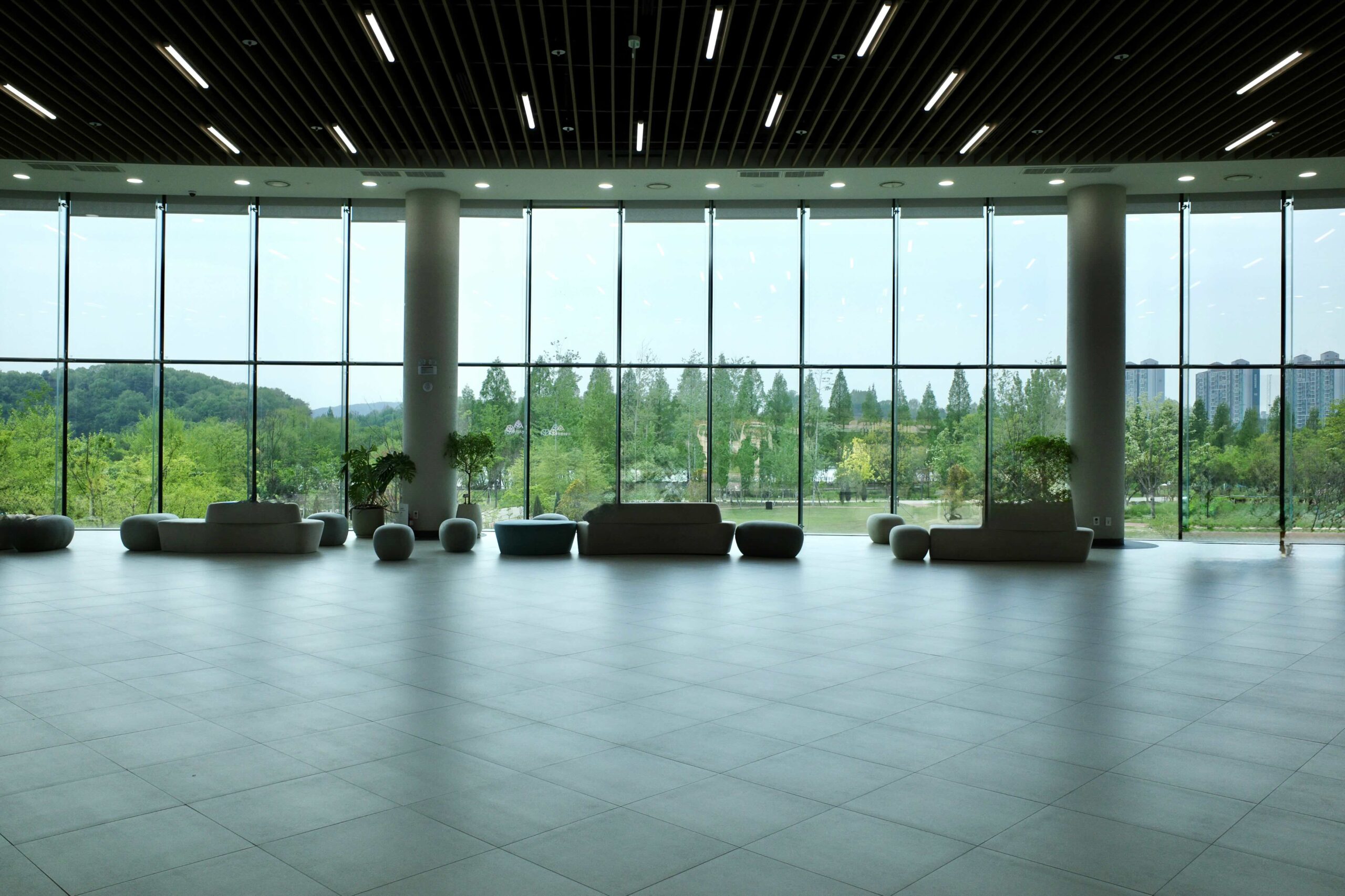
A wide lounge with floor-to-ceiling windows looks north over the outdoor park. The seating here is essentially empty on weekday mornings, which makes it feel like a private observation room. The view through the glass is a long green panorama: the treetops of the outdoor garden, the glint of the reservoir beyond, the tall metasequoias that line the park’s main promenade.
The Grounds
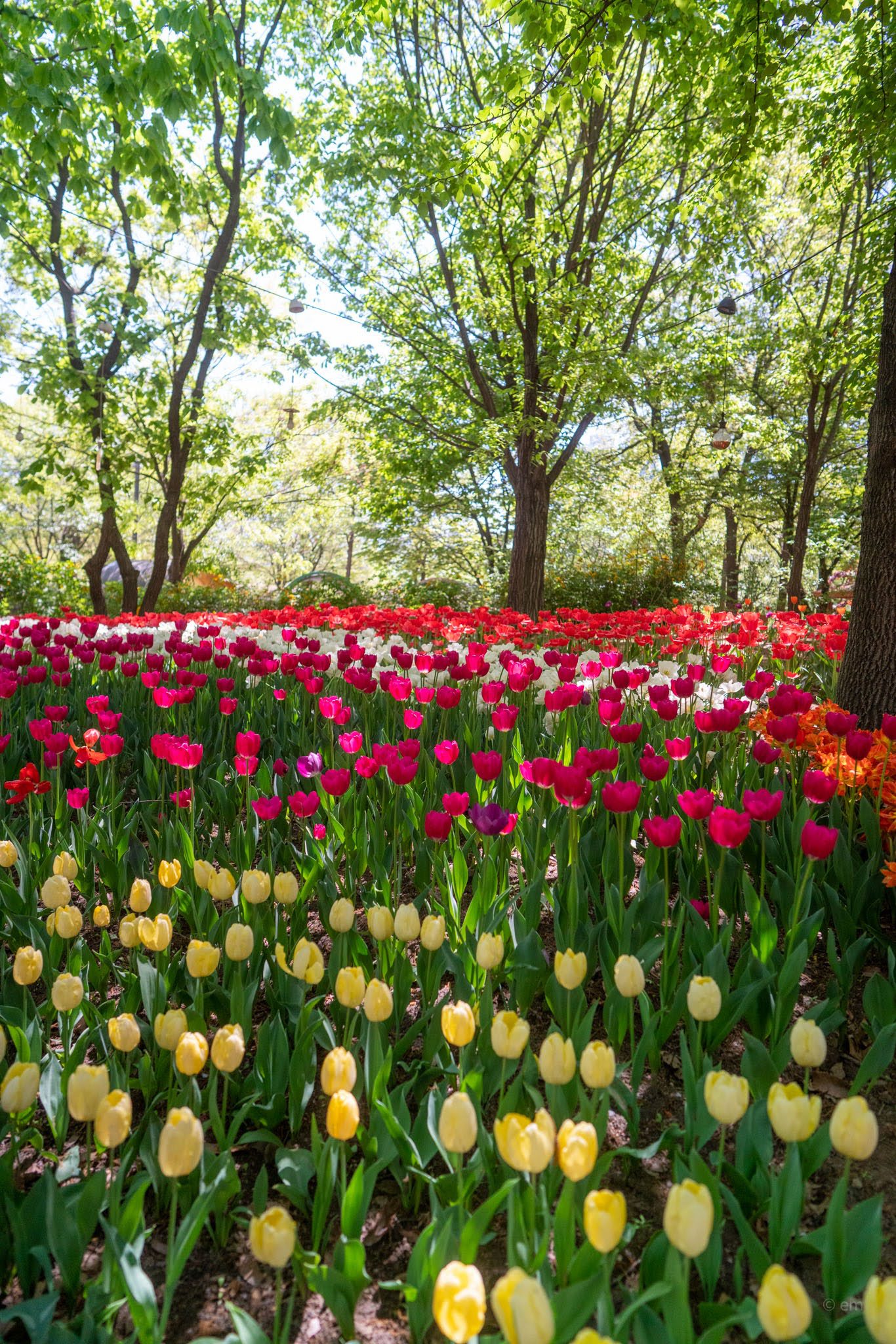
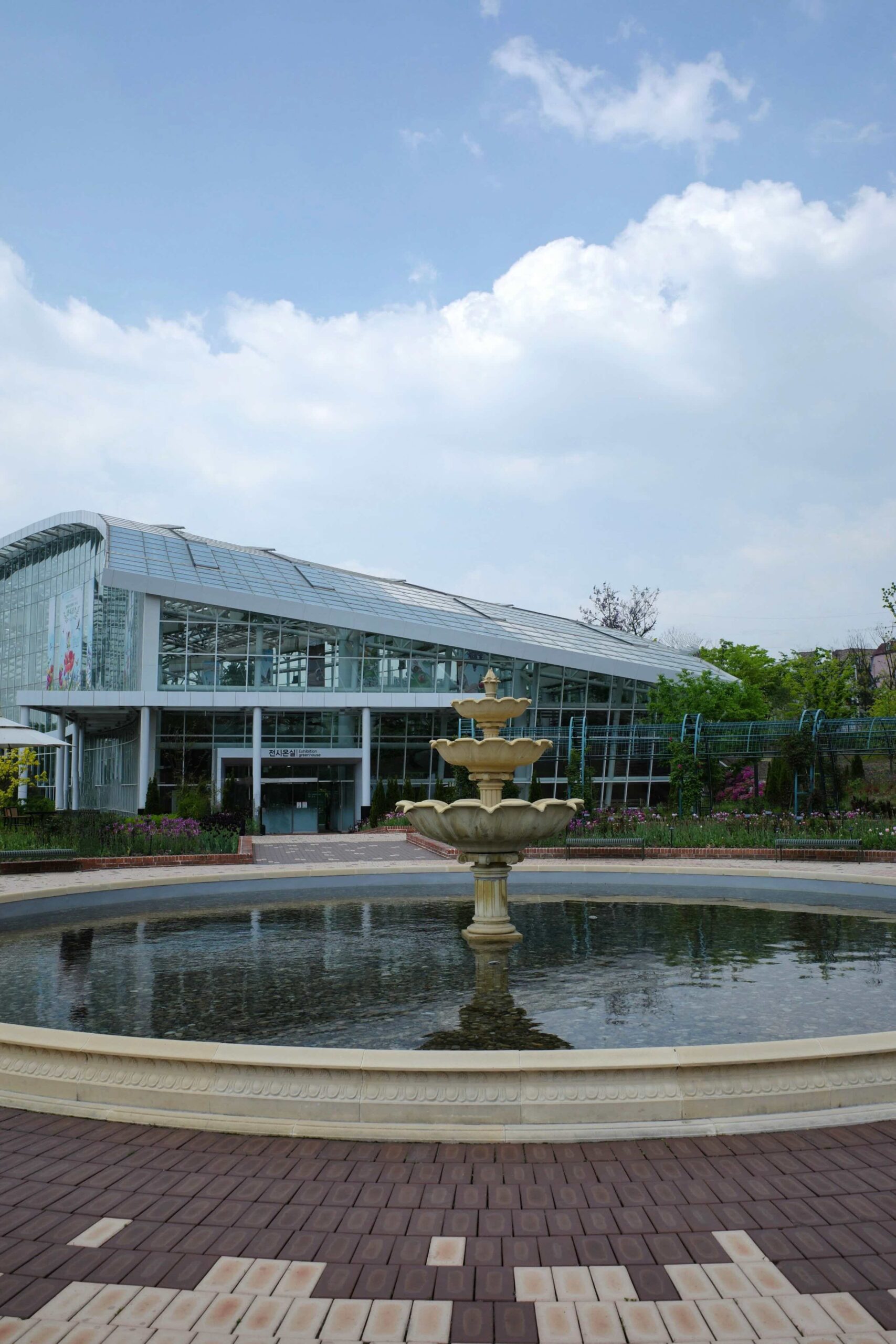
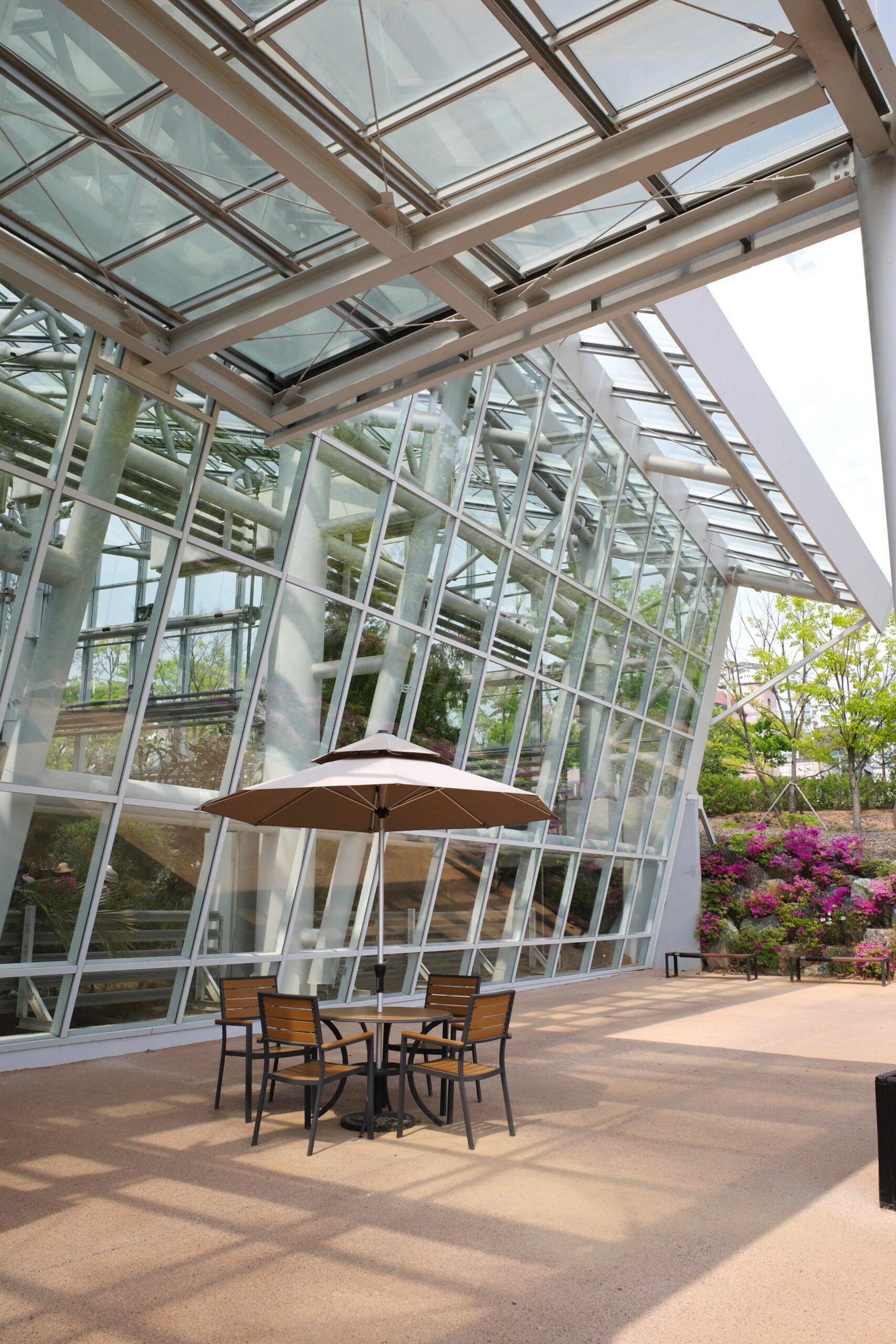
Tickets in hand, the outdoor gardens open first — the greenhouse comes after, reached through the grounds rather than bypassing them. From the visitor center plaza — a wide red-brick forecourt anchored by a tiered stone fountain — the greenhouse building reads as something between a concert hall and a botanical conservatory, its arched roof tapering at both ends, the glass catching light differently at every angle. Outdoor café tables and parasols spread across the brick terrace in front, adjacent to shaped flower beds and, in spring, tulips in full bloom along the low borders. The outdoor terrace is unhurried in a way that indoor spaces rarely are. People sit with takeaway cups from the café inside, facing the greenhouse wall, as if the building itself were the view — which it is.
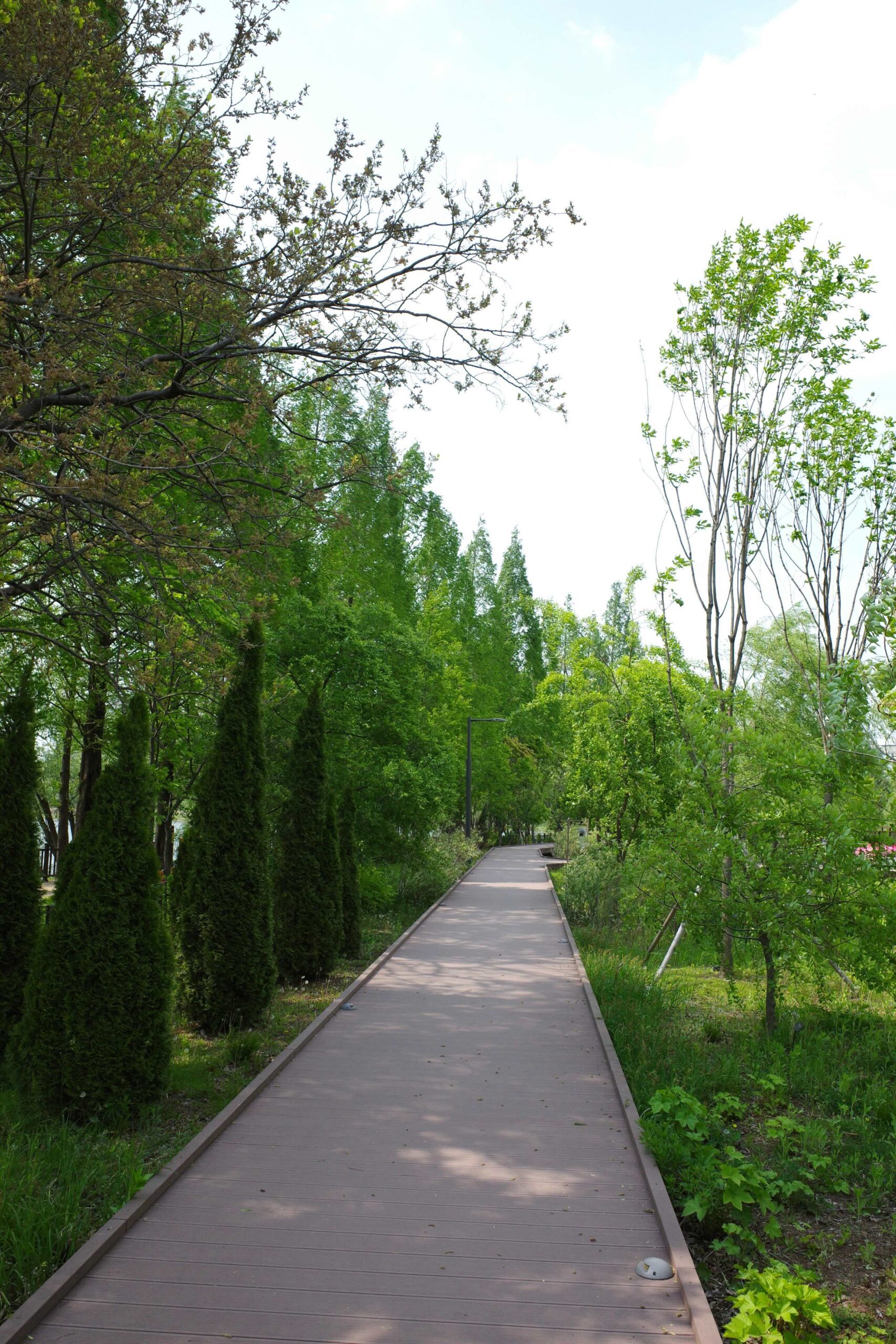
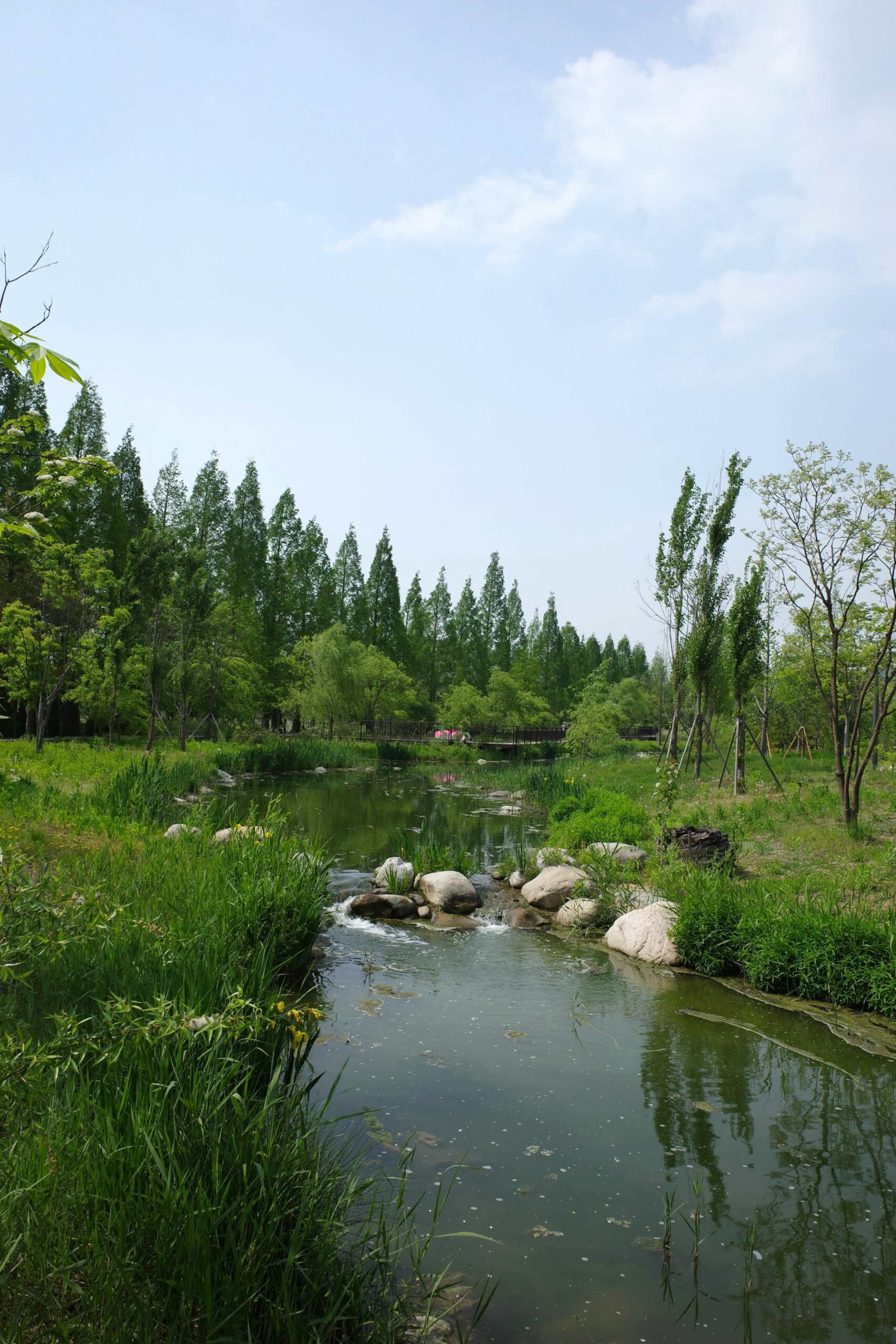
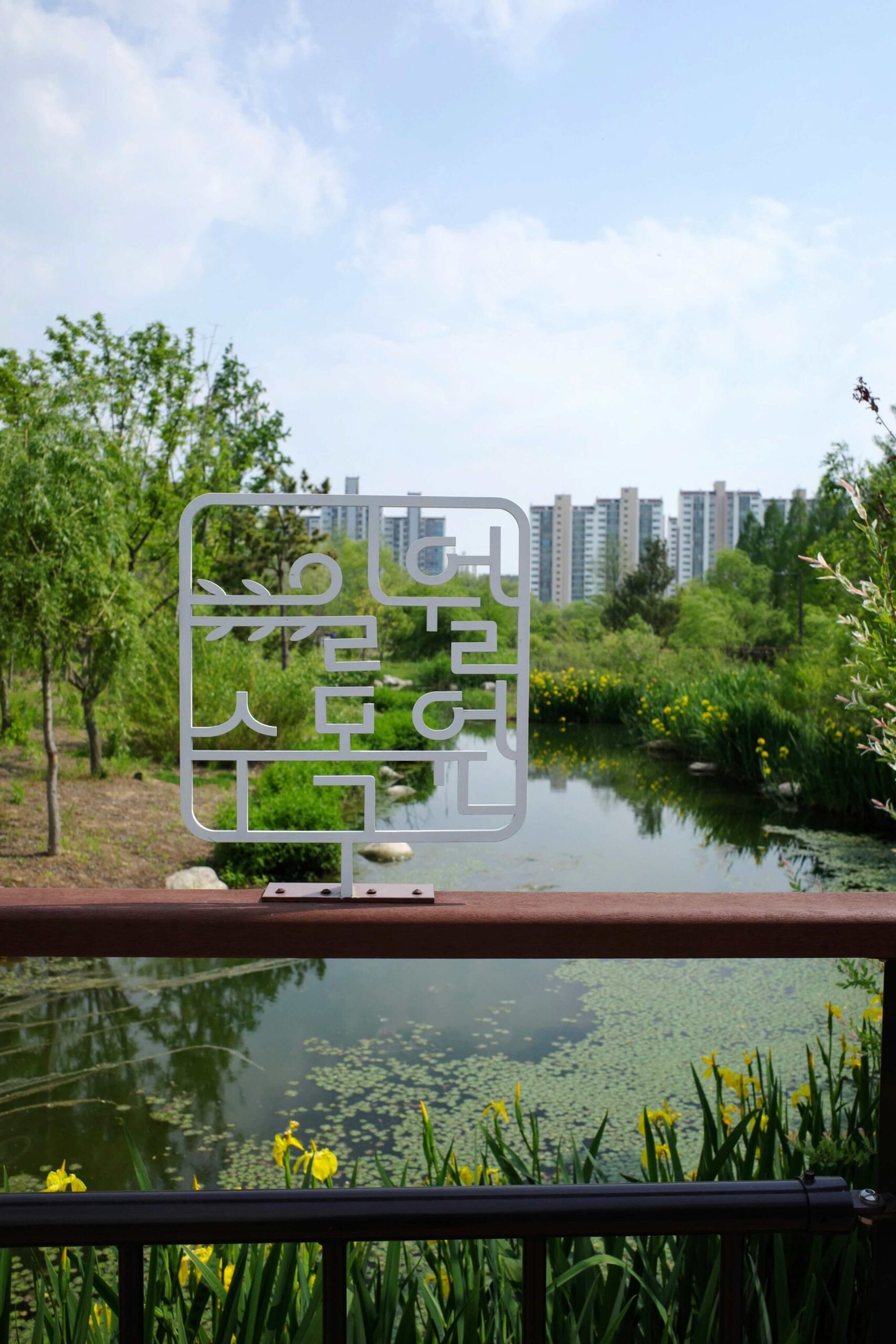
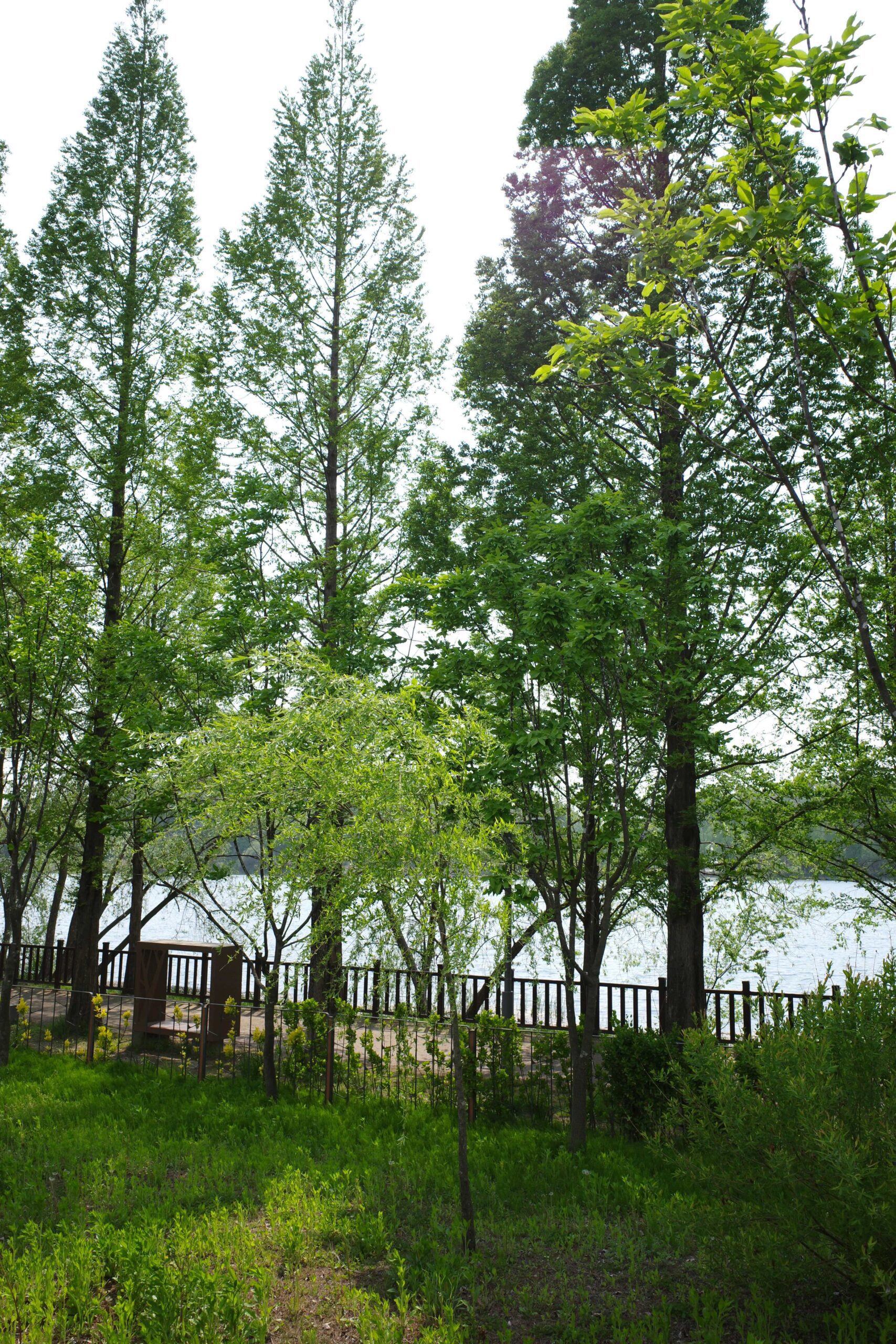
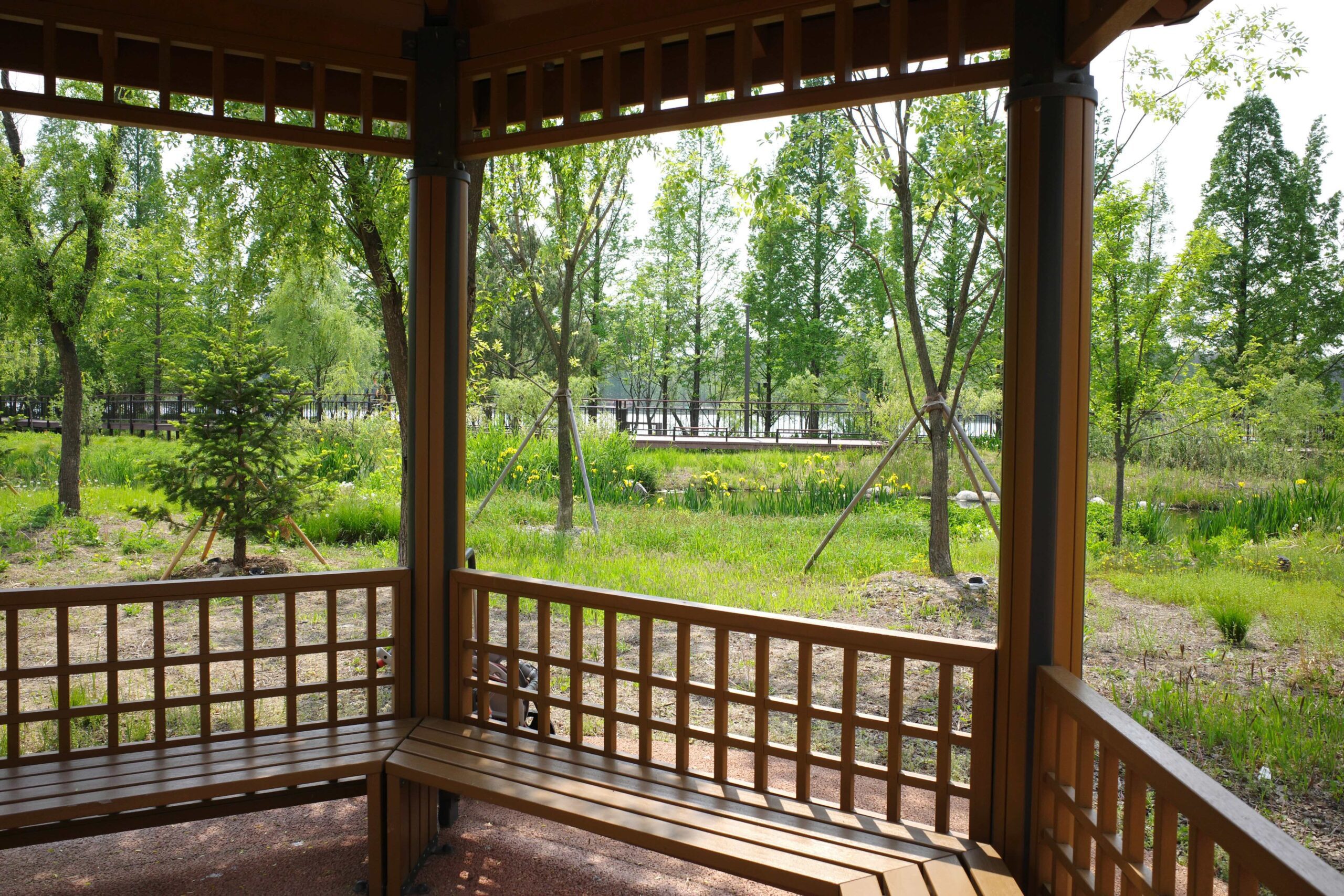
The outdoor grounds reward wandering. A wooden boardwalk cuts through a stand of cypresses and metasequoias, narrow enough to feel like a private path even when it isn’t. Beyond that, the ecology observation garden opens onto a natural-style pond thick with lily pads and iris flowers, backed by the apartment towers of the surrounding city. It’s an image that recurs throughout the site — the cultivated and the built coexisting without apology, the city visible but not intrusive, as if Ilwol has made peace with the fact of being urban in a way that older gardens sometimes haven’t.
Inside the Greenhouse
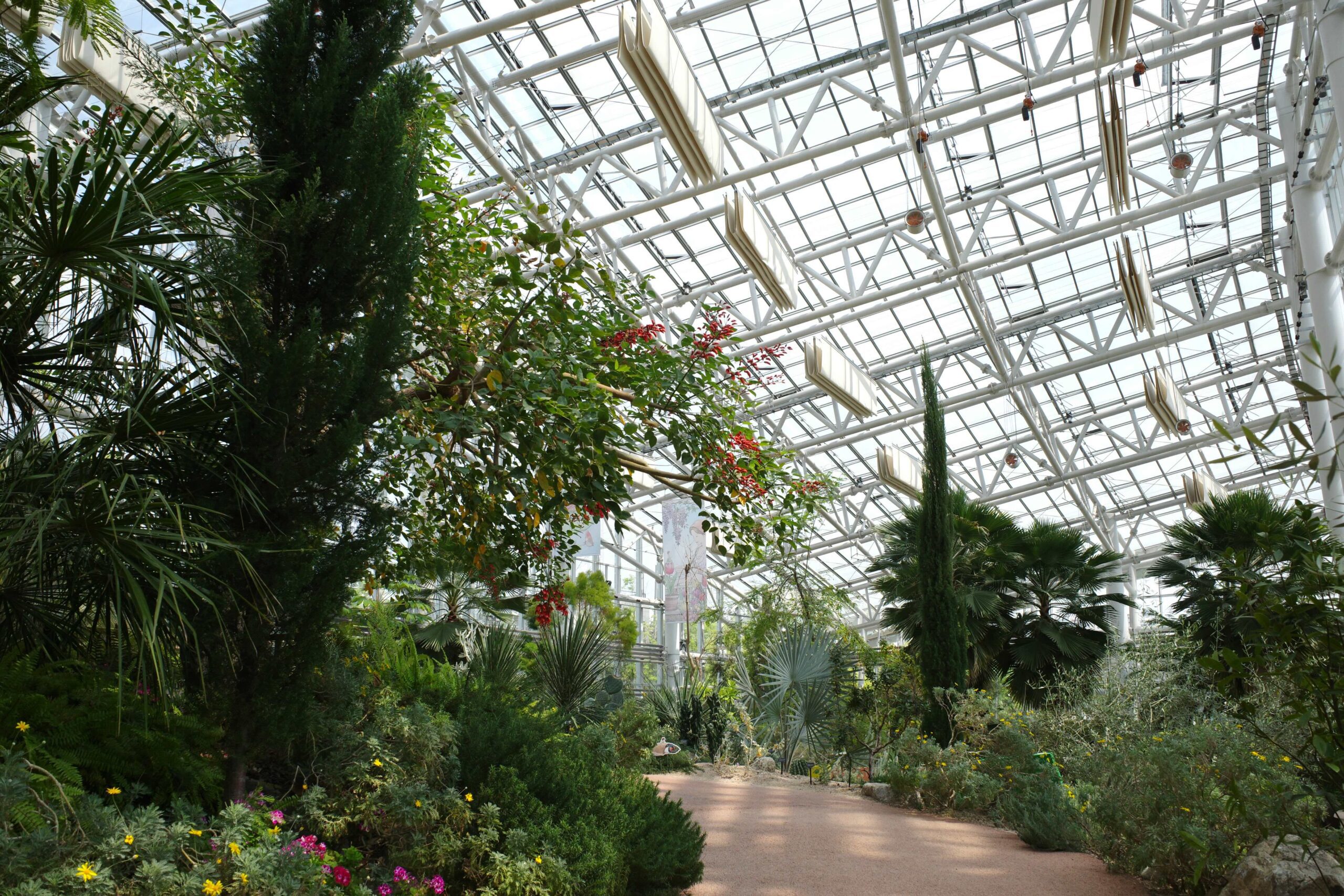
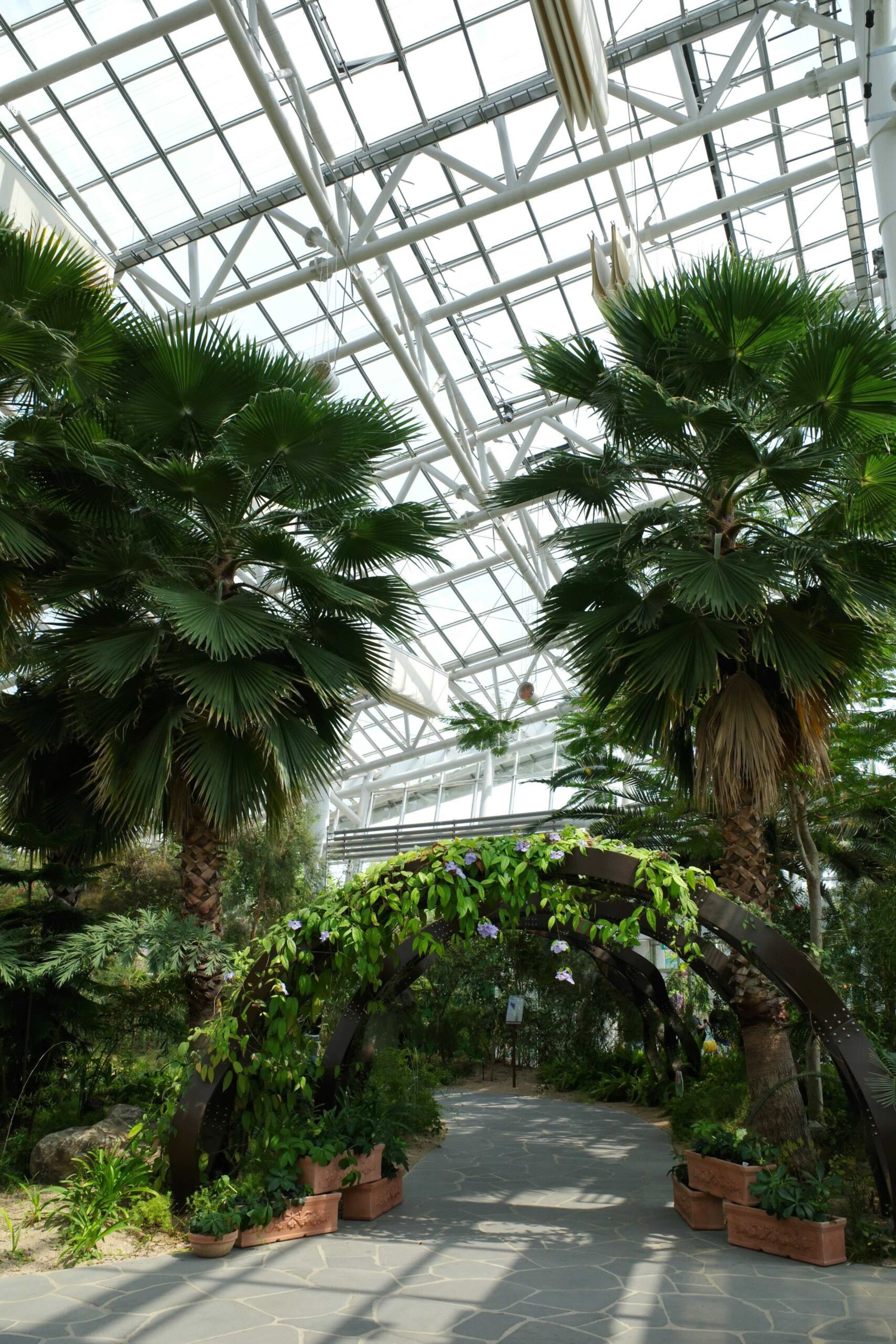
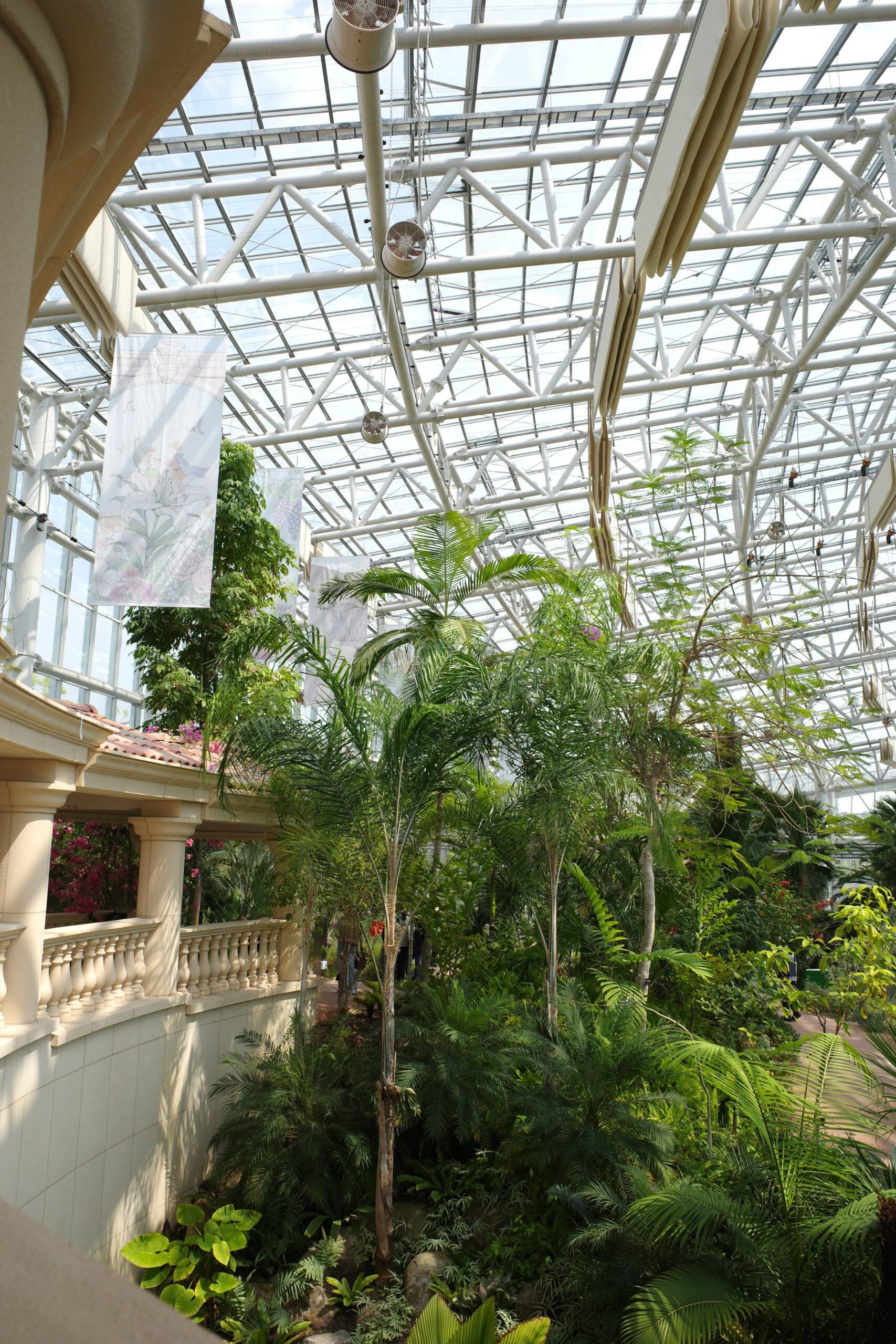
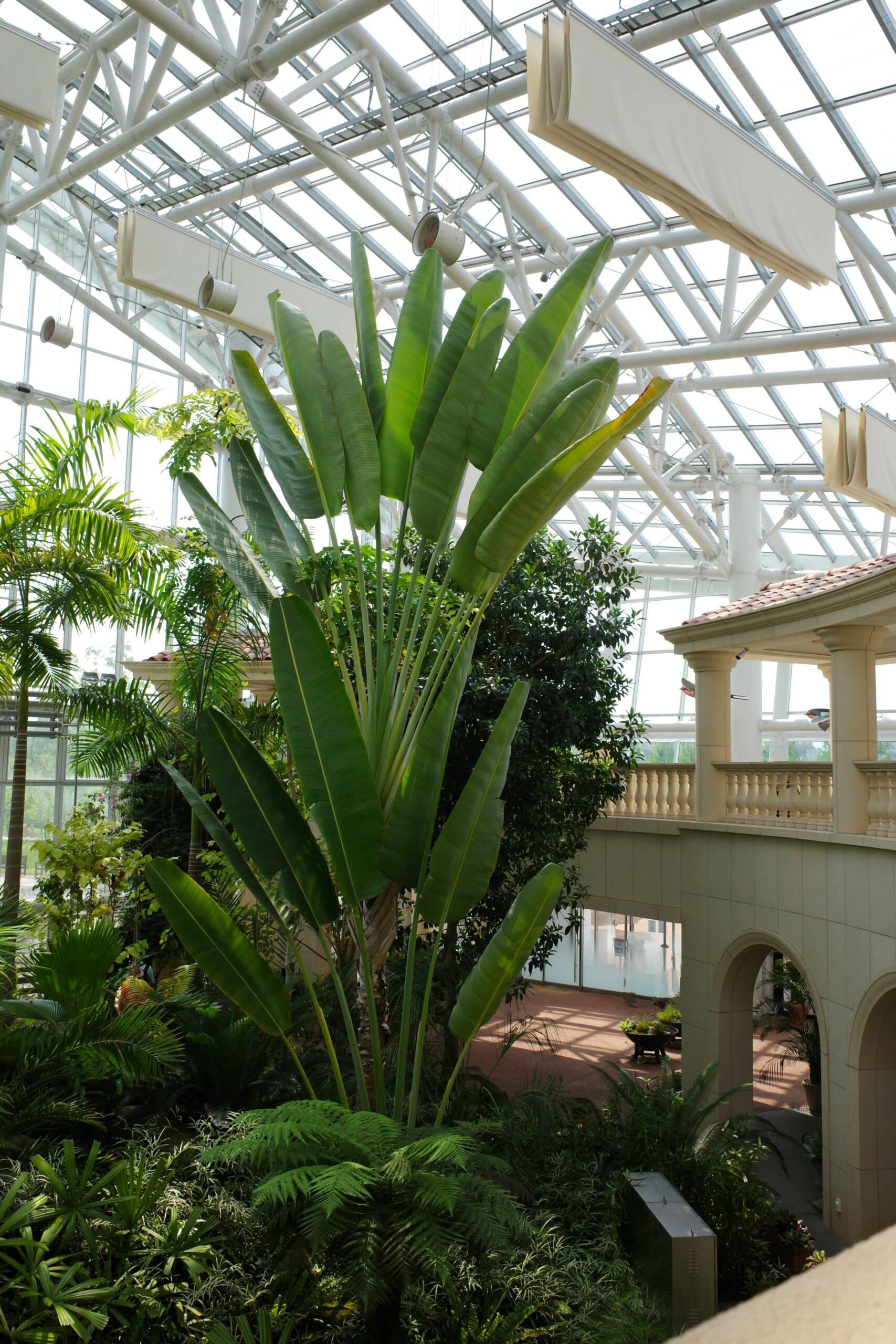
The greenhouse proper is a single large volume, but it doesn’t feel like one. The interior is divided into distinct climate zones and exhibition areas that flow into each other without hard transitions, so the shift from tropical to desert to Mediterranean happens almost without your noticing. The overall structure is enormous — the arched ceiling rises well above the canopy line of the tallest palms — and the steel framework overhead, white and geometric, is part of the aesthetic rather than an apology for it.
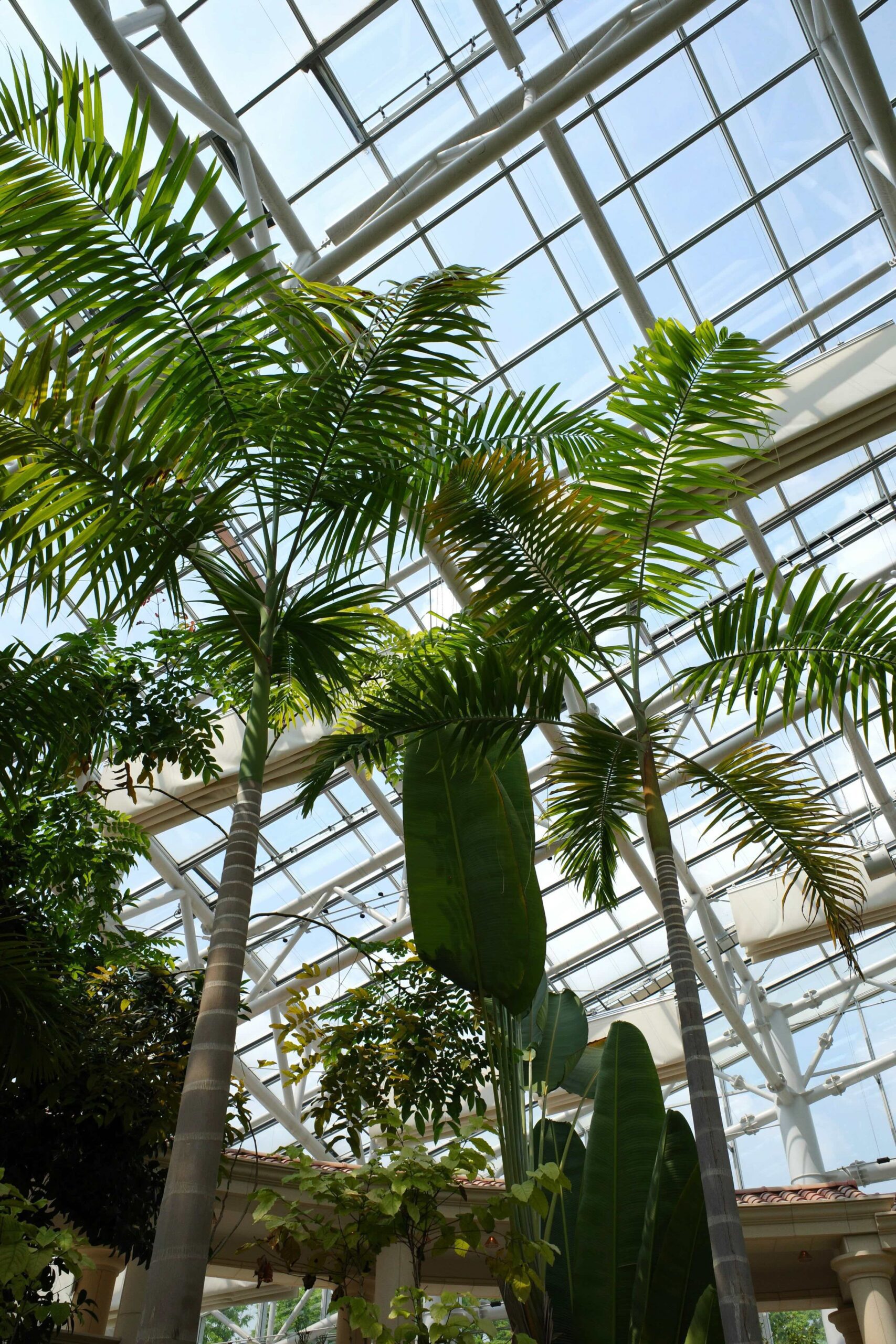
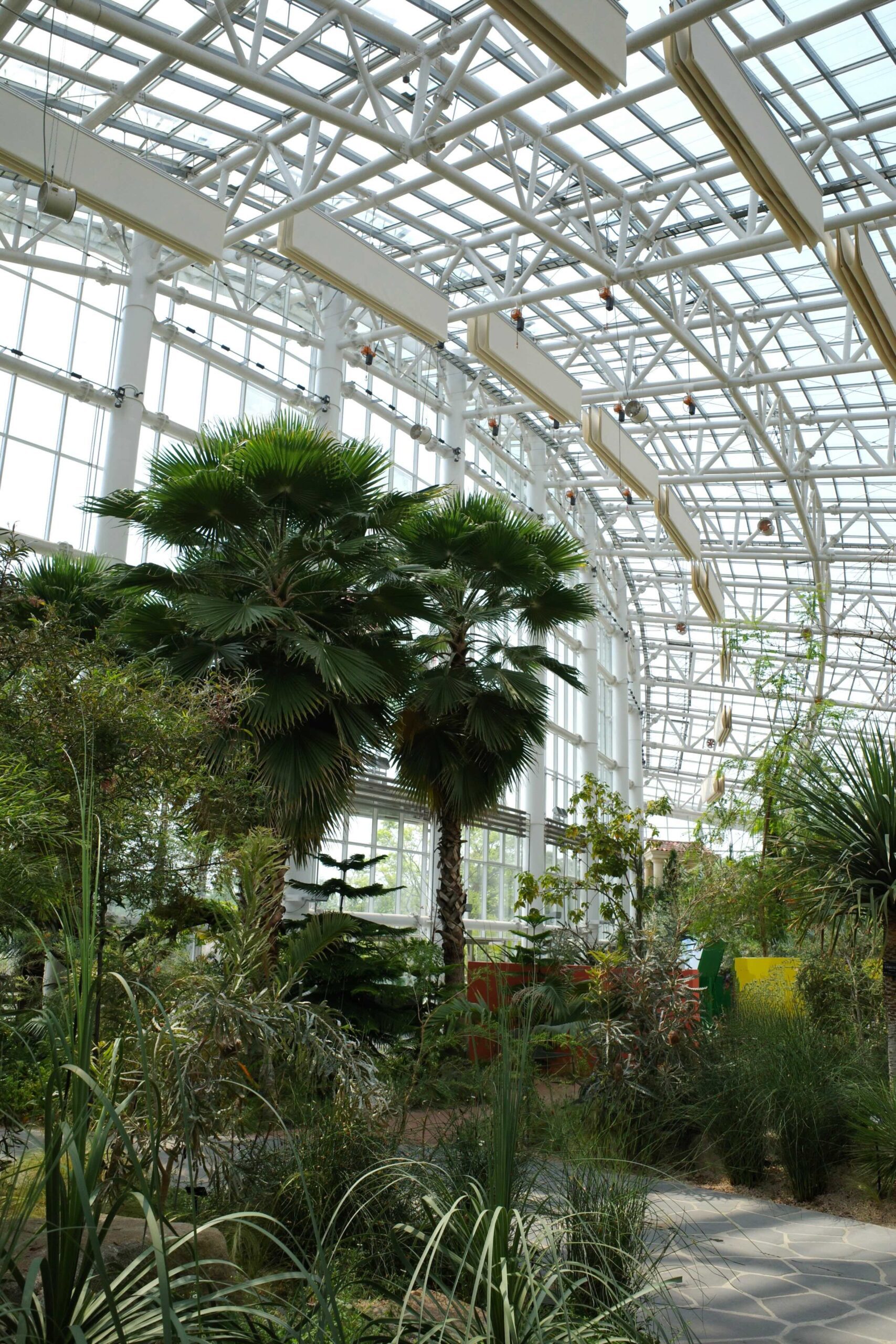
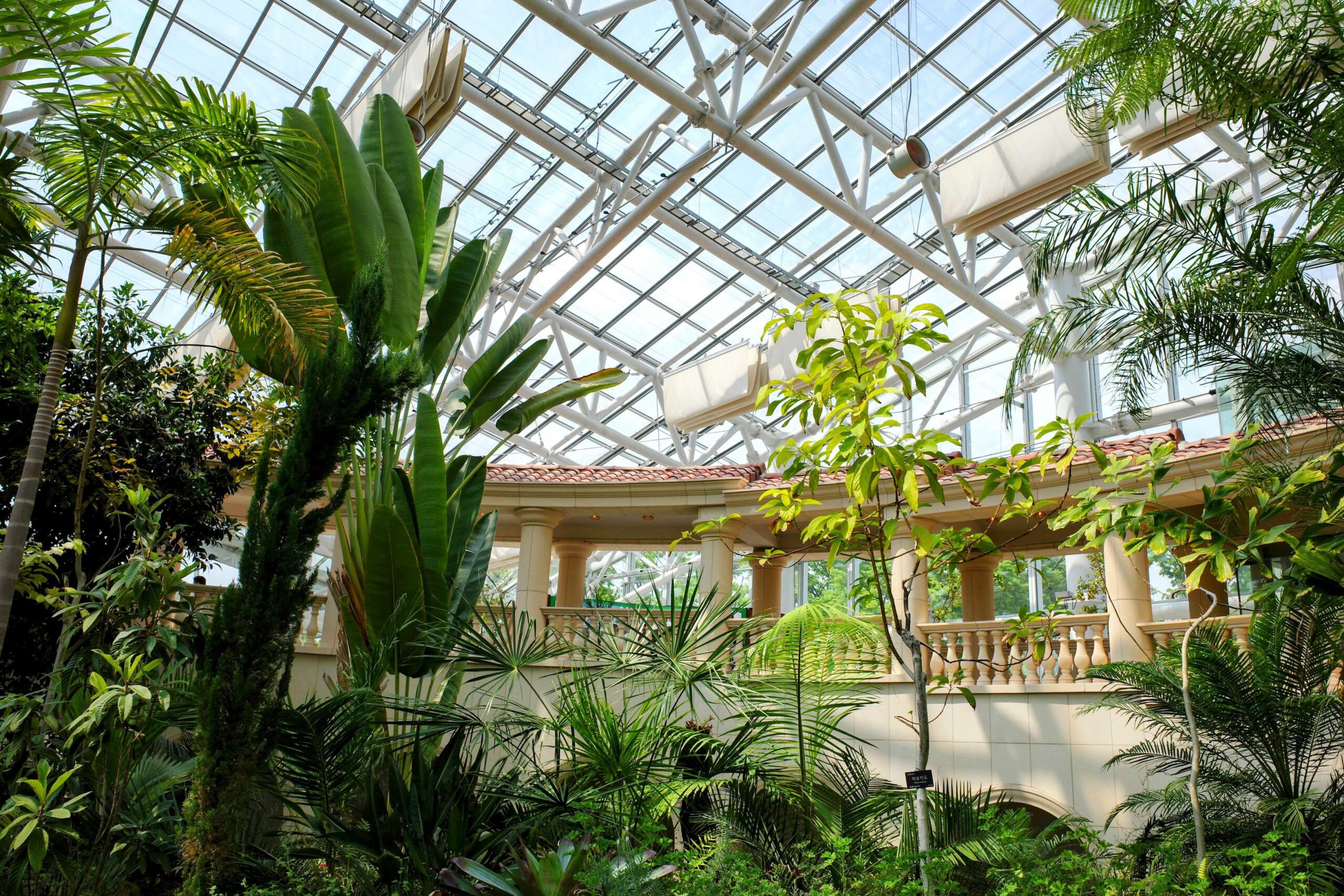
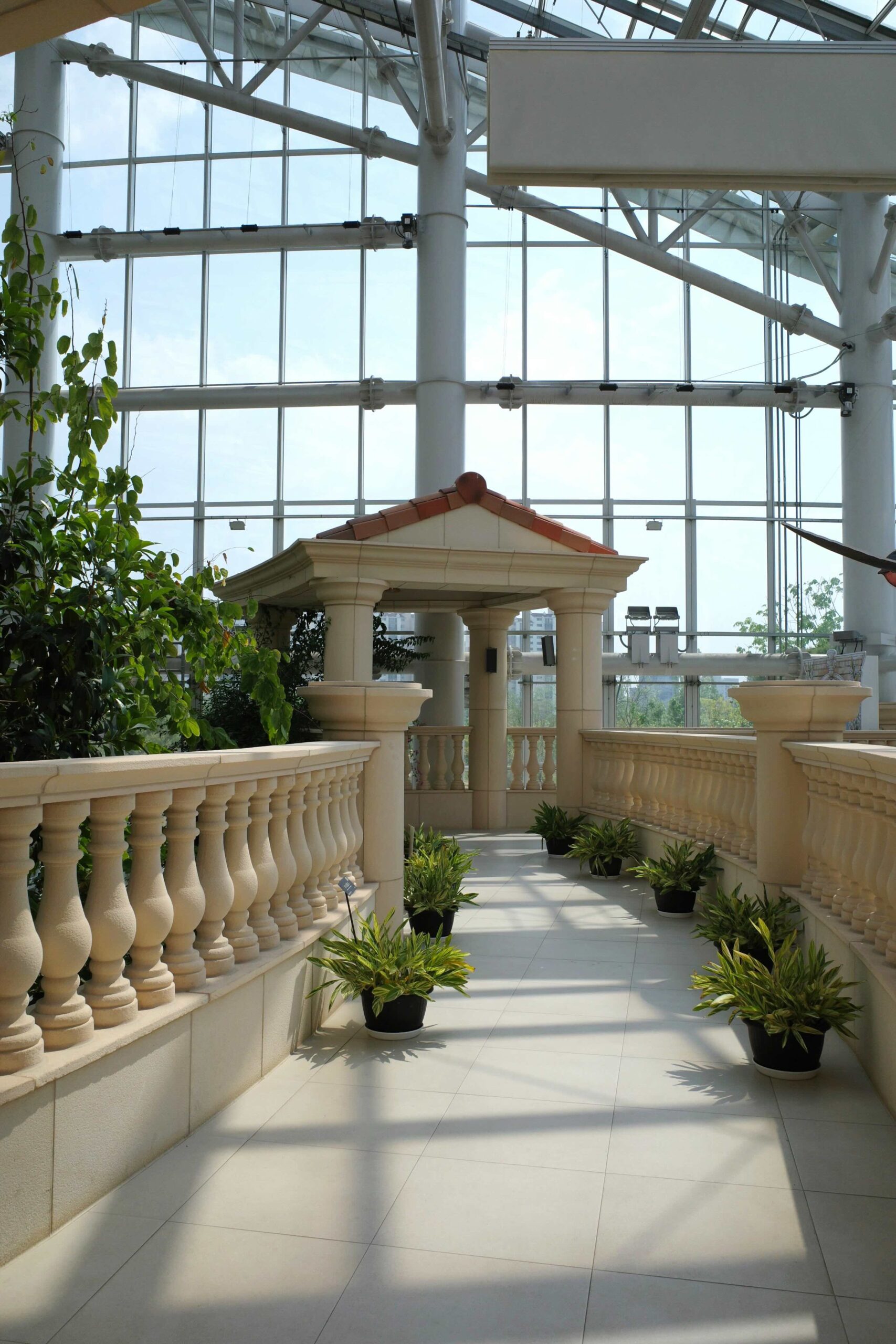
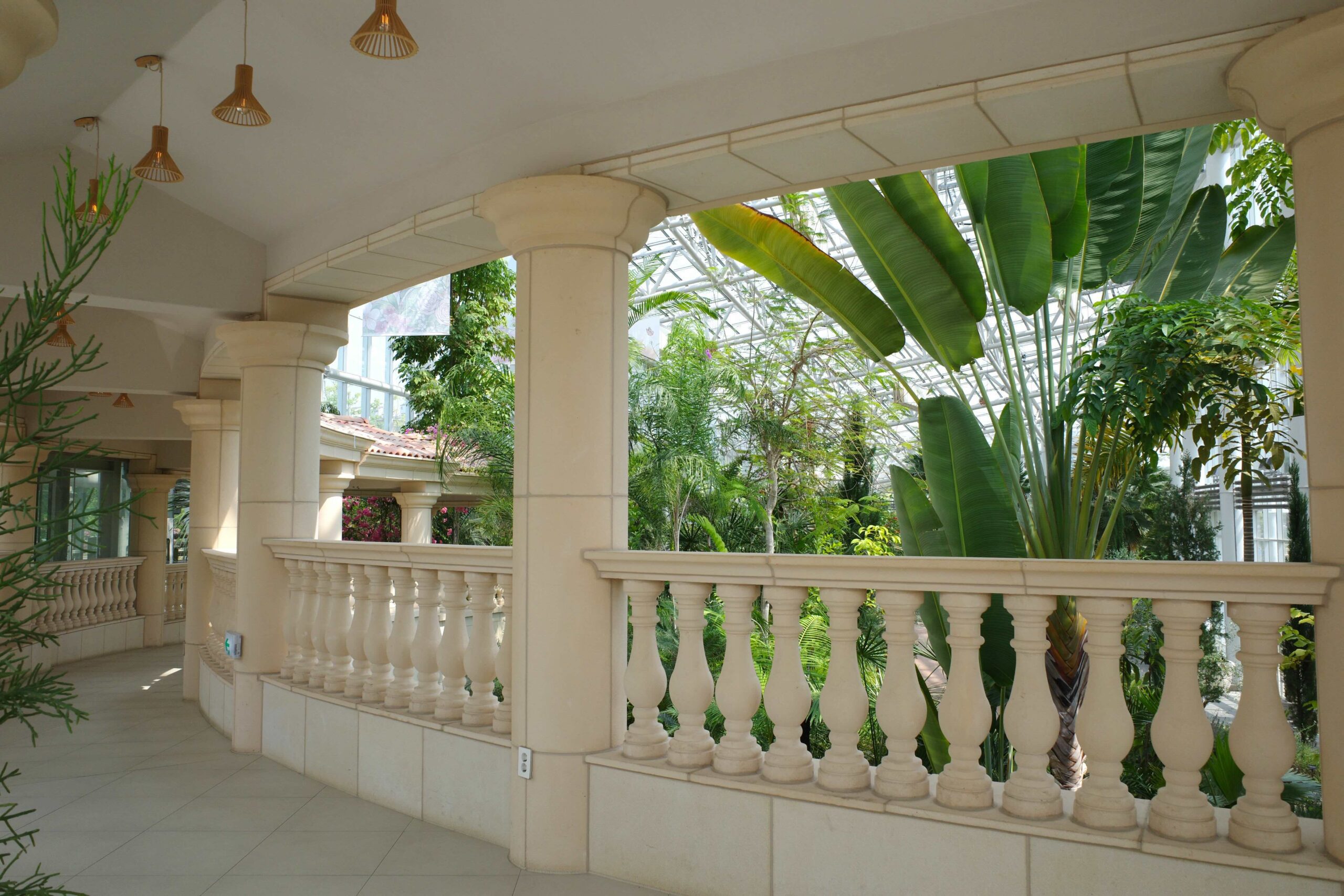
The tropical section sets the scale immediately. Banana trees, strelitzias, and fan palms press upward toward the ridge of the roof. Embedded within the planting, a low two-storey building in warm stucco with red terracotta tiles and a balustraded upper balcony sits like a transplanted Mediterranean villa — out of context in the best possible way, entirely at home in the heat and humidity of a greenhouse summer. Flowering bougainvillea climbs the exterior. Cycads anchor the ground level. It is excessive in a way that works, a stage set that has been growing long enough to become something real.
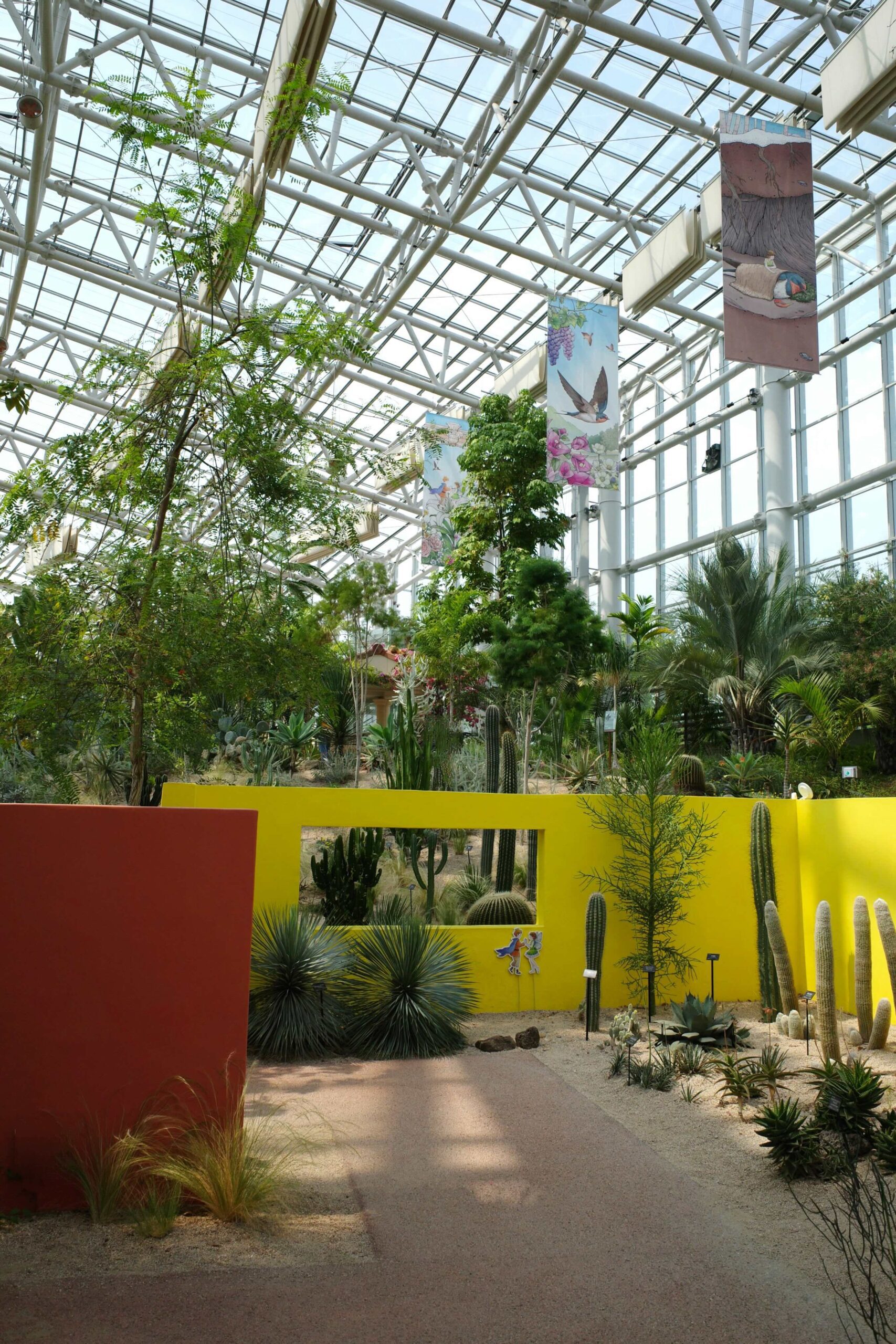
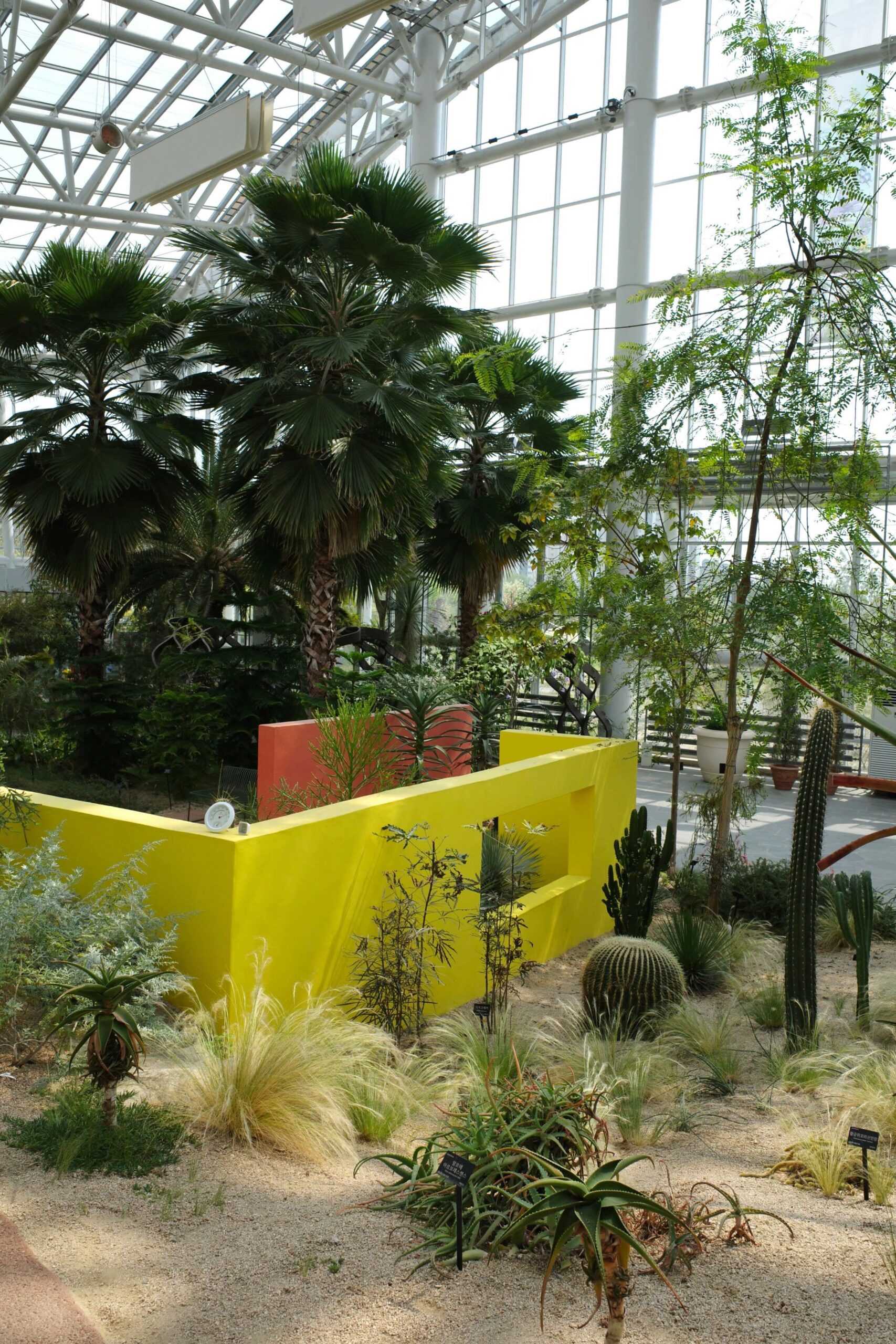
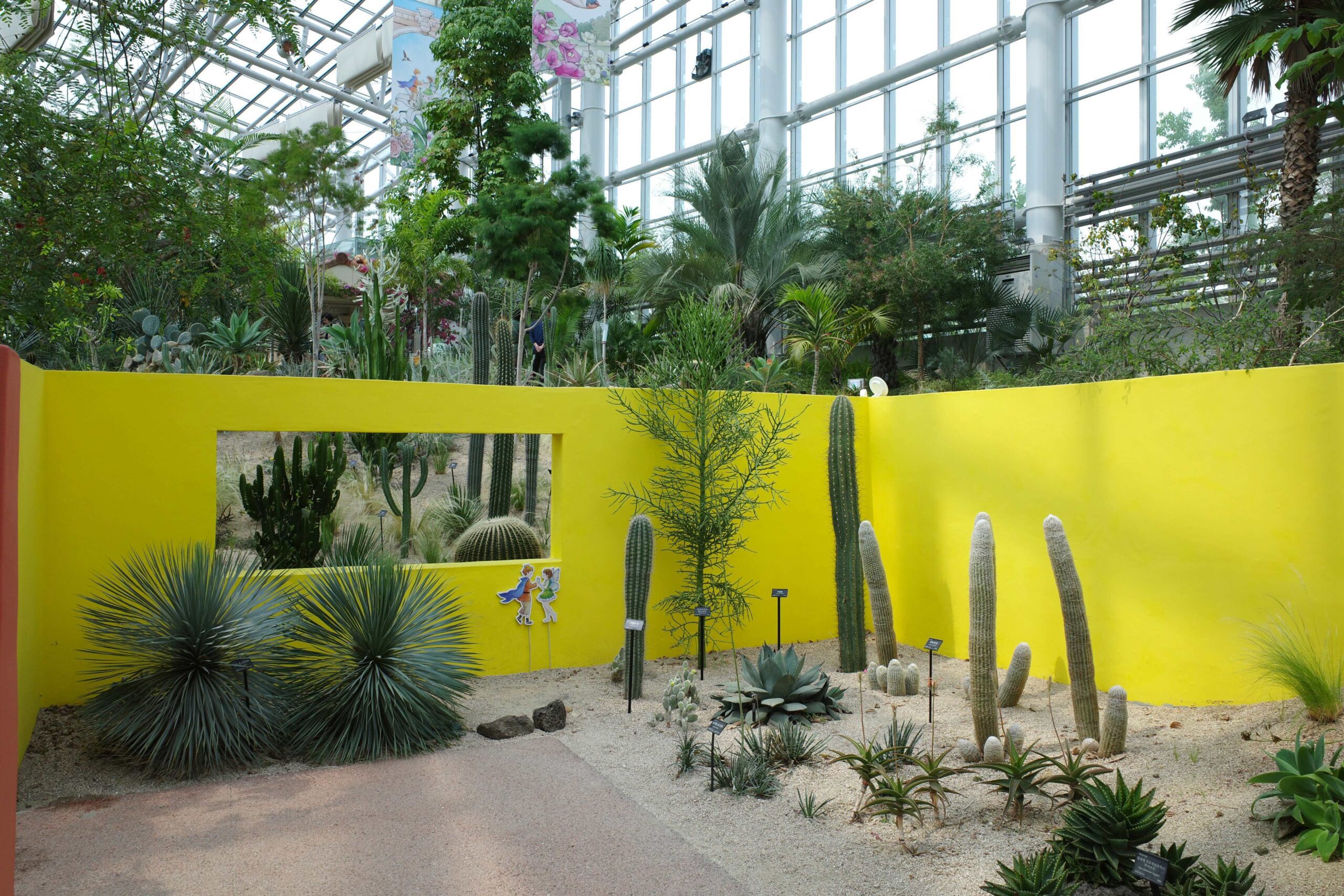
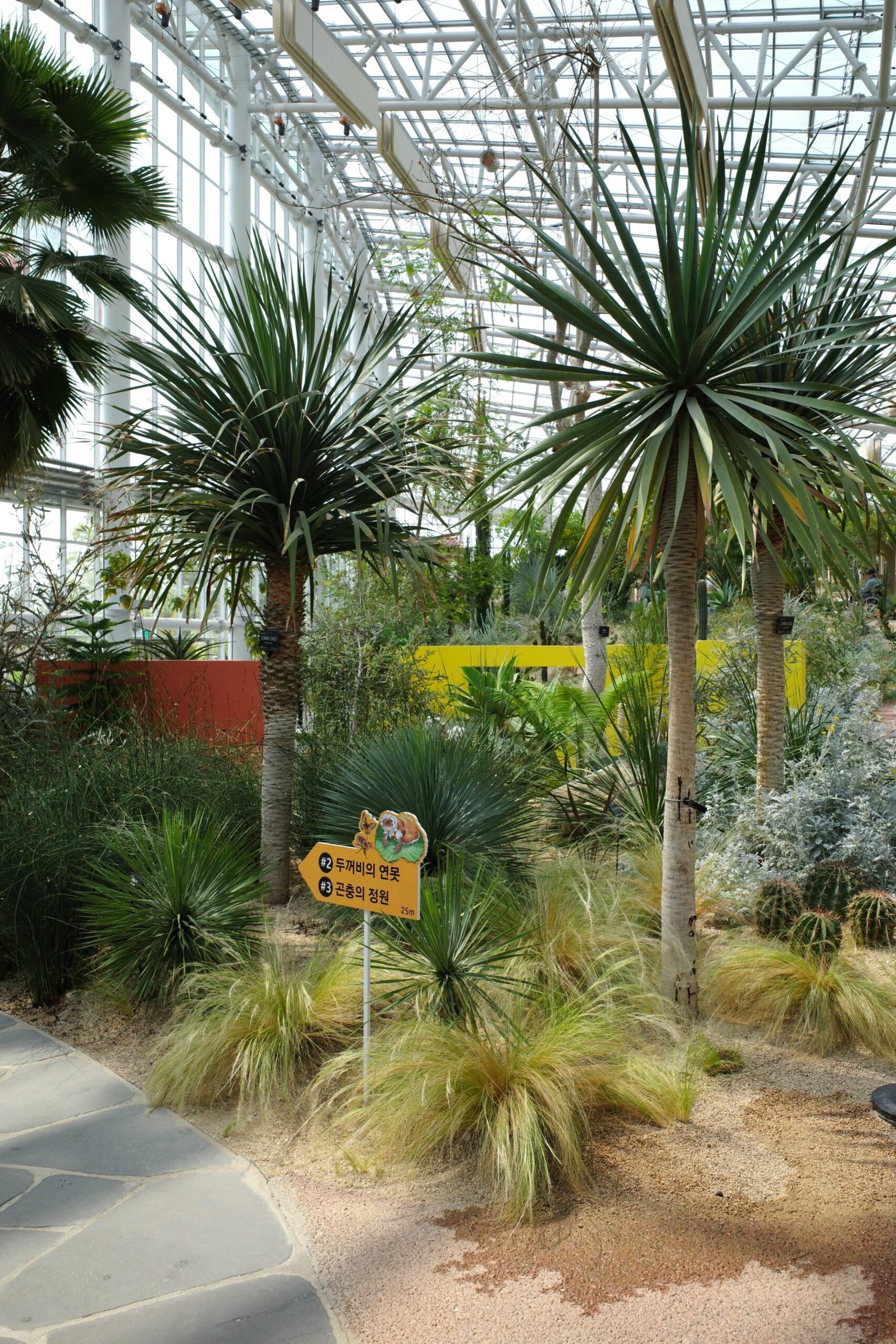
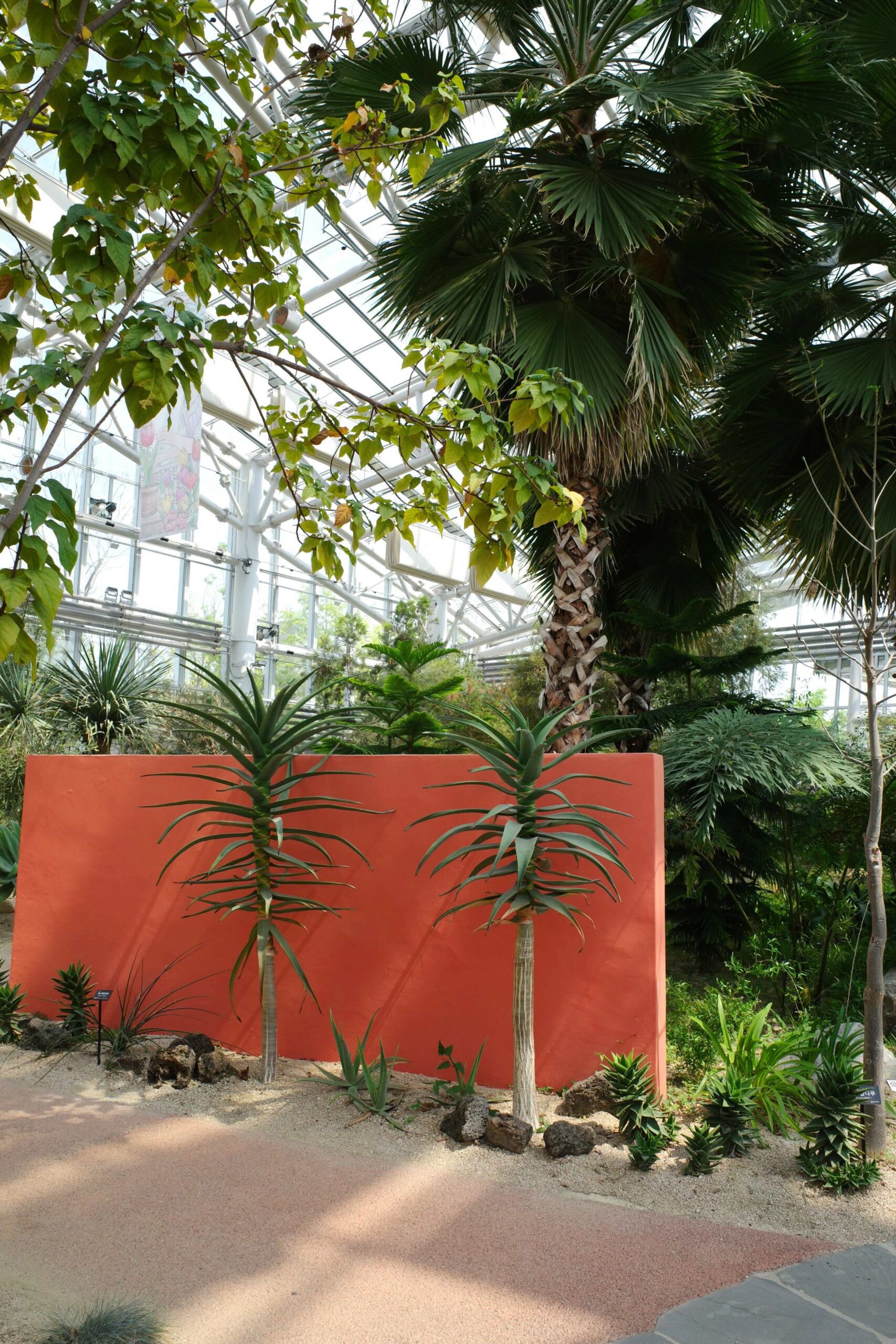
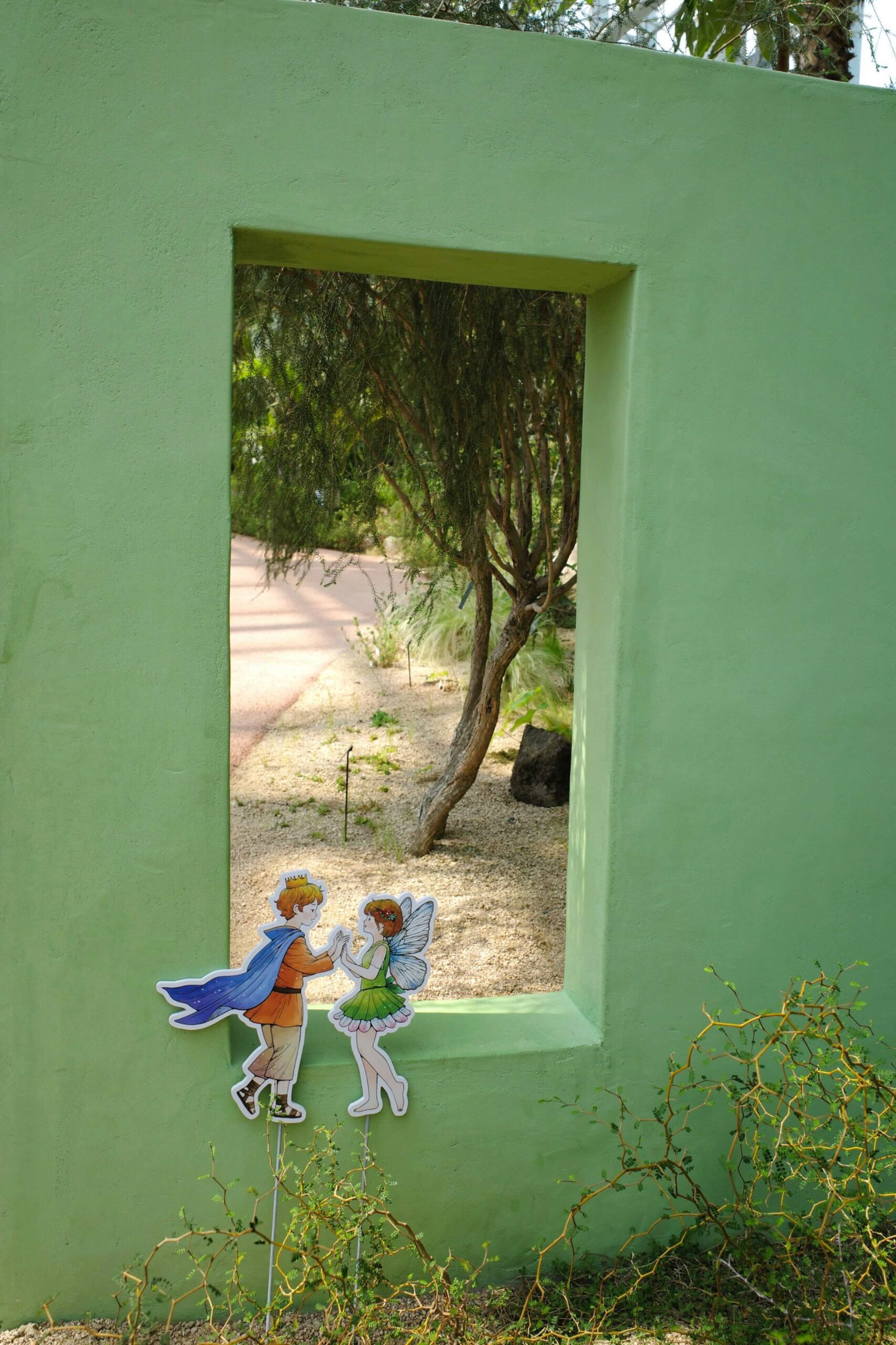
The desert zone shifts the register entirely. Here the planting opens up — barrel cacti, tall columnar species, agaves and yuccas spread across sandy beds under the full force of the greenhouse light. Bright yellow and deep terracotta walls divide the zone into loosely defined rooms, framing views of cactus gardens through cut-out windows like paintings. The color is bold enough to be almost jarring against the dusty greens and grays of the succulents, but that tension is the point. This corner of the greenhouse reads like a design decision more than a botanical one, and it’s better for it.
The Thumbelina Exhibition
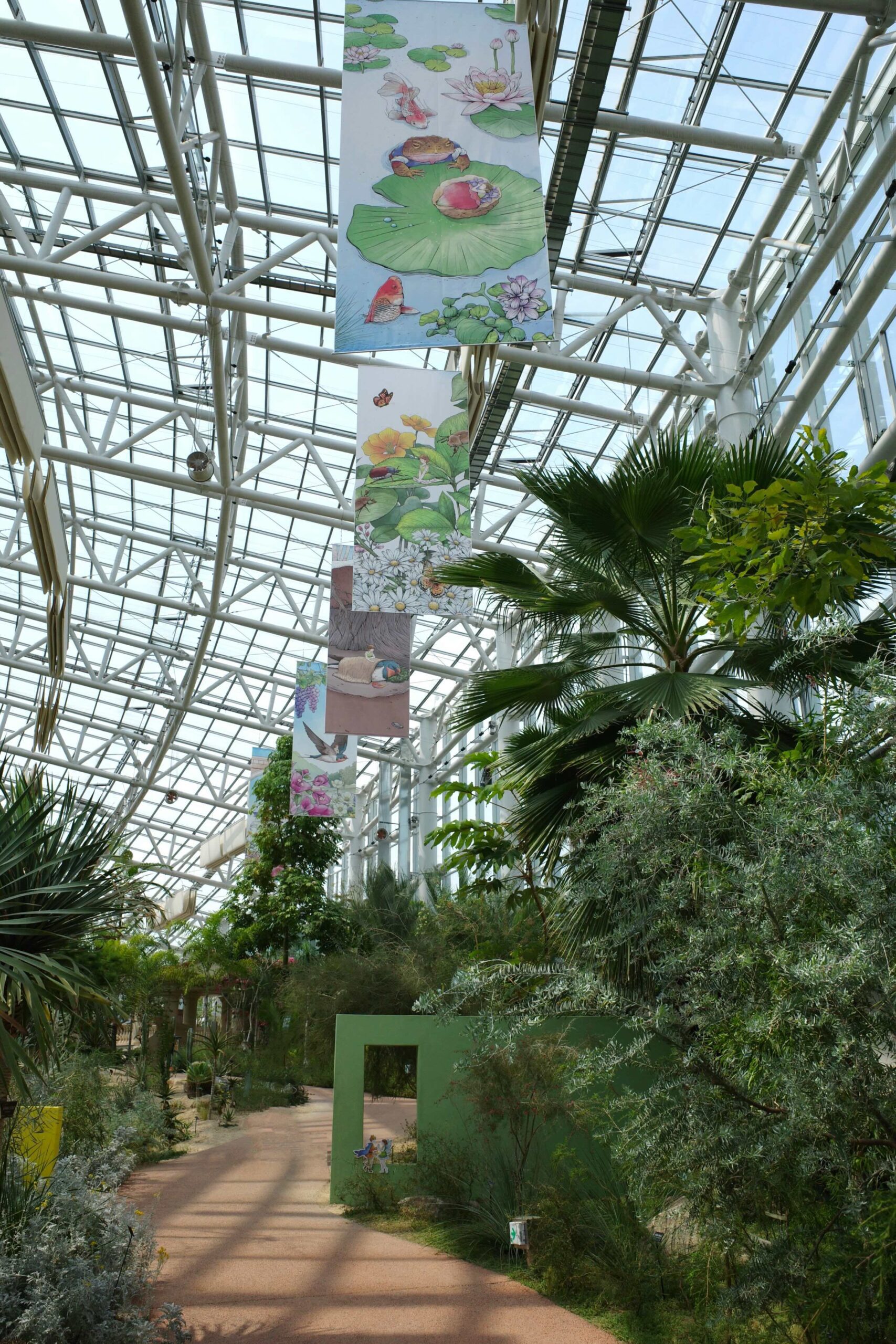
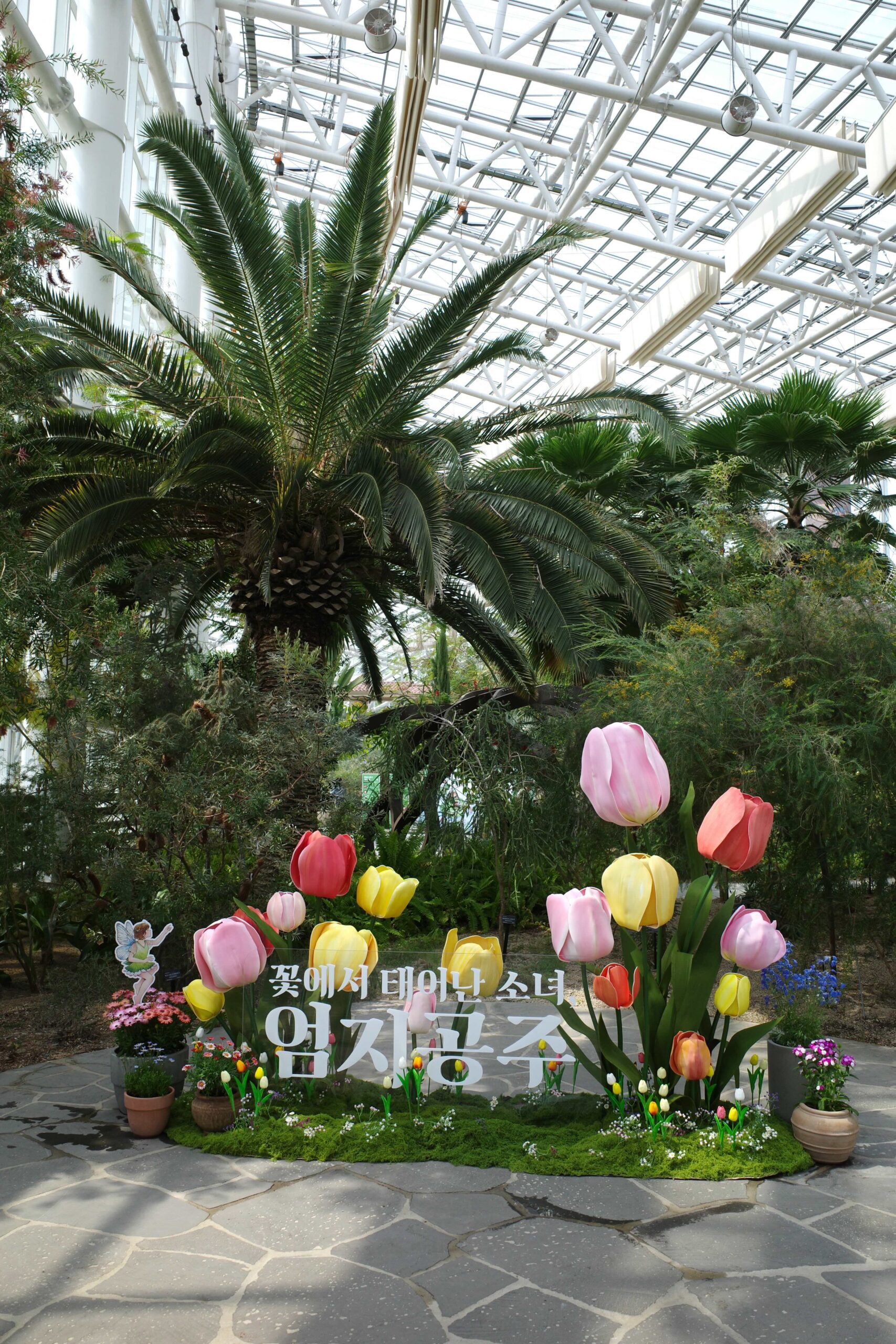
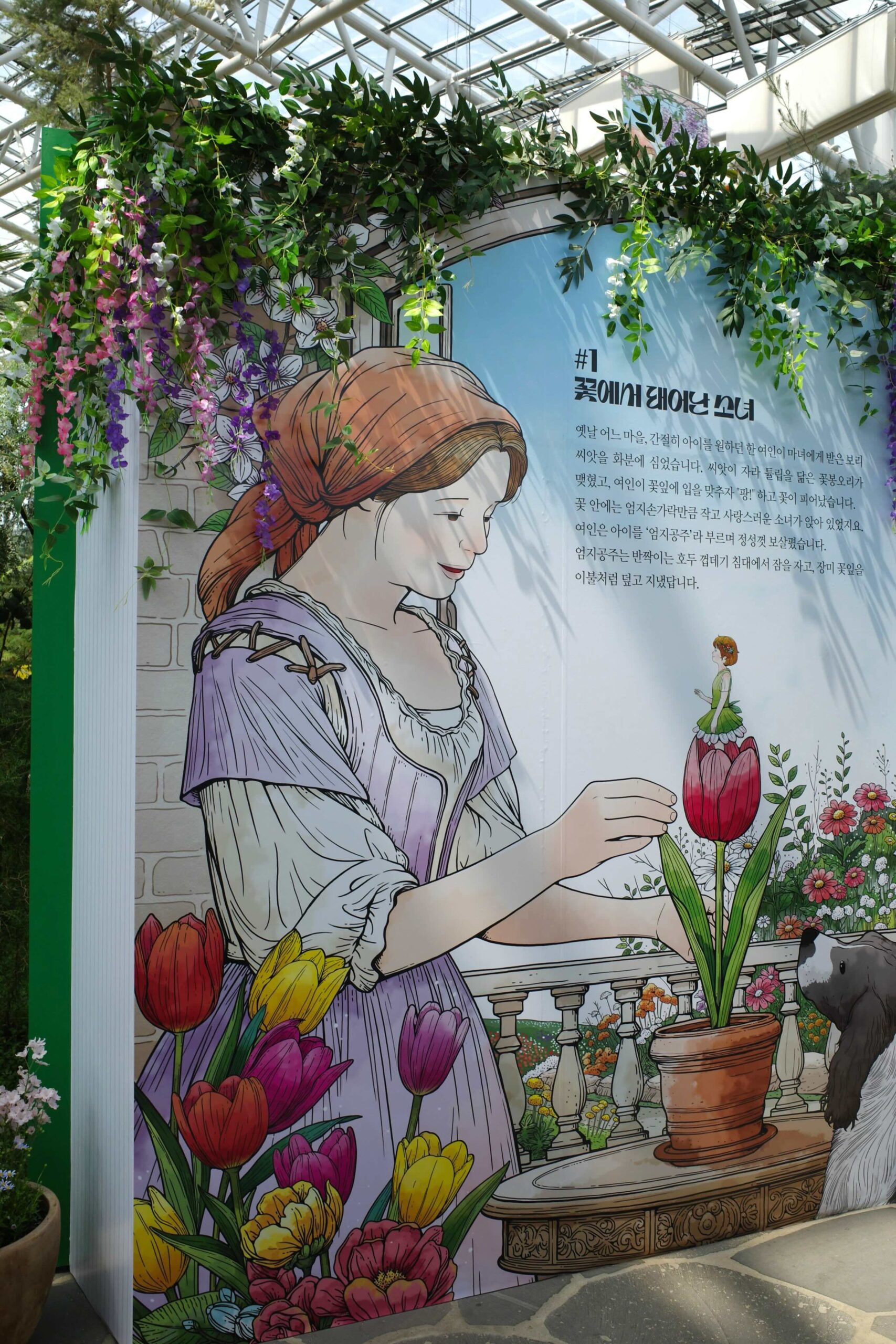
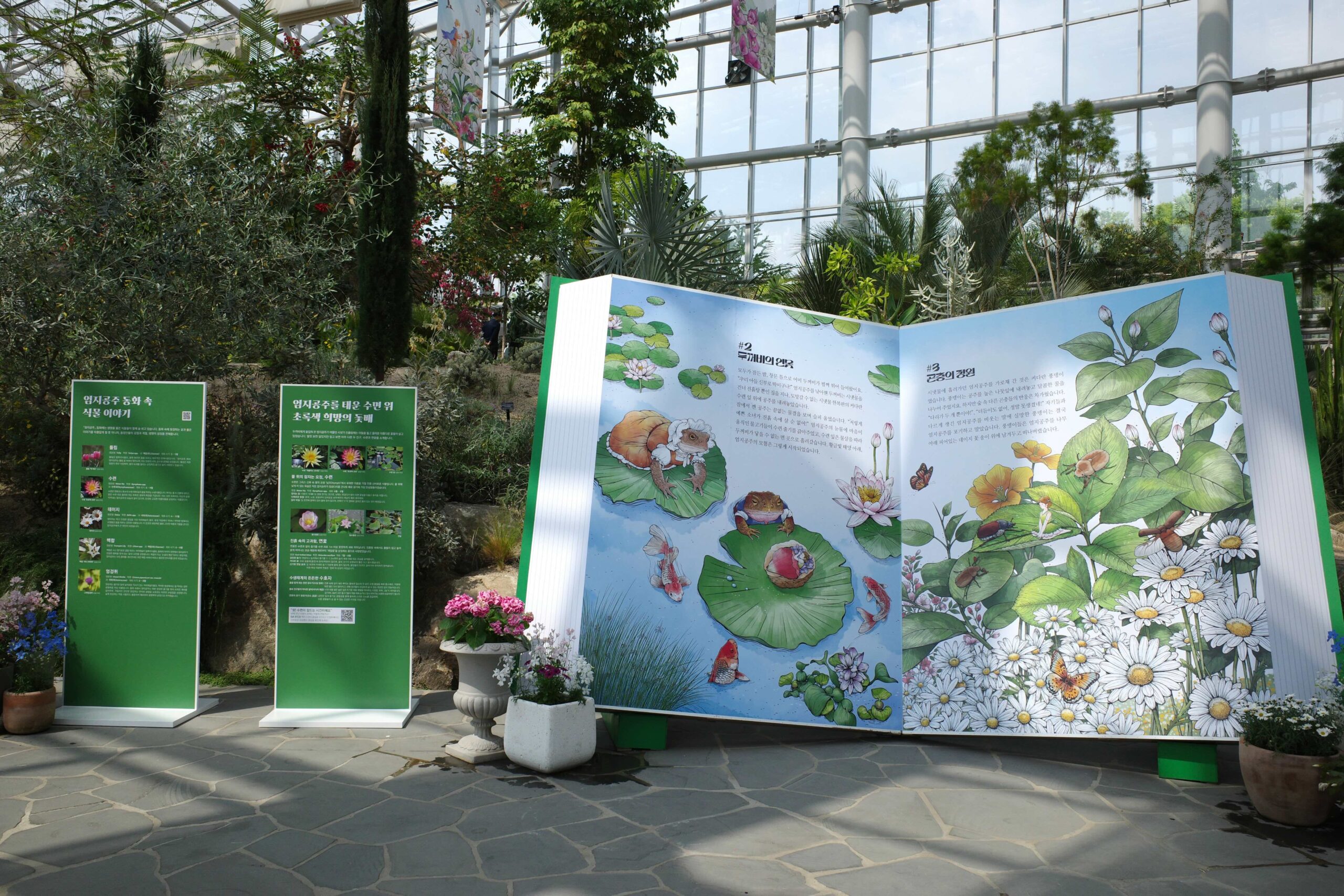
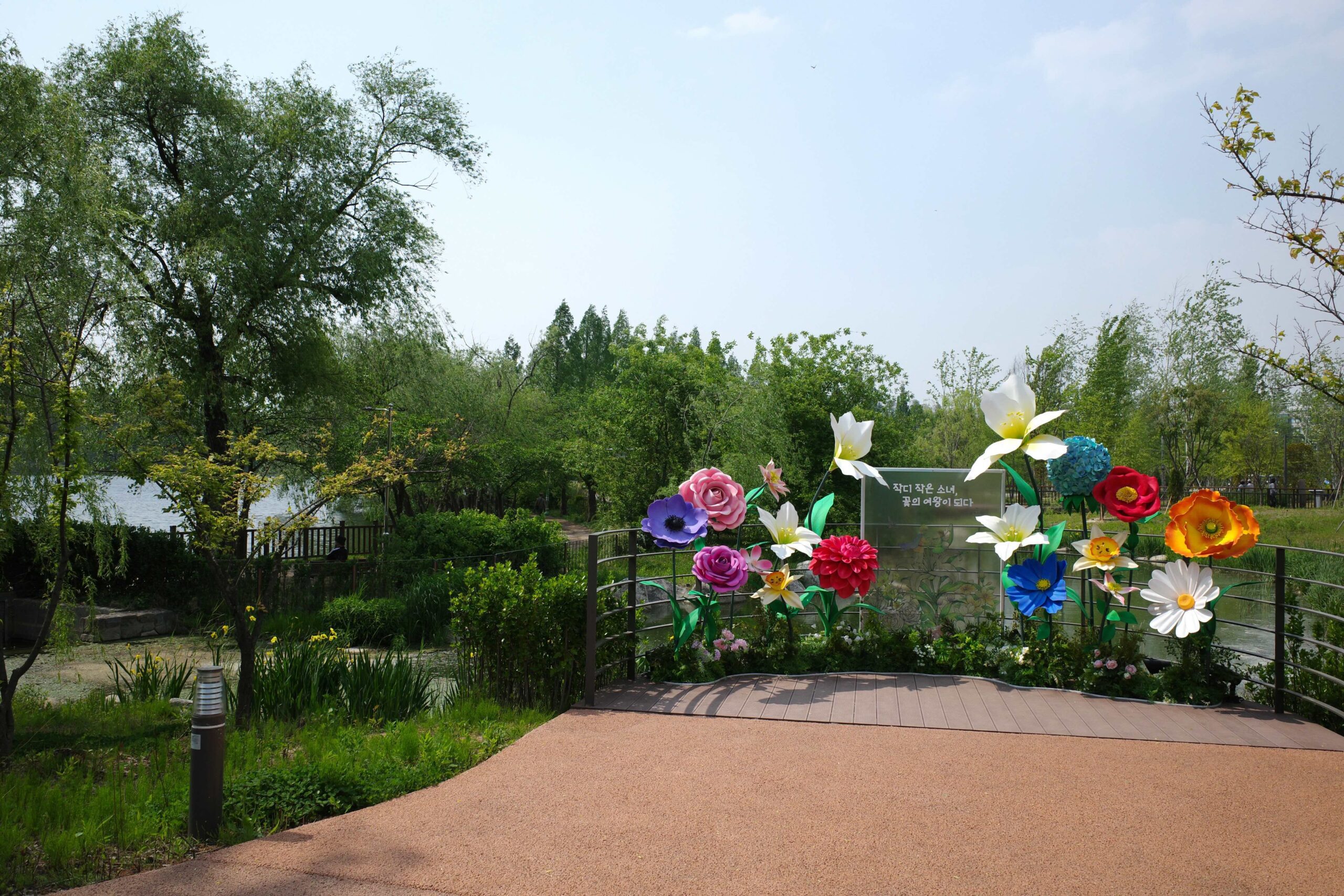
At the time of this visit, the greenhouse’s upper section had been partially given over to a seasonal exhibition based on the story of Thumbelina (엄지공주). Illustrated panels retelling the tale in stylized graphic-novel artwork hung from the greenhouse frame at height, running the length of the main path. Oversized tulip sculptures in candy pink, yellow, and soft red formed a low installation around the title signage near the tropical entrance. A large open-book prop displayed chapters two and three of the story — a toad’s lotus pond, a garden of insects — set against the backdrop of palms and cactus. It’s the kind of temporary programming that coexists with the permanent collection rather than competing with it, and the scale of the space absorbs it comfortably.
After Dark: Bambitjeongwon
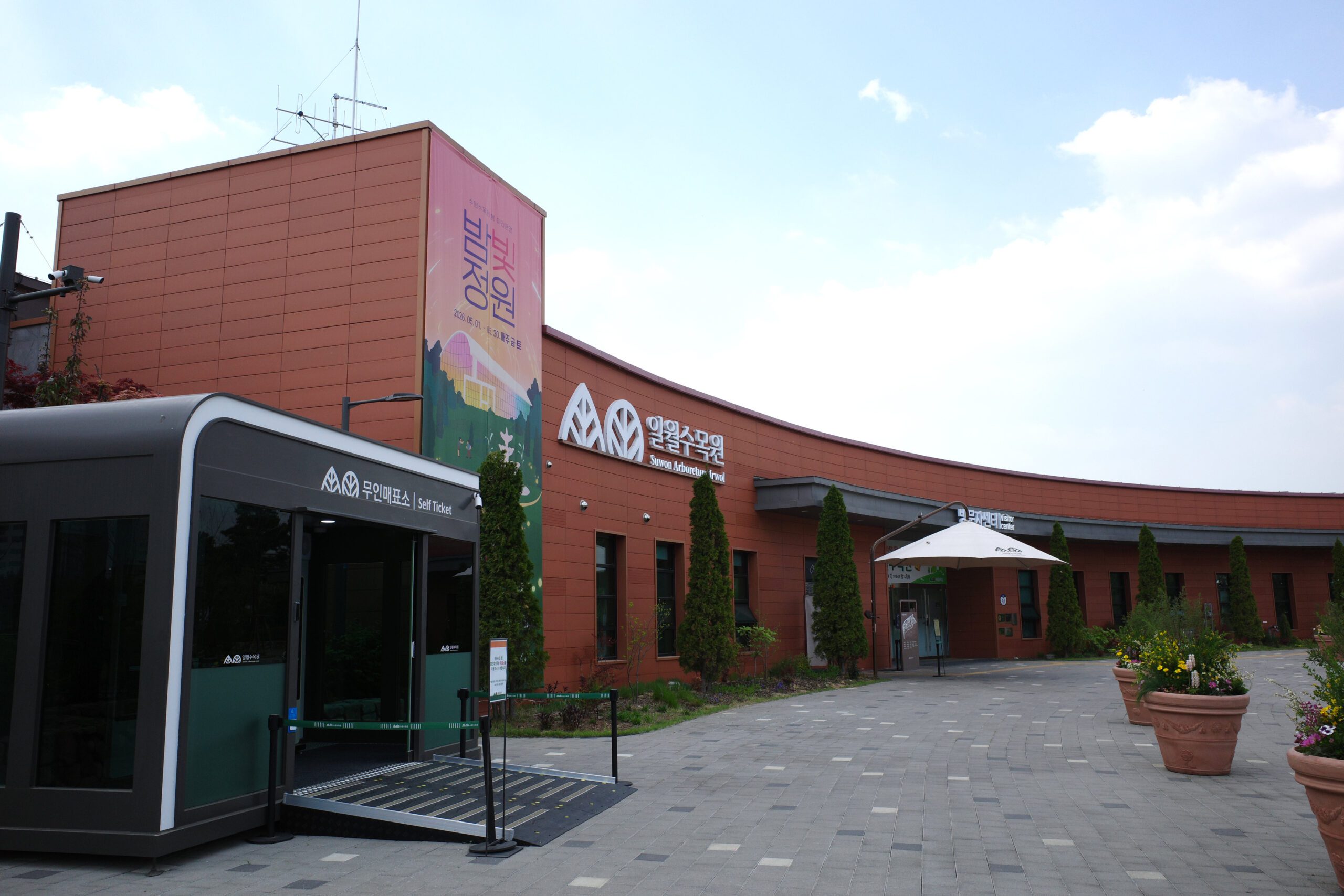
On select dates in spring and autumn, Ilwol runs evening hours under the name Bambitjeongwon — Night Garden. The arboretum stays open until 9:00 PM, and the outdoor grounds and greenhouse take on a different quality entirely after the daylight fades: path lighting low along the boardwalks, the glass structure luminous from within, the reservoir catching whatever remains of the sky. The schedule is announced seasonally on the official website and Instagram rather than fixed in advance, so it’s worth checking before a visit if an evening is an option. It’s a meaningfully different experience from the daytime, and a rare chance to have a botanical garden largely to yourself after the afternoon crowds clear.
Getting There
Ilwol Arboretum’s most practical advantage is its accessibility from Seoul. The arboretum sits a short bus or taxi ride from Hwaseo Station on Line 1 — under an hour from central Seoul — and the adjacent Starfield Suwon complex makes it easy to combine the visit with a half-day in the city. The arboretum itself is among the first public botanical gardens in Korea to receive the national Barrier-Free excellence certification, meaning the entire site has been designed for stroller and wheelchair access throughout.
Ilwol Arboretum (일월수목원)
- Address: 61 Ilwol-ro, Jangan-gu, Suwon-si, Gyeonggi-do
- Hours: 9:30 AM – 5:30 PM (last ticket 5:00 PM) / Extended to 9:00 PM on designated night opening dates / Visitor Center 9:00 AM – 6:00 PM
- Closed: Mondays; Chuseok and Seollal (the holiday itself); January 1st
- Admission: Adults ₩4,000 / Teens (13–18) ₩2,500 / Children (7–12) ₩1,500 / Suwon residents discounted / Under 6 and over 65 free
- Access: Hwaseo Station (Line 1), Exit 6 → Bus 3 → Ilwol Arboretum stop
- Instagram: @suwon_arbor
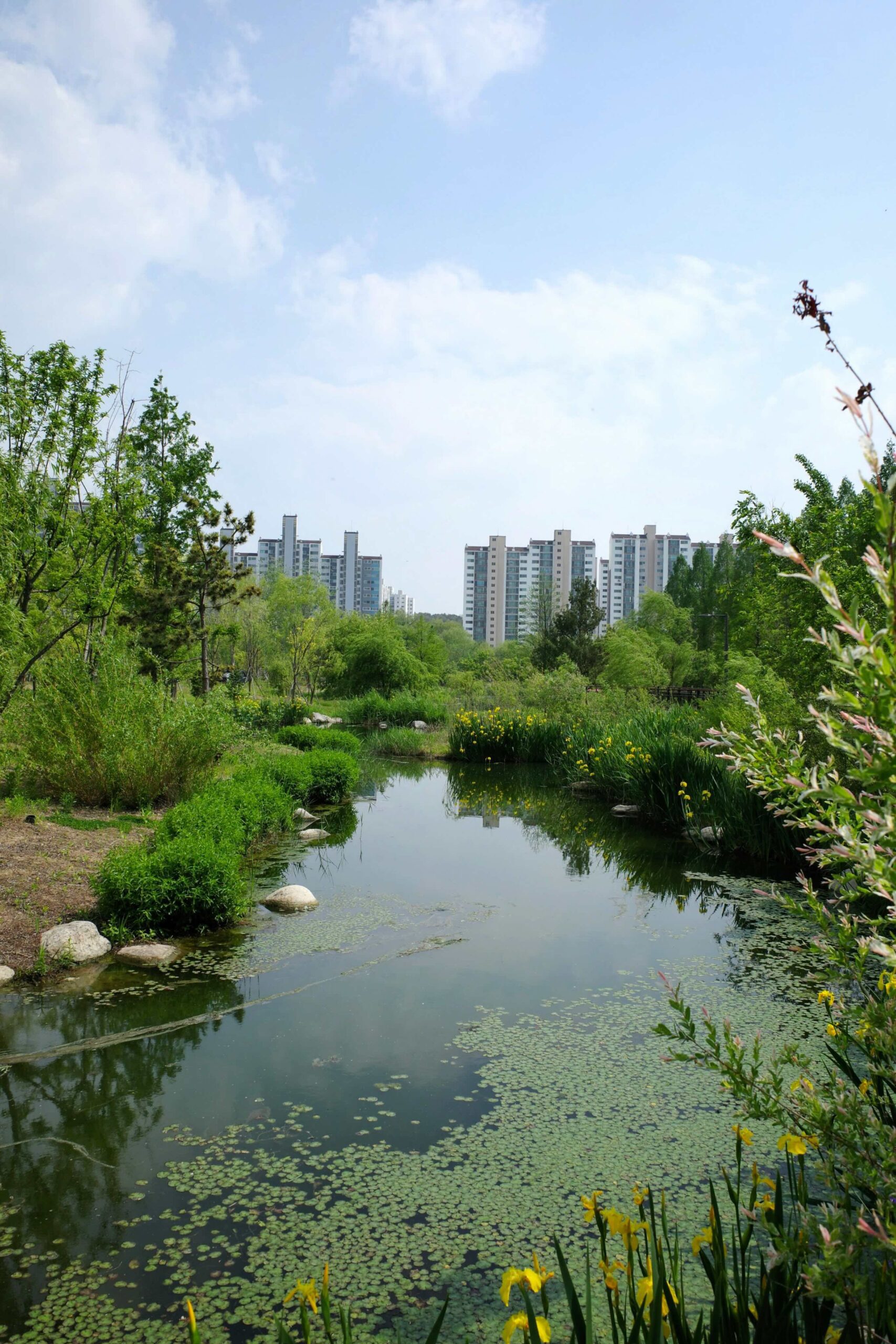
The city is still visible from inside. That’s not a flaw — it’s the whole point.